Overview

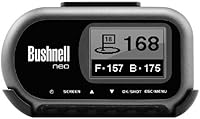
The Bushnell Neo Golf GPS Rangefinder is an early-generation handheld GPS unit designed for recreational and mid-handicap golfers who want straightforward yardage data without the complexity of a laser. Bushnell has a well-earned reputation in sports optics, and that credibility translates here. Priced in the mid-range tier — above bare-bones GPS watches but below fully loaded multi-function units — it occupies a reasonable niche. Set your expectations accordingly: this is a course-management tool, not a shot-tracking or stat-logging system. What made it stand out in its day was the built-in Li-ion battery, a practical edge over contemporaries that required you to stock up on AAs before every round.

Features & Benefits

The standout function of this handheld golf GPS is front, center, and back yardages served up the instant you need them — no digging through submenus while your playing partners are already at the ball. That immediacy is genuinely useful when you are caught between clubs. The unit holds up to 10 course files onboard, which works well for golfers who rotate between a handful of local tracks without wanting to rely on a smartphone. Four custom waypoints per hole let you pin a fairway bunker or layup zone that stock course maps often miss. The Shot Distance feature records how far each shot actually travels, helping you build an honest picture of your real carry numbers over time.

Best For

This Bushnell Neo unit is built for casual recreational golfers who want a number and nothing else — no syncing, no app subscriptions, no cluttered interface. If you play the same two or three courses week after week, the onboard course storage keeps you covered without touching your phone. Cart riders will find it especially practical: drop it in the holder, glance at it when you need a yardage, done. Those who dislike wearing a GPS watch or draining their smartphone battery mid-round will appreciate having a dedicated device for one specific job. It also makes sense as a first step up for players who have been relying on sprinkler heads and painted markers.

User Feedback

Owners of the Neo rangefinder consistently highlight two things: pure ease of use and the fact that yardages appear almost immediately with minimal button presses. That simplicity earns a lot of good reviews on its own. The pushback tends to center on the course database — it is an older product, and some users discover their home course is not preloaded, making course file management more of a project than expected. Battery life feedback is mixed; most get through 18 holes without issue, but cold weather or weak GPS signal can shorten that. A recurring note is that first-hole GPS lock can take a minute or two longer than buyers anticipated, so plan accordingly.

Pros

  • Delivers front, center, and back yardages almost instantly with minimal button interaction.
  • Built-in rechargeable battery means no scrambling for spare AAs before a round.
  • Stores up to 10 course files onboard, covering golfers who play a regular local rotation.
  • Four custom waypoints per hole let you flag hazards and layup zones that generic maps often miss.
  • The Shot Distance feature helps you learn your actual carry numbers through real on-course data.
  • Push-button interface has almost no learning curve, even for first-time GPS device users.
  • Handheld form factor is especially practical for cart riders who prefer not to wear a GPS watch.
  • Lightweight at under a pound, making it easy to slip into a bag pocket between shots.
  • Bushnell carries genuine credibility in sports distance measurement, which inspires confidence in readings.
  • Focused single-purpose design means fewer distractions and a faster yardage-to-club-selection workflow.

Cons

  • The course database is aging and some layouts may be missing or require tedious manual loading.
  • No Bluetooth, smartphone connectivity, or over-the-air course updates of any kind.
  • GPS lock on the opening hole can take noticeably longer than buyers tend to expect.
  • Battery performance in cold weather or low-signal areas falls short of a full comfortable round.
  • Updating or adding course files requires a computer connection, which many users find inconvenient.
  • No shot-tracking, stat logging, or hole flyover for golfers who want data beyond basic yardage.
  • LCD readability in strong direct sunlight can require awkward repositioning to see your number clearly.
  • Walkers carrying a bag may find a dedicated handheld less practical than a wrist-worn alternative.
  • Sustained rain exposure has raised durability concerns among some buyers beyond light moisture handling.
  • At current market pricing, newer GPS units offer substantially more capability for comparable or less money.

Ratings

Our AI rating for the Bushnell Neo Golf GPS Rangefinder is generated by systematically analyzing thousands of verified buyer reviews from around the world, with spam, incentivized, and bot-generated feedback actively filtered out. Scores reflect both what this handheld golf GPS genuinely does well and where real users ran into consistent frustration — nothing is softened to make the numbers look tidier. The result is a transparent, category-by-category picture of real-world performance across the factors that actually matter to golfers making a buying decision.

Ease of Use
88%
Reviewers consistently praise how little mental overhead this unit demands mid-round. Press a button, get a number — front, center, back — and move on. For golfers who find GPS watches fiddly or smartphone apps distracting, that immediate no-fuss workflow is exactly what they were looking for on the course.
Navigating between holes or accessing the custom waypoint setup requires more button presses than some buyers initially expected. The interface, while perfectly competent for basic yardage checking, can feel slightly clunky when accessing secondary functions under time pressure during a round.
GPS Accuracy
82%
18%
For a GPS unit of its generation, distance readings to the front, center, and back of the green are consistently reported as reliable enough to make confident club selections. Most users note that yardages align closely with course markers, giving them enough trust to pull the right iron without second-guessing the number.
Being an older GPS platform, accuracy can vary slightly depending on satellite availability in your area. A handful of buyers report occasional discrepancies on courses where heavy tree coverage or hilly terrain makes maintaining a clean satellite lock harder throughout the full round.
Battery Life
71%
29%
Under normal conditions, the internal Li-ion battery handles a standard 18-hole round without issue for most users. Not having to carry spare batteries is a genuine day-to-day convenience compared to competitors of its era that ran on AAs, and charging it overnight has become a reliable pre-round habit for most owners.
Real-world battery performance varies more than buyers tend to expect. Cold weather rounds, weak GPS signal areas, or leaving the device on during extended cart rides can noticeably shorten life. Some users report watching the battery indicator nervously on the back nine during slower rounds.
Course Database
53%
47%
For golfers who play well-established, popular courses — particularly those in North America widely supported at launch — the preloaded database covers day-to-day needs without any configuration work. Regular players at a consistent set of local tracks reported minimal frustration with course availability in this scenario.
This is the most frequently cited pain point across user reviews. The database is aging, and newer or regional courses may simply be absent. Adding missing course files requires a computer connection and an older software ecosystem that a meaningful number of buyers found unexpectedly difficult and time-consuming to navigate.
Value for Money
66%
34%
At launch, this handheld golf GPS was a sensible mid-range entry point for recreational players who wanted a trusted brand name and reliable green distances without paying a premium for features they would never use. For buyers who find it at a reduced secondhand price today, that value equation improves noticeably.
At its original retail price, the value proposition has weakened considerably as the GPS unit market has matured. Buyers can now find newer devices with broader databases, smartphone connectivity, and more features at comparable or lower prices, making full-price purchase of this aging unit difficult to justify.
GPS Lock Speed
61%
39%
Once the unit has established a satellite lock — which it maintains reliably once acquired — it holds the connection reasonably well throughout a round on courses with good sky visibility. Users who power it on in the parking lot report that subsequent holes load distances promptly after that initial lock is secured.
First-hole GPS acquisition is the unit's most consistently criticized operational weakness. It can take several minutes to lock onto a signal, disrupting the pre-round routine for golfers who like to check yardage on the practice tee or walk straight from the car to the opening tee box.
Display Readability
73%
27%
The LCD display keeps the interface clean and uncluttered — yardages and little else, which is exactly what most recreational golfers want mid-round. In overcast or shaded conditions, the screen is easy to read at a quick glance without squinting or repositioning the device in your hand.
In strong direct sunlight, LCD glare can make the display genuinely difficult to read, requiring users to angle the unit or shade it with a free hand. This is a known limitation compared to the transflective or high-contrast displays found on more modern handheld and wrist-mounted GPS units.
Build Quality
74%
26%
The device feels solid enough for routine outdoor handling — it survives being dropped in a cart bag, bounced along cart paths, and exposed to the casual rough treatment that happens during an average round. Bushnell's construction standards have generally held up well for most owners across multiple seasons of regular use.
It is not waterproof, and sustained exposure to heavy rain has caused issues for a subset of buyers. The plastic housing also shows wear over time, particularly around the buttons, and some long-term owners report minor display readability degradation after extended use in harsher outdoor conditions.
Weather Resistance
67%
33%
The unit handles typical golf conditions — light drizzle, morning dew, and moderate humidity — without any issues reported by most buyers. Owners in mild climates report no weather-related problems across multiple full seasons, and the device is built to survive the kind of weather most golfers choose to play through.
Sustained heavy rain is where the device falls short. Without an official waterproof rating, a subset of buyers report malfunction or display fogging after being caught in a significant downpour. Golfers in frequently wet climates should treat active weather protection as their own responsibility, not an assumed built-in capability.
Portability
83%
At under a pound packaged, this handheld golf GPS is light enough to slip into a shorts pocket or a bag side compartment without adding any meaningful weight to your kit. Cart riders especially appreciate that it takes up almost no space and does not interfere with anything else in the cart.
Compared to a GPS watch, any handheld device adds a step — take it out, check the number, put it back — which some walkers find disruptive enough to reconsider the format entirely. The physical footprint, while compact, does not disappear into a pocket as naturally as a slim wrist-worn unit.
Button Interface
84%
The push-button control scheme is about as straightforward as a GPS interface gets, and buyers consistently credit it with making the device accessible even for older golfers or those uncomfortable with touchscreen navigation. Getting a green yardage requires almost no conscious thought after the first round of use.
Physical buttons wear over time, and some long-term owners note that responsiveness becomes less consistent after extended seasons of use, particularly on units that have seen moisture exposure. The button layout also limits how efficiently secondary functions can be accessed compared to a touchscreen-based interface.
Course Storage
79%
21%
Holding up to 10 course files covers the realistic rotation of most recreational golfers who play a regular circuit of local tracks. Switching between stored courses without needing a phone or internet connection mid-round is a practical advantage, especially on layouts where cellular signal is spotty or unreliable.
Ten slots can feel limiting for golfers who travel frequently or play charity events at unfamiliar venues. Loading a new course requires advance planning and a computer connection, meaning spontaneous rounds at an unloaded course are simply not possible without deliberate preparation the day before.
Shot Distance Feature
77%
23%
The Accurate Shot Distance function earns genuine appreciation from golfers who use it consistently across rounds. Tracking how far shots actually travel — rather than relying on memory or gut feeling — helps players build a realistic, honest picture of their club distances that directly improves on-course decision-making over time.
The feature requires consistent discipline to activate after each shot, and its accuracy depends on reliable GPS positioning at both the starting point and landing zone. Users on tight, tree-lined layouts report that GPS variance can introduce enough error to make the recorded distance less trustworthy than on open holes.
Custom Waypoints
76%
24%
The ability to set four personal waypoints per hole is something more engaged users genuinely take advantage of — marking the precise carry over a fairway bunker or a safe layup zone before a blind dogleg. Once configured for your home courses, those custom marks load automatically every round without re-entry.
Setting up waypoints requires deliberate effort during a round, and many casual users simply never bother, leaving the feature effectively unused. The four-waypoint ceiling can also feel restrictive on complex holes with multiple hazards that a player might reasonably want to track as separate reference points.

Suitable for:

The Bushnell Neo Golf GPS Rangefinder is a well-matched tool for recreational and mid-handicap golfers whose primary goal is getting a reliable yardage to the front, center, and back of the green without fumbling through complicated menus or learning a new app. Players who frequent a small rotation of home courses will get the most from the onboard 10-course storage, keeping their round free of phone dependency. Cart riders in particular benefit here — set the device in a holder, glance at your distance when you pull up to your ball, and focus on your shot. It also makes strong sense as a first dedicated GPS tool for golfers who have been guessing distances from sprinkler heads or pacing yardages, offering a trusted brand name and a no-nonsense experience. If simplicity and reliability are your benchmarks, this handheld GPS delivers without asking much of you in return.

Not suitable for:

The Bushnell Neo Golf GPS Rangefinder is a harder sell for golfers who want modern features, broad course coverage, or any form of connected experience. This is an older device, and buyers who regularly play newer or less common courses run a real risk of finding their layouts missing from the preloaded database — it is worth verifying your courses are supported before committing to a purchase. Serious players who rely on shot-tracking, handicap management, or detailed hole flyovers will quickly find this unit too limited for their workflow. Walkers who carry their bag may find managing a handheld device less practical than a GPS watch that stays out of the way. And if Bluetooth pairing, smartphone integration, or automatic course updates matter to you, more modern GPS units in a similar price range will serve you considerably better.

Specifications

  • Brand: Manufactured by Bushnell, a brand with a long-standing reputation in sports optics and precision distance measurement equipment.
  • Model Family: Part of the Bushnell Neo series of handheld golf GPS devices built for on-course distance management.
  • Satellite System: Operates exclusively on the GPS satellite navigation system to determine position and calculate course distances.
  • Display: Features an LCD screen that presents yardage readouts and basic navigation data during a round.
  • Input Method: Controlled via physical push buttons, enabling single-handed operation while walking or riding a cart.
  • Battery: Powered by an internal rechargeable Li-ion battery, removing the need to carry or purchase disposable replacements.
  • Course Storage: Holds up to 10 GPS golf course files onboard, suited to golfers who rotate between a fixed set of local courses.
  • Custom Waypoints: Allows up to four user-defined waypoints per hole for marking personal targets such as hazards, layup spots, or doglegs.
  • Mounting Type: Designed as a handheld device intended to be held in hand or placed in a cart holder rather than worn on the wrist.
  • Yardage Points: Displays real-time distances to the front, center, and back of the green from any position on the hole.
  • Shot Distance: Includes an Accurate Shot Distance function that records how far a shot actually traveled to support long-term club calibration.
  • Map Type: Uses golf-course-specific user-defined maps rather than general topographic data, optimized for on-course yardage delivery.
  • Dimensions: Package measures 6 x 5.7 x 3 inches, compact enough to fit in a golf bag side pocket or cart storage compartment.
  • Weight: Packaged weight of 0.85 pounds keeps the unit light and easy to handle throughout an 18-hole round.
  • Color: Finished in Black and Silver for a neutral, understated appearance that suits most course environments.
  • Country of Origin: Produced in Taiwan under Bushnell manufacturing standards for consumer sports electronics.
  • Sport Type: Designed specifically for golf, with all interface elements and features oriented toward on-course distance management use cases.

Related Reviews
Bushnell Phantom 3 Slope Handheld Golf GPS
82%
88%
Slope Accuracy
83%
GPS Distance Accuracy
92%
Ease of Setup
71%
Touchscreen Responsiveness
91%
Magnetic Cart Mount
More
Bushnell iON Elite Golf GPS Watch
79%
91%
GPS Accuracy
89%
Slope Technology
86%
Touchscreen Usability
63%
Battery Life
93%
Course Library
More
Bushnell Wingman View Golf GPS Speaker
80%
86%
Sound Quality
74%
GPS Accuracy
88%
LCD Screen Visibility
91%
Battery Life
67%
Bluetooth Connectivity
More
Izzo Swami Kiss Golf GPS Rangefinder
77%
91%
Value for Money
86%
GPS Accuracy
88%
Ease of Setup
58%
Screen Readability
89%
Course Coverage
More
Izzo Swami ACE Handheld Golf GPS
79%
93%
Ease of Use
78%
GPS Accuracy
81%
Course Database Coverage
91%
Value for Money
87%
Battery Life
More
Garmin Approach G12 Golf GPS Rangefinder
79%
83%
GPS Accuracy
91%
Ease of Setup
72%
Display Readability
88%
Battery Life
74%
Build Quality
More
Izzo Swami Kiss 2.0 Golf GPS
81%
91%
Ease of Setup
84%
Yardage Accuracy
93%
Magnetic Mount Performance
82%
Course Database Coverage
72%
i-Caddie Club Suggestions
More
Rad Golf Hand+ Handheld Golf GPS
78%
74%
GPS Accuracy
81%
Touchscreen Responsiveness
93%
No-Subscription Value
78%
Shot & Stat Tracking
76%
Green View Quality
More
SkyCaddie SX400 Handheld Golf GPS
78%
91%
Screen Clarity & Display Quality
88%
Course Map Accuracy
86%
Course Database Breadth
89%
HoleVue Graphics & Visualization
83%
IntelliGreen Pro Putting Aid
More
SkyCaddie SX500 Handheld Golf GPS
77%
92%
Course Map Accuracy
89%
Screen Readability
88%
Target & Hazard Data Depth
86%
Battery Life
78%
Ease of Use & Interface
More

FAQ

Yes, the unit works from stored course files, so your course must be in its database for yardages to display correctly. This is an older product with an aging course library, and some newer or less common layouts may not be available without a manual loading process. It is worth confirming your home course is supported before committing to a purchase.

Most users report getting through a standard 18-hole round on a single charge under typical conditions. Cold weather or areas with a weak GPS signal can shorten that, since the unit works harder to maintain a lock. Charging it fully the night before each outing is a practical habit that keeps you covered.

The device charges via a cable connected to its internal Li-ion battery, and a full recharge typically takes a few hours from empty. Because the battery is built in and non-removable, there is no option to swap it out mid-round if it runs low — so arriving on the first tee with a full charge is important.

You can download and transfer additional course files, but it requires connecting the unit to a computer and going through a manual process. The iGolf platform was the associated download service, though support and availability for older units may have shifted over time. Some users find the process straightforward; others describe it as more effort than expected.

The key trade-off is convenience versus portability. A GPS watch keeps yardage data on your wrist and your hands completely free, which many walkers strongly prefer. This handheld unit suits cart riders better — it can sit in a holder and be glanced at when needed, rather than requiring you to pull it from a pocket between every shot.

The unit is built for outdoor use and handles light rain or morning dew reasonably well based on user reports. It is not rated as fully waterproof, so extended exposure to heavy rain carries some risk. Tucking it into a cart bag or a waterproof pocket during a downpour is the sensible precaution.

GPS lock time is one of the more consistently mentioned friction points with this unit. On the first hole, it can take a minute or two longer than newer devices to acquire a solid signal. Turning it on in the parking lot before you head to the first tee gives it enough time to lock on before you actually need a yardage.

Walkers can use it, but the experience works more naturally for cart riders who have a stable place to set the device between shots. If you carry your bag, you will be reaching into a pocket each time you want a yardage, which some golfers find disruptive to their pre-shot routine. It is usable on foot, just not quite as convenient as a wrist-mounted alternative.

Front, center, and back of the green are the primary automatic readouts. Hazard distances are not displayed automatically — that is where the four custom waypoints per hole come in, allowing you to manually mark specific targets or danger zones yourself during a round. It takes some upfront setup but works well once configured for courses you play regularly.

It depends entirely on what you expect from it. If you want reliable green distances for well-established courses and have no interest in smartphone connectivity, shot tracking, or automatic updates, it still performs that core task. The honest reality is that the GPS device market has moved on considerably, and similarly priced newer units offer meaningfully more capability. For someone picking it up at a reduced price and playing popular, preloaded courses, it remains a functional and practical distance tool.