Overview

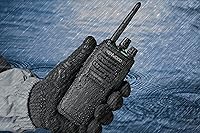
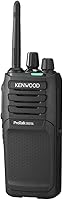
The Kenwood TK-3701D Digital Licence-Free Two-Way Radio is one of the few walkie-talkies on the market that genuinely bridges the gap between professional-grade digital communication and the simplicity of analogue, all without requiring a radio licence. Built for business environments where reliability matters — think warehouses, event venues, construction sites — this Kenwood walkie-talkie carries IP54/55 rated protection alongside full MIL-STD 810 compliance, meaning it can take a knock or get caught in a downpour without missing a beat. The price is not casual, but for teams that depend on clear, uninterrupted communication daily, the investment makes practical sense.

Features & Benefits

What sets the TK-3701D apart from most PMR446 radios is the sheer flexibility packed into its channel layout: 48 channels spread across three zones give teams the ability to segment communication without juggling multiple devices. In digital dPMR446 mode, the AMBE+2 vocoder produces noticeably cleaner audio than analogue — less background hiss, more intelligible speech even at distance. The Second PTT function is worth highlighting specifically: it lets a supervisor broadcast on one channel while keeping a separate channel active for a different team, all from the same radio. Add a 1-watt BTL amplifier into the mix and you have clear, punchy audio even on a noisy factory floor.

Best For

This digital two-way radio is a strong fit for anyone who needs professional comms without the bureaucratic overhead of a radio licence. Event management teams, warehouse supervisors, and hospitality staff coordinating across large venues will get the most out of its multi-zone channel setup. Construction and logistics crews will appreciate the rugged chassis in wet or dusty conditions. It also suits businesses currently running analogue PMR446 radios — the backwards compatibility means you can upgrade gradually rather than replacing everything at once. Where it may be overkill is for casual or occasional users; the price makes most sense for daily operational use.

User Feedback

Across roughly 66 ratings, this Kenwood walkie-talkie holds a 4-star average — respectable for a product in this category, though not universally glowing. Buyers consistently praise the audio quality in digital mode and highlight how solid the build feels straight out of the box. Setup gets positive marks too; the plug-and-play nature of licence-free operation means teams can be up and running quickly. The main grumbles centre on price — some buyers feel the cost is steep — and range, which in urban environments or buildings falls well short of the 9 km open-area maximum. Battery life generally draws positive comments, and accessory compatibility appears adequate for most use cases.

Pros

  • Dual digital and analogue modes in one device means no compromise when upgrading from older radio systems.
  • No radio licence required — teams can be operational straight out of the box with zero regulatory paperwork.
  • Audio clarity in digital mode is noticeably cleaner than typical analogue PMR446 radios, especially over distance.
  • The Second PTT function lets one operator manage two separate staff groups without carrying multiple radios.
  • IP54/55 and full MIL-STD 810 compliance makes this Kenwood walkie-talkie genuinely tough in real working conditions.
  • 48 channels across three zones gives large teams serious flexibility in how they structure communication.
  • Battery life draws consistently positive feedback from buyers, holding up well through a full working shift.
  • Plug-and-play licence-free operation removes ongoing regulatory costs that come with licensed radio systems.
  • Build quality feels premium and sturdy — buyers consistently comment that it feels like a professional tool, not a toy.

Cons

  • The price is steep and hard to justify for teams that use radios only occasionally or on a seasonal basis.
  • Real-world range in urban areas or inside buildings falls significantly short of the 9 km open-area maximum.
  • The zone and channel configuration can feel complex to new users unfamiliar with digital radio systems.
  • No mention of IP67 or higher waterproofing — it handles rain and dust but is not submersion-proof.
  • At 9.9 ounces it is heavier than basic PMR446 alternatives, which some users may notice during long shifts.
  • Accessory ecosystem is adequate but not as broad as some competing professional radio brands.
  • Buyers outside Europe should carefully check local dPMR446 frequency compatibility before purchasing.
  • The learning curve around dual-mode switching may require staff training, adding time before teams are fully operational.

Ratings

Our AI-generated scores for the Kenwood TK-3701D Digital Licence-Free Two-Way Radio were produced by systematically analyzing verified buyer reviews from multiple global markets, with spam, incentivized, and bot-generated feedback actively filtered out before scoring. Each category reflects the honest distribution of real user sentiment — the strengths are genuine, and the frustrations are not glossed over. Where this digital two-way radio consistently impresses, the scores reflect it; where buyers have run into limitations, those are captured too.
Audio Clarity
88%
In digital dPMR446 mode, buyers consistently describe the audio as noticeably cleaner and more intelligible than anything they had used on analogue PMR446 radios previously. Warehouse supervisors and event crew members specifically highlight how well speech cuts through background noise during busy operational periods.
A handful of users note that when the signal begins to drop at range, digital audio can cut out more abruptly than analogue rather than degrading gradually, which can feel jarring in the field if teams are not aware of this characteristic.
Build Quality
91%
The chassis feels immediately solid in hand — buyers coming from budget consumer radios frequently comment on the step-up in material quality. MIL-STD 810 compliance is not just a paper specification here; users working on construction sites and in logistics environments report the radio surviving regular drops and rough handling without issue.
A small number of buyers feel the plastic housing, while sturdy, does not quite match the premium price expectation aesthetically. The radio looks functional rather than refined, which matters less on a worksite but may be a consideration for hospitality environments.
Range Performance
61%
39%
In genuinely open environments — outdoor events, large open-plan warehouses, flat industrial estates — the TK-3701D performs reliably and confidently. Users in those specific settings report that range comfortably meets their operational requirements without signal drop issues.
The 9 km maximum range claim draws the most consistent criticism across reviews. In urban areas, multi-storey buildings, or sites with heavy metal structures, effective range drops significantly — often to under 1 km. Buyers who purchased expecting city-wide coverage were frequently disappointed, and this mismatch between marketing and reality is a recurring theme.
Ease of Setup
83%
The licence-free operation means there is no registration or frequency application process to navigate, which buyers appreciate enormously. Most teams report being able to unbox, charge, and begin using the radios within the same working day with minimal configuration required.
The zone and channel structure — three zones with a mix of digital and analogue channels — can confuse users who are new to digital radio systems. Some buyers note that without reading the manual carefully, it is easy to end up broadcasting on the wrong zone or mode without realising it.
Second PTT Usability
74%
26%
Users who took the time to learn the Second PTT feature genuinely found it valuable for multi-team coordination — event managers in particular highlight it as a feature that replaced the need for a second radio entirely in some workflows. Once understood, the workflow feels efficient.
The Second PTT is not intuitive for first-time users, and several reviewers admit they did not use it at all for weeks after purchase simply because the manual explanation was unclear. Without hands-on guidance or a video walkthrough, the feature can feel inaccessible.
Battery Life
82%
18%
Battery endurance draws consistently positive feedback across reviews. Users on full-day shifts — including events staff working 10-hour days and warehouse operatives on rotating shifts — report the battery comfortably lasting through their working hours without needing a mid-shift charge.
There are occasional reports of battery performance degrading noticeably after several months of daily use, which is not unusual for lithium-ion units but worth noting for teams that run radios in continuous heavy rotation. Replacement battery availability at a reasonable cost has also been flagged by some buyers.
Water & Dust Resistance
79%
21%
The IP54/55 rating holds up well in practice — buyers working on building sites or in outdoor conditions report using the radio comfortably in rain and dusty environments without any ingress issues. For most commercial use cases, the protection level is genuinely sufficient.
Some buyers assumed the IP rating indicated full waterproofing and were caught out when the radio was exposed to sustained heavy rain or accidental submersion. IP54/55 is splash and dust resistance, not immersion protection, and this distinction is not always communicated clearly at point of purchase.
Value for Money
58%
42%
For teams with a genuine daily dependency on reliable professional radio communication, the combination of digital and analogue modes, rugged build, and zero ongoing licence costs does justify the investment over a multi-year lifecycle. Buyers who made the full cost-benefit assessment tend to be satisfied.
The price is the single most polarising aspect across all reviews. Casual buyers and small operations with infrequent radio use feel the cost is hard to justify against far cheaper PMR446 alternatives. Several reviewers explicitly state they would not repurchase at this price point if given the choice again.
Channel Flexibility
85%
Having 48 channels spread across three zones gives larger teams genuine operational flexibility — different departments or work areas can operate on separate channels without interference, which buyers from hospitality and logistics backgrounds find particularly useful in daily coordination.
For smaller teams of two to four people, the channel depth is far more than they will ever need and adds unnecessary complexity to the interface. The zone structure makes the radio feel over-engineered for straightforward point-to-point communication between a small number of users.
Weight & Ergonomics
71%
29%
The radio sits well in hand and the button layout is logical for professional users familiar with two-way radio operation. The PTT button placement is comfortable for extended press-and-talk use during long operational periods.
At 9.9 ounces it is heavier than many comparable consumer-grade radios, which some users notice during long shifts when the radio is clipped to a belt or vest. A few buyers with smaller hands also found the body slightly wide for comfortable single-handed operation over extended periods.
Analogue Compatibility
81%
19%
The inclusion of a fully functional analogue PMR446 zone is a genuine practical benefit for businesses that already own analogue radios. Teams can integrate the TK-3701D into an existing fleet without forcing an immediate full replacement, which reduces the upfront cost burden of upgrading.
The analogue zone is functional but basic — it does not unlock any enhanced features compared to a dedicated analogue radio. Buyers who only intend to use analogue mode may feel they are paying a significant premium for digital capabilities they never actually use.
Accessory Availability
67%
33%
Kenwood-compatible accessories including earpieces, speaker microphones, and carry cases are available from both the manufacturer and third-party suppliers, giving buyers reasonable options for customising their setup without being locked into expensive proprietary accessories.
Third-party accessory compatibility is inconsistent, and several buyers report having to return items that were listed as compatible but did not fit correctly. Dedicated Kenwood accessories are reliably compatible but carry a price premium that adds to the overall cost of ownership.
Digital Mode Reliability
86%
In stable signal conditions, the digital mode performs with a consistency that analogue simply cannot match — there is no background hiss, no signal bleed from adjacent channels, and voice reproduction via the AMBE+2 vocoder stays natural and clear throughout a transmission.
Digital radio does not degrade gracefully at the edge of range in the way analogue does. When the signal weakens, the audio drops out in chunks or cuts entirely rather than fading gradually, which some users find more disorienting than analogue interference when working near coverage boundaries.
Charging & Power Management
69%
31%
The included lithium-ion battery is ready to go straight from the box, and most buyers report straightforward charging behaviour without unusual power management issues during the initial months of use.
Some users have raised concerns about charger compatibility when purchasing additional units, as bundle configurations vary and not all purchases include a multi-unit charging dock. Teams buying multiple radios should verify what is included in their specific bundle to avoid discovering they cannot charge all units simultaneously.

Suitable for:

The Kenwood TK-3701D Digital Licence-Free Two-Way Radio is purpose-built for businesses and operational teams that need dependable, clear communication without the hassle of applying for a radio licence. Warehouse managers, logistics coordinators, and construction site supervisors will find the rugged IP54/55-rated chassis and MIL-STD 810 compliance genuinely useful — this is a radio designed to survive the environments where most consumer walkie-talkies give up. Event production crews and large hospitality teams will particularly benefit from the multi-zone channel layout and the Second PTT feature, which allows a single operator to communicate with two distinct groups without switching devices. Small and mid-size businesses currently running older analogue PMR446 radios will also appreciate the backwards compatibility, making a phased upgrade realistic rather than a full fleet replacement. If your team relies on radio communication every single working day, the price point becomes much easier to justify.
Not suitable for:

The Kenwood TK-3701D Digital Licence-Free Two-Way Radio is not the right choice for buyers who need occasional or casual radio communication — the cost is simply too high to make sense for infrequent use. Buyers expecting the advertised 9 km range in real-world urban settings, multi-storey buildings, or dense environments will be disappointed; that figure reflects open-area ideal conditions, not a typical city block or shopping centre. Users who are not technically comfortable with channel zones and dual-mode configuration may find the setup less intuitive than a basic consumer walkie-talkie. It is also worth noting that while the radio works across Europe on licence-free frequencies, buyers outside compatible dPMR446 regions should verify local regulatory compatibility before purchasing. Finally, anyone on a tight budget looking for a capable but affordable team radio should look at simpler PMR446 analogue options that cost considerably less.
Specifications

  • Brand: Manufactured by Kenwood, a established name in professional two-way radio communications.
  • Model Number: The exact model designation is TK-3701D, also commonly referenced as TK3701D.
  • Operating Modes: Supports both digital dPMR446 and analogue PMR446 operation, switchable from a single device.
  • Total Channels: Comes with 48 preset channels in total: 32 digital channels across 2 digital zones and 16 analogue channels in 1 analogue zone.
  • Frequency Band: Operates on the UHF frequency band, which is standard for licence-free PMR446 and dPMR446 radios in Europe.
  • Max Range: Rated up to 9 km talking range under ideal open-area conditions; real-world range in built-up or indoor environments will be considerably shorter.
  • Audio Output: Equipped with a BTL amplifier delivering 1 watt of audio output, providing clear and powerful sound even in loud work environments.
  • Vocoder: Uses the AMBE+2 vocoder in digital mode, which produces natural-sounding voice reproduction with minimal transmission delay.
  • Second PTT: Includes a Second PTT button that allows the operator to communicate on a secondary channel without leaving the primary channel active.
  • Water Resistance: Rated IP54 and IP55 for protection against dust ingress and water splashes from multiple directions.
  • Military Standard: Compliant with US MIL-STD 810 revisions C, D, E, F, and G, covering resistance to shock, vibration, humidity, and temperature extremes.
  • Battery: Powered by one lithium-ion rechargeable battery operating at 7V DC, which is included in the box.
  • Dimensions: The radio body measures 2.17 x 1.38 x 5.12 inches, making it a compact but substantial handheld unit.
  • Weight: Weighs 9.9 ounces, which is slightly heavier than basic consumer PMR446 radios due to its rugged construction.
  • Licence Required: No radio licence is required for operation under dPMR446 and PMR446 regulations in Europe and compatible regions.
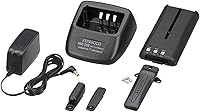
  • In the Box: The package includes the radio unit and one lithium-ion battery; buyers should confirm whether a charger is included or sold separately for their specific bundle.

Related Reviews
Motorola T803 Two-Way Radio
83%
84%
Range Performance
88%
Battery Life
78%
Bluetooth Functionality
90%
Build Quality & Durability
85%
Ease of Use
More
Baofeng AR-5RM Handheld Ham Radio
77%
93%
Value for Money
78%
Ease of Use
61%
Transmission Range
67%
Build Quality
74%
Battery Life
More
Motorola T470 Talkabout Two Way Radios
84%
88%
Range Performance
91%
Ease of Use
85%
Build Quality & Durability
83%
Weather Resistance
80%
Battery Life
More
Motorola DLR1060 Business Two Way Radios
85%
92%
Battery Life
88%
Ease of Use
75%
Range
87%
Build Quality
90%
Portability
More
Wouxun KG-805G GMRS Two Way Radio
81%
88%
Battery Life
91%
Water Resistance
75%
Communication Range
85%
Portability
70%
Ease of Use
More
BTECH DMR-6X2 PRO Two-Way Radio
87%
88%
Performance & Signal Quality
91%
Bluetooth Functionality
85%
GPS & APRS Features
83%
Battery Life
92%
Build Quality & Durability
More
Midland MXT115VP3 GMRS MicroMobile Radio
76%
78%
Transmission Range
84%
Audio Clarity
81%
Repeater Functionality
76%
Ease of Installation
79%
Build Quality
More
Motorola RMV2080 Two-Way Radio VHF 8 Channels
84%
93%
Durability
88%
Audio Quality
60%
Range
91%
Weather Alert Feature
92%
Build Quality
More
Garmin Rino 700 Handheld GPS and Two-Way Radio
83%
87%
Battery Life
91%
Communication Range
84%
GPS Accuracy
90%
Durability
88%
Ease of Use
More
BTECH GMRS-20V2 20W Mobile Two-Way Radio
83%
91%
Performance & Range
93%
Durability & Waterproofing
74%
Ease of Use
70%
Setup & Programming
82%
Battery Life
More

FAQ

No, you do not. The TK-3701D operates on the licence-exempt dPMR446 and PMR446 frequency bands, which means you can take it out of the box and start using it immediately with no paperwork or regulatory applications required. This applies across the UK, EU, and most of Europe.

Yes, it can. The radio includes a dedicated analogue PMR446 zone with 16 channels, so it will work alongside your current analogue radios without any issue. This makes it a practical choice if you want to upgrade part of your fleet to digital while keeping older units in service temporarily.

It is simpler than it sounds. The Second PTT is essentially a second push-to-talk button that lets you broadcast on a different channel from your main one. In practice, a supervisor could use the main PTT to talk to one team and the Second PTT to give different instructions to another group — all from the same radio, without switching channels manually. There is a small learning curve, but most users pick it up quickly.

The 9 km range figure is a best-case scenario measured in open outdoor conditions with no obstructions. Inside a warehouse, multi-storey building, or urban environment, you should realistically expect somewhere between 0.5 and 2 km depending on the layout, building materials, and number of floors. For most warehouse and site operations, that is still entirely workable.

It is splash and dust resistant rather than fully waterproof. The IP54/55 rating means it can handle rain, splashes, and dusty conditions comfortably, but it is not rated for submersion in water. You would not want to drop it in a bucket or leave it out in heavy, sustained rain without protection.

Battery life is one of the more positively reviewed aspects of this radio. Most users report it lasting through a full 8-hour shift under normal mixed use — a combination of standby time and regular transmission. Heavy continuous use will naturally reduce that, but for typical team communication it holds up well.

This is an important point to check before buying. The dPMR446 and PMR446 frequency bands are primarily designated for licence-free use in Europe. In the US and Australia, different frequency allocations and regulations apply. Using this radio on these frequencies outside of compatible regions may be illegal, so it is worth verifying local rules with your national communications regulator before purchasing.

Most users who have made the switch say yes, quite noticeably. The AMBE+2 vocoder used in digital mode filters out background noise and delivers cleaner, more intelligible speech — particularly useful in loud environments like warehouses or construction sites where analogue audio can sound muddy or hissy at distance.

The TK-3701D uses Kenwood-compatible accessory connectors, and a range of earpieces, speaker microphones, and headsets are available from both Kenwood and third-party suppliers. That said, compatibility can vary by connector type, so it is worth checking that any accessory is specifically listed as compatible with this model before buying.

It depends on how heavily you rely on radio communication day-to-day. For a small team that uses radios constantly across a large site — a restaurant, a small events company, a retail store with a stockroom — the features and durability make sense. If your team only picks up a radio once or twice a day, the price may be hard to justify and a simpler, lower-cost PMR446 radio would serve you just as well.