Overview

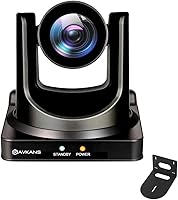
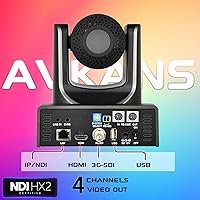
The AVKANS NDI PTZ Camera 30X sits in an interesting spot in the market — professional enough for real broadcast work, yet priced where serious institutions can actually justify the purchase without a lengthy procurement battle. It carries official NDI certification, which matters more than it sounds; not every camera claiming NDI support is listed on NewTek's verified ecosystem directory. The 1/2.7-inch Panasonic CMOS sensor delivers 1080p at 60fps, and the ability to push NDI, 3G-SDI, HDMI, and IP signals simultaneously makes it genuinely versatile for production environments where multiple destinations are the norm rather than the exception.
Features & Benefits

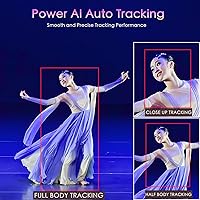
What makes this NDI PTZ camera practical for real installations is the single-cable PoE setup — run one Ethernet line and you have power, control, and network video handled at once. That alone cuts installation time significantly in venues like sanctuaries or lecture halls where cable runs are painful. The Gen-3 AI tracking handles presenter framing across full-body, upper-body, and close-up modes, and the zone tracking feature lets you define up to four distinct areas, which is genuinely useful when a speaker moves between a lectern and a whiteboard. It also speaks the right protocol languages — RTMP, SRT, RTSP — and works natively with vMix and OBS.

Best For

This streaming camera was clearly designed with fixed-installation environments in mind. Houses of worship get the most obvious value: one operator can manage a full service without touching the camera once tracking is configured. Schools and universities benefit similarly, especially in large lecture halls where a single PTZ replaces what used to require a dedicated camera operator. Corporate AV teams building PoE-based camera networks will appreciate the clean IP integration. It also makes sense for small regional broadcast studios moving toward NDI-based infrastructure, where simultaneous SDI and IP output means the camera bridges both legacy and modern signal chains without additional hardware.

User Feedback

Buyers consistently praise NDI reliability and how straightforward the single-cable setup is once the network is configured correctly — that caveat matters. A recurring honest note from users is that the initial NDI configuration has a learning curve, particularly for volunteers with limited networking experience. AI tracking accuracy gets positive marks in church and classroom settings, though a few users note it can occasionally lose a fast-moving subject. Build quality is generally well-regarded for the price tier. The tech support team draws frequent positive mentions, which is reassuring given that setup complexity is real. Overall sentiment leans strongly positive with realistic expectations around the setup process.

Pros

  • Single PoE cable handles power, control, and NDI video simultaneously, cutting installation complexity significantly.
  • Simultaneous NDI, 3G-SDI, HDMI, and IP outputs let one camera feed multiple destinations without additional hardware.
  • Official NDI certification provides confidence that network video integration will work as expected with compatible software.
  • Gen-3 zone tracking covers up to four defined areas, useful when presenters move between a podium and a screen.
  • Works natively with OBS, vMix, and Zoom — no custom drivers or workarounds required in most setups.
  • 30x optical zoom holds sharp, usable image quality even at full telephoto in large sanctuaries or auditoriums.
  • Broadcast-standard frame rates ensure clean compatibility with professional video switchers and capture cards.
  • Two-year warranty backed by a responsive technical support team that buyers describe as genuinely knowledgeable.
  • The AVKANS NDI PTZ Camera 30X covers multiple streaming protocols including SRT and RTMP for direct-to-platform flexibility.
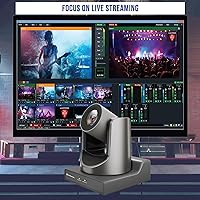
  • Pan and tilt motors are quiet enough for use in worship spaces where ambient noise during recording is a real concern.

Cons

  • NDI network configuration is not beginner-friendly and frequently requires several hours of troubleshooting for first-time installers.
  • AI tracking can lose lock on fast-moving subjects or presenters wearing low-contrast clothing against dark backgrounds.
  • Included documentation does not adequately cover SRT setup or advanced CGI control integration.
  • No 4K output limits future-proofing as venues gradually upgrade downstream production infrastructure.
  • Included mounting accessories are minimal — most installations require purchasing a separate rated bracket independently.
  • Image noise becomes noticeable in low-light or high-contrast scenes, such as candlelit events or dimly lit stages.
  • Support response times can stretch for complex firmware-level issues, which is a real risk near production deadlines.
  • At maximum zoom, building vibration becomes visible without a very rigid, vibration-dampening mount in place.
  • The overall operational refinement does not quite match higher-priced PTZ alternatives from established broadcast manufacturers.
  • Software compatibility with niche or custom broadcast platforms is inconsistent and poorly documented by the manufacturer.

Ratings

Our AI rating engine analyzed verified global buyer reviews for the AVKANS NDI PTZ Camera 30X, actively filtering out incentivized submissions and bot activity to surface what real installers, church AV teams, and production coordinators actually experienced. Scores reflect both the genuine strengths that earned this camera a loyal following and the friction points that caused headaches — nothing is glossed over. The result is a transparent snapshot of where this streaming camera excels and where buyers should go in with clear expectations.

NDI Reliability
91%
Users running multi-camera worship productions consistently report stable, low-latency NDI feeds over standard gigabit switches without dropouts. In real church deployments, operators describe leaving the camera running for hours through full services without a single stream interruption — the kind of dependability that matters when you cannot stop a live broadcast to troubleshoot.
A handful of users on older or unmanaged network switches experienced occasional NDI handshake failures, requiring a camera reboot. The camera performs best on a properly configured network, and buyers who skip that groundwork tend to blame the hardware for what is really a network issue.
Installation Simplicity
83%
The PoE implementation is a genuine time-saver in real installations. Church volunteers and school IT staff frequently mention running a single Cat6 cable from a PoE switch and having the camera powered, networked, and controllable within minutes — no electrician needed, no secondary power outlet required near the ceiling mount.
While the physical wiring is straightforward, the initial software configuration — assigning IP addresses, integrating with vMix or OBS, and setting NDI stream names — trips up users without networking backgrounds. Several buyers noted spending an afternoon troubleshooting before the first clean stream, which the product packaging does not adequately warn about.
AI Auto-Tracking Accuracy
74%
26%
In stable, well-lit environments like a church sanctuary or a university lecture hall, the Gen-3 presenter tracking does a credible job keeping a speaker centered as they move across the stage. The zone-based tracking feature adds real flexibility for venues where presenters move between multiple defined areas, like a podium and a projection screen.
The tracking system can struggle with fast lateral movement, crowded stages, or low-contrast backgrounds — a presenter in dark clothing against a dark curtain is a known weak point. A few users in school gymnasium settings reported the camera occasionally locking onto the wrong person, requiring manual override, which is frustrating mid-broadcast.
Video Output Quality
88%
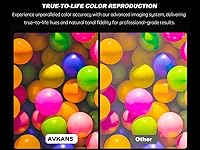
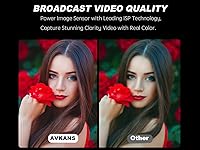
The 1/2.7-inch Panasonic CMOS sensor delivers genuinely clean 1080p footage that holds up well under the scrutiny of projection screens and broadcast monitors. Users integrating this camera into Blackmagic ATEM setups report accurate color reproduction and consistent exposure across various lighting conditions in worship and conference environments.
The sensor is 1080p only — there is no 4K output, which is increasingly a consideration as venues upgrade their downstream infrastructure. In very low light, such as candlelit ceremonies or dimly lit stages, some noise becomes visible, and the camera does not handle high-contrast scenes as gracefully as sensors found in higher-priced broadcast cameras.
Multi-Output Flexibility
93%
The ability to push NDI, 3G-SDI, HDMI, and IP outputs simultaneously is genuinely rare at this price tier and is a primary reason institutional buyers choose this camera over competitors. A small regional broadcaster can feed a legacy SDI switcher and an IP production system at the same time without any additional distribution hardware between them.
While simultaneous output works as advertised, users running all outputs at maximum quality concurrently have noted occasional latency differences between signal paths that require compensation in their switcher. This is a minor technical nuance but one that production-minded buyers should account for during system design.
Build Quality & Durability
78%
22%
The chassis feels solid for a camera in this class, and users report no issues with structural integrity after months of continuous ceiling or wall mounting. The pan and tilt motors are described as quiet enough for use in worship spaces where ambient noise is low, which is a meaningful real-world consideration.
At roughly 7 pounds, the camera requires a robust mounting solution, and the stock mounting hardware is not universally praised. A few long-term users have noted minor cosmetic wear on the outer housing after a year of use, and the overall finish does not quite match the premium feel of Japanese or European broadcast alternatives at higher price points.
Software Compatibility
86%
Out-of-the-box compatibility with vMix, OBS, and Zoom covers the vast majority of use cases for the target audience. Church AV volunteers using OBS for YouTube streaming and corporate teams using Zoom for hybrid meetings both report the camera appearing reliably as an NDI source without needing custom drivers or workarounds.
Compatibility with less common production platforms is inconsistent and poorly documented. Users working with niche broadcast software or custom CGI control systems report having to dig through forums and contact support to get things working, which is a time cost that more experienced integrators will find manageable but newcomers will find frustrating.
PTZ Control Responsiveness
81%
19%
Pan and tilt movements feel smooth and predictable when controlled via IP, and the preset recall speed is fast enough for live switching between camera positions mid-broadcast. Users running multi-camera setups with the AVKANS PTZ controller describe the system as responsive and reliable during fast-paced live events.
At maximum pan speed, there is a slight mechanical jerkiness that some users find unpolished compared to higher-end PTZ brands. Remote control latency over IP is generally low, but a few users on congested networks reported noticeable lag during live events, which is a production risk worth planning around.
Zoom Performance
87%
The 30x optical zoom is a legitimate asset in large sanctuaries and auditoriums where the camera is mounted far from the subject. Users consistently note that the image stays sharp and usable even at full telephoto, with none of the digital softening that plagues lesser optics at extended zoom ranges.
At maximum zoom in low-light conditions, image stability can suffer without a very rigid mount, as even minor building vibration becomes visible at that focal length. The zoom motor is not silent, and in quiet recording environments, a slow zoom during a recording can occasionally be picked up by sensitive nearby microphones.
Streaming Protocol Support
89%
Support for RTMP, RTMPS, SRT, and RTSP in a single device gives production teams genuine flexibility for direct-to-platform streaming without an intermediary encoder. Users pushing directly to YouTube and Facebook report clean, stable streams when the upstream network is healthy, making this a capable standalone streaming node.
SRT configuration, while supported, is not well documented in the included materials, and users who want to use it for low-latency remote production across the public internet often have to rely on community resources or support tickets rather than the official manual.
Initial Setup Experience
61%
39%
Once configured, the system runs reliably and the initial investment in setup pays off quickly in practice. Users who have deployed NDI cameras before describe the setup process as logical and consistent with industry norms for IP-based camera systems.
For first-time NDI buyers — a significant portion of the target audience — the setup experience is a genuine pain point. Network configuration, firmware updates, and NDI tool installation are not beginner-friendly, and the included documentation does not bridge that gap adequately. Multiple reviews specifically mention spending several hours on what should have been a 30-minute process.
Tech Support & Warranty
84%
The two-year warranty and lifetime tech support claim is taken seriously by the company based on buyer feedback. Users who contacted support reported relatively fast response times and staff who could actually troubleshoot technical issues rather than just reciting documentation, which is not a given at this price tier.
Support quality appears somewhat inconsistent depending on the complexity of the issue and the time of contact. A few users dealing with firmware-specific problems reported longer resolution timelines, and the support interaction is primarily asynchronous, which can be frustrating when a live production deadline is looming.
Value for Money
79%
21%
When buyers compare the simultaneous multi-output capability and NDI certification against what equivalent functionality would cost from more established broadcast brands, this NDI PTZ camera looks like a reasonable proposition. Institutional buyers with defined budgets consistently describe it as one of the more capable options available without stepping into a significantly higher spend bracket.
It is not an inexpensive camera, and buyers expecting consumer-grade simplicity at this price will feel the gap. Those who have used higher-end PTZ cameras from Sony or Panasonic note that the AVKANS PTZ cam does not quite match the operational refinement of those platforms, which matters for organizations with demanding production standards.
Mounting & Physical Setup
72%
28%
The camera dimensions are well-suited to standard ceiling and wall mount brackets commonly found in AV supply catalogs, and the weight is manageable for two-person installation without specialized lifting equipment. Users in churches report successful ceiling mounts in under two hours with standard hardware.
The included mounting accessories are minimal, and most installations require purchasing a separate heavy-duty pan-tilt head or ceiling bracket rated for the camera weight. Users who did not account for this in their initial budget found it an unwelcome additional cost after the camera arrived.

Suitable for:

The AVKANS NDI PTZ Camera 30X is built for institutional environments where reliability, remote operation, and multi-destination output matter more than portability or consumer simplicity. Houses of worship are the most natural fit — a single operator can cover an entire service hands-free once presenter tracking zones are configured, which is a genuine operational advantage for volunteer-run AV teams. School and university AV coordinators will find the PoE single-cable architecture appealing for lecture hall installations where ceiling runs are expensive and minimizing hardware is a priority. Live event producers who need to simultaneously feed a legacy SDI switcher and a modern IP-based production system will appreciate that this streaming camera handles both without extra distribution gear. Corporate AV teams building out hybrid meeting infrastructure and small regional broadcasters transitioning to NDI-based workflows are also well-served here, provided they have at least basic networking competence on staff.
Not suitable for:

The AVKANS NDI PTZ Camera 30X is not a good match for buyers expecting a plug-and-play experience out of the box. If your team has no one who understands IP addressing, managed switches, or basic network configuration, the initial setup will be a frustrating multi-hour ordeal rather than a quick install. Videographers or content creators looking for a versatile handheld or studio camera for solo productions will find the fixed-install PTZ form factor entirely wrong for their needs. Anyone requiring 4K output should also look elsewhere — this camera tops out at 1080p, and as downstream infrastructure upgrades continue across venues, that ceiling will feel limiting sooner than the hardware otherwise ages out. Budget-conscious buyers who expect consumer-grade build refinement or the operational polish of established broadcast brands like Sony or Panasonic will likely feel the gap, as this camera trades some finish for feature breadth at its price tier.
Specifications

  • Image Sensor: The camera uses a 1/2.7-inch Panasonic CMOS sensor, which delivers accurate color reproduction and consistent exposure across typical institutional lighting conditions.
  • Optical Zoom: A 30x full-glass optical zoom lens provides sharp, usable image quality across the entire focal range without the softening associated with digital zoom.
  • Max Resolution: Maximum video output is 1080p at 60fps, with broadcast-standard frame rates including 1080p59.94, 1080p50, 1080i60, and 720p59.94 also supported.
  • Video Outputs: The camera simultaneously outputs NDI HX2, NDI HX3, 3G-SDI, HDMI, and IP video, allowing multiple destinations to receive a live signal without additional distribution hardware.
  • Power over Ethernet: PoE 802.3af/at at 48V and 13W is supported, meaning a single Ethernet cable carries both network data and power to the camera.
  • Streaming Protocols: Supported streaming protocols include RTMP, RTMPS, RTSP, SRT, and CGI/HTTP, covering direct-to-platform streaming and low-latency remote production workflows.
  • AI Tracking Modes: The Gen-3 tracking system offers Presenter Mode and Zone Mode, with Zone Mode supporting up to four independently defined tracking areas within the camera's field of view.
  • Framing Options: When AI tracking is active, the camera can automatically apply full-body, upper-body, close-up, or custom framing depending on the operator's configured preference.
  • Compatible Software: The camera works natively with vMix, OBS, Zoom, Skype, and any other production or conferencing platform that supports the NDI HX protocol.
  • Audio Formats: Supported audio formats include AAC and MP3, providing compatibility with standard broadcast and streaming encoding pipelines.
  • Video Format: Recorded and captured video is encoded in MP4 format, which is broadly compatible with editing software and archiving workflows.
  • Connectivity: The camera operates exclusively over wired Ethernet, with a single Cat5e or Cat6 cable handling power, control, and NDI video simultaneously when connected to a PoE switch.
  • Item Weight: The camera weighs 7.04 pounds, which requires a mounting bracket rated for at least that load, not included in the standard package.
  • Package Dimensions: The shipping package measures 11.6 x 9.8 x 9.7 inches, accommodating the camera body and basic included accessories.
  • Warranty: The camera carries a two-year limited warranty and lifetime technical support, with an in-house support team available for installation and configuration assistance.
  • NDI Certification: AVKANS is a verified NDI-certified brand listed on the official NewTek NDI ecosystem directory, confirming protocol compliance with certified NDI tools and hardware.
  • PTZ Control: Pan, tilt, and zoom can be controlled remotely via IP using standard CGI/HTTP commands or compatible PTZ controllers, including AVKANS-branded hardware controllers.
  • PoE Standard: The camera complies with IEEE 802.3af and 802.3at PoE standards, making it compatible with most enterprise and prosumer managed PoE network switches.

Related Reviews
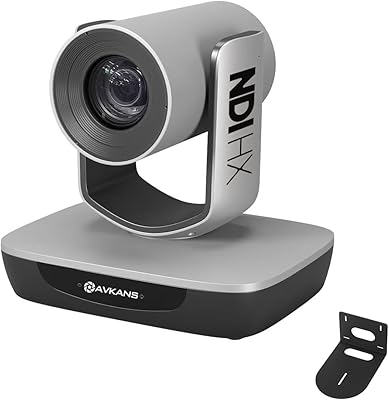
AVKANS AV-E20-NDI PTZ Camera
79%
88%
Image Quality
91%
NDI Integration
93%
Connectivity & Output Options
82%
Low-Light Performance
74%
PTZ Motor & Movement Smoothness
More
AVKANS 4K NDI PTZ Camera with AI Tracking
85%
89%
AI Tracking Accuracy
91%
Ease of Setup (PoE & NDI Integration)
88%
Video Output Flexibility (HDMI, SDI, USB, IP)
85%
Build Quality
90%
Software Compatibility (OBS, Zoom, vMix)
More
FoMaKo KN30A Pro NDI PTZ Camera
86%
94%
Video Quality
92%
AI Auto-Tracking Accuracy
89%
Low-Light Performance
90%
Build Quality
88%
PTZ Mechanism Precision
More
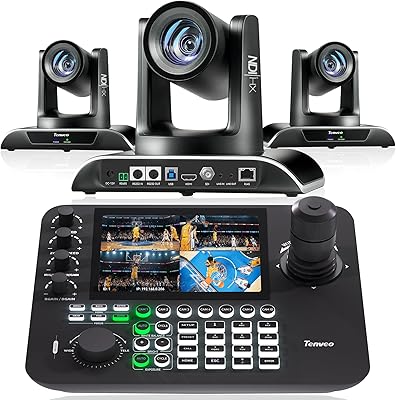
Tenveo VHD630A-NDI PTZ Camera Bundle
88%
95%
AI Auto-Tracking Accuracy
92%
Video Quality
90%
Zoom Performance
88%
Controller Usability
85%
Installation & Setup
More
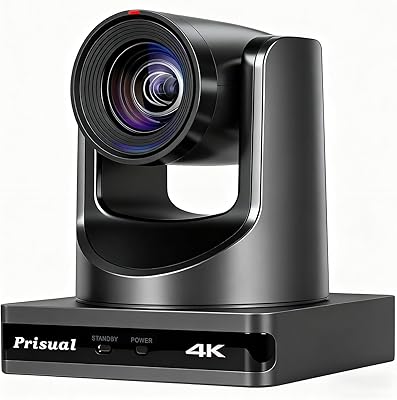
Prisual TEM-20N PRO NDI PTZ Camera
88%
85%
Performance in Low-Light
91%
Zoom Quality
88%
Setup & Installation
87%
AI Tracking Accuracy
92%
Video Output Flexibility
More
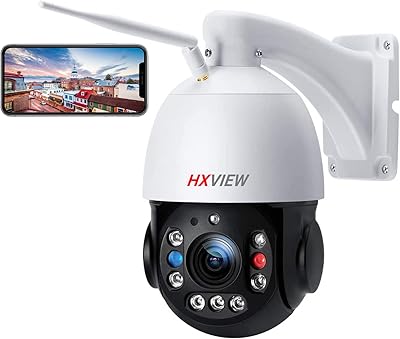
HXVIEW BU-E580 5MP PTZ Camera with 30X Optical Zoom
80%
91%
Video Quality
89%
Night Vision
72%
Ease of Setup
77%
Motion Tracking Accuracy
70%
Wi-Fi Reliability
More
Tenveo VL12U 4K PTZ Camera
83%
91%
AI Tracking Performance
88%
Image Quality (4K)
86%
Zoom Functionality
82%
Ease of Setup
85%
Field of View
More
TONGVEO 20X PTZ Conference Camera
78%
88%
Zoom Clarity & Optical Performance
93%
Setup & Ease of Use
79%
PTZ Movement & Preset Recall
86%
Video Quality at 1080p 60fps
71%
Remote Control Reliability
More
Prisual PT20X-4K PTZ Camera
90%
96%
Video Quality
94%
PTZ Smoothness
91%
Auto Tracking Accuracy
88%
Low-Light Performance
90%
Setup & Installation
More
OBSBOT Tail Air NDI
OBSBOT Tail Air NDI
77%
91%
AI Tracking Accuracy
88%
Image Quality
87%
PTZ Range & Positioning
89%
Connectivity & Protocol Support
74%
NDI Integration
More

FAQ

You need a switch that supports IEEE 802.3af or 802.3at PoE — not every switch does. Most business-grade and prosumer managed switches from brands like Netgear, Ubiquiti, or Cisco will work fine. A basic unmanaged consumer switch without PoE will not power the camera, so confirm your switch specs before installation.

Yes, simultaneous output across NDI, 3G-SDI, HDMI, and IP is a genuine feature, not a marketing claim. In practice, users run the SDI feed into a legacy switcher while the NDI feed goes to a software production platform like vMix at the same time, with no signal degradation reported between the two paths.

If you have basic networking experience, expect to spend 30 to 60 minutes on initial configuration — assigning the camera a static IP, installing the NDI Tools plugin for OBS, and locating the camera as an NDI source. If networking is new territory for you, budget a full afternoon and have the AVKANS support team on standby, as the documentation alone does not fully cover every scenario.

In stable, well-lit sanctuaries with a single presenter on a defined stage area, the tracking performs reliably enough for unattended operation throughout a full service. It handles slow to moderate lateral movement well. Where it struggles is with fast movement, low-contrast clothing against similar backgrounds, or crowded stages with multiple people — in those cases, manual override is the safer choice.

Yes, and it is a well-documented use case. The 3G-SDI output connects directly to ATEM switcher SDI inputs, and the broadcast-standard frame rates like 1080p59.94 and 1080i60 are natively recognized without conversion. Many church and event production teams specifically pair this streaming camera with ATEM Mini or ATEM Television Studio models.

For a three-camera NDI deployment, a managed gigabit switch with adequate PoE budget is the baseline requirement. NDI HX streams are relatively bandwidth-efficient compared to full NDI, but you still want a switch that can handle simultaneous gigabit throughput across all ports without bottlenecking. Ubiquiti UniFi and Netgear ProSafe lines are commonly used in installations like this.

No, it does not. The maximum output resolution is 1080p at 60fps. If your venue is planning a 4K production workflow in the near future, you should factor that into your buying decision now rather than discovering the limitation after installation.

Yes, basic PTZ control is available via IP using standard web browser CGI commands or any software that supports IP camera control, including vMix and most broadcast production platforms. A dedicated hardware joystick controller gives you a more tactile experience for live operation, but it is not required to get the camera working.

In typical use, the motors are quiet enough for worship environments and lecture halls where ambient noise provides some cover. Most users report no issues with motor noise being picked up by audience or room microphones at normal operating distances. At maximum pan speed the movement is slightly more audible, so smooth, slower preset movements are recommended for quiet recording environments.

The manufacturer offers lifetime technical support beyond the warranty period, which means configuration help, firmware guidance, and troubleshooting assistance remain available even years after purchase. The warranty covers hardware defects for two years, but the support access does not have an expiration date, which is a meaningful long-term consideration for institutional buyers who plan to run equipment for five or more years.