Overview

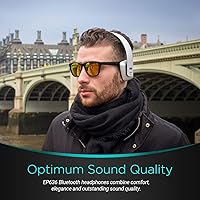
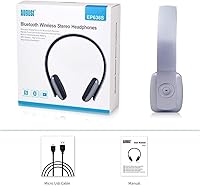
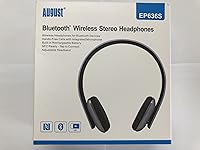
The August EP636 Bluetooth On-Ear Headphones are a budget wireless option from August, a UK-based audio brand that doesn't get much spotlight but has been quietly selling consumer headphones for years. These wireless on-ears launched back in 2014, which is worth keeping in mind — the tech world has moved fast since then, and newer competitors at similar prices now offer aptX, USB-C charging, and better drivers. That said, the EP636 still holds its own as a practical daily commuter pick. It's light at just 130g, comes in a clean silver finish, and pairs via Bluetooth 4.1 with NFC for Android users who want quick connections without digging through settings menus.

Features & Benefits

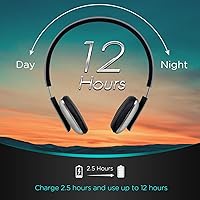
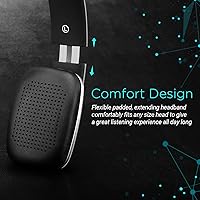
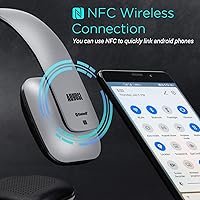
The most practical spec here is battery life — up to 12.5 hours per charge is genuinely useful for all-day commutes or study sessions, and a 2.5-hour recharge via Micro USB is reasonable, even if USB-C would have been preferred. NFC pairing works well with compatible Android devices; tap once and you're connected, which is convenient. iPhone users won't see any benefit from that feature, though. The on-cup push-button controls handle playback, volume, and calls without needing to reach for your phone. The 32-ohm dynamic drivers are tuned for casual smartphone listening, not serious audio work, and the lightweight build — ABS frame with PU ear cushions and some metal reinforcement — keeps things comfortable for moderate wear.

Best For

The EP636 makes most sense for budget-conscious commuters who want wireless audio without the overhead of a premium brand. Students and remote workers who need a headset that can handle both a playlist and a phone call will find it does that job adequately. If you primarily stream from an Android phone and have been looking for hassle-free NFC pairing, this August headset fits the bill. It's less suited to anyone who prioritises sound quality above all else, or who needs headphones for long uninterrupted listening — the on-ear fit can get uncomfortable after a couple of hours. Think of it as a reliable everyday tool, not a listening experience in itself.

User Feedback

With over 4,500 ratings and a 4.1-star average, these wireless on-ears have clearly satisfied a lot of buyers at this price point. The most consistent praise centres on easy Bluetooth pairing and the battery holding up well through full days of use. Comfort gets positive marks too, though several users flag that longer sessions — anything past two or three hours — can cause ear pressure from the on-ear design. Sound quality is the most common sticking point: it's serviceable for podcasts, calls, and casual streaming, but the bass lacks body and the overall audio feels flat compared to slightly pricier rivals. Build quality is considered fair rather than impressive, and NFC reliability has been hit-or-miss depending on the device.

Pros

  • Battery life holds up well through a full day of commuting and streaming without needing a top-up.
  • NFC tap-to-pair makes connecting to compatible Android phones quick and completely fuss-free.
  • At just 130g, the EP636 sits lightly on the head and does not feel fatiguing during moderate wear.
  • On-cup controls for playback, volume, and calls work reliably without needing to touch your phone.
  • The built-in microphone handles voice calls clearly enough for everyday use on the go.
  • Over 4,500 buyer ratings with a 4.1-star average signals consistent satisfaction at this price point.
  • The clean silver finish looks presentable and more considered than many headphones at this budget level.
  • Pairing via Bluetooth 4.1 is straightforward and stable within the 10-metre range in typical conditions.
  • Recharge time of around 2.5 hours is reasonable for the battery capacity on offer.

Cons

  • Bass response is noticeably thin, leaving music sounding flat compared to rivals at similar prices.
  • The on-ear fit creates pressure discomfort during listening sessions longer than two to three hours.
  • Micro USB charging is outdated — most competing headphones at this price have moved to USB-C.
  • NFC pairing offers zero benefit to iPhone users, removing one of the headline selling points entirely.
  • Bluetooth 4.1 lacks the audio codec support of newer versions, which limits wireless audio quality potential.
  • Build quality uses mostly plastic and feels appropriately budget-grade rather than durable or premium.
  • NFC connectivity has been reported as inconsistent by a meaningful portion of real-world users.
  • No water or sweat resistance makes these wireless on-ears a risky choice for outdoor exercise or wet commutes.
  • The product launched in 2014, and the hardware design has not kept pace with what newer budget options now offer.

Ratings

The scores below reflect an AI-driven analysis of thousands of verified global user reviews for the August EP636 Bluetooth On-Ear Headphones, with spam, incentivized, and bot-generated feedback actively filtered out before scoring. Each category is rated independently to give you an honest, granular picture of where this August headset genuinely delivers and where real buyers have run into frustration. Both the strengths and the recurring pain points are weighted transparently so you can make a fully informed decision.

Value for Money
78%
22%
For casual daily use — commuting, streaming, light study sessions — buyers consistently feel the EP636 punches above its asking price. The combination of wireless connectivity, NFC, a microphone, and solid battery life in a single affordable package earns real appreciation from cost-conscious shoppers.
That value calculation shifts when you factor in the product's age. Competing headphones at similar prices now offer USB-C, aptX audio, and improved drivers, making the EP636 feel like a tighter compromise than it once was for buyers doing their homework.
Battery Life
83%
The roughly 12.5-hour runtime is one of the standout practical strengths of these wireless on-ears, and real-world user reports broadly align with that figure under moderate volume. Commuters and students regularly praise the fact that the headset comfortably covers a full day without needing a mid-session top-up.
The 2.5-hour recharge time is acceptable but not fast by current standards, and the Micro USB port feels dated compared to USB-C alternatives. There is also no pass-through cable option, so a flat battery means no listening at all until recharged.
Sound Quality
54%
46%
For podcasts, audiobooks, casual playlist streaming, and background music during commutes, the audio output is functional and inoffensive. The dynamic drivers handle mid-range frequencies reasonably well, which keeps spoken word and vocal-led tracks sounding clear enough for everyday listening.
Bass extension is noticeably limited — music that relies on low-end punch, such as electronic, hip-hop, or bass-heavy pop, sounds flat and uninvolving. The overall soundstage lacks depth, and buyers stepping up from even moderately better headphones will likely notice the shortfall quickly.
Comfort
61%
39%
At just 130g, the EP636 sits lightly on the head and causes little fatigue during shorter listening periods of an hour or two. The PU ear cushions provide a reasonable initial softness that most users find adequate for transit or study use.
The on-ear design creates cumulative pressure on the outer ear during extended sessions, and several buyers specifically flag discomfort appearing after two to three hours of continuous wear. For all-day office or travel use, the fit becomes a genuine drawback that is hard to overlook.
Bluetooth Connectivity
72%
28%
Pairing over Bluetooth 4.1 is straightforward and the connection holds reliably stable at typical indoor distances. Most users report a consistent, dropout-free experience during commutes and everyday indoor use within the rated 10-metre range.
Bluetooth 4.1 is showing its age against newer 5.0 and 5.3 implementations found in rivals, and the lack of aptX or AAC codec support puts a ceiling on wireless audio quality. Reconnection after switching devices can occasionally require re-pairing manually.
NFC Pairing
58%
42%
When NFC works as intended on a compatible Android device, the tap-to-connect experience is genuinely quick and convenient — no menus, no searching, just tap and play. For Android-first users this is a minor but real daily quality-of-life benefit.
NFC performance is inconsistent across devices, with a meaningful portion of users reporting failed or unreliable tap connections that require falling back to manual Bluetooth pairing anyway. iPhone users receive zero benefit from this feature whatsoever, which removes one of the headline selling points entirely.
Microphone Quality
66%
34%
The built-in microphone handles everyday voice calls well enough for commuters and remote workers making standard mobile or VoIP calls. Call recipients generally report hearing the speaker clearly in typical environments, which is all most buyers at this tier need.
In noisy environments like busy transit or open-plan offices, the microphone struggles to isolate the speaker's voice effectively. It is not a suitable choice for professional podcasting, voice recording, or high-quality video call setups where clarity under noise matters.
Build Quality
59%
41%
The combination of ABS plastic, metal reinforcement, and PU cushioning gives the headset a reasonably sturdy feel for its weight class. Most buyers using these for regular commuting find the construction holds up adequately with normal daily handling.
The overall build does not feel premium and the plastic components can give a slightly hollow impression when flexed. Several longer-term users report wear on the PU cushioning and headband padding over months of regular use, suggesting the materials age faster than more robust alternatives.
Controls & Usability
74%
26%
The push-button controls on the ear cup cover the practical basics — play, pause, skip, volume, and call answering — without requiring any app or pairing beyond the initial Bluetooth setup. Most buyers find the layout intuitive after a short adjustment period.
Button feedback is functional rather than tactile, and a few users note accidental presses during repositioning. There is no companion app, no EQ customisation, and no voice assistant shortcut, which limits the headset compared to smarter rivals at only a slightly higher price point.
Portability
77%
23%
The 130g weight and relatively compact folded profile make the EP636 easy to slip into a bag or backpack without taking up significant space. The silver finish looks neutral enough to pair with most everyday outfits without drawing attention.
There is no hard carry case included in the box, which means the headphones are vulnerable to scratches and minor damage when tossed loosely into a bag. The folding mechanism is basic and does not collapse as flat as some competing on-ear designs.
Pairing Speed
69%
31%
After the initial setup, the headset reconnects to the last paired device reasonably quickly when powered on, which keeps the startup experience smooth for daily commuters who use a single phone consistently.
Switching between two different devices — for example, a phone and a laptop — requires manually disconnecting and re-pairing each time, since there is no multipoint connection support. This becomes a genuine friction point for users who regularly move audio between devices.
Noise Isolation
47%
53%
The on-ear fit does provide a minor degree of passive isolation from ambient sound, which is enough to take the edge off light background chatter in a quiet office or a relatively calm train carriage.
There is no active noise cancellation, and the on-ear seal is too loose to block out meaningful environmental noise in busy settings like underground transit, loud offices, or outdoor urban environments. Buyers expecting meaningful sound isolation will be disappointed.
Setup & Ease of Use
81%
19%
Getting the EP636 up and running takes very little effort — the Bluetooth pairing process is standard, the controls are self-explanatory, and no software installation is required. First-time wireless headphone buyers in particular find the simple setup reassuring.
The instruction documentation is minimal, and while that is rarely a problem in practice, users who encounter NFC inconsistencies or reconnection quirks have little official guidance to fall back on. The lack of a dedicated app also means there is no firmware update path if issues arise.
Compatibility
76%
24%
These wireless on-ears work with any Bluetooth-enabled smartphone or tablet, covering the full range of Android and iOS devices without restriction. The microphone and call controls function correctly across both platforms for standard voice calls.
NFC functionality is limited to Android devices only, and codec support is restricted to basic SBC, meaning audio quality is capped below what the same source file would sound like through aptX or AAC on a rival headset. Users with older Bluetooth devices may also see more pairing variability.

Suitable for:

The August EP636 Bluetooth On-Ear Headphones are a solid pick for everyday commuters who want reliable wireless audio without stretching their budget. Students who spend long hours in libraries, cafes, or on public transit will appreciate the 12.5-hour battery life keeping them going through a full day without needing to hunt for a charging point. Remote workers or anyone who regularly takes calls on the move will find the built-in microphone and on-cup call controls genuinely useful for staying hands-free. Android users with NFC-enabled phones get a particularly smooth experience — tap to pair and you are connected within seconds, which is a small but real daily convenience. If your listening habits are mostly podcasts, playlists, and occasional video streaming rather than critical music listening, the EP636 delivers perfectly acceptable audio for those tasks.
Not suitable for:

The August EP636 Bluetooth On-Ear Headphones are not the right choice for buyers who care deeply about sound quality. The dynamic drivers produce audio that is adequate for casual use but falls noticeably short when it comes to bass depth and overall sonic detail — anyone who has used a decent pair of wired or higher-end wireless headphones will likely find the sound underwhelming. The on-ear design, while lightweight, creates real pressure discomfort during extended sessions of three or more hours, making these a poor fit for long-haul travellers or anyone who wears headphones continuously throughout a workday. iPhone users will gain nothing from the NFC feature, since it is Android-only, so the pairing convenience that partly justifies this headset simply disappears for that audience. The Micro USB charging port and Bluetooth 4.1 are also dated by current standards, and buyers comparing options at this price tier today will find newer models offering USB-C, aptX audio, and more refined builds for similar or only slightly higher prices.
Specifications

  • Bluetooth Version: The headphones use Bluetooth 4.1 + EDR for wireless audio and call connectivity with smartphones and tablets.
  • NFC Pairing: NFC tap-to-connect is supported, enabling instant pairing with compatible NFC-enabled Android devices without navigating menus.
  • Battery Life: A fully charged internal lithium-ion battery delivers up to 12.5 hours of continuous audio playback.
  • Charge Time: The battery charges fully in approximately 2.5 hours via the Micro USB port.
  • Charging Port: Power is supplied through a Micro USB port, which is an older standard compared to USB-C found on newer headphones.
  • Driver Type: The headphones use dynamic drivers with a 32-ohm impedance, tuned for use with smartphones and standard portable devices.
  • Bluetooth Range: Stable wireless connection is maintained at distances of up to 10 metres from the paired source device.
  • Weight: The headphones weigh 130g (4.6 oz), keeping them light enough for comfortable daily commuter use.
  • Ear Placement: The on-ear design positions the cushioned ear cups directly against the outer ear rather than fully enclosing it.
  • Microphone: A built-in microphone is integrated into the headset to support hands-free voice calls from a connected mobile device.
  • Controls: Push-button controls on the ear cup manage music playback, volume adjustment, and call answering or ending.
  • Materials: The frame is constructed from ABS plastic and metal, with PU leather and foam sponge used for the ear cushions and headband padding.
  • Water Resistance: These headphones carry no water or sweat resistance rating and should be kept away from rain, moisture, and exercise conditions.
  • Compatible Devices: The EP636 is designed for use with Bluetooth-enabled smartphones and tablets running Android or iOS operating systems.
  • Noise Control: There is no active noise cancellation; the on-ear fit provides only passive, minimal isolation from ambient sound.
  • Frequency Response: The listed frequency response floor is 80 Hz, indicating limited sub-bass extension typical of budget dynamic drivers.
  • Item Dimensions: The packaged product measures 14.41 x 9.92 x 0.55 inches, reflecting the compact folded profile of the headphones.
  • Colour Option: The reviewed model is finished in silver with a modern aesthetic suited to everyday casual use.

Related Reviews

Wyze Headphones WNCH1 Noise Cancelling Bluetooth Over-Ear Headphones
83%
87%
Noise Cancellation
91%
Battery Life
85%
Comfort for Extended Use
78%
Bluetooth Connectivity
65%
Microphone Quality
More
Kiwi Ears Aventus
Kiwi Ears Aventus
77%
83%
Sound Quality
71%
Active Noise Cancellation
78%
Battery Life
81%
Build Quality
77%
Comfort & Fit
More
Kiwi Ears Ardor
Kiwi Ears Ardor
78%
88%
Sound Quality
67%
Active Noise Cancellation
93%
Battery Life
61%
Build Quality
82%
Comfort & Fit
More
iJoy Logo Bluetooth Over-Ear Headphones
74%
91%
Value for Money
88%
Feature Set
74%
Battery Life
67%
Sound Quality
61%
Build Quality
More
Awrotye P9 Bluetooth Over-Ear Headphones
76%
91%
Battery Life
84%
Comfort & Fit
74%
Sound Quality
61%
Microphone Quality
63%
Build Quality
More
Rockpapa E9 Over-Ear Bluetooth Headphones
83%
85%
Sound Quality
90%
Comfort for Long Use
88%
Battery Life
87%
Connectivity (Bluetooth/Wired)
75%
Microphone Performance
More
Qecnato Q77 Open Ear Bluetooth Earbuds
79%
88%
Wearing Comfort
84%
Fit Stability
67%
Audio Quality
91%
Battery Life
86%
Water & Sweat Resistance
More
QXUFV QX68 Open-Ear Bluetooth Headphones
80%
92%
Wearing Comfort
84%
Fit & Stability
74%
Sound Quality
96%
Situational Awareness
89%
Battery Life
More
Gixxted O3 Open-Ear Bluetooth Headset
77%
88%
Wearing Comfort
79%
Microphone Clarity
62%
Audio Sound Quality
83%
Dual-Device Pairing
86%
Mute Button Usability
More
Soundcore Q11i
Soundcore Q11i
76%
94%
Battery Life
83%
Bass Performance
91%
Value for Money
72%
Comfort & Fit
63%
Build Quality
More

FAQ

Yes, the EP636 pairs with iPhones via Bluetooth without any issues. The one thing worth knowing is that the NFC tap-to-pair feature is Android-only, so iPhone users will need to pair manually through their Bluetooth settings the first time. After the initial pairing it reconnects automatically, so it is only a minor inconvenience.

The August EP636 Bluetooth On-Ear Headphones produce audio that is perfectly acceptable for podcasts, streaming playlists, and casual video watching. That said, do not expect rich, punchy bass or detailed soundstaging — the dynamic drivers at this price tier keep things functional rather than impressive. If your listening is mostly background music or spoken word, you will be satisfied. Dedicated music fans or anyone used to higher-end headphones will notice the limitations quickly.

Yes, the built-in microphone and on-cup call controls make this August headset a workable option for voice calls and basic video meetings. Call quality is generally rated as clear enough for day-to-day use. It is not a studio-grade microphone, but for a Teams or Zoom call from a home office or a commute, it does the job.

They are light enough at 130g that initial comfort is good, and most people find the first hour or two fairly easy. However, because the cups sit directly on the ears rather than around them, pressure tends to build up during longer sessions. Several real-world users report noticeable discomfort after two to three hours of continuous wear, so if you are planning to wear them all day, these may not be the most comfortable choice.

It works well on most modern NFC-enabled Android phones, but a notable number of users have reported inconsistency — sometimes the tap-to-pair does not trigger first time and requires a manual Bluetooth connection instead. It is a convenient feature when it works, but it is not always dependable enough to count on every time.

The stated 12.5-hour figure is fairly consistent with what real users report under typical listening conditions at moderate volume. Heavy use or high volume will reduce that, but for most commuters and students it comfortably covers a full day. Charging takes around 2.5 hours, which is manageable overnight or during a work break.

Unfortunately, no — there is no 3.5mm auxiliary cable option on the EP636, so when the battery is flat, the headphones stop working entirely. You will need to charge them before using again. This is worth factoring in if you often forget to charge devices.

Not really. These wireless on-ears have no water or sweat resistance rating at all, so gym sessions, runs, or outdoor workouts in variable weather carry a real risk of moisture damage. The on-ear fit also tends to shift during physical activity. They are much better suited to commuting and seated listening than any form of exercise.

No, the EP636 does not support multipoint Bluetooth connection, which means it can only be actively paired to one device at a time. If you want to switch between your phone and laptop, you will need to manually disconnect from one and reconnect to the other.

It depends on your expectations. The core functionality — wireless audio, decent battery, built-in mic, NFC pairing — still works fine for everyday casual use. But the Micro USB port, Bluetooth 4.1, and budget audio tuning mean that newer headphones at a comparable price point have moved ahead in most measurable ways. If the price is notably lower than alternatives, it remains a reasonable value pick for undemanding use; just go in knowing what you are getting.