Overview

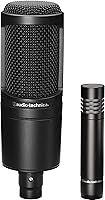
The Audio-Technica AT2041SP Studio Pack is a two-microphone bundle that gives home studio builders something genuinely useful: two complementary condensers from a brand that has earned real trust in professional audio circles. You get a large-diaphragm side-address mic paired with a small-diaphragm cardioid — two tools that cover very different recording scenarios. Both connect via XLR, which means you will need a phantom-power-capable interface to use them. That is not a knock against this studio mic bundle; it is just the reality of stepping into proper condenser territory. At its mid-range price, buying the two mics together costs noticeably less than purchasing them separately.
Features & Benefits

The two mics serve distinct purposes. The AT2020 is a large-diaphragm side-address condenser — it sits in front of you like a classic studio vocal mic, making it the natural choice for tracking vocals, podcasting, or close-miking a guitar amp. The AT2021, by contrast, is a small-diaphragm cardioid, the kind you reach for when you need precise transient capture on acoustic instruments, drum overheads, or a piano. Both share a cardioid polar pattern that rejects off-axis sound reasonably well, keeping bleed under control in less-than-perfect rooms. The 77 dB signal-to-noise ratio is solid for this price tier, and high SPL handling means neither mic will struggle with louder sources. Each comes with its own mounting hardware.

Best For

This two-mic set makes the most sense for people building out a home studio on a practical budget. Singer-songwriters who track their own vocals and acoustic guitar in the same session will get immediate mileage from having both a large and small-diaphragm option on hand. Drummers and producers recording live kits can use the AT2021 as an overhead or hi-hat mic without buying a separate small-diaphragm pair. It is also a smart step up for content creators moving from USB microphones to a proper XLR signal chain — just be prepared for that learning curve. Recording students who want to practice real mic placement techniques on different sources will find this bundle genuinely educational.

User Feedback

With a 4.6 out of 5 rating across more than 100 reviews, the AT2041SP pack has built up a pretty solid reputation. The AT2020 takes most of the praise — buyers regularly describe its vocal clarity as better than expected at this price. The AT2021 gets less attention in reviews, but users who put it to work on acoustic guitar or drum overheads tend to be pleasantly surprised. On the critical side, a few buyers were caught off guard by needing a phantom power source — that interface is not included and adds to the total cost. Some also wished XLR cables were in the box. Neither complaint reflects poorly on the mics themselves, just on pre-purchase expectations.

Pros

  • Two genuinely complementary microphones in one purchase — large and small diaphragm covered together.
  • The AT2020 delivers vocal clarity that routinely surprises buyers at this price tier.
  • The AT2021 is a quiet achiever on acoustic guitar and drum overheads, often exceeding expectations.
  • A 77 dB signal-to-noise ratio means clean recordings without fighting constant background hiss.
  • Buying this two-mic set together saves real money compared to purchasing each microphone separately.
  • Both mics include their own mounting hardware, so you can get on a stand and start recording immediately.
  • Cardioid polar patterns on both mics help control bleed in home studios that lack full acoustic treatment.
  • High SPL handling gives both microphones useful flexibility across a range of recording volumes.
  • Audio-Technica's build reputation means these mics are likely to last years of regular home studio use.
  • Works reliably with a wide range of audio interfaces, mixers, and digital recorders over standard XLR.

Cons

  • No XLR cables included — a frustrating omission that first-time buyers frequently discover too late.
  • A phantom-power-capable audio interface is required and sold separately, adding significant cost.
  • No pop filter or shock mount in the box, meaning more accessories are needed for polished vocal recordings.
  • The plastic mounting hardware feels noticeably budget-grade and can feel loose on heavier mic arms.
  • The AT2021 requires careful placement to perform well — beginners may struggle to get results quickly.
  • Neither microphone is suited for loud live environments or close-miked high-SPL sources like guitar cabs.
  • Setting up an XLR signal chain has a real learning curve for anyone coming from USB microphones.
  • The bundle packaging does not clearly communicate the phantom power requirement before purchase.

Ratings

The Audio-Technica AT2041SP Studio Pack has been evaluated by our AI system after analyzing verified buyer reviews from around the world, with spam, bot-generated, and incentivized feedback actively filtered out. The scores below reflect a honest cross-section of real-world experiences — both the things buyers genuinely love and the friction points that surface repeatedly. Strengths and shortcomings are weighted equally so you can make a fully informed decision.
Vocal Recording Performance
91%
The AT2020 consistently impresses home studio users who track vocals over an interface. Buyers describe a full, present sound that holds up well even in untreated rooms, with enough detail to sit cleanly in a mix without heavy processing.
In very reflective spaces, the cardioid pattern picks up more room sound than expected, which can require additional acoustic treatment. A handful of users found the proximity effect more pronounced than anticipated when recording up close.
Acoustic Instrument Capture
84%
The AT2021 earns real praise from singer-songwriters who point it at an acoustic guitar and are surprised by how natural the result sounds. Its small-diaphragm design captures transient detail — fingerpicking clarity in particular — that larger condensers sometimes smear.
The AT2021 is less forgiving of poor mic placement than its larger sibling, and users new to small-diaphragm condensers may need a few sessions to find the sweet spot. It is also less discussed in reviews, so there is less community guidance to draw from.
Value for Money
88%
Buying two complementary Audio-Technica condensers together at a mid-range price is a genuine deal — purchasing them separately would cost noticeably more. For home studio builders trying to cover multiple recording scenarios without breaking the budget, the math works strongly in their favor.
The bundle does not include XLR cables or a phantom-power source, so first-time buyers sometimes underestimate the true cost of getting started. Factor in an audio interface and cables and the total spend is meaningfully higher than the bundle price alone suggests.
Build Quality
82%
18%
Both microphones feel solid in hand with a metal body construction that is reassuring at this price tier. The AT2020 in particular has a reputation for holding up well over years of regular home studio use without developing handling noise or connector issues.
Neither mic feels as weighty or premium as higher-end studio condensers, and the included mounting hardware — while functional — is basic plastic construction. A few buyers noted the stand mounts feel slightly wobbly under heavier microphone arms.
Noise Floor & Signal Clarity
86%
At 77 dB signal-to-noise ratio, both mics deliver clean recordings that require minimal noise reduction in post. Users recording spoken word, acoustic guitar, and quiet vocal takes report a quiet background that lets the source material breathe without audible hiss.
At very high gain settings on budget interfaces, some users reported picking up a faint noise floor — though this is more likely an interface limitation than a microphone flaw. Users with noisier preamps will notice the difference more than those with quality interfaces.
Versatility Across Sources
87%
Having a large-diaphragm and small-diaphragm condenser in one box means you can tackle vocals, acoustic instruments, overhead drum recording, and podcasting without buying additional gear. Producers tracking a full home session find this combination genuinely practical.
Neither mic is suited to dynamic live performance or high-SPL guitar cabinet work where a dynamic mic would be safer. The bundle covers studio and near-field recording well, but buyers expecting to use these in louder, uncontrolled environments may find their limits faster.
Ease of Setup
67%
33%
The physical setup is straightforward — both mics include mounting hardware and thread onto a standard mic stand quickly. For buyers who already own an XLR interface with phantom power, getting sound in is a matter of minutes.
The setup is not plug-and-play for beginners, and this is a recurring frustration in reviews. Buyers without a phantom-power-capable audio interface cannot use either mic at all, and the packaging does not make this dependency obvious enough before purchase.
Drum Overhead Performance
78%
22%
Users who press the AT2021 into service as a drum overhead are often pleased with the result — it captures cymbal shimmer and kit air without sounding harsh. For home drummers recording scratch tracks or demo-quality audio, it holds its own against more expensive options.
Using a single AT2021 as a mono overhead is workable, but buyers wanting a stereo overhead setup will need a second matched small-diaphragm mic. The AT2021 also benefits from careful positioning over a kit, which takes experimentation for those new to overhead recording.
Podcasting & Voiceover Suitability
81%
19%
The AT2020 has built a strong reputation in the podcasting community for good reason — its side-address design and vocal-focused character suit spoken-word content well. Users recording interviews or solo shows appreciate how little post-processing is needed to get a broadcast-ready sound.
The XLR connection means podcasters need an interface or mixer in the chain, which adds cost and complexity compared to USB alternatives. Those used to USB microphones may find the added signal routing a hurdle, especially when recording remotely or on a laptop with limited inputs.
Polar Pattern Effectiveness
79%
21%
The cardioid pattern on both mics does a decent job of rejecting sound coming from behind and the sides, which matters a lot in home studios where room treatment is incomplete. Buyers recording near windows or in live-sounding rooms find it meaningfully helpful in controlling bleed.
Neither mic has an exceptionally tight cardioid rejection arc, and in very reverberant rooms the difference between cardioid and omnidirectional can feel smaller than expected. Users recording in acoustically challenged spaces will still benefit from portable baffles or reflection filters.
Included Accessories
61%
39%
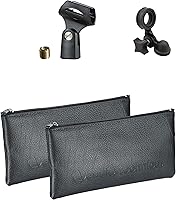
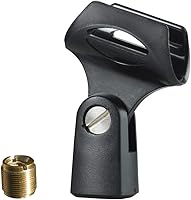
Both mics come with their own mounting hardware — a pivoting threaded mount for the AT2020 and a professional clamp for the AT2021 — which is enough to get them on a stand and recording quickly. That is more than some entry-level bundles bother to include.
The absence of XLR cables is the most commonly cited disappointment, especially for first-time buyers who assume a bundle covers everything. There are no carrying cases, no pop filter, and no shock mount — additions that rivals at a similar price sometimes manage to include.
SPL Handling
83%
Both mics tolerate high sound pressure levels better than their price would suggest, which gives them flexibility on louder sources like brass, loud acoustic guitar, or percussion. Users who have accidentally pointed them at louder-than-expected sources report no distortion at typical home studio volumes.
For very loud sources — close-miked snare or guitar cabinets pushed hard — dynamic microphones remain the safer and more purpose-built choice. The AT2021 in particular is best kept away from extremely high SPL environments where a rugged dynamic would perform with less risk.
Compatibility with Interfaces
85%
Both mics work reliably across a wide range of XLR-equipped audio interfaces, mixers, and digital recorders. Users pairing them with popular entry-level interfaces report stable, consistent performance without gain-matching or impedance headaches.
Phantom power is non-negotiable — neither mic will function without it. Budget interfaces with noisy preamps can expose the mics' sensitivity to upstream noise, so the quality of results is partly tied to what you plug them into.

Suitable for:

The Audio-Technica AT2041SP Studio Pack is built for the kind of buyer who is serious enough about recording to invest in proper XLR gear but not yet ready to spend professional-studio money on individual high-end microphones. Singer-songwriters who track their own vocals and acoustic guitar in the same session will get the most immediate value — the large-diaphragm AT2020 handles the vocal side while the small-diaphragm AT2021 takes care of the instrument, meaning you can cover a complete solo recording setup in one purchase. Home studio builders who are tired of the limitations of USB microphones and are ready to move into an interface-based signal chain will find this two-mic set a smart entry point into that world. Drummers and producers who need an affordable overhead option alongside a dedicated vocal mic will also find the bundle punches well above what individual budget mics would deliver. Recording students who want to practice real placement technique on different source types — learning when to reach for each mic type and why — will get genuine educational value out of owning both simultaneously.
Not suitable for:

The Audio-Technica AT2041SP Studio Pack is the wrong choice for anyone expecting a plug-and-play experience straight out of the box. Both microphones require phantom power delivered through an XLR audio interface or mixer — without that piece of equipment already in your setup, neither mic will produce a single sound, and that interface adds meaningful cost on top of the bundle price. Buyers who only need a single microphone for one specific task, like dedicated podcasting or a single vocal chain, will find the bundle format inefficient and may be better served by purchasing just the AT2020 on its own. Live performers who need rugged, feedback-resistant microphones for stage use should look elsewhere — condenser microphones of this type are optimized for controlled studio environments, not amplified live settings. Anyone working in a very reflective, acoustically untreated space may also struggle to get clean results without additional room treatment, since both condensers are sensitive enough to pick up unflattering room sound that a dynamic mic would largely ignore.

Specifications

  • Bundle Contents: Includes the AT2020 large-diaphragm side-address cardioid condenser microphone and the AT2021 small-diaphragm cardioid condenser microphone.
  • Connector Type: Both microphones use a standard 3-pin XLR output connector for connection to audio interfaces, mixers, or digital recorders.
  • Polar Pattern: Both the AT2020 and AT2021 feature a cardioid polar pattern, which focuses pickup on sound arriving from the front while rejecting off-axis noise.
  • Power Requirement: Both microphones require 48V phantom power supplied through the XLR connection from a compatible audio interface or mixer; no USB or battery option is available.
  • Signal-to-Noise Ratio: Both microphones are rated at 77 dB signal-to-noise ratio, delivering a clean and low-noise signal suitable for professional-quality recording applications.
  • Diaphragm Type: The AT2020 uses a large-diaphragm capsule in a side-address configuration, while the AT2021 uses a small-diaphragm capsule in an end-address configuration.
  • Package Dimensions: The retail package measures 9.5 x 9.6 x 2.6 inches and weighs 2.2 pounds, making it compact enough for easy shipping and storage.
  • Body Material: Both microphone housings are constructed from metal with a matte black finish, providing durability suited to regular home and project studio use.
  • AT2020 Mount: The AT2020 includes a pivoting, threaded stand mount that allows for precise angle adjustment on a standard microphone stand.
  • AT2021 Mount: The AT2021 includes a professional stand clamp designed for secure mounting on a standard microphone stand or overhead boom arm.
  • Compatibility: Both microphones are compatible with personal computers, laptops, audio interfaces, analog mixers, and standalone digital recorders via XLR connection.
  • Color: Both microphones and the retail packaging are finished in black.
  • Manufacturer: Both microphones are designed and manufactured by Audio-Technica, a Japanese professional audio brand founded in 1962.
  • Model Number: The bundle is sold under the model designation AT2041SP, which identifies it as the dual-microphone studio pack configuration.
  • AT2020 Design: The AT2020 is a side-address microphone, meaning sound is captured from the side of the capsule rather than the tip, similar to the orientation of a classic large-diaphragm studio mic.
  • AT2021 Design: The AT2021 is an end-address small-diaphragm condenser, meaning sound enters from the tip of the microphone, which is the standard orientation for instrument and overhead miking.
  • Discontinuation Status: As of the most recent product data available, neither microphone in this bundle has been discontinued by Audio-Technica.
  • GTIN: The bundle carries Global Trade Identification Number 00042005140039 for retail and distribution identification purposes.

Related Reviews
Audio-Technica ATH-M50x
89%
92%
Audio Accuracy
94%
Build Durability
89%
Value for Money
86%
Passive Noise Isolation
67%
Long-Term Comfort
More
Audio-Technica ATH-M40x
82%
93%
Sound Accuracy
84%
Build Quality
78%
Comfort & Fit
74%
Passive Noise Isolation
88%
Cable & Connectivity
More
Sterling Audio SP150/130 Studio Condenser Microphone Pack
82%
86%
Sound Quality
92%
Value for Money
85%
Build Quality
89%
Ease of Setup
76%
Microphone Sensitivity
More
Audio-Technica ATH-M70x
88%
96%
Acoustic Accuracy
92%
Build Durability
94%
High-Frequency Detail
88%
Noise Isolation
85%
Monitoring Flexibility
More
Audio-Technica AT-LP3XBT
82%
88%
Sound Quality (Wired)
74%
Bluetooth Audio Quality
93%
Ease of Setup
91%
Fully Automatic Operation
67%
Build Quality
More
Audio-Technica ATH-M50xWH
87%
94%
Sound Quality
89%
Build Quality
82%
Comfort for Extended Use
91%
Noise Isolation
88%
Durability of Detachable Cable
More
Audio-Technica ATH-M30x
78%
83%
Sound Accuracy
88%
Mid-Range Clarity
61%
Bass Response
72%
Comfort & Fit
74%
Build Quality
More
Audio-Technica AT-LPW40WN
82%
91%
Sound Quality
88%
Build Quality
89%
Tonearm Performance
86%
Speed Accuracy & Stability
74%
Ease of Setup
More
Audio-Technica AT-LP7 Turntable
86%
94%
Sound Quality
92%
Build Quality
80%
Ease of Setup
88%
Manual Control Experience
90%
Tracking Accuracy
More
Audio-Technica AT-LP5X
84%
93%
Build Quality
91%
Sound Quality
94%
Motor & Speed Stability
88%
Cartridge & Stylus
89%
Tonearm Performance
More

FAQ

Yes, and this is the most important thing to know before buying. Both microphones use XLR connections and require 48V phantom power, which means you need an audio interface or mixer that provides phantom power. Neither mic will produce any sound without it. You will also need XLR cables, which are not included in the box.

Use the AT2020 for vocals — its large-diaphragm, side-address design is purpose-built for that application and is the mic in this two-mic set that gets the most praise from singers and podcasters. Reach for the AT2021 when recording acoustic guitar, piano, drum overheads, or hi-hat, where a small-diaphragm condenser captures transient detail more precisely than a large-diaphragm mic typically would.

No. Both microphones are XLR-only and have no USB output. To connect them to a computer, you need an audio interface with XLR inputs and phantom power. Popular options that pair well with these mics include interfaces from Focusrite, PreSonus, and Behringer in the entry-to-mid price range.

The AT2020 in this bundle is a well-regarded podcasting microphone — it captures a full, clear vocal sound and has been used widely in that space. That said, the XLR setup adds more complexity than a USB microphone, so if podcasting is your only use case, consider whether the added interface investment makes sense for your workflow.

They will work, but you will hear the room. Condenser microphones are more sensitive than dynamic mics and will pick up reflections, background noise, and room reverb more readily. If your recording space is not acoustically treated, a portable reflection filter behind the AT2020 can help significantly, especially for vocals.

Yes, but you need an audio interface with at least two XLR inputs and two channels of phantom power to record both simultaneously. Single-input interfaces will only let you use one mic at a time. For anyone planning to record vocals and acoustic guitar at the same time, a two-channel interface is essential.

No, XLR cables are not included. This is one of the more commonly mentioned frustrations from buyers who assumed the bundle was complete out of the box. You will need one XLR cable per microphone, so budget for at least two cables in addition to your interface.

The AT2021 does not get talked about as much as its larger sibling, but buyers who actually use it on acoustic guitar and overheads tend to be pleasantly impressed. It captures detail and transient accuracy that holds up well against similarly priced small-diaphragm options. It is not a flashy mic, but it is a honest and capable one.

No pop filter is included. For vocal recording, a pop filter is strongly recommended to control plosive sounds — the bursts of air from letters like P and B that can cause low-frequency thumps in recordings. An inexpensive clip-on pop filter is a worthwhile addition if you plan to use the AT2020 for singing or voiceover work.

Both mics have a solid reputation for longevity in home studio environments. The metal body construction holds up well over years of regular use, and Audio-Technica as a brand is known for reliable build quality in this price tier. As long as you handle them with basic care — avoiding drops and storing them away from humidity — they should last you a long time.