Overview

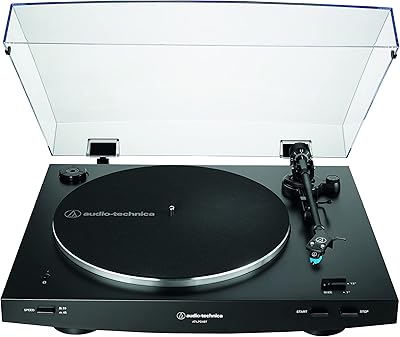
The Audio-Technica AT-LP120XUSB-BK sits in a compelling spot in the turntable market — substantial enough to satisfy serious listeners, yet accessible enough that someone transitioning from a cheap plastic deck won't feel overwhelmed. Audio-Technica has built a strong following among DJs and audiophiles for decades, and this direct-drive deck carries that reputation forward. It isn't trying to be an entry-level toy, but it also doesn't demand the reverence of a four-figure audiophile rig. One thing worth knowing upfront: fully manual operation is a core part of its identity. No auto-return, no automatic cueing. For purists, that's a feature. For casual listeners who want to press play and forget it, that's worth thinking about before buying.
Features & Benefits

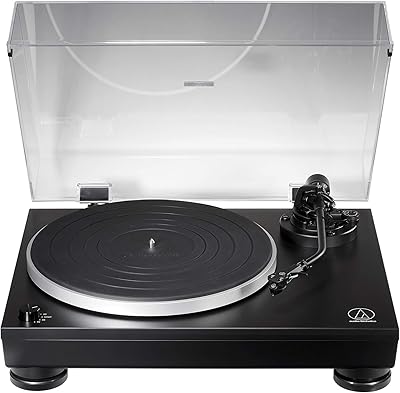
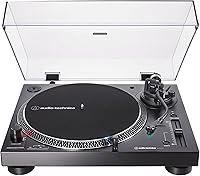
At the heart of this turntable is a direct-drive DC servo motor that keeps the platter spinning at consistent speeds — a meaningful advantage over belt-drive alternatives that can drift over time. You get selectable 33, 45, and 78 RPM playback with variable pitch control and quartz speed lock, so you can fine-tune or lock down speed precisely. The built-in phono preamp is a practical inclusion; it means you can plug straight into any receiver or powered speaker without needing a separate stage. USB output lets you record directly to a computer and archive records using free software. The S-shaped tonearm with hydraulically damped cueing feels deliberate and controlled, and the die-cast aluminum platter keeps resonance in check during playback.

Best For

This direct-drive deck is a natural fit for vinyl collectors who want to archive their records digitally without buying additional gear — the USB connection handles that job well enough for most people, though it won't replace a dedicated audio interface if high-fidelity archiving is your priority. It's also a strong upgrade choice for anyone moving up from a budget belt-drive table, where tighter speed accuracy and a sturdier build will be immediately noticeable. Home listeners without a dedicated phono stage will appreciate the built-in preamp flexibility. Manual operation suits hobbyists and hands-on listeners who enjoy being involved in the playback ritual. And given Audio-Technica's long parts history, finding a replacement stylus or cartridge down the road isn't a concern.

User Feedback

Across thousands of verified owner reviews, a few consistent themes emerge. Build quality and stability come up constantly — buyers moving from cheaper decks are often surprised by how solid it feels and how quickly it gets up to speed. Setup also earns praise; most owners report being up and running within minutes, which isn't always the case at this price point. On the critical side, the stock cartridge is generally considered adequate but not the deck's best asset — many owners swap it out after a few months and notice a clear improvement in sound. The USB recording quality draws occasional criticism as functional rather than exceptional. Still, repeat buyers and long-term owners point to lasting reliability as a core reason they'd recommend it.

Pros

  • Direct-drive motor delivers rock-solid speed consistency that belt-drive decks at this price simply cannot match.
  • Built-in phono preamp means you can connect to virtually any receiver or powered speaker without extra gear.
  • USB output lets you digitize your record collection without buying a separate audio interface.
  • Setup is straightforward for a manual turntable — most buyers are spinning records within 30 minutes of unboxing.
  • Supports 33, 45, and 78 RPM speeds, covering virtually every vinyl format you will ever encounter.
  • The hydraulically damped tonearm cueing makes lowering the needle feel controlled and precise, reducing the risk of accidental damage.
  • Excellent long-term parts availability — styli, cartridges, and accessories are widely stocked and affordable.
  • Thousands of verified buyers cite lasting reliability as a key reason they would buy this turntable again.
  • The die-cast aluminum platter keeps resonance low, contributing to a noticeably clean and stable sound floor.

Cons

  • No auto-return or automatic tonearm lift — forgetting to lift the needle accelerates stylus and record wear.
  • The stock cartridge is the deck's weakest component and often the first thing owners spend extra money replacing.
  • USB recording quality introduces audible noise floor issues that dissatisfy buyers who want high-resolution digital archives.
  • The built-in phono preamp, while convenient, loses detail compared to a quality standalone phono stage.
  • Dust cover and felt mat feel noticeably cheaper than the core hardware they are meant to protect.
  • Included RCA cable is basic and typically one of the first accessories buyers swap out for a better option.
  • A faint motor hum has been reported in very quiet listening environments with highly sensitive speaker setups.
  • Full manual operation requires initial calibration — tracking force, anti-skate, and tonearm height — that intimidates first-time turntable buyers.

Ratings

The Audio-Technica AT-LP120XUSB-BK has been stress-tested by thousands of real buyers worldwide, and the scores below reflect what they actually experienced — not marketing promises. Our AI analyzed verified global reviews, actively filtering out incentivized, spam, and bot-generated feedback, to surface honest patterns across both praise and frustration. The result is a transparent, balanced snapshot of where this direct-drive deck genuinely excels and where it leaves room for improvement.
Build Quality
91%
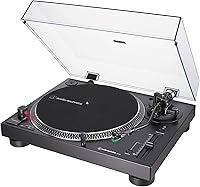
Owners moving up from entry-level decks are often caught off guard by how substantial this turntable feels. The die-cast aluminum platter, metal chassis, and overall rigidity communicate durability that holds up over years of regular use — not just unboxing day.
A small number of users noted that some external components, particularly the dust cover hinges and tonearm rest, feel slightly less premium than the core structure. It is a minor complaint, but noticeable if you are scrutinizing every detail at this price tier.
Speed Accuracy & Stability
93%
The direct-drive motor with quartz speed lock is the standout performer here. Listeners report a noticeably tighter, more consistent playback compared to belt-drive alternatives, with virtually no perceptible wow or flutter during long listening sessions.
In rare cases, users running the deck on unstable or vibration-prone surfaces reported occasional speed inconsistencies. This is more an environmental issue than a hardware flaw, but it is worth noting for buyers without a dedicated, stable setup surface.
Sound Quality
84%
For a turntable at this level, the overall analog sound reproduction is genuinely satisfying. The low-resonance platter and balanced tonearm contribute to a clean, stable signal that rewards listeners with well-recorded vinyl in their collection.
The stock cartridge is the weak link. It is functional and decent for casual listening, but seasoned ears will hear its limitations fairly quickly. Many owners report a meaningful jump in clarity and warmth after swapping to an aftermarket cartridge — an upgrade most serious users end up making.
Ease of Setup
88%
Most buyers describe getting from unboxed to first record in under 30 minutes, which is genuinely fast for a manual turntable with this many adjustable components. The included accessories and straightforward layout make the initial configuration accessible even for first-timers.
Fully manual operation means there is a learning curve for new vinyl listeners. Setting tracking force, anti-skate, and tonearm height correctly takes patience, and a few users initially struggled without prior experience — though most figured it out quickly with online guidance.
Phono Preamp Quality
76%
24%
The built-in switchable preamp is a practical convenience that removes the need for a separate unit in simpler setups. For listeners connecting to powered speakers or a basic receiver, it does the job cleanly and without obvious coloration.
Audiophiles who have heard the deck through a dedicated outboard phono stage tend to agree the built-in unit softens some detail. It is a solid all-in-one solution but not a substitute for a quality standalone preamp if critical listening is the goal.
USB Recording Quality
67%
33%
For casual archiving — transferring a record collection to MP3 or FLAC for personal use — the USB output is genuinely convenient. Paired with free software, it works without needing an additional audio interface, which many buyers appreciate for its simplicity.
The USB capture quality is functional, not exceptional. Users wanting high-resolution digital archives report that a dedicated audio interface produces noticeably cleaner results. The USB path introduces some noise floor issues that more discerning listeners find hard to ignore on quiet passages.
Tonearm Performance
86%
The S-shaped tonearm with hydraulically damped cueing feels deliberate and smooth in practice. Lowering the needle onto a record has a controlled, reassuring motion that reduces the anxiety of accidentally dropping it, which is especially appreciated by new turntable owners.
Some experienced users note the stock headshell and cartridge pairing does not fully exploit the tonearm's capability. Upgrading the cartridge reveals what this arm can actually do, which suggests the out-of-box configuration is a conservative starting point rather than the ceiling.
Cartridge & Stylus
69%
31%
The included cartridge is a reasonable starting point that gets the deck sounding good immediately. Casual listeners who play mainstream vinyl in decent condition will find it competent for everyday use without any immediate need to spend more.
It is the most commonly cited upgrade target among owners. The stylus wears at an average rate, and many buyers report replacing it within the first year of moderate use. The good news is that the upgrade path is well-documented and compatible options are widely available.
Manual Operation Experience
78%
22%
For listeners who enjoy the ritual of vinyl — placing the needle, flipping the record, being physically engaged with the music — fully manual operation is a genuine pleasure. It keeps the mechanical complexity low and the connection to the music direct.
Listeners who want the convenience of auto-return or automatic stop after a record ends will find the lack of automation frustrating. Forgetting to lift the needle at the end of a side means the stylus sitting in the run-out groove, which adds unnecessary wear over time.
Value for Money
82%
18%
Compared to similarly priced decks, the combination of direct-drive accuracy, built-in preamp, USB output, and brand reliability makes this turntable a genuinely competitive package. You are getting a lot of functional hardware without paying a luxury premium.
Budget-focused buyers will find the price meaningful, particularly once the cartridge upgrade is factored in. If the full ownership cost — deck plus a better stylus or cartridge — is considered together, some buyers feel they are pushed above their initial budget expectations.
Noise & Vibration Control
83%
The anti-resonance die-cast aluminum platter and the motor isolation do a solid job of keeping mechanical noise out of the signal path. Most users report a quiet background during playback, which lets the music come through without distracting hum or rumble.
In very quiet listening environments with sensitive speaker setups, a faint motor hum has been reported by a small number of users. It is not a widespread issue, but those running high-efficiency speakers in acoustically treated rooms may notice it occasionally.
Durability & Longevity
89%
Long-term owners are among the deck's most vocal advocates. Multiple buyers report years of consistent, trouble-free operation with no significant mechanical degradation, which speaks well of the motor and core engineering quality.
A handful of users encountered issues with specific components — tonearm bearings and the RCA output connection being the most mentioned — after extended heavy use. These are not common complaints, but they are worth keeping in mind for buyers planning very intensive use.
Accessories & Inclusions
74%
26%
The box includes everything needed to start playing records: USB cable, RCA cable, AC adapter, 45 RPM adapter, counterweight, felt mat, and a dust cover. It is a complete package that does not leave buyers scrambling for essentials.
The quality of included accessories is adequate but not impressive. The felt mat is thin, the dust cover is functional rather than sturdy, and the RCA cable is the kind most buyers replace fairly quickly. None of it is bad — it just does not match the quality of the deck itself.
Compatibility & Connectivity
87%
The switchable phono and line-level output gives this deck genuine flexibility across a wide range of home audio setups. Whether connecting to a vintage receiver, a modern amplifier, or directly to powered speakers, the AT-LP120XUSB adapts without requiring extra equipment.
PC and Mac USB compatibility is well-established, but users on some newer operating systems occasionally report driver hiccups that require minor troubleshooting. Nothing that a quick settings adjustment cannot resolve, but it adds a small friction point for less technically confident users.

Suitable for:

The Audio-Technica AT-LP120XUSB-BK is built for listeners who take vinyl seriously but haven't yet committed to a fully separates-based hi-fi setup. It's an ideal choice for intermediate buyers stepping up from a budget suitcase-style or entry-level belt-drive deck, where the jump in speed accuracy and build quality will be immediately and gratifyingly obvious. Vinyl collectors who want to archive their record libraries digitally will find the USB output a genuinely convenient bridge between analog and digital — no extra hardware needed to get started. The built-in phono preamp adds real-world flexibility, making it easy to drop into almost any home audio setup without worrying about whether your amplifier has a dedicated phono input. DJs and hobbyists who enjoy hands-on, manual control of every aspect of playback will feel right at home, and anyone who values long-term ownership — knowing that replacement styli, cartridges, and parts will still be available years down the road — will find Audio-Technica's brand depth reassuring.
Not suitable for:

The Audio-Technica AT-LP120XUSB-BK is not the right deck for everyone, and it's worth being honest about that. Listeners who want the convenience of automatic playback — auto-return, automatic tonearm lift at the end of a side, or one-touch operation — will find fully manual control more of an obligation than a pleasure, and forgetting to lift the needle after a record ends means unnecessary stylus and vinyl wear. Buyers hoping to use the USB output as a professional-grade digitizing solution may also feel underwhelmed; the capture quality is decent for personal use but falls noticeably short of what a dedicated external audio interface can deliver. Pure audiophiles who already own a quality outboard phono preamp and a high-end cartridge setup may find they are paying for built-in features they won't use. And shoppers on a tight total budget should factor in that the stock cartridge — while adequate — is frequently the first thing owners upgrade, which adds to the real cost of ownership fairly quickly.

Specifications

  • Drive Type: Direct-drive DC servo motor provides consistent platter rotation with minimal wow and flutter across all speed settings.
  • Speeds: Supports three selectable playback speeds: 33-1/3, 45, and 78 RPM, covering virtually all standard vinyl formats.
  • Pitch Control: Variable pitch control with quartz speed lock allows fine adjustment of playback speed or precise locking to exact target RPM.
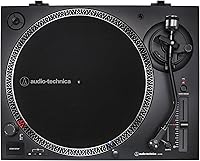
  • Tonearm: Balanced S-shaped tonearm with hydraulically damped lift control and lockable rest for controlled, safe needle placement.
  • Anti-Skate: Adjustable dynamic anti-skate control helps maintain even stylus pressure across the record groove during playback.
  • Platter: Professional-grade die-cast aluminum platter paired with a felt mat to minimize resonance and vibration during playback.
  • Phono Preamp: Built-in switchable phono preamplifier supports both phono-level and line-level output, selectable depending on the connected audio system.
  • Output: Outputs include a USB port for digital recording and a detachable dual RCA male-to-male cable for analog connection.
  • USB Compatibility: USB output is compatible with both Mac and PC, supporting vinyl-to-digital recording via Audacity or similar software.
  • Dimensions: The unit measures 13.86 x 17.8 x 5.57 inches, providing a standard footprint suitable for most shelf or rack placements.
  • Weight: Weighs 20.1 pounds, reflecting the aluminum-heavy construction that contributes to platter stability and reduced vibration.
  • Material: Primary structural components are aluminum, including the die-cast platter, which contributes to long-term durability and resonance control.
  • Operation: Fully manual operation — the user is responsible for cueing, lifting, and returning the tonearm at the start and end of each side.
  • Included Items: Package includes the turntable, USB cable, detachable RCA output cable, AC adapter, 45 RPM adapter, counterweight, felt mat, and a removable hinged dust cover.
  • Manufacturer: Designed and manufactured by Audio-Technica, a Japanese audio equipment company with decades of experience in professional and consumer turntable engineering.
  • Model Number: Official model designation is AT-LP120XUSB-BK, with the BK suffix indicating the black colorway.
  • Availability: First made available in January 2019 and remains an active, non-discontinued product in Audio-Technica's current lineup.

Related Reviews
Audio-Technica AT-LP60X
78%
94%
Ease of Setup
78%
Sound Quality
72%
Build Quality
91%
Automatic Operation
88%
Value for Money
More
Audio-Technica ATH-S120C-BK USB-C Headphones
82%
84%
Sound Quality
78%
Comfort for Long Use
91%
USB-C Connectivity
88%
Portability and Design
85%
Ease of Use (Controls)
More
Audio-Technica AT-LP3XBT
82%
88%
Sound Quality (Wired)
74%
Bluetooth Audio Quality
93%
Ease of Setup
91%
Fully Automatic Operation
67%
Build Quality
More
Audio-Technica ATH-M30x
78%
83%
Sound Accuracy
88%
Mid-Range Clarity
61%
Bass Response
72%
Comfort & Fit
74%
Build Quality
More
Audio-Technica AT-LP5X
84%
93%
Build Quality
91%
Sound Quality
94%
Motor & Speed Stability
88%
Cartridge & Stylus
89%
Tonearm Performance
More
Audio-Technica AT-LP7 Turntable
86%
94%
Sound Quality
92%
Build Quality
80%
Ease of Setup
88%
Manual Control Experience
90%
Tracking Accuracy
More
Audio-Technica AT-LPW40WN
82%
91%
Sound Quality
88%
Build Quality
89%
Tonearm Performance
86%
Speed Accuracy & Stability
74%
Ease of Setup
More
Audio-Technica ATH-M50xWH
87%
94%
Sound Quality
89%
Build Quality
82%
Comfort for Extended Use
91%
Noise Isolation
88%
Durability of Detachable Cable
More
Audio-Technica AT875R
83%
93%
Sound Rejection
94%
Form Factor & Compactness
88%
Vocal Clarity
82%
Handling Noise Reduction
86%
Build Quality & Durability
More
Audio-Technica AT-LP70XBT
81%
92%
Ease of Setup
78%
Sound Quality
74%
Bluetooth Performance
71%
Build Quality
89%
Automatic Mechanism
More

FAQ

No, you do not. The built-in switchable preamp handles that job, letting you connect directly to powered speakers or a receiver without a dedicated phono input. If you do own a quality external phono stage and prefer to use it, simply switch the output to line-level bypass mode.

Not directly — this turntable outputs via RCA or USB only, so there is no built-in Bluetooth. You would need either a Bluetooth transmitter with an RCA input or a Bluetooth-enabled receiver in between to make that connection work.

It can be, with one honest caveat: fully manual operation means you handle all the cueing yourself, which has a small learning curve. That said, setup is well-documented and most first-timers get comfortable within a few sessions. If you are committed to vinyl and want a deck that will grow with you, it is a solid starting point at this level.

Audacity is the most commonly used option and it is completely free for both Mac and PC. You can also use any other recording software that accepts a USB audio input. The turntable shows up as a standard USB audio device, so compatibility is broad.

For personal archiving and everyday listening copies, yes — it works well. If you are aiming for high-resolution, audiophile-grade digital captures, a dedicated external audio interface will give you noticeably cleaner results. Think of the USB output as a convenient option, not a professional mastering tool.

The stock cartridge is genuinely functional and not something you need to rush to replace immediately. Most owners enjoy it for months before feeling the urge to upgrade. When you do decide to swap it, the improvement in detail and warmth is meaningful — it is one of the most cost-effective upgrades you can make on this deck.

No, it does not. This is a fully manual deck, which means you need to lift the tonearm yourself when the record ends. If you regularly get absorbed in other things while listening, it is worth building a habit of checking in, since leaving the stylus sitting in the run-out groove adds unnecessary wear.

The key practical difference is speed consistency. A direct-drive motor couples directly to the platter and tends to maintain more stable RPM with less drift, especially under load. Belt-drive decks isolate motor vibration well but can lose speed accuracy as the belt ages. For most home listeners either type is fine, but direct-drive is generally preferred when consistent speed and durability under heavy use matter.

The speed is supported — 78 RPM is one of the three selectable options. However, for best results with shellac 78s you really should use a dedicated 78 stylus, since the groove geometry is different from standard vinyl. Playing shellac records with a standard LP stylus can damage both the record and the stylus over time.

Very stable, particularly compared to belt-drive alternatives. The quartz speed lock locks the motor to a precise frequency reference, so drift is minimal even during extended listening sessions. Long-term owners consistently cite speed reliability as one of the deck's strongest attributes even after years of regular use.