Overview

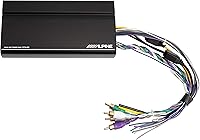
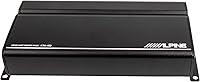
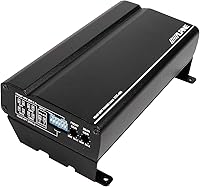
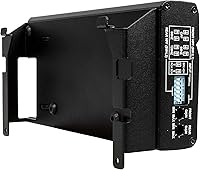
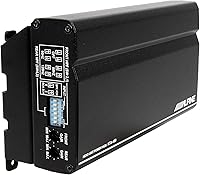
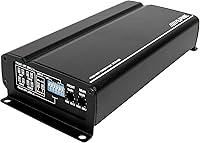
The Alpine KTA-450 4-Channel Car Amplifier comes from a brand with serious credibility in car audio — decades of it. It runs on a Class D circuit, which means it leans on efficiency rather than brute force: less heat generated, lower current draw, and a wiring job that doesn't spiral into a weekend project. At this price tier, buyers rightly expect thoughtful engineering, and this Alpine amp delivers on that front. Notably, it skips the need for a dedicated power wire to the battery, which is a real differentiator for DIY installs. Just keep in mind: this is a speaker amplifier, not a subwoofer solution.

Features & Benefits

The standout feature here is Dynamic Peak Power — Alpine's name for a circuit that senses sudden transients in music and temporarily supplies up to double the normal output. In plain terms: a sharp drum hit or a plucked bass note gets more headroom without the signal distorting or clipping. That's genuinely useful for dynamic music genres. The KTA-450 delivers 45W RMS per channel across all four outputs, with the option to bridge to 100W on two channels if your setup calls for it. At just 7 inches wide, this compact 4-channel amplifier slides under a seat or into a trunk corner without drama. Power ratings are CTA-2006 compliant, so what's printed is what you actually get.

Best For

This Alpine amp is an ideal fit if you're upgrading a stock system and want all four speakers properly driven. Head-unit outputs typically top out around 18 usable watts, so adding the KTA-450 brings a noticeable clarity upgrade without requiring any changes to your car's main electrical system. It's a natural choice for compact cars, motorcycles with audio rigs, or marine setups — anywhere limited install space is a real constraint. Audio clarity over raw volume is the priority here, so if rattling windows is the goal, look elsewhere. That said, buyers who pair this with a quality set of 4-ohm speakers will get the best of what this amp has to offer.

User Feedback

With a 4.6-star average drawn from well over 300 verified buyers, the KTA-450 has built up a track record worth paying attention to. The most consistent praise centers on improved sound clarity and a wider soundstage compared to running speakers straight off a head unit — a difference buyers describe as immediately audible. Installers frequently mention how physically manageable the unit is in cramped locations, which matches expectations given its dimensions. The honest caveat: buyers accustomed to higher-wattage amplifiers sometimes find the output underwhelming for high-volume use. This compact 4-channel amplifier is tuned for quality, not quantity. A few reviewers also note the value of verifying speaker impedance before committing — a reasonable precaution with any amplifier, not unique to this one.

Pros

  • Class D design runs cool and draws less current, simplifying the overall install significantly.
  • No new battery power wire needed — a genuine time and cost saver for DIY installs.
  • Dynamic Peak Power technology prevents clipping on loud transients, keeping audio clean at higher volumes.
  • CTA-2006 compliant ratings mean the published power specs are honest, not inflated marketing figures.
  • At under 1.5 inches tall, the KTA-450 tucks under seats or into tight trunk spaces with ease.
  • Over 370 buyers rate it 4.6 stars, with recurring praise specifically for improved soundstage and clarity.
  • Bridgeable to 100W on two channels, offering useful flexibility for different speaker configurations.
  • Alpine's long-standing reputation in car audio backs the build quality and reliability at this tier.
  • Straightforward wiring layout makes it accessible for intermediate DIYers, not just professional installers.

Cons

  • Per-channel RMS output is modest; buyers chasing high-volume performance will likely feel underserved.
  • Not suitable for subwoofer duty — bridged output lacks the headroom a demanding woofer requires.
  • Buyers with non-standard or high-impedance speakers must verify compatibility carefully before purchase.
  • No built-in DSP or remote level control, unlike some competing units at a comparable price point.
  • The no-new-power-wire advantage is irrelevant for buyers who already planned a full wiring run.
  • No wiring kit included, so budget for additional accessories to complete the install.
  • Higher-wattage 4-channel alternatives exist at similar prices for those who prioritize output above all.
  • Surface-mount design may not work cleanly in vehicles with unusually constrained or irregularly shaped spaces.

Ratings

The scores below for the Alpine KTA-450 4-Channel Car Amplifier were generated by our AI engine after processing hundreds of verified buyer reviews sourced globally, with spam, incentivized, and bot-flagged submissions actively filtered out. Each category score reflects both the consistent praise and the recurring pain points that real owners report — nothing is smoothed over or inflated. Where this amp earns strong marks and where it falls short are both represented honestly.

Sound Quality
88%
Buyers consistently report that pairing this amp with a quality set of door speakers produces a noticeably wider soundstage and cleaner midrange than any factory head unit can deliver. The DPP circuit keeps transients crisp without distortion, which comes through clearly on acoustic tracks and vocals during daily commutes.
At moderate-to-high volume, some listeners note that the modest RMS output starts to limit dynamic range, and the amp cannot fully resolve the lowest octaves without a dedicated subwoofer in the chain. It is a strong performer within its power envelope, not beyond it.
Power Output
67%
33%
For upgrading a factory system with quality 4-ohm speakers, 45W RMS per channel is genuinely sufficient for clear, distortion-free listening at everyday road volumes. The CTA-2006 compliance means those watts are honest and consistent, not the inflated peak numbers common in competitor marketing materials.
Buyers who have owned higher-wattage amplifiers frequently flag that the KTA-450 runs out of headroom faster in larger cabin vehicles or at high listening volumes. If you are chasing serious output — filling an SUV interior or competing at any level — this amp will leave you wanting more.
Build Quality
84%
The chassis feels solid for its weight class, and several installers note the component quality is consistent with what you would expect from Alpine's higher-tier lineup. The board layout is clean, connection points are robust, and nothing feels flimsy when handling or mounting the unit.
A handful of buyers mention the housing is primarily plastic rather than a full metal chassis, which is a reasonable trade-off for the compact size but raises some questions about long-term durability in high-heat environments. It is well-built for its category, just not tank-like.
Installation Ease
91%
This is one of the most consistently praised aspects — DIYers with intermediate skills repeatedly describe a clean, manageable install experience, particularly because the compact body fits under seats without clearance battles. The wiring terminals are clearly labeled and spaced well, cutting down on guesswork and frustration during the job.
A few installers working on vehicles with very limited under-seat clearance or unusually routed factory wiring report that placement still required some creative problem-solving. No wiring kit is included, so first-time installers will need to budget for cables and hardware before getting started.
Value for Money
79%
21%
At its price tier, the KTA-450 delivers honest, standardized power output, a meaningful feature in DPP, and a compact design that simplifies the install — a combination that holds up well against competitors when assessed on real-world results rather than spec-sheet wattage figures.
Buyers comparing it directly to higher-wattage 4-channel options at a similar price point may feel the per-channel output does not fully justify the cost, especially if volume and headroom are priorities. Those focused on pure output per dollar will find stronger candidates elsewhere in this price range.
Size and Form Factor
93%
The slim profile is a standout characteristic — at just over an inch tall, it disappears under a front seat in virtually any vehicle and fits in motorcycle storage compartments and marine consoles where no standard-sized amp could go. Compact car owners specifically mention how much easier this made their install compared to previous amplifiers.
The compact chassis naturally means the number of onboard controls and adjustment points is limited compared to full-size amplifiers, which some users find restrictive. Buyers who prefer direct hands-on access to gain, crossover, and bass boost controls on the amp itself will find the physical control set fairly minimal.
Thermal Performance
89%
Running a Class D circuit keeps heat generation noticeably lower than Class A/B designs, and buyers who have installed this under seats or in enclosed spaces report it stays cool during extended highway drives. That thermal efficiency also directly contributes to the amp's longevity over repeated use cycles.
A small number of users report noticeable warmth building up during prolonged high-volume sessions in tightly enclosed or poorly ventilated mounting locations. It is not a design flaw per se, but placement choices do matter — mounting in a sealed compartment with no airflow is not recommended for extended listening sessions.
DPP Technology
86%
Buyers who understand what DPP does tend to rate it highly — the ability to handle sudden loud musical peaks without clipping makes a real difference on orchestral recordings, live concerts, and anything with wide dynamic range. It effectively gives the amp a larger perceived headroom than the rated RMS figure alone suggests.
The benefit is most noticeable on dynamically varied music genres; listeners who predominantly stream heavily compressed audio may not perceive a meaningful difference from DPP in everyday use. It also does not replace the fundamental value of higher base power output for those who want more sustained volume.
Power Efficiency
87%
The ability to skip a dedicated battery power run is a genuinely practical advantage that experienced installers highlight repeatedly — it reduces install time, eliminates the need to route heavy-gauge cable through the firewall, and lowers the barrier for anyone completing this job in a driveway rather than a professional shop.
For buyers already planning a full-build install with dedicated power runs or adding multiple amplifiers, this efficiency advantage becomes largely irrelevant and may not factor into the purchase decision. The benefit is also less pronounced in older vehicles with aging factory wiring that may need attention regardless.
Wiring Layout
83%
The terminal layout is clean and logically organized, with input and output sections kept clearly separated to minimize confusion during install. Professional installers note the terminal spacing is practical even when working with thicker wire gauges in compact mounting locations, which is not always guaranteed on smaller amplifiers.
The compact chassis means input and output terminals are closer together than on a standard-sized amplifier, which can create minor cable routing challenges in very tight spaces. There are no color-coded terminals, which is a small but noticeable omission for buyers installing their first amplifier.
Speaker Compatibility
76%
24%
Optimized for the 4-ohm impedance that most aftermarket car speakers use, this compact 4-channel amplifier pairs naturally with a wide range of component and coaxial setups right out of the box. The 2-ohm capability adds a layer of flexibility for buyers who have or plan to upgrade to lower-impedance speakers down the road.
A recurring theme in user feedback is the importance of checking impedance before purchase — buyers who connected non-standard or mismatched speakers reported underwhelming performance and occasional instability at higher volumes. It handles the common cases well, but non-standard setups require extra attention during the planning stage.
Brand Reputation
92%
Alpine carries genuine credibility in the car audio market built over decades of product consistency, and buyers frequently cite the brand name as a deciding factor when choosing between similarly specced alternatives. That trust translates into confidence in warranty support, customer service responsiveness, and long-term reliability expectations.
A segment of buyers feel the Alpine name carries a price premium that is not always reflected in the hardware specs when compared directly to lesser-known competitors offering similar or greater output at lower cost. Brand loyalty has diminishing returns when buyers use raw output-per-dollar as their primary filter.
Signal-to-Noise Ratio
85%
Users consistently describe the background noise floor as impressively low — connecting quality speakers reveals a clean, quiet signal that lets subtle musical details come through clearly, which is particularly noticeable on acoustic recordings and low-volume late-night listening where hiss or hum would be immediately apparent.
A small number of installers report that improper grounding during installation introduced audible hum into the signal chain, though the consensus points to installation technique rather than the amp itself as the source. Ground loop issues are a universal car audio challenge that require careful attention to grounding points regardless of which amplifier is used.
Bridging Flexibility
71%
29%
The bridging option opens up a useful 2-channel configuration that doubles per-channel power, giving buyers some adaptability when priorities change or when they want to focus output on a more limited speaker setup with added punch for front-stage priority listening.
The 100W bridged output into 4 ohms is insufficient for buyers hoping to run a subwoofer from this amp, and several users discovered this limitation only after completing their install. Anyone planning a bridged subwoofer configuration would be better served by a dedicated mono amplifier from the start.

Suitable for:

The Alpine KTA-450 4-Channel Car Amplifier is built for the listener who wants a meaningful upgrade from head-unit-only power without committing to a complex, invasive install. If you drive a compact car, a motorcycle with a saddlebag speaker setup, or a small boat, the amp's slim form factor makes it far easier to place than a full-size unit. It's an especially strong fit for anyone upgrading factory door speakers to a quality set of 4-ohm component or coaxial speakers and wanting the clean, dynamic sound they deserve. DIYers who dread the prospect of running a new power cable from the battery will appreciate that this amp's Class D efficiency makes that step unnecessary. It also suits the audiophile-leaning listener who values musical detail and transient accuracy over sheer volume — the kind of person who notices the difference between clean amplification and distortion on a quiet passage.

Not suitable for:

The Alpine KTA-450 4-Channel Car Amplifier is not the right tool if your primary goal is maximum output — buyers who want to fill large vehicles with concert-level volume will quickly find the per-channel power modest compared to higher-wattage alternatives at a similar price. It's also not a subwoofer amp; bridging two channels gives you 100W per side, which isn't enough to drive a demanding woofer properly. If your vehicle already has a complex electrical setup and you were planning to run dedicated power cables anyway, the efficiency advantage essentially disappears as a selling point. Buyers with high-impedance or non-standard speaker setups should verify compatibility carefully, as performance is optimized for 4-ohm loads. If you're after a single amplifier that handles both full-range speakers and a sub, this isn't it — a separate mono block would still be needed for that role.

Specifications

  • Brand: Manufactured by Alpine, a brand with decades of established presence in the car audio industry.
  • Model Number: This amplifier is designated model KTA-450.
  • Amplifier Class: Uses a Class D amplifier circuit, prioritizing power efficiency and reduced heat generation over traditional Class A/B designs.
  • Channels: Operates as a 4-channel amplifier, capable of independently driving up to four speakers simultaneously.
  • 2-Ohm Power: Delivers 45W RMS per channel when driving 2-ohm speaker loads across all four channels.
  • 4-Ohm Power: Delivers 50W RMS per channel when driving 4-ohm speaker loads across all four channels.
  • Bridged Power: Can be configured as a 2-channel bridged amplifier, producing 100W RMS per channel into a 4-ohm load.
  • Total Output: Rated at 200W total combined output power across all channels.
  • Dimensions: Measures 7″W x 1-3/8″H x 3-9/16″D, making it notably compact relative to other 4-channel amplifiers in its output class.
  • Weight: Weighs 1.1 pounds, light enough for under-seat or concealed mounting without structural concerns.
  • Operating Voltage: Designed to operate at a standard automotive 14.4V DC supply voltage.
  • Mounting Type: Uses a surface-mount design, allowing flexible placement on flat surfaces throughout the vehicle interior.
  • Key Technology: Incorporates Alpine's Dynamic Peak Power (DPP) technology, which temporarily supplies up to double the rated output during sudden loud musical transients to prevent clipping.
  • Compliance: Power ratings are CTA-2006 compliant, meaning they are independently standardized and reflect real-world output rather than inflated peak figures.
  • Power Wiring: The Class D circuit's efficiency is low enough that no dedicated new power wire run from the vehicle battery is required for standard installation.

Related Reviews
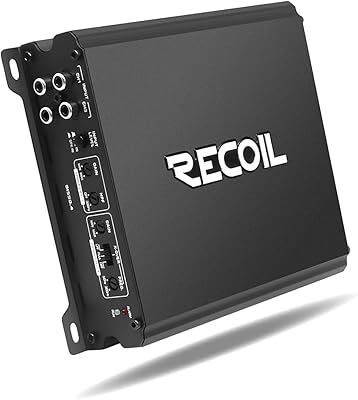
Recoil REA600.4 4-Channel Car Audio Amplifier
84%
89%
Audio Performance
91%
Ease of Installation
85%
Sound Quality at High Volumes
62%
Heat Management
90%
Power Output
More
Recoil DI800.4 4-Channel Car Amplifier
75%
88%
Value for Money
51%
Power Accuracy
63%
Build Quality
79%
Thermal Management
86%
Ease of Installation
More
Recoil DI550.4 4-Channel Car Audio Amplifier
74%
91%
Value for Money
78%
Power Output
86%
Ease of Installation
74%
Sound Quality
67%
Build Quality
More
Planet Audio AC2400.4 4-Channel Car Amplifier
84%
95%
Power Output
89%
Sound Clarity
87%
Bass Performance
82%
Ease of Installation
65%
Thermals/Heat Management
More
Planet Audio PL1600.4 4-Channel Car Amplifier
72%
88%
Value for Money
84%
Ease of Installation
74%
Sound Quality
58%
Power Output (Real-World)
61%
Build Quality
More
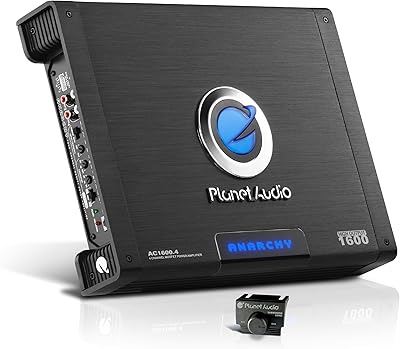
Planet Audio AC1600.4 Anarchy Series 4-Channel Car Amplifier
82%
94%
Power Output
88%
Sound Quality
70%
Ease of Installation
92%
Value for Money
85%
Build Quality
More
Soundfy SA 400.4 4-Channel Car Amplifier
71%
78%
Value for Money
72%
Sound Quality
63%
Power Output
58%
Build Quality
81%
Thermal Management
More
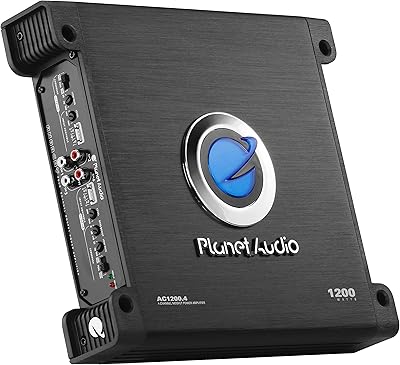
Planet Audio AC1200.4 4-Channel Car Amplifier
73%
88%
Value for Money
67%
Power Output
83%
Installation Ease
74%
Sound Quality
61%
Build Quality
More
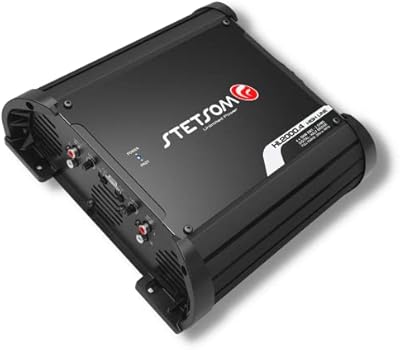
Stetsom HL 2000.4 2-Ohm 4-Channel Car Audio Amplifier

87%
93%
Power Output
85%
Cooling System Efficiency
88%
Sound Quality
91%
Ease of Installation
82%
Durability
More
Hifonics BXX800.4 Brutus 800W RMS 4-Channel Car Audio Amplifier
86%
88%
Sound Quality
92%
Power Output
85%
Build Quality
72%
Heat Management
89%
Ease of Installation
More

FAQ

That's correct for most standard installs — the Class D design draws little enough current that the KTA-450 can typically work with your existing wiring without a dedicated run. That said, it's still worth confirming that your existing wire gauge is adequate for your specific setup and install location. When in doubt, check the amp's fuse rating and cross-reference with a wire gauge chart.

It's Alpine's name for a circuit that detects sudden loud moments in music — a sharp snare hit, a bass guitar attack, a horn burst — and briefly supplies up to double the normal output to handle the peak cleanly. Without it, those transients can cause the amp to clip, which sounds harsh and puts unnecessary stress on your speakers. In everyday use, it means the amp stays composed and clean during dynamic musical passages even at moderate volumes.

Technically yes — you can bridge two channels together for 100W into a 4-ohm load — but this amp was not designed with subwoofer duty in mind. For a dedicated sub, a mono amplifier will give you significantly more headroom, better low-frequency control, and a built-in subsonic filter. This compact 4-channel amplifier really shines when it's focused on powering full-range door or dash speakers.

For most people, absolutely yes. Factory head units typically deliver around 15 to 18 usable watts per channel before distortion becomes noticeable, so jumping to clean, CTA-2006-certified power with this amp produces a clearly audible difference in clarity, dynamics, and detail. Just be realistic: if your goal is concert-level volume that fills a large SUV, you'll want an amp with higher headroom.

It performs best with 4-ohm speakers, which is also the most common impedance for aftermarket car speakers, so compatibility is rarely an issue for standard builds. The amp will also handle 2-ohm loads, though per-channel power drops slightly. Before wiring anything up, confirm your speakers' rated impedance — mismatched loads are one of the most common causes of poor performance or thermal issues in any amplifier.

The wiring layout is clean and well-labeled, and the compact dimensions remove a lot of the physical headaches that come with larger, heavier units. Someone with basic electrical knowledge can typically work through it with patience. If you've never installed a car amp before, watching a walkthrough video specific to 4-channel installs is well worth the hour — and always double-check your polarity before powering up.

Under a front or rear seat is the most popular choice, and the unit's slim profile clears most seat-track rails without any modification. Trunk side panels, behind kick panels, and even under the dashboard in certain vehicles are also common options depending on the car. Wherever you mount it, make sure there is reasonable airflow around the unit — it runs cool, but a fully sealed enclosure is not ideal for any electronics over extended use.

The compact 4-channel amplifier is genuinely popular in powersports and marine contexts because of its small footprint and low current draw. However, it does not carry a marine or IP-rated waterproof certification, so it needs to be protected from direct moisture and saltwater exposure. Mounting it inside a protected compartment or enclosure is the standard approach for those applications.

Class D amplifiers are notably more efficient than Class A/B designs, converting more of their input power into audio output rather than wasted heat. Under normal listening conditions, the KTA-450 stays considerably cooler than comparable traditional amplifiers. Prolonged high-volume use in a poorly ventilated space can still cause warmth to build up, so placing it somewhere with reasonable airflow is always a sensible precaution.

No wiring kit is included in the box. You'll need to source RCA cables, speaker wire, a power wire, a ground wire, and a remote turn-on wire independently. Picking up a bundled wiring kit matched to the amp's current draw is an easy way to keep the install clean and avoid guessing on wire gauges. This is standard practice for amplifiers across the board, not something unique to this model.

Where to Buy