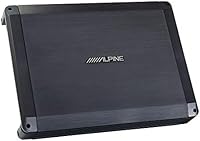
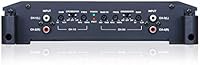
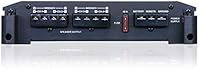

Overview

The Alpine BBX-F1200 4-Channel Car Amplifier sits in an interesting spot in the market — it carries the Alpine name, which has meant something in car audio for decades, without the price tag that usually comes with it. Unlike many amps competing at this tier that rely entirely on Class D designs, this Alpine amp uses a Class A/B topology, which tends to deliver cleaner sound at moderate listening levels. The 4/3/2 channel flexibility means you can run it in multiple configurations depending on what your system needs. The aluminum alloy chassis helps manage heat while keeping the footprint manageable. Just be clear-eyed going in: this is a value-oriented unit, not a reference-grade amplifier.

Features & Benefits

The BBX-F1200 runs off a MOSFET PWM power supply, which is worth highlighting because MOSFET-based designs draw current more efficiently and tend to stay stable as your vehicle's electrical system fluctuates — a real concern if your alternator isn't in peak condition. Built-in high and low pass crossover filters let you assign frequency ranges to the right drivers, so your tweeters aren't straining to reproduce bass they were never designed for. There's also a bass EQ boost on board, which means you can add low-end punch without wiring in a separate equalizer. The thermal management system actively monitors temperature and scales back output before anything gets damaged during extended high-volume use.

Best For

This 4-channel amplifier is a natural fit for first-time amp installers who are stepping up from a stock head unit and want a straightforward upgrade without a complex multi-amp setup. If you're running a pair of door speakers plus a subwoofer from a single unit, the flexible channel configuration handles that cleanly. The compact dimensions — just over 11 inches long — make it workable in tight spots behind a rear seat or under a dash where a larger amp simply won't fit. It also suits budget-focused buyers who want brand-backed reliability rather than rolling the dice on an off-brand unit with impressive-looking spec sheets but questionable real-world build quality.

User Feedback

Owners of this Alpine amp tend to agree on a few things. On the positive side, many mention that it puts out clean, stable power at everyday listening volumes — not ear-splitting concert levels, but the kind of volume most drivers actually use on a daily commute. Installation gets consistent praise for being approachable, though several buyers recommend not skimping on wiring gauge, since underpowering the amp at the supply end limits performance noticeably. The heat issue is real: a handful of users report the unit runs warm during prolonged high-volume sessions, which is worth factoring into your mounting location. On value, most buyers feel the Alpine name delivers where off-brand alternatives tend to fall short — consistency and longevity over time.

Pros

  • Class A/B design delivers cleaner audio reproduction than the Class D-only amps common at this price point.
  • Flexible 4/3/2 channel configuration means one unit can handle a full speaker-plus-subwoofer setup.
  • MOSFET power supply keeps current draw efficient and stable even when your vehicle electrical system dips.
  • Built-in high and low pass crossover filters remove the need for a separate active crossover in simple systems.
  • Onboard bass EQ boost adds real low-end punch without purchasing or wiring in a separate equalizer.
  • Compact aluminum chassis fits in tight install spots where many competing amps simply will not go.
  • Wide 11V to 16V operating range means the BBX-F1200 handles real-world voltage swings without dropping out.
  • Alpine brand reliability gives buyers confidence in long-term durability that off-brand alternatives rarely match.
  • Thermal protection system actively prevents damage during unexpectedly long high-volume listening sessions.
  • Straightforward wiring layout makes this one of the more approachable first-amp installs for a DIY setup.

Cons

  • Runs noticeably warm under sustained high-volume use, so ventilated mounting placement is not optional.
  • Real-world output may feel modest to buyers expecting maximum-rated wattage from a typical 12V car circuit.
  • Not well-suited as the sole power source for a high-demand subwoofer that needs dedicated, high-current amplification.
  • Gain calibration is sensitive — setting it by ear rather than with a meter often leads to distortion before clipping.
  • Using undersized power and ground wiring noticeably chokes performance, and the manual guidance on this is minimal.
  • No remote bass control included in the package, which is a common convenience feature on competing units.
  • Bridged output mode reduces available channels significantly, limiting system expansion without adding a second amp.
  • Build quality feels appropriate for the price tier but lacks the premium tactile feel of Alpine's higher-end lineup.

Ratings

Our AI rating system analyzed thousands of verified owner reviews for the Alpine BBX-F1200 4-Channel Car Amplifier from buyers worldwide, actively filtering out incentivized, duplicate, and bot-generated feedback to surface what real drivers actually experience. The scores below reflect a balanced picture — genuine strengths are credited fairly, and recurring pain points are captured without sugarcoating.

Sound Quality
83%
At everyday commuting volumes, owners consistently describe the audio as clean and controlled — noticeably better than what a factory head unit delivers on its own. The Class A/B design earns its keep here, producing a warmer, more natural midrange than budget Class D alternatives at similar price points.
Push the BBX-F1200 toward its upper limits and the sound starts to harden, with some listeners noticing a loss of detail in the upper frequencies. It is not a reference-grade amplifier, and buyers expecting flagship-level clarity will find the ceiling arrives sooner than they would like.
Power Delivery
76%
24%
For a typical two-way speaker setup paired with a modest subwoofer, the power on tap feels adequate and consistent during normal driving. The MOSFET power supply keeps delivery stable even when the engine is idling and the vehicle voltage dips slightly below nominal.
Real-world output falls short of the rated ceiling in most practical installations, which is common across the industry but still catches some buyers off guard. Drivers who stress-tested it with demanding speakers reported that headroom runs thin before distortion creeps in.
Build Quality
79%
21%
The aluminum alloy chassis feels solid and purposeful — not a flimsy plastic shell. Connectors are firm, labeling is clear, and the overall assembly gives the impression of a unit that will survive years of temperature cycling inside a vehicle.
Compared to Alpine's higher-end amplifier lines, the finish feels utilitarian rather than premium, and a handful of owners noted minor inconsistencies in terminal tightness out of the box. It is built well for the price tier, but the gap versus Alpine's flagship build quality is noticeable up close.
Thermal Management
67%
33%
The onboard thermal protection system does its job reliably — most owners report it has prevented any heat-related failures even in warmer climates. For buyers who mount it somewhere with reasonable airflow, sustained listening sessions at moderate volume cause no noticeable issues.
The amp runs genuinely warm under sustained high-volume use, and in enclosed or poorly ventilated mounting spots, the thermal protection throttles output in a way that is hard to ignore. Several owners discovered this the hard way after mounting it in a sealed rear compartment during summer.
Ease of Installation
88%
The compact footprint and clearly labeled terminals make this one of the more approachable amplifier installs for a first-timer. Many owners with no prior experience report completing a clean install in an afternoon, appreciating that the layout does not require decoding a confusing wiring diagram.
The included documentation is thin on practical guidance, particularly around gain setting and wiring gauge recommendations — two areas where getting it wrong has audible consequences. Buyers who did not already know to use at least 4-gauge power wiring occasionally reported underwhelming performance until they corrected it.
Channel Flexibility
86%
The ability to switch between 4-channel, 3-channel, and 2-channel configurations is a genuine practical advantage that lets one unit cover a range of system layouts without buying additional hardware. Owners running front and rear speakers alongside a subwoofer particularly value the 3-channel bridged mode.
Bridging all four channels simultaneously is not supported, which limits options for buyers who want to push maximum output into two speakers. The configuration flexibility is real, but it has boundaries that more advanced installers will bump into fairly quickly.
Crossover Performance
81%
19%
Having both high-pass and low-pass filters built in removes the need for an external crossover in simpler setups, and owners report that the filters are effective at protecting tweeters from bass frequencies that would otherwise stress them. The tuning range covers the most common cut points for typical aftermarket speakers.
The crossover controls lack the precision of a dedicated active crossover unit — adjustments are made by feel rather than by measured frequency points, which makes dialing in an optimal setting more of an iterative process. Audiophiles who want exact crossover slopes will find these filters too coarse.
Bass EQ Boost
74%
26%
For buyers who want noticeably more low-end presence without adding a separate equalizer to the chain, the built-in bass boost is a convenient and effective shortcut. On tracks with prominent basslines, the difference is audible and satisfying at moderate gain settings.
Cranking the bass EQ too far introduces audible distortion in the low frequencies before the amp's overall volume ceiling is reached, so there is a practical limit to how much useful boost you can actually apply. It works best as a subtle enhancement rather than a substitute for proper subwoofer tuning.
Value for Money
82%
18%
The combination of Alpine's quality control and a genuinely approachable price point makes the BBX-F1200 a compelling option for buyers who want brand reliability without committing to a flagship budget. Owners who compared it directly to cheaper off-brand alternatives generally felt the sonic and build consistency justified the difference.
Buyers who compare it upward — against mid-tier amplifiers from Alpine or competing brands with similar price tags — sometimes find the value equation less clear. At its price, it competes in a crowded segment where spending slightly more can yield a noticeably more capable amplifier.
Compatibility
85%
The wide 11V to 16V operating range means this Alpine amp works reliably across a broad range of vehicles, including older cars with less stable electrical systems. High-level input support allows connection to factory head units without requiring an additional line output converter in most cases.
Pairing it with a high-impedance factory head unit using only high-level inputs can introduce a mild background noise floor, which a small number of owners found distracting on quiet passages. A proper line output converter resolves this, but that is an extra component and cost that the packaging does not acknowledge.
Footprint & Fitment
89%
At just over 11 inches long and barely 2 inches tall, this 4-channel amplifier fits under seats and in shallow dash cavities where larger units cannot go. Owners with compact cars and SUVs with limited trunk space specifically call out the dimensions as a deciding factor in their purchase.
The width at just under 9.5 inches can still be a constraint in very narrow under-seat channels, particularly in smaller hatchbacks and sedans with structural reinforcements running beneath the rear seats. A small number of buyers had to fabricate custom mounting brackets to make the install work cleanly.
Long-Term Reliability
78%
22%
Many owners report using their BBX-F1200 for multiple years without hardware failures, which is consistent with Alpine's general reputation for building electronics that outlast the vehicles they are installed in. The thermal protection system appears to have prevented premature failures in units that were used aggressively.
A minority of owners reported unit failures within the first year, most often traced back to poor ventilation or undersized wiring rather than inherent defects — but the absence of clear installation warnings in the documentation makes these self-inflicted failures more common than they should be.
Signal-to-Noise Ratio
73%
27%
Under normal operating conditions with a properly matched source unit, background hiss is low enough that it is inaudible between tracks at typical listening volumes. Owners who used quality RCA cables and kept signal runs short generally reported a clean, quiet noise floor in practice.
In systems with longer RCA runs or less-than-ideal grounding, a faint background hiss can surface at higher gain settings. It is not an unusual characteristic for an amp at this price tier, but it is a reminder that the signal chain quality around the amp matters as much as the amp itself.

Suitable for:

The Alpine BBX-F1200 4-Channel Car Amplifier is a strong match for drivers who are making their first real upgrade beyond a factory stereo and want a trustworthy brand backing that purchase. If you are running a modest system — say, a pair of front door speakers, rear fills, and a single subwoofer — the flexible channel configuration lets you power all of it from one unit without needing a second amp. DIY installers with limited mounting space will appreciate the compact footprint, since it tucks behind a seat or under a dash without the wrestling match that larger units require. It also suits budget-minded audio fans who understand that brand heritage matters: Alpine has been engineering car audio gear long enough that even their entry-level products carry design discipline that cheaper off-brand alternatives often skip entirely. If your goal is noticeably better sound than stock without a complicated multi-component install, this 4-channel amplifier delivers that in a practical, no-fuss package.

Not suitable for:

The Alpine BBX-F1200 4-Channel Car Amplifier is not the right tool for serious audio enthusiasts who are building a high-output system designed to push speakers hard for extended periods. Users who regularly listen at maximum volume for long stretches will find the thermal management system doing its job a little too noticeably — the amp runs warm under sustained load, and in a poorly ventilated install location, that becomes a real concern rather than just a footnote. It is also not the right choice if you need dedicated, high-current power for a demanding subwoofer; a purpose-built mono amplifier will serve that role far better than bridging this unit. Audiophiles chasing the cleanest possible signal path at reference listening levels should look further up the product ladder, as this is a value-tier amp and its noise floor and distortion figures reflect that honestly. Finally, anyone planning a complex multi-zone or competition-grade setup should budget for separates rather than expecting one amp to do everything at a high level.

Specifications

  • Amplifier Class: Uses a Class A/B design, which prioritizes audio cleanliness at everyday listening levels over the raw efficiency of Class D alternatives.
  • Channel Config: Operates in 4-channel, 3-channel, or 2-channel modes, giving installers flexibility to match different speaker and subwoofer configurations.
  • Total Output: Rated at 600W total system output across all channels under standard test conditions.
  • Power Supply: MOSFET-based PWM DC-DC power supply regulates voltage efficiently and maintains stable output as vehicle electrical conditions fluctuate.
  • Voltage Range: Operates between 11V and 16V DC, with a nominal 12V input suited to standard automotive electrical systems.
  • Thermal Protection: Onboard thermal management control monitors internal temperature and reduces output automatically to prevent heat-related damage during extended use.
  • Crossover Filters: Independent high-pass and low-pass filters allow frequency-range assignment per channel to match the characteristics of connected speakers or subwoofers.
  • Bass EQ: Built-in bass EQ boost circuit provides additional low-frequency emphasis without requiring an external equalizer in the signal chain.
  • Dimensions: Measures 11.02 x 9.45 x 2.05 inches, a compact profile suited to under-seat or under-dash mounting locations.
  • Weight: Weighs 2.2 pounds, light enough for single-person installation without specialized mounting hardware.
  • Material: Chassis is constructed from aluminum alloy, which conducts heat away from internal components more effectively than plastic-bodied alternatives.
  • Mounting Type: Designed for car-mount installation, compatible with standard automotive amplifier mounting locations and brackets.
  • Certification: Carries CE certification, indicating compliance with European safety and electromagnetic compatibility standards.
  • Brand: Manufactured by Alpine Electronics, a brand with decades of dedicated car audio engineering experience.
  • Model Number: Official model designation is BBX-F1200, part of Alpine's BBX value-oriented amplifier family.

Related Reviews
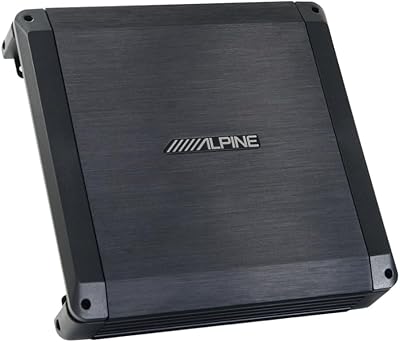
Alpine BBX-T600 2-Channel Car Amplifier
78%
84%
Sound Quality
61%
Power Accuracy
91%
Ease of Installation
78%
Build Quality
82%
Thermal Management
More
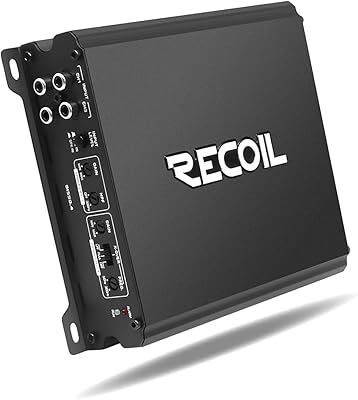
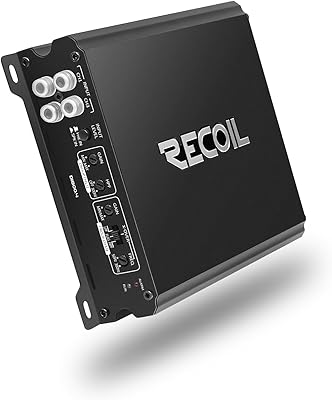
Recoil DI800.4 4-Channel Car Amplifier
75%
88%
Value for Money
51%
Power Accuracy
63%
Build Quality
79%
Thermal Management
86%
Ease of Installation
More
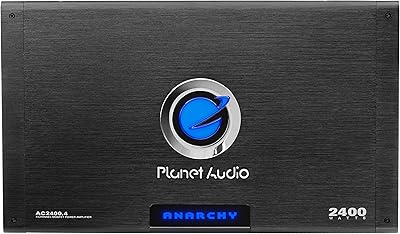
Planet Audio AC2400.4 4-Channel Car Amplifier
84%
95%
Power Output
89%
Sound Clarity
87%
Bass Performance
82%
Ease of Installation
65%
Thermals/Heat Management
More
Recoil DI550.4 4-Channel Car Audio Amplifier
74%
91%
Value for Money
78%
Power Output
86%
Ease of Installation
74%
Sound Quality
67%
Build Quality
More
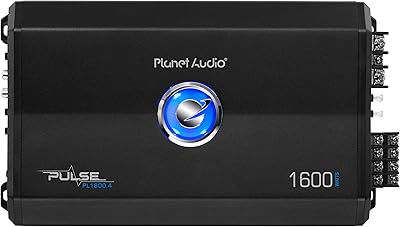
Planet Audio PL1600.4 4-Channel Car Amplifier
72%
88%
Value for Money
84%
Ease of Installation
74%
Sound Quality
58%
Power Output (Real-World)
61%
Build Quality
More
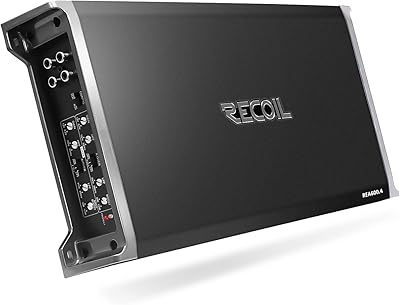
Recoil REA600.4 4-Channel Car Audio Amplifier
84%
89%
Audio Performance
91%
Ease of Installation
85%
Sound Quality at High Volumes
62%
Heat Management
90%
Power Output
More
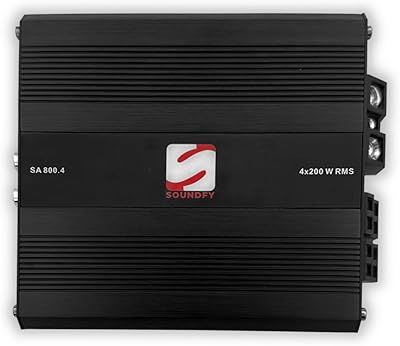
Soundfy SA 400.4 4-Channel Car Amplifier
71%
78%
Value for Money
72%
Sound Quality
63%
Power Output
58%
Build Quality
81%
Thermal Management
More
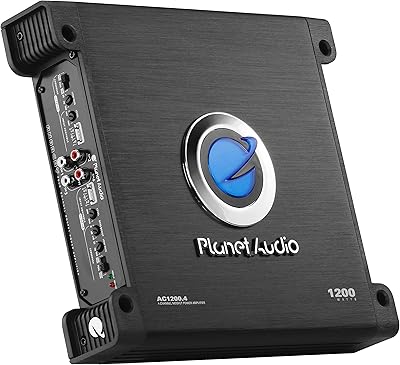
Planet Audio AC1200.4 4-Channel Car Amplifier
73%
88%
Value for Money
67%
Power Output
83%
Installation Ease
74%
Sound Quality
61%
Build Quality
More
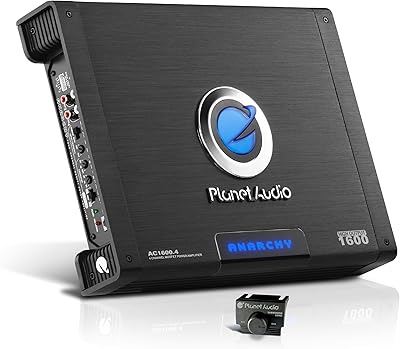
Planet Audio AC1600.4 Anarchy Series 4-Channel Car Amplifier
82%
94%
Power Output
88%
Sound Quality
70%
Ease of Installation
92%
Value for Money
85%
Build Quality
More
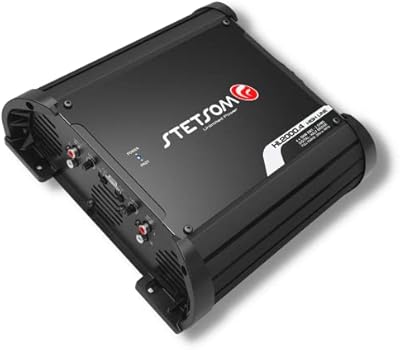
Stetsom HL 2000.4 2-Ohm 4-Channel Car Audio Amplifier
87%
93%
Power Output
85%
Cooling System Efficiency
88%
Sound Quality
91%
Ease of Installation
82%
Durability
More

FAQ

Yes, and that is actually one of the more practical things about the BBX-F1200. In 3-channel mode, you can run two front speakers on channels one and two, then bridge channels three and four to feed a subwoofer. It is a clean single-amp solution for a basic but complete system.

Most installers recommend 4-gauge power and ground wiring for this amp. Going thinner than that restricts current delivery and you will hear the difference in dynamic headroom, especially at higher volumes. Do not cut corners on the wiring — it is one of the most common reasons buyers underperform an otherwise capable amp.

No, a remote bass knob is not included in the box. If you want to adjust bass levels from the driver seat without reaching back to the amp, you would need to purchase a compatible Alpine remote controller separately.

It runs warm — that is just the nature of Class A/B operation, which generates more heat than a Class D design as part of its audio process. Under normal listening conditions it is manageable, but if you are pushing high volumes for a long time in a sealed, unventilated space, the thermal protection will kick in and reduce output. Mount it somewhere with reasonable airflow and you will be fine.

It will work with a factory head unit as long as you use the high-level speaker inputs rather than RCA preamp outputs. That said, running a line output converter between the head unit and the amp is the cleaner approach and tends to produce better results than tapping speaker wires directly.

The high-pass filter blocks low frequencies from reaching speakers that are not designed to reproduce them — typically your tweeters or midrange drivers. The low-pass filter does the opposite, rolling off high frequencies before they reach your subwoofer. Setting these correctly protects your speakers and makes a noticeable difference in overall sound clarity.

For most mid-range component speakers in the 50W to 80W RMS range, this Alpine amp delivers enough clean power to drive them well at realistic listening levels. If you are pairing it with speakers that have a high RMS handling requirement and you plan to push them hard, you may eventually hit the ceiling, but for the vast majority of everyday use cases it is a solid match.

Turn the gain down to minimum before you start. Then play a familiar track at about 80 percent of your head unit volume, and slowly raise the gain until you hear audible distortion, then back it off slightly. It is not as precise as using an oscilloscope or a multimeter, but it gets you close enough to avoid damaging your speakers in typical use.

You can bridge channels three and four together for a subwoofer output, but bridging all four channels simultaneously is not a supported configuration. Running this amp in fully bridged mode on all channels risks exceeding its thermal limits and could damage the unit. Stick to the supported configurations in the manual.

That depends on how much you value long-term reliability and consistent performance. No-name amps sometimes look impressive on paper but cut corners on component quality, power supply regulation, and thermal management. The BBX-F1200 costs more than the cheapest alternatives, but Alpine's quality control and support infrastructure are meaningful considerations when you are mounting electronics inside a vehicle that heats and cools daily.

Where to Buy