
Overview

The ALEOPIX RT-1000W 1000W Car Power Inverter sits comfortably in the mid-range of portable car inverters, offering a practical way to run household devices from your vehicle's 12V battery. It connects two ways: plug into the cigarette lighter for lighter tasks under 200W, or clamp directly to the battery for the full 1000W output. The housing is aluminum alloy, keeping weight under two pounds despite the solid feel. One thing worth noting upfront — this is a modified sine wave inverter, which works fine for most electronics but may not suit sensitive medical equipment or certain audio gear.

Features & Benefits

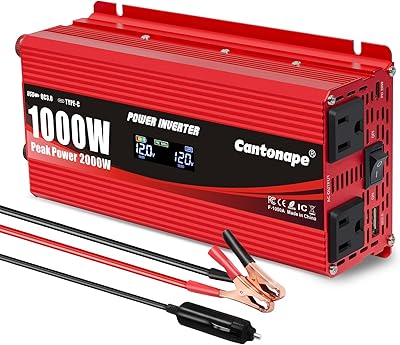
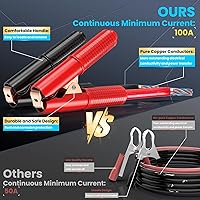
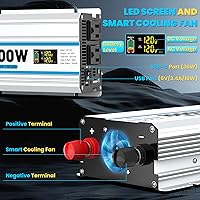
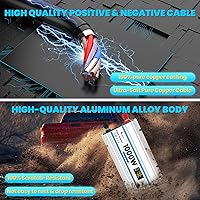
Two standard AC outlets handle anything from a laptop to a small fan, up to 1000W continuous draw. What makes this 1000W inverter stand apart from bare-bones units is the charging lineup: a 36W USB-C Power Delivery port and an 18W Quick Charge USB-A port mean you can fast-charge a phone or tablet without hunting for a wall adapter. The included 100A pure copper cables run cooler than the 60A cables you typically find at this price, helping maintain over 90% conversion efficiency. An LED display shows input voltage and current load in real time, and the smart cooling fan only kicks on when temperatures climb, so it stays quiet at light loads.

Best For

This car inverter is a natural fit for weekend campers and overlanders who need to run a small electric cooler, charge camera batteries, or keep a CPAP powered overnight — as long as the device tolerates modified sine wave output. Remote workers who occasionally do work from a parked truck will appreciate having two AC outlets and fast USB charging in one unit. It also makes a sensible emergency backup for keeping a phone, router, or small lamp running during a power outage. Anyone wanting a plug-and-go setup without hiring an electrician will find the battery clamp connection straightforward enough to manage alone.

User Feedback

Early buyers have given the ALEOPIX inverter mostly positive marks, with the USB-C charging speed and the clarity of the LED display earning consistent praise. People running laptops and phones report the inverter handles those loads without drama. The criticism that shows up repeatedly is fan noise — at higher wattage draws the fan gets noticeable, which some find annoying in a quiet car cabin. A few users note the cigarette lighter connection hits its 200W ceiling fast with any real appliance, making the battery clamps effectively mandatory for heavier use. With under 300 reviews since its late-2024 launch, long-term reliability is still an open question, so tempering expectations on durability seems fair.

Pros

  • The 36W USB-C Power Delivery port fast-charges modern phones and laptops at full speed without needing a separate adapter.
  • Two AC outlets let you run two devices simultaneously, which is genuinely useful on a crowded campsite or in a van.
  • The included 100A pure copper battery cables run cooler and more efficiently than the thinner cables bundled with many competing units.
  • At under two pounds, this car inverter is easy to toss in a bag and forget about until you actually need it.
  • The LED display gives you a real-time read of input voltage and load wattage, so you know before you overload it.
  • The temperature-controlled fan stays quiet during light use, making it unobtrusive when you are just charging phones or running a small lamp.
  • Built-in protections against overload, short circuit, and overheating add a meaningful layer of safety for unattended use.
  • Early verified buyers consistently report that real-world charging performance on phones and laptops matches the advertised spec.
  • The aluminum alloy housing feels more durable than the plastic shells common at this price point.

Cons

  • Fan noise becomes clearly audible when the inverter is pushed above moderate wattage loads, which can be annoying inside a quiet cabin.
  • The cigarette lighter port is capped at 200W, making battery clamps effectively mandatory for anything beyond phone and laptop charging.
  • With fewer than 300 reviews since its late-2024 launch, long-term reliability under sustained heavy use remains an unknown.
  • Modified sine wave output rules out compatibility with some sensitive medical devices and high-end audio equipment.
  • No pure sine wave option is available in this model, limiting its usefulness for a meaningful subset of electronics.
  • The battery clamp setup, while manageable, adds setup time compared to simply plugging into a cigarette lighter socket.
  • Some users report the inverter runs warm even at moderate loads, which may give pause in high-ambient-temperature environments.
  • The brand is relatively new to Western markets, meaning warranty support and long-term parts availability are harder to assess than with established names.

Ratings

The scores below reflect an AI-driven analysis of verified global buyer reviews for the ALEOPIX RT-1000W 1000W Car Power Inverter, with spam, bot-submitted, and incentivized feedback actively filtered out before scoring. Each category is assessed on real-world usage patterns reported by actual owners across road trips, camping setups, mobile work environments, and emergency home use. Both the highlights and the honest pain points are weighted equally so you can make a clear-eyed decision.

Charging Performance
88%
Buyers consistently report that the 36W USB-C port charges modern phones and USB-C laptops at or near full rated speed, which is notably better than what most competitors bundle at this price. Users running a MacBook or iPad from a parked vehicle find the output reliable and stable without the throttling issues common in cheaper inverters.
A small number of users note that when both AC outlets and USB ports are in use simultaneously, USB charging speeds can dip slightly. It is not a dealbreaker, but users who depend on maximum USB-C speed while also running an AC device should be aware of the shared load dynamic.
AC Output Reliability
83%
Most buyers report that the dual AC outlets handle everyday loads like laptops, box fans, and small televisions without interruption or voltage instability. The rated 1000W continuous output holds up well in real use for moderate-draw appliances, and the overload protection triggers cleanly rather than damaging connected gear.
A handful of users pushing the inverter closer to its wattage ceiling — running two power-hungry devices at once — report occasional shutdowns from the thermal protection system. This is expected behavior but still frustrating when it interrupts workflow mid-task on a hot day.
Build Quality
79%
21%
The aluminum alloy housing feels noticeably more solid than the plastic shells common in this category, and several buyers specifically mention it does not flex or creak when handled. The unit survives the bumps and vibrations of regular in-car use without any reported cracking or port damage in early ownership.
Since the product only launched in late 2024 and has fewer than 300 reviews, multi-year durability data simply does not exist yet. A few users also note that the cable clamps, while functional, feel slightly less refined than the housing itself, with connector grip that could be tighter.
Noise Level
71%
29%
At light loads — charging a phone or powering a laptop — the smart fan stays off entirely, making the inverter effectively silent during typical in-cab use. Buyers who use it primarily for phone and device charging rarely hear the fan at all, which is a meaningful advantage during quiet nighttime camping scenarios.
Push the inverter past moderate wattage and the fan becomes clearly audible, which multiple reviewers describe as distracting in a quiet car or van. It is not unusually loud for this class of inverter, but buyers expecting near-silent operation under heavy load will be disappointed.
LED Display Clarity
91%
The LED readout earns some of the most consistent praise in the review pool — buyers appreciate being able to glance at input voltage and current draw without guessing whether they are approaching the limit. Campers and van lifers especially mention it as useful for monitoring battery drain during overnight use.
A minor complaint from a few users is that the display can be hard to read in direct bright sunlight, where the LED contrast washes out slightly. This is a situational issue rather than a fundamental flaw, but it is worth noting for users who mount the inverter in a sun-exposed location.
Cable Quality
82%
18%
The included 100A pure copper battery clamp cables draw genuine appreciation from buyers who have previously used inverters with thin, flimsy cables that run hot under load. Users report the cables stay cool even during extended high-wattage sessions, which contributes to confidence during longer trips.
The cable length is adequate but not generous, and a couple of buyers with awkward battery placement in their vehicle found it just barely reached without a clean routing path. An extra foot of cable length would eliminate that frustration entirely for some installation scenarios.
Cigarette Lighter Usability
58%
42%
For truly light tasks — charging a phone, powering a small LED lamp, or running a tablet — the cigarette lighter connection is convenient and completely fuss-free. Users who just need occasional low-draw power find it a perfectly usable no-clamp option.
The 200W ceiling on the cigarette lighter port frustrates buyers who discover only after purchase that laptops with larger power bricks or any real appliance immediately demands the battery clamps instead. Several reviews reflect surprise at this limitation, suggesting the marketing emphasis on convenience undersells the practical constraint.
Setup & Installation
86%
Buyers with no electrical background consistently describe the setup process as intuitive — attach the clamps, plug in, and switch on. No tools, no wiring, and no manual-reading required beyond the basics of positive-to-positive and negative-to-negative terminal connection.
Users who want a cleaner permanent installation — secured mounting, hidden cabling — will find the out-of-box setup too provisional for that purpose. The inverter is designed for plug-and-go portability rather than fixed installation, which limits its appeal for buyers planning a more integrated vehicle power system.
Portability
93%
At under two pounds and roughly the size of a hardcover book, this car inverter genuinely disappears into a gear bag without adding meaningful weight or bulk. Campers who rotate gear between vehicles or carry it on overlanding trips call out the lightweight form factor as a practical daily advantage.
The one trade-off of keeping weight low is that the unit does not feel planted when resting on a flat surface — it can slide around on a seat or dashboard without some improvised stabilization. A basic rubber base or included mounting bracket would improve the experience meaningfully.
Thermal Management
74%
26%
The temperature-controlled fan system works as advertised — it responds to internal heat buildup rather than running constantly, and buyers report the inverter body stays comfortably cool to the touch during typical mixed-use sessions. The aluminum housing actively helps with passive heat dissipation between fan cycles.
In hot ambient conditions — a parked car in summer, for example — the fan cycles on more frequently and stays on longer, which some buyers find bothersome. A few users in warmer climates also report the inverter reaching its thermal cutoff faster than expected when running near peak capacity.
Value for Money
81%
19%
Buyers generally feel the combination of 36W USB-C charging, 100A copper cables, an LED display, and a solid aluminum housing represents fair value at this price tier. Those who comparison-shopped note that similarly priced competitors often cut corners on either the cables or the charging ports, making this a well-rounded mid-range option.
A few buyers who purchased expecting pure sine wave output — without reading the specifications carefully — feel the value proposition weakens for their use case. For anyone specifically needing sine wave output, spending more on a dedicated pure sine wave unit is a better investment regardless of how competitive this pricing looks.
Safety Protections
87%
The multi-layered protection system — covering overload, short circuit, overvoltage, undervoltage, and overheating — functions reliably according to buyer reports, with the unit shutting down cleanly rather than failing dangerously when limits are exceeded. Users who run the inverter unattended during overnight camping feel reassured by the automatic shutoff behavior.
While the protections themselves work, the inverter does not always clearly communicate which protection triggered when it shuts off, leaving users troubleshooting by elimination. A more descriptive fault indicator on the LED display would make diagnosing the cause of a shutdown considerably faster.
Long-Term Durability
62%
38%
Early ownership feedback on physical durability is generally positive — no reported port failures, housing cracks, or cable degradation within the first few months of use. The aluminum construction and copper cabling are encouraging signs for longevity relative to cheaper plastic-bodied alternatives.
With a launch date of late 2024 and a still-modest review count, there is simply not enough data to score long-term reliability with confidence. Buyers who need a proven multi-year track record should wait for the review pool to mature or consider an inverter brand with an established reliability history.

Suitable for:

The ALEOPIX RT-1000W 1000W Car Power Inverter is a practical match for anyone who regularly needs AC power away from home but does not want to deal with a complex installation or a bulky unit. Weekend campers and overlanders will find it capable of running a small electric cooler, charging camera gear, or keeping a portable fan going during warm nights. Remote workers who occasionally need to run a laptop or even a small monitor from a parked vehicle will appreciate having two AC outlets and fast USB charging all in one compact package. It also makes solid sense as an emergency preparedness tool — keeping a phone, a small lamp, or a home router running during an unexpected power outage is well within its wheelhouse. Truck drivers and van lifers who want a versatile charging hub without hiring an electrician will find the battery clamp connection manageable enough to set up solo.

Not suitable for:

The ALEOPIX RT-1000W 1000W Car Power Inverter is not the right choice for users who need to power sensitive electronics that require a pure sine wave output — think certain CPAP machines with advanced motors, high-end audio equipment, or some older laser printers. Anyone planning to run high-draw appliances like a microwave, a full-size power tool, or a hair dryer should also think carefully, since 1000W continuous headroom disappears quickly with those loads. The cigarette lighter connection caps out at 200W, so users who want to avoid dealing with battery clamps will find themselves limited to light-duty tasks only. If you need an inverter that has been thoroughly proven over years of real-world use, the relatively short review history since its late-2024 launch means there is limited data on how it holds up after prolonged heavy use. Finally, buyers who frequently operate in very hot climates and plan to run the inverter near its rated capacity for extended periods should be aware that fan noise becomes noticeable under those conditions.

Specifications

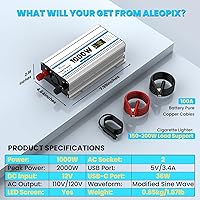
  • Continuous Output: This inverter delivers a steady 1000W of continuous AC power, suitable for running laptops, fans, small appliances, and other moderate-draw devices.
  • Peak Output: It can handle surge demands up to 2000W momentarily, which helps accommodate the brief startup spike of devices like small power tools or compressors.
  • Input Voltage: Designed to connect to a standard 12V DC vehicle battery, making it compatible with the vast majority of cars, trucks, SUVs, and vans.
  • Output Voltage: Converts 12V DC to 110–120V AC, matching standard North American household outlet voltage for everyday device compatibility.
  • Wave Type: Produces a modified sine wave output, which works reliably for most consumer electronics but may not be suitable for certain sensitive medical devices or high-end audio equipment.
  • AC Outlets: Equipped with two standard three-prong household AC outlets, allowing two devices to run simultaneously up to the combined 1000W limit.
  • USB-C Port: A single USB-C port delivers up to 36W via Power Delivery protocol, enabling fast charging for modern smartphones, tablets, and USB-C laptops.
  • USB-A Port: A single USB-A port supports 18W Quick Charge output, providing fast charging for compatible Android and other QC-enabled devices.
  • Cigarette Lighter: When connected via the cigarette lighter plug, the maximum load is capped at 200W, making it suitable only for low-draw devices like phone chargers or small LED lights.
  • Battery Cables: Includes 100A-rated pure copper battery clamp cables, which run cooler and transfer power more efficiently than the standard 60A cables found in many competing inverters.
  • Efficiency: Conversion efficiency is rated at greater than 90%, meaning minimal energy is lost as heat during the DC-to-AC conversion process.
  • LED Display: A built-in LED screen shows real-time input voltage and current wattage draw, allowing users to monitor load and battery status at a glance.
  • Cooling System: An intelligent temperature-controlled fan activates automatically when internal temperatures rise, staying off during light use to minimize noise.
  • Protections: Built-in safety circuitry guards against overvoltage, undervoltage, overload, short circuit, and overheating to protect both the inverter and connected devices.
  • Housing Material: The outer shell is constructed from aluminum alloy, which dissipates heat more effectively than plastic and resists deformation and corrosion over time.
  • Dimensions: The unit measures 7.99 x 4.64 x 2.16 inches, a compact footprint that fits easily in a glove box, under a seat, or in a gear bag.
  • Weight: At 1.87 pounds, this car inverter is light enough to carry without adding meaningful bulk to a travel or camping kit.
  • Brand: Manufactured by ALEOPIX, a brand that entered the North American inverter market in late 2024 with a focus on mid-range portable power solutions.

Related Reviews
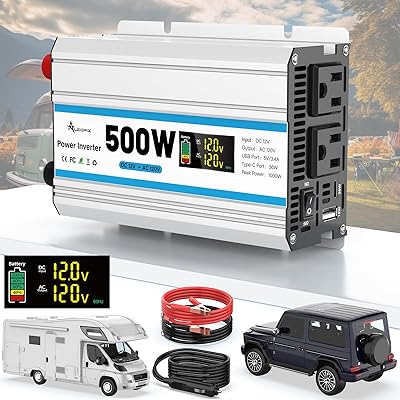
ALEOPIX 500W Car Power Inverter RT-500W
86%
90%
Portability & Size
88%
Charging Speed (USB-A & USB-C)
85%
Power Output (500W)
82%
Build Quality
67%
Cooling Fan Noise
More
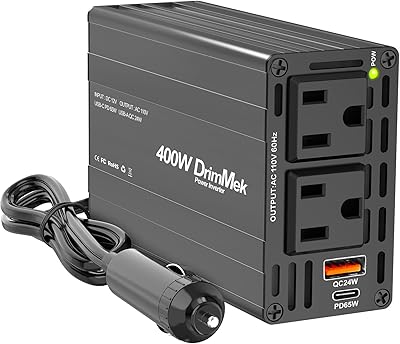
Cantonape 1000W Car Power Inverter
86%
88%
Performance
85%
Build Quality
91%
Ease of Use
83%
Portability
90%
Charging Capability
More
BieiFAU 600W Car Power Inverter
76%
83%
Value for Money
88%
Charging Performance
79%
Build Quality
84%
Noise Level
71%
Power Output Accuracy
More
Fancy Buying 1000W Power Inverter
82%
92%
Portability
89%
Value for Money
88%
Charging Speed
85%
Build Quality
91%
Ease of Use
More
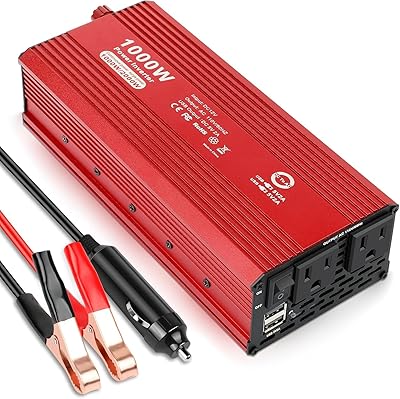
DrimMek MT-M400C 400W Car Power Inverter
84%
91%
USB-C Charging Speed
88%
Build Quality & Materials
86%
Thermal Management
72%
Real-World Wattage Usability
84%
Port Variety & Layout
More
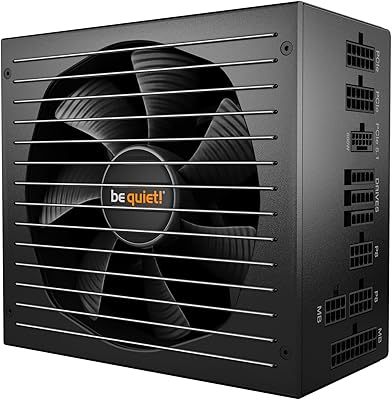
be quiet! Straight Power 12 1000W Power Supply
88%
94%
Quiet Operation
92%
Energy Efficiency
89%
Build Quality
90%
Modular Design and Cable Management
88%
Stability Under Load
More
Kzreect Inverter-MK 220W Portable Power Inverter
85%
94%
Portability and Size
89%
Charging Speed (USB-C & USB-A)
82%
Battery Compatibility
88%
Ease of Use
90%
Safety Features (Overload, Overcurrent)
More
be quiet! Pure Power 13 M 1000W Power Supply
89%
92%
Performance
94%
Noise Level
89%
Build Quality
90%
Power Delivery Stability
88%
Cable Management
More
be quiet! Pure Power 12 M 1000W
85%
93%
Noise Level
89%
Efficiency & Power Delivery
91%
Build Quality
86%
Cable Quality & Flexibility
88%
Modular System Usability
More
Tebrol 5500W Power Inverter
83%
88%
Performance
91%
Ease of Setup
85%
Build Quality
73%
Cooling System Efficiency
80%
Portability
More

FAQ

It depends on the specific CPAP model. This 1000W inverter produces a modified sine wave, and many modern CPAP machines tolerate that just fine, but some older or more sensitive units require a pure sine wave to run properly and quietly. Check your CPAP manual or contact the manufacturer before relying on this inverter for that use.

You can use either connection, but the cigarette lighter port is capped at 200W, so it is only practical for light tasks like charging phones or running a small LED light. For anything more demanding, including powering a laptop or small appliance, you will need to connect directly to the battery using the included clamp cables.

A good rule of thumb is that 1000W covers most laptops, televisions under 50 inches, box fans, electric blankets, and small LED TVs without issue. It will not run a microwave, a full-size hair dryer, or a power-hungry electric kettle at full wattage. Always check the wattage label on your device before connecting it.

At light loads — charging phones or running a laptop — the fan stays off entirely, so the unit is essentially silent. Once you push it past moderate wattage draws, the fan kicks on and becomes audible. Buyers who have used it in a quiet car cabin at night note it is noticeable but not disruptive at mid-range loads.

You can leave it connected, but be mindful of battery drain. Running devices through an inverter while the engine is off will pull from your car battery, and if you run it too long without the engine on, you risk draining the battery to the point where the car will not start. The built-in low voltage protection will shut the inverter down before it causes serious damage, but it is still good practice to monitor usage.

Yes, the 36W USB-C Power Delivery port is fast enough to charge most MacBook Air models and all current iPads at or near their maximum charging rate. For a MacBook Pro that normally uses a 67W or higher charger, it will still charge but slightly more slowly than with the original adapter.

It is straightforward if you have basic familiarity with a car battery. Red clamp goes to the positive terminal, black to the negative. Most buyers report the setup takes a few minutes and does not require any tools. The clamp cable is included in the box, so there is nothing additional to purchase.

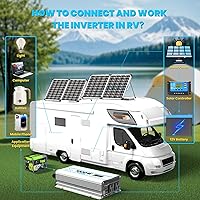
Absolutely — any 12V vehicle battery is compatible, which covers the vast majority of cars, trucks, pickup trucks, SUVs, vans, and even some RVs. Just confirm your vehicle runs on a 12V system rather than a 24V system, which is common in large commercial trucks.

That is a fair concern. The unit only entered the market in late 2024 and has fewer than 300 reviews as of now, so there simply is not much long-term data available yet. Early feedback on build quality is positive, particularly regarding the aluminum housing and copper cables, but anyone who needs a proven track record may want to wait for more reviews to accumulate.

Yes, the built-in overload protection will shut the inverter down automatically if the connected load exceeds what it can safely handle. You will typically see an indicator on the LED display and the unit will power off before any damage occurs. Just reduce the load and restart it once the issue is cleared.