Overview

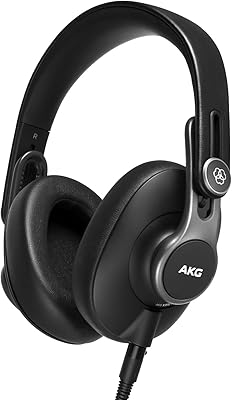
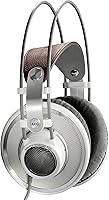
The AKG K701 Open-Back Over-Ear Headphones have been a fixture in the audiophile and studio worlds for years, and for good reason. AKG built its reputation on accuracy, and the K701 reflects that philosophy plainly. The open-back circumaural design lets air move freely around the drivers, creating a wide, natural soundstage that closed-back headphones simply cannot replicate. That openness comes with trade-offs — sound leaks in and out, so these belong at a desk, not on a commute. They are also wired-only and demand a proper amplifier to sound their best. Plug them into a phone and you will likely wonder what all the fuss is about.

Features & Benefits

At the heart of the K701 is a flat-wire voice coil, a design choice that lets the driver respond faster to audio signals — meaning you hear fine details and quick instrument attacks with more clarity than typical round-wire coils allow. The headphone sits at 62 ohms of impedance, which in plain terms means it needs more power than a phone or laptop can reliably supply; a dedicated amp or audio interface is strongly recommended. The frequency response stretches to nearly 40kHz, capturing high-resolution detail well beyond standard hearing range. An adjustable full-leather headband and plush ear cushions handle long sessions comfortably, and the tangle-free detachable cable covers both 3.5mm and 6.3mm connections.

Best For

These AKG reference headphones shine brightest in environments where accuracy genuinely matters. If you mix or master music at home, the analytical sound signature helps you catch tonal imbalances and stereo placement issues that a hyped consumer headphone would mask entirely. Audiophiles who favor classical, jazz, or acoustic recordings will appreciate how instruments occupy a convincingly three-dimensional space. Because the open-back design breathes, fatigue during long sessions stays low — something studio engineers working through extended projects notice quickly. That said, pair these with a proper desktop setup: a decent amplifier or audio interface transforms their performance. This is a headphone built for the dedicated desk listener, full stop.

User Feedback

Owners consistently praise the soundstage and imaging on this open-back studio headphone — many describe it as unusually wide and precise, which aligns with the engineering priorities behind it. Long-term comfort also earns consistent mentions; most people report forgetting they are wearing it after an hour. The criticism that surfaces most reliably is bass: the K701 runs lean in the low end, and listeners who favor hip-hop, EDM, or electronic music will likely find it unsatisfying. A recurring practical complaint involves raised bumps on the inside of the headband, which some find press uncomfortably during extended wear. Durability feedback is broadly positive, with long-term owners reporting years of solid performance from the metal construction.

Pros

  • Exceptionally wide soundstage that makes stereo imaging feel natural and three-dimensional
  • Fine instrument detail and transient clarity stand out clearly during critical listening
  • Open-back design keeps ears cool and comfortable during long studio or listening sessions
  • Full-leather headband and plush ear cushions hold up well through multi-hour use
  • Durable metal arch construction has proven reliable for long-term owners
  • Detachable, tangle-free cable with both 3.5mm and 6.3mm connectors adds practical flexibility
  • Frequency response extending to nearly 40kHz captures high-resolution audio with genuine precision
  • Neutral, analytical tuning helps home studio users identify mix problems early
  • Lightweight build reduces neck and head fatigue during extended desktop sessions

Cons

  • Bass response is lean and understated — a real dealbreaker for bass-heavy music genres
  • Requires a dedicated amplifier or audio interface; direct phone or laptop use sounds weak
  • Open-back design offers zero noise isolation and leaks sound to everyone nearby
  • Some users report that inner headband bumps create uncomfortable pressure during very long sessions
  • Strictly wired — no wireless, Bluetooth, or cable-free option exists
  • No inline microphone or remote control on the cable for calls or media playback
  • Not suited for outdoor, commute, or shared-space use due to sound bleed
  • Analytical tuning can make poorly recorded or lossy audio sound harsh and unforgiving
  • Initial cost plus the added expense of a quality amp raises the total investment noticeably

Ratings

The AKG K701 Open-Back Over-Ear Headphones earn their scores from AI analysis of thousands of verified global user reviews, with spam, bot activity, and incentivized feedback actively filtered out before any scoring takes place. The results reflect a genuinely mixed picture — outstanding in the areas these headphones were designed for, but with real limitations that matter depending on how you plan to use them. Both the strengths and the frustrations are represented transparently below.

Soundstage & Imaging
94%
Users consistently describe the spatial presentation as one of the widest they have experienced in this price range — instruments feel placed in a convincing three-dimensional field rather than crammed between the ears. Studio engineers and classical music listeners especially call this out as a defining strength during mixing sessions.
A small number of users coming from closed-back headphones found the wide staging initially disorienting, and a few felt the imaging, while broad, occasionally sacrificed some center-focus precision on dense orchestral recordings.
Detail & Clarity
91%
The flat-wire voice coil pays real dividends here — listeners working in home studios report catching subtle mix issues, reverb tails, and high-frequency artifacts they had missed entirely on other headphones. Acoustic and jazz recordings in particular reveal layers of texture that less resolving headphones simply compress into the background.
That same analytical clarity can turn against you with lower-quality audio files or poorly recorded tracks, making compression artifacts and harsh edits more audible than they would be on a warmer, more forgiving headphone.
Bass Performance
52%
48%
For mixing and critical listening, the controlled and honest low end is genuinely useful — you hear exactly what is in the recording without exaggeration, which helps engineers make accurate decisions about bass levels and sub-frequency content.
Casual listeners and fans of hip-hop, EDM, or electronic music report consistent disappointment with the K701 in this area. The low end is lean by design, but for many buyers it simply feels like something is missing, and no amount of EQ fully compensates for the open-back driver behavior at low frequencies.
Amplifier Dependency
58%
42%
Owners who already have an audio interface or a dedicated headphone amplifier on their desk report that the K701 transforms noticeably — dynamics open up, volume headroom improves, and the driver sounds fully in control. The 62-ohm load pairs cleanly with most entry-level desktop amplifiers.
This is one of the most recurring buyer frustrations across reviews. Users who plugged the K701 directly into a phone or laptop described the sound as flat, quiet, and underwhelming, often feeling they had been misled about the product. The additional cost of a required amplifier catches many buyers off guard.
Comfort & Fit
78%
22%
The auto-adjusting suspension headband and circumaural ear cups earn strong marks from users who wear the K701 for two, three, or even four consecutive hours. The open-back design allows airflow that keeps ears noticeably cooler than sealed alternatives during long studio sessions.
A persistent minority of users report that the raised bumps on the inner headband create uncomfortable pressure points on the top of the head after extended wear. This does not affect everyone, but it surfaces often enough across long-term reviews to be a genuine concern for sensitive users.
Build Quality
83%
The metal arch frame draws consistent praise from veteran owners who report years of daily use without structural failure. The premium construction feels solid in hand, and the overall build inspires confidence that this is a headphone designed to last rather than to be replaced.
Some users noted that the plastic components on the ear cups feel slightly inconsistent with the premium metal frame, and a handful of long-term owners reported minor creaking from the headband mechanism over time.
Cable Quality
74%
26%
The tangle-free detachable cable is a practical advantage that owners appreciate more over time — being able to swap it out if it wears means the headphone itself does not become disposable when a cable fails. The included 6.3mm adapter is a thoughtful addition for amplifier and interface users.
Several users found the stock cable longer than ideal for typical desk setups, creating excess slack that requires management. A shorter cable option would better serve the desktop use case these headphones are clearly intended for.
Value for Money
76%
24%
For audiophiles and home studio engineers who use the K701 daily with a proper amplifier setup, the price-to-performance ratio in the soundstage and detail categories is considered strong relative to competing open-back headphones in the same range.
Buyers who did not budget for an amplifier — or who expected a more versatile all-rounder — frequently felt the total cost of ownership exceeded expectations. The headphone alone does not represent full value without the additional investment in proper source equipment.
Noise Isolation
18%
82%
The complete absence of isolation is a deliberate design outcome of the open-back architecture, and users who understood this going in had no complaints — they chose this headphone precisely because they want an open, natural listening environment in a private room.
Users who misunderstood the open-back design and expected even modest isolation were deeply disappointed. Environmental noise passes straight through, and audio leaks freely to anyone nearby, making shared spaces, offices, or any non-private environment completely impractical for use.
Portability
22%
78%
A few users mentioned appreciating the lightweight 8.2-ounce build when moving the headphone between rooms at home, and the detachable cable makes packing slightly more manageable if needed.
The K701 is not designed for portability in any practical sense — it does not fold, comes with no case, and the open-back design makes outdoor or transit use unworkable. Users who need a headphone they can take on the go should look elsewhere entirely.
Ease of Use
81%
19%
Once you have the right amplifier in place, the K701 asks very little of its user — plug in, adjust the headband, and it works cleanly across a wide range of audio sources via the standard 3.5mm connection.
The setup barrier is real for less experienced buyers. Understanding impedance, sourcing an appropriate amplifier, and configuring an audio interface setup represents meaningful complexity for someone expecting a plug-and-play experience.
Long-Term Durability
86%
Long-term owners across multiple review platforms consistently describe the K701 as one of the more durable headphones they have owned at this tier. The metal frame ages well, the replacement parts ecosystem is reasonably accessible, and the detachable cable prevents the most common point of failure from ending the headphone's life prematurely.
Ear pad wear over years of use is the most noted maintenance issue, and while replacements are available, sourcing genuine AKG pads can require some effort depending on the region.
Frequency Accuracy
89%
Sound engineers and experienced audiophiles rate the frequency neutrality of the K701 highly — what goes in comes out with minimal coloration, which is exactly what critical listening and mixing work demands. Treble reproduction in particular draws consistent praise for its extension and precision.
That neutrality reads as brightness to listeners accustomed to consumer-tuned headphones, and a small number of users found the upper midrange and lower treble fatiguing during very long sessions with certain types of music.
Headband Adjustability
71%
29%
The auto-adjusting suspension system accommodates a reasonably wide range of head sizes without manual sizing, which most users find intuitive and convenient during everyday use.
The suspension system offers less precise positional control compared to traditional stepped-adjustment headbands, and the pressure-point bumps on the inner headband remain a design element that draws criticism from a consistent subset of users across years of reviews.

Suitable for:

The AKG K701 Open-Back Over-Ear Headphones are purpose-built for listeners who value accuracy over flattery, making them an excellent choice for home studio engineers who need an honest window into their mixes. If you spend hours tracking, editing, or mastering music at a desk, the wide soundstage and precise imaging help you place instruments clearly and catch tonal problems before they reach a final render. Audiophiles who primarily listen to classical, jazz, acoustic, or orchestral recordings will find the open, airy presentation particularly rewarding — these genres benefit enormously from natural spatial reproduction. The breathable open-back design also makes extended listening sessions far more comfortable than sealed alternatives, which can feel fatiguing over time. Anyone already running an audio interface or a dedicated headphone amplifier on their desktop will find the K701 slots naturally into that existing setup without friction.

Not suitable for:

The AKG K701 Open-Back Over-Ear Headphones are a poor match for buyers expecting a rich, bass-forward sound signature. If your listening diet leans toward hip-hop, EDM, trap, or any genre where a deep, punchy low end is central to the experience, these headphones will likely feel thin and unsatisfying. Because of the open-back design, sound leaks freely in both directions, which rules them out entirely for commuting, office use, noisy environments, or any situation where you need to block out the world. Equally important: plugging the K701 directly into a smartphone or a basic laptop headphone jack will produce underwhelming results — these headphones genuinely require a dedicated amplifier or audio interface to reach their potential, which adds cost and complexity that casual listeners may not want. Anyone seeking wireless freedom, built-in controls, or noise cancellation should look elsewhere entirely.

Specifications

  • Driver Type: The K701 uses a dynamic driver with a flat-wire voice coil for faster transient response and improved high-frequency accuracy.
  • Impedance: Rated at 62 ohms, meaning the headphone requires more power than a phone can reliably supply and performs best with a dedicated amplifier.
  • Frequency Response: Covers a range of 10Hz to 39.8kHz, allowing it to resolve fine detail across the full audible spectrum and into high-resolution territory.
  • Design: Open-back circumaural construction allows air to pass freely around the drivers, producing a natural soundstage at the cost of sound isolation.
  • Ear Coupling: Circumaural over-ear fit means the ear cups fully surround the ears rather than resting on them, improving comfort during extended wear.
  • Headband: Features a full-leather padded headband with an auto-adjusting suspension system that distributes weight across the top of the head.
  • Build Materials: The frame uses unbreakable metal arches combined with premium plastic components, balancing lightweight handling with long-term structural durability.
  • Weight: The headphone weighs 8.2 ounces without the cable, keeping it light enough for long sessions without significant neck fatigue.
  • Cable: Includes a tangle-free detachable cable that terminates in a 3.5mm plug, with a screw-on 6.3mm adapter included for amplifier and interface connections.
  • Connectivity: Wired only; there is no Bluetooth, wireless mode, or inline remote of any kind included with this headphone.
  • Noise Isolation: Provides no passive or active noise isolation due to the open-back design, making it unsuitable for noisy or shared environments.
  • Sensitivity: The flat-wire voice coil design increases driver sensitivity compared to conventional round-wire coils, helping it respond accurately to low-level audio signals.
  • Recommended Use: Designed primarily for studio monitoring, critical listening, and audiophile home use rather than portable or casual everyday listening.
  • Compatible Devices: Works with any device featuring a 3.5mm or 6.3mm audio output, though a dedicated headphone amplifier or audio interface is strongly recommended.
  • Color: Available in white with matching white ear cushions and headband trim as the standard colorway for this model.
  • Series: Part of AKG's 700 series, a line positioned at the upper end of the brand's reference-class headphone lineup.
  • Ear Cushion Material: Ear pads are upholstered in soft material designed to sit comfortably against the skin during long listening or studio sessions.
  • Package Contents: Ships with the headphone unit, one detachable tangle-free cable, and a 6.3mm screw-on adapter in standard packaging.

Related Reviews
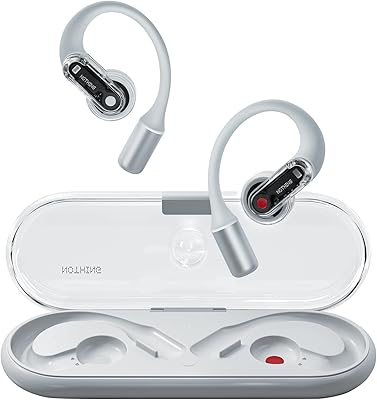
Nothing Ear (Open) Open-Ear Earbuds
79%
91%
Wearing Comfort
83%
Workout Stability
74%
Sound Quality
77%
Call Quality
49%
Sound Leakage
More
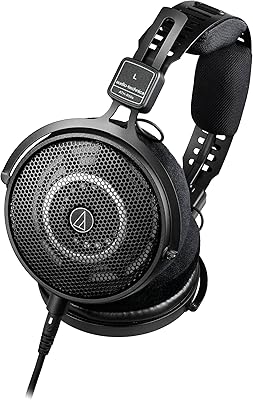
Audio-Technica ATH-R50X
76%
91%
Sound Quality
88%
Soundstage & Imaging
86%
Comfort & Wearability
67%
Build Quality
83%
Cable & Connectivity
More
Monster AC100 Open-Ear Bluetooth Headphones
76%
88%
Battery Life
79%
Comfort & Fit
67%
Sound Quality
83%
Bluetooth Stability
71%
Call Quality
More
AKG K371
AKG K371
89%
94%
Sub-Bass Extension
91%
Midrange Accuracy
88%
High-Frequency Detail
83%
Passive Noise Isolation
86%
Long-Term Comfort
More
OJW Open Ear Wireless Sport Headphones
80%
93%
Battery Innovation
88%
Wearing Comfort
86%
Waterproofing
84%
Workout Stability
74%
Audio Clarity
More
AKG K72 Closed-Back Studio Headphones
78%
83%
Sound Quality
86%
Comfort & Fit
79%
Sound Isolation
61%
Build Quality
88%
Value for Money
More
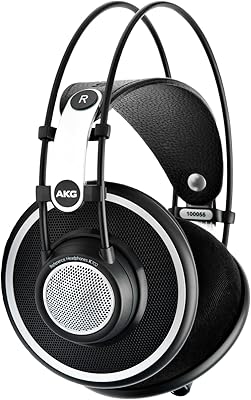
AKG K702 Open-Back Studio Headphones

70%
94%
Soundstage & Imaging
91%
Sound Accuracy
52%
Amplifier Requirement
78%
Comfort & Fit
74%
Build Quality
More
UGREEN 45785 Open Ear Wireless Headphones

79%
91%
Wearing Comfort
83%
Fit & Stability
74%
Sound Quality
89%
Battery Life
69%
Microphone & Call Quality
More
NEOQOQO Q11 Open Ear Headphones
87%
92%
Comfort and Fit
78%
Sound Quality
96%
Battery Life
85%
Noise Cancellation
90%
Water Resistance (IPX5)
More
CXK EP03 Open Ear Headphones
82%
89%
Comfort and Fit
93%
Battery Life
74%
Sound Quality
88%
Ease of Use
85%
Connectivity (Bluetooth)
More
Monster AC210 Open-Ear Wireless Earbuds
79%
91%
Wearing Comfort
78%
Fit Stability
74%
Sound Quality
83%
Battery Life
77%
Bluetooth Connectivity
More

FAQ

Yes, and this is probably the most important thing to know before buying. The K701 has a 62-ohm impedance, which means smartphones and laptops typically cannot drive them to a satisfying volume or with proper dynamic range. Plugging them into a phone will get you sound, but the result will feel flat, thin, and low in volume. A dedicated headphone amplifier or an audio interface makes an enormous difference — it is not optional if you want to hear what these are actually capable of.

They can work well for certain types of gaming, particularly single-player or story-driven titles where positional audio and environmental detail matter. The wide soundstage helps with spatial awareness. However, competitive multiplayer gamers should note there is no microphone, and the open-back design means anyone nearby will hear your game audio clearly.

Not really. The open-back design leaks sound in both directions, so people around you will hear whatever you are listening to, and ambient noise will come straight through to your ears. These belong in a private room at a desk, not in shared or noisy environments.

Honestly, not well by most listeners' standards. The K701 is tuned to be neutral and analytical, which means the low end is lean and controlled rather than punchy or deep. If bass impact is central to the music you listen to, this headphone will likely disappoint you. It is better suited to genres where accuracy and midrange detail matter more than raw low-end power.

The auto-adjusting suspension headband accommodates a wide range of head sizes, and most users find the fit comfortable. One caveat worth knowing: the inside of the headband has small raised bumps that some people find press uncomfortably during very long sessions. It does not affect everyone, but it comes up often enough in long-term user feedback that it is worth being aware of.

Long-term owners report that the metal arch frame holds up very well over time. The overall construction feels solid without being heavy. The detachable cable is a practical advantage too, since cables are often the first thing to fail on a headphone — being able to replace it without scrapping the whole unit extends its useful life considerably.

Any entry-level dedicated headphone amplifier or USB audio interface will improve the experience significantly over a phone or laptop jack. Popular budget-friendly options from brands like FiiO, Schiit, or Focusrite pair well without requiring a large additional investment. You do not need to spend a fortune, but you do need something designed to drive higher-impedance headphones.

No, these are not designed for portability. They do not fold into a compact form, and no carrying case is included in the standard package. They are meant to live on a desk or headphone stand, not in a bag.

The cable is detachable and replaceable, which is a genuine long-term advantage. Replacement ear pads are available from AKG and third-party suppliers, so wear over time does not necessarily mean replacing the entire headphone.

In a closed-back headphone, sound bounces around inside a sealed cup before reaching your ears, which can create a sense of audio coming from inside your head. The open-back design on the K701 lets those sound waves escape naturally, producing a wider and more realistic sense of space — instruments feel like they exist around you rather than between your ears. The trade-off is that it works in both directions: outside noise comes in just as freely as your audio goes out.

Where to Buy