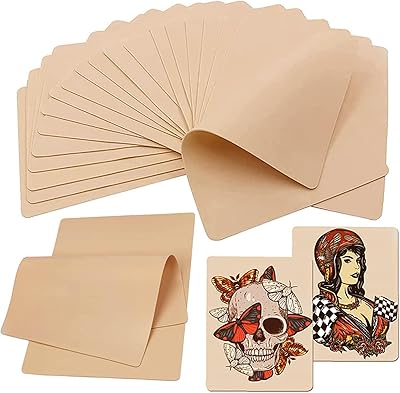
A Pound of Flesh 11x9 Silicone Tattoo Practice Skin
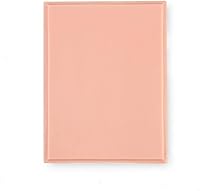
A Pound of Flesh 11x9 Silicone Tattoo Practice Skin — image 1
A Pound of Flesh 11x9 Silicone Tattoo Practice Skin — image 2
A Pound of Flesh 11x9 Silicone Tattoo Practice Skin — image 3
A Pound of Flesh 11x9 Silicone Tattoo Practice Skin — image 4
79%
21%

Overview

A Pound of Flesh 11x9 Silicone Tattoo Practice Skin sits in that mid-to-premium range where serious apprentices and working artists actually spend their money — not on the cheapest foam sheet they can grab, but on something that earns its place on the workbench. Silicone-rubber blend practice skins exist because repetition matters, and practicing on material that pushes back like real tissue builds better instincts than anything foam-based. The 11x9-inch format with its decorative beveled edge sets this tattoo blank apart visually and functionally. Handmade in the USA, it carries a quality signal worth examining across feel, usability, and real session performance.

Features & Benefits

The rubber-silicone blend is where this tattoo blank earns its reputation. Unlike foam, which collapses predictably and forgives sloppy technique, this material offers genuine resistance — your needle behaves more like it does on actual skin, which accelerates real learning. The half-inch thickness reinforces that, giving you meaningful depth feedback rather than the through-and-through sensation you get with thinner alternatives. At 11x9 inches, there is enough real estate for full sleeve panels or multi-subject compositions. The water-resistant surface holds up well across different ink formulations, and the beveled edge means a finished piece looks presentable enough to frame or display in a shop window.

Best For

This silicone practice skin makes the most sense for two distinct groups. The first is apprentices and students who need high repetition on a surface that actually teaches muscle memory — not just movement. The second is experienced artists who are testing new machines, needle configurations, or ink brands before committing them to a client. Shop owners also find real value here: a completed design on the practice canvas looks professional enough to pin on a wall or add to a portfolio book. That said, if you are still deciding whether tattooing is for you, the price point makes more sense once you are already committed to the craft.

User Feedback

Most buyers highlight the realistic skin feel as the standout quality — particularly those who switched from cheaper foam alternatives. The ink absorption and color accuracy also draw consistent praise. Where feedback gets more critical is surface consistency: a small number of users report minor texture variations between batches, which is not uncommon for handmade goods. A few experienced artists note that this tattoo blank still does not fully replicate the give of living skin — nothing synthetic really does — but most agree it comes closer than competing options at this price tier. Durability is generally solid across multiple sessions, though heavy shading work can leave the surface visibly worn over time.

Pros

  • The rubber-silicone blend offers noticeably more realistic needle resistance than standard foam practice skins.
  • At 11x9 inches, the work surface is large enough for complex, multi-element designs in a single session.
  • Half-inch thickness gives meaningful depth feedback, helping artists calibrate needle depth more accurately.
  • The water-resistant surface holds up cleanly across multiple ink types without unexpected bleed or distortion.
  • Finished pieces on this tattoo blank look polished enough to display in a shop or include in a portfolio.
  • The decorative beveled edge adds a finished, professional appearance that cheaper practice skins lack entirely.
  • Handmade USA production tends to result in more consistent surface texture compared to mass-produced imports.
  • Works well as a low-risk testing ground for new ink brands before committing them to client skin.
  • The flesh-tone color gives a more realistic visual reference for how ink colors will actually read on skin.

Cons

  • Silicone still cannot replicate the elasticity and warmth of living skin, so some technique transfer is limited.
  • Minor texture inconsistencies between individual units have been reported, a known risk with handmade production.
  • Heavy shading sessions can visibly wear down the surface, reducing the useful life of a single piece.
  • The flat, rigid format offers no useful practice for curved body areas like knuckles, ears, or necks.
  • The price is harder to justify for casual hobbyists or those still undecided about pursuing tattooing seriously.
  • Some users find the surface slightly slippery when ink pools, which can affect grip and line control.
  • The practice canvas is not reusable in any meaningful sense once fully worked — it is essentially single-use.
  • No variation in thickness across the surface means artists cannot practice adapting to thinner or bonier skin areas.

Ratings

The scores below reflect an AI-driven analysis of verified global buyer reviews for the A Pound of Flesh 11x9 Silicone Tattoo Practice Skin, with spam, bot activity, and incentivized feedback actively filtered out before any scoring was applied. Each category captures what real artists and apprentices experienced across multiple sessions — not just first impressions. Both the genuine strengths and the recurring frustrations are represented here without softening either side.

Skin-Feel Realism
79%
21%
Most buyers coming from foam-based skins describe the rubber-silicone blend as a meaningful step up in tactile honesty — the material resists the needle in a way that actually informs technique rather than just accommodating it. Artists report that linework corrections feel more consequential, which accelerates real skill development over repeated sessions.
Experienced artists who have spent years tattooing living clients consistently note that the surface still lacks the warmth, elasticity, and variable give of skin stretched over muscle. For high-level practitioners, this gap is noticeable enough to remain a point of frustration despite the product's overall quality.
Needle Feedback
83%
The half-inch thickness is one of the most praised technical aspects among working artists — it provides enough material depth that needle penetration feels graduated rather than abrupt, giving the artist real-time feedback on depth control that thinner practice blanks simply cannot offer.
Some users note that the feedback response changes noticeably after the surface has been worked heavily in one area, as repeated needle passes compress the material and alter its resistance profile. This means the most realistic feedback is concentrated in the early-to-mid lifespan of each piece.
Ink Absorption
81%
19%
The water-resistant surface takes ink cleanly across a wide range of formulations, and color-packing results are consistent enough that artists use this tattoo blank to genuinely preview how specific inks will saturate before committing them to a client session. Black-and-grey work in particular reads clearly and without unexpected bleed.
Highly fluid or thinned inks can pool slightly on the surface rather than absorbing with the same predictability as on skin, which skews color-read results for washes and watercolor-style work. A small number of users also report that certain ink brands leave a residue that affects how subsequent layers sit on the same area.
Work Surface Size
91%
The 11x9-inch format consistently earns praise for giving artists genuine creative room — apprentices can lay out full chest panel studies or multi-figure compositions without constantly repositioning, and experienced artists use the full surface to test large-scale designs before scaling them for real work.
A niche group of users working on small-scale or fine-detail styles find the large format unnecessary for their needs and would prefer a smaller, more affordable option in the same material quality. The size also makes bulk purchasing for high-volume practice sessions a more significant financial commitment.
Durability
66%
34%
For light to moderate practice — linework drills, shading gradients, and single-pass color tests — the practice canvas holds up reliably across several sessions before showing significant wear. Artists who rotate through multiple blanks and avoid overworking any single area report a reasonable overall lifespan per unit.
Heavy shading sessions, particularly with magnum needles or aggressive packing passes, visibly degrade the surface faster than many buyers expect at this price point. Once a section is heavily worked, the material loses its original texture and resistance, limiting the usable surface area for follow-up sessions on the same piece.
Display Quality
88%
The decorative beveled edge is a genuinely practical feature that separates this silicone practice skin from utilitarian alternatives — finished pieces look clean and composed enough to pin on a shop wall or slide into a portfolio without any additional framing effort. Several shop owners specifically cite this as a reason they reorder.
The flesh-tone base color, while realistic for practice purposes, can make certain lighter ink colors or pastel palettes harder to read as a display piece, particularly under warm artificial shop lighting. Artists working in illustrative or watercolor styles may find the background tone works against the visual impact of their finished work.
Surface Consistency
69%
31%
The majority of buyers receive pieces with a uniform, well-finished surface that behaves predictably across the full 11x9-inch area. For most users, the handmade origin translates into a product that feels intentional and carefully produced rather than factory-stamped.
A recurring minority of reviews mention receiving units with subtle texture variations — slightly smoother or rougher patches across the surface — that affect how ink sits and how the needle tracks in those zones. This batch-to-batch variability is an inherent trade-off of handmade production and worth factoring in if surface uniformity is critical to your practice goals.
Value for Money
74%
26%
Artists who have outgrown foam skins and are ready to practice with more honest feedback generally find the price justified — particularly when they factor in the display utility and the USA-made quality controls. For serious apprentices logging daily practice hours, the cost-per-session math holds up reasonably well.
Casual or early-stage hobbyists frequently flag the price as a barrier, especially given that durability under heavy use is limited. If you are buying this tattoo blank to work through fundamentals at high volume, you will likely go through enough units that the cumulative cost becomes a real consideration compared to cheaper alternatives.
Machine Compatibility
86%
Artists report clean, consistent results across both rotary and coil machines at a range of voltage settings, making this a reliable calibration surface when dialing in a newly built or recently serviced machine. The material density is forgiving enough that minor setup adjustments are clearly legible in the result.
A small number of users running very high-speed rotary setups note that the surface can exhibit minor tearing around aggressive needle entry points, particularly with groupings larger than a 15-magnum. This is more a function of technique and setup than a product flaw, but it is worth noting for artists pushing the upper limits of their machine speed.
Ink Color Accuracy
77%
23%
For standard saturated colors — particularly blacks, deep reds, blues, and greens — the flesh-tone base provides a useful and realistic preview of how those hues will read against actual skin tone. Artists regularly use finished test patches to make confident ink selection decisions before client consultations.
Lighter colors, whites, and highly pigmented pastels do not translate as predictably, partly because the base tone competes with the ink rather than receding beneath it the way real skin often does. Color-realism testing on this surface works best for mid-to-dark palette work and should be interpreted with some caution for lighter or more delicate tones.
Ease of Cleaning
72%
28%
Between sessions, a simple wipe-down with a damp cloth removes most surface ink cleanly, which keeps the blank usable and readable for subsequent layers without requiring any specialized cleaning products. Artists who use this practice canvas for multi-session design builds find the low-maintenance upkeep genuinely convenient.
Certain high-pigment or alcohol-based inks leave staining that a basic wipe cannot fully remove, and using stronger solvents to compensate risks degrading the silicone surface. Once significant ink buildup accumulates across a session, the affected area becomes less reliable as a neutral ground for color testing.
Build Quality
84%
The handmade USA production results in a product that feels substantial and purposeful in hand — edges are clean, the beveled finish is well-executed, and the material does not feel brittle or cheaply bonded. Artists who have purchased multiple units over time report a consistency in physical construction that builds confidence in the brand.
Occasional reports of minor edge imperfections or slight surface indentations out of the box suggest that handmade quality control, while generally strong, is not perfectly uniform across every unit. These issues are cosmetic rather than functional in most cases, but they can be disappointing at this price tier.
Versatility
71%
29%
Beyond standard tattooing practice, this silicone practice skin has found users among cosmetic tattoo artists doing technique drills, illustrators experimenting with ink on non-paper surfaces, and medical trainees using it for procedural familiarization. The large flat format and realistic resistance make it adaptable to adjacent disciplines.
The flat, rigid rectangle format is a hard limitation for anyone needing to practice on curved or three-dimensional body areas — knuckle work, ear cartilage placement, or neck curves are simply not replicable on this surface. Artists whose client work involves a lot of complex body-contour tattooing will find this tattoo blank only partially useful for realistic preparation.

Suitable for:

The A Pound of Flesh 11x9 Silicone Tattoo Practice Skin is best matched to artists who are past the dabbling stage and ready to invest in tools that actually push their technique forward. Apprentices logging serious practice hours will notice the difference between this rubber-silicone blend and the foam sheets that come with beginner kits — the resistance is more honest, and honest resistance builds better habits. Experienced artists who want to dial in a new machine, test an unfamiliar needle configuration, or audition a fresh ink brand before it touches a client will also get real mileage from the large 11x9-inch work surface. Shop owners have a practical secondary use case here too: a well-executed piece on this tattoo blank looks clean enough to frame and display as a portfolio sample. Anyone who cares that their materials are made domestically with consistent quality controls will find the handmade USA origin reassuring rather than just a marketing note.

Not suitable for:

If you are just starting to explore whether tattooing interests you at all, the price point of this silicone practice skin puts it in awkward territory — cheaper synthetic options exist specifically for low-stakes curiosity. Artists who work primarily with hand-poke or stick-and-poke techniques may also find that the surface feedback does not translate as directly to their method as it does for machine work. It is also worth being clear-eyed about the fundamental limitation every practice skin shares: the A Pound of Flesh 11x9 Silicone Tattoo Practice Skin, however well-engineered, does not fully replicate the elasticity, warmth, or variable tension of living skin stretched over muscle and bone. Buyers expecting a one-to-one simulation of tattooing a real person will be disappointed, regardless of how good the material is. Finally, those who need to practice on curved or three-dimensional surfaces — such as training for ear or knuckle work — will find a flat rigid rectangle an inherently limited tool.

Specifications

  • Brand: Manufactured and sold by A Pound of Flesh, a brand specializing in professional-grade tattoo practice materials.
  • Dimensions: The practice skin measures 11 inches wide by 9 inches tall by 0.5 inches thick.
  • Material: Constructed from an exclusive blend of rubber and silicone engineered to replicate the resistance and texture of natural human skin.
  • Shape: Rectangular format with a decorative beveled edge along the perimeter for a finished, display-ready appearance.
  • Color: Available in a flesh tone that provides a realistic visual reference for how tattoo inks will read on actual skin.
  • Thickness: At 0.5 inches thick, the blank provides enough depth to simulate realistic needle penetration feedback during practice.
  • Surface Area: The usable work area spans 99 square inches, giving artists ample room for complex, multi-element compositions.
  • Water Resistance: The surface is water resistant, allowing it to withstand ink application and light cleaning without warping or degrading.
  • Origin: Each piece is handmade in the USA, supporting a higher degree of quality oversight compared to mass-produced imports.
  • Primary Use: Designed for tattoo needle and ink practice, including linework, shading, color packing, and machine calibration sessions.
  • Secondary Use: Finished pieces can serve as display canvases for shop portfolios or framed artwork showcasing an artist's technical range.
  • Compatibility: Compatible with both rotary and coil tattoo machines, as well as a wide range of professional tattoo ink formulations.
  • Care Instructions: Surface can be wiped clean with a damp cloth between uses; harsh chemical solvents should be avoided to preserve surface integrity.
  • Manufacturer Status: This item is actively manufactured and has not been discontinued by A Pound of Flesh as of the most recent product listing.

Related Reviews
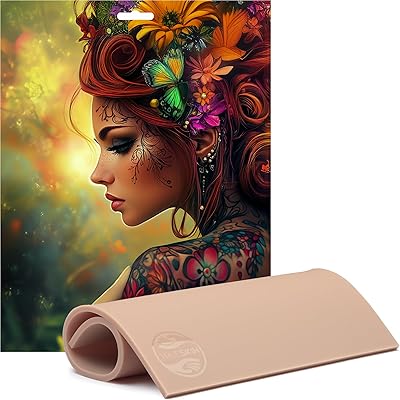
TrueSkin SilkTouch 8.5″x11″ Tattoo Practice Skin
83%
88%
Ink Absorption
74%
Surface Realism
83%
Durability
86%
Double-Sided Usability
81%
Value for Money
More
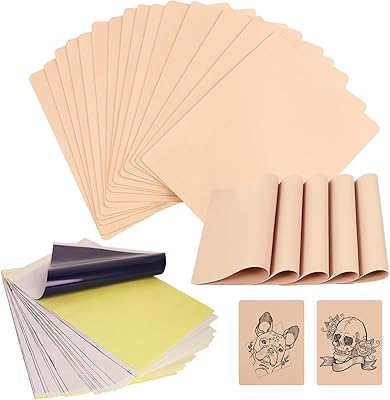
WZPB 40-Piece Tattoo Skin Transfer Paper Kit
68%
54%
Skin Texture Realism
67%
Value for Money
58%
Transfer Paper Quality
61%
Reusability
76%
Beginner Suitability
More
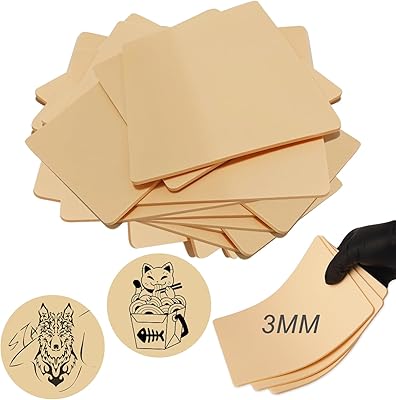
Prgislew Tattoo Practice Skins 15Pcs 3MM
85%
88%
Realistic Skin Feel
92%
Durability & Reusability
85%
Ease of Use for Beginners
90%
Double-Sided Design for Extended Practice
87%
Value for Money
More
Jconly Blank Tattoo Practice Skin 30Pcs 8×6 in
86%
92%
Realistic Feel & Durability
90%
Value for Money
87%
Stretchability & Resistance to Tearing
85%
Dual-Sided Design Effectiveness
88%
Overall Practice Experience
More
Emalla 3mm Fake Tattoo Skin 20-Pack
80%
74%
Skin-Feel Realism
83%
Ink Retention
81%
Sheet Durability
86%
Value for Money
91%
Portability
More
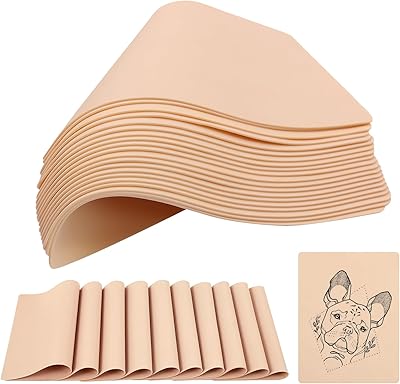
Yuelong 30-Pack Silicone Tattoo Practice Skins
78%
74%
Skin Realism & Texture
71%
Needle Depth Feedback
83%
Ink Clarity & Line Quality
66%
Reusability & Longevity
88%
Value for Quantity
More
Medarchitect Silicone Tattoo Practice Hand
77%
78%
Surface Realism
82%
Ink Absorption
71%
Material Feel
74%
Durability
81%
Anatomical Accuracy
More
EH Tattoo Practice Skin 5Pcs 8″ x 12″ Pink
86%
88%
Ease of Use
91%
Realism of Texture
85%
Durability
89%
Value for Money
86%
Needle Depth Control
More
DOCTORCOS Silicone V-Line Face Lifting Mask
79%
81%
Lifting Effectiveness
68%
Comfort & Fit
89%
Material Quality
86%
Sensitive Skin Compatibility
77%
Ease of Use
More
KnowU Silicone Nail Art Practice Hand
77%
74%
Silicone Texture & Realism
61%
Nail Tip Fit & Retention
79%
Finger Poseability
86%
Workflow Compatibility
67%
Hand Proportions & Size Accuracy
More

FAQ

The A Pound of Flesh 11x9 Silicone Tattoo Practice Skin comes closer to real skin than most synthetic alternatives, but it is important to be honest: no practice material fully replicates the warmth, elasticity, and variable tension of skin on a living person. What this silicone blank does well is resist the needle in a way that feels purposeful rather than hollow, which helps build better technique than foam ever could. Think of it as a strong approximation, not a perfect substitute.

It works with both rotary and coil machines without any compatibility issues. The surface density is forgiving enough that you can adjust needle depth and speed settings as you normally would. It is also a good tool for testing voltage and hit speed on a machine you just tuned or rebuilt.

A damp cloth or a gentle wipe-down with mild soap and water is enough to remove surface ink between uses. Avoid acetone, alcohol-based cleaners, or anything abrasive, as these can break down the silicone surface over time and affect how the material takes ink in future sessions.

You can get multiple sessions out of it, but it is not indefinitely reusable. Light linework and color work will leave the surface workable for several sessions, while heavy shading or repeated needle passes in the same area will visibly wear it down. Most artists treat each piece as finite and rotate through a few blanks at a time.

Standard professional tattoo inks perform well, and the water-resistant surface handles both black-and-grey and full-color work without major bleed distortion. Highly fluid or watered-down inks may behave slightly differently than on skin, so it is worth factoring that in when reading color results. It is a useful tool for testing how a specific brand or viscosity behaves before using it on a client.

Yes, and that is actually one of its more underrated uses. The beveled edge gives the blank a clean, finished look that holds up well when mounted or framed. Several shop owners use completed pieces as portfolio samples on their walls, which is a legitimate way to get extra value out of this tattoo blank beyond pure practice.

It works for beginners, but the price point assumes you are already committed to learning properly rather than just curious. If you are in the very early stages and unsure whether tattooing is for you, starting with a cheaper synthetic skin to get a feel for the process makes more financial sense. Once you are ready to practice with purpose and build real muscle memory, this silicone practice skin is genuinely worth the investment.

Foam skins are significantly more forgiving — arguably too forgiving. They collapse under the needle in a way that masks poor depth control and lets sloppy linework look cleaner than it actually is. This silicone blend pushes back more honestly, which means your mistakes are more visible and your corrections more meaningful. For anyone serious about improving, that trade-off is well worth the price difference.

Because each piece is handmade, there can be minor variations in surface texture between individual units. Most buyers do not notice a meaningful difference, but it is something to be aware of if you are highly sensitive to surface consistency. It is a reasonable trade-off for domestic handmade production compared to the more uniform but often lower-quality output of mass-produced alternatives.

Some cosmetic tattoo artists do use silicone practice skins for technique work, and this tattoo blank is thick enough to provide useful depth feedback for that purpose. That said, the flesh-tone surface and material density are optimized for traditional tattooing rather than the finer, shallower strokes used in microblading. It can serve as a general surface practice tool, but artists focused specifically on cosmetic techniques may want to supplement it with materials designed for that niche.