Overview

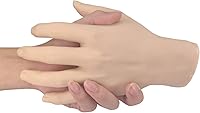
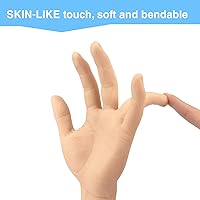
The Medarchitect Silicone Tattoo Practice Hand fills a real gap for anyone serious about tattooing — that awkward stretch between sketching on flat paper and actually working on a client's hand. Modeled after an adult male left hand at true life size, it replicates the curves, knuckle creases, and finger contours you would encounter in a real session. At its mid-range price point, buyers expect more than a flat silicone slab, and this fake hand model does deliver a noticeably three-dimensional, textured surface. Medarchitect focuses squarely on training and education tools, and that specialization shows in the attention to anatomical detail here.

Features & Benefits

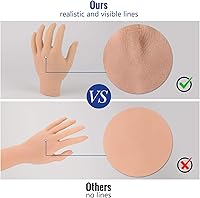
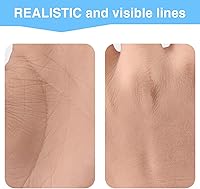
The silicone compound used here is soft and pliable enough to push a needle through with genuine resistance — closer to real skin than the stiff practice pads many artists start with. Knuckle ridges and finger creases are well-defined, which matters when you are trying to nail the tricky spots where skin bunches or stretches during a real hand tattoo. The surface accepts ink without heavy spreading, and because it is water resistant, wiping it down between sessions is straightforward — no staining or warping over repeated use. A slip-resistant base keeps it stable on a workbench, and the satisfaction guarantee removes most of the purchase risk.

Best For

This tattoo training hand makes the most sense for tattoo apprentices who have not yet built the confidence — or the client roster — to experiment with bold hand placements on real people. It is equally useful for working artists who want to test a new machine, needle configuration, or ink brand without any stakes. Tattoo school instructors will appreciate that it can be wiped clean and reused across multiple students without hygiene concerns. SFX makeup artists also get genuine value here, as the realistic hand form works well for practicing prosthetic edges near joints and knuckles. As a gift, it is a genuinely practical choice over novelty items.

User Feedback

Buyers who have worked with this fake hand model tend to praise the ink absorption most — it holds color well without pooling or skating across the surface the way cheaper alternatives do. The texture earns consistent compliments, with many noting it feels closer to real skin than flat practice sheets. That said, some users point out that the silicone is firmer than live skin, which can slightly misrepresent needle depth and resistance for complete beginners. A handful of reviews flag minor ink bleed at fine line widths. Most durability feedback is positive, though a few buyers noted the hand runs slightly smaller than the listing photos suggest.

Pros

  • The surface detail — knuckle ridges, finger creases, and natural contours — is realistic enough to meaningfully practice intricate hand placements.
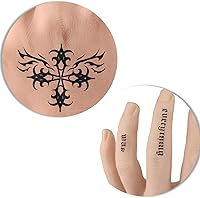
  • Ink absorbs into the silicone without excessive pooling or spreading, giving a reasonably honest sense of how lines will sit.
  • Water-resistant material means cleaning between sessions is quick and does not degrade the surface over time.
  • The slip-resistant base keeps this tattoo training hand stable on a workbench during use without needing clamps or extra support.
  • Reusable across many sessions, making the per-use cost low for anyone practicing regularly.
  • Versatile enough for SFX makeup and medical training use, adding value beyond tattooing alone.
  • Life-sized proportions mean finger and knuckle scale is accurate, which matters when planning real tattoo layouts.
  • A satisfaction guarantee with refund or replacement option reduces the risk of a disappointing purchase.
  • Lightweight at under 15 ounces, making it easy to transport to a studio or classroom.

Cons

  • Silicone is noticeably firmer than live skin, which can give a misleading sense of needle resistance for beginners.
  • Fine line work may show slight ink bleed at the edges, making it less reliable for practicing delicate detail work.
  • Only available as a left hand, limiting its usefulness for artists who specifically need right-hand placement practice.
  • Some buyers report the hand looks slightly smaller in person than it appears in product photos.
  • The ivory silicone color does not closely mimic darker or medium skin tones, which can affect how ink contrast reads during practice.
  • No stand or mount is included, so positioning the hand at different angles requires improvising a support.
  • Repeated needle passes over the same area eventually degrade the surface, reducing the number of usable sessions on a single model.
  • Not suitable as a substitute for practicing on real skin long-term — it is a bridge tool, not a permanent replacement.

Ratings

The scores below for the Medarchitect Silicone Tattoo Practice Hand were generated by our AI system after analyzing verified buyer reviews from multiple global markets, with spam, bot-submitted, and incentivized feedback actively filtered out before scoring. Each category reflects what real users — apprentices, working artists, instructors, and SFX practitioners — consistently reported across their actual hands-on experience. Both the genuine strengths and the recurring frustrations are transparently baked into every number you see here.
Surface Realism
78%
22%
Most buyers are genuinely impressed by how closely the knuckle ridges, finger creases, and overall hand contours mirror a real adult hand. Artists report that navigating the curved surface around joints feels meaningfully different from flat practice pads, which translates to better spatial preparation for real client work.
The ivory color is a neutral starting point but does not replicate the full range of human skin tones, which limits how accurately you can preview ink contrast before working on a client. A small number of users felt the texture, while detailed, still has a slightly manufactured quality up close.
Ink Absorption
82%
18%
Buyers consistently note that standard tattoo ink sits into the silicone surface without immediately beading or skating across, giving a reasonably honest read on how lines will behave. For black and dark grey work in particular, the absorption feels close enough to skin to be a useful reference point.
Fine line work is where this fake hand model shows its limits — some users report minor ink bleed at narrow line widths that does not reflect what would happen on real skin. Light-colored and pastel inks also tend to look different on the ivory base than they would on varied human skin tones.
Material Feel
71%
29%
The soft silicone compound is noticeably more pliable than rigid practice blocks, and buyers appreciate that it does not feel like plastic under the needle. For artists transitioning from flat practice sheets, the three-dimensional flexibility is a clear step up in terms of tactile realism.
Silicone is inherently firmer than live human skin, and this is the most commonly cited limitation in buyer feedback. Artists who build their needle depth calibration primarily on this model sometimes find they need to readjust when moving to real clients, which is a meaningful training gap.
Durability
74%
26%
For a training prop used across multiple sessions, most buyers find this tattoo training hand holds up well — the surface does not tear prematurely under normal needle pressure, and the water-resistant material shows no significant warping or staining after repeated cleaning.
Concentrated needle work in the same small area will degrade that spot noticeably faster than spread-out practice, limiting reusability for anyone drilling repetitive fine details in one location. A handful of long-term users report the silicone starts to look visibly worked-over after heavy use.
Anatomical Accuracy
81%
19%
The life-sized proportions based on an adult male hand are accurate enough that artists can use it to realistically plan tattoo layouts — sizing lettering across knuckles, wrapping designs around fingers, and judging how artwork will flow over the hand dorsum all translate meaningfully.
It is modeled exclusively as a left hand, which is a genuine limitation for artists who need to practice right-hand placements or want to compare symmetrical designs. The hand also represents one specific hand size and shape, leaving out variation across smaller hands or different builds.
Ease of Cleaning
88%
The water-resistant silicone wipes down quickly with a damp cloth or mild soap, and buyers report that ink residue does not permanently stain the surface after normal use. Instructors sharing it across multiple students particularly appreciate how little effort the cleanup requires between sessions.
Very heavy ink saturation from extended practice sessions can leave some residual staining in deeper surface lines, particularly with highly pigmented dark inks. It is minor, but worth noting for anyone who wants to keep the surface looking pristine across many uses.
Stability During Use
83%
The slip-resistant base earns consistent praise for keeping the model steady on smooth workbench surfaces without needing clamps or extra support. Most artists find they can work at a natural tattooing pace without the hand sliding or rocking mid-session.
There is no mounting system or poseable stand included, so working at tilted or vertical angles requires improvising a prop or support. Artists who prefer to hold or reposition the model frequently during practice will find the lack of a grip handle a minor inconvenience.
Value for Money
76%
24%
At its mid-range price point, this silicone practice hand offers a noticeably better training experience than budget flat skins, and buyers generally feel the three-dimensional form factor justifies the step up in cost. For apprentices logging consistent practice hours, the per-session cost works out favorably.
Artists who go through practice props quickly due to heavy use may find the cost adds up faster than expected, since a single model has finite surface life. Compared to more premium silicone body parts used in professional training programs, this one sits in an accessible but not exceptional tier.
Versatility
79%
21%
Buyers beyond the tattoo world — particularly SFX makeup artists and jewelry sellers — report genuine satisfaction using this fake hand model for prosthetic edge practice and ring display respectively. That cross-category utility adds real value for buyers who can put it to multiple uses.
Its identity as a single left hand limits how broadly versatile it actually is — it cannot substitute for arm, torso, or full-body practice surfaces. For artists whose primary work is not hand tattoos, the narrow focus of this specific form factor reduces its everyday utility.
Packaging & Presentation
67%
33%
Most buyers report the model arrives well-protected and undamaged, and the overall presentation is clean enough to make it a reasonable gift purchase for a tattooing enthusiast. The no-frills packaging does its job without excess waste.
Several buyers mention that the hand looks larger in product photos than it actually is in person, which creates a sizing expectation gap at unboxing. There are no accessories, instructions, or supplementary materials included, which some beginners find leaves them without much guidance on how to get the most from the model.
Needle Feedback
66%
34%
Compared to wooden practice blocks or paper, the silicone gives genuine needle resistance that helps artists develop a feel for machine voltage and stroke length in a more realistic context. For equipment testing and tuning, it performs well as a low-stakes surface.
The firmness discrepancy between silicone and live skin means needle depth calibration learned here does not transfer perfectly to real tattooing. Artists who rely too heavily on this surface for depth training risk developing pressure habits they will need to correct when working on actual clients.
Realism for Training
73%
27%
As a bridge between flat practice skin and live clients, this tattoo training hand fills a real gap in most training progressions. Apprentices who use it alongside other practice methods report it builds hand confidence and layout skills that flat surfaces simply cannot provide.
It works best as one tool in a broader training toolkit rather than a standalone solution. Artists who use it exclusively and skip other practice formats tend to find certain skills — particularly shading depth and fine line precision — did not transfer as smoothly as expected to real skin.
Brand Reliability
77%
23%
Medarchitect has a focused product identity around tattoo training, and buyers generally find the quality consistent with what the brand promises. The satisfaction guarantee with refund or replacement backing adds a layer of confidence that broader general merchandise brands often do not provide.
The brand does not have the long-established reputation of major professional tattoo supply companies, which makes some buyers cautious about repeat purchases. Customer service response times for guarantee claims are not consistently reported, leaving some uncertainty around how smoothly the process runs in practice.

Suitable for:

The Medarchitect Silicone Tattoo Practice Hand is a strong fit for tattoo apprentices who are not yet ready to work on clients but need something more realistic than flat practice skin to build their confidence. If you are learning hand and finger placements specifically — one of the trickier areas to tattoo due to the curved surfaces and tight skin over joints — having a three-dimensional model to work on is genuinely useful. Working artists who want to test a new machine setup, try out a different needle grouping, or dial in ink consistency will also find this fake hand model worth keeping on the workbench as a low-stakes option. Tattoo school instructors benefit from its reusability and easy cleaning, making it a practical shared prop across multiple students. Beyond tattooing, SFX makeup artists who practice near knuckles and finger joints will appreciate the anatomical accuracy. Gift buyers searching for something practical for a tattooing enthusiast will find this tattoo training hand a more thoughtful choice than novelty items.
Not suitable for:

The Medarchitect Silicone Tattoo Practice Hand is not the right choice for artists expecting a surface that perfectly replicates the feel of live human skin — silicone is inherently firmer and behaves differently under the needle, which means needle depth feedback and ink spread will not translate one-to-one to real tattooing. Complete beginners who rely solely on this model to calibrate their hand pressure may develop habits they need to correct once they move to actual clients. It is also a left-hand-only model, so anyone specifically needing to practice right-hand placements will need to look elsewhere or purchase both orientations. If you are after a full arm or body-form practice surface, this fake hand model is too limited in scope. Artists who primarily do large-scale body work rather than hand tattoos will find limited relevance in this specific form factor.
Specifications

  • Brand: Manufactured by Medarchitect, a brand focused on tattoo training and education tools.
  • Material: Constructed from flexible, skin-like silicone designed to mimic the feel and give of real human skin.
  • Hand Orientation: Modeled as a left hand only; a separate purchase is required for right-hand practice.
  • Size: Life-sized proportions based on an adult male left hand for accurate scale practice.
  • Package Dimensions: The packaged unit measures 9.84 x 8.11 x 2.13 inches for shipping and storage reference.
  • Weight: The model weighs 14.89 ounces, making it lightweight enough to carry to a studio or classroom.
  • Color: Available in an ivory tone intended to approximate a neutral skin base for ink visibility.
  • Surface Texture: Features realistic skin texture with visible knuckle lines, finger creases, and natural hand contours.
  • Ink Compatibility: The silicone surface accepts standard tattoo ink without excessive pooling or immediate spreading.
  • Water Resistance: Rated as water resistant, allowing the surface to be wiped clean between sessions without degradation.
  • Base Design: Includes a slip-resistant base to keep the model stable on flat work surfaces during practice.
  • Reusability: Designed for repeated use across multiple practice sessions before the surface shows significant wear.
  • Style: Classified as soft style, indicating a pliable, flexible feel rather than a rigid or semi-hard build.
  • Sellers Rank: Ranked #146 in Tattoo Machine Parts on Amazon at time of listing, indicating consistent category demand.
  • Guarantee: Backed by a satisfaction guarantee offering a refund or replacement if the buyer is not satisfied.
  • Versatility: Suitable for tattoo practice, SFX makeup application, jewelry display, stage props, and basic medical training use.
  • Pack Size: Sold as a single unit — one left-hand silicone model per package.

Related Reviews
Tiebeauty Silicone Right-Hand Nail Practice Hand
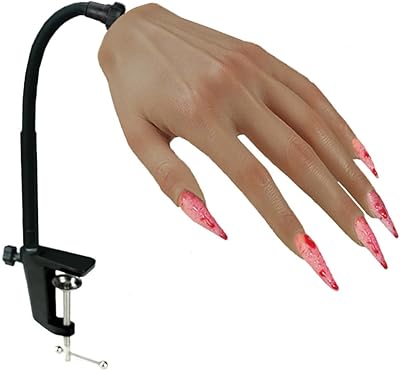
81%
88%
Material Quality
84%
Finger Articulation
67%
Nail Tip Fit
86%
Realism & Simulation
61%
Stand Stability
More
Tiebeauty Silicone Practice Hand for Acrylic Nails - Left Hand with Stand
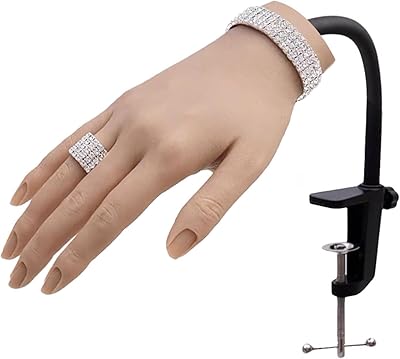
88%
92%
Realistic Feel & Flexibility
88%
Ease of Use & Positioning
85%
Durability
91%
Value for Money
89%
Cleaning & Maintenance
More
PALPTASN Silicone Practice Hand for Acrylic Nails with Stand Bracket (Right Hand, Ivory White)
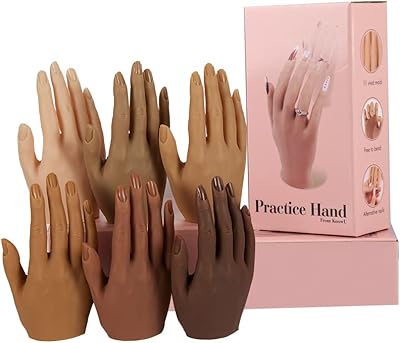
86%
88%
Realism of Feel
91%
Flexibility and Adjustability
85%
Ease of Use
87%
Durability and Reusability
90%
Ease of Cleaning
More
KnowU Silicone Nail Art Practice Hand
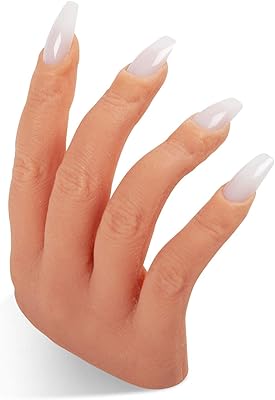
77%
74%
Silicone Texture & Realism
61%
Nail Tip Fit & Retention
79%
Finger Poseability
86%
Workflow Compatibility
67%
Hand Proportions & Size Accuracy
More
Nail Nobility Professional Silicone Practice Half Hand

85%
91%
Realism and Poseability
87%
Durability and Build Quality
89%
Ease of Cleaning and Maintenance
84%
Value for Money
90%
Ideal for Beginners
More
TrueSkin SilkTouch 8.5″x11″ Tattoo Practice Skin
83%
88%
Ink Absorption
74%
Surface Realism
83%
Durability
86%
Double-Sided Usability
81%
Value for Money
More
LIONVISON Practice Hand for Acrylic Nails
89%
92%
Flexibility and Adjustability
88%
Ease of Use
91%
Realistic Feel and Texture
85%
Durability and Longevity
89%
Stability and Clamp Functionality
More
Wilfniee Practice Hand for Acrylic Nails
85%
88%
Realism of Hand Design
91%
Flexibility of Finger Joints
85%
Value for Money
83%
Portability and Stability of Stand
90%
Ease of Nail Tip Application
More
Prgislew Tattoo Practice Skins 15Pcs 3MM
85%
88%
Realistic Skin Feel
92%
Durability & Reusability
85%
Ease of Use for Beginners
90%
Double-Sided Design for Extended Practice
87%
Value for Money
More
Saviland Advanced Practice Hand for Acrylic Nails
85%
89%
Ease of Use
85%
Flexibility of Hand
91%
Realistic Feel
92%
Replaceable Nail Tips
87%
Value for Money
More

FAQ

It is genuinely useful as a training step, but you should go in with realistic expectations. The silicone is firmer than live skin, so needle resistance and depth feedback will not be identical to working on a real hand. That said, the surface contours — knuckle ridges, finger creases, curved surfaces — are accurate enough to help you plan placements and build muscle memory for navigating a three-dimensional hand shape.

Both machine types work fine on this silicone practice hand. The surface accepts needle penetration from rotary and coil setups without tearing prematurely, so you can use it to test machine tuning regardless of your preferred equipment.

A damp cloth or mild soap and water is all you need. The water-resistant silicone wipes down easily without absorbing liquids, and the surface does not warp or stain significantly from cleaning. Just avoid harsh solvents, which can break down silicone over time.

That depends heavily on how concentrated your needle passes are. If you spread your work across the full surface, most users report getting several solid sessions from a single model. If you repeatedly needle the same small area, that spot will degrade faster. It is not meant to last indefinitely, but it offers reasonable value for the number of sessions you get.

No, this listing is for the left hand only. Medarchitect does offer a right-hand version separately, so if you need both orientations you would need to purchase them individually.

It is a solid starting point, but be aware that silicone teaches you placement and surface navigation more than it teaches precise needle depth. Beginners often develop good spatial habits on this fake hand model, but they should supplement with flat practice skin for fine line and shading depth work before moving to clients.

Yes, most standard tattoo ink colors show up reasonably well against the ivory silicone, especially darker pigments like black and dark grey. Very light colors or white ink will naturally have less contrast, similar to how they behave on fair skin.

Absolutely — the surface accepts most types of ink, including henna paste. For artists learning henna hand and finger designs specifically, this tattoo training hand is actually a practical tool since the three-dimensional finger shape mimics real application conditions far better than flat surfaces.

The slip-resistant base does a decent job on smooth workbench surfaces. Most users find it stays put during normal tattooing without needing clamps. That said, if you prefer to work at unusual angles, you may want to prop it against something since there is no built-in mounting option.

It works well as a jewelry display — rings, bracelets, and finger accessories sit naturally on it thanks to the realistic proportions. Several buyers use it for exactly this purpose alongside tattoo practice, which adds some everyday utility beyond training sessions.