Overview

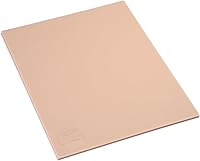
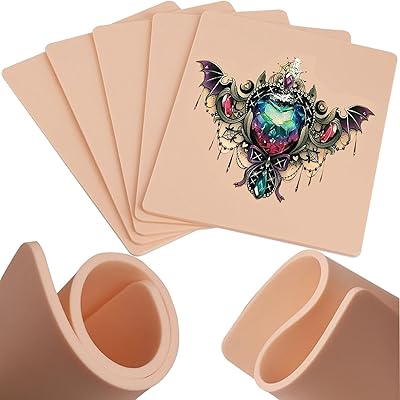
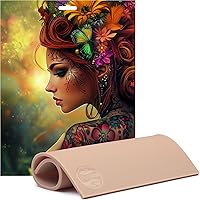
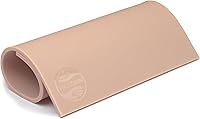
The TrueSkin SilkTouch 8.5″x11″ Tattoo Practice Skin is a platinum silicone training tool built for artists at any stage, from first-timers still learning to hold a machine to more experienced artists warming up before a session. The letter-size format is immediately comfortable — it's the same dimensions you've been drawing on your whole life, which makes sketching reference designs before picking up the needle feel natural. At 4–5mm thick, it has enough body to stay firm under the machine without flopping around. It's not cheap foam, but it's not a bespoke custom mold either, sitting in a practical middle ground that most practicing artists will actually want to keep around.
Features & Benefits

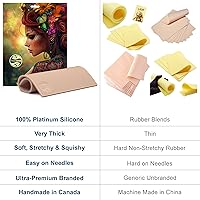
What separates this silicone practice skin from the foam and rubber sheets most beginners start with is how it actually takes ink. Platinum silicone has a surface tension and give that's noticeably closer to real skin — needles meet genuine resistance rather than punching through like tissue paper. The double-sided construction earns its keep; each face can be worked independently, and the thickness means there's no bleed-through to the reverse side. The water-resistant surface wipes clean between sessions, so a single sheet can stretch across many hours of use. The embedded branding is a minor detail, but it does make finished panels presentable enough for a trade show table or portfolio display.

Best For

This tattoo training sheet is a strong fit for anyone in the early-to-mid stages of their tattooing journey. Beginners get the most obvious value — the surface lets you focus on building muscle memory and line consistency without the pressure of working on a paying client. Apprentices who need a daily-use surface that won't fall apart after a few sessions will appreciate how well it holds up. It also makes sense for established artists who want to test a new needle configuration or an unfamiliar ink brand before committing to skin. If you've outgrown foam practice sheets and want something that responds more realistically, this is the logical next step.

User Feedback

Buyers tend to divide along experience lines. Beginners and apprentices consistently highlight ink absorption and overall feel as standout qualities, with many calling it the most realistic non-skin surface they've tried. More seasoned artists occasionally point out that the silicone surface runs a touch slicker than real skin, which can make some fine-detail techniques feel slightly off during practice. On the durability front, most report that the TrueSkin practice panel holds up well across many sessions — though concentrating heavy linework in one spot will eventually show wear. Value for money sentiment is broadly positive, particularly given how many usable sessions a single sheet delivers before it's time to replace it.

Pros

  • Platinum silicone accepts ink noticeably better than foam or rubber sheets, giving practice sessions more real-world relevance.
  • Double-sided construction effectively doubles usable surface area, with no ink bleeding through to the reverse face.
  • The 4–5mm thickness gives needles genuine pushback that thinner or cheaper practice surfaces can't replicate.
  • Water-resistant surface wipes clean between sessions, extending the life of a single sheet across many hours of use.
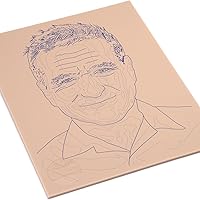
  • Letter-size format makes it easy to sketch reference designs directly onto the sheet before picking up the machine.
  • Holds up well over multiple uses without tearing, warping, or the ink contaminating the underlying structure.
  • Hypoallergenic silicone material is comfortable to handle for extended sessions with no irritation concerns.
  • Finished panels are clean and polished enough for trade show displays or portfolio documentation.
  • The opacity at this thickness means neither side interferes with the other, keeping both faces fully usable.

Cons

  • The silicone surface runs slicker than real skin, which can subtly skew how certain needle techniques feel in practice.
  • No artificial surface — this one included — can replicate the variability and elasticity of live human skin.
  • Heavy linework concentrated in one area will eventually leave permanent surface damage and reduce usability in that zone.
  • Beginners risk building habits on a forgiving surface that don't translate cleanly when they move to actual skin.
  • The embedded brand logo may feel like an unwanted intrusion for artists who prefer a plain, unmarked working surface.
  • A single 8.5″x11″ sheet won't accommodate artists who habitually work with large-scale or panoramic compositions.
  • Less practical for seasoned artists trying to refine advanced techniques where real skin behavior is the critical variable.
  • The weight and rigidity may feel unfamiliar to artists accustomed to lighter, more flexible foam-based alternatives.

Ratings

The scores below reflect AI-driven analysis of verified global buyer reviews for the TrueSkin SilkTouch 8.5″x11″ Tattoo Practice Skin, with spam, bot activity, and incentivized feedback actively filtered out before scoring. This silicone practice skin earned consistently strong marks in material quality and ease of use, while real pain points around surface feel and advanced-artist limitations are transparently captured in the ratings. Both the genuine strengths and the recurring frustrations buyers reported are reflected here, giving you a complete picture before you commit.

Ink Absorption
88%
Artists across skill levels consistently praised how smoothly ink sits into the platinum silicone during practice. Unlike foam alternatives, this surface holds pigment without the ink pooling or beading, giving a more accurate read on saturation levels. For anyone calibrating a new ink brand or testing consistency before a client session, the absorption behavior feels meaningfully closer to real skin.
A handful of experienced artists noted that very diluted washes and watercolor-style techniques behave slightly differently than they would on skin, requiring minor adjustments to how they interpret results. The absorption is not a perfect match for every ink formulation, particularly at thinner viscosities.
Surface Realism
74%
26%
For a non-human surface, the SilkTouch finish comes closer to mimicking real skin than anything in the foam or rubber category. The resistance the material provides under the needle gives a tangible sense of depth control that translates to more productive practice sessions than cheaper alternatives allow.
Several users — particularly those with professional experience — flagged that the surface runs noticeably slicker than real skin, which can subtly skew needle angle and drag perception. The silicone also lacks the warmth, elasticity, and variability of live skin, meaning some advanced technique refinement still requires a real-world surface.
Durability
83%
Most buyers report this sheet holding up across many sessions of regular use without tearing, warping, or ink contaminating the underlying structure in any permanent way. Artists who spread their work across the surface rather than repeatedly hitting the same spot find it lasts considerably longer than foam equivalents.
Concentrating heavy linework or multiple saturation passes in one area will eventually leave visible surface degradation in that zone, limiting reuse of that specific patch. High-traffic areas show wear faster than some buyers expected given the manufacturer's longevity claims.
Double-Sided Usability
86%
The double-sided claim holds up in real practice. At 4–5mm, the sheet is thick enough that completed work on one face leaves zero ghost impression or show-through on the reverse, giving users genuinely independent working surfaces on both sides.
A small number of buyers noted that the two faces can feel marginally different in surface smoothness depending on manufacturing variance, which occasionally creates an inconsistency between sessions. It's a minor issue, but worth knowing if you're using both sides back-to-back and comparing results.
Value for Money
81%
19%
Buyer sentiment around pricing is broadly positive, particularly for artists who get multiple full-length sessions out of a single sheet. Compared to foam sheets at lower price points, the step-up to platinum silicone translates to a measurably better practice experience, making the cost feel proportionate for serious practitioners.
Casual or infrequent users who only get two or three sessions from the sheet before setting it aside may find the value equation harder to justify. Budget-conscious beginners weighing this against multi-pack foam alternatives will need to consider quality-per-session against upfront cost.
Thickness & Opacity
91%
The 4–5mm build is one of this sheet's clearest practical advantages. It provides a firm, stable working surface that stays in place during a session and gives needles the depth resistance that thinner practice materials simply don't offer.
The extra thickness adds weight and stiffness compared to lighter alternatives, which some users found slightly inconvenient when repositioning the sheet mid-session. It does make the panel feel more like a rigid board than a flexible sheet, which takes some adjustment.
Surface Texture
69%
31%
The SilkTouch finish provides a smoother, more consistent working surface than rubber or foam, and it reads well visually once ink is applied, making it easier to critically assess line quality and shading coverage during and after practice.
Multiple buyers mentioned the texture feels noticeably slicker than real human skin, particularly to artists with hands-on tattooing experience. This can affect how needle drag and hand speed translate, meaning some techniques practiced here will feel slightly different when applied to an actual client.
Ease of Cleaning
93%
The water-resistant silicone surface makes post-session cleanup remarkably quick. A damp cloth removes most surface ink in seconds, and the material doesn't stain or absorb residual pigment into its structure the way foam alternatives can, keeping the sheet ready for the next session without any prep work.
While routine cleaning is effortless, deeply embedded ink in areas of heavy saturation doesn't always wipe away completely, leaving faint staining in high-use zones. This doesn't affect usability, but the sheet won't look pristine after extended regular use.
Needle Resistance
79%
21%
The resistance this surface provides under the needle is meaningfully closer to real skin than foam or rubber alternatives. Artists working on fundamentals like consistent depth and even pressure report that the tactile feedback is useful enough to build genuinely transferable habits.
Experienced artists note that the resistance still falls short of the elastic pushback that live skin provides, particularly when simulating how skin stretches during a real session. The gap is smaller than with foam, but it remains present and worth factoring in.
Size & Format
87%
The 8.5″x11″ letter-size footprint is immediately practical for most studio and home setups. Artists can sketch or print reference designs on standard paper and work directly alongside the sheet, or use the surface to test full-composition layouts before committing to skin.
For artists who habitually work in larger formats or prefer panoramic designs, a single sheet won't cover enough area in one piece. Larger-scale compositions require taping multiple sheets together, which introduces seam inconsistencies that can disrupt the workflow.
Beginner Suitability
84%
Beginners consistently rate this among the better practice surfaces for early-stage skill development. The familiar letter-size format removes one variable from the learning curve, and the realistic ink behavior gives new artists more accurate feedback than cheaper training sheets typically provide.
Some entry-level users found the surface slightly more demanding than expected, particularly those transitioning from very forgiving foam. Without proper guidance on machine settings and needle depth, beginners may initially struggle to calibrate their technique to the firmer resistance of platinum silicone.
Material Safety
96%
The hypoallergenic platinum silicone formulation receives consistently positive feedback from users who handle the sheet for extended sessions. No reported cases of skin irritation or allergic reactions have surfaced in mainstream buyer reviews, making it a comfortable choice for prolonged studio or home use.
A very small number of users noted a faint chemical odor when first opening the package. It dissipates quickly and doesn't appear to persist, but airing out a new sheet before use is a sensible precaution for anyone who is sensitive to such things.
Portability & Storage
78%
22%
At letter-size dimensions, this sheet fits neatly into most portfolio cases, art folders, or standard sleeves, making it easy to carry to a studio, apprenticeship, or convention without any dedicated packaging. The rigid structure also means it won't crumple or distort in transit.
The 12.7 oz weight and 4–5mm thickness make it bulkier than ultra-thin foam alternatives that pack flat with almost no volume. For artists traveling frequently with a full kit, the added bulk can be a minor inconvenience in compact bags.
Branding & Presentation
72%
28%
For artists who plan to display completed practice panels at trade shows or include them in physical portfolios, the embedded TrueSkin logo gives finished work a more professional, product-like appearance than a plain unmarked sheet would. Several convention-focused buyers specifically appreciated this detail.
Artists who prefer a clean, neutral practice surface found the embedded logo intrusive, feeling it limited usable space near the branding area. It's a subjective complaint, but it appeared consistently enough across buyer feedback to be worth flagging for anyone particular about their working canvas.

Suitable for:

The TrueSkin SilkTouch 8.5″x11″ Tattoo Practice Skin is best suited to tattoo artists who treat skill-building as a structured, ongoing part of their craft rather than something they do only when a client cancels. Apprentices working through a formal program will get the most consistent value here, since the sheet handles daily use without tearing or warping after just a handful of sessions. Beginners upgrading from foam or rubber alternatives will notice a real difference in how ink sits and how the needle responds, making this a logical and worthwhile step up at that stage of development. Intermediate artists looking to test an unfamiliar needle configuration, try a new ink, or work through a tricky composition before touching a client will find the letter-size format practical for that kind of low-pressure experimentation. It also suits anyone preparing demo pieces for a trade show or convention, where finished panels need to look polished and hold up under scrutiny.
Not suitable for:

The TrueSkin SilkTouch 8.5″x11″ Tattoo Practice Skin is not the right tool for artists who expect a direct, one-to-one translation of technique from silicone to real skin — no artificial surface can fully replicate the elasticity, moisture variation, and inconsistency of human skin, and expecting otherwise will lead to frustration. Highly experienced professionals focused on refining advanced, skin-specific skills may find this surface a step removed from what they actually need, particularly when subtle tissue behavior becomes critical to the result. The silicone material runs slightly slicker than real skin, which means some needle angles and depth cues won't feel quite right compared to a live session. Artists who only plan to use a practice surface once or twice won't extract enough value to justify the cost — this sheet earns its keep across repeated sessions, not occasional ones. If your goal is to simulate the stretch and give of skin under tension during a full tattoo, this panel simply cannot get you there.
Specifications

  • Material: The practice surface is constructed from platinum-grade silicone, a higher-purity formulation that accepts ink more evenly than standard silicone, rubber, or foam alternatives.
  • Dimensions: Each sheet measures 8.5″x11″, matching standard letter-size paper to make laying out reference sketches before a session straightforward.
  • Thickness: The sheet is 4–5mm thick, providing enough depth for realistic needle resistance and maintaining full opacity between both tattooable faces.
  • Tattooable Sides: Both the front and back faces are fully tattooable and manufactured to an equal surface standard, allowing independent use of each side.
  • Water Resistance: The surface is water-resistant and can be wiped clean with a damp cloth or mild cleanser between practice sessions without degrading the material.
  • Color Options: The sheet is available in white or clear, offering a neutral canvas that makes ink colors and line work easy to read during practice.
  • Weight: The sheet weighs 12.7 oz, giving it a substantive feel that keeps it stable on a flat work surface during a session.
  • Package Size: Packaged dimensions are 12.4x9.41x0.55 inches, making it flat enough to store in a portfolio case or standard art supply folder.
  • Model Number: The official manufacturer model number is TS8511-2, as designated by TrueSkin Tattoo for this specific size and configuration.
  • Brand: This sheet is manufactured by TrueSkin Tattoo, a brand focused specifically on professional-grade silicone practice materials for tattoo artists.
  • Skin Safety: The platinum silicone formulation is hypoallergenic and non-irritating, making it safe for extended contact handling during long practice sessions.
  • Opacity: The thickness of the sheet produces high opacity between faces, ensuring that ink work completed on one side does not show through to the other.
  • Durability: The manufacturer describes the material as museum-grade, with a stated longevity claim of a century or more under normal handling and storage conditions.
  • Surface Finish: The SilkTouch surface finish is engineered to replicate the texture and needle resistance of human skin more closely than standard foam-based practice sheets.
  • Embedded Branding: The TrueSkin logo is built into the sheet itself, making completed practice panels presentable enough for portfolio documentation or trade show display.

Related Reviews

Jconly Blank Tattoo Practice Skin 30Pcs 8×6 in
86%
92%
Realistic Feel & Durability
90%
Value for Money
87%
Stretchability & Resistance to Tearing
85%
Dual-Sided Design Effectiveness
88%
Overall Practice Experience
More
EH Tattoo Practice Skin 5Pcs 8″ x 12″ Pink
86%
88%
Ease of Use
91%
Realism of Texture
85%
Durability
89%
Value for Money
86%
Needle Depth Control
More
MECOLOUR Temporary Tattoo Paper 8.5″×11″ 10-Pack
75%
88%
Ease of Application
74%
Print Quality
71%
Wear Duration
67%
Color Vibrancy
69%
Adhesion & Skin Bond
More
Hustle Butter Second Skin Tattoo Wrap 8.8yd
79%
88%
Adhesion Strength
84%
Waterproof Performance
82%
Breathability
61%
Ease of Application
86%
Removal Experience
More
WZPB 40-Piece Tattoo Skin Transfer Paper Kit
68%
54%
Skin Texture Realism
67%
Value for Money
58%
Transfer Paper Quality
61%
Reusability
76%
Beginner Suitability
More
Prgislew Tattoo Practice Skins 15Pcs 3MM
85%
88%
Realistic Skin Feel
92%
Durability & Reusability
85%
Ease of Use for Beginners
90%
Double-Sided Design for Extended Practice
87%
Value for Money
More
A Pound of Flesh 11x9 Silicone Tattoo Practice Skin
79%
79%
Skin-Feel Realism
83%
Needle Feedback
81%
Ink Absorption
91%
Work Surface Size
66%
Durability
More
Emalla 3mm Fake Tattoo Skin 20-Pack
80%
74%
Skin-Feel Realism
83%
Ink Retention
81%
Sheet Durability
86%
Value for Money
91%
Portability
More
Yuelong 30-Pack Silicone Tattoo Practice Skins
78%
74%
Skin Realism & Texture
71%
Needle Depth Feedback
83%
Ink Clarity & Line Quality
66%
Reusability & Longevity
88%
Value for Quantity
More
Recovery Aftercare Derm Shield 5.9″x8yd Tattoo Bandage
81%
86%
Adhesion Strength
89%
Waterproof Performance
84%
Breathability
78%
Skin Compatibility
88%
Flexibility & Conformity
More

FAQ

It's genuinely useful, but the key is managing expectations. This kind of surface gives you real reps for needle control, line consistency, and shading technique without the pressure of working on a person. The fundamentals you build here do carry over. Think of it as structured practice in a controlled environment rather than a perfect stand-in for skin.

It holds up in practice. The 4–5mm thickness puts enough material between the two faces that ink stays contained to whichever side you're working on. You can finish a complete piece on the front, flip it over, and start fresh on the back without any ghosting or show-through from the first side.

Standard professional tattoo needles and inks work without any special adjustments. The platinum silicone accepts most ink formulations cleanly. If you're testing a specific ink dilution or a wash consistency, it's worth doing a small test patch first, since very thin dilutions can behave slightly differently on silicone than on skin.

A damp cloth or paper towel with a mild soap is all you need. The water-resistant surface doesn't absorb liquids, so surface ink wipes away easily after a session. Avoid harsh chemical solvents or alcohol-based cleaners, as those can break down the silicone over time and shorten the lifespan of the sheet.

It depends entirely on how you use it. Artists who spread work across the surface and avoid overworking any one area consistently report getting many hours of use from a single panel. Concentrating heavy saturation passes or linework in the same spot repeatedly will eventually mark up that zone, but the rest of the sheet stays fully usable.

The TrueSkin SilkTouch 8.5″x11″ Tattoo Practice Skin is a reasonable starting point for beginners, especially those who want something more realistic than the foam sheets bundled in most starter kits. That said, pair it with real instruction — whether that's a mentor, an apprenticeship, or a structured course — because silicone can reinforce bad technique just as easily as good technique if you're practicing in a vacuum.
The difference is immediately noticeable once you've used both. Foam is too forgiving — it tears instead of resisting, and it gives you a false sense of needle depth. Platinum silicone provides actual pushback that's closer to how skin behaves, and the ink absorption is far more representative of a real session. If you're practicing seriously, the upgrade is worth it.

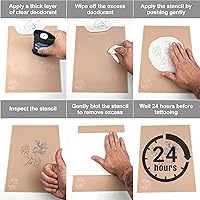
Standard stencil transfer paper works on silicone, though adhesion quality can vary by brand. Some artists apply a thin layer of stencil solution or a small amount of petroleum jelly first to improve the transfer. It's worth testing your preferred method once on a corner of the sheet before committing to a detailed reference design.

Partially yes, partially no — and it's important to be honest about that. The fundamentals you develop here, things like needle angle, machine speed, line consistency, and ink load awareness, do transfer. What doesn't carry over cleanly is the tactile feedback of live skin: its elasticity, warmth, and movement. Silicone practice builds a strong foundation, but real skin will always require its own adjustment period.

A handful of users do find it slightly slicker than they expected, particularly if they're used to the natural drag of real skin. It's noticeable but not so pronounced that it makes work difficult. A light wipe-down before starting can help, and most artists find they adjust to the feel within a session or two once they've calibrated their machine settings accordingly.