Overview

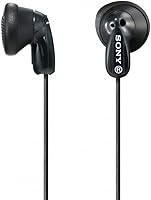
The Sony MDR-E9LP In-Ear Earbuds have been a quiet constant in the budget audio space since 2011 — and that kind of staying power says something. These Sony earbuds aren't trying to impress audiophiles; they're built for real-life daily use. At just 6 grams, you barely notice them during a long commute or a gym session. The 3.5mm wired connection means no pairing, no battery, no fuss — just plug in and listen. Two pairs of silicone ear tips come included, which is a small but genuinely useful touch that lets you dial in a more secure, comfortable fit right out of the box.

Features & Benefits

The MDR-E9LP is built around a 13.5mm dynamic driver backed by a neodymium magnet — a combination that punches above expectations at this price point. You get a frequency range stretching from 18Hz all the way to 22,000Hz, which means it handles everything from spoken podcasts to acoustic tracks without obvious gaps. The low 16 Ohm impedance is a practical perk: any phone or portable media player can drive this wired pair without a separate amplifier. The cord runs 1.2 meters — long enough for a bag-to-ears reach on a subway ride, but not so long it tangles up in your pocket constantly.

Best For

These Sony earbuds are a natural fit for students and commuters who need something reliable without overthinking the purchase. If your previous pair got lost, snapped at the jack, or just gave up, this wired pair is a quick, solid replacement that won't feel like a compromise. They also work well for people who are tired of Bluetooth dropouts — there's something refreshing about a plug-in connection that just works every time. Light gym use and casual walks are well within their range too, particularly because the rounded silicone tips stay put without causing ear fatigue over longer sessions.

User Feedback

With over 10,000 ratings and a 4.2-star average, the MDR-E9LP has earned consistent trust from a wide base of buyers. Comfort and fit draw the most praise — particularly the inclusion of two ear tip sizes, which buyers say makes a real difference for smaller or larger ear canals. On the flip side, cable durability near the jack is a repeated concern; some users report fraying after several months of regular use. Bass-heavy listeners also note the low end doesn't hit very hard, which is fair at this price tier. For casual genres like pop, podcasts, or classical, most find the audio quality more than adequate.

Pros

  • Extremely lightweight at 6 grams — easy to forget you're wearing them during long sessions.
  • Two silicone ear tip sizes included, giving you a better shot at a genuinely secure fit.
  • The 3.5mm wired connection works instantly with virtually any device — no setup required.
  • Low 16 Ohm impedance means even low-powered phones drive the MDR-E9LP without strain.
  • A 1.2-meter cord is long enough for real-world use without excess cable getting in the way.
  • Sound quality holds up well for podcasts, casual music, and calls at this price tier.
  • Sony's brand reliability adds a degree of build consistency that many no-name budget earbuds lack.
  • Over 10,000 buyer ratings with a 4.2-star average reflects broad, sustained satisfaction.
  • The rounded silicone tips provide reasonable passive noise reduction for everyday environments.
  • A quick, low-risk replacement option for anyone who lost or damaged their previous pair.

Cons

  • Cable durability near the 3.5mm jack is a recurring issue — fraying reported after months of daily use.
  • Bass response is noticeably thin for listeners who enjoy bass-heavy music genres.
  • No in-line microphone or playback controls, limiting hands-free or media control use.
  • Passive noise isolation is modest at best and won't hold up in genuinely loud environments.
  • The cord, while a practical length, can still tangle in pockets during casual carry.
  • No wireless option — a dealbreaker for anyone already accustomed to Bluetooth convenience.
  • These Sony earbuds offer little upgrade path; there are no accessory tips or carrying case included.
  • Long-term durability may disappoint users expecting multi-year everyday use from one pair.

Ratings

The scores below reflect our AI-driven analysis of thousands of verified global user reviews for the Sony MDR-E9LP In-Ear Earbuds, with spam, bot activity, and incentivized feedback actively filtered out to ensure accuracy. Each category captures what real buyers consistently praised or criticized across long-term use, not just first-impression reactions. Both the strengths that keep people coming back and the friction points that lead to frustration are represented transparently in every score.

Value for Money
91%
Buyers repeatedly call these earbuds a smart spend for what you get — a recognizable Sony product that performs reliably for daily listening without requiring much financial commitment. Commuters and students especially appreciate being able to replace a lost or broken pair quickly without any real sting to the wallet.
A small segment of buyers who compare these directly to slightly pricier competitors feel the gap in audio refinement is noticeable enough to question whether the savings are worth it. For listeners with higher expectations, the value equation shifts.
Comfort & Fit
84%
The 6-gram weight is a genuine comfort advantage — users frequently mention wearing these for two or three hours straight without the ear fatigue that heavier earbuds cause. The inclusion of two silicone ear tip sizes earns consistent praise, with many buyers noting that swapping to the smaller set made a meaningful difference in how securely the earbuds sat during a walk or commute.
A portion of users with atypically shaped ear canals report that neither included tip size provides a truly secure seal, leading to earbuds that shift or fall out during more active movement. Those doing higher-intensity workouts tend to find the fit less reliable than at rest.
Sound Quality
73%
27%
For the price tier, buyers are generally pleasantly surprised — midrange clarity comes through well enough for podcasts, vocals, and acoustic music, and the 13.5mm dynamic driver manages a reasonably open sound that does not feel as closed-in as cheaper budget competitors. Casual listeners report it handles everyday content cleanly.
The low end is where most dissatisfaction surfaces: bass-heavy genres like hip-hop, EDM, and electronic music expose the driver's limits quickly. Users who migrated from slightly more capable earbuds often describe the sound as thin or flat at higher volumes.
Cable Durability
54%
46%
The cable itself is lightweight and does not tangle aggressively during everyday carry, which users who stuff earbuds into a jacket pocket daily tend to appreciate. At the 1.2-meter length, it rarely feels like there is too much excess cord to manage.
Cable longevity is the single most common complaint across the review base. The junction where the cable meets the 3.5mm jack is the most vulnerable point, with many buyers reporting fraying, signal dropout, or full failure in that area after three to six months of regular daily use. This is a persistent, well-documented pattern.
Bass Response
58%
42%
For casual, low-volume listening to pop, classical, or spoken content, the bass presence is adequate and does not feel entirely absent. Users who listen primarily to podcasts or radio-style audio report that the low-end balance feels natural and unobtrusive.
Anyone who gravitates toward bass-forward music will find the MDR-E9LP noticeably lacking in depth and impact. The driver simply does not move enough air at low frequencies to satisfy listeners who are used to earbuds tuned for warmth or punch, and no EQ adjustment on the source device fully compensates.
Build Quality
62%
38%
The earbud housings themselves feel solid enough for the price point, and the rounded silicone tips show no early signs of degradation under normal use. Sony's manufacturing consistency means units rarely arrive with obvious defects, which matters for a product in this category.
The overall construction still reads as budget-grade — the plastic housing has little flex resistance, and the cable strain relief above the jack feels minimal. Users who handle their earbuds roughly or stuff them into bags without a case tend to see wear faster than those who treat them carefully.
Noise Isolation
67%
33%
The passive seal created by the silicone tips does a reasonable job of muffling light background noise — office hum, quiet public transit, and low-level street noise are noticeably reduced when the tips fit well. For low-distraction environments, most users find the isolation satisfactory.
In genuinely noisy environments like a busy subway car, a crowded gym, or an open-plan office with lots of conversation, the isolation falls short. There is no active noise cancellation, and the physical seal alone cannot block out sustained loud ambient noise without users cranking the volume to compensate.
Ease of Use
93%
The plug-and-play nature of a wired 3.5mm connection is something users genuinely appreciate — no app downloads, no pairing sequences, no battery to charge before a commute. Buyers who have grown frustrated with Bluetooth reliability issues specifically call out this simplicity as a reason they returned to wired earbuds.
The lack of any in-line controls means you have to physically reach for your device to adjust volume or skip tracks, which is mildly inconvenient compared to earbuds that include a remote. It is a minor friction point, but one that surfaces regularly in feedback from users switching from more feature-rich options.
Device Compatibility
88%
The 16 Ohm impedance and standard 3.5mm connector make these earbuds compatible with virtually any consumer device — older MP3 players, laptops, tablets, gaming handhelds, and most Android phones work without any adapter. Users value this universality, especially as a backup or travel pair.
Newer iPhones and a growing number of Android flagships have eliminated the 3.5mm jack entirely, which forces users to rely on an adapter that adds a step and an extra item to carry. This is an external limitation rather than a product flaw, but it does reduce the plug-and-play convenience for a meaningful segment of current smartphone users.
Midrange Clarity
76%
24%
Vocals, speech, and instruments in the midrange frequency band come through with a clean, unmuddied quality that works well for podcasts, audiobooks, and acoustic music. Users who listen primarily to voice-driven content consistently rate this aspect favorably compared to similarly priced alternatives.
At higher volumes, some midrange smearing becomes noticeable — the driver starts to lose precision on complex tracks with layered instrumentation. It is not severe, but attentive listeners picking through detailed recordings will catch it.
Treble & Highs
71%
29%
High-frequency reproduction is reasonably detailed for the category — cymbals, string plucks, and vocal sibilance come through without harsh distortion at moderate listening volumes. Buyers who listen to classical, jazz, or folk music tend to find the treble presentation pleasant and non-fatiguing.
At elevated volumes, a slight sharpness creeps into the upper frequencies that some users describe as tiring over longer sessions. It is not an extreme issue, but listeners sensitive to treble harshness may find themselves keeping the volume slightly lower than usual.
Portability
89%
At 6 grams and with no case or charging hardware to carry, these Sony earbuds are genuinely pocketable in a way that larger or wireless options simply are not. Students and commuters who toss them into a bag or coat pocket without much thought find them easy to bring everywhere without adding bulk.
No carrying pouch or case is included, which means unprotected cable and tips rattle around loosely in bags or pockets. Users who are careful about equipment longevity find this omission frustrating, as a basic pouch would meaningfully reduce cable wear.
Long-Term Reliability
59%
41%
Users who treat these earbuds carefully — loosely coiling the cable, storing them in a pouch, and avoiding tugging the jack out by the cord — report getting a full year or more of functional use. Sony's consistent production quality means units tend to behave uniformly, with few reports of early driver failure.
The overall lifespan picture across the review base is mixed: a significant number of buyers report cable failure within six months of daily use, particularly near the jack. For a product positioned as an everyday pair, this frequency of early-failure reports is a meaningful concern that pulls the reliability score down substantially.

Suitable for:

The Sony MDR-E9LP In-Ear Earbuds are a strong match for anyone who just needs a dependable daily-use pair without spending much thought — or much money — on the decision. Students commuting to class, office workers who want something to plug into a laptop during lunch, or gym-goers who prefer not to risk a pricier pair on a sweaty treadmill will all find these a practical choice. The wired 3.5mm connection means they work instantly with phones, older MP3 players, tablets, and basically any device that still has a headphone jack — no app, no pairing, no waiting. At only 6 grams, they're easy to wear for hours without any real discomfort, and the two included ear tip sizes mean there's a reasonable chance one of them actually fits your ear canal well. If you've lost or broken a pair and just need a reliable replacement from a brand you trust, this wired pair covers that need cleanly.

Not suitable for:

The Sony MDR-E9LP In-Ear Earbuds are not the right pick for anyone prioritizing deep, punchy bass or rich, layered sound — this is a casual-listening pair, and it performs honestly within that lane. Dedicated music listeners who spend time with bass-heavy genres like hip-hop, EDM, or heavy rock will likely find the low-end underwhelming compared to even modestly priced competitors that focus on audio performance. The cable is also a known weak point over time, particularly near the jack, so anyone planning heavy daily use over a long stretch may find themselves replacing the pair sooner than expected. People who are already committed to wireless listening won't find any reason to switch back here — there's no Bluetooth, no microphone for hands-free calls, and no in-line remote on this model. And if you need noise isolation for a loud environment like a busy train or open office, the passive seal from the silicone tips alone may not cut it.

Specifications

  • Driver Size: Each earbud uses a 13.5mm dynamic driver to reproduce audio across the full listening range.
  • Frequency Range: The MDR-E9LP covers a frequency range of 18Hz to 22,000Hz, handling the complete audible spectrum.
  • Impedance: At 16 Ohm impedance, these earbuds are easy to drive directly from smartphones, tablets, and portable media players.
  • Connector Type: A standard 3.5mm stereo jack provides universal wired compatibility with most consumer audio devices.
  • Cable Length: The attached cable measures 1.2 meters, offering practical reach from a jacket pocket or bag to the ears.
  • Driver Magnet: Neodymium magnets are used in the driver assembly to support efficient and responsive sound reproduction.
  • Earpiece Shape: The earbuds feature a rounded-tip design intended to sit comfortably in the ear canal without sharp pressure points.
  • Ear Tip Material: Silicone ear tips are included and provide a soft, flexible contact surface for extended wear.
  • Included Tips: Two pairs of silicone ear tips in different sizes are included in the box to accommodate varying ear canal shapes.
  • Item Weight: The earbuds weigh just 6 grams, making them one of the lighter options in the wired in-ear category.
  • Connectivity: These earbuds use a fully wired connection with no Bluetooth or wireless components.
  • Form Factor: The MDR-E9LP uses a standard in-ear form factor where the earbud sits inside the ear canal opening.
  • Compatible Devices: Designed for use with portable media players, smartphones, tablets, and any device with a 3.5mm audio output.
  • Noise Control: Passive noise isolation only — provided by the physical seal of the silicone ear tips, with no active noise cancellation.
  • Microphone: No built-in microphone or in-line remote is included on this model.
  • First Available: This model was first made available in March 2011 and has remained in production continuously since.
  • Manufacturer: Manufactured by Sony Corporation under the MDR (Micro Dynamic Receiver) headphone product line.
  • Model Number: The official model number is MDRE9LP/BLK, with the MDR-E9LP identifier used across product documentation.

Related Reviews
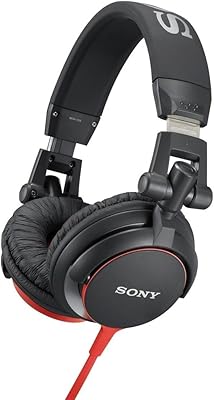
Sony MDR-V55 DJ Over-Ear Headphones
70%
72%
Sound Quality
58%
Comfort & Fit
54%
Build Quality
83%
Design & Aesthetics
78%
Cable & Connectivity
More
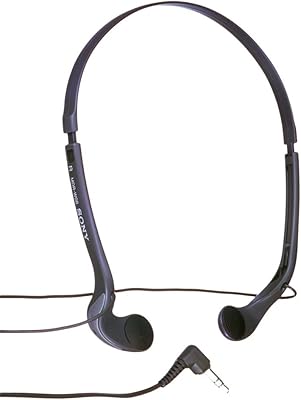
Sony MDR-W08L In-Ear Headphones
71%
91%
Wearing Comfort
78%
Sound Quality
34%
Noise Isolation
63%
Build Quality
72%
Cable Design
More
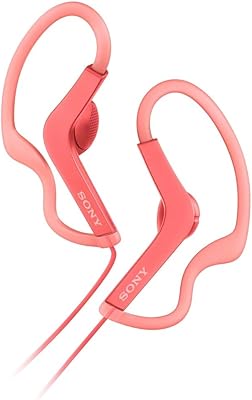
Sony MDR-AS210 Sport In-Ear Headphones
71%
83%
Fit & Stability
74%
Sound Quality
68%
Build Quality
77%
Water Resistance
71%
Comfort Over Time
More
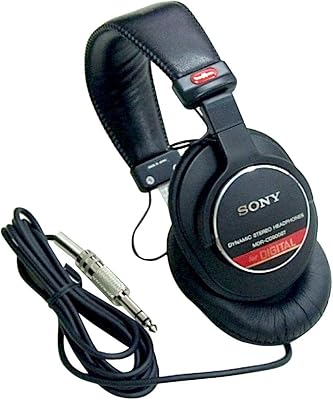
Sony MDR-CD900ST Studio Monitor Headphones
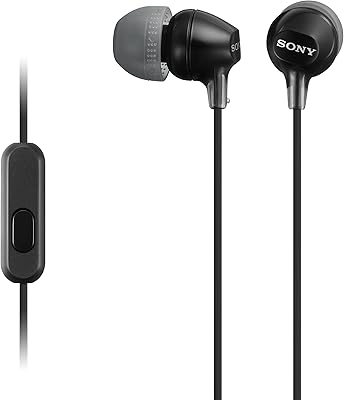
72%
94%
Sound Accuracy
91%
Mixing & Monitoring Performance
78%
Build Quality
82%
Comfort & Wearability
76%
Passive Isolation
More
Sony MDR-EX155AP
Sony MDR-EX155AP
76%
74%
Sound Quality
81%
Microphone & Call Performance
68%
Fit & Comfort
61%
Build Quality & Durability
88%
Value for Money
More
Sony MDREX15AP In-Ear Headphones with Mic
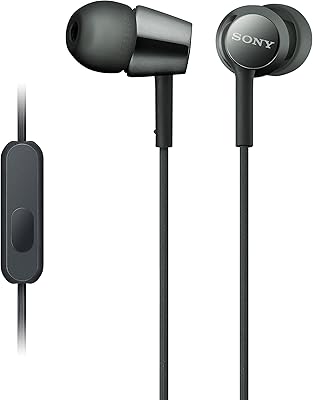
75%
91%
Value for Money
71%
Sound Quality
78%
Comfort & Fit
76%
Microphone Quality
58%
Build Quality
More
Sony MDR-EX110AP
Sony MDR-EX110AP
71%
83%
Bass & Low-End Performance
74%
Overall Sound Quality
79%
Comfort & Fit
58%
Microphone Quality
71%
Call & Playback Controls
More
Haowolf SP05 Open-Ear Bluetooth Sports Earbuds
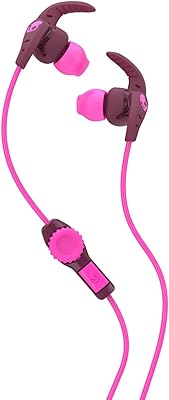
80%
88%
Comfort & Wearability
83%
Fit & Stability
92%
Battery Life
67%
Sound Quality
71%
Call Quality
More
Htcmf O8 Open-Ear Wireless Earbuds
74%
88%
Wearing Comfort
83%
Earhook Stability
91%
Battery Life
67%
Sound Quality
93%
Ambient Awareness
More
Skullcandy Xtplyo In-Ear Sport Earbuds
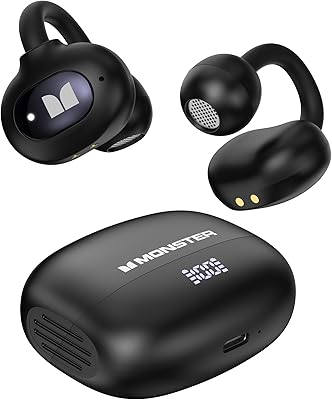
83%
88%
Fit & Comfort
85%
Sound Quality
90%
Build Quality
80%
Water Resistance
70%
Cable Durability
More

FAQ

Yes, as long as your phone has a 3.5mm headphone jack. Many newer iPhones and some Android phones have removed the jack, so you would need a Lightning-to-3.5mm or USB-C-to-3.5mm adapter. The earbuds themselves connect via standard wired 3.5mm and will work fine once you have the right adapter.

No, the MDR-E9LP does not include an in-line microphone or any call controls. They are audio-only earbuds, so you would need to use your phone's built-in microphone if you take a call while wearing them.

Start with the larger pair and switch to the smaller set if they feel uncomfortable or loose. A good seal means the tip sits snugly in the ear canal without needing to push hard — you should notice a slight reduction in ambient noise when the fit is right. Most people find one size works noticeably better than the other.

Remove the silicone tips from the earbuds first, then wipe them gently with a slightly damp cloth or a cotton swab. Avoid harsh chemicals or submerging the tips in water. Let them dry fully before reattaching. The driver housing itself should only be wiped with a dry or very lightly dampened cloth — never wet the mesh area directly.

They work reasonably well for light gym use like treadmill walking, cycling, or low-impact workouts. The silicone tips provide a fairly secure fit during moderate movement. That said, they are not rated as water or sweat resistant, so heavy training sessions with significant sweat exposure could shorten their lifespan over time.

This is a known weak point for these earbuds. The cable tends to hold up fine for several months of regular use, but the area just above the 3.5mm jack is where most people notice fraying or signal issues first. Wrapping the cable loosely rather than tightly coiling it, and not yanking the jack out by the cord, will extend its life noticeably.

Honestly, better than you might expect from a pair this affordable. The mids and highs come through clearly for everyday listening — voices, acoustic instruments, and general music all sound clean. The bass is present but not deep or punchy, which is the main trade-off. For podcasts, pop, or classical music, most people find the sound more than satisfying.

Yes, absolutely. Any device with a standard 3.5mm audio output — including laptops, desktops, gaming consoles, and older MP3 players — will work without any extra setup. Just plug in and the audio routes through automatically.

They offer a moderate level of passive isolation — meaning the silicone tips physically block some ambient sound when properly seated in the ear. It is enough for a quiet office or light street noise, but a busy subway or loud gym will still bleed through. There is no active noise cancellation on this model.

Generic silicone ear tips in small and medium sizes that fit standard in-ear earbuds are widely available and inexpensive. The MDR-E9LP uses a common nozzle diameter, so most universal replacement tips sold online or at electronics stores should fit without any issue.

Where to Buy

Newegg.com
In stock $15.99
Grooves-Inc.com
In stock $7.95
PC Richard & Son
In stock $9.95
University of Florida Bookstore
In stock $9.95
Rensselaer Collegiate Store
In stock $9.95
Florida State University Bookstore
In stock $9.95
Northern Illinois University
In stock $9.95