Overview

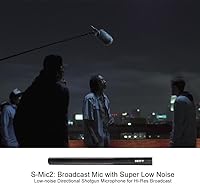
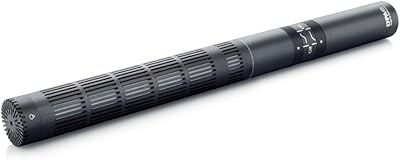
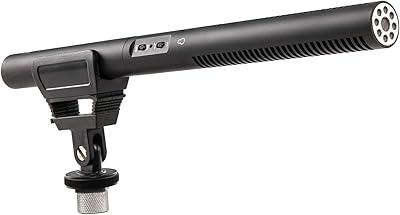
The Deity S-Mic 2 Shotgun Condenser Microphone sits squarely in the mid-tier prosumer space, aimed at indie filmmakers and content creators ready to move past built-in camera audio. Deity has built a solid reputation for delivering surprisingly capable hardware without the premium price tag of brands like Sennheiser or Rode. Worth noting upfront: this particular listing is a bundle variant, pairing the mic with PERGEAR accessories rather than selling the bare microphone alone. It connects exclusively via XLR, meaning you'll need a recorder, mixer, or audio interface — this isn't a plug-and-play USB setup. Within Deity's own lineup, it sits above the V-Mic series but below the more refined S-Mic 2S.
Features & Benefits

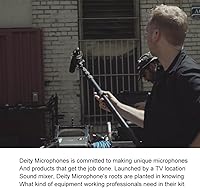
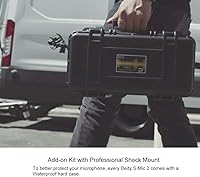
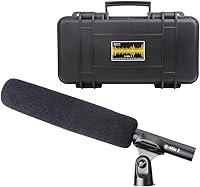
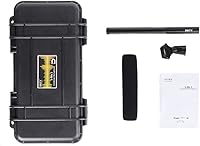
The supercardioid polar pattern is where this shotgun mic earns its keep — it pulls in sound from directly ahead while rejecting ambient noise from the sides and rear, which matters enormously on noisy sets or outdoor locations. The full 20Hz–20kHz frequency range translates to dialogue that sounds natural rather than thin or boxy. Phantom power via XLR keeps it compatible with any professional audio chain. The standout inclusion, though, is the Rycote shock mount — at this price tier, most competitors bundle a generic plastic clip that transmits every footstep and camera tap. Add in the foam windscreen and carry case, and the kit genuinely covers what you need to start shooting.

Best For

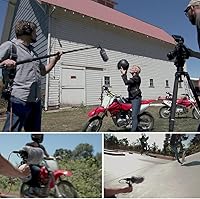
This condenser mic makes the most sense for solo video creators — vloggers, documentary shooters, and short-film makers who are recording dialogue on location without a dedicated sound person. It's a natural step up for anyone still relying on built-in camera mics or budget lavaliers. Podcasters and streamers who want boom-positioned XLR audio will also find it capable. That said, it's not the right tool for controlled studio voiceover work, where a large-diaphragm condenser in a treated room will outperform it. And if you don't already own a recorder or audio interface, factor that cost in before buying — the XLR-only connection means this won't plug directly into your laptop.

User Feedback

Across dozens of reviews, the Deity S-Mic 2 draws consistent praise for its clear dialogue capture, particularly from shooters who came from cheap on-camera mics and were genuinely surprised by the jump in quality. The Rycote shock mount gets called out frequently as something that shouldn't be included at this price — in a good way. On the other side, a handful of users report inconsistent results with lower-powered recorders that struggle to supply adequate phantom power. A few buyers also note the plastic body feels less substantial than rivals like the Rode NTG3 or Audio-Technica AT875R. Overall, the rating reflects genuine satisfaction from a practical, budget-conscious audience rather than inflated enthusiasm.

Pros

  • Strong directional pickup rejects off-axis noise effectively, making dialogue cut through even in moderately loud environments.
  • The included Rycote shock mount is a genuinely premium accessory that competing bundles rarely offer at this tier.
  • Full 20Hz–20kHz frequency response captures natural-sounding voice without the harshness or roll-off of cheaper shotgun mics.
  • Compact enough to mount directly on a camera hotshoe without throwing off rig balance.
  • XLR connectivity ensures compatibility with virtually any professional audio chain you might upgrade to later.
  • The carry case and windscreen make this a ready-to-use kit rather than a bare mic requiring immediate extra purchases.
  • Off-axis rejection is consistently praised by real users who shoot in less-than-ideal acoustic conditions.
  • Deity's build quality relative to price point has earned the brand genuine credibility among prosumer shooters.

Cons

  • XLR-only connectivity is a dealbreaker for beginners who don't own a recorder or audio interface yet.
  • The plastic and rubber body feels noticeably less premium than metal-chassis rivals in the same category.
  • Some users report inconsistent performance with recorders that supply marginal or unstable phantom power.
  • The listing's signal-to-noise ratio spec appears to contain a data error, making it difficult to compare technically with competitors.
  • Not well-suited for indoor studio use where a large-diaphragm condenser would produce noticeably richer results.
  • Weather resistance is limited — adequate for a light drizzle or dusty set, but not a replacement for a proper rain cover on wet days.
  • The PERGEAR accessories add bulk to the package but may not all be essential, making the bundle feel slightly padded.
  • Buyers switching from USB mics will face a steeper learning curve navigating gain staging and phantom power settings.

Ratings

Our scores for the Deity S-Mic 2 Shotgun Condenser Microphone are generated by AI after systematically analyzing verified global buyer reviews, actively filtering out incentivized, bot-generated, and duplicate feedback to surface what real users actually experience. The ratings reflect a balanced picture — where this shotgun mic genuinely delivers and where it falls short — so you can make a properly informed decision rather than one based on curated highlights.
Audio Clarity
88%
Buyers consistently report that dialogue recorded on location sounds noticeably cleaner and more defined compared to built-in camera mics or entry-level condensers. Voices come through with a natural presence that holds up well in post-production without heavy EQ correction.
A small segment of users note that in acoustically challenging spaces — tiled rooms, small offices — the mic picks up more room character than expected. It rewards careful placement but punishes lazy positioning more than a looser cardioid pattern would.
Off-Axis Rejection
84%
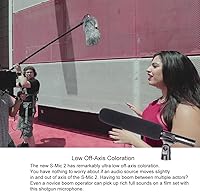
The supercardioid pattern earns consistent praise from run-and-gun shooters who need to isolate a subject from crowd noise, street ambience, or event chatter. Reviewers shooting documentary-style footage specifically call out how well it narrows the pickup window compared to similarly priced competitors.
The tight pickup angle is a double-edged reality — users who don't keep the mic precisely aimed at their subject report noticeable thinning of the sound. It requires more deliberate mic placement discipline than a wider cardioid, which can be a learning curve for beginners.
Build Quality
67%
33%
The mic is light enough to mount on a camera hotshoe without affecting balance, and the plastic housing has held up for most users through regular field use and transport in the included carry case. For solo shooters who handle their gear carefully, durability has not been a common complaint.
The plastic and rubber construction is the most frequently cited disappointment among buyers who have handled all-metal competitors like the Rode NTG3 or Audio-Technica AT875R. It feels workmanlike rather than professional-grade, and a few users express concern about long-term durability with heavy daily use.
Value for Money
86%
Most buyers feel the bundle punches well above its price bracket when the Rycote shock mount alone is factored in, since that accessory retails separately at a meaningful cost. Indie filmmakers and vloggers upgrading from kit-level audio consistently describe it as one of the more impactful purchases in their production setup.
A portion of buyers note the value calculation shifts if you already own a shock mount or windscreen, since you're effectively paying for accessories you won't use. The bare mic's price-to-performance ratio is harder to evaluate without separating it from the bundle premium.
Included Accessories
83%
The Rycote Lyre shock mount is the standout — it genuinely isolates handling and camera vibration in a way that cheap plastic clips simply cannot match, and buyers who have used it on boom poles or camera rigs notice the difference immediately. The hard carry case also earns points for protecting the mic during transport.
The PERGEAR cleaning cloth feels like filler inclusion that adds little real value. Some users also note that the windscreen, while serviceable, doesn't provide the level of wind isolation a proper blimp system offers, which can create unrealistic expectations for outdoor heavy-wind situations.
Ease of Setup
72%
28%
For users who already own an XLR-capable recorder or audio interface, setup is genuinely straightforward — connect, enable phantom power, and you're recording. Videographers familiar with external audio chains report getting usable sound within minutes of unboxing.
Buyers new to XLR workflows frequently underestimate what's required and leave frustrated reviews after discovering their camera or laptop has no compatible input. The learning curve isn't steep once you have the right gear, but the XLR-only design creates a real barrier that the product listing doesn't sufficiently communicate.
Phantom Power Compatibility
71%
29%
With recorders and interfaces that supply a stable 48V phantom power signal — Zoom, Tascam, Focusrite, and similar — the mic performs reliably without noise floor issues. Users on established prosumer rigs rarely report any compatibility problems.
A recurring thread in negative reviews involves users pairing this condenser mic with budget recorders that supply undervoltage phantom power, resulting in thin output or inconsistent sensitivity. This is a real-world compatibility issue that affects a meaningful minority of buyers who don't research their recorder's power specs first.
Wind Resistance
69%
31%
The foam windscreen handles light outdoor breezes competently, and the bundled windshield adds a second layer of protection that makes the kit more field-ready than most competitors at this tier. Shooters working in mild outdoor conditions generally don't need to buy additional wind protection.
In sustained or gusty wind conditions, the included accessories reach their limits quickly, and buyers who assumed the wind protection would cover them in more demanding outdoor scenarios have been caught off guard. A proper blimp-and-dead-cat system is still necessary for serious exterior production work.
Handling Noise
81%
19%
The Rycote shock mount does most of the heavy lifting here, and buyers who use it consistently report minimal transmission of footsteps, camera button presses, and boom pole vibration into their recordings. For camera-mounted use, the isolation is noticeably better than rigs using generic rubber clips.
Users who bypass the shock mount and use the basic mic clamp — particularly on boom poles during active movement — report more handling noise bleeding into recordings than they expected. The mic body itself doesn't appear to have significant internal vibration isolation beyond what the mount provides.
Weather Resistance
63%
37%
The modest weather resistance provides a genuine safety margin for outdoor shooters who encounter unexpected light drizzle or dusty environments. Several run-and-gun videographers mention that it has survived incidental moisture exposure without any apparent damage.
The protection level is easy to overestimate. Users who relied on it in persistent rain or high-humidity tropical conditions have reported issues, and the spec is not officially rated or quantified by Deity. Treating it as light splash resistance rather than true weatherproofing is the safer assumption.
Voice Frequency Response
82%
18%
The 20Hz–20kHz range translates to a natural, full-bodied vocal capture that avoids the harsh mid-range spike some budget shotgun mics exhibit. Content creators recording interviews and narration frequently note that voices sit well in the mix without needing significant corrective EQ.
In controlled A/B comparisons posted by users, the Deity S-Mic 2 shows a slightly less refined high-frequency response than the Rode NTG3 or AT875R, with some finding the top end a touch brittle on sibilant sounds. It's a minor distinction for most use cases but matters to buyers with more critical ears.
Portability
87%
The compact form factor makes it easy to travel with, and the included carry case means it can go into a camera bag without risk of damage. Solo shooters who work across multiple locations in a single day appreciate not having to dedicate significant bag space to their audio setup.
The 3.42-pound package weight is the shipping bundle, not the mic itself, so field weight is much lower — but buyers who don't read carefully occasionally mistake the listing weight for the mic's actual in-hand weight, creating minor confusion at the purchase stage.
Brand Reliability
79%
21%
Deity has cultivated a genuinely positive reputation in the prosumer filmmaking community since the brand's emergence, and buyers cite consistent quality control and responsive customer support as differentiators compared to less-established audio brands at similar price points.
Deity is still a younger brand without the decades-long track record of Sennheiser or Rode, and a minority of buyers express uncertainty about long-term support and parts availability. Some also note that firmware and software ecosystems — where competitors have invested — are not part of the Deity S-Mic 2 proposition.

Suitable for:

The Deity S-Mic 2 Shotgun Condenser Microphone is a strong fit for indie filmmakers, solo documentary shooters, and video content creators who are done tolerating the muffled, ambient-heavy audio that built-in camera mics produce. If you're regularly recording interviews, on-location dialogue, or event coverage and need a mic that can mount on a camera rig or boom pole without a dedicated sound crew, this shotgun mic delivers a meaningful and noticeable upgrade. It works well in semi-controlled environments — think outdoor interviews, run-and-gun shoots, or small studio setups where you're not fighting extreme background noise. Podcasters and streamers who already own a recorder or audio interface and want a directional XLR mic for a cleaner sound floor will also find it a practical, capable option. The included Rycote shock mount and windscreen make it genuinely field-ready without needing to source accessories separately.
Not suitable for:

The Deity S-Mic 2 Shotgun Condenser Microphone is not the right call for buyers who don't already own a phantom-powered recorder, mixer, or audio interface — the XLR-only connection is a hard requirement, not a minor inconvenience, and the additional gear cost can catch newcomers off guard. Studio voiceover artists or musicians looking for a mic to record in a treated room will get far better results from a large-diaphragm condenser designed specifically for controlled acoustic environments. Similarly, if your primary recording scenario involves extreme weather — heavy rain, dust storms, sand — the body's weather resistance offers only modest protection and shouldn't be taken as a ruggedized field tool. Buyers on a tight budget who were hoping to skip purchasing a recorder should also reconsider; without the right signal chain, even a capable shotgun mic will underperform. And if you're comparing at the higher end of the prosumer market, the plastic body construction may feel like a step down from all-metal competitors like the Rode NTG3.
Specifications

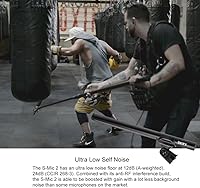
  • Microphone Type: Shotgun condenser microphone designed for directional dialogue capture in video production and broadcast applications.
  • Polar Pattern: Supercardioid (unidirectional), providing tight front-focused pickup with strong rejection of sound arriving from the sides and rear.
  • Connectivity: Standard 3-pin XLR output requiring 48V phantom power supplied by a compatible recorder, mixer, or audio interface.
  • Frequency Response: 20Hz to 20kHz, covering the full audible spectrum with a response tuned for natural voice reproduction.
  • Audio Sensitivity: Rated at -32 dB, indicating a moderate output level that performs reliably with standard professional preamps.
  • Channels: Single-channel mono output, standard for shotgun dialogue mics used in video and field recording workflows.
  • Power Source: Powered exclusively via phantom power through the XLR connection; no internal battery option is available.
  • Body Material: Constructed from plastic and rubber, keeping the overall weight low while providing basic handling durability for field use.
  • Weather Resistance: Offers a degree of weather resistance suitable for light outdoor use, though it is not rated for heavy rain or submersion.
  • Package Dimensions: The full kit package measures approximately 15.43 x 9.69 x 3.9 inches, accommodating the mic and all included accessories.
  • Package Weight: The complete bundled package weighs approximately 3.42 pounds, which includes the mic, shock mount, case, and all accessories.
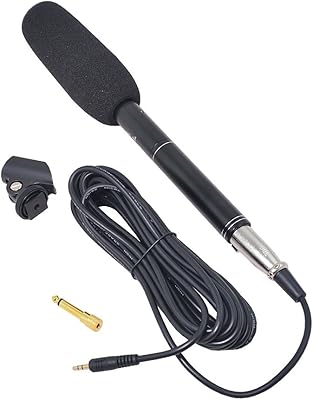
  • Included Accessories: Bundle includes a foam windscreen, full windshield, Rycote shock mount, mic clamp, hard carry case, and a PERGEAR cleaning cloth.
  • Mounting Options: Compatible with standard camera hotshoe mounts and 3/8-inch to 5/8-inch boom pole adapters via the included mic clamp and Rycote mount.
  • Manufacturer: Designed and produced by Deity Microphones, a brand focused on the prosumer filmmaking and content creation audio market.
  • Available Since: This product listing first became available in July 2018, giving it an established track record among prosumer audio buyers.

Related Reviews
Deity V-Mic D3 Shotgun Microphone

81%
83%
Audio Clarity
46%
Wind Rejection
86%
Build Quality
91%
Value for Money
89%
Ease of Setup
More
Rode NTG-2
Rode NTG-2
80%
83%
Audio Clarity
93%
Dual Power Flexibility
81%
Directional Pickup & Off-Axis Rejection
89%
Build Quality & Durability
76%
Wind & Rumble Rejection
More
DPA 4017B Shotgun Condenser Microphone
83%
93%
Sound Quality
91%
Off-Axis Rejection
88%
Build Quality
63%
Value for Money
89%
Transient Response
More
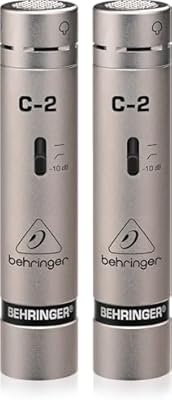
Behringer C-2 Stereo Condenser Microphone Pair

79%
91%
Value for Money
78%
Sound Quality
74%
Stereo Matching Accuracy
83%
Build Quality
86%
Ease of Setup
More
Rode NTG-1 Shotgun Condenser Microphone
86%
92%
Sound Quality
89%
Portability
87%
Build Quality
74%
Wind Noise Reduction
90%
Ease of Use
More
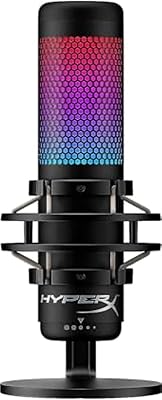
HyperX QuadCast S
HyperX QuadCast S
87%
88%
Vocal Clarity
96%
Mute Functionality
91%
Build Quality
84%
Shock Absorption
89%
Gain Control Ease
More
LyxPro CMG-50
LyxPro CMG-50
85%
88%
Audio Clarity
93%
Build Durability
82%
Off-Axis Rejection
91%
Power Versatility
96%
Value for Money
More
Ruittos M-11 Shotgun Microphone
71%
74%
Audio Clarity
61%
Build Quality
82%
Value for Money
88%
Ease of Setup
71%
Noise Rejection
More
RØDE NTG4+ Supercardioid Condenser Shotgun Microphone
87%
91%
Sound Quality
96%
Battery Life
88%
Build Quality
84%
Ease of Use
90%
Noise Isolation
More
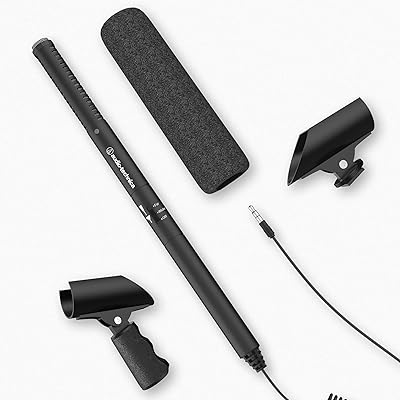
Audio-Technica ATR6550X Condenser Shotgun Microphone
72%
81%
Audio Clarity
78%
Directionality Control
67%
Build Quality
91%
Ease of Setup
83%
Value for Money
More

FAQ

You will need a separate device that supplies 48V phantom power — this means a field recorder like a Zoom H5 or H6, a mixer, or an audio interface connected to your computer. The mic itself has no internal battery and cannot connect via USB, so it won't work plugged directly into a camera's 3.5mm jack without an adapter that also provides phantom power. If you're starting from scratch, factor that cost into your decision.

Not directly. The Deity S-Mic 2 uses a 3-pin XLR output, so you'd need either an XLR-to-3.5mm adapter or a small external preamp like the Rode VXLR+ that converts the signal and supplies phantom power. Keep in mind that most camera 3.5mm inputs are relatively noisy, so you'll get the best results running the mic into a dedicated recorder.

It can work indoors, but shotgun mics are generally better suited to locations where you have some distance between the mic and reflective walls. In a small, untreated room, the off-axis rejection can actually pick up more room ambience than a tightly placed cardioid or large-diaphragm condenser would. For dedicated indoor studio recording, a different mic type would serve you better.

The NTG3 has an all-metal build, a slightly smoother high-end response, and RF-bias technology that gives it an edge in humid conditions. That said, the Deity comes in at a lower price point and ships with a Rycote shock mount that Rode doesn't include. For most indie shooters, the practical difference in audio quality won't be dramatic — the Rode has a slight edge in refinement, but the Deity holds its own in real-world use.

It requires standard 48V phantom power, which is the industry norm supplied by virtually all professional recorders, mixers, and audio interfaces. Some lower-end recorders supply only 3V or 5V plug-in power, which is insufficient — always check your recorder's specs before assuming it's compatible.

Based on product listings and user reports, it is a genuine Rycote Lyre-style shock mount, not a generic imitation. Rycote's Lyre design is widely regarded as one of the best passive shock isolation systems available, and getting it included in a mid-tier bundle is a legitimate bonus rather than a marketing exaggeration.

The included foam windscreen handles light breezes reasonably well, and the full windshield (also included) adds meaningful protection in moderate outdoor conditions. For strong, sustained wind, you'd want a proper blimp and dead cat system — what's in the box is solid for casual outdoor shooting but not a substitute for dedicated broadcast-level wind protection.

Yes, it can work for that setup, though it's not the most common choice for podcasting. Because it's a shotgun mic, it needs to stay pointed fairly precisely at your mouth — any significant off-axis shift will cause the sound to thin out. A cardioid or large-diaphragm condenser is generally more forgiving for stationary desk use, but if you want that directional rejection to keep keyboard noise and room sound out of your recording, this condenser mic is a valid option.

Only in very light drizzle and with caution. The weather resistance is more of a practical advantage for run-and-gun outdoor shoots where you might encounter the occasional light misting — it is not waterproof and shouldn't be exposed to sustained rain without additional protection like a blimp cover. Think of it as a buffer against the unexpected, not a license to shoot in wet conditions.

It's a great step up from built-in camera audio, but only if you already own — or are ready to buy — a recorder or audio interface that supplies phantom power. If you're completely new to external audio gear, you might find a USB condenser or a camera-mounted 3.5mm mic easier to get started with. If you're committed to building out a proper audio chain, though, this shotgun mic is a genuinely capable entry point into XLR-based production audio.