Overview

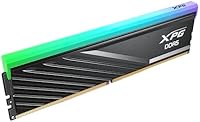
The XPG Lancer Blade 32GB DDR5 Desktop RAM sits in a practical middle ground — fast enough to satisfy serious builders, yet priced where it won't demand a second mortgage. ADATA, the Taiwanese memory veteran behind the XPG sub-brand, has earned a solid reputation for reliable performance hardware, and this DDR5 memory kit reflects that track record. Running at 6000MHz with CL30 latency, it hits the sweet spot most platform guides recommend for both Intel and AMD systems. The low-profile heatsink is a genuine practical consideration, not just aesthetics. One thing worth being clear on upfront: this is a dual-channel 2x16GB configuration, not a higher-density option.
Features & Benefits

At DDR5-6000 CL30, this DDR5 memory kit operates at a frequency-latency balance that translates to noticeably snappier frame times in memory-sensitive games and faster throughput in rendering or large file workloads. Both Intel XMP 3.0 and AMD EXPO profiles are built in, so hitting rated speeds is a single UEFI toggle — no manual timing tables involved. The onboard PMIC keeps voltage delivery stable during sustained loads, which matters more than most buyers realize at higher DDR5 frequencies. There is also on-die ECC worth clarifying: this is not enterprise error correction but a hardware-level integrity check that catches single-bit errors quietly in the background. RGB lighting is handled through XPG Prime software — functional, though the app has a mixed reputation for stability across different systems.

Best For

This XPG RAM kit is a strong fit for anyone building around Intel 12th, 13th, or 14th Gen processors, or AMD Ryzen 7000 series — both of which benefit meaningfully from 6000MHz operation compared to baseline DDR5-4800. The compact heatsink profile makes it genuinely suitable for ITX and small form factor cases where taller memory sticks would collide with CPU air coolers. Gamers and content creators who want solid performance without stepping into enthusiast-tier pricing will find this a reasonable landing spot. It also suits first-time DDR5 builders who want rated speeds to work out of the box without wrestling with manual overclocking. If you need more than 32GB, though, look elsewhere — this is strictly a 32GB dual-channel configuration.

User Feedback

The Lancer Blade DDR5 carries a 4.8 out of 5 rating across 83 reviews at time of writing — a strong signal, though a relatively modest sample for drawing firm conclusions. Buyers consistently highlight easy XMP activation as a standout experience, with most reporting that EXPO and XMP speeds locked in without any manual adjustment. Build quality and heatsink feel draw positive mentions too, with several noting it compares well physically against pricier competitors. On the other hand, a portion of users flag XPG Prime as the weak point — RGB sync reliability can be inconsistent depending on system configuration, and some found the software clunky. No widespread reports of instability or DOA units, which speaks to consistent production quality at this price level.

Pros

  • DDR5-6000 CL30 is the widely recommended sweet spot for both Intel and AMD DDR5 platforms.
  • Both XMP 3.0 and AMD EXPO profiles are included, so rated speeds activate with a single BIOS toggle.
  • The low-profile heatsink at under 2 inches tall is a genuine lifesaver for compact and ITX builds.
  • Onboard PMIC keeps voltage delivery stable, which matters during sustained high-frequency operation.
  • On-die ECC quietly catches single-bit memory errors in the background without any user intervention.
  • Build quality draws consistent praise from buyers, with the heatsink feel comparing favorably to pricier options.
  • RGB lighting looks solid in windowed cases and adds visual appeal without inflating the physical footprint.
  • Real-world performance gains over baseline DDR5-4800 are confirmed by multiple buyers across gaming and productivity tasks.
  • Setup experience is described as straightforward by most reviewers, including those new to DDR5 platforms.

Cons

  • XPG Prime software has a mixed reputation — RGB sync can be unreliable depending on system configuration.
  • The 83-rating sample is relatively small, so the 4.8-star average should be treated with some caution.
  • 32GB is the maximum capacity in this kit; there is no upgrade path within the same configuration.
  • On-die ECC is frequently misunderstood — it is not server-grade error correction and should not be treated as such.
  • Users outside the Intel XMP or AMD EXPO ecosystem will need to manually configure timings to hit rated speeds.
  • XPG Prime lacks the polish and cross-platform compatibility of more established RGB software suites.
  • The Lancer Blade DDR5 does not cater to enthusiast-tier overclockers looking to push beyond DDR5-6000 with tighter timings.
  • Limited long-term durability data is available given the kit launched in mid-2023 and has a modest review base.

Ratings

The scores below reflect an AI-driven analysis of verified global buyer reviews for the XPG Lancer Blade 32GB DDR5 Desktop RAM, with spam, bot-submitted, and incentivized feedback actively filtered out before scoring. Each category is weighted against real-world usage patterns reported by builders, gamers, and content creators across multiple platforms. Both the strengths that earned this kit its reputation and the friction points that hold it back are reflected transparently in every scorecard.

Performance at Rated Speed
91%
Buyers consistently report that hitting DDR5-6000 CL30 produces a noticeable uplift in memory-sensitive games and productivity tasks compared to stock DDR5-4800 kits. Frame time consistency in particular draws positive mentions from gamers pairing this with Ryzen 7000 and Intel 13th Gen systems.
A small subset of users on older or budget-tier motherboards found the rated speed harder to stabilize, occasionally requiring manual sub-timing adjustments to avoid intermittent crashes. The performance gap is also less dramatic for users running non-memory-sensitive workloads.
XMP & EXPO Compatibility
88%
The dual-profile approach covering both Intel XMP 3.0 and AMD EXPO is one of the most consistently praised features across buyer feedback. Most users report that enabling rated speed is a single BIOS toggle with no follow-up tweaking required, which is genuinely appreciated by first-time DDR5 adopters.
A handful of reviewers noted that certain budget B650 motherboards required a BIOS update before EXPO activated cleanly, and a few Intel Z690 boards showed occasional instability at 6000MHz requiring a drop to 5600MHz to stabilize.
Heatsink Clearance
93%
The low-profile design at just under 2 inches tall is called out specifically by ITX and compact build users as a meaningful practical advantage. Several buyers mention successfully fitting this kit under large tower air coolers where taller DDR5 modules had physically conflicted with the cooler fan or heatsink fins.
The tradeoff for the shorter profile is a slightly reduced heatsink surface area, which in theory offers marginally less passive cooling than taller alternatives during extreme overclocking — though no buyers report heat-related throttling under normal or XMP operation.
Build Quality & Feel
86%
Buyers who handle competing DDR5 kits frequently note that the Lancer Blade DDR5 feels solid and premium for its price tier, with the black anodized heatsink sitting flush and evenly across both modules. The overall construction compares favorably to options priced noticeably higher.
A few buyers noticed minor variation in RGB diffuser brightness uniformity between modules out of the box, and some felt the heatsink edges were slightly sharper than expected when handling during installation.
RGB Lighting Quality
74%
26%
The RGB output itself draws genuine compliments for brightness and color accuracy, particularly from builders with windowed cases running darker themes. The lighting strip along the top edge diffuses evenly across most of the module length and looks polished at a glance.
The lighting is only as good as the software controlling it, and XPG Prime has a mixed track record — some users find the lighting locks to a default color cycle after system restarts or software crashes, requiring a re-launch to restore custom profiles.
RGB Software (XPG Prime)
58%
42%
For users who install and configure XPG Prime successfully, the range of lighting effects and customization options available is reasonably broad and covers the basics most builders want. First-time setup on clean Windows installs tends to go smoothly for the majority of buyers.
Cross-platform RGB sync with Aura, iCUE, or Mystic Light is essentially unsupported, which frustrates builders running mixed-brand ecosystems. Several users report that the software feels unpolished compared to rivals, with occasional crashes, delayed detection, and a UI that has not kept pace with the hardware it controls.
Setup & Installation
89%
Buyers new to DDR5 frequently highlight the straightforward physical installation and the one-click EXPO or XMP activation as confidence-building experiences. The kit slots in cleanly, and most users are at rated speeds within minutes of booting into the BIOS for the first time.
A small number of users encountered initial boot loops when XMP was enabled on specific board and CPU combinations, requiring a CMOS reset and a second attempt — a rare but not unheard-of DDR5 quirk that is not unique to this kit.
Stability & Daily Reliability
87%
Long-term stability is one of the stronger feedback themes across buyer reviews, with users noting months of continuous operation under gaming, rendering, and multitasking workloads without memory errors or unexpected BSODs. The onboard PMIC appears to contribute meaningfully to sustained voltage consistency.
Edge cases exist around aggressive secondary timing configurations attempted by enthusiast users, where a small number report needing to loosen a few sub-timings to achieve true 24-7 stability — expected behavior at this frequency tier but worth noting.
Value for Money
83%
For a DDR5-6000 CL30 kit with both XMP 3.0 and EXPO support, on-die ECC, and a low-profile heatsink, buyers broadly feel this XPG RAM kit is priced fairly within its competitive tier. The feature set at this price point is difficult to match from larger-brand alternatives without spending noticeably more.
Budget-focused buyers occasionally note that DDR5-5600 or DDR5-6000 alternatives without RGB can be found for less, making the premium partially a payment for aesthetics rather than pure performance — a reasonable tradeoff for some, but not all.
Platform Versatility
81%
19%
Covering both major desktop ecosystems with dedicated profiles makes this a genuinely flexible kit that does not force buyers to choose a platform-specific SKU. Builders who are unsure whether they will stick with Intel or AMD long-term find this dual compatibility reassuring.
DDR5 platform support means this kit is entirely incompatible with any DDR4-based system, which limits its audience to builders on current-gen hardware — an inherent constraint of the standard rather than a flaw in the kit itself.
Capacity Adequacy
77%
23%
For gaming builds and mainstream productivity workloads in 2024, 32GB comfortably handles simultaneous gaming, browser sessions, and background software without any visible memory pressure. Most buyers find the capacity headroom satisfying for their daily use patterns.
Professional users in video production, 3D rendering, or virtual machine environments increasingly find 32GB a ceiling rather than a comfort zone, and the 2x16GB configuration limits the upgrade path without replacing the entire kit.
On-Die ECC Usefulness
69%
31%
For buyers who understand what on-die ECC actually does, the feature provides a quiet layer of data integrity assurance during high-frequency operation — a genuine technical differentiator compared to kits without it, particularly during overclocked workloads.
The feature is widely misunderstood in buyer feedback, with some expecting server-grade error reporting that never materializes. Since it operates invisibly with no user-facing feedback, many buyers neither notice its benefit nor can confirm it is functioning, reducing its perceived value.
Cooler Compatibility Documentation
62%
38%
The low-profile specification is clearly stated and allows buyers to cross-reference their CPU cooler clearance requirements before purchasing, which is more transparency than many competing kits offer in their product listings.
XPG does not publish a comprehensive CPU cooler compatibility list, which means buyers with large air coolers are left doing their own research or relying on community reports to confirm physical fit — a gap that creates pre-purchase uncertainty for cautious builders.
Packaging & Out-of-Box Experience
78%
22%
Buyers describe the unboxing as clean and appropriately protective, with modules arriving secure and undamaged. The presentation feels consistent with the mid-to-upper-mid market tier this kit occupies, without excessive waste packaging.
There is no printed quick-start guide included, and first-time DDR5 buyers occasionally wish for clearer in-box instructions on enabling XMP or EXPO — a minor but recurring comment among less experienced builders.

Suitable for:

The XPG Lancer Blade 32GB DDR5 Desktop RAM is a well-matched choice for PC builders putting together a new system on Intel 12th, 13th, or 14th Gen platforms, or AMD Ryzen 7000 series, where DDR5-6000 CL30 represents a genuine performance uplift over baseline speeds without requiring any manual tuning. Gamers who play memory-sensitive titles and content creators handling video exports or large project files will notice the difference compared to stock DDR5-4800 kits. The low-profile heatsink makes this a particularly smart pick for ITX and compact builds, where taller memory sticks routinely clash with larger CPU air coolers — a real, recurring headache that this kit sidesteps cleanly. It also works well for first-time DDR5 adopters who want rated speeds to activate through a single BIOS toggle rather than fussing with manual timing configurations. If you want RGB lighting that adds some personality to a windowed case without compromising the kit's thermal or electrical characteristics, this fits that profile too.
Not suitable for:

Buyers who need more than 32GB of system memory for heavily threaded workloads like 3D rendering, large dataset processing, or professional video production should look at higher-capacity kits rather than relying on the XPG Lancer Blade 32GB DDR5 Desktop RAM. This is a dual-channel 2x16GB configuration, so there is no quad-channel option here, and the 32GB ceiling may feel constraining sooner than expected in memory-hungry professional environments. Enthusiast overclockers chasing sub-CL28 timings or frequencies above 7000MHz will find better-suited kits at the higher end of the market. Users deeply embedded in competing RGB ecosystems — such as Corsair iCUE or ASUS Aura — may find XPG Prime frustrating to integrate, since cross-platform RGB sync is rarely trouble-free. Anyone building a platform that does not support XMP 3.0 or EXPO will also be unable to reach rated speeds without manual configuration, which partly undercuts this kit's key convenience advantage.

Specifications

  • Capacity: This kit includes two 16GB modules for a total of 32GB in a dual-channel configuration.
  • Memory Type: DDR5 SDRAM, the current-generation standard for modern desktop platforms on both Intel and AMD.
  • Speed: Rated at 6000MHz (PC5-48000) when XMP 3.0 or AMD EXPO profiles are enabled in the BIOS.
  • Latency: CL30 primary latency, which pairs with the 6000MHz frequency to deliver a balanced performance-per-clock ratio.
  • Form Factor: 288-pin UDIMM, the standard desktop memory form factor compatible with full-size ATX, Micro-ATX, and Mini-ITX motherboards.
  • Voltage: Operates at 1.4V when running at rated XMP or EXPO speeds.
  • Heatsink Height: The low-profile aluminum heatsink stands at 1.97 inches tall, reducing the risk of clearance conflicts with large CPU air coolers.
  • RGB Lighting: Per-module RGB lighting is customizable through XPG Prime software on supported Windows systems.
  • OC Profiles: Includes both Intel XMP 3.0 and AMD EXPO profiles, enabling one-click rated-speed activation on compatible motherboards.
  • On-Die ECC: On-die error-correcting code is built into each module to silently detect and correct single-bit memory errors during operation.
  • PMIC: An onboard Power Management IC regulates voltage delivery for improved stability during sustained workloads and overclocked operation.
  • Module Color: Black anodized heatsink with integrated RGB diffuser along the top edge of each module.
  • Module Weight: Each module weighs approximately 1.06 ounces, typical for a low-profile DDR5 stick with a metal heatsink.
  • Dimensions: Each module measures approximately 3.94 inches long by 1.97 inches tall by 0.5 inches wide.
  • Manufacturer: Designed and sold by XPG, the performance hardware sub-brand of ADATA Technology, a Taiwanese memory manufacturer.
  • Release Date: This kit was first made available in July 2023.
  • Channel Support: Configured for dual-channel operation; quad-channel is not supported in this kit.
  • Platform Support: Compatible with Intel 12th, 13th, and 14th Gen platforms, as well as AMD Ryzen 7000 series motherboards with DDR5 support.

Related Reviews
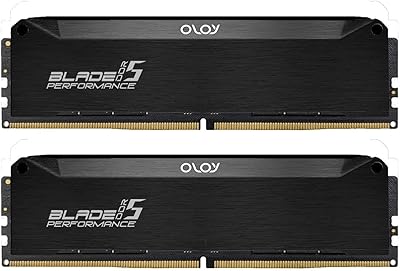
OLOy Blade DDR5-6400 32GB Desktop RAM
80%
88%
Rated Speed Performance
79%
Latency & Timings
86%
Value for Money
71%
Motherboard Compatibility
83%
Overclocking Headroom
More
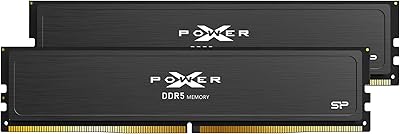
Silicon Power Value Gaming DDR5 32GB RAM
76%
84%
Value for Money
81%
Performance at Rated Speed
58%
Compatibility
89%
XMP & EXPO Activation
83%
Thermal Management
More
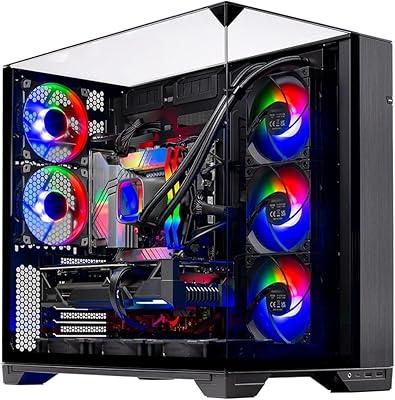
Skytech Gaming Azure 3 Desktop PC, Ryzen 7 7700X, NVIDIA RTX 5070 12GB, 32GB DDR5 RAM, 1TB SSD
86%
94%
Gaming Performance
88%
Build Quality
91%
Cooling Efficiency
85%
Value for Money
89%
Ease of Setup
More
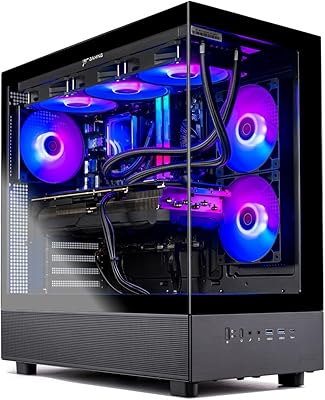
Skytech Gaming O11 Vision Desktop PC, Ryzen 7 9800X3D, AMD RX 9070 XT, 32GB DDR5 RAM, 2TB SSD
87%
94%
Gaming Performance
93%
Graphics Quality
88%
Build Quality
96%
Ease of Setup
85%
Cooling Performance
More
Skytech Gaming Chronos 3 Gaming Desktop PC
77%
91%
GPU Performance
78%
Value for Money
93%
Out-of-Box Experience
72%
CPU Performance
88%
RAM & Memory Speed
More
A-Tech 32GB DDR5 5600MHz RAM
87%
93%
Performance
91%
Ease of Installation
89%
Reliability
78%
Compatibility
94%
Gaming Performance
More
DATO 32GB DDR5 4800MHz Desktop RAM
71%
74%
Value for Money
88%
Installation Ease
79%
System Stability
71%
Memory Speed
63%
Latency Performance
More
Acclamator DDR5 32GB 4800MHz Desktop RAM Kit
75%
88%
Value for Money
91%
Installation Ease
86%
System Stability
74%
Compatibility
41%
Overclocking Headroom
More
Crucial 32GB DDR5 SODIMM Laptop RAM
83%
88%
Platform Compatibility
91%
Installation Experience
71%
Real-World Performance Gains
83%
Value for Money
93%
Long-Term Reliability
More
Crucial Pro Overclocking 32GB DDR5-6000 RAM Kit
91%
96%
Ease of Installation
93%
System Stability
89%
Gaming Performance
88%
Value for Money
84%
Thermal Management
More

FAQ

It will not run at 6000MHz out of the box — most DDR5 kits default to a lower safe speed until you enable an overclocking profile. The good news is that this kit supports both Intel XMP 3.0 and AMD EXPO, so enabling rated speed is just a matter of entering your BIOS, finding the memory profile setting, and selecting the XMP or EXPO option. No manual timing adjustments needed.

Yes, the Lancer Blade DDR5 includes an AMD EXPO profile specifically designed for Ryzen 7000 series compatibility. As long as your motherboard supports DDR5 and has EXPO support in the BIOS — which most X670, X670E, B650, and B650E boards do — you should be able to hit 6000MHz with a single setting change.

On-die ECC is a hardware feature built into each memory die that detects and corrects single-bit errors quietly in the background while your system runs. It is not the same as the server-grade ECC found in workstation or enterprise memory, which requires specific platform support and shows up as a feature in your operating system. Think of on-die ECC as a background safety net that helps maintain data integrity at high frequencies — you will never see it working, but it is doing a small amount of useful work continuously.

The heatsink on this kit sits at just under 2 inches tall, which is meaningfully shorter than many standard DDR5 modules on the market. That said, whether it clears your specific cooler depends on your cooler model and which memory slots you are using — slots closest to the CPU socket are the most likely to be obstructed. The NH-D15 in particular is tight with memory in the first two slots on some boards, so it is worth checking Noctua's compatibility tool or your motherboard's QVL before assuming it will fit.

No — the memory itself will function at full performance with no software installed at all. XPG Prime is only needed if you want to customize the RGB lighting effects or sync them with other components. If you do not care about RGB or prefer a static color, you can skip the software entirely.

Not natively. This kit uses XPG Prime for lighting control, and it does not integrate directly with third-party RGB ecosystems like ASUS Aura Sync or Corsair iCUE without workarounds. If you are building a system where unified RGB control across all components is important to you, that is a real limitation worth factoring in before buying.

In theory, yes, but running four DDR5 sticks at full rated speed is significantly harder than running two, and results vary widely by motherboard and CPU IMC quality. If you think you will need 64GB eventually, it is often more reliable to buy a 2x32GB kit from the start rather than trying to pair two separate 2x16GB kits later.

In everyday desktop tasks, you will not feel a dramatic difference. Where 6000MHz CL30 starts to show its value is in gaming titles that are particularly sensitive to memory bandwidth and latency — think open-world games or CPU-bound scenarios — and in workflows involving large file operations, video editing, or data compression. The improvement is real but incremental; do not expect a transformation, but the gap is measurable and consistent.

For most gaming use cases today, 32GB is comfortably sufficient and leaves headroom for background applications, streaming software, or browser tabs running alongside your game. A handful of newer AAA titles are beginning to push toward 16GB of usage on their own, so 32GB provides a reasonable buffer. If you are also doing video editing, 3D work, or running virtual machines alongside gaming, you might eventually want more — but for pure gaming builds, 32GB is a solid, forward-looking amount.

XPG typically backs its memory products with a limited lifetime warranty, though specific terms can vary by region and retailer. It is worth confirming warranty coverage with the seller at time of purchase, particularly if you are buying from a third-party marketplace listing rather than directly from an authorized retailer.