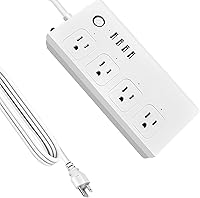
Overview

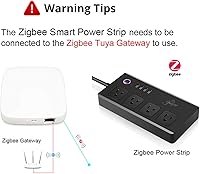
The XENON ZigBee 4-Outlet Smart Power Strip is built squarely for people already invested in a ZigBee home automation ecosystem. Before anything else: a hub is required. This is not a plug-in Wi-Fi device, and XENON doesn't pretend otherwise. The brand itself is relatively new, having launched in mid-2024, and this strip is clearly aimed at enthusiasts running setups like Home Assistant, SmartThings, or Hubitat. Within that niche, it lands in a solid mid-range position — practical enough for real automation work, and priced to fit a serious home automation build without being extravagant.

Features & Benefits

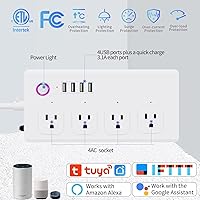
What sets this ZigBee power strip apart from a basic smart strip is the per-outlet individual control — all four AC outlets can be toggled, scheduled, or automated independently, which is genuinely useful for managing different devices on separate routines. It runs on ZigBee 3.0, which means lower latency and a more reliable mesh connection than typical Wi-Fi strips in signal-congested homes. A USB-C charging port is included, keeping a slot free for actual appliances. Surge protection is present, though XENON hasn't published a joule rating, so treat it as a safety bonus rather than a core selling point. Timer scheduling works through the Smart Life app even without voice assistants.

Best For

The XENON smart strip makes the most sense for people already running a ZigBee hub — Home Assistant, SmartThings, Hubitat, or a compatible Echo device. If that's your setup, it fits neatly into an existing automation ecosystem without adding another Wi-Fi device to a crowded network. It's especially practical for home offices or workbenches where switching individual outlets on different schedules actually matters. Anyone hoping for a standalone, hub-free experience should look elsewhere — the dependency is real. But for ZigBee households dealing with Wi-Fi congestion, the mesh reliability advantage makes this a smarter choice than most Wi-Fi alternatives on the shelf.

User Feedback

Because this smart outlet strip only launched in mid-2024, the review pool is still relatively limited — worth keeping in mind when weighing overall sentiment. That said, early adopters in ZigBee communities have noted reliable pairing performance and appreciated the compact build that doesn't crowd neighboring outlets on a power board. On the flip side, setup documentation is a consistent complaint, particularly for users on non-Echo hubs who expected clearer guidance. A few buyers have also raised questions about long-term firmware support from a newer brand. The power-restore state feature draws specific praise from Home Assistant users, though its limited hub support remains a notable gap for many.

Pros

  • Each of the four outlets can be controlled, scheduled, and automated completely independently.
  • ZigBee 3.0 protocol delivers lower latency and stronger mesh reliability than Wi-Fi alternatives in busy homes.
  • The compact form factor avoids blocking adjacent outlets on a power board, a common frustration with bulkier smart strips.
  • USB-C port is a practical addition that handles modern device charging without consuming an AC slot.
  • Works with a wide range of hubs including Home Assistant, SmartThings, Hubitat, Homey, and compatible Echo devices.
  • Timer and scheduling features work through the Smart Life app even without any voice assistant setup.
  • Power-restore state customization lets Home Assistant and ThirdReality Hub users define exact on/off behavior after an outage.
  • ZigBee mesh means adding this strip can actually strengthen your overall network rather than strain it.

Cons

  • A ZigBee hub is mandatory — there is no Wi-Fi fallback or standalone operation mode whatsoever.
  • Surge protection joule rating is unpublished, making it hard to assess real protection for sensitive equipment.
  • Setup documentation is sparse for non-Echo hub users, leading to confusion during initial pairing.
  • Power-restore state customization is only supported on two hub platforms, leaving most users without the feature.
  • XENON is a brand-new entrant with a limited track record, raising reasonable questions about long-term firmware and support.
  • The review base is still small given the mid-2024 launch, so long-term reliability data is essentially unavailable.
  • No published wattage or amperage per-outlet limit, which matters when planning high-draw device connections.
  • Smart Life app has received mixed feedback in the broader smart home community regarding stability and update frequency.

Ratings

The scores below for the XENON ZigBee 4-Outlet Smart Power Strip were generated by our AI engine after analyzing verified global user reviews, actively filtering out incentivized, duplicate, and bot-generated feedback to surface what real buyers actually experienced. Both the genuine strengths and the recurring frustrations are reflected here without sugarcoating — because knowing where a product falls short is just as valuable as knowing where it excels.

Hub Compatibility
83%
Users running established ZigBee ecosystems — Home Assistant, SmartThings, Hubitat, or hub-enabled Echo devices — report that pairing is straightforward and reliable once the hub is in place. The breadth of supported platforms is genuinely wide for a newer brand, covering most of the major ZigBee controllers on the market.
Compatibility is only as good as your existing setup, and buyers who didn't realize they needed a specific hub model felt blindsided. Documentation for non-Echo hubs is thin, and some SmartThings and Homey users reported needing community forum help to complete setup.
ZigBee Connectivity
86%
The ZigBee 3.0 implementation earns consistent praise for stability — users in apartments with congested Wi-Fi bands noted noticeably fewer dropped connections compared to their previous Wi-Fi smart strips. The mesh behavior works as expected, with the strip strengthening the ZigBee network rather than adding load to it.
Response latency, while generally low, occasionally spikes in larger homes where the strip sits at the edge of the ZigBee mesh range. A small number of Home Assistant users reported the device dropping off and requiring re-pairing after firmware updates on their hub side.
Per-Outlet Control
91%
This is where the XENON smart strip genuinely delivers. Home office users love being able to cut power to a monitor and desk lamp independently while keeping a charging station live — all on different schedules. The granularity feels purposeful rather than gimmicky, and automation builders in particular find it extremely capable.
A handful of users found the Smart Life app's interface for managing individual outlet schedules slightly unintuitive, particularly when setting up complex multi-outlet routines. Voice command response for individual outlets (rather than all at once) also occasionally required rephrasing commands for Alexa to parse correctly.
Setup Experience
62%
38%
For Echo 4th Gen and SmartThings users, setup follows a familiar and largely painless discovery process. Users who said they followed the included instructions for compatible Echo devices had the strip online within a few minutes, which is about as fast as ZigBee onboarding gets.
Outside the Echo ecosystem, the setup experience drops off sharply. Home Assistant and Hubitat users frequently mention that the physical documentation provides almost no guidance, forcing them to rely on community wikis and Reddit threads. This is a recurring complaint across the early review base and one XENON needs to address.
Build Quality
74%
26%
The strip feels solid enough for everyday home use — the housing doesn't flex or creak when plugging in heavier adapters, and the outlet sockets have a firm, reassuring grip. At 1.23 pounds it has enough heft to suggest decent internal construction without being awkward to position.
The finish feels mid-range rather than premium, and a few users noted the plastic housing picks up scuffs and marks fairly easily. For a strip that might live on a visible desk or entertainment unit, the aesthetic is functional but unremarkable.
Surge Protection
57%
43%
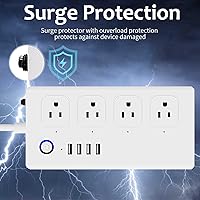
Having surge protection present at all in this price tier is welcome, and users appreciate that their connected devices have at least a baseline level of protection from voltage spikes. For lower-risk loads like lamps, fans, or phone chargers, it covers the bases adequately.
The absence of a published joule rating is a real problem for buyers trying to protect sensitive equipment. Without knowing the protection threshold, it's impossible to make an informed decision about plugging in a gaming PC, NAS drive, or high-end monitor — and several reviewers called this out explicitly.
App Experience
63%
37%
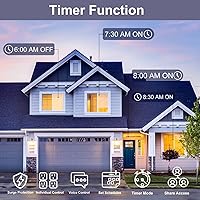
The Smart Life app handles basic scheduling and device grouping well enough for most users, and the timer functionality works reliably for straightforward on/off routines. Users who just need to set a morning schedule for a coffee maker and a lamp generally find it gets the job done.
The Smart Life platform is a shared ecosystem app, not something XENON controls directly, and its stability has a mixed reputation. Some users reported sync delays and occasional missed schedules, and the app's UX has drawn criticism for feeling cluttered when managing multiple smart devices side by side.
Power Restore Setting
68%
32%
For Home Assistant users specifically, the power-restore state customization is a standout feature — being able to define exact outlet behavior after an outage is critical for setups where certain devices should never auto-restart, like 3D printers or NAS units. Users on supported hubs are genuinely pleased it was included.
The feature's narrow hub support — currently limited to Home Assistant and ThirdReality Hub Gen2 — means the majority of buyers won't have access to it. SmartThings and Hubitat users in particular flagged this as a missing feature they expected, making it feel more like a partial implementation than a finished one.
Voice Control
77%
23%
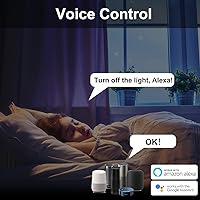
Alexa integration through compatible Echo hubs works reliably for the majority of users, with outlet-level voice commands responding quickly once the devices are properly named in the Alexa app. Google Home users with a compatible ZigBee bridge also report consistent performance for basic on/off commands.
Controlling individual outlets by voice requires thoughtful device naming upfront — users who didn't set distinct names for each outlet in their hub found Alexa defaulting to controlling all outlets simultaneously. Google Home integration is slightly less polished, with a few users noting it doesn't always expose individual outlet control cleanly.
Form Factor
88%
The slim profile is one of the most consistently praised physical attributes across early reviews. Users specifically note that it doesn't block adjacent sockets on a wall outlet or surge bar — a frustratingly common problem with bulkier smart plugs and strips. The size-to-outlet-count ratio is efficient.
At just over 10 inches long, it's slightly longer than some competing 4-outlet strips, which can be a minor inconvenience on compact desks or in tight under-shelf installations. The cord length hasn't been flagged as a major issue, but a few users wished for a longer run.
USB-C Port Utility
71%
29%
Having a USB-C port built in is a practical inclusion that most users welcome — keeping a phone or tablet topped up without sacrificing an AC outlet is a small but meaningful convenience for desk and nightstand setups. It reduces the need for a separate USB charger block in the mix.
XENON has not published the wattage output for the USB-C port, and users who tested it report it charges at standard speeds only — not fast charging. For anyone with a power-hungry laptop or tablet that needs speed, this port won't cut it, and the lack of spec transparency is frustrating.
Value for Money
79%
21%
Within the ZigBee smart strip niche, the pricing lands in a fair spot — buyers who needed exactly this feature set (per-outlet ZigBee control, USB-C, surge protection) found it difficult to source a comparable alternative at a lower price. For the right buyer, the value proposition is genuinely solid.
For anyone who ends up needing to purchase a ZigBee hub to make it work, the total cost of entry rises considerably and can feel disproportionate for a 4-outlet strip. Users who misread the listing and expected standalone functionality felt the value collapsed quickly once they understood the full picture.
Brand Trust & Support
54%
46%
A small number of early buyers reported positive interactions with XENON support when they reached out directly, and the company appears responsive on product Q&A sections. For a brand this new, that baseline responsiveness is at least a reasonable starting point.
XENON launched in mid-2024 with a limited public track record, and there's simply not enough data yet to judge firmware update frequency or long-term support commitment. Several buyers expressed hesitation about investing in a smart home device from a brand with no established history of sustained software support.

Suitable for:

The XENON ZigBee 4-Outlet Smart Power Strip is a strong fit for anyone already running a ZigBee-based smart home setup — particularly Home Assistant, SmartThings, Hubitat, or a compatible Echo device. If you've built out a ZigBee mesh network and want to extend outlet-level control without adding more Wi-Fi congestion, this strip slots in cleanly. It's especially practical for home office desks, entertainment centers, or workshop benches where you genuinely need different outlets operating on different schedules rather than everything toggling together. The individual outlet control is real and functional, not a gimmick — and for automation hobbyists who script routines in Home Assistant, the power-restore state setting adds a layer of reliability that most competing strips skip entirely. ZigBee enthusiasts who prioritize mesh stability over convenience will get solid value here.

Not suitable for:

If you don't already own a compatible ZigBee hub, the XENON ZigBee 4-Outlet Smart Power Strip is simply not the right purchase — full stop. There is no built-in Wi-Fi, no Bluetooth pairing, and no standalone app setup path; without a hub, the smart features are completely inaccessible. Casual smart home users who picked up a basic Amazon Echo Dot or a standard Google Home speaker will likely find their device isn't compatible, since only specific hub-enabled Echo models and third-party controllers are supported. Setup documentation is also thin for non-Echo ecosystems, so if you're not comfortable navigating SmartThings or Home Assistant integration yourself, expect a frustrating experience. Buyers who need surge protection with a confirmed joule rating for sensitive electronics should also look elsewhere, as XENON has not published that specification.

Specifications

  • Protocol: Operates on ZigBee 3.0, providing low-latency mesh communication that integrates with a wide range of compatible smart home hubs.
  • AC Outlets: Features 4 individually controlled AC outlets, each switchable and schedulable independently via app or voice command.
  • USB-C Port: Includes one USB-C charging port for modern devices, preserving all four AC slots for appliance use.
  • Voltage: Rated for 120V household current, making it compatible with standard North American wall outlets.
  • Dimensions: Measures 10.24 x 4.09 x 2.83 inches, a slim enough profile to avoid blocking adjacent sockets on most power boards.
  • Weight: Weighs 1.23 pounds, light enough for desktop or shelf placement without strain on the outlet.
  • Hub Requirement: Requires a compatible ZigBee hub to function as a smart device; no standalone Wi-Fi or Bluetooth operation is supported.
  • Compatible Hubs: Works with Echo 4th Gen, Echo Plus, SmartThings 2015/2018, Home Assistant, Hubitat, Homey Bridge, Homey Pro, Eero 6, Eero Pro 6, and ThirdReality Hub Gen Plus.
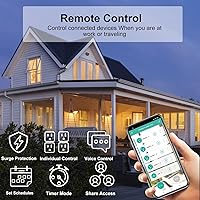
  • App Support: Controlled via the Smart Life app, which supports timer scheduling and device grouping without requiring a voice assistant.
  • Voice Assistants: Compatible with Amazon Alexa and Google Home when connected through a supported ZigBee hub or hub-enabled Echo device.
  • Surge Protection: Built-in surge protection is included, though XENON has not published an official joule rating for this unit.
  • Timer & Scheduling: Supports programmable timers and on/off scheduling for each outlet independently through the Smart Life app.
  • Power Restore: Allows users to define the on/off state of outlets after a power outage; currently supported only on Home Assistant and ThirdReality Hub Gen2.
  • Brand: Manufactured by XENON, a smart home accessories brand that entered the ZigBee market in mid-2024.
  • Launch Date: First made available in July 2024, making it a relatively recent product with a still-developing user review base.

Related Reviews
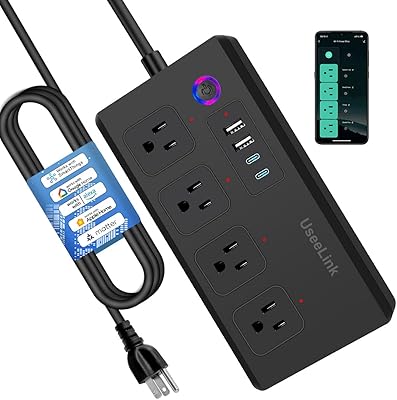
UseeLink Smart Power Strip with 4 Outlets and 4 USB Ports
86%
89%
Value for Money
90%
Ease of Setup
72%
App Experience
94%
Voice Control Integration
88%
Surge Protection Effectiveness
More
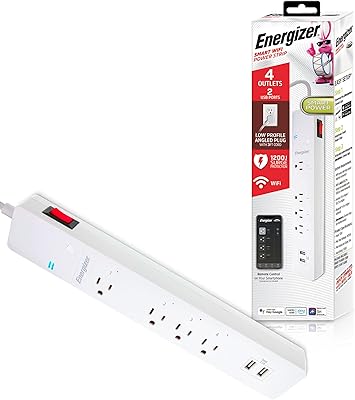
Energizer Smart Wi-Fi 4-Outlet Power Strip
73%
88%
Ease of Setup
67%
App Performance
84%
Voice Control Integration
62%
Outlet Spacing
71%
Surge Protection
More
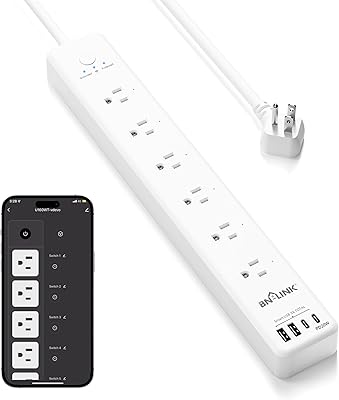
BN-LINK Smart Plug Power Strip with 6 Outlets and 4 USB Ports
85%
88%
Voice Control
90%
Surge Protection Performance
85%
USB Charging Speed
93%
Ease of Setup
72%
App Compatibility
More
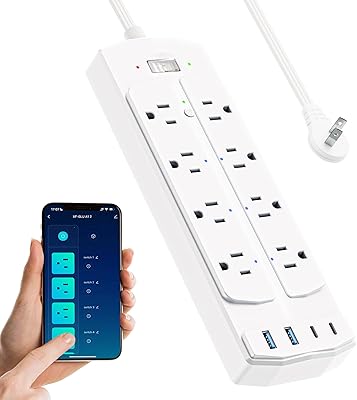
Yozisital 2-Prong Smart Power Strip
75%
83%
Setup & Pairing
67%
App Reliability
88%
Outlet Versatility
91%
Flat Plug Design
61%
USB-C Charging Speed
More
Geeni Smart Plug Power Strip 6-Outlet with USB Ports
83%
88%
Wi-Fi Connectivity & Setup
91%
Surge Protection & Device Safety
85%
Ease of Use & Control
89%
Voice Assistant Integration
84%
Build Quality & Durability
More
POWSAV NBW-903 18-Outlet Surge Protector Power Strip
81%
93%
Outlet Count & Spacing
78%
Surge Protection Reliability
91%
Flat Plug Design
54%
USB Charging Performance
88%
Cable Length & Management
More
Monoprice Heavy Duty Metal Surge Protector 4-Outlet Power Strip
86%
89%
Surge Protection Performance
91%
Build Quality
85%
Ease of Use
88%
Durability
92%
Value for Money
More
DEWENWILS 10-Outlet Surge Protector Power Strip with 4 USB Ports
86%
91%
Surge Protection Effectiveness
88%
Ease of Use
85%
Build Quality
78%
USB Charging Speed
94%
Cord Length
More
GHome Smart Plug Power Strip with 6 Outlets & 3 USB Ports
87%
92%
Value for Money
88%
Ease of Use
90%
Energy Monitoring
94%
Surge Protection
86%
USB Charging Speed
More
QINLIANF PW-902 24-Outlet Surge Protector
89%
96%
Outlet Density
93%
Surge Protection Reliability
89%
Build Quality and Durability
82%
USB Charging Convenience
91%
Plug and Cord Design
More

FAQ

You do need a compatible ZigBee hub — there is no way around it. The XENON ZigBee 4-Outlet Smart Power Strip has no built-in Wi-Fi or Bluetooth, so without a hub like an Echo 4th Gen, SmartThings, or Home Assistant, the smart features simply won't work. If you don't already own one of those, factor in the hub cost before purchasing.

Unfortunately, no. Standard Echo Dots and most basic Google Home speakers don't have a ZigBee hub built in. You need a hub-enabled device like an Echo 4th Gen, Echo Plus, or Echo Show 10 Gen 2 or later. On the Google side, pairing happens indirectly through a compatible ZigBee hub that is already linked to Google Home.

Each of the four outlets is fully independent. You can turn them on or off individually, set separate schedules for each one, or group them together if you want to control multiple outlets with a single command. That per-outlet granularity is one of the main reasons people choose this over a basic smart strip.

ZigBee uses a mesh network, meaning each ZigBee device can relay signals to others nearby, which tends to make the connection more stable in homes with thick walls or crowded Wi-Fi bands. It also uses less power and generally has lower response latency than Wi-Fi-based smart plugs. The trade-off is that you need a hub to bridge ZigBee to your home network, whereas Wi-Fi plugs connect directly.

The strip supports a power-restore state setting, which lets you define whether each outlet should turn back on, stay off, or return to its previous state after an outage. That said, this feature currently only works on Home Assistant (via ZHA or Zigbee2MQTT) and ThirdReality Hub Gen2. Users on other hubs may not have access to this setting yet.

There is surge protection built in, but XENON hasn't published a joule rating, which makes it hard to say definitively how robust it is. For basic appliances and smart home accessories, it's a reasonable safety net. If you're protecting high-value electronics like a desktop PC or a large TV, you'd be better served by a surge protector with a clearly rated and certified joule specification.

Yes, and this is actually one of the more appealing use cases for this smart outlet strip. Home Assistant supports it through ZHA (Zigbee Home Automation) and Zigbee2MQTT, both of which operate entirely locally — no cloud, no internet dependency for basic automations. The power-restore state feature also works in this configuration, which is a bonus for Home Assistant users who care about offline reliability.

The Smart Life app is free to download and use. You'll need to create an account to access remote control and scheduling features, but there's no paid subscription tier required for standard functionality. That said, cloud-based remote control does depend on XENON maintaining their server infrastructure, which is worth keeping in mind for a newer brand.

XENON hasn't published specific wattage details for the USB-C port, so it's safest to treat it as a standard-speed charging port rather than assuming fast-charge capability. It's a convenient addition for phones or small devices, but if fast charging is critical for you, verify specs with the manufacturer before relying on it.

It's a fair concern. XENON only entered the market in 2024, and like any newer brand, there's limited history to judge their firmware update cadence or customer support responsiveness. On the positive side, ZigBee devices used with local hubs like Home Assistant or Hubitat are less dependent on the manufacturer's cloud or app updates for core functionality. If you're running a local hub setup, you're somewhat insulated from that risk.