Overview

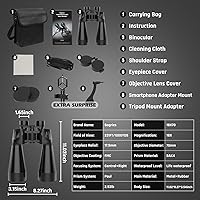
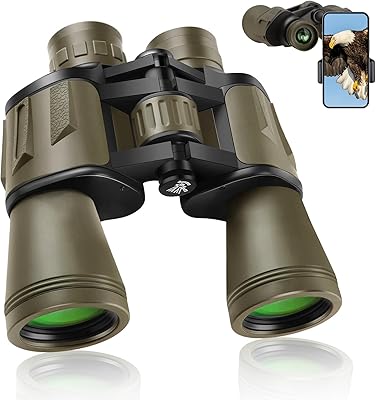
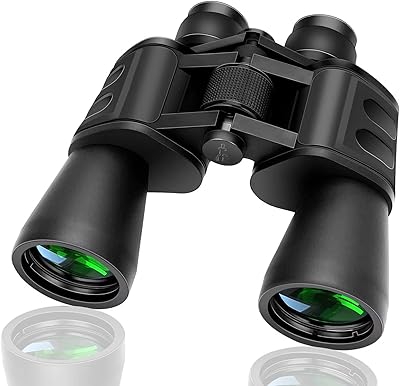
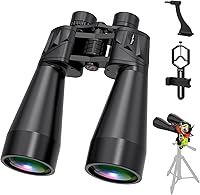
The Sogries 18x70 Binoculars occupy an interesting spot in the mid-range optics market — big enough to pull in serious amounts of light, powerful enough to resolve distant detail, yet priced where most hobbyists can actually justify the purchase. The defining specs here are the 18x magnification and a 70mm front lens, a combination that lets you pick out craters on the moon or follow a distant hawk with genuine clarity. That said, the metal barrel construction means these are not light — nearly three pounds of glass and metal demand respect. The kit includes a smartphone adapter, tripod adapter, and carrying case, which rounds out the package nicely for buyers setting up a fixed observation spot.
Features & Benefits

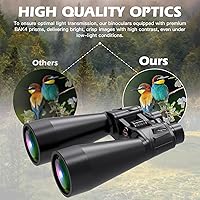
The optical core of this 18x70 model centers on BAK-4 prism glass, which gathers and transmits light more efficiently than cheaper alternatives — a real difference-maker when you are scanning a dim treeline at dusk or trying to resolve stars against a murky sky. An 18mm eye relief means you can observe comfortably for extended sessions without pressing your face against the eyepiece, and the 4.2-degree field of view is workable for tracking slow-moving subjects at range. The IPX7 waterproofing and fogproof sealing hold up in damp, cold conditions where budget optics tend to fog internally. The included 1/4-inch tripod adapter is not optional at this weight — it is, practically speaking, essential.

Best For

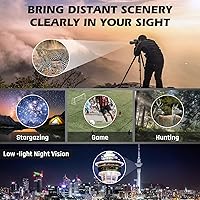
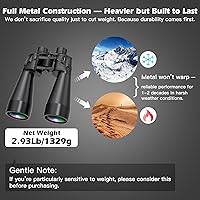
These large-aperture binoculars are a natural fit for anyone who does their observing from a fixed or semi-fixed position. Backyard astronomers who want to scan wide star fields without the setup complexity of a telescope will find the combination of aperture and magnification genuinely rewarding. Stationary wildlife watchers — at a birding blind, a boat deck, or a stadium upper tier — will appreciate the reach. What they are not built for is hiking or any situation requiring handheld use over more than a few minutes; at nearly three pounds, arm fatigue sets in quickly. If portability matters, this is the wrong tool for the job.

User Feedback

With over 180 ratings averaging 4.5 stars, the reception for the Sogries binoculars leans positive, though the picture is not entirely rosy. Buyers consistently highlight image brightness at dusk and the quality of the included accessories as genuine strengths for the price. The carrying case in particular gets called out as a thoughtful inclusion. On the other side, a recurring note is that handheld use becomes uncomfortable within minutes, and several reviewers mention that the tripod adapter shifts from a nice extra to a practical necessity. A handful of users report mixed results with optical alignment straight out of the box, so it is worth inspecting yours on arrival.

Pros

  • The 70mm front lens gathers noticeably more light than compact alternatives, making dusk and dawn sessions rewarding.
  • BAK-4 prisms deliver clean, bright images with solid color accuracy across a range of lighting conditions.
  • IPX7 waterproofing and fogproof sealing hold up reliably in cold, damp, and coastal environments.
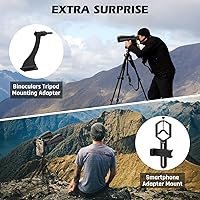
  • The tripod adapter and smartphone mount are included in the box — not sold separately as with many competitors.
  • Rubber-coated metal construction feels durable and provides a secure grip even with cold or wet hands.
  • At this price tier, the aperture and optical spec sheet is hard to match from better-known brands.
  • The carrying case is well-padded and sized correctly, making transport between fixed locations easy.
  • Casual moon photography is genuinely achievable using the included smartphone adapter with some patience.
  • The generous eye relief allows comfortable extended viewing sessions without pressing against the eyepiece.

Cons

  • Handheld use beyond a few minutes is physically tiring — a stable tripod is effectively mandatory, not optional.
  • A tripod is not included, meaning buyers without one face an additional purchase to use these properly.
  • Some units have shipped with slight optical misalignment, so inspect yours carefully upon arrival.
  • Edge softness at full magnification is noticeable, particularly on high-contrast subjects in bright light.
  • The smartphone adapter requires fiddly realignment during longer sessions and is too imprecise for serious astrophotography.
  • At nearly three pounds, these large-aperture binoculars are too heavy for travel or on-the-go use cases.
  • High magnification amplifies atmospheric shimmer on average nights, limiting how often conditions are truly ideal.
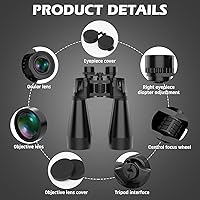
  • The lens caps fit loosely on some units and are easy to lose during field use.
  • Focus wheel travel is long relative to depth of field, making quick adjustments on moving subjects awkward.

Ratings

The scores below for the Sogries 18x70 Binoculars were generated by our AI system after analyzing verified purchase reviews from buyers worldwide, with spam, bot-submitted, and incentivized feedback actively filtered out. We looked at patterns across hundreds of real-world use cases — from backyard stargazing sessions to waterfront wildlife watching — to surface both where these large-aperture binoculars genuinely deliver and where they fall short. Strengths and frustrations are reflected here with equal weight.
Optical Clarity
83%
Most buyers are genuinely impressed by the sharpness at the center of the field, particularly when the binoculars are tripod-mounted and vibration is eliminated. Stars resolve cleanly on calm nights, and distant terrestrial subjects show good contrast and color fidelity for the price tier.
Edge softness is noticeable, especially at higher magnification, and a small number of users received units with slight optical misalignment out of the box. Chromatic fringing appears occasionally on high-contrast edges in bright daylight.
Low-Light Performance
76%
24%
The 70mm front lens gathers a meaningful amount of light, and the BAK-4 prisms transmit it efficiently enough to make dusk and dawn sessions genuinely productive. Several astronomy-focused reviewers noted that faint star clusters and nebulae were visible that smaller binoculars simply could not reveal.
At 18x magnification, any atmospheric shimmer or hand movement is amplified significantly, which can undercut the light-gathering advantage in practice. Without a stable tripod, low-light views become shaky and frustrating rather than impressive.
Build Quality
78%
22%
The metal barrel feels solid and purposeful — this does not rattle or flex under pressure, and the rubber coating provides a secure grip even with gloved hands in cold conditions. Overall construction inspires confidence for regular outdoor use.
A few reviewers flagged inconsistent quality control, with some units showing slightly loose eyepiece adjustment or minor cosmetic blemishes on arrival. The focus wheel, while smooth on most units, feels less precise on a small percentage of reported samples.
Waterproofing & Weather Resistance
88%
IPX7-rated waterproofing and internal fogproof sealing make these a dependable choice for early morning sessions near water, misty coastal environments, or cold-weather stargazing where lens fogging is a constant problem with cheaper optics. Buyers in humid climates specifically called this out as a meaningful differentiator.
The IPX7 rating covers submersion protection, but the seals around the focus wheel and eyepiece adjusters are the most likely failure points after extended heavy use. No long-term durability data is available given the product launched in mid-2024.
Portability & Weight
41%
59%
For buyers who set up at a fixed location — a backyard, a boat deck, or a stadium seat — the weight is a non-issue once the binoculars are mounted and positioned. The carrying case makes transport between locations manageable when you are not rushing.
At nearly three pounds, handheld use beyond a few minutes becomes physically tiring for most adults, and prolonged handheld viewing is effectively impractical. This is the single most common complaint across all user reviews and should be a firm dealbreaker for anyone expecting to use these while moving.
Tripod Compatibility
86%
The included 1/4-inch threaded adapter fits standard photography tripods without any adapter hunting, which is a genuine convenience given that a tripod is essentially mandatory for comfortable use. Buyers who already own a decent tripod reported a smooth setup experience.
The tripod itself is not included, and the listing's own weight disclaimer recommends against portable or lightweight tripods. Buyers without an existing stable tripod are looking at an additional purchase to get full value from this 18x70 model.
Smartphone Adapter Usability
62%
38%
The adapter does fit a wide range of phone sizes and attaches to the eyepiece without requiring tools, making casual astrophotography accessible for buyers who want to capture moon shots or share what they are seeing. Several users posted usable lunar images using this setup.
Alignment between the phone camera and eyepiece requires patience and tends to shift during longer sessions, which frustrates users expecting plug-and-play results. Dedicated astrophotographers will find the adapter too imprecise for anything beyond casual snapshots.
Value for Money
81%
19%
At this price point, the combination of 70mm aperture, BAK-4 prisms, IPX7 sealing, and a full accessory bundle is difficult to match from established brands. For hobbyist astronomers or stationary wildlife watchers, the capability-to-cost ratio genuinely stands out.
Buyers who expected handheld versatility or compact size feel the value proposition weakens considerably once they realize the tripod dependency. If your use case is primarily on-the-go or travel, the money is better spent on a lighter, lower-magnification model.
Eye Comfort & Relief
74%
26%
The 18mm eye relief is generous enough for extended observation sessions without straining, and most non-eyeglass wearers found the eyecups comfortable across viewing sessions lasting 30 minutes or more. The exit pupil size suits nighttime use well.
Eyeglass wearers reported a narrower effective field of view when using the eyecups in their folded position, which is a common trade-off at this magnification level. The diopter adjustment is functional but lacks fine-tuned precision compared to higher-end models.
Focus Mechanism
71%
29%
The central focus wheel operates smoothly on well-assembled units and allows reasonably quick adjustment when shifting between near and far subjects. For slow-moving or stationary targets like the moon or a distant bird perched on a branch, it works reliably.
The focus wheel travel is long relative to the depth-of-field at 18x, meaning small adjustments can require more turns than expected. Users tracking moving subjects reported difficulty keeping up, though this is partly a function of the magnification level itself.
Accessories & Packaging
84%
The carrying case is well-padded and sized correctly for the binoculars plus accessories, which is not always the case with bundled cases at this price. Reviewers consistently appreciated that the tripod adapter and smartphone mount were included rather than sold separately.
The included lens caps fit loosely on some units and are easy to misplace during field use. The strap, while functional, is basic and not ergonomically designed for a load of this weight over extended carry periods.
Astronomy Performance
79%
21%
Wide-field views of the Milky Way, open star clusters, and bright nebulae are where these large-aperture binoculars genuinely shine compared to smaller, lower-powered alternatives. The large front lens picks up enough photons to make deep-sky casual observing a real possibility.
High magnification amplifies atmospheric turbulence, so nights with average seeing conditions can produce disappointingly wobbly views even on a solid tripod. This model is better suited to scanning wide fields than resolving fine planetary detail.
Durability Over Time
67%
33%
For a product less than two years old, early buyer reports suggest the build holds up reasonably well through regular seasonal use, and the metal construction should outlast plastic-bodied alternatives in similar conditions.
Long-term reliability data is limited given the relatively recent launch date. A small subset of reviewers noted that internal dust or fogging appeared after several months of use, suggesting seal integrity may vary across production batches.

Suitable for:

The Sogries 18x70 Binoculars are purpose-built for observers who do their viewing from a stable, fixed position — and for that audience, they genuinely deliver. Backyard astronomers who want to scan wide star fields, trace the Milky Way, or study the moon without wrestling with telescope alignment will find the large front lens and powerful magnification a compelling combination. Stationary wildlife watchers — whether at a dedicated birding blind, a waterfront platform, or a boat deck — benefit from the reach and light-gathering that smaller binoculars simply cannot match. Cruise passengers and sports fans who want maximum zoom from a fixed vantage point, with no need to carry the optics long distances, are also natural fits. For anyone who already owns a solid tripod and wants a capable, weather-sealed optical tool without spending significantly more on a branded alternative, these large-aperture binoculars represent a well-rounded package at a realistic price.
Not suitable for:

If you are expecting to use the Sogries 18x70 Binoculars while moving — hiking a trail, scanning a shoreline on foot, or following action at a sporting event from a standing position — you are likely to be disappointed. At nearly three pounds, handheld fatigue sets in within minutes, and at 18x magnification, any hand movement translates into a shaky, disorienting image. Casual users who want a grab-and-go pair of binoculars for travel, day trips, or concerts will find this 18x70 model impractical and cumbersome. Eyeglass wearers may find the effective field of view narrowed in ways that make tracking subjects frustrating. Buyers hoping for a true all-in-one optic — something that works equally well handheld and on a tripod — should look at lighter, lower-magnification alternatives in the 8x42 or 10x50 range instead.
Specifications

  • Magnification: These binoculars deliver 18x magnification, bringing distant subjects significantly closer than the naked eye or standard binoculars.
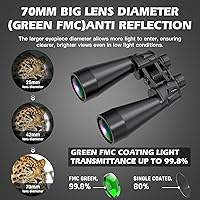
  • Objective Lens: The 70mm objective lens diameter allows a large volume of light to enter, supporting brighter views in low-light conditions.
  • Eyepiece Diameter: Each eyepiece measures 26mm in diameter, sized to accommodate standard ocular accessories and the included smartphone adapter.
  • Field of View: The field of view spans 4.2 degrees, covering a workable swath of sky or landscape at long distances when the unit is mounted steadily.
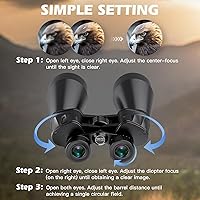
  • Eye Relief: Eye relief is 18mm, which is generous enough for relaxed extended viewing sessions without pressing your eye directly against the eyepiece.
  • Prism Type: BAK-4 borosilicate prisms are used internally, offering higher light transmission and edge sharpness compared to the more common BK-7 glass.
  • Waterproofing: The body is IPX7-rated waterproof, meaning it can withstand temporary submersion in up to 1 meter of water for up to 30 minutes.
  • Fogproof Sealing: Internal nitrogen or dry-gas purging prevents internal fogging when moving between temperature extremes, such as a warm car to cold outdoor air.
  • Body Construction: The barrel is made of metal for rigidity, finished with a rubber coating that improves grip and absorbs minor surface impacts.
  • Net Weight: The binoculars alone weigh 2.94 lb, which is substantial enough to make extended handheld use tiring for most adults.
  • Package Weight: The total packaged weight, including accessories and carrying case, is 4.67 lb.
  • Package Dimensions: The shipping package measures 13.43 x 11.61 x 5.98 inches, reflecting the size of the included padded carrying case.
  • Tripod Thread: A standard 1/4-inch threaded adapter is included, compatible with the vast majority of photography and astronomy tripods.
  • Smartphone Adapter: The included smartphone adapter fits phones with a body width of 53mm to 90mm and attaches to eyepieces ranging from 24mm to 52mm in diameter.
  • Included Accessories: The package includes a padded carrying case, a 1/4-inch tripod adapter, and a smartphone adapter for casual afocal photography.
  • Brand & Model: Manufactured by Sogries under model designation 18X70, first made available for purchase in August 2024.

Related Reviews
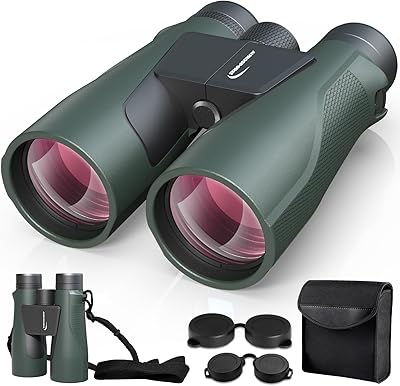
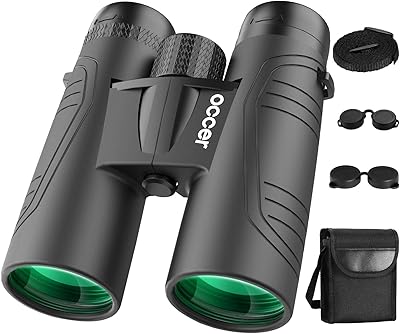
Occer 12x50 Binoculars
87%
89%
Clarity & Sharpness
85%
Ease of Use
88%
Build Quality
91%
Lightweight & Portability
67%
Focus Adjustment Speed
More
Aurosports 20x70 Binoculars
83%
91%
Magnification & Clarity
85%
Low Light Performance
88%
Build Quality & Durability
78%
Portability & Comfort
84%
Accessories in Box
More
PISEZ 20x50 Binoculars
72%
72%
Optical Clarity
68%
Magnification Performance
74%
Low-Light Performance
71%
Build Quality & Durability
88%
Value for Money
More
BRESSER 20x50 Binoculars
83%
91%
Magnification Performance
88%
Build Quality & Durability
87%
Image Clarity & Brightness
82%
Portability & Design
89%
Waterproof & Shockproof Features
More
Retulgie 12x25 Compact Binoculars
75%
74%
Optical Clarity
58%
Low-Light Performance
63%
Build Quality
91%
Portability & Size
78%
Comfort & Ergonomics
More
WOZEL 20x70 Binoculars
72%
83%
Optical Clarity
78%
Magnification Performance
71%
Low-Light Performance
76%
Build Quality
52%
Handheld Stability
More
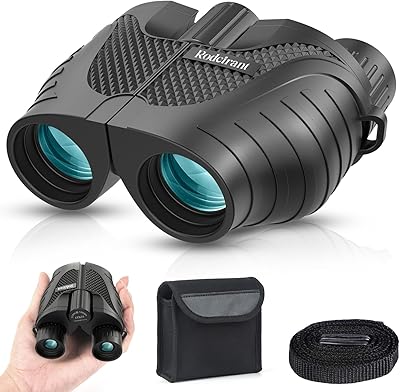
Rodcirant 15x25 Binoculars
85%
89%
Value for Money
84%
Magnification Performance
95%
Portability and Size
90%
Durability (Waterproof/Fog-proof)
88%
Ease of Use (One-handed Operation)
More
Occer 15x42 Binoculars
86%
88%
Magnification and Clarity
92%
Portability and Weight
85%
Optical Quality
87%
Build Quality
90%
Ease of Use
More
Deesoo 20x52 Binoculars
73%
74%
Optical Clarity
81%
Magnification Performance
69%
Build Quality
62%
Low-Light Capability
53%
Image Stability
More
Allenjoy 20x50 Binoculars
78%
83%
Optical Clarity
78%
Magnification Performance
69%
Low-Light Performance
81%
Build Quality
88%
Ease of Focus
More

FAQ

Technically you can hold them, but realistically you will struggle. At 18x magnification, any hand movement is amplified dramatically, and at nearly three pounds, arm fatigue sets in fast. For anything beyond a brief glance, a stable tripod transforms the experience from frustrating to genuinely impressive.

Any tripod with a standard 1/4-inch screw mount will fit the included adapter, which covers most photography and video tripods. Given the weight, a flimsy travel tripod is not ideal — look for something rated to hold at least 5 to 6 lbs with a fluid or pan-tilt head for smooth tracking.

Yes, they are a reasonable entry point for casual astronomy. The large front lens picks up enough light to reveal star clusters, the Andromeda Galaxy, and good lunar detail. Just be aware that high magnification also amplifies atmospheric shimmer, so some nights will look better than others regardless of the optics.

They work well for birding from a fixed spot — a blind, a deck, or a perch overlooking a wetland. The reach is exceptional. Where they fall short is any situation requiring you to carry them for extended distances or track fast-moving birds through dense canopy, where the weight and narrow field of view become real obstacles.

The adapter clamps onto the eyepiece and holds your phone camera aligned over the lens for afocal photography. It works best for static subjects like the moon. Expect to spend a few minutes getting the alignment right each session — it can shift slightly during use, so it is better suited for casual snapshots than serious astrophotography.

The IPX7 waterproof rating means they can handle rain, splashes, and brief accidental submersion without issue. The internal fogproof sealing also means the lenses will not cloud up when moving between humid and cold environments. For coastal or rainy-climate users, this is a meaningful practical advantage.

The 18mm eye relief is on the higher end, which helps eyeglass wearers maintain a usable field of view. That said, you will still see some reduction in effective field width compared to bare-eyed use. Roll down the eyecups fully when wearing glasses, and you should be able to observe comfortably.

For wide-field viewing — sweeping the Milky Way, scanning open clusters, getting a broad view of the moon — these large-aperture binoculars are actually more intuitive than a telescope and require no alignment or cool-down time. A telescope will outperform them on planetary detail and resolving fine structure, but for casual deep-sky browsing, the binoculars are quicker and easier to use.

Most units arrive in good condition, but a small number of buyers have reported slight optical misalignment or looseness in the eyepiece assembly. It is worth doing a quick check when your unit arrives — verify both barrels focus to the same point at distance, and test the diopter adjustment. If something is off, contact the seller promptly.

High-powered, large-aperture binoculars like this 18x70 model are optimized for long-distance viewing and typically have a minimum focus distance of around 20 to 30 meters. They are not suited for close-range subjects — if you need to observe anything nearer than roughly 15 to 20 meters, the image will be blurry regardless of focus adjustments.