Overview

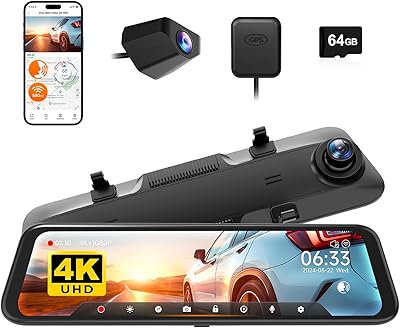
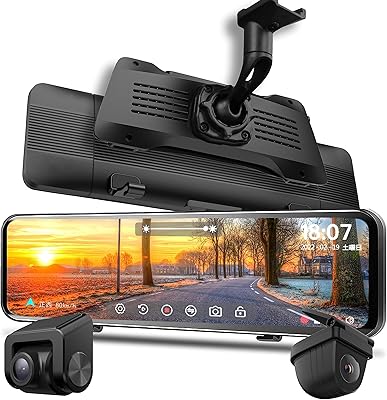
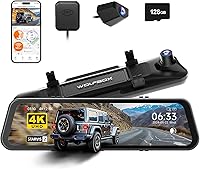
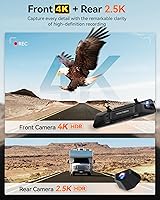
The WOLFBOX G900 Pro 12-inch Mirror Dash Cam is a full-replacement rearview mirror that swaps out your factory unit and puts a large touchscreen display where it used to be. The dual-channel setup records at 4K up front and 2.5K out back via a USB-C rear camera, covering both ends of your vehicle with genuine detail. Powering the front lens is the STARVIS 2 IMX678 sensor — a meaningful step up from the previous generation in terms of low-light performance. The package includes a 128GB card and a one-year warranty, which helps justify the mid-to-premium price for drivers who want everything in a single, tidy unit.
Features & Benefits

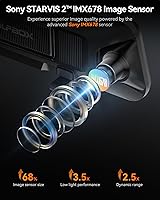
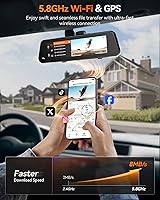
The STARVIS 2 IMX678 sensor, backed by a 7-glass lens, is where this mirror dash cam earns its positioning. Nighttime footage is noticeably sharper than what older STARVIS 1 chips produce, though the rear camera still has limits in very low light. The 4K front feed captures license plates and road signs with real clarity, while the 2.5K rear handles close-range incidents well. 5.8GHz WiFi makes pulling clips to the WOLFBOX app genuinely quick. Voice control lets you lock footage or snap a photo hands-free, which matters while driving. The supercapacitor design — no lithium battery — means it handles summer heat better than most competitors. Built-in GPS logs speed and location onto clips automatically, and loop recording with G-sensor ensures collision footage never gets overwritten.

Best For

This rearview camera system is a natural fit for daily commuters and rideshare drivers who need solid front and rear documentation without adding a separate windshield mount. If you drive frequently at night or through poorly lit stretches, the upgraded sensor does make a real difference. Fleet managers and long-haul road-trippers will also appreciate the GPS-stamped recordings for accountability or insurance purposes. App-comfortable users will find the WiFi-based clip management straightforward. If you want a clean, uncluttered cockpit, this mirror-integrated format is hard to beat — though drivers with smaller vehicles should confirm the 12-inch screen fits their headliner setup before purchasing.

User Feedback

Across close to 600 ratings averaging 4.3 stars, the pattern is fairly consistent. Owners frequently cite sharp daytime footage and a responsive touchscreen as standout positives, along with a reasonably smooth installation experience. On the critical side, routing the rear camera cable through the headliner is the most common frustration — manageable if you are handy, but not a quick job. A number of buyers were caught off guard by the parking mode caveat: 24-hour monitoring requires a separately purchased hardware kit that is easy to overlook. The WOLFBOX app earns decent marks for pairing speed, though some users note the large screen can create glare depending on sunlight angle.

Pros

  • 4K front footage is sharp enough to capture license plates and road signs at highway speeds.
  • The STARVIS 2 IMX678 sensor delivers a real and noticeable improvement in low-light clarity over older chips.
  • GPS speed and location data are embedded directly into footage, which is genuinely useful for insurance claims.
  • 128GB storage card is included out of the box, so you are recording from the moment installation is done.
  • 5.8GHz WiFi makes pulling clips to your phone meaningfully faster than older 2.4GHz-only dash cam competitors.
  • Voice control lets you lock footage or take a photo without taking your hands off the wheel.
  • The supercapacitor design handles heat-intensive climates far more reliably than lithium battery-based units.
  • Loop recording with G-sensor ensures collision footage is automatically protected and never accidentally overwritten.
  • The mirror-integrated format keeps the cabin clean and avoids the windshield-clutter problem of traditional dash cam setups.
  • A 4.3-star average across nearly 600 verified ratings signals consistent real-world satisfaction at this price tier.

Cons

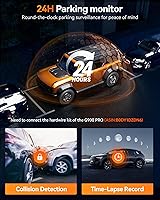
  • Parking monitor functionality requires purchasing a separate hardwire kit that is easy to overlook before buying.
  • Rear camera cable routing through the headliner is a tedious, multi-hour job for anyone without car-installation experience.
  • Rear camera footage quality drops off noticeably in genuinely dark environments like unlit roads or underground garages.
  • The WOLFBOX app is functional but receives mixed marks for stability, particularly during longer video download sessions.
  • The 12-inch display can create glare or partially obstruct sightlines in compact vehicles with shorter headliners.
  • At 4K and 2.5K dual recording, the 128GB card fills faster than many buyers anticipate, requiring more active storage management.
  • Voice recognition accuracy degrades with road noise, music, or HVAC running — enough that some users revert to the touchscreen.
  • The one-year warranty window is shorter than some competitors at a similar price point who offer two-year coverage.
  • The external GPS antenna adds minor cable clutter inside the cabin compared to units with integrated GPS chips.

Ratings

The WOLFBOX G900 Pro 12-inch Mirror Dash Cam has been evaluated by our AI rating system after processing hundreds of verified global buyer reviews, with spam, bot-generated, and incentivized submissions actively filtered out. The scores below reflect a honest picture of where this rearview camera system genuinely delivers and where real-world frustrations surface. Both the standout strengths and the recurring pain points are weighted transparently into every category.
Video Quality (Front)
91%
In daylight, the 4K front feed is sharp enough to read license plates several car lengths ahead, which matters when you actually need footage for an insurance claim. Reviewers consistently noted that colors look natural and detail holds up even at highway speeds. This is where the WOLFBOX G900 Pro earns its positioning most clearly.
A small number of users noted minor rolling shutter artifacts when panning quickly through tight turns. The 4K recording also fills the included 128GB card faster than lower-resolution competitors, so drivers who leave the car parked for extended periods may need to manage storage more actively.
Video Quality (Rear)
78%
22%
The 2.5K rear camera is a genuine step above the 1080p units found on cheaper mirror dash cams, and it shows in parking-lot incidents and tailgating documentation where close-range detail is critical. Reviewers found it reliable enough for everyday incident capture.
The rear camera does show its limits in very dark conditions — think unlit rural roads or underground parking garages — where footage can appear grainy or washed out under artificial lighting. It performs meaningfully better than entry-level alternatives, but buyers expecting front-camera parity will be slightly disappointed.
Night Vision Performance
76%
24%
The STARVIS 2 IMX678 sensor is a real upgrade over older chips, and it shows most clearly on suburban roads with mixed streetlight coverage. Drivers who frequently commute at dawn or dusk reported noticeably cleaner footage compared to their previous dash cams, with less smearing on moving headlights.
Night vision is improved, not transformed. In genuinely dark environments with no ambient light, the front camera still produces visible noise, and the rear camera drops off sooner. Buyers coming from a premium dedicated dash cam with a larger sensor aperture may find the low-light ceiling lower than expected.
Installation Experience
67%
33%
Mounting the mirror itself is straightforward — it straps over the factory rearview mirror cleanly, and the front camera cable management is manageable for most drivers. The included cable clips and straps make hiding the power wire along the headliner achievable with basic patience.
Routing the 21.3-foot rear camera cable through the headliner to the back of the vehicle is where things get genuinely tedious. Multiple reviewers flagged this as a two-hour-plus job if done neatly, and those without any car-installation experience found it frustrating enough to mention it specifically in their reviews.
App & WiFi Connectivity
74%
26%
The 5.8GHz WiFi connection pairs quickly with the WOLFBOX app and noticeably speeds up video downloads compared to older 2.4GHz-only competitors. For drivers who regularly pull clips after incidents or want to review footage on their phone without removing the SD card, this is a practical day-to-day improvement.
The app works well for basic functions but has received mixed feedback on stability — some Android users reported occasional disconnection during longer download sessions. The app interface is functional rather than polished, and a few users noted that firmware update processes through the app are not particularly intuitive.
GPS Accuracy & Logging
83%
Speed and location data are embedded directly into footage files, which proved useful for owners who submitted clips to insurance providers. The external GPS antenna picks up signal reliably in most urban and suburban driving environments without a long acquisition delay after startup.
In dense urban canyons with tall buildings, a handful of users noted occasional GPS drift on the recorded track. The external antenna adds a small amount of cable clutter in the cabin, which some buyers found mildly annoying compared to units with an internal GPS chip.
Voice Control Reliability
71%
29%
Being able to say a command and lock a clip or start a photo without reaching toward the screen is a genuine safety benefit, especially during highway driving. Users with clear cabin acoustics and minimal road noise reported consistently accurate command recognition for core functions.
Voice recognition accuracy drops noticeably with road noise, HVAC fans running, or music playing. A few reviewers found themselves repeating commands often enough that they defaulted back to using the touchscreen, which somewhat undermines the hands-free premise in real driving conditions.
Touchscreen Responsiveness
82%
18%
The 12-inch display registers taps accurately and switches between views without meaningful lag, which reviewers appreciated when quickly pulling up the rear camera feed in traffic. Brightness is sufficient in most daylight conditions, making the screen readable even with direct sun nearby.
In very bright, direct sunlight — especially in vehicles with low sun visors — the screen can wash out slightly. A small number of drivers also noted that the large screen picks up glare at certain angles, which can momentarily distract rather than help during certain times of day.
Build Quality & Durability
79%
21%
The mirror housing feels solid and the strap attachment system keeps it from shifting over time, which was a frequent point of praise from longer-term owners. The supercapacitor design eliminates one of the most common failure points in dash cams — battery swelling in hot climates.
The plastic housing, while functional, does not feel particularly premium to the touch given the price point. A couple of buyers reported minor rattling after extended use on rough roads, suggesting the internal components could benefit from tighter tolerances.
Screen Size & Fit
69%
31%
For most mid-size and full-size vehicles, the 12-inch display fits naturally within the driver's field of view and replaces the factory mirror without awkward overhang. The wide display also makes the rear camera feed genuinely useful as a backup aid, not just a small postage-stamp preview.
In compact cars with shorter headliners or smaller windshields, the 12-inch unit can feel oversized and may partially obscure the front sight line. A handful of reviewers specifically advised checking the mirror cavity size of their specific vehicle before purchasing to avoid a difficult return process.
Parking Monitor Functionality
58%
42%
When the separately purchased hardwire kit is installed, the parking monitor provides a useful layer of protection for drivers who park in urban areas or busy lots. The G-sensor triggers recording on impact reliably, and clips are date-stamped and GPS-logged for incident reference.
The parking monitor requires buying a separate hardware kit that is not included — and this catches a significant number of buyers off guard. It is mentioned in the fine print but is easy to miss, and several reviewers expressed frustration at discovering this only after the unit was already installed.
Storage & File Management
77%
23%
The included 128GB card is a genuinely useful starting point that covers multiple days of loop recording at full resolution before overwriting older footage. Expanding up to 512GB gives long-haul drivers or fleet managers room to retain footage for extended periods without manual management.
At 4K front and 2.5K rear, file sizes accumulate quickly, and the default recording settings will cycle through a 128GB card faster than some buyers expect. File organization on the card itself is functional but basic, and pulling specific clips by date on a computer requires some patience.
Value for Money
73%
27%
Compared to buying a separate front dash cam, rear dash cam, and GPS logger, this rearview camera system bundles meaningful hardware into a single footprint. The STARVIS 2 sensor, 5.8GHz WiFi, included storage card, and GPS antenna together represent reasonable value at this tier.
The price sits at a level where buyers have high expectations, and a few compromises — like the extra cost for parking mode, the app polish gap, and the rear camera's low-light ceiling — create some friction when weighing the total cost of ownership. It is competitive but not obviously the best dollar-for-dollar option in its class.
Setup & User Manual
63%
37%
The core installation steps are covered clearly enough for drivers with basic DIY confidence. Mounting the unit, connecting the front camera cable, and getting the device recording takes most people under 30 minutes for the front-only setup.
The manual falls short when it comes to rear camera routing and the GPS antenna placement, which are exactly the steps where new users need the most guidance. Several reviewers turned to third-party YouTube tutorials to complete installation cleanly, suggesting the documentation has meaningful room for improvement.
Brand Support & Warranty
76%
24%
The one-year warranty and responsive customer service received positive mentions from buyers who encountered early firmware or connectivity issues. WOLFBOX appears to issue replacement units without excessive friction when hardware defects are confirmed, which adds confidence at this price point.
Post-warranty support is less certain, and the one-year coverage window is shorter than a few direct competitors who offer two-year guarantees on similar hardware. Buyers expecting multi-year peace of mind may find the warranty term a modest weak point relative to the investment.

Suitable for:

The WOLFBOX G900 Pro 12-inch Mirror Dash Cam is genuinely well-matched to drivers who want a single, clean installation that handles front and rear recording without a windshield cluttered with separate mounts and cables. Daily commuters who log serious mileage will appreciate having GPS-stamped, high-resolution footage ready to go if an incident happens — the kind of documentation that actually holds up when dealing with insurance adjusters. Rideshare drivers in particular benefit from the all-in-one format, since both ends of the vehicle are covered and the mirror-integrated look keeps the cabin looking professional. Drivers who frequently navigate at night or in low-light suburban areas will find the STARVIS 2 sensor a meaningful upgrade over the generic sensors found in budget-tier units. Fleet operators or road-trippers who need speed and location data embedded in every clip will also find the built-in GPS earns its place quickly. If you run hot summers and have had a dash cam fail on you before due to battery swelling, the supercapacitor design removes that concern entirely.
Not suitable for:

The WOLFBOX G900 Pro 12-inch Mirror Dash Cam is not the right choice for buyers who expect parking surveillance out of the box — the 24-hour parking monitor requires a separately purchased hardwire kit, and overlooking this detail leads to real frustration after installation. Drivers of compact cars with shorter headliners or smaller mirror cavities should measure carefully before purchasing, because the 12-inch display can feel oversized and may partially restrict forward visibility in tighter cockpits. Anyone uncomfortable with a moderately involved DIY installation should think twice, since routing the rear camera cable cleanly through the headliner to the back of the vehicle is a legitimate multi-hour job without prior experience. Buyers prioritizing rear camera performance in very dark, unlit environments may find this rearview camera system falls short of their expectations, as the rear feed has a lower low-light ceiling than the front. Those wanting a refined, polished companion app experience may also find the WOLFBOX app functional but lacking the fit and finish of software from more established electronics brands. If your primary need is a minimalist, discreet recording solution, the 12-inch format is simply not built for that use case.
Specifications

  • Front Resolution: The front camera records at 4K (3840x2160) at 30 frames per second, delivering enough detail to clearly identify license plates and road signage in footage.
  • Rear Resolution: The included rear camera records at 2.5K (2560x1440) at 30 frames per second via a USB-C connection, providing meaningfully more detail than standard 1080p rear units.
  • Front Sensor: The front camera uses a Sony STARVIS 2 IMX678 image sensor, which offers improved low-light sensitivity and dynamic range compared to the previous STARVIS 1 generation.
  • Lens: The front lens features a 7-element glass construction with a 170-degree field of view, capturing wide-angle coverage across multiple lanes of traffic.
  • Screen Size: The unit houses a 12-inch IPS touchscreen display that replaces the factory rearview mirror and doubles as the rear camera monitor.
  • WiFi: Connectivity runs on 5.8GHz dual-band WiFi, enabling faster video transfers to the WOLFBOX app compared to 2.4GHz-only dash cam competitors.
  • GPS: An external GPS antenna is included in the box and logs speed and geographic coordinates directly onto recorded footage for documentation and insurance purposes.
  • Storage: A 128GB microSD card is included, and the unit supports cards up to 512GB for extended recording capacity without manual file management.
  • Power System: The unit is powered by a built-in supercapacitor rather than a lithium battery, improving thermal resilience and long-term reliability in high-temperature environments.
  • Rear Camera Cable: The rear USB-C camera connects via a 21.3-foot cable, providing sufficient length to route through the headliner to the rear of most standard passenger vehicles.
  • Dimensions: The mirror unit measures 1.5 x 12.01 x 2.99 inches, designed to strap over most factory rearview mirrors without permanent modification.
  • Weight: The complete mirror unit weighs 2.65 pounds, which is within the normal range for 12-inch mirror dash cam systems of this class.
  • Car Charger Cable: An 11.5-foot car charger cable is included in the box, long enough to route cleanly along the headliner to the 12V power outlet in most vehicles.
  • Parking Monitor: Parking surveillance mode is supported but requires a separately purchased hardwire kit; the 24-hour monitoring function is not available with the included car charger cable alone.
  • Voice Control: The unit supports voice commands for core functions including starting and stopping recording, capturing photos, and locking individual clips without touching the screen.
  • App Compatibility: The WOLFBOX app is compatible with both iOS and Android smartphones and connects over WiFi for video preview, clip download, and basic settings management.
  • Special Features: Additional features include loop recording, G-sensor impact detection, reverse assist guidelines, touch screen operation, and night vision optimized through the STARVIS 2 sensor.
  • Warranty: WOLFBOX covers this unit with a 1-year manufacturer guarantee, with customer support available for hardware defects and replacement requests during the coverage period.

Related Reviews
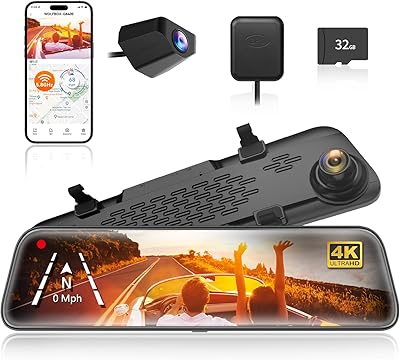
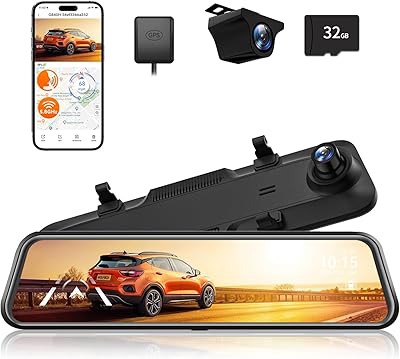
WOLFBOX G850 12″ Mirror Dash Cam
75%
88%
Video Clarity (Front Camera)
74%
Rear Camera Quality
76%
Night Vision Performance
83%
Screen Size & Usability
79%
Installation & Setup
More
WOLFBOX G840S 12″ Mirror Dash Cam
76%
88%
Video Clarity (Front Camera)
83%
Night Vision Performance
86%
Display Quality
74%
Rear Camera & Coverage
79%
GPS Accuracy & Logging
More
WOLFBOX G840H Mirror Dash Cam
75%
83%
Daytime Video Quality
64%
Night Recording Performance
71%
ADAS Safety Alerts
68%
Blind Spot Detection
86%
Screen Size & Usability
More
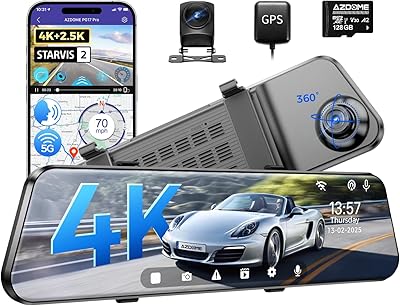
AZDOME PG17 Pro Mirror Dash Cam
78%
93%
Video Clarity (Front)
91%
Night Vision Performance
84%
Rear Camera Quality
71%
App & WiFi Experience
74%
Voice Command Accuracy
More
PORMIDO D50 12″ Triple Mirror Dash Cam
75%
88%
Night Vision Quality
91%
Display Clarity
84%
Video Recording Quality
52%
Installation Experience
67%
GPS Accuracy
More
Jansite RM 12″ 4K Mirror Dash Cam
86%
92%
Video Quality (Front)
88%
Ease of Installation
84%
App and Wi-Fi Functionality
63%
Rear Camera Installation
90%
Night Vision Performance
More
Podofo RM Front & Rear Mirror Dash Cam 11.26 Inch
84%
88%
Video Quality
94%
Display Clarity
85%
Ease of Installation
91%
Night Vision Performance
79%
Connectivity (CarPlay/Android Auto)
More
AMprime RM 9.66″ Mirror Dash Cam
73%
74%
Video Quality
88%
CarPlay & Android Auto
61%
Night Vision
78%
Installation Ease
71%
Parking Monitor
More
NikoMaku AS-J3 Mirror Dash Cam
76%
78%
Video Quality
67%
Night Vision
83%
Screen Quality
81%
Build & Design
54%
Installation Ease
More
UZIVO U24 Mirror Dash Cam
86%
89%
Ease of Setup
91%
Video Quality
65%
Screen Visibility in Sunlight
87%
Night Vision Performance
92%
Parking Monitor Effectiveness
More

FAQ

For basic front and rear recording, yes — the box includes the mirror unit, the rear camera with its cable, a 128GB card, an external GPS antenna, a car charger, and mounting hardware. The one thing that is not included is the hardwire kit for parking mode. If you want 24-hour parked surveillance, you will need to purchase that kit separately, and it requires a connection to a fused power source in your vehicle.

It fits most mid-size sedans, SUVs, and trucks without issue since it straps over the factory mirror rather than replacing it permanently. That said, compact cars with smaller headliners or narrower mirror brackets can be a tighter fit. Before purchasing, it is worth measuring your existing mirror and comparing it to the unit dimensions of 12.01 x 2.99 inches to avoid surprises.

Mounting the mirror and setting up the front camera is genuinely straightforward — most people get that done in under 30 minutes. The harder part is routing the rear camera cable cleanly through the headliner from the front to the back of the vehicle, which can take a couple of hours if you want a tidy result. It is doable as a DIY project, but if you have never done any car cable work before, watching a walkthrough video specific to your vehicle model first is strongly recommended.

The STARVIS 2 IMX678 sensor is a genuine hardware upgrade over the older STARVIS 1 chips, and the difference in low-light performance is real and noticeable — particularly on the front camera on suburban roads with mixed streetlighting. That said, it is not perfect. In genuinely dark environments with no ambient light, you will still see some noise and reduced clarity, especially from the rear camera. It is better than most units in this price range, but it is not a night-vision-level solution for pitch-black conditions.

Yes, that is exactly what the WiFi connection is for. The WOLFBOX app connects to the unit over 5.8GHz WiFi, and you can preview, download, and share clips directly from your phone. The 5.8GHz band makes downloads notably faster than older 2.4GHz-only systems. Just keep in mind that both your phone and the dash cam need to be within WiFi range of each other, so this works best when you are parked near the vehicle.

Yes. The built-in G-sensor detects sudden impacts or hard braking and automatically locks the current clip so that loop recording cannot overwrite it. You can also manually lock a clip using the voice command feature or by tapping the screen. GPS and speed data are embedded in the file at the moment of recording, which is useful if you need to share the footage with an insurance company.

Most budget dash cams use a small lithium battery as their internal power source, which can swell, degrade, or even fail when the interior of a parked car gets very hot in summer. The supercapacitor in this unit charges and discharges faster than a battery and handles heat far more reliably over time, which means it is less likely to fail after a few seasons of use in warm climates. It is a practical durability advantage, not just a spec on paper.

It works with standard microSD cards and supports capacities up to 512GB, so you have flexibility to expand beyond the included 128GB card if you want longer retention before footage gets overwritten. For reliable performance at 4K and 2.5K dual recording, it is worth using a card rated at U3 or V30 speed class or higher — slower cards can cause dropped frames or recording errors at these resolutions.

Voice control works well in quiet cabin conditions, but real-world performance does drop when there is significant background noise — music, highway wind, or a blasting HVAC system can all cause misrecognition. It is a useful feature for quick clip locking or starting a recording on a quiet road, but it is not reliable enough to fully replace the touchscreen in all driving conditions. Most users end up using voice commands situationally rather than as their primary control method.

Yes. The rear camera feed automatically displays on the screen when the vehicle is put into reverse, and the unit includes reverse assist guidelines to help with distance judgment. The rear camera is mounted on the back of the vehicle and provides a 2.5K live view, which is a significant improvement over the small, blurry feeds on many OEM backup camera systems. Just note that the rear camera needs to be properly positioned and the cable fully routed for this to work as intended.

Where to Buy