Overview

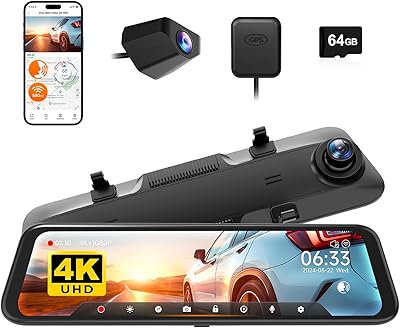
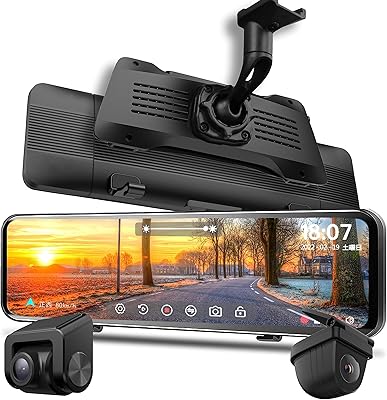
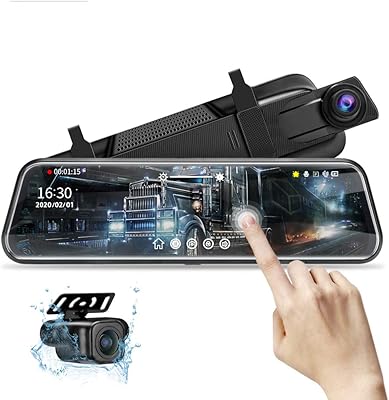
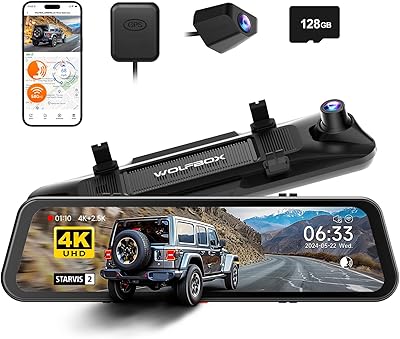
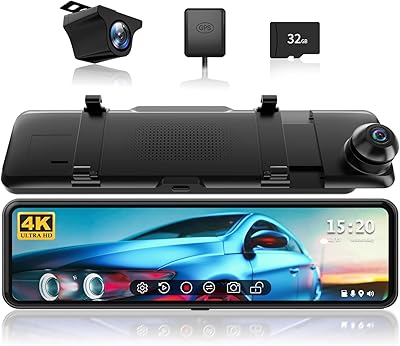
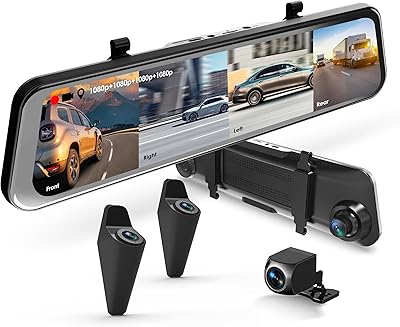
The PORMIDO D50 12″ Triple Mirror Dash Cam sits in an interesting spot in the market — it's not the cheapest option on the shelf, but it brings a level of hardware and feature density that most budget mirror cams simply can't match. Triple-channel recording has grown popular because a single forward-facing camera leaves too many blind spots; add a cabin view and a waterproof rear camera, and you have a much more complete picture of what's happening around your vehicle. The D50 pairs that three-lens setup with a large touch display and Sony IMX335 sensors on every channel, which is a meaningful hardware choice over the generic sensors packed into lower-priced competitors. Just know that getting everything installed cleanly takes real patience.

Features & Benefits

The 12-inch anti-glare touch display is genuinely one of the better screens you'll encounter in this category — on a sunny afternoon, the full laminated panel holds up where cheaper glossy screens become near-unreadable washes of white. All three cameras capture footage simultaneously, with the front lens at 1296P and both the cabin and rear feeds at 1080P. Night driving is where the Sony Starvis sensor earns its keep: under dim parking lot lighting or on unlit rural roads, license plates stay legible and nearby objects retain real detail rather than disappearing into noise. A GPS-stamped recording adds speed and route data to each clip, which can matter greatly if footage is ever needed for an insurance dispute.

Best For

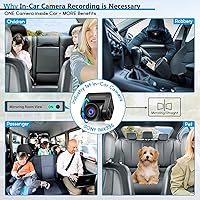
This triple-channel mirror cam makes the most sense for drivers who genuinely need eyes in multiple directions at once. Rideshare and taxi drivers will find the interior cabin lens particularly valuable — it's a quiet deterrent and a clear record if a passenger dispute ever arises, though it's worth being transparent with riders about recording. Families with kids in the back seat and pet owners benefit for similar reasons. RV and truck owners should note the 33-foot rear cable, which handles most full-size vehicles without issue, and the optional longer extension is available for especially deep cargo setups. Anyone upgrading from a basic single-lens cam will immediately notice the difference in coverage.

User Feedback

With over a thousand verified ratings and a 4.3-star average, the D50 mirror dash cam has clearly satisfied a wide range of buyers, though the picture isn't entirely spotless. Screen clarity and the quality of low-light footage are the two things reviewers praise most consistently. The detached camera design also earns genuine appreciation — it solves a real frustration with older mirror cams where the fixed lens angle was difficult to optimize. On the other side, cable management during installation draws the most complaints; running wires cleanly through a headliner is time-consuming, and a few users report occasional GPS lag in dense urban environments. Long-term reliability appears solid for most, but customer support response times get mixed marks.

Pros

  • The 12-inch anti-glare display stays clearly visible even on bright, sunny afternoons when most mirror screens wash out.
  • Sony Starvis sensors on all three channels keep license plates and nearby objects legible in dark parking lots.
  • Three fully detached cameras offer real flexibility in positioning, avoiding the blocked-view problem of fixed-lens mirror cams.
  • GPS-stamped footage adds speed and location data to every clip, which is genuinely useful if an incident ever ends up disputed.
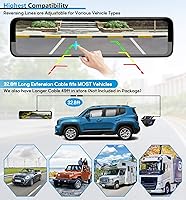
  • The included rear cable is long enough for most SUVs and sedans straight out of the box.
  • HDR across all lenses handles the headlight glare problem that makes nighttime footage on cheaper cams unreliable.
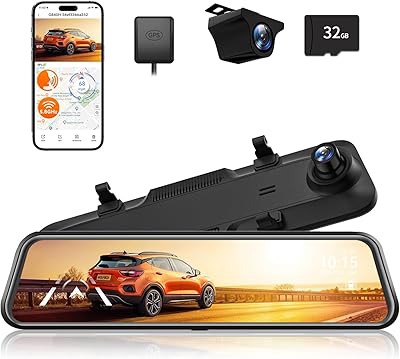
  • A 32GB card ships included, so the system is ready to record from day one without an additional purchase.
  • Parking monitor and G-sensor work together to capture impact events even when the engine is off.
  • Loop recording manages storage automatically, so the card never fills up and stops recording without warning.
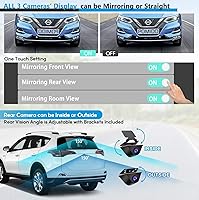
  • The split-screen display lets you monitor all three feeds at once, which is practical during reversing or stop-and-go traffic.

Cons

  • Installation is genuinely time-consuming; expect a multi-hour job to route cables cleanly without visible wires.
  • The 12-inch form factor is bulky for smaller vehicles and may feel intrusive on compact car windshields.
  • GPS performance can lag or lose signal in dense urban environments, reducing the reliability of location-stamped clips.
  • Customer support response times have received mixed feedback, which matters if you hit a setup issue.
  • The cabin-facing interior camera raises passenger privacy concerns that require upfront transparency in rideshare or carpool situations.
  • The 49-foot rear cable extension for large trucks and RVs is sold separately, adding to the total cost.
  • Touch-screen responsiveness has been noted as inconsistent by some users, particularly in cold weather conditions.
  • At this price tier, the absence of Wi-Fi or Bluetooth for wireless clip transfer is a notable missing feature.
  • The strap-based mirror mount, while adjustable, may shift on some mirror shapes over time with vibration.
  • Reviewing footage requires removing the SD card or using the device screen directly, with no companion app available.

Ratings

The scores below for the PORMIDO D50 12″ Triple Mirror Dash Cam were generated by our AI engine after analyzing thousands of verified buyer reviews from global markets, with spam, incentivized, and bot-flagged submissions actively filtered out. Each category reflects genuine user sentiment — the wins and the frustrations — so you can make a clear-eyed purchase decision rather than one based on curated highlights.
Night Vision Quality
88%
Drivers consistently report being able to read license plates on unlit residential streets and in dimly lit parking structures — conditions where cheaper sensors produce grainy, overblown footage. The HDR processing across all three lenses handles the tricky mix of streetlights and oncoming headlights better than most competitors at this price tier.
In truly pitch-black environments with zero ambient light, the footage softens noticeably and fine detail is lost. A small number of users also report color accuracy degrading under sodium vapor streetlights, which can make footage look artificially warm.
Display Clarity
91%
The full laminated panel earns consistent praise for staying readable during midday drives when glare would render a standard glossy screen useless. Drivers who upgraded from smaller or non-laminated mirror screens describe the visibility difference as immediately apparent, especially on sun-drenched highways.
A handful of buyers in very cold climates note that touch responsiveness slows down when the cabin temperature drops significantly before the heater warms up. The display can also appear overly bright at night on its default setting, requiring a manual brightness adjustment after installation.
Video Recording Quality
84%
Front-facing footage at 1296P captures enough detail to clearly identify vehicle makes, colors, and plate numbers in incident clips — which is the primary use case buyers care about most. Users submitting footage for insurance claims report that the detail level held up well under scrutiny.
The interior cabin feed at 1080P is adequate but can look slightly soft when recording passengers at the far end of a larger vehicle cabin. Under very low cabin lighting with no exterior light source, the interior camera struggles more than the front lens does in equivalent outdoor darkness.
Installation Experience
52%
48%
The strap-mount system for the mirror unit itself is genuinely tool-free and takes only a few minutes, which is appreciated by buyers who just want to get the display attached quickly. The included hardware kit covers the basics, and the user manual provides a reasonable starting point for routing cables.
Routing three separate camera cables through door trim, along the headliner, and out to a rear bumper-mounted camera is a multi-hour job that regularly frustrates buyers who underestimate the scope. Many reviewers specifically note that without prior experience hiding automotive wiring, the result looks messy and unprofessional, and a few users paid for professional installation to get a clean finish.
GPS Accuracy
67%
33%
On open highways and suburban roads, the GPS antenna logs speed and location data that matches real-world driving accurately enough to be useful as supporting evidence in an insurance dispute or traffic incident. Users report that route playback on the saved clips is reliable for inter-city travel.
Urban environments with tall buildings create consistent signal dropout complaints, with speed readings sometimes lagging several seconds behind actual vehicle speed. A subset of users in dense city centers describe the GPS data as unreliable enough that they treat it as a bonus rather than a core feature they depend on.
Camera Flexibility
86%
The detached camera design is one of the most praised aspects of this rearview mirror camera system, specifically because it eliminates the frustrating blocked-view problem common with fixed-lens mirror cams. Drivers can position the front camera on the windshield independently of the mirror, keeping sightlines clear.
The mounting adhesive and brackets for the detached cameras can be finicky to reposition once set, and a few users report the interior cabin camera slowly drifting from its aimed position over weeks of road vibration. Getting all three cameras optimally angled on the first attempt can take several adjustment sessions.
Build Quality
74%
26%
The mirror housing feels solid and the overall assembly does not rattle or creak on rough roads, which matters on a device that lives permanently on a vehicle mirror. The rear camera's waterproof construction has held up well in user reports covering heavy rain and car-wash exposure.
The plastic housing of the front and interior cameras feels noticeably lighter than the mirror unit itself, and a few long-term users report mounting clip wear after six or more months of daily use. The strap system, while functional, occasionally needs retightening on vehicles that experience significant road vibration.
Ease of Use
77%
23%
Once installed and configured, day-to-day operation is minimal — loop recording handles storage automatically, and the backup camera activates without any manual input when reversing. The touchscreen menu is logically organized for basic setting changes like sensitivity and display layout.
The initial configuration menu requires working through multiple layers of settings to get parking lines, recording modes, and channel preferences dialed in, which some users find tedious. Accessing recorded footage requires physically removing the SD card or navigating through the on-device menu, as there is no app or wireless transfer option.
Parking Monitor
69%
31%
When hardwired correctly, the G-sensor-triggered parking mode reliably captures impact events and saves them to a protected folder that loop recording will not overwrite. Several users report successfully using parking-mode footage to document hit-and-run incidents in urban parking lots.
Effective parking monitoring requires a hardwire kit that is not included in the box, adding extra cost and another installation step that not all buyers anticipate. Without the hardwire setup, the unit powers completely off with the ignition and parking monitoring is simply unavailable.
Value for Money
79%
21%
For buyers who genuinely use all three channels — particularly rideshare drivers or large-vehicle owners — the feature set relative to the price compares favorably to buying a standalone mirror cam and a separate interior camera. The included 32GB card and GPS antenna add tangible immediate value without requiring additional purchases to get started.
Buyers who only need front and rear coverage will likely feel they are paying for a cabin camera they do not use, making the price harder to justify against simpler two-channel alternatives. The separately sold 49-foot cable extension and hardwire kit for parking mode mean real-world total cost can run noticeably higher than the unit price alone.
Rear Camera Performance
81%
19%
The waterproof rear camera handles backup duty reliably, and the adjustable parking guidelines are flexible enough to calibrate for different vehicle widths and bumper heights. Image quality in daytime reversing is sharp enough to comfortably judge tight parking gaps and proximity to obstacles.
In heavy rain, the rear lens can accumulate water droplets that blur the image until the vehicle builds speed and airflow clears the surface — a limitation shared by most externally mounted rear cameras. Night backup performance, while functional, is the weakest of the three channels in very dark conditions.
Interior Cabin Camera
76%
24%
For rideshare drivers, the cabin lens provides a clear, wide view of rear passengers that has real protective value in dispute or safety situations. Parents using the D50 mirror dash cam on family road trips also find the feed reassuring for keeping an eye on children in the back seat without turning around.
The cabin camera's fixed position and lens angle may not cover the full rear seating area in larger SUVs or minivans without careful aiming during installation. Privacy-conscious passengers may react negatively to being recorded without prior notice, which puts the responsibility on the driver to communicate openly about recording.
Long-Term Reliability
71%
29%
A meaningful portion of reviewers with six to twelve months of ownership report no hardware failures, and loop recording has continued operating without intervention for most consistent users. The Sony sensors appear to hold their performance level over time without significant image quality degradation.
A recurring thread in longer-term reviews points to intermittent screen freezes or camera feed dropouts that require a manual restart to resolve, though these appear to be a minority of units. Customer support response times receive mixed feedback, with some buyers reporting slow or unhelpful replies when troubleshooting hardware issues.
Cable Management
48%
52%
The 33-foot rear cable is generously long for most passenger cars and mid-size SUVs, meaning drivers do not typically need to purchase an extension just to complete a standard installation. The included mounting clips and adhesive pads provide enough hardware to route cables along headliner edges if the installer is patient.
Managing three separate long cables cleanly inside a vehicle interior is the single most-cited complaint across all user reviews, and no cable tidy solution or conduit is included to help organize the runs. Several buyers specifically advise future purchasers to budget extra time and potentially extra adhesive clips, or to pay a professional installer to avoid a visibly messy result.

Suitable for:

The PORMIDO D50 12″ Triple Mirror Dash Cam is purpose-built for drivers who need more than a single forward-facing lens can offer. Rideshare and taxi drivers stand to gain the most from this setup — having a verified cabin recording can resolve passenger disputes quickly and protect against false accusations. Parents who regularly transport children, or anyone who hauls pets, will appreciate being able to glance at the rear-seat feed without turning around. Drivers who frequently park in urban lots or high-crime areas benefit from the parking monitor and GPS-stamped footage, which together create a credible, timestamped record useful for insurance claims. Large-vehicle owners — RV operators, van drivers, delivery professionals — will find the generous rear cable length and wide-angle waterproof backup camera genuinely practical rather than a checkbox feature.

Not suitable for:

The PORMIDO D50 12″ Triple Mirror Dash Cam is likely a frustrating purchase for anyone who expects a plug-and-play installation experience. Running three camera cables cleanly through a headliner, along door trim, and into the rear of a vehicle is a real job — it can take several hours even for someone with basic DIY skills, and without that effort the wiring looks messy. Drivers who rarely drive at night or in low-visibility conditions may also find the premium sensor hardware underutilized relative to the cost. Minimalists or commuters who simply want a small, unobtrusive forward-facing recorder will find this rearview mirror camera system oversized for their needs — a 12-inch display replacing a standard mirror is noticeable. Buyers hoping for seamless real-time GPS tracking in dense cities should also temper expectations, as urban signal lag is a documented limitation.

Specifications

  • Screen Size: The mirror display measures 12 inches diagonally, replacing a standard rearview mirror with a full-width touch-enabled panel.
  • Screen Type: Full laminated anti-glare IPS touch display that reduces surface reflections and maintains visibility under direct sunlight.
  • Channels: Records three simultaneous video streams: front exterior, interior cabin, and rear exterior.
  • Front Resolution: The front-facing camera captures footage at 1296P for sharp detail on road signs, vehicles, and license plates ahead.
  • Rear & Cabin Res.: Both the interior cabin camera and the waterproof rear camera record at 1080P full HD resolution.
  • Image Sensor: All three cameras use Sony IMX335 Starvis sensors with HDR processing to handle high-contrast lighting conditions on every channel.
  • Field of View: The front camera captures a 170-degree wide-angle field of view, covering multiple lanes and roadside areas simultaneously.
  • Rear Camera: The rear camera is fully waterproof and designed for exterior mounting at the back of the vehicle, suitable for all weather conditions.
  • Rear Cable Length: The included rear camera extension cable is 33 feet long, with an optional 49-foot cable available separately for larger vehicles.
  • GPS: An included GPS antenna embeds driving speed, route path, and geographic location data directly into recorded video files.
  • Storage Support: Supports microSD cards up to 128GB; a 32GB card is included in the box to allow immediate use after installation.
  • Power Interface: The unit draws power at DC 5V and 3.5A, connecting to the vehicle via a Type-C power interface.
  • Mounting Type: Attaches to the existing rearview mirror using adjustable elastic straps, requiring no permanent modifications to the vehicle interior.
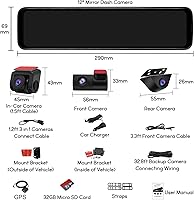
  • Dimensions: The mirror unit measures 11.5 x 2.75 x 0.6 inches, sitting close to the original mirror profile to minimize obstruction.
  • Weight: The complete mirror unit weighs 2.2 pounds, which is manageable for strap-based mirror mounting without excessive strain on the bracket.
  • Special Features: Includes G-sensor impact detection, loop recording, parking monitor mode, and a split-screen display for monitoring multiple feeds simultaneously.
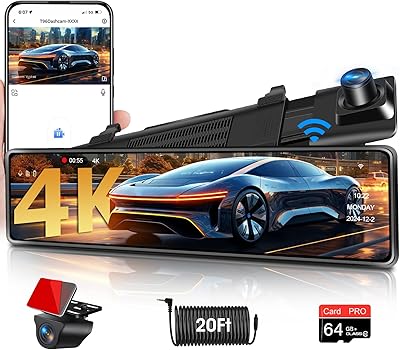
  • In-Box Contents: Package includes the 12-inch mirror screen, front camera, interior camera, rear camera, installation hardware, mount cables and brackets, and a printed user manual.
  • Connectivity: Uses a Type-C port for power input; there is no built-in Wi-Fi or Bluetooth for wireless file transfer.

Related Reviews
Jansite RM 12″ 4K Mirror Dash Cam
86%
92%
Video Quality (Front)
88%
Ease of Installation
84%
App and Wi-Fi Functionality
63%
Rear Camera Installation
90%
Night Vision Performance
More
WOLFBOX G840S 12″ Mirror Dash Cam
76%
88%
Video Clarity (Front Camera)
83%
Night Vision Performance
86%
Display Quality
74%
Rear Camera & Coverage
79%
GPS Accuracy & Logging
More
WOLFBOX G850 12″ Mirror Dash Cam
75%
88%
Video Clarity (Front Camera)
74%
Rear Camera Quality
76%
Night Vision Performance
83%
Screen Size & Usability
79%
Installation & Setup
More
PORMIDO D80 10″ OEM Mirror Dash Cam
78%
88%
Video Quality (Day)
91%
Video Quality (Night)
83%
Build Quality
63%
Installation Experience
84%
Parking Mode Reliability
More
Jansite RM 10″ Mirror Dash Cam
72%
83%
Video Clarity (Day)
71%
Night Vision Performance
86%
Touch Screen Usability
84%
Backup Camera & Parking Assist
73%
Installation Experience
More
WOLFBOX G840H Mirror Dash Cam
75%
83%
Daytime Video Quality
64%
Night Recording Performance
71%
ADAS Safety Alerts
68%
Blind Spot Detection
86%
Screen Size & Usability
More
NikoMaku AS-J3 Mirror Dash Cam
76%
78%
Video Quality
67%
Night Vision
83%
Screen Quality
81%
Build & Design
54%
Installation Ease
More
UZIVO U24 Mirror Dash Cam
86%
89%
Ease of Setup
91%
Video Quality
65%
Screen Visibility in Sunlight
87%
Night Vision Performance
92%
Parking Monitor Effectiveness
More
AZDOME PG17 Pro Mirror Dash Cam
78%
93%
Video Clarity (Front)
91%
Night Vision Performance
84%
Rear Camera Quality
71%
App & WiFi Experience
74%
Voice Command Accuracy
More
JOMISE T860+ Mirror Dash Cam
74%
88%
Video Clarity (Front)
79%
Video Clarity (Rear)
76%
Night Vision Performance
83%
Installation Experience
74%
Screen Quality & Usability
More

FAQ

It depends on your comfort level with basic automotive DIY work. Mounting the mirror unit itself is straightforward — the straps slip over your existing mirror in minutes. The time-consuming part is routing three separate camera cables cleanly through the headliner and along the door trim so nothing hangs loose. Budget at least two to three hours if you want a tidy result, and watch a few vehicle-specific install videos before you start.

Yes. When the vehicle is put into reverse, the display automatically switches to the rear camera feed and shows adjustable parking guide lines. The rear camera is also waterproof, so rain or car-wash spray is not a concern.

The strap-mount design fits most standard rearview mirrors, and because the D50 display sits over the original mirror, auto-dimming functionality on the factory mirror becomes irrelevant — the D50 handles its own display brightness. That said, some oddly shaped or very narrow factory mirrors may not hold the straps as securely, so it is worth checking your specific mirror dimensions before purchasing.

The interior camera records continuously alongside the front and rear channels by default, but you can switch which feeds are displayed on screen and adjust recording settings through the touch menu. If cabin privacy is a concern — for passengers or rideshare riders — you should be transparent that recording is active, as laws around in-vehicle recording vary by location.

The Sony Starvis sensor makes a noticeable difference compared to cameras using generic sensors. In a dim parking garage or on an unlit residential street, the footage retains enough detail to read nearby license plates and identify pedestrians. It is not perfect in complete darkness without any ambient light, but in real-world low-light conditions it holds up well above average for this price category.

The system ships with a 32GB card, which gives you roughly two to four hours of total recording across three channels before loop recording overwrites the oldest files. Upgrading to a 64GB or 128GB card extends that window significantly — 128GB is the maximum supported. Use a Class 10 or U3-rated card for reliable continuous recording.

GPS performance is generally solid on open roads and highways, where the antenna gets a clear sky view. In dense urban environments with tall buildings — think downtown Manhattan or a covered parking structure — some users report signal dropouts or speed readings that take a moment to catch up. For highway driving and suburban routes, the location and speed data embedded in clips is consistently accurate.

The included 33-foot rear cable covers most standard cars, SUVs, and mid-size trucks without any additions. For full-size pickup trucks, large RVs, or trailers, that cable will likely fall short. An optional 49-foot extension is sold separately by the manufacturer, and you can contact them directly if you need an even longer run.

The parking monitor uses the G-sensor to detect impacts or movement near the vehicle while it is parked and saves a short clip when triggered. To use it in parked mode, the unit needs continuous low-current power, which requires a hardwire kit connected to a fused accessory circuit — otherwise it powers off with the ignition. Without a hardwire setup, parking monitoring is not active when the car is off.

If you genuinely need cabin monitoring — for rideshare work, family trips, or cargo security — the third interior channel justifies the price gap over a standard two-channel setup. If you only need front and rear coverage, a simpler two-channel system at a lower price point will serve you just as well and be easier to install. The value of the D50 is really tied to whether that interior camera and the larger display address a real need in your specific driving situation.