Overview
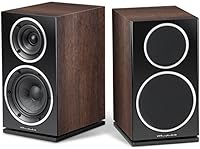
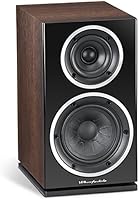
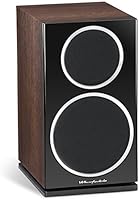
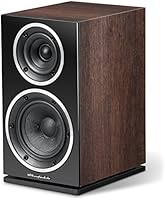
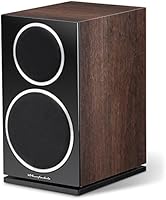
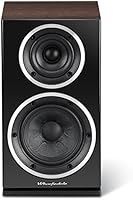
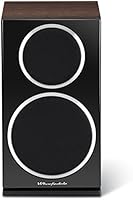
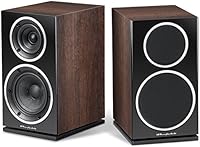
The Wharfedale Diamond 220 comes from a brand that has been shaping British hi-fi since the 1930s — a lineage that carries real weight in audio circles. These Wharfedale bookshelves sit squarely in the mid-range, aimed at listeners who have outgrown budget gear but aren't ready to spend serious money on high-end separates. The walnut finish looks genuinely refined — not like a veneer slapped on to justify the price, but something that sits comfortably in a living room or home office. One thing to be clear about upfront: these are passive speakers that require a separate amplifier or receiver. They arrive as a pair, ready to become the heart of a proper stereo setup.
Features & Benefits
The engineering behind these British speakers is what separates them from similarly priced competition. The Kevlar woofer handles bass with real control — you get tight definition rather than boom, which works particularly well for acoustic instruments and well-recorded jazz or rock. Up top, the one-inch soft-dome tweeter keeps high frequencies smooth across long listening sessions; there's no harshness or bite even at moderate volumes. The layered cabinet construction cuts down on the box coloration that plagues cheaper designs. A frequency response stretching from 45Hz to 24kHz means most listeners won't feel the need for a subwoofer in a compact room, and the 100W power handling gives real flexibility when choosing an amplifier.
Best For
These Wharfedale bookshelves make the most sense for listeners ready to make a meaningful step up from a soundbar or cheap desktop speakers. Small to medium rooms are the sweet spot — a bedroom, dedicated home office, or a compact living area where speakers can be properly positioned on a shelf or stand. Vinyl enthusiasts tend to connect with what the Diamond 220s offer; the accurate midrange pairs naturally with a well-set-up turntable and an entry-level integrated amplifier. If you prioritize tonal honesty over bass-heavy coloration, these British speakers reward that preference. The refined walnut cabinet also means they look at home in a thoughtfully decorated room rather than sticking out as purely utilitarian gear.
User Feedback
Owners of the Diamond 220s tend to be enthusiastic, and the most frequently praised qualities are midrange clarity and vocal reproduction — listeners consistently note how natural and present instruments and voices sound. Build quality also comes up often; at this price level, the cabinet and finish feel more considered than most buyers anticipated. The main criticisms cluster around two areas: bass extension in larger rooms, where the speakers can feel a bit lean, and amplifier dependency — pair them with something weak or underpowered and they won't show what they're capable of. A handful of buyers flagged packaging concerns during delivery. Despite those caveats, overall sentiment is strong among value-conscious listeners who treated these as a proper stereo system investment.
Pros
- Vocal and midrange reproduction is exceptionally natural and detailed for this price tier.
- The Kevlar woofer delivers tight, well-defined bass that suits acoustic, jazz, and classical music well.
- Layered cabinet construction keeps coloration low, letting the source material speak for itself.
- The walnut veneer finish looks genuinely premium and integrates naturally into home decor.
- A frequency response reaching 24kHz means the Diamond 220s handle high-frequency content with real refinement.
- 100W power handling gives flexibility to pair with a wide range of amplifiers as your system evolves.
- Compact dimensions make placement easy on a shelf, stand, or within a media unit.
- Build quality consistently exceeds buyer expectations relative to the price point.
- These Wharfedale bookshelves image well in stereo, creating a convincing sense of depth and instrument placement.
- Long listening sessions rarely produce fatigue thanks to the smooth, non-aggressive treble character.
Cons
- Bass extension falls short in larger rooms, often requiring a subwoofer to fill the low end properly.
- Performance is heavily amplifier-dependent — a weak or cheap amp will significantly undermine results.
- New buyers unfamiliar with passive speaker setups face a real learning curve around equipment pairing.
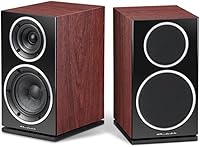
- Only two finish options available, limiting choices for buyers with specific interior design requirements.
- Packaging has drawn complaints for not being robust enough against rough shipping conditions.
- These are not desktop plug-and-play speakers — setup requires cables, an amp, and thoughtful positioning.
- Genre versatility is limited; bass-centric music genres feel underpowered without supplementary bass support.
- Total system cost including amplifier and cables is considerably higher than the speaker price alone suggests.
Ratings
The Wharfedale Diamond 220 has been scored by our AI system after analyzing thousands of verified buyer reviews from global markets, with spam, bot activity, and incentivized feedback actively filtered out. These scores reflect the honest spread of real owner experiences — strengths and frustrations weighted equally — so you get a transparent picture before committing to a purchase. Where these British speakers consistently impress and where they fall short are both captured in the breakdowns below.
Sound Quality
Bass Response
Treble Clarity
Midrange Performance
Build Quality
Amplifier Compatibility
Value for Money
Design & Aesthetics
Ease of Setup
Packaging & Unboxing
Room Suitability
Imaging & Soundstage
Long-Term Durability
Genre Versatility
Suitable for:
The Wharfedale Diamond 220 is a strong fit for listeners who are ready to move beyond all-in-one systems and invest in a proper two-channel stereo setup. If you already own — or are planning to buy — a decent integrated amplifier in the 40–80W per channel range, these British speakers will reward that investment with a level of midrange clarity and tonal honesty that is hard to find at this price point. Vinyl enthusiasts in particular tend to connect deeply with what the Diamond 220s offer; the controlled bass and natural midrange complement a well-set-up turntable beautifully. They work best in smaller to medium-sized rooms — a dedicated listening space, a well-arranged home office, or a compact living room — where they can be positioned with some breathing room from rear walls. Anyone who values accurate vocal reproduction, refined aesthetics that blend into home furniture, and a speaker that genuinely improves with a better source and amplifier will find these Wharfedale bookshelves a satisfying long-term purchase.
Not suitable for:
The Wharfedale Diamond 220 is not the right choice if you are expecting a plug-and-play solution straight out of the box — these are passive speakers that require a separate amplifier or receiver, and that additional investment is non-negotiable for good results. Buyers who primarily listen to bass-heavy genres like electronic music, hip-hop, or heavily produced pop may find the controlled, neutral low end underwhelming without a subwoofer added to the system. Large or open-plan rooms will expose the speakers' output limitations, and pushing them hard in bigger spaces tends to highlight where the bass rolls off. Anyone on a tight total budget should think carefully — the speakers themselves are only part of the cost, and pairing them with a cheap or underpowered amplifier will produce disappointing results that unfairly reflect on the hardware. If you want a simple, self-contained desktop audio upgrade without dealing with amplifiers, cables, and placement considerations, these British speakers are almost certainly the wrong category of product entirely.
Specifications
- Speaker Type: Passive 2-way bookshelf speaker, sold as a stereo pair requiring a separate amplifier or receiver.
- Woofer: 5.1-inch Kevlar cone dynamic driver designed for controlled bass response with minimal distortion.
- Tweeter: 1-inch soft-dome tweeter engineered for smooth, fatigue-free high-frequency reproduction.
- Frequency Response: Rated from 45Hz to 24kHz, covering the majority of musical content across most genres.
- Power Handling: Maximum output power of 100W, giving compatibility with a wide range of amplifier outputs.
- Channel Config: 2.0 stereo configuration with no built-in amplification or active crossover electronics.
- Connectivity: RCA input connectivity via standard binding posts accepting bare wire and banana plugs.
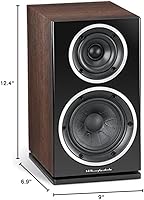
- Dimensions: Each cabinet measures 12.4″ H x 6.9″ W x 9.8″ D, sized for shelf or stand mounting.
- Weight: The pair weighs approximately 27.2 lbs combined, reflecting the density of the layered cabinet construction.
- Cabinet Build: Layered cabinet construction is used to reduce internal resonance and minimize coloration of the sound.
- Finish: Walnut veneer finish applied to the exterior, with black also available as an alternative colorway.
- Mounting Type: Designed for shelf mounting, though compatible with third-party bookshelf speaker stands for elevated placement.
- Power Source: Entirely passive — no power cable or internal amplifier; requires a powered amplifier or integrated receiver.
- Audio Driver Type: Dynamic driver configuration used across both the woofer and tweeter for consistent performance.
- Series: Part of the Wharfedale Diamond series, a long-running line with a documented award history in UK hi-fi press.
- Compatible Sources: Works with any amplifier-driven source including turntables with phono preamps, CD players, streamers, and televisions via receiver.
- Warranty: Covered by a limited manufacturer warranty; exact duration and regional terms should be confirmed with the point of purchase.
- Country of Origin: Designed by Wharfedale, a British audio brand with engineering roots dating back to the 1930s.
Related Reviews

Gold Diamond Cirugía Capilar 1L Shampoo Treatment
Lavinda Diamond Nail Drill
BUFFALO LinkStation 220 12TB NAS

AOC XL2-220 Smart Mini Projector
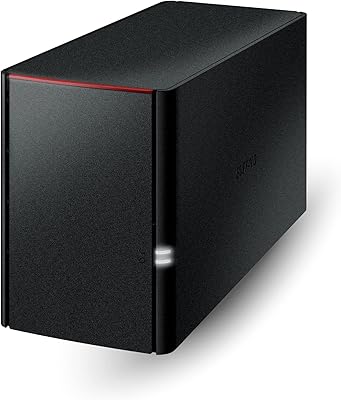
BUFFALO LinkStation 220 4TB 2-Bay NAS

Diamond Multimedia VC500

Aroma Magic Diamond Glow 6-Step Facial Kit
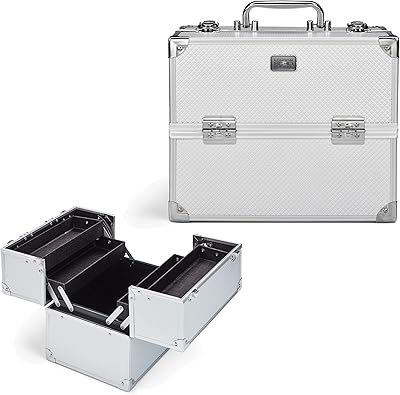
Conair Makeup Beauty Case - Silver Diamond

Microderm GLO Premium Diamond Microdermabrasion Tips