
Overview

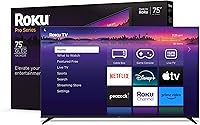
The Roku Pro Series 75-inch 4K QLED TV sits in an interesting spot — large enough to anchor a dedicated media room, refined enough to satisfy buyers who actually care about picture quality. What separates it from the crowded mid-range field is the pairing of a QLED panel with Mini-LED backlighting, a combination you typically find on screens costing considerably more. The native Roku OS is baked right in, so there's no streaming stick to lose or extra remote to manage. Honest caveat: this large-screen QLED delivers impressive contrast for its technology, but it won't replicate the absolute black levels of a flagship OLED.

Features & Benefits

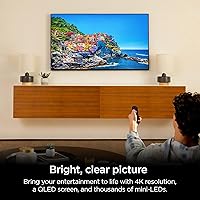
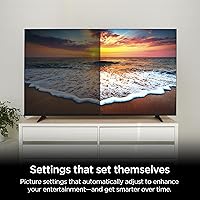
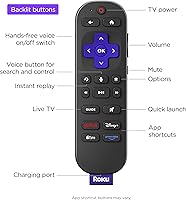
The full array local dimming is where this Roku TV earns its keep on a dark movie night — thousands of Mini-LEDs work in zones across the panel, pushing highlights brighter and letting shadows fall darker than edge-lit TVs can manage. Dolby Vision IQ refines HDR tone-mapping shot by shot using ambient light data, so the picture responds to your room rather than ignoring it. Gaming on a PS5 or Xbox Series X at 4K and 120fps feels genuinely responsive thanks to Game Mode and dual HDMI 2.1 ports. The Roku Smart Picture Max AI layer handles noise and color on the fly, which is especially noticeable on live sports. The rechargeable, backlit remote with a built-in lost-finder is a small but welcome upgrade over the typical cheap clicker.

Best For

This large-screen QLED makes the most sense for households that have committed to streaming as their primary way to watch — the Roku interface handles Netflix, Disney+, Hulu, and dozens of free live channels from a single, uncluttered home screen. Sports fans will appreciate the 120Hz motion handling on a screen this size, and the built-in antenna input means local games and news don't require a cable subscription. Console gamers get two HDMI 2.1 ports without paying for a top-tier brand name. It's also a strong upgrade target for anyone stepping up from a 55- or 65-inch set — the jump to 75 inches in a living room is substantial, and this TV fills that space without demanding a commercial-grade budget.

User Feedback

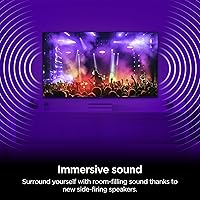
Most owners land around 4.5 stars, and the common thread in positive reviews is how good the picture looks straight out of the box — buyers rarely mention needing to fiddle with settings, which says something about the factory calibration. Roku OS simplicity gets repeated praise, particularly from users who previously wrestled with more cluttered smart TV platforms. On the critical side, the built-in speakers handle dialogue and casual viewing fine, but they don't do justice to a Dolby Atmos track — a soundbar is worth budgeting for. A few buyers also flag that the stand spans a full 45 inches, so measure your furniture beforehand. Some reviewers compare the Pro Series 75-inch favorably against pricier Samsung and LG competitors at this screen size, which is a reasonable takeaway.

Pros

  • Mini-LED full array local dimming produces noticeably richer contrast than edge-lit TVs in the same price range.
  • Dolby Vision IQ adapts HDR tone-mapping in real time, making movies and sports look consistently polished.
  • The Roku OS is one of the cleanest, fastest smart TV interfaces available — no learning curve required.
  • Dual HDMI 2.1 ports make this large-screen QLED genuinely capable for next-gen console gaming at 4K 120fps.
  • Wi-Fi 6 support keeps the connection stable even in busy multi-device households.
  • The rechargeable Voice Remote Pro includes a lost-remote finder — a small feature that makes a real difference daily.
  • Roku Smart Picture Max AI processing visibly improves lower-quality broadcast signals without manual adjustment.
  • Factory color calibration earns consistent praise, with most buyers happy watching right out of the box.
  • Free live local news and antenna support make this a practical replacement for a traditional cable setup.
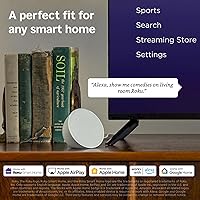
  • Apple AirPlay, HomeKit, Alexa, and Google Home compatibility covers nearly every smart home ecosystem.

Cons

  • The built-in speakers are adequate for casual viewing but fall short during action scenes or music-heavy content.
  • Mini-LED local dimming, while strong, can produce faint blooming around bright objects on very dark backgrounds.
  • The stand spans 45 inches wide, which may not fit many standard TV consoles or entertainment units.
  • No included wall-mount hardware — buyers planning a VESA installation need to budget for that separately.
  • Roku OS, while simple, offers fewer advanced picture calibration options than some competing platforms.
  • At 116.8 pounds, this Roku TV is a two-person installation job — solo setup is genuinely awkward.
  • Hands-free voice activation requires the microphone to always be listening, which some privacy-conscious buyers dislike.
  • The optical audio output is the only non-HDMI audio path, which limits compatibility with older soundbar setups.
  • HDR performance in very bright rooms can look washed out if the ambient light sensor is not properly configured.
  • No built-in Ethernet port on the remote itself — Wi-Fi range issues in large homes may affect streaming consistency.

Ratings

The scores below were generated by AI after analyzing thousands of verified global buyer reviews for the Roku Pro Series 75-inch 4K QLED TV, with automated filtering applied to remove incentivized, duplicate, and bot-generated submissions. The resulting data reflects a genuine cross-section of real ownership experiences — including what buyers consistently praise and where genuine frustrations surfaced. Both strengths and shortcomings are weighted transparently so you can make a confident, informed decision.

Picture Quality
88%
Buyers repeatedly describe the image as vibrant and punchy straight out of the box, with Dolby Vision IQ making streaming content look noticeably more refined than on their previous TVs. The QLED panel handles bright, sunlit rooms better than most competitors at this price tier, and color accuracy draws consistent praise across film, sports, and gaming content.
A portion of reviewers who came from OLED backgrounds note that fast-moving dark scenes occasionally reveal subtle blooming around bright objects — a known Mini-LED limitation. For critical dark-room viewing, the contrast ceiling is real, and it remains a step below what a same-sized OLED can produce.
HDR Performance
86%
The combination of Dolby Vision IQ and HDR10+ means the Pro Series 75-inch handles metadata-rich content with scene-by-scene precision that many TVs in this category still lack. HDR highlights on nature documentaries and cinematic films look genuinely luminous, with the ambient light sensor adding useful real-world adaptability.
HDR gains feel most impressive in moderate lighting — buyers in very bright living rooms report that peak highlights can appear slightly washed out if the ambient sensor is not calibrated properly. HDR from lower-bitrate streaming sources also shows more compression artifacts than buyers expect at this screen size.
Local Dimming
83%
Full array Mini-LED local dimming is a meaningful step up from the edge-lit panels found on most similarly priced TVs, and buyers watching movies with dark letterbox bars appreciate that the blacks stay deep without obvious light leakage from the sides. Zone control is granular enough that starfield scenes and night-sky shots look genuinely convincing.
In scenes with a small bright element against a large dark background — a candle in a dark room, a spotlight on a stage — faint blooming halos are visible if you are watching close to the screen. The effect is easy to ignore during action content but harder to overlook for buyers who watch a lot of slow, dark cinema.
Gaming Performance
91%
Console gamers running a PS5 or Xbox Series X report that Game Mode delivers noticeably snappy response times, making fast-paced titles feel tight and responsive on a screen this large. Having two HDMI 2.1 ports means buyers can keep two consoles permanently connected without sacrificing 4K 120fps capability on either.
Some PC gamers note that variable refresh rate support could be more robustly implemented, and the Game Mode interface requires a few menu steps to activate — it is not automatically triggered when a console is detected. A small number of users also report that auto low-latency mode switching is inconsistent with certain older consoles.
Smart TV & OS
93%
The Roku OS earns some of the most enthusiastic feedback of any category — buyers who previously dealt with cluttered, ad-heavy smart TV platforms describe the switch as immediately refreshing. Channel discovery, streaming app loading times, and the unified live TV guide all draw frequent praise, especially from less tech-savvy households.
Power users who want deeper system customization or more granular picture calibration tools find the OS somewhat limited compared to Google TV or LG's webOS. A handful of reviewers also flag that the home screen includes promoted content tiles that cannot be fully removed, which some find distracting.
Motion Handling
84%
Sports broadcasts are where this Roku TV earns particular loyalty — the native 120Hz panel keeps fast pans and player tracking sharp without the soap-opera effect that aggressive motion smoothing often introduces. Hockey, basketball, and soccer reviewers specifically call out how clean the motion looks at this screen size.
The default motion processing settings lean slightly aggressive for some viewers, and buyers sensitive to the smoothing effect need to spend time dialing back the motion enhancement controls to find a comfortable balance. Film-mode purists may need to disable motion processing entirely to avoid judder correction artifacts on cinematic content.
Built-in Audio
61%
39%
For news, talk shows, and casual daytime viewing, the built-in speaker system is genuinely adequate — dialogue clarity is good, and volume gets loud enough for a large room without obvious distortion. Buyers who primarily use the TV for background viewing or family movie nights without a soundbar report that it covers basic needs.
Action movies, concert streams, and any Dolby Atmos content exposed the speakers as the clearest weak point buyers mention across reviews — bass is thin, and the spatial audio processing sounds more like a simulation than an actual soundstage. The consensus among engaged reviewers is straightforward: budget for a soundbar alongside this purchase.
Remote Control
89%
The rechargeable backlit remote draws genuine appreciation — buyers who watch in dark rooms particularly welcome not having to fumble for buttons or hunt for batteries. The lost-remote finder feature gets mentioned repeatedly as one of those small-but-daily conveniences that feels hard to give up once you have used it.
A small number of users report that the hands-free voice microphone occasionally activates unintentionally during normal conversation near the TV, which proves annoying in open-plan living spaces. The personal shortcut buttons are useful but limited to a fixed set of services, and buyers who use niche streaming platforms find them less relevant.
Connectivity
87%
Wi-Fi 6 support keeps streaming stable and buffer-free even in crowded multi-device households, and buyers with wired setups appreciate the full Ethernet port for rock-solid 4K playback. The USB-A and USB-C ports add practical flexibility for connecting external drives or charging small accessories directly from the TV.
Buyers using older soundbars or AV receivers without HDMI ARC may find the optical output the only viable audio connection, which limits the formats it can pass through. A few reviewers also note that Bluetooth connectivity for wireless headphones works, but pairing can be inconsistent with certain third-party devices.
Setup & Installation
72%
28%
The Roku OS guided setup is straightforward and fast — most buyers report having the TV up and streaming within 15 to 20 minutes of unboxing. On-screen prompts handle Wi-Fi, app login, and remote pairing cleanly, making it one of the least frustrating smart TV setup experiences at this size.
The physical installation is a two-person job without question — at nearly 117 pounds, solo setup attempts have caused dropped units according to several reviews. The 45-inch stand span also catches buyers off guard if they did not measure their media console in advance, and a wall-mount bracket is not included in the box.
Build & Design
79%
21%
The bezel-less design looks genuinely premium in a living room, and the slim 2-inch profile makes wall mounting visually clean. Buyers who have had the TV for several months report no panel uniformity issues or backlighting irregularities developing over extended use.
The plastic rear casing feels less refined than the front panel presentation suggests, and some buyers note visible flex when moving the TV during installation. At this size and weight, the stand feet feel slightly less solid than the TV's overall price tier might lead buyers to expect.
Smart Home Integration
82%
18%
Apple HomeKit, AirPlay 2, Alexa, and Google Home support covers nearly every smart home ecosystem in one device, which buyers who already own smart speakers find immediately useful. Controlling the TV via voice commands for power, volume, and input switching works reliably across all four platforms according to reviewers.
Deeper smart home automation — like conditional triggers or integration with third-party home control hubs beyond the four supported platforms — is not supported natively. Apple HomeKit users also report occasional reconnection drops after firmware updates that require re-pairing the TV in the Home app.
Value for Money
86%
A meaningful portion of reviewers who cross-shopped Samsung and LG TVs at the same screen size conclude that the Pro Series 75-inch delivers comparable or better picture performance for considerably less outlay. The inclusion of a premium rechargeable remote, Wi-Fi 6, dual HDMI 2.1, and a clean native OS makes the overall package feel well-considered rather than spec-padded.
Buyers who expected the built-in speakers to match the quality of the display are likely to add a soundbar to their budget, which shifts the true cost of the setup noticeably. Those who later discover they need a VESA wall mount and installation hardware face additional unplanned expenses, as nothing beyond the stand is included.
Long-term Reliability
77%
23%
Buyers who have owned the TV for six months or more generally report stable performance with no unexpected failures, and Roku's track record of delivering OS updates over time adds confidence that the smart platform will stay relevant for several years. Panel uniformity and brightness consistency appear solid based on longer-term owner feedback.
The sample of long-term reviews is still limited given the product launch date, so definitive durability conclusions remain premature. A small number of owners report firmware update issues that temporarily disrupted app functionality, though these appear to have been resolved through subsequent updates rather than hardware faults.

Suitable for:

The Roku Pro Series 75-inch 4K QLED TV was built for households where the television is the centerpiece of daily life, not just an occasional screen. Cord-cutters will find it particularly well-matched — the native Roku OS surfaces free live channels, local news, and dozens of major streaming services from one clean interface, no extra hardware required. Sports fans benefit from the 120Hz refresh rate and smooth motion handling on a screen large enough to actually feel immersive during a game broadcast. Console gamers running a PS5 or Xbox Series X will appreciate having two HDMI 2.1 ports ready for 4K at 120fps without paying a premium-brand surcharge. It also makes strong sense for anyone stepping up from a 55-inch or 65-inch panel who wants a meaningful size upgrade in a larger living room or open-plan space, and who values a genuinely simple, low-friction smart TV experience.

Not suitable for:

Buyers chasing the absolute best contrast and black levels should know upfront that the Roku Pro Series 75-inch 4K QLED TV, despite its capable Mini-LED backlighting, cannot replicate the pixel-level black control of an OLED display — if dark-room cinephile performance is the top priority, an OLED-based alternative deserves a serious look. The built-in audio system is functional but modest, meaning anyone who plans to use this as a home theater centerpiece without adding a soundbar or AV receiver will likely feel underwhelmed by the sound relative to the picture quality. Buyers with smaller rooms or limited furniture space may also find the 75-inch footprint impractical — the stand alone spans 45 inches, which rules out many standard media consoles. Those deeply embedded in a non-Roku smart home ecosystem who prefer a different OS or more granular picture calibration controls may also find the platform somewhat limiting compared to higher-end alternatives.

Specifications

  • Screen Size: The panel measures 75 inches diagonally (74.5″ active area), making it well-suited to living rooms and dedicated media spaces where viewing distances of 9 feet or more are typical.
  • Panel Type: Uses a QLED (Quantum Light-Emitting Diode) panel, which produces wider color volume and higher peak brightness than standard LED-LCD displays.
  • Backlighting: Full array Mini-LED backlighting with local dimming allows precise zone-by-zone brightness control, producing deeper shadow detail and brighter highlights than edge-lit panels.
  • Resolution: Native 4K Ultra HD resolution (3840 x 2160 pixels) delivers four times the pixel density of 1080p across the 75″ screen surface.
  • Refresh Rate: Native 120Hz refresh rate reduces motion blur during fast-paced sports broadcasts and supports high-frame-rate console gaming without interpolation artifacts.
  • HDR Support: Compatible with Dolby Vision IQ, HDR10+, and HLG, covering the full range of HDR formats used by major streaming platforms and broadcast sources.
  • Processor: Roku Smart Picture Max uses AI-based processing to automatically adjust sharpness, noise reduction, and color balance based on the type of content currently on screen.
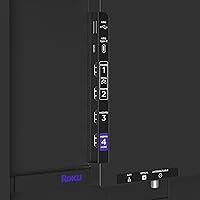
  • HDMI Inputs: Includes four HDMI ports total: two HDMI 2.1 (supporting 4K at 120fps), one standard HDMI, and one HDMI eARC for connecting audio equipment such as soundbars.
  • Connectivity: Supports Wi-Fi 6 (802.11ax), wired Ethernet, and Bluetooth for flexible network and peripheral connections across modern home setups.
  • USB Ports: Provides one USB-A and one USB-C port for connecting external storage, media drives, or compatible accessories.
  • Audio Output: Includes a digital optical audio output for compatibility with external amplifiers, soundbars, and AV receivers that do not support HDMI ARC.
  • Built-in Audio: Internal speaker system supports Dolby Atmos, Dolby Audio, and Roku Sound Stage processing, though it is intended for standard listening rather than dedicated home theater use.
  • Smart Platform: Runs native Roku OS with built-in support for Apple AirPlay 2, Apple HomeKit, Amazon Alexa, and Google Home voice assistant ecosystems.
  • Remote: Includes the Roku Voice Remote Pro (2nd Edition) with backlit buttons, a rechargeable battery, hands-free and push-to-talk voice control, personal shortcut buttons, and a lost-remote finder.
  • VESA Mount: Compatible with standard 400x400mm VESA wall-mount brackets; mounting hardware is not included in the box.
  • Stand Width: The included pedestal stand spans 45.0 inches wide, requiring a media console or surface of at least that width to provide stable support.
  • Dimensions: With stand: 64.1″ wide x 41.0″ tall x 15.4″ deep; without stand: 64.1″ wide x 38.0″ tall x 2.0″ deep.
  • Weight: The TV weighs 116.8 pounds, which means professional or two-person installation is strongly advisable for both wall-mounting and placement on a stand.
  • Power: Operates on 120 volts AC at a rated power consumption of 400 watts under typical viewing conditions.
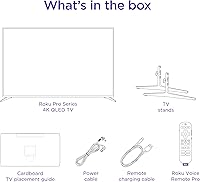
  • In the Box: Package includes the TV, pedestal stands with screws, Roku Voice Remote Pro (2nd Edition), a USB-A to USB-C cable, and a quick-start guide.

Related Reviews
Roku Pro Series 55-inch 4K QLED TV
83%
83%
Picture Quality
88%
Motion & Refresh Rate
86%
Smart Platform (Roku OS)
91%
Remote Control
84%
Value for Money
More
Samsung Q60D 75-Inch QLED 4K TV
73%
78%
Picture Quality
58%
Contrast & Black Levels
83%
Color Accuracy
71%
Motion Handling
61%
Gaming Performance
More
VIZIO 75-Inch P-Series 4K QLED Smart TV
86%
91%
Picture Quality
88%
Gaming Performance
85%
Smart Features and Usability
92%
Value for Money
74%
Sound Quality
More
VIZIO M-Series 75-Inch QLED 4K Smart TV
71%
82%
Picture Quality
88%
Value for Money
67%
Gaming Performance
63%
Smart TV Platform
84%
HDR Performance
More
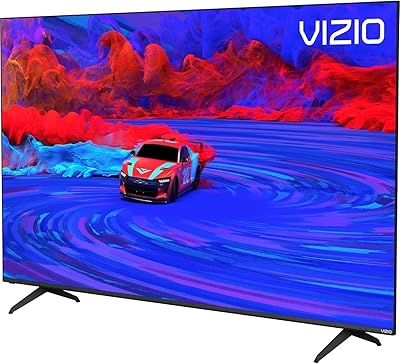
Roku Plus Series 65-Inch 4K QLED Smart TV
87%
94%
Picture Quality
89%
Ease of Setup
91%
Streaming Performance
88%
Design and Build
75%
Sound Quality
More
Samsung 75-Inch The Frame Pro 4K Neo QLED TV
89%
96%
Display Quality
94%
Art Mode Realism
89%
Gaming Performance
92%
Color Accuracy
85%
Connectivity Options
More
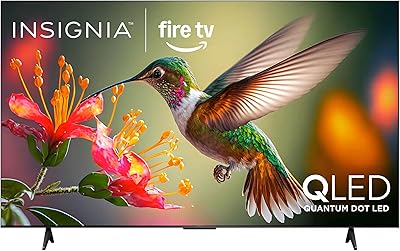
VIZIO MQX 75-inch 4K QLED Smart TV
71%
83%
Picture Quality
78%
HDR Performance
86%
Gaming Performance
54%
Smart TV Platform
88%
Value for Money
More
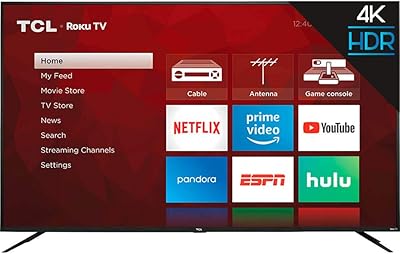
INSIGNIA 75-inch QF Series QLED Smart TV
69%
91%
Value for Money
67%
Picture Quality
94%
Screen Size & Presence
58%
Smart TV Interface (Fire TV)
54%
Refresh Rate & Motion Handling
More
TCL 75-inch Class 4-Series 4K UHD HDR Smart Roku TV 75S435
82%
91%
Value for Money
88%
Display Quality
92%
Ease of Setup
85%
Smart Features and Connectivity
60%
Sound Quality
More
Roku Select Series 55-Inch 4K Smart TV
79%
93%
Smart TV Interface
91%
Setup Experience
74%
Picture Quality
88%
Remote Control
86%
Value for Money
More

FAQ

Everything is built in. The Roku OS runs natively on the TV itself, so Netflix, Disney+, Hulu, and dozens of other services are available the moment you connect to Wi-Fi. There is no need to plug in a Roku stick or any other streaming device.

Yes, and it works well. The TV has two HDMI 2.1 ports, which support the full 4K 120fps signal that both consoles output. Just make sure you connect your console to one of those two specific HDMI 2.1 ports, then enable Game Mode in the settings to get the lowest possible input lag.

The included pedestal stand spans 45 inches from foot to foot, so your furniture surface needs to be at least that wide. A lot of standard 55-inch TV consoles will not be deep or wide enough, so it is worth measuring your setup before the TV arrives.

For everyday TV watching and casual streaming, the built-in speakers are perfectly adequate. However, if you watch a lot of action movies, live sports with crowd noise, or any content mixed in Dolby Atmos, the internal audio will feel noticeably thin. A soundbar or even a basic external speaker setup will make a significant difference.

Yes, it supports Apple AirPlay 2 natively, so you can mirror or cast content directly from an iPhone, iPad, or Mac without any additional hardware. It also works with Apple HomeKit, which means you can control it through the Home app or Siri.

The Mini-LED backlighting with local dimming is genuinely impressive, producing much better contrast than a typical edge-lit LED TV. That said, OLED panels control blacks on a pixel-by-pixel basis, which this TV cannot match. In a well-lit room, the difference is hard to notice. In a dark home theater environment, a premium OLED will show slightly superior shadow detail.

Absolutely. There is a built-in cable and antenna input, and the Roku OS includes a live TV guide that combines over-the-air channels alongside your streaming apps. If you use an antenna, you can watch local news and network programming without any subscription.

The included Roku Voice Remote Pro (2nd Edition) has a built-in rechargeable battery and comes with a USB-A to USB-C cable for charging. It also has backlit buttons and a lost-remote finder, which lets you use the TV itself to make the remote beep when you cannot find it.

Yes to both. The TV is compatible with Amazon Alexa and Google Home, so you can control basic functions like power, volume, and input switching through a smart speaker or display you already own. The Roku remote itself also has built-in hands-free voice control if you prefer to keep things self-contained.

For a 4K panel at this size, a comfortable viewing distance is generally between 8 and 12 feet. Sitting closer than 8 feet can actually reveal more picture detail given the high resolution, but for most people with a standard-sized living room, somewhere around 9 to 10 feet tends to feel like the sweet spot between immersion and comfort.

Where to Buy