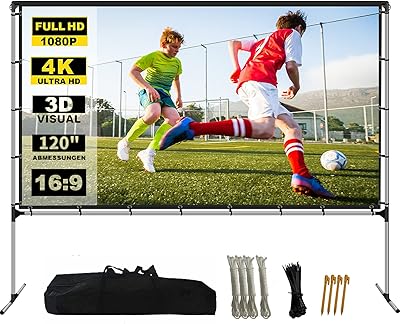
Overview

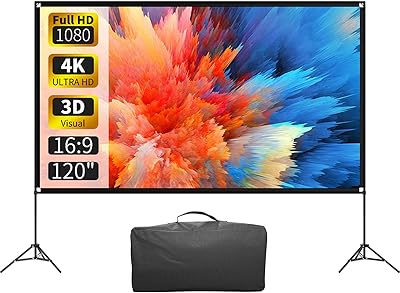
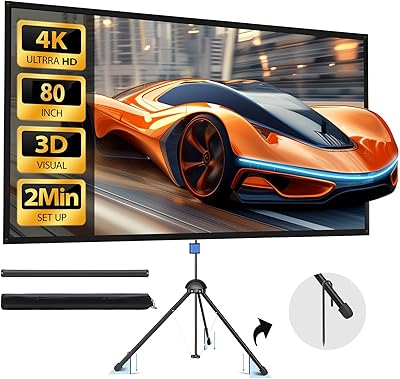
The VISULAPEX 80-Inch Projector Screen with Stand is a freestanding tripod screen built for casual outdoor and indoor use without needing a wall or permanent mount. At 80 inches diagonal in a 16:9 format, it covers enough real estate to make backyard movie nights feel genuinely cinematic. What separates it from basic fabric alternatives is the fiberglass projection surface with a 1.2 gain rating and a black-coated backing — a combination that plain white cloth screens simply do not offer at this price point. That said, this is an entry-level portable screen, not a replacement for a fixed home theater setup, and buyers should approach it with that expectation clearly in mind.
Features & Benefits

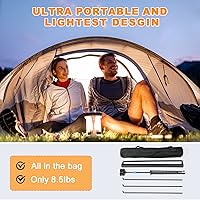
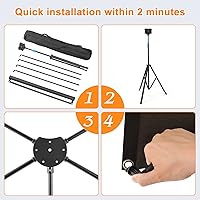
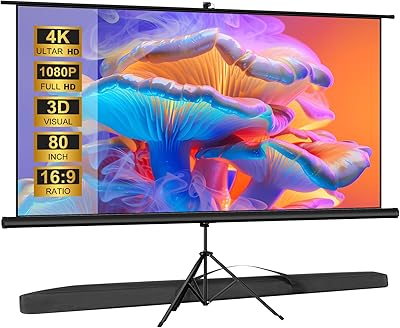
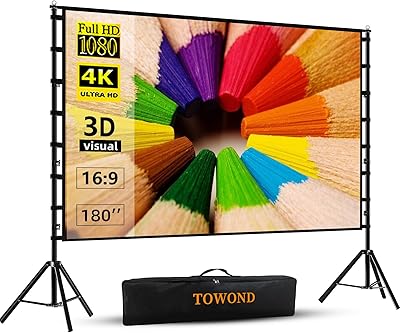
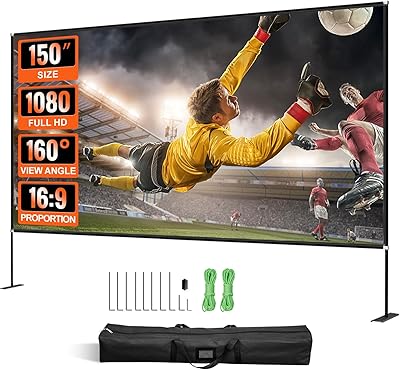
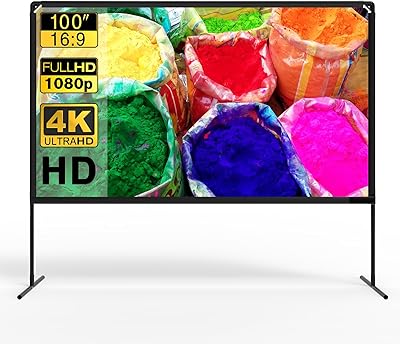
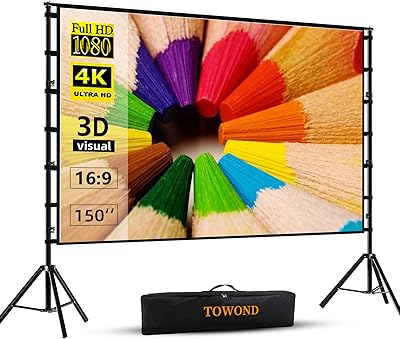
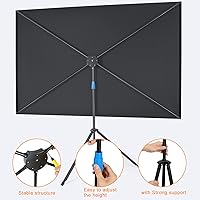
The fiberglass screen surface is the standout spec here — it delivers noticeably more brightness and color accuracy than woven fabric screens common at this price tier, and the black backing cuts down on light bleed-through, which translates to better contrast in semi-lit environments. The metal tripod frame, reinforced with four diagonal support poles, feels stable on grass or pavement. Height is adjustable, and assembly is fast — most people get it standing in well under five minutes. At roughly 10.8 pounds and collapsing into a compact storage tube with a carry bag included, portability is a genuine strength here, not just a marketing claim.

Best For

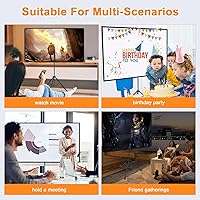
This tripod projection screen is a natural fit for backyard movie nights, camping trips, and anywhere you need a proper viewing surface without hauling permanent hardware. Renters who cannot drill into walls will appreciate the freestanding design immediately. It also works well for college students or hobbyists wanting a real upgrade over projecting onto a painted wall — the difference in image clarity is noticeable. Travelers pairing this portable screen with a compact projector will find the lightweight build and carry bag genuinely convenient. It suits occasional casual use best, rather than serving as a daily dedicated home theater solution where a fixed installation would be more appropriate.

User Feedback

Buyers consistently praise easy assembly and portability as the main wins, with most finding the setup straightforward and appreciating how compactly everything stores away. The image quality improvement over a bare wall surprises many in a positive way. On the downside, some users report light screen tension issues or minor wrinkles after the first unroll — these tend to relax with use, but it is worth knowing upfront. Outdoor stability draws mixed opinions; the stand handles calm evenings well but can wobble in a noticeable breeze. The carry bag is functional rather than premium, and long-term durability of the stand hardware is an open question for anyone planning frequent heavy use.

Pros

  • Fiberglass surface produces noticeably sharper, brighter images compared to plain fabric or a painted wall.
  • The freestanding tripod design works anywhere without needing walls, mounts, or drilling.
  • At under 11 pounds, this portable screen is easy for one person to carry and set up solo.
  • Black-coated backing reduces light bleed-through, improving contrast in semi-lit outdoor settings.
  • Assembly is straightforward and genuinely fast once you have done it once or twice.
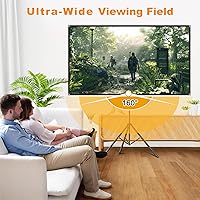
  • The 160-degree viewing angle keeps image quality acceptable for guests seated well off to the sides.
  • Packs into a compact storage tube that fits easily in a car trunk or closet.
  • Works across a wide range of projector types without color casting from the screen surface.
  • The 80-inch 16:9 format is practically sized for backyard groups without being cumbersome to handle.
  • Carry bag keeps all components organized and ready to go for the next outing.

Cons

  • Stand stability drops quickly in even mild wind, making outdoor use unreliable on breezy evenings.
  • Some screens arrive with a visible bow or uneven surface tension that never fully resolves.
  • The carry bag stitching and handles show wear early under frequent transport conditions.
  • Joint connectors between tubes loosen noticeably after a full season of repeated assembly cycles.
  • Height locking mechanism can slowly creep down during a long viewing session.
  • The tube length of nearly 45 inches makes it awkward to carry without a vehicle.
  • Corner distortion and uneven edge tension affect a meaningful minority of units.
  • Very short-throw projector setups can produce hotspot effects with uneven center-to-edge brightness.
  • Indoor use in typical living rooms suffers from ambient light sensitivity more than fixed wall-mounted screens.
  • Replacement parts and manufacturer support are not well-documented for long-term owners.

Ratings

The VISULAPEX 80-Inch Projector Screen with Stand has been evaluated by our AI rating system after processing verified buyer reviews from multiple global markets, with spam, bot activity, and incentivized feedback actively filtered out. The scores below reflect what real users experienced across setup, image quality, portability, and durability — strengths and frustrations included. Nothing has been smoothed over to make this portable screen look better than it actually performs in everyday conditions.
Ease of Setup
88%
Most buyers found the assembly process genuinely quick, with the tripod and aluminum tubes clicking into place without tools. Families setting up for a backyard movie night reported being ready to project within a few minutes, which holds up well against the claimed sub-3-minute setup time.
A small number of users struggled to align the spring-tension tubes on first use, especially in low light conditions outdoors. The instructions included are minimal, and without prior experience with tripod screens, the first assembly can take closer to 8 to 10 minutes.
Image Quality
79%
21%
Compared to projecting onto a painted wall or a bedsheet, the fiberglass surface with 1.2 gain produces a noticeably brighter and more color-accurate image. Users pairing this screen with mid-range projectors in semi-dark backyards were consistently impressed by the contrast improvement.
The screen is not a substitute for a proper fixed-installation panel in a dedicated room. In bright ambient light, the 1.2 gain is not enough to compensate, and fine detail in 4K content can look soft depending on the projector being used.
Portability & Storage
91%
At under 11 pounds and collapsing into a tube that fits in most car trunks, this portable screen travels far more easily than competing frame-style options. Campers and travelers specifically praised how the carry bag keeps everything organized between uses.
The carry bag itself is functional but not durable — the zipper and stitching showed early wear for users who transported it frequently. The rolled screen tube is also somewhat awkward to repack if you are not careful about alignment the first time.
Build Quality & Stability
71%
29%
The metal tripod frame with four diagonal support poles feels solid on flat grass or pavement, and the aluminum tubes lock in firmly enough that the screen does not wobble during normal use. For occasional backyard setups, the construction is more than adequate.
Wind is a real vulnerability. Even a moderate evening breeze can cause visible screen flutter or tip the stand on softer ground. Long-term users also noted that the connection joints between tubes show wear after repeated assembly and disassembly cycles.
Screen Material & Surface
82%
18%
Fiberglass is a meaningful upgrade over fabric at this price tier — it resists minor creasing better, holds its shape more consistently, and the black backing genuinely reduces light bleed-through from behind the screen. Users noticed cleaner blacks compared to single-layer cloth screens.
Some buyers reported a visible wave or slight bow across the screen surface after the first unroll, which typically relaxed over a few uses but never fully disappeared for some units. Edge tension is uneven on a minority of screens, causing a subtle distortion at the corners.
Value for Money
86%
For the price bracket this screen occupies, the combination of fiberglass material, a metal tripod frame, and a carry bag represents solid value. Budget-conscious buyers who previously projected onto walls described this as a worthwhile upgrade that delivered a noticeably better experience.
Buyers expecting premium construction will feel the gap. The hardware feels entry-level under close inspection, and the durability trade-offs become apparent after several months of regular outdoor use, which erodes the perceived value over time.
Screen Size & Aspect Ratio
89%
The 80-inch diagonal in a 16:9 format hits a practical sweet spot for groups of 6 to 12 people seated at a comfortable backyard distance. Users consistently described the size as large enough to feel cinematic without being unwieldy to set up solo.
For very large gatherings or situations where the audience is spread wide, 80 inches can feel limiting. A few buyers wished a larger size option were available in the same tripod format without a significant price jump.
Viewing Angle
77%
23%
The 160-degree viewing angle means guests seated well off to the sides of the screen still get a watchable image without severe brightness falloff. For casual group settings where seating is informal and spread out, this works better than narrower-gain alternatives.
At the outer edges of the claimed viewing angle, color accuracy and brightness drop more than the specs imply. Viewers seated at sharp angles in real-world conditions reported a noticeably dimmer and cooler image compared to those seated centrally.
Height Adjustability
74%
26%
The adjustable tripod height lets users fine-tune the screen position to suit different seating arrangements — whether on camping chairs, blankets, or standard outdoor furniture. Most buyers found the range of adjustment sufficient for common setups without needing to prop anything up.
The height locking mechanism is functional but not precise — some users found the screen crept slightly lower during a long viewing session. The adjustment range also has a fairly low ceiling, which can be limiting when projecting for audiences seated on raised surfaces.
Weight & Handling
83%
Just under 11 pounds makes this one of the lighter options in the freestanding tripod screen category. Solo users setting up without help appreciated being able to carry and position the screen without assistance, even on uneven terrain like a campsite.
While the weight is manageable for most adults, the length of the packed tube — nearly 45 inches — makes it awkward to carry on public transit or store in smaller vehicles. It fits a car trunk comfortably but is not truly backpack-portable.
Assembly & Disassembly Durability
63%
37%
The spring-tension tube system allows for tool-free assembly, which is convenient for frequent outdoor use. Users who set it up carefully and stored it properly reported that the mechanism still worked smoothly after a full season of weekend use.
Repeated assembly and disassembly takes a visible toll on the tube end caps and joint connectors over time. Several buyers reported loosening connections and minor cracking at stress points after a summer of regular use, suggesting the system is not built for years of heavy cycling.
Carry Bag Quality
57%
43%
The included carry bag keeps all components together and makes transport to and from a car straightforward. For infrequent users who store the screen between seasonal uses, the bag does its basic job without any issues.
The bag material is thin and the stitching around the handles is a weak point — multiple buyers reported handle tears within a few months of moderate use. It functions as a storage sleeve more than a proper carrying solution for anyone transporting it regularly.
Compatibility with Projectors
81%
19%
The neutral white fiberglass surface works well with a wide range of projector types, from budget LED portable units to mid-range lamp-based models. Users pairing it with popular compact projectors reported clean, well-defined images without color casting from the screen surface itself.
Very short-throw projectors placed close to the screen can create hotspot effects where the center appears brighter than the edges. The 1.2 gain is optimized for moderate throw distances, so extreme short-throw setups may require experimentation to get an even image.
Indoor Usability
73%
27%
While marketed primarily for outdoor use, this portable screen works well in living rooms, basements, and offices where a fixed mount is not an option. Renters found it particularly useful as a wall-free solution for movie nights or presentations without permanent installation.
Indoors, the freestanding base requires meaningful floor space around the screen, which can be awkward in smaller rooms. The screen also picks up ambient light from lamps and windows more than a wall-mounted screen would, reducing the image quality advantage in typical living room conditions.
Packaging & First Impressions
78%
22%
The product arrived well-packaged for most buyers, with the screen rolled and protected inside its tube and components separated to prevent scratching. First impressions of the materials were generally positive, with the metal frame feeling reassuringly solid out of the box.
Some units showed minor cosmetic marks on the screen surface upon first unrolling, likely from the manufacturing process rather than shipping damage. A small number of buyers also reported missing or stripped screws in the hardware pack, which caused brief frustration during setup.

Suitable for:

The VISULAPEX 80-Inch Projector Screen with Stand is a smart pick for anyone who wants a real projection surface without committing to a permanent installation. Renters, apartment dwellers, and college students will appreciate the freestanding tripod design that requires zero wall drilling and packs away when not needed. Families planning regular backyard movie nights or camping trips will find the combination of fiberglass surface quality and carry bag storage genuinely practical rather than just a marketing checkbox. It also suits hobbyists and casual enthusiasts who are stepping up from projecting onto a bare wall for the first time and want a noticeable image quality improvement without spending heavily. Anyone pairing this portable screen with a mid-range portable projector for occasional use — weekend screenings, outdoor gatherings, or informal presentations — is squarely in the intended audience for this product.
Not suitable for:

The VISULAPEX 80-Inch Projector Screen with Stand is not the right choice for buyers expecting the build quality or longevity of a fixed home theater setup. If you plan to assemble and disassemble it multiple times per week throughout the year, the joint connectors and tube end caps will likely show wear faster than you would hope. Anyone hosting large outdoor events where a stiff breeze is common should know upfront that the stand struggles in wind — without staking or weights, it is not reliable in anything beyond calm conditions. Buyers who need a screen larger than 80 inches for big crowds, or who need razor-sharp detail for high-stakes presentations, will find this screen's material and gain limitations frustrating. Finally, if you want a carry solution that holds up to frequent rough handling during transport, the included bag will disappoint you within a season of regular use.
Specifications

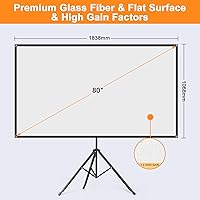
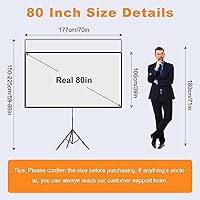
  • Screen Size: The viewable screen area measures 80 inches diagonally, with an active display surface of approximately 72.36″ wide by 42.04″ tall.
  • Aspect Ratio: The screen is formatted in a 16:9 widescreen ratio, matching the native output of most modern projectors, streaming devices, and Blu-ray content.
  • Screen Material: The projection surface is constructed from fiberglass, which provides better dimensional stability and surface consistency than woven fabric alternatives.
  • Screen Gain: The surface has a measured optical gain of 1.2, meaning it reflects slightly more light back toward the audience than a standard matte white reference surface.
  • Back Coating: A black anti-light-bleed layer is applied to the rear of the screen to reduce light transmission through the material and improve perceived contrast.
  • Viewing Angle: The screen supports a 160-degree viewing angle, allowing audiences seated well to the sides to receive an acceptable image without severe brightness falloff.
  • Frame Material: The support structure is built from metal with four diagonal bracing poles and aluminum tube sections that connect via spring-tension end caps.
  • Support Poles: The frame includes one central main pole and four diagonal stabilizing poles that spread outward at the base to provide freestanding balance.
  • Mounting Type: The screen uses a freestanding tripod mount design that requires no wall attachment, ceiling hardware, or external support structure of any kind.
  • Product Weight: The complete assembled unit weighs approximately 10.8 pounds, including the screen, frame components, and storage tube.
  • Packed Dimensions: When disassembled and stored in its tube, the package measures approximately 44.88″ long by 6.3″ wide by 5.51″ tall.
  • Setup Time: The manufacturer claims the screen can be fully assembled and ready to use in under 3 minutes, though real-world times vary by user familiarity.
  • Height Adjustment: The central tripod pole offers adjustable height to accommodate different seating configurations and projector throw distances.
  • Storage Solution: The screen rolls into a rigid storage tube, and a carry bag is included in the package to hold all components together during transport.
  • Projector Compatibility: The screen surface is compatible with standard, short-throw, and portable projectors and can display content up to 4K Ultra HD resolution.
  • Package Contents: The package includes 4 aluminum tubes, 1 storing paper tube, 1 carry bag, 1 user manual, and 4 extra screws — no screwdriver is required.
  • Brand & Manufacturer: This product is sold under the VISULAPEX brand and manufactured by Vnliway.
  • Date Available: This product was first made available for purchase on December 19, 2023.

Related Reviews

VISULAPEX 120-Inch Portable Projector Screen with Stand
77%
88%
Portability & Transport
91%
Setup Speed & Ease
73%
Screen Flatness & Tension
67%
Outdoor Stability & Wind Resistance
79%
Image Quality & Projection Performance
More
HYZ 80-inch Projector Screen with Stand
86%
91%
Portability & Ease of Setup
88%
Image Quality & Viewing Experience
87%
Durability & Build Quality
89%
Adjustable Height Flexibility
68%
Outdoor Visibility in Bright Conditions
More
VISULAPEX 100-Inch Portable Projector Screen with Stand
79%
88%
Portability & Packability
91%
Ease of Assembly
72%
Screen Flatness
74%
Image Clarity & Brightness
78%
Build Quality
More
SCREENMAX 80-Inch Portable Projector Screen
77%
91%
Ease of Setup
74%
Portability
78%
Image Quality
71%
Build Quality
62%
Outdoor Stability
More
HOIN 80-inch Portable Projector Screen Stand
78%
91%
Ease of Assembly
88%
Portability & Transport
84%
Screen Fabric Flatness
82%
Frame Stability — Calm Conditions
56%
Wind Resistance
More
LEORFI 150″ Portable Projector Screen with Stand
76%
88%
Value for Money
79%
Screen Image Quality
82%
Build Quality & Frame Durability
86%
Ease of Assembly
83%
Portability & Transport
More
KSAN ST120 120″ Projector Screen with Stand
76%
91%
Ease of Assembly
88%
Portability & Storage
74%
Screen Image Quality
67%
Wind & Outdoor Stability
78%
Screen Wrinkle Resistance
More
VEVOR Projector Screen with Stand 150″
70%
88%
Screen Size Impact
82%
Ease of Assembly
79%
Portability & Storage
67%
Screen Material Quality
71%
Stand Stability
More
GYUEM 120 Inch Projector Screen with Stand
85%
88%
Value for Money
94%
Setup & Installation
91%
Portability
85%
Durability & Build Quality
90%
Image Quality
More
PropVue 60-Inch Tripod Projector Screen
75%
93%
Ease of Assembly
91%
Portability
78%
Image Quality
67%
Canvas Tension & Flatness
69%
Tripod Stability
More

FAQ

Realistically, plan for about 8 to 10 minutes on your first attempt while you familiarize yourself with how the aluminum tubes and spring-tension connectors fit together. Once you have done it once or twice, you can get close to the claimed 3-minute setup time. Reading the manual before your first outdoor use saves a lot of frustration.

On flat or mildly uneven ground in calm conditions, the four diagonal support poles provide solid footing and the screen holds steady without tipping. On softer or sloped terrain, you may want to press the base poles into the ground slightly for extra grip. The stand is not designed for windy conditions and will need additional anchoring if you expect any breeze.

Yes, the neutral white fiberglass surface works with virtually any projector type — standard lamp-based, LED, laser, or portable battery-powered units. The 1.2 gain works best with projectors at a moderate throw distance; very short-throw projectors placed close to the screen may produce an uneven hotspot in the center. There is no special compatibility requirement beyond having a 16:9 or adjustable aspect ratio on your projector.

Some buyers do notice a slight bow or surface tension variation on the first unroll, which is common with rolled fiberglass screens. In most cases this relaxes within one or two uses as the material settles. Storing it properly rolled — rather than folded — helps prevent permanent creasing over time.

In full daylight, the 1.2 gain is not strong enough to produce a watchable image with most consumer projectors. This screen performs best after dusk or in shaded, low-ambient-light conditions. If you need a screen for daytime outdoor use, you would need a significantly higher-lumen projector than average to compensate.

The difference is noticeable and worth the upgrade for most people. The fiberglass surface produces more accurate colors, better brightness uniformity, and cleaner edges compared to a standard wall, which often has texture, paint imperfections, or a non-neutral tint that distorts the image. The black-coated backing also improves perceived contrast compared to a wall with ambient light behind it.

The bag is adequate for occasional use and keeps everything organized between seasonal setups. For people transporting this screen every weekend, the handle stitching and zipper tend to show wear within a few months. If you plan to use it frequently, consider supplementing with a more durable bag or case for longer-term protection.

One person can absolutely handle the full setup alone — the components are light enough and the assembly process does not require anyone to hold parts in place while you secure others. The entire stand, once assembled, can be positioned and adjusted solo without difficulty.

Mild, calm evenings are fine, but this portable screen is not wind-resistant in any meaningful sense. Even a moderate breeze can cause visible screen flutter and, on softer ground, tip the stand. For outdoor use in areas where wind is unpredictable, you would want to stake the base poles or use sandbags on the feet to keep things steady.

It works indoors for occasional use, but the freestanding base takes up noticeable floor space and the adjustable height range may not perfectly suit all room configurations. It is better treated as a bring-it-out-when-needed solution rather than a permanent living room fixture. For truly regular indoor use, a wall-mounted or ceiling-mounted fixed screen will deliver a cleaner, more stable experience.