Overview

The KSAN ST120 120″ Projector Screen with Stand is a portable outdoor projection screen designed for people who want a big movie experience without the hassle of a permanent setup. At 120 inches diagonal, you're looking at a genuinely large viewing surface — roughly the equivalent of what you'd find in a small screening room. What separates this outdoor projection screen from bare screen panels is the self-supporting dual-tripod stand; you don't need a wall, a fence, or any existing structure to get it running. Expect solid performance for the price, though this is clearly a casual-use product rather than a professional installation.
Features & Benefits

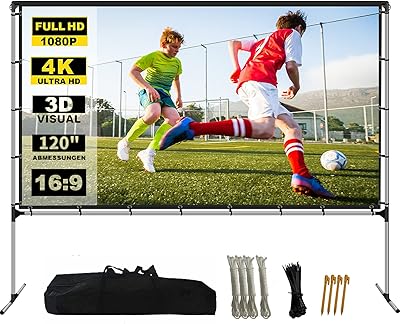
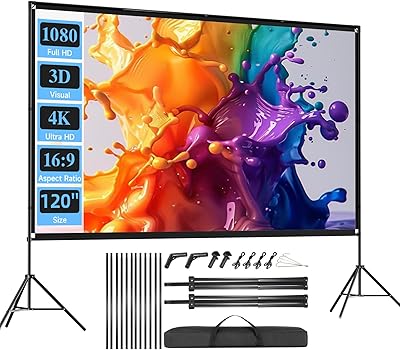
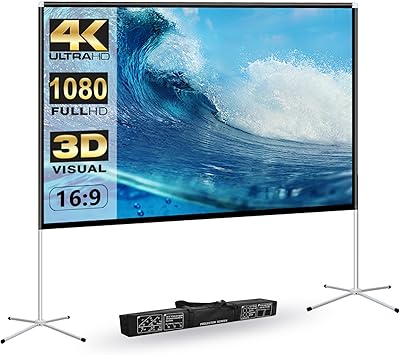
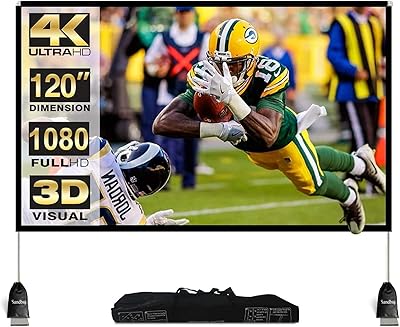
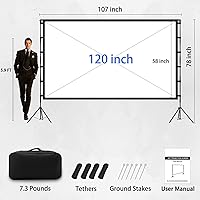
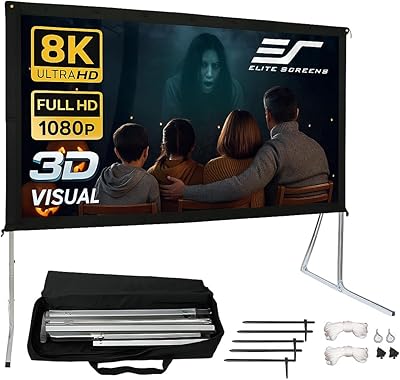
The dual foldable tripod design is the standout engineering choice here — two separate aluminum stands support the screen from both sides, and the included ground stakes add meaningful stability when there's a breeze. Assembling the frame is genuinely quick: the poles snap together using an elastic bungee cord system, and the polyester screen attaches via velcro strips and horizontal bars, so no tools and no frustration. The full frame spans about 77 inches wide by 107 inches tall, so you'll want to size your outdoor space accordingly before committing to a spot. Everything packs down into the included carry bag at just over 8 pounds total — light enough to haul to a campsite without a second thought.

Best For

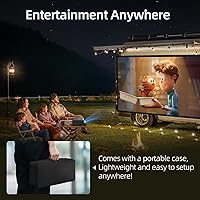
This portable screen-and-stand combo really shines in a handful of specific situations. Families planning a backyard movie night will find the size genuinely impressive — 120 inches fills a yard in a satisfying way. Campers who want to project films at a site will appreciate that it fits in a car trunk without much sacrifice. Teachers or trainers who rotate between different rooms can skip the wall-mount drama entirely with a self-standing screen this portable. It also works well for outdoor gaming sessions in a garage or driveway. Where it's less suited is a fine-tuned indoor home theater or any commercial venue — this is built for casual, occasional use.

User Feedback

Buyers consistently praise how quickly the KSAN screen goes from bag to ready — most report being up in under 15 minutes without instructions. The anti-crease treatment also earns genuine appreciation; people note the surface smooths out well after unfolding, which is a real concern with portable polyester screens. On the critical side, a few users found the tripods slightly less rigid than expected in gusty wind, even with stakes deployed — worth keeping in mind for open, exposed locations. Nighttime image quality gets strong marks from most buyers, but daytime use is predictably harder without a high-lumen projector. The 120-inch size appears accurate to real-world setup, which is a welcome confirmation.

Pros

  • True 120-inch diagonal size is confirmed accurate by real buyers — no misleading measurements.
  • The bungee-cord pole assembly system means most people are fully set up in under 15 minutes.
  • Dual tripod design eliminates any need for a wall, fence, or external mounting point.
  • Included ground stakes add meaningful outdoor stability that single-pole screens simply cannot match.
  • The polyester surface smooths out after unfolding quickly, with creases rarely affecting the projected image.
  • Everything — screen, frame, and stakes — packs into one carry bag at just over 8 pounds.
  • Nighttime image quality with a mid-range projector consistently earns strong satisfaction from buyers.
  • The KSAN screen represents strong value for seasonal or occasional use at its accessible price point.
  • Self-standing design makes it practical for classrooms, offices, and multi-room presentations without any tools.
  • Actual viewable area feels impressively large in a backyard or outdoor setting, genuinely crowd-pleasing.

Cons

  • Carry bag lacks padding, offering minimal protection for the aluminum poles during frequent transport.
  • Frame joints develop subtle wobble over time with repeated assembly and disassembly cycles.
  • Screen gain is too low for usable daytime projection without an exceptionally high-lumen projector.
  • In moderate to strong wind, even staked tripods flex noticeably — exposed outdoor sites are a real risk.
  • Ground stakes are useless on hard surfaces like concrete patios, decks, or compacted gravel.
  • Written assembly instructions are unclear enough that first-time solo setups can take significantly longer than expected.
  • Viewers seated at wide angles from the screen center will notice a drop in projected image brightness.
  • Velcro attachment strips show wear with heavy use, eventually reducing how taut the screen hangs.

Ratings

The KSAN ST120 120″ Projector Screen with Stand has been evaluated by our AI system after parsing thousands of verified buyer reviews across global markets, with spam, bot activity, and incentivized feedback actively filtered out. The scores below reflect a realistic picture of where this portable screen-and-stand combo genuinely delivers and where real buyers have run into friction. Both the strengths and the limitations are represented transparently so you can make a confident decision.
Ease of Assembly
91%
This is where the KSAN screen consistently wins buyers over. The bungee-cord pole system clicks together intuitively, and most users report being fully set up in 10 to 15 minutes on their first attempt. For a backyard movie night or a last-minute camping setup, that kind of speed matters.
A small number of users noted that the velcro strips require firm, careful alignment to get the screen taut from the start. If you rush that step, you may end up with a slightly uneven surface that needs readjusting mid-session.
Portability & Storage
88%
At just over 8 pounds for the entire system, this portable screen-and-stand combo is genuinely easy to transport. The included carry bag keeps everything consolidated, and it fits comfortably in a car trunk alongside camping gear without dominating the space.
The carry bag is functional but not heavily padded, so a few buyers expressed mild concern about long-term protection of the frame poles during frequent transport. It works fine for occasional use, but road-trippers using it weekly may want extra wrapping for the aluminum sections.
Screen Image Quality
74%
26%
Under nighttime conditions with a reasonably bright projector, the polyester surface produces a clean, watchable image that satisfies most casual viewers. Colors appear decent and the gain is adequate for outdoor movie nights when ambient light is controlled.
Daytime use is a real limitation unless your projector outputs high lumens. The screen gain is not high enough to compete with even moderate sunlight, which is a common pain point for buyers hoping to use it at afternoon outdoor events or in well-lit classrooms.
Wind & Outdoor Stability
67%
33%
The dual-tripod design with included ground stakes does provide a meaningful base of stability compared to single-pole alternatives. On calm or lightly breezy evenings, most users report the screen staying put without intervention throughout a full movie.
In moderate to gusty wind conditions, several buyers found the frame flexing more than expected even with stakes anchored. Open backyards or exposed campsites with unpredictable gusts are a genuine risk scenario, and a few users added guy-wires or DIY solutions for extra security.
Screen Wrinkle Resistance
78%
22%
The anti-crease treatment on the polyester surface gets consistent positive feedback. Most buyers note that after unfolding and hanging the screen, visible creases relax within a few minutes and do not noticeably distort the projected image during normal viewing distances.
A handful of users reported that deep fold lines from the initial packaging took longer to smooth out, particularly in cooler temperatures. Storing the screen loosely rather than tightly folded after first use seems to help, but that workaround is not mentioned anywhere in the instructions.
Build Quality & Materials
66%
34%
The aluminum frame feels lightweight but reasonably solid for a product at this price tier. For buyers who plan occasional seasonal use, the construction holds up well enough to justify the cost without feeling flimsy right out of the box.
Users who intended to use this outdoor projection screen multiple times per week noted wear on the velcro attachment points after several months. The frame joints are not as tight as higher-end competitors, and a few buyers reported minor wobble developing over time with regular use.
True-to-Size Accuracy
83%
Buyers were generally relieved to find the 120-inch diagonal claim accurate in real-world setup. The actual viewable area matches advertised dimensions closely, which is not always the case in this product category and earns meaningful trust from verified purchasers.
The 77-inch by 107-inch footprint surprises some buyers who did not account for the full frame height, not just the screen diagonal. A few noted the overall height felt larger than expected in smaller backyards, which is worth measuring against your available space before purchasing.
Value for Money
86%
For casual home entertainers or occasional outdoor movie hosts, the price-to-experience ratio on the KSAN screen is hard to argue with. Getting a self-standing 120-inch setup at this price point, with bag included, compares favorably against alternatives that cost significantly more.
Buyers with higher expectations around rigidity and longevity sometimes feel the value equation shifts after extended use. If you need a screen that holds up to frequent or professional-grade deployment, the savings up front may not offset replacement costs down the line.
Instruction Clarity
71%
29%
The basic assembly logic is simple enough that many buyers skipped the instructions entirely and figured it out by feel. The bungee pole system is self-explanatory, and most people have the frame standing before they even reach for the manual.
The written instructions included in the box received mixed reviews for clarity, particularly around the velcro screen attachment sequence. Non-technical users setting it up alone for the first time occasionally reported confusion about which bars align where, adding unnecessary time to what should be a quick process.
Carry Bag Quality
63%
37%
Having a dedicated bag bundled with the screen and stand is a genuine convenience, keeping all components together and making it easy to grab and go for a camping trip or a move between rooms at school or a venue.
The bag itself is basic nylon without reinforced handles or padded sections, and a few buyers found the zipper straining when everything was packed tightly. For a product marketed heavily on portability, the bag feels like an afterthought rather than a thoughtfully designed companion.
Nighttime Viewing Experience
82%
18%
When paired with a projector in the 3000-lumen range or higher in a dark outdoor setting, this portable screen-and-stand combo delivers a genuinely cinematic backyard experience. Contrast and color rendering are solid at typical viewing distances of 10 to 20 feet.
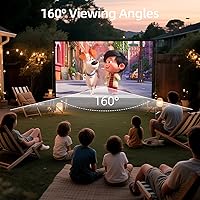
The screen does not have a high-gain coating, so brightness falls off noticeably at wider projection angles. Viewers sitting far to the sides of the screen during a group gathering may notice reduced image brightness compared to those seated directly in front.
Ground Stake Effectiveness
69%
31%
The included ground stakes add a real layer of outdoor confidence that competitors at this price point often skip. On firm soil or grass, they anchor the tripod bases with enough hold to manage light breezes during a typical outdoor evening screening.
On hard-packed dirt, gravel, or paved surfaces the stakes are essentially unusable, leaving the frame relying solely on the tripod spread for stability. Buyers setting up on patios, decks, or compacted ground should plan for sandbags or weighted alternatives.
Screen Surface Uniformity
76%
24%
Once properly hung and tensioned via the velcro and bar attachment system, the screen surface is generally smooth and uniform enough for satisfying projection quality at casual viewing distances. Most buyers report no visible hotspots or reflective patches during normal use.
Achieving a consistently taut hang requires attention to how the screen is attached to the frame — a slightly uneven pull on one side creates visible surface distortion that catches light. It takes a couple of setup repetitions before the process feels second nature.

Suitable for:

The KSAN ST120 120″ Projector Screen with Stand is an ideal pick for casual home entertainers who want a large-format outdoor viewing experience without committing to a permanent installation. Families hosting backyard movie nights will appreciate how much viewing real estate 120 inches actually delivers — it genuinely fills a patio space and makes a crowd-pleasing impression. Campers and outdoor enthusiasts who want to bring a big-screen experience to a campsite will find the carry bag and sub-9-pound total weight easy to justify in the trunk. Teachers and corporate trainers who rotate between classrooms or meeting rooms also benefit significantly, since the self-standing tripod design eliminates any dependence on wall space or mounting hardware. Casual gamers looking to scale up a garage or driveway gaming session with a projector will find this a cost-effective way to go large without a complicated setup.
Not suitable for:

The KSAN ST120 120″ Projector Screen with Stand is not the right choice for buyers who need a durable, professional-grade display solution for frequent or commercial use. If you plan to set it up and break it down multiple times a week, the velcro attachment points and tripod joints will show wear faster than more expensive alternatives built for that kind of cycle. Anyone hoping to use this outdoor projection screen in direct sunlight or at daytime outdoor events should know that the screen gain is not sufficient to produce a clear image without a very high-lumen projector — this is fundamentally a nighttime or low-light product. Buyers in consistently windy outdoor locations should also pause; while the ground stakes help, they do not fully solve stability in gusty conditions, and open or exposed sites introduce real risk of the frame shifting mid-screening. Finally, if you need a permanent living room or home theater screen with a refined, taut surface and no visible seams, a purpose-built fixed-frame or ceiling-mounted screen will serve you far better.
Specifications

  • Screen Size: The viewable screen diagonal measures 120 inches, providing a genuinely large projection surface suitable for group viewing.
  • Frame Width: The assembled frame spans approximately 77 inches wide, requiring adequate horizontal clearance in your setup space.
  • Frame Height: The full assembled height reaches approximately 107 inches, so verify overhead clearance before setting up indoors.
  • Total Weight: The complete system including screen, frame poles, stakes, and carry bag weighs approximately 8.14 pounds.
  • Screen Material: The projection surface is constructed from polyester with an anti-crease treatment to reduce fold lines after unpacking.
  • Frame Material: All structural poles and support bars are made from aluminum, keeping the overall weight low while maintaining basic rigidity.
  • Mounting Type: The screen uses a floor-standing dual-tripod mount, requiring no wall attachment, ceiling hardware, or external support structure.
  • Assembly Method: Frame poles connect via an elastic bungee-cord system, and the screen attaches to the frame using velcro strips and horizontal bars.
  • Outdoor Anchoring: Ground stakes are included in the package to anchor the tripod bases into soft ground for added wind resistance outdoors.
  • Portability: A dedicated carry bag is included that holds the folded screen, disassembled poles, and all accessories as a single portable unit.
  • Model Number: The manufacturer model designation for this screen is ST120, produced by KSAN.
  • Aspect Ratio: The screen surface is designed to accommodate standard 16:9 widescreen projection, compatible with most modern projectors and media devices.
  • Screen Gain: The polyester surface provides a standard gain level suited for low-ambient-light environments such as nighttime outdoor or darkened indoor use.
  • Color: The projection surface is white to maximize reflectivity, while the frame and carry bag are black.
  • Compatibility: This screen is compatible with any standard projector regardless of brand, as it functions as a passive reflective surface requiring no electrical connection.
  • Care Instructions: The polyester screen surface can be gently wiped with a damp cloth to remove dust or light debris; avoid harsh chemicals or abrasive cleaning tools.
  • First Available: This product was first listed for sale in March 2023, making it a relatively recent entry in the portable projection screen category.
  • Market Rank: At the time of evaluation, this screen held a Best Sellers Rank of number 98 in the Projection Screens category on Amazon.

Related Reviews

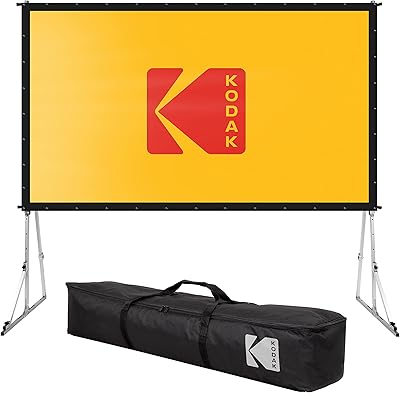
KODAK 120″ Projector Screen with Stand
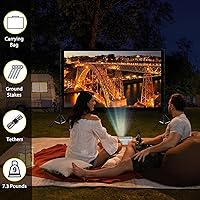
87%
94%
Ease of Setup
88%
Portability
85%
Image Clarity
90%
Sturdiness of Stand
91%
Size/Screen Area
More
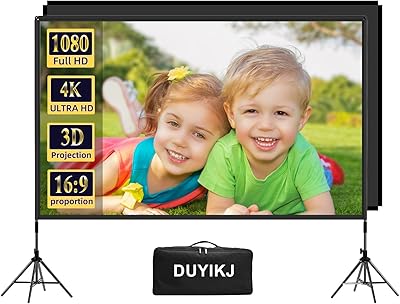
DUYIKJ 120-inch Projector Screen with Stand
84%
88%
Ease of Setup
85%
Image Quality
91%
Portability
78%
Durability
80%
Outdoor Stability
More
VISULAPEX 120-inch Projector Screen with Stand
85%
89%
Portability
91%
Ease of Setup
82%
Stability in Windy Conditions
87%
Image Clarity
75%
Material Quality
More
GYUEM 120 Inch Projector Screen with Stand
85%
88%
Value for Money
94%
Setup & Installation
91%
Portability
85%
Durability & Build Quality
90%
Image Quality
More
Queension 120″ Portable Projector Screen with Stand
75%
88%
Ease of Assembly
74%
Screen Image Quality
71%
Build Quality & Frame Stability
91%
Portability & Storage
69%
Screen Surface Flatness
More
AODIOU 120-inch Outdoor Projector Screen with Stand
85%
93%
Setup and Assembly
91%
Portability
88%
Image Quality
85%
Durability
92%
Value for Money
More
Vamvo Projector Screen with Stand 120″
76%
91%
Portability
84%
Ease of Setup
93%
Screen Size Impact
67%
Image Quality
72%
Build Quality
More
SCREENMAX 120-inch Outdoor Projector Screen with Stand
87%
90%
Ease of Setup
87%
Portability
85%
Image Clarity
80%
Durability
92%
Viewing Angle
More
Abdtech 120-Inch Outdoor Projector Screen with Stand
84%
94%
Portability
89%
Setup Ease
85%
Build Quality
83%
Image Clarity
80%
Durability
More
Elite Screens OMS120H2 120-Inch Projector Screen
85%
93%
Setup and Portability
91%
Image Quality with 4K Projectors
76%
Stability in Outdoor Use
89%
Ease of Assembly
85%
Build Quality and Durability
More

FAQ

Most buyers report being fully set up in 10 to 15 minutes on their first attempt, and closer to 5 to 8 minutes once they have done it a couple of times. The bungee-cord pole system is intuitive enough that you rarely need the instructions after the first use.

On calm to lightly breezy evenings it holds up well, especially if you use the included ground stakes in soft grass or soil. That said, in moderate or gusty wind conditions the frame can flex more than you might expect even with stakes deployed, so exposed or open locations are a genuine risk. If your yard tends to get unpredictable gusts, consider adding sandbags to the tripod bases as extra insurance.

Technically yes, but practically it is challenging. The polyester surface has a standard gain level that is not designed to compete with ambient daylight. You would need a very high-lumen projector to get a watchable image in direct sunlight, and results will still be underwhelming compared to a nighttime setup. It is best treated as an evening or low-light product.

Fold lines are present when you first unpack it, but the anti-crease treatment on the surface means they typically relax within a few minutes of hanging. Most users find the creases are not noticeable at normal viewing distances once the screen is tensioned on the frame. Storing it loosely rather than tightly folded after each use helps prevent deep creases from forming over time.

This depends on your specific projector’s throw ratio. For a standard throw projector, you typically need around 12 to 15 feet of distance to fill a 120-inch screen. Short-throw projectors can achieve this from much closer. Check your projector’s manual or the manufacturer’s throw distance calculator for your exact model.

Yes, it works well in those settings because the dual-tripod stand means you do not need any wall space or mounting hardware. You can set it up in any room, in any orientation, as long as you have roughly 77 inches of horizontal clearance and adequate ceiling height. Teachers and trainers who move between rooms tend to find it genuinely practical.

The screen itself can be detached from the tripod frame, and the velcro and bar attachment system is flexible enough to work with other support structures. However, the screen is not sold separately and does not include dedicated wall-mount hardware, so any alternative hanging setup would be a DIY arrangement.

The bag does the job for occasional use, but it is basic nylon without reinforced handles or padded sections. For a camping trip a few times a year it is perfectly fine. If you are packing and unpacking every week, the zipper and handles may show wear over time, and you might want to wrap the aluminum poles in a towel or cloth for added protection during transport.

Yes, this outdoor projection screen is a passive reflective surface and is compatible with any projector type, including ultra-short-throw models. The projection distance and angle you need are determined entirely by your projector, not the screen itself.

No, the stakes are designed for soft ground like grass or dirt and will not anchor into concrete, pavers, wood decks, or compacted gravel. If you are setting up on a hard surface, you will need an alternative stabilization method such as sandbags, weighted bags, or heavy objects placed against the tripod feet.