Overview

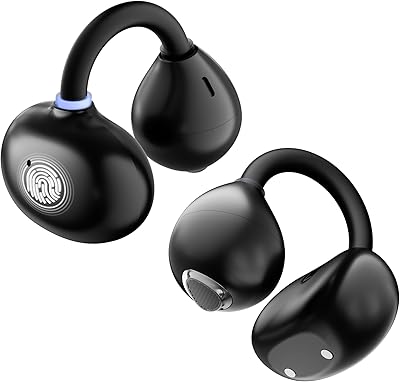
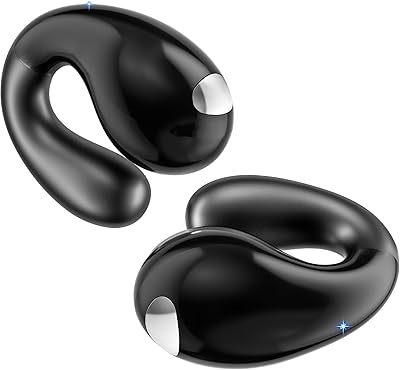
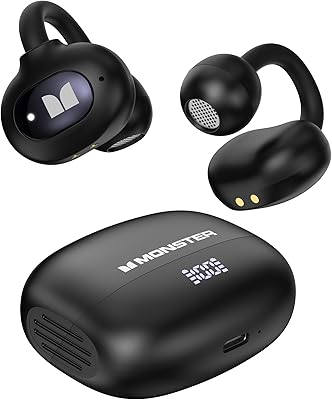
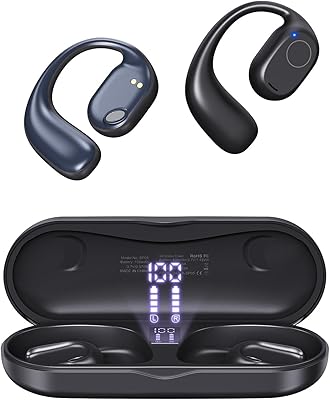
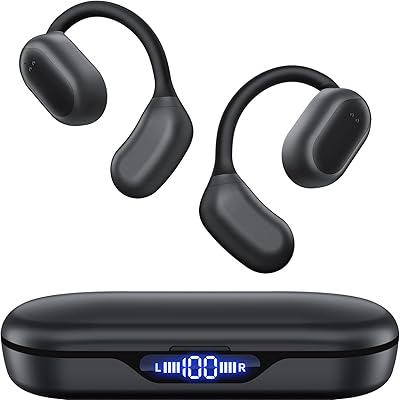
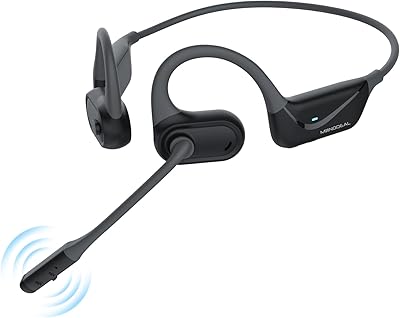
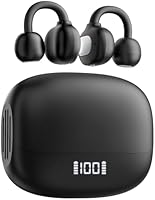
The PSIER EP20 Open-Ear Bluetooth Earbuds enter a market where Shokz has long set the benchmark, but at a fraction of the price. Unlike true wireless earbuds that sit inside the ear canal, these open-ear clip earbuds hook over the outer ear, leaving the canal completely open. That design is a deliberate trade-off: you keep full awareness of your surroundings, but don't expect deep bass or total audio privacy — that's physics, not a flaw. Launched in April 2025, the EP20s are early in their product life with a modest review pool, though the digital display charging case is already an uncommon perk at this price point.
Features & Benefits

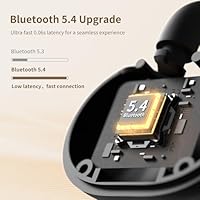
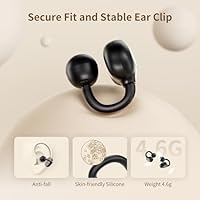
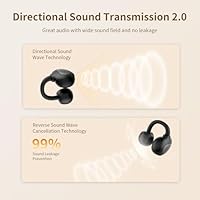
The EP20s run on Bluetooth 5.4, which in practical terms means quicker device pairing, a more stable connection across a room, and lower latency — useful when you're on a video call and don't want audio out of sync. The sound delivery is worth clarifying: this is directional acoustic beamforming, not true bone conduction. Rather than vibrating through your skull, sound travels through air aimed precisely at your ears — closer to a well-directed speaker than a Shokz-style headset. IPX5 waterproofing handles sweat and light rain confidently, and the ergonomic clip design means no ear-tip pressure building up after hours of wear.

Best For

These open-ear clip earbuds make the most sense for people who genuinely need to stay aware of what's happening around them. Runners and cyclists will appreciate hearing traffic without pulling out an earbud every few minutes. In open-plan offices, they let you listen to music or take calls without fully tuning out your team. People who struggle with in-ear tips — whether from sensitivity or long-session discomfort — will find the clip format a relief. And if you've been curious about open-ear audio but can't justify spending on a premium brand, PSIER's clip-on earbuds offer a low-risk entry point to see if the format suits your daily routine.

User Feedback

With a 4.7-star average from 56 ratings, early reception is strong — but 56 reviews is a thin sample for a product only launched in April 2025, so treat the score as an encouraging signal rather than settled consensus. Buyers consistently highlight comfortable all-day fit and reliable clip stability during runs and workouts, with pairing described as quick and fuss-free. Criticism, where it appears, tends to center on limitations inherent to open-ear designs: less bass than sealed earbuds and some sound leakage at higher volumes. Notably, several reviewers described the charging case display as genuinely practical rather than a gimmick, which adds real confidence to that specific feature.

Pros

  • Open-ear clip design keeps you aware of traffic, voices, and surroundings without removing the earbuds.
  • Bluetooth 5.4 delivers faster pairing and a stable connection with noticeably lower audio lag on video calls.
  • Thirty hours of combined playtime from earbuds and case easily covers multi-day use between charges.
  • The digital charging case display lets you check battery levels at a glance without opening any app.
  • IPX5 waterproofing means sweat during workouts and light rain on commutes are not a concern.
  • No ear tips means no canal pressure or fatigue buildup, making the EP20s genuinely comfortable for extended sessions.
  • Lightweight clip build makes it easy to forget you're wearing them during long runs or all-day desk work.
  • Early buyer ratings skew strongly positive, with fit stability during exercise repeatedly highlighted as a standout feature.

Cons

  • Bass response is inherently limited — open-ear audio cannot match the depth or punch of sealed earbuds.
  • Sound leakage at higher volumes can disturb people nearby in quiet offices or calm public spaces.
  • Only around 56 ratings at launch makes it difficult to draw confident conclusions about long-term durability.
  • These are not true bone conduction earbuds, which could mislead buyers who specifically want that technology.
  • No passive isolation means background noise bleeds in fully, making them a poor choice for focus-intensive work.
  • Call quality in loud outdoor environments may suffer without the natural noise-blocking that in-ear designs provide.
  • Clip-on fit can vary depending on ear shape, so comfort and stability are not guaranteed for every user.
  • PSIER is a relatively unfamiliar brand with limited long-term customer service reputation compared to established audio names.

Ratings

The PSIER EP20 Open-Ear Bluetooth Earbuds earn their scores below through AI-driven analysis of verified buyer feedback gathered globally, with spam, bot-generated, and incentivized reviews actively filtered from the dataset. The ratings reflect both what these open-ear clip earbuds genuinely do well and where the format's real-world trade-offs drag scores down. No category has been glossed over — the aim is to give you the clearest possible picture before you decide.

Comfort & Fit
88%
The clip-over format earns consistent praise from people wearing these through full workdays and long runs without ear fatigue. Because nothing sits inside the canal, there is no pressure buildup — a relief that buyers switching from in-ear tips notice immediately. Users with ear canal sensitivity frequently cite comfort as the primary reason they keep choosing this style over traditional earbuds.
Fit can vary noticeably depending on ear shape — those with smaller or unusually contoured ears occasionally find the clip feels insecure during intense movement. There is no adjustable tension mechanism, leaving buyers outside the standard fit range with limited ways to improve the hold. A few early users noted the clip felt stiff initially before loosening naturally with regular wear.
Ambient Awareness
93%
For the specific use case these earbuds are designed for, ambient awareness is where they genuinely shine. Runners and cyclists can hear approaching traffic and trail sounds without fiddling with pause buttons or pulling out an earbud. Office workers appreciate catching a colleague's comment mid-playlist without the social awkwardness of a dramatic removal.
The openness that makes awareness excellent also means you cannot reduce it when you actually want isolation. On a loud commute or in a noisy workspace, there is no filtering — you hear everything whether you want to or not. This is an inherent category trade-off rather than a flaw specific to the EP20s, but it is worth understanding before buying.
Sound Quality
71%
29%
Clarity in the midrange and higher frequencies is genuinely decent for the price and the format. Podcasts, audiobooks, video calls, and vocal-leaning music all come through with enough detail to be enjoyable during a commute or gym session. Buyers who primarily use earbuds for spoken content report being more satisfied than those focused on music listening.
Open-ear acoustics make deep bass physically difficult to reproduce, and the EP20s do not overcome that constraint. Bass-heavy genres — hip-hop, EDM, anything built on a strong low-end punch — sound noticeably flat and thin. The overall soundstage also lacks the immersion of even a mid-tier sealed in-ear design, which is a real factor for dedicated music listeners.
Battery Life
84%
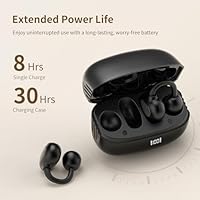
Thirty hours of combined playtime across both earbuds and the charging case is a strong number at this price. Most users covering typical daily use find they can go several days without reaching for a charger. Commuters and travelers particularly appreciate not having to plan charging stops around their audio needs.
The 30-hour figure covers the full earbud-plus-case total, and the per-earbud runtime on a single charge is not broken out in the product specs. Based on the category, single-charge playback is likely in the 6-to-8-hour range — adequate but not exceptional. Users who forget to recharge the case regularly may find themselves caught short unexpectedly.
Value for Money
86%
At this price, the EP20s offer Bluetooth 5.4, IPX5 waterproofing, a digital display case, and 30 combined hours of battery — a package that costs significantly more from premium brands. For first-time open-ear buyers testing the format, the entry price makes the risk feel genuinely low. Early buyers consistently express positive surprise at what the product delivers relative to its cost.
PSIER is a relatively unfamiliar brand without the track record or support infrastructure of established audio manufacturers, which adds uncertainty for long-term buyers. The lower price is also reflected in the build materials, which feel functional rather than refined. Buyers who prioritize brand confidence and reliable post-purchase support may find the value calculus shifts depending on those priorities.
Connectivity
87%
Bluetooth 5.4 is the latest chip generation available, and real-world performance reflects that — pairing is quick, signal holds stable across a typical room, and audio-to-video latency on calls is noticeably lower than older Bluetooth versions. Buyers using these for video calls and online meetings specifically flag the low-latency connection as a practical day-to-day benefit.
Like any Bluetooth product, range can drop in environments with heavy wireless interference, such as crowded gyms or busy transit stations. There is no confirmed multipoint connection support, which means users who switch frequently between a phone, laptop, and tablet may find re-pairing across devices slightly tedious. These are common class-wide limitations rather than unique defects.
Ease of Pairing
89%
Buyers consistently describe the initial pairing process as straightforward — open the case, wait for the audio cue, find the device in Bluetooth settings, and connect. Subsequent automatic reconnection when the case is opened near a paired device works reliably in early user reports. For less technically confident buyers, the lack of a complicated setup process is a clear win.
A small number of early users reported occasional reconnection hesitations after the earbuds had been in the case for an extended period, requiring a manual reconnect from the device's Bluetooth menu. With only 56 ratings in the pool, it is hard to tell whether this reflects a repeatable issue or isolated unit variation. More reviews over time will clarify this.
Exercise Stability
83%
For most users, the clip holds firmly through running, cycling, and gym workouts without constant readjustment. Early buyers who put these through outdoor runs and elliptical sessions describe the fit as more secure than they initially expected from a clip-on design. The absence of silicone ear-tip wings means there is nothing to cause additional discomfort during extended sessions.
The clip-on design does not accommodate every ear shape equally, and a subset of users with smaller ears find the hold loosens during high-impact activities like jump training or sprinting. There are no stabilizer fins or additional securing options included in the box. Buyers with a history of earbuds dislodging during intense workouts should factor this into their decision.
Build Quality
74%
26%
The construction feels solid enough for daily handling — the earbuds survive being dropped into a gym bag, clipped on and off repeatedly, and carried in a pocket without obvious scuffing or damage based on early reports. The charging case clicks shut securely, and the digital display adds a layer of polish that feels above the price tier.
The materials are clearly budget-grade — the plastic on both the earbuds and case lacks the premium tactile feel of higher-end products, and there is no official warranty period or durability rating listed to reassure buyers about long-term resilience. Given PSIER's limited brand history, long-term build reliability remains an open question that only time and more reviews will answer.
Water Resistance
78%
22%
IPX5 protection is a meaningful rating for workout earbuds — it covers the scenarios most active users actually encounter: heavy sweat during a run, light rain on a commute, or a splash near a gym water fountain. Buyers who have tested these in sweaty workout conditions report no issues, and the coating appears to hold up with regular moisture exposure.
IPX5 does not protect against submersion or water sports, so buyers who swim or train in heavy rain should not rely on this rating for those scenarios. The protection level is hard to independently verify, and PSIER has not published third-party certification data. Rinsing the earbuds after salt-heavy sweat sessions is a sensible habit to extend the coating's lifespan.
Call Quality
72%
28%
For quiet office environments and indoor calls, voice clarity is adequate — callers on the other end generally report hearing the speaker clearly, and the low-latency Bluetooth 5.4 connection prevents noticeable sync issues. The open-ear design also means the user hears their own voice naturally, avoiding the muffled self-feedback that sealed earbuds sometimes create.
In noisy outdoor environments — busy streets, windy conditions, crowded transit — call quality degrades noticeably because the open design provides no passive noise isolation for the microphone. Background noise bleeds into calls more heavily than it would with a traditional in-ear headset. Users who take frequent calls in loud settings will likely find the performance frustrating over time.
Bass Performance
49%
51%
Within the specific constraints of open-ear audio, the bass that is present is clean rather than muddy or artificially boosted. For genres where bass is a background element rather than a defining feature — indie rock, jazz, classical, or spoken word — the low-end presence is adequate and does not distort at moderate volumes.
Open-ear acoustics cannot generate the bass depth that sealed earbuds or over-ear headphones produce, and the EP20s find no workaround. For bass-heavy music listeners, the result is a noticeably flat, thin low-end that drains energy from tracks built around kick drums and sub-bass. This is a format-wide constraint, not a manufacturing flaw, but it is a real listening trade-off.
Sound Leakage
61%
39%
At moderate listening volumes — roughly 50 to 60 percent — leakage is minimal enough that someone sitting nearby in a quiet room would not be able to make out what is playing. The directional beamforming does focus audio toward the ear rather than broadcasting it outward, providing a degree of containment that pure open speakers cannot match.
At higher volumes, sound leakage becomes a genuine concern — in quiet spaces like libraries or small meeting rooms, people nearby can hear what is playing. This is a structural consequence of open-ear design with no settings-based fix. Listeners who habitually push volume high will need to be more mindful of their environment than they are with sealed earbuds.
Charging Case
82%
18%
The digital battery percentage display on the case is a genuinely useful differentiator at this price tier — most budget earbud cases rely on vague LED dot indicators. Buyers highlight the display as a practical daily feature rather than a cosmetic novelty, noting that knowing the exact remaining percentage removes guesswork about whether the case can handle another full top-up.
The case is made of lightweight plastic that does not feel particularly robust when handled roughly. Wireless charging is not supported, and the cable input type is not confirmed as USB-C in the listing, which matters for buyers standardizing their cables. The hinge and closure mechanism work fine but feel more functional than durable over a long ownership period.

Suitable for:

The PSIER EP20 Open-Ear Bluetooth Earbuds are built for people who need to stay connected to their surroundings while still enjoying personal audio. Runners and cyclists are a natural fit — the clip-over design means you can hear approaching traffic or a trail hazard without ever pausing your playlist. Office workers in open-plan environments get a similar benefit, listening to music or joining a call without cutting themselves off from a colleague who needs their attention. Anyone who has dealt with ear canal fatigue or sensitivity from hours of in-ear tip use will find the clip format a genuine comfort upgrade for long workdays or commutes. The EP20s also make a sensible starting point for buyers curious about the open-ear format who are not yet ready to spend significantly more on an established premium brand in the category.
Not suitable for:

If audio quality, bass depth, or sound isolation are priorities, the PSIER EP20 Open-Ear Bluetooth Earbuds will likely fall short — not because of a manufacturing flaw, but because open-ear acoustics physically cannot deliver the low-end punch or immersive staging that a well-sealed in-ear or over-ear headphone produces. Listeners who favor bass-heavy genres, or who need strong isolation for deep focus work or loud commutes, will find the open design actively works against them. Sound leakage at higher volumes is also a real concern in quiet shared spaces like libraries or meeting rooms, where the earbuds could become a distraction to people nearby. Buyers who specifically want true bone conduction technology should note that PSIER's clip-on earbuds use directional acoustic beamforming instead — a different approach that should not be confused with what brands like Shokz deliver. Finally, shoppers who rely on a large, long-established review base before committing may want to wait, as the product launched in April 2025 and has accumulated only a modest number of ratings so far.
Specifications

  • Brand: Manufactured and sold by PSIER, a consumer electronics brand positioned at the accessible end of the wireless audio market.
  • Model: The model designation is EP20, PSIER's open-ear clip earbud released in April 2025.
  • Bluetooth Version: Equipped with Bluetooth 5.4, offering faster initial pairing, a more stable connection range, and lower power consumption than previous Bluetooth generations.
  • Audio Technology: Sound is delivered via directional acoustic beamforming, which focuses audio through air toward the ear — this is a distinct method from true bone conduction and should not be confused with it.
  • Design Style: Uses an open-ear clip-on format that hooks over the outer ear, leaving the ear canal completely unobstructed.
  • Total Playtime: Up to 30 hours of combined listening time is available when accounting for the earbuds and the charging case together.
  • Water Resistance: Rated IPX5, meaning the earbuds can withstand sweat and light rain exposure but are not suitable for submersion or water sports.
  • Charging Case: The case features a built-in digital percentage display that shows remaining case battery at a glance, without requiring a companion app.
  • Dimensions: The packaged unit measures 3.66 × 3.43 × 1.46 inches, compact enough to slip into a jacket pocket or small bag.
  • Package Weight: The total packaged weight is 3.2 ounces, reflecting a lightweight build well suited to all-day carry.
  • Color Options: Currently listed in Black as the available color option.
  • Connectivity: Connection is entirely wireless via Bluetooth; no wired audio mode is available or supported.
  • Release Date: First made available in April 2025, placing it among the more recently launched products in the open-ear earbud category.
  • Customer Rating: Holds a 4.7 out of 5 star average across 56 ratings on Amazon as of its initial launch period.

Related Reviews

AMINY U9 Open-Ear Clip-On Earbuds
78%
91%
Wearing Comfort
83%
Secure Fit During Activity
74%
AI Translation Accuracy
61%
Sound Quality
88%
Battery Life
More
VNMN S19 Open-Ear Clip Wireless Earbuds
75%
83%
Comfort & Fit
67%
Sound Quality
91%
Ambient Awareness
68%
Call Quality
86%
Battery Life
More
Mkilp Bejia HM-22 Open-Ear Clip-On Earbuds
78%
86%
Wearing Comfort
91%
Battery Life
63%
Sound Quality
88%
Bluetooth Connectivity
74%
Secure Fit During Activity
More
Monster AC100 Open-Ear Bluetooth Headphones
76%
88%
Battery Life
79%
Comfort & Fit
67%
Sound Quality
83%
Bluetooth Stability
71%
Call Quality
More
Nothing Ear (Open) Open-Ear Earbuds
79%
91%
Wearing Comfort
83%
Workout Stability
74%
Sound Quality
77%
Call Quality
49%
Sound Leakage
More
EarFun Clip Open-Ear Earbuds
75%
88%
Wearing Comfort
83%
Audio Quality
71%
Call Quality
74%
Fit Stability
91%
Battery Life
More
Haowolf SP05 Open-Ear Bluetooth Sports Earbuds
80%
88%
Comfort & Wearability
83%
Fit & Stability
92%
Battery Life
67%
Sound Quality
71%
Call Quality
More
Htcmf O8 Open-Ear Wireless Earbuds
74%
88%
Wearing Comfort
83%
Earhook Stability
91%
Battery Life
67%
Sound Quality
93%
Ambient Awareness
More
Monster AC338 Open-Ear Bluetooth Earbuds
75%
83%
Comfort & Fit
78%
Battery Life
61%
Audio Quality
86%
Water & Sweat Resistance
81%
Bluetooth Connectivity
More
LOBKIN S18 Open Ear Clip-On Earbuds
77%
91%
Wearing Comfort
83%
Stability During Exercise
66%
Sound Quality
94%
Situational Awareness
81%
Battery Life
More

FAQ

They are not true bone conduction earbuds. The PSIER EP20 Open-Ear Bluetooth Earbuds use directional acoustic beamforming, which focuses sound through air toward your ears, rather than transmitting vibrations through your cheekbones and skull the way Shokz-style devices do. Both approaches leave the ear canal open, so the ambient awareness experience feels similar, but the underlying technology and audio characteristics are meaningfully different.

The 30-hour figure covers total playtime including the case reserves combined, and the listing does not break out per-earbud runtime separately. Based on comparable open-ear earbuds in this class, a reasonable estimate is somewhere between 6 and 8 hours per charge before the earbuds need a top-up from the case. For most workdays or long commutes, that single charge should be more than enough.

The EP20s carry an IPX5 rating, so sweat, splashing, and light rain are all fine. What they are not built for is submersion — swimming or leaving them sitting in standing water is out. For running in drizzly conditions or a high-intensity gym session, they should hold up without issue.

Clip stability during workouts is one of the most consistently praised points in early buyer feedback. Most users report the earbuds hold their position well through runs and active sessions. That said, clip-on designs can fit differently depending on individual ear shape, so it is worth testing them at a moderate intensity first before relying on them for a long race or high-movement workout.

Yes, and that is the core purpose of the open-ear design. Nothing sits inside your ear canal, so ambient sound passes through completely naturally. You will hear conversations, traffic, and any alerts around you without removing the earbuds. The flip side is that you cannot block out noise when you want to, so if you need audio isolation for focus work, a traditional in-ear option would serve you better.

Open the charging case with the earbuds inside, and they should automatically enter pairing mode — usually indicated by a blinking LED or an audio tone. Open your phone's Bluetooth settings, find the EP20 in the available devices list, and tap to connect. Most buyers report that first-time pairing takes under a minute, and after that, the earbuds reconnect automatically when you open the case near your previously paired device.

Clarity in the mid and high frequencies is solid for the price — voices, podcasts, and acoustic or vocal-heavy music come through well. Where these open-ear clip earbuds fall short is bass: the open design cannot produce low-end depth the way sealed earbuds can, so bass-heavy genres like hip-hop or EDM will sound noticeably thin. For spoken content and balanced music, most early buyers seem satisfied with what they get.

It shows the remaining battery percentage of the case itself, so you know at a glance how much charge is left to top up the earbuds. It is a small but practical detail that removes the guesswork you typically face with indicator lights — a feature that stands out as genuinely useful rather than just cosmetic, according to several early reviewers.

At moderate volumes, leakage is minimal. At higher volumes, the open design does let sound escape, and someone sitting close by in a quiet environment — a library, a small office, or a calm train car — may faintly hear what is playing. The directional beamforming helps aim audio toward your ears rather than broadcasting it outward, but it does not eliminate leakage entirely. Keeping the volume at a reasonable level largely takes care of the issue.

Shokz uses true bone conduction technology, carries years of refinement, and has a large established user base, all of which is reflected in its higher price. The EP20s use a different audio approach and cost significantly less, making them a reasonable option for someone who wants to try the open-ear format without a major financial commitment. If you want a proven product with strong long-term reliability and support, Shokz is the safer choice. If you are curious whether the open-ear lifestyle actually suits your daily routine, PSIER's clip-on earbuds offer a practical, low-risk way to find out.