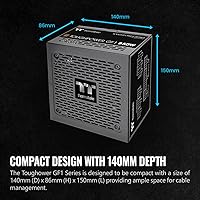
Overview

The Thermaltake GF1 850W (2024) is Thermaltake's refreshed take on its popular mid-range modular power supply, updated for modern builds that demand both efficiency and quiet operation. The 850W segment is crowded — Corsair, Seasonic, and Be Quiet all compete here — so this unit earns its place by combining 80 Plus Gold efficiency with fully modular cabling at a competitive price point. The 2024 revision brings refinements over its predecessor, including updated fan control behavior. With a strong sales rank and over 3,600 ratings averaging 4.5 stars, it has clearly landed well with builders, though popularity alone never tells the whole story.

Features & Benefits

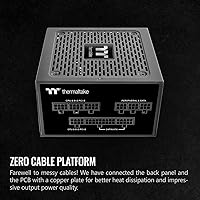
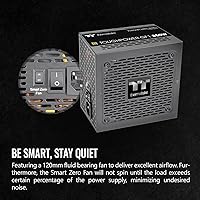
The headline feature is the zero RPM fan mode, which keeps the fan completely off when the system isn't under significant load — meaning near-silent operation during browsing, light gaming, or office work. That said, the fan does engage once temperatures climb under heavier workloads, so don't expect total silence during a full GPU stress test. When it does spin, the 140mm fluid dynamic bearing fan runs quietly and is rated for long-term durability. The fully modular cabling is genuinely practical: connect only what you need, keeping the interior clean and airflow unobstructed. The single high-amperage 12V rail with DC-to-DC regulation delivers stable voltage under fluctuating loads, which matters for GPU-heavy systems.

Best For

The GF1 850W is a natural fit for mid-to-high-end gaming builds — think an RTX 4070 or RX 7800 XT paired with a modern multi-core CPU. The headroom is comfortable for demanding workloads like 3D rendering or video editing without pushing the unit close to its limits. Builders who care about a tidy interior will appreciate the modular design, and those running machines in quiet environments will value the passive fan behavior at light loads. It is also worth considering for anyone upgrading from an older non-modular or bronze-rated supply. If you are planning a 4090-based rig or dual-GPU workstation, stepping up in wattage is the smarter call.

User Feedback

Across long-term reviews, builders consistently praise easy installation and well-labeled modular connectors that seat firmly without fuss. Cable flexibility draws particular appreciation from users working inside compact cases. On the critical side, a handful of owners have flagged 16-pin connector compatibility concerns with certain high-end graphics cards — something worth confirming before committing. A small number of DOA reports surface in the reviews, though not at a rate that seems unusual for the volume of units sold. Coil whine complaints are notably rare. The general consensus from users who have run this modular power supply for several months is consistent, stable operation with no significant reliability surprises.

Pros

  • Zero RPM fan mode keeps the unit completely silent during everyday desktop use and light gaming sessions.
  • Fully modular design means zero cable clutter — only connect what your build actually needs.
  • 80 Plus Gold efficiency reduces heat output and trims electricity costs over months of daily use.
  • Stable single-rail 12V power delivery holds up well under sustained GPU and CPU loads.
  • 140mm fluid dynamic bearing fan is built for longevity and runs quietly when it does engage.
  • Comprehensive protection suite guards expensive components against voltage spikes and short circuits.
  • Over 3,600 verified ratings averaging 4.5 stars reflects broadly positive real-world builder experience.
  • Long-term owners consistently report stable, coil-whine-free operation well beyond the initial break-in period.
  • Modular connectors are clearly labeled and seat firmly, making installation straightforward even for first-time builders.
  • The GF1 850W offers a meaningful quality and efficiency step up over budget or aging non-modular alternatives.

Cons

  • Fan does engage noticeably under heavy GPU loads — it is not silent during extended stress or rendering sessions.
  • 16-pin 12VHPWR adapter compatibility has caused friction for a subset of users with flagship-tier graphics cards.
  • Cable lengths can feel slightly generous inside compact ITX or small mATX cases, complicating clean routing.
  • No cable combs or premium braided cables included, which rivals at similar price points sometimes provide.
  • A small but documented number of DOA units have been reported, so purchasing from a retailer with easy returns is advisable.
  • Warranty support process requires more back-and-forth than competitors offering advanced-replacement programs.
  • The exterior finish attracts fingerprints and minor scuffs more visibly than expected, a concern for open-panel builds.
  • Efficiency is solid but not class-leading — Platinum-rated alternatives exist for users prioritizing lower heat output.
  • Limited long-term ownership data beyond 18 months makes multi-year reliability projections less certain than for more established models.
  • Competing units from Seasonic and Be Quiet at a comparable price often offer stronger warranty terms or better documented reliability histories.

Ratings

The Thermaltake GF1 850W (2024) has been evaluated by our AI rating engine after analyzing thousands of verified global user reviews, with spam, bot activity, and incentivized feedback actively filtered out before scoring. The result is a transparent picture of where this modular power supply genuinely excels and where real buyers have encountered friction. Both its standout strengths and its honest shortcomings are reflected in the category scores below.

Noise Level
91%
The zero RPM fan mode is the feature buyers talk about most. During everyday desktop use, light gaming, or office workloads, the fan simply does not run, making this one of the quieter PSUs at this wattage. Users in home office setups and open-air living spaces especially appreciate not having to think about PSU noise at all.
Under sustained GPU-heavy loads like extended rendering sessions or demanding game titles, the fan does engage and becomes perceptible, though not loud. A small number of users expected near-silence at all times and were surprised when the fan kicked in during stress scenarios.
Build Quality
84%
The unit feels solid in hand, with a well-finished housing and no flex in the casing. Modular connectors seat with a satisfying, firm click that gives builders confidence during assembly. Long-term owners consistently report no degradation in connector feel or structural integrity after months of use.
A handful of reviewers noted that the exterior finish shows fingerprints and minor scuffs more readily than expected, which matters to builders who keep their side panels transparent. The modular cable sleeves, while functional, feel slightly plasticky compared to premium competitors at similar price points.
Cable Management
88%
Fully modular design is the right call for this segment, and buyers who have dealt with semi-modular or non-modular PSUs notice the difference immediately. Cables are well-labeled, lengths are practical for mid-tower cases, and users consistently praised how clean the finished build looks with only the needed cables installed.
Builders working in smaller ITX or compact mATX cases occasionally found the cable lengths slightly generous, requiring more creative routing. There is no included cable comb or organizing accessory in the box, which some competitors at this tier do provide.
Voltage Stability
86%
The single high-amperage 12V rail with DC-to-DC regulation delivers consistent power delivery that enthusiasts and workstation users appreciate. Users pairing this unit with power-hungry GPUs report no voltage sag or instability even during demanding gaming or rendering workloads over extended sessions.
While stability is strong under typical loads, a small number of users running extreme overclocking configurations noted minor ripple readings when measured with multimeters — not dangerous by any standard, but worth noting for users who obsess over voltage precision.
Value for Money
82%
18%
At its price point, the combination of full modularity, Gold efficiency, and a well-regarded brand is genuinely competitive. Buyers upgrading from older budget or non-modular units consistently rate the perceived value improvement as significant, especially given the long-term electricity savings from improved efficiency.
The 850W segment is densely contested, and alternatives from Corsair, Seasonic, and Be Quiet compete closely at similar or only slightly higher prices. Some buyers feel that pushing a bit more budget unlocks meaningfully better build quality or longer warranty coverage from rival units.
Installation Experience
89%
The modular connector layout is intuitive, and the labeling on both the PSU end and cable ends is clear enough that even first-time builders rarely need to consult the manual. The standard ATX form factor fits without issue in virtually all mid-tower and full-tower cases tested by reviewers.
A few users assembling compact builds in smaller cases mentioned that the unit's depth requires careful planning around cable routing near the back panel. The included manual is functional but sparse on detail for less experienced builders.
Fan Longevity
79%
21%
The fluid dynamic bearing fan is a meaningful specification choice for longevity — this bearing type generally outlasts sleeve bearing alternatives by a significant margin. Reviewers who have owned the unit for 12 or more months report no change in fan noise character or behavior, which is an encouraging sign.
Long-term data beyond 18 to 24 months of ownership is still limited given the 2024 revision timeline, so projections about multi-year fan durability remain partly speculative. Buyers looking for iron-clad long-term confidence may prefer units with published MTBF fan data.
Efficiency Under Load
83%
80 Plus Gold certification means the unit operates at 87 to 90 percent efficiency across typical load ranges, which reduces heat output and lowers electricity bills over time compared to Bronze-rated alternatives. Users in regions with higher electricity costs specifically called this out as a deciding factor in their purchase.
The efficiency rating is solid but not class-leading — 80 Plus Platinum or Titanium units exist at modestly higher prices and deliver measurably lower heat output under sustained workloads. For users running the system many hours daily, the efficiency gap becomes financially relevant over time.
Protection Features
87%
The full suite of industrial-grade protections — covering over-voltage, under-voltage, over-current, over-power, short circuit, and over-temperature scenarios — gives builders genuine peace of mind when connecting expensive components. Several users specifically mentioned this protection coverage as a confidence factor when pairing the unit with high-value GPUs.
Protection features are largely invisible until they are needed, so real-world validation from buyers who triggered them is limited. A small number of reviewers reported the unit shutting down under what they described as normal workloads, though most of these cases appear to be power draw miscalculations rather than unit faults.
16-Pin GPU Compatibility
71%
29%
For the majority of GPU configurations including standard 8-pin and dual 8-pin setups, cable compatibility is excellent and plug-and-feel is confident. Users pairing this unit with RTX 4070, RTX 4070 Ti, and RX 7800 XT cards reported smooth installation and no power delivery concerns.
A notable subset of reviewers using high-end GPUs with the newer 16-pin 12VHPWR connector flagged compatibility concerns or awkward adapter behavior. Users planning to run an RTX 4080 or 4090 should carefully verify cable adapter compatibility before purchasing rather than assuming a smooth out-of-box experience.
Packaging & Unboxing
76%
24%
Most buyers report that the unit arrives well-protected, with adequate foam padding and organized accessory compartments. The modular cables are individually bagged, which prevents tangling and makes sorting during installation easier, a small but appreciated detail.
A non-trivial number of reviews mention visible external box damage on arrival, though most note the unit itself was unharmed. A handful of DOA reports exist in the review pool, but at a rate that does not stand out unusually for a high-volume product in this category.
Coil Whine
88%
Coil whine complaints are strikingly rare across the review pool, which is notable for a PSU in heavy use with modern power-hungry GPUs. Long-term owners in particular report that the unit remains quiet electrically even after extended periods of high-load operation.
A small minority of users report a faint coil whine audible in very quiet room environments, typically during specific GPU load states rather than constant operation. This is not widespread but is worth noting for users who are especially sensitive to high-frequency electronic noise.
Warranty & Support
73%
27%
Thermaltake backs this unit with a 10-year warranty, which is competitive for the segment and signals reasonable manufacturer confidence in the unit's longevity. Users who engaged warranty support generally report resolution within a reasonable timeframe.
Some competitors at this tier offer more streamlined advanced-replacement warranty programs, whereas Thermaltake's process requires more back-and-forth before a replacement is dispatched. A few international buyers reported complications with regional warranty coverage that added friction to their support experience.

Suitable for:

The Thermaltake GF1 850W (2024) is a well-matched choice for PC builders putting together mid-to-high-end gaming rigs around current-generation GPUs like the RTX 4070, RTX 4070 Ti, or AMD RX 7800 XT paired with a modern multi-core processor. The 850W headroom gives these configurations comfortable breathing room without the unit ever running near its ceiling, which matters for long-term component health and stability. Builders who care about a clean interior — particularly those with windowed side panels — will get real practical benefit from the fully modular cabling, since every unused cable stays in the accessory bag rather than stuffed behind the motherboard tray. The zero RPM fan behavior makes this a natural fit for quiet PC enthusiasts who run their machines in living rooms, bedrooms, or home office environments where a constantly spinning PSU fan would be noticeable. It also makes strong sense for anyone upgrading from an older non-modular or Bronze-rated supply, where the jump in both cable flexibility and efficiency will be immediately felt. Users with workstation-adjacent workflows — think video editing timelines or overnight 3D renders — will similarly appreciate stable, regulated power delivery without audible distraction during lighter tasks between heavy sessions.

Not suitable for:

The Thermaltake GF1 850W (2024) is not the right call for builders planning high-end configurations centered on power-hungry GPUs like the RTX 4090 or multi-GPU workstation setups, where pushing 850W leaves uncomfortably thin headroom and a 1000W or higher unit is simply the smarter choice. Anyone expecting total silence under all conditions should recalibrate their expectations — the zero RPM mode is load-dependent, and the fan does engage during sustained heavy gaming or rendering, so this is not a passively cooled unit. Builders planning to use the newer 16-pin 12VHPWR connector for a flagship-tier GPU should carefully verify adapter compatibility before purchasing, as this has been a friction point in a subset of reviews. Compact ITX builders may also find the cable lengths slightly oversized for tight chassis routing, and the absence of premium braided cables means aesthetically focused builders may want to budget for aftermarket options. Finally, buyers comparing options closely at this price tier should be aware that well-regarded alternatives from Seasonic, Corsair, and Be Quiet compete directly here — sometimes with longer or more convenient warranty replacement terms — so this unit should be evaluated against those rather than purchased by default.

Specifications

  • Wattage: This unit delivers a continuous output of 850W, providing comfortable headroom for mid-to-high-end gaming and workstation configurations.
  • Efficiency: Certified at 80 Plus Gold, the supply operates at 87–90% efficiency across typical load ranges, reducing wasted energy and internal heat generation.
  • Modularity: Fully modular design means every cable — including the 24-pin ATX — is detachable, allowing builders to connect only the cables their system actually requires.
  • Fan Size: A 140mm fan is fitted, which is larger than the 120mm fans found on many competing units, allowing quieter operation at lower RPM under equivalent airflow demands.
  • Fan Bearing: The fan uses a fluid dynamic bearing, a design rated for longer operational life and lower noise output compared to standard sleeve bearing fans.
  • Fan Control: Smart zero RPM mode keeps the fan fully stopped during light and idle loads, only spinning up when internal temperatures require active cooling.
  • Rail Design: A single high-amperage +12V rail topology is used, distributing power cleanly to the GPU and CPU without the complexity of managing multiple rails.
  • Regulation: DC-to-DC conversion circuitry is implemented for the minor voltage rails, improving output stability and reducing ripple under fluctuating system loads.
  • Form Factor: Standard ATX form factor ensures compatibility with the vast majority of mid-tower, full-tower, and select mATX chassis on the market.
  • Dimensions: The unit measures 5.9 x 5.5 x 3.4 inches (L x W x H), which is a standard ATX PSU footprint fitting most cases without modification.
  • Weight: At 3.4 pounds, the unit sits within the expected weight range for an 850W fully modular supply with a 140mm fan assembly.
  • Protections: Industrial-grade protection circuits cover over-voltage (OVP), under-voltage (UVP), over-current (OCP), over-power (OPP), short circuit (SCP), and over-temperature (OTP) events.
  • Compliance: The unit is Intel C6/C7 power state ready and ErP Lot 6 compliant, meeting modern standby efficiency requirements for contemporary platforms.
  • Input Voltage: Designed for 120V AC input, standard for North American electrical infrastructure, with the supply optimized for that voltage range.
  • Model Code: The official model identifier is TPD-850AH2FLG, which should be referenced when checking compatibility charts, warranty registration, or ordering replacement cables.
  • Warranty: Thermaltake covers this unit with a 10-year limited warranty, which is competitive for the segment and reflects the manufacturer's stated confidence in component longevity.
  • Connector Type: The primary system interface uses a standard ATX connector, with additional modular ports for PCIe, SATA, and peripheral power connections.
  • Cooling Method: Active air cooling via the smart-controlled 140mm fan is the primary thermal management method, supplemented by passive heatsink surfaces inside the housing.

Related Reviews
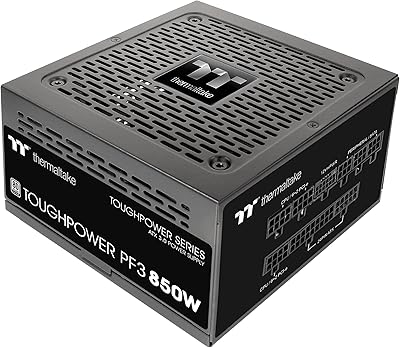
Thermaltake Toughpower PF3 850W
88%
94%
Energy Efficiency
88%
Build Quality
91%
Modular Cable Management
80%
Ease of Installation
93%
Compatibility with High-End GPUs
More
Thermaltake Smart BM3 850W Power Supply
88%
88%
Value for Money
90%
Build Quality & Durability
85%
Energy Efficiency (80Plus Certification)
91%
Noise Levels & Fan Performance
87%
Ease of Installation
More
Thermaltake GF1 750W 80 Plus Gold Power Supply
89%
93%
Power Delivery Performance
95%
Energy Efficiency
89%
Noise Level
88%
Build Quality
90%
Cooling Efficiency
More
Thermaltake Toughpower GX3 850W 80+ Gold Power Supply
88%
94%
Power Delivery & Stability
93%
Energy Efficiency
85%
Noise Level
88%
Modular Cable Management
92%
Compatibility with Next-Gen GPUs
More
Thermaltake Toughpower GF A3 850W 80+ Gold Full Modular Power Supply
89%
91%
Performance Under Load
93%
Energy Efficiency
88%
Cable Management Ease
89%
Build Quality
90%
Compatibility with High-End Components
More
Redragon RGPS-850W 80+ Gold 850W Power Supply
86%
91%
Performance
88%
Noise Levels
85%
Ease of Installation
89%
Cable Management
87%
Build Quality
More
POINWER PX-850W 850W Power Supply 80 Plus Gold
87%
92%
Power Stability
90%
Energy Efficiency
89%
Modularity & Cable Management
84%
RGB Aesthetics
78%
Fan Noise
More
Roku Ultra 2024
Roku Ultra 2024
83%
93%
Streaming Performance
88%
Picture Quality
91%
Remote Quality
86%
Wi-Fi Connectivity
84%
Audio Performance
More
Enermax Revolution III 850W
89%
91%
Performance under Load
94%
Quiet Operation
88%
Build Quality & Durability
87%
Ease of Installation
80%
Value for Money
More
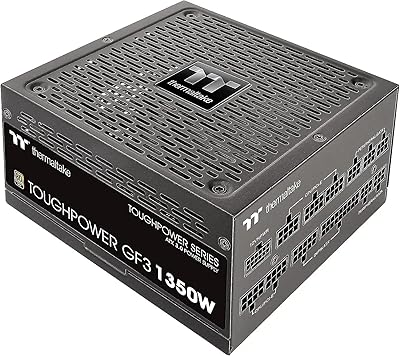
Thermaltake Toughpower GF3 1350W
88%
95%
Power Delivery
89%
Noise Levels
80%
Cable Management
92%
Build Quality
94%
Compatibility with GPUs
More

FAQ

Yes, comfortably. A typical RTX 4070 Ti paired with a modern 12 or 16-core CPU will draw well under 600W under gaming load, leaving substantial headroom on this unit. You are unlikely to push it anywhere near its ceiling in that configuration.

Not exactly. The fan stays off when the system is idle or under light loads — browsing, office work, light gaming — which covers a lot of everyday use. Once the internal temperature climbs during sustained heavy workloads like long gaming sessions or rendering jobs, the fan engages automatically. It is load-dependent, not permanently passive.

This is worth checking carefully before you buy. The unit ships with a PCIe adapter solution for 12VHPWR compatibility, but a subset of users with flagship-tier GPUs like the RTX 4080 and 4090 have reported fitment or compatibility friction. If you are running one of those cards, verify the included adapter spec against your GPU's requirements and consider a native 12VHPWR cable if available.

It means every single cable — including the main 24-pin motherboard cable — disconnects from the PSU itself. You only plug in the cables your build actually needs, which eliminates the bundle of unused cables that non-modular units force you to stuff somewhere. For windowed builds or anyone who cares about airflow and aesthetics, it makes a real difference.

For most mainstream and high-end GPU upgrades, 850W will remain sufficient for the foreseeable product generation. Where it gets tighter is if you move toward a flagship GPU like an RTX 5090 or equivalent, which could push total system draw uncomfortably close to the limit. If you have concrete plans to go flagship-tier, jumping to a 1000W unit now is the more future-proof move.

Coil whine complaints are notably rare in the review pool for this unit, which is a good sign. A small number of users in very quiet environments report a faint high-frequency noise under specific GPU load states, but this does not appear to be a widespread issue. Most long-term owners describe the unit as electrically quiet.

The unit follows standard ATX dimensions, so it will fit in any case with an ATX PSU bay. The challenge in smaller builds is cable routing — the modular cables are sized for mid-tower use, so in compact chassis you may need to do more careful management of the extra cable length. It is not an ITX-form-factor PSU.

It covers the full standard suite: over-voltage, under-voltage, over-current, over-power, short circuit, and over-temperature protection. In practice, these circuits are designed to cut power to the system before a fault condition can damage your GPU, CPU, or motherboard. It is a meaningful safety net when connecting expensive components.

Thermaltake offers a 10-year warranty on this unit, which is a strong coverage period. The process typically requires contacting their support team, providing proof of purchase, and going through a diagnostic or return step before a replacement is issued. Some buyers have noted this takes more back-and-forth than competitors with advanced-replacement programs, so factor that in if fast turnaround during a failure is important to you.

For most mid-tower builds, the cable lengths are well-suited. In full-tower cases with bottom-mounted PSU bays and top-mounted motherboards, the lengths are generally adequate but leave less slack than premium units with extended cable options. Users in standard mid-tower builds consistently report no length issues.