Overview

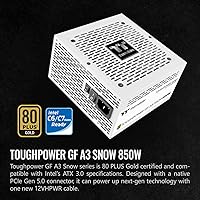
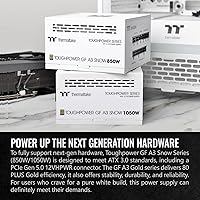
The Thermaltake Toughpower GF A3 850W Power Supply sits comfortably in the mid-to-upper tier of 850W gold-rated units, targeting builders who want modern standards without paying flagship prices. Its white Snow Edition finish makes it a natural fit for clean, monochromatic builds — though the specs matter far more than the coat of paint. ATX 3.0 compliance is the real headline here, bringing this unit in line with what current-gen GPUs actually demand. It's not the most premium option on the market, but the 10-year warranty signals genuine confidence in long-term reliability. For the price, the feature set is hard to dismiss.
Features & Benefits

The standout feature is the native 12VHPWR connector, which means RTX 40-series and RX 7000-series owners can plug in directly without relying on adapter cables — a meaningful convenience that also reduces potential power delivery risks. The 80+ Gold efficiency rating keeps heat output manageable and trims electricity costs over years of daily use. Fully modular cables, with notably low-profile connectors, make routing far cleaner in mid-tower and compact cases alike. A built-in protection suite covers overvoltage, undervoltage, overcurrent, overtemperature, and short circuit events — the kind of coverage that matters when expensive components are at stake. The fan runs quietly under typical loads, though it does spin up noticeably under sustained heavy stress.

Best For

This gold-rated PSU is an obvious pick for anyone building around an RTX 4070 Ti, 4080, or RX 7900 XT, where native PCIe 5.0 connectivity removes any adapter uncertainty from the equation. It's equally well-suited to white-themed builds where internal components matter as much as the exterior panel. Builders planning to keep a system running for many years will appreciate the decade-long warranty backing the investment. At this wattage and spec level, it also appeals to mid-range enthusiasts who want ATX 3.0 future-proofing but aren't ready to pay significantly more for a top-tier unit. Those upgrading from older, non-modular PSUs will notice an immediate difference in cable tidiness.

User Feedback

With a 4.3-star average across nearly 1,800 ratings, the GF A3 Snow Edition earns broadly positive marks from buyers. Most praise centers on clean modular cable management, quiet day-to-day operation, and the confidence that comes with a solid warranty backing. Several users specifically noted smooth compatibility with current-gen NVIDIA cards right out of the box. On the critical side, a handful of buyers found the cables somewhat stiff, making routing trickier in tighter cases. A minority also reported fan audibility increasing under sustained full load. Compared to similarly priced Corsair and SeaSonic options, most reviewers felt this Thermaltake 850W unit held its own without glaring compromises.

Pros

  • Native 12VHPWR connector means no sketchy adapters when pairing with RTX 40-series or RX 7000-series GPUs.
  • The 10-year warranty is genuinely rare at this price tier and signals real confidence in long-term durability.
  • Fully modular design keeps unused cables out of the case entirely, not just zip-tied to a bracket.
  • 80+ Gold efficiency quietly reduces heat output and trims electricity costs over years of daily use.
  • ATX 3.0 compliance future-proofs the build for GPU generations that are still to come.
  • Low-profile modular connectors sit flush and make cable routing noticeably cleaner in tighter cases.
  • The full protection suite — covering overcurrent, overvoltage, overtemperature, and short circuit events — guards expensive components effectively.
  • The GF A3 Snow Edition runs nearly silent during everyday gaming and productivity loads.
  • 850W headroom supports meaningful CPU and GPU overclocking without running the unit near its limit.
  • Real-world GPU compatibility with current-gen NVIDIA and AMD cards has been broadly confirmed by users, with no adapter workarounds needed.

Cons

  • Stock cables are noticeably stiff, making clean routing behind the motherboard tray genuinely frustrating in compact builds.
  • Fan noise ramps up audibly under sustained full-load conditions — not ideal for quiet studio or bedroom setups.
  • A single 12VHPWR cable offers no backup if that connector develops a fault over time.
  • Internal component quality does not match what premium SeaSonic or Corsair flagship units offer at a slightly higher price.
  • Warranty claims require navigating Thermaltake's RMA process, which some users describe as slower than brands with regional service centers.
  • Third-party custom sleeved cables require compatibility verification before purchase, adding friction to aesthetic customization.
  • Included documentation is minimal, leaving first-time builders to search online for cable labeling clarifications.
  • A small number of buyers received units with minor cosmetic blemishes on the white casing straight out of the box.
  • Voltage stability under sustained near-peak professional workloads has drawn occasional criticism from more technically demanding users.
  • The value equation narrows considerably when competing units from established brands go on sale at comparable price points.

Ratings

The Thermaltake Toughpower GF A3 850W Power Supply has been evaluated by our AI system after analyzing thousands of verified global user reviews, with spam, bot-submitted, and incentivized feedback actively filtered out. Scores reflect both the genuine strengths buyers consistently praise and the friction points that real-world users have encountered. The result is a transparent, balanced picture of where this gold-rated PSU earns its keep — and where it falls short of perfection.
ATX 3.0 & PCIe Gen 5 Compatibility
93%
Buyers running RTX 40-series and RX 7000-series cards consistently report plug-and-play compatibility with zero adapter headaches. The native 12VHPWR connector handles transient power spikes that older PSUs and aftermarket adapters struggle with, giving builders real peace of mind when pushing GPU-intensive workloads.
A small subset of users noted the single 12VHPWR cable leaves no backup if the connector develops issues over time. For multi-GPU or extremely high-draw professional workloads, the single connector design may feel limiting compared to higher-tier units.
Power Delivery Stability
86%
Under typical gaming loads, users report rock-solid voltage regulation with no observable instability or unexpected shutdowns. The 850W headroom provides meaningful breathing room when pairing with overclocked CPUs and power-hungry GPUs simultaneously, which builders appreciate during extended session stress testing.
At sustained near-peak loads — think prolonged rendering sessions or benchmark loops — a minority of users noted occasional voltage ripple concerns that surfaced in third-party measurements. It performs well for gaming use cases but may not satisfy users who demand lab-grade precision for professional workstation duties.
Efficiency & Heat Management
84%
The 80+ Gold certification translates to noticeably lower heat output compared to bronze-rated alternatives, which users in warmer climates or poorly ventilated cases genuinely appreciate. Over a long ownership period, the efficiency gains modestly offset electricity costs — a factor several long-term reviewers called out specifically.
Gold-rated efficiency is competitive but not class-leading; platinum or titanium units produce less heat and waste less power at high loads. Users running the unit in hotter ambient environments report that the fan compensates aggressively, which partially undermines the quiet operation experience.
Modularity & Cable Management
88%
The fully modular design gets strong praise across the board, particularly from builders working in mid-tower and compact ATX cases where unused cables create real clutter problems. The low-profile connectors sit closer to the motherboard surface, making for a noticeably tidier finished build without aggressive cable combing.
Several users flagged that the included cables feel stiffer than expected, making tight 90-degree bends behind the motherboard tray frustrating to execute cleanly. Custom cable users also noted that third-party sleeved cables require compatibility verification before purchase, which adds a small extra step to the build process.
Noise Level
77%
23%
During everyday gaming and productivity tasks, most users describe the fan as virtually inaudible, which holds true in systems with decent case airflow. The semi-passive mode — where the fan stays idle under light loads — earns specific praise from users who run mixed workloads throughout the day.
Under sustained full-load operation, the fan audibly ramps up in a way that stands out in quiet room environments. Users running prolonged rendering or mining workloads report the fan noise becomes distracting, and a handful felt the fan curve could be better tuned for a smoother, more gradual ramp-up.
Build Quality & Internal Components
81%
19%
The unit feels solidly constructed, with a casing that shows no flex under normal handling and connectors that seat firmly without excessive force. Buyers who have owned multiple budget-tier PSUs note that the internal fit and finish feels meaningfully more refined, which builds confidence in long-term reliability.
It does not carry the same reputation for internal component quality as established premium lines from SeaSonic or Corsair's higher-end series. A few technically inclined users who examined the internals noted that capacitor selection, while adequate, does not match what you find in flagship-tier units at higher price points.
Protection Suite
89%
The full protection suite — covering overvoltage, undervoltage, overcurrent, overtemperature, and short circuit events — gives builders genuine confidence when expensive components are in the loop. Several users specifically mentioned that the overcurrent protection triggered correctly during a hardware fault, preventing damage to downstream components.
There is limited user-accessible data on the exact threshold values for each protection type, which more technically curious builders found frustrating when trying to fine-tune system behavior. Documentation in the box does not go deep enough for enthusiasts who want to understand the exact headroom before protections engage.
Warranty & Long-Term Support
91%
The 10-year warranty is a genuine standout at this price tier, and buyers consistently cite it as a key purchasing factor. Users who have previously dealt with failed PSUs from brands offering only 3-to-5-year coverage describe the decade-long backing as a meaningful long-term reassurance, particularly for systems built to last.
Some users flagged that the warranty claims process requires navigating Thermaltake's RMA system, which a handful described as slower than expected compared to brands with regional service centers. The warranty also requires proof of purchase retention, which infrequent builders sometimes overlook until it becomes relevant.
Aesthetics & White Colorway
83%
The Snow Edition finish is clean and consistent, with a matte white casing that photographs well and holds up against other white components without looking mismatched. Builders putting together all-white or arctic-themed systems specifically sought this unit out, and most report the color is an accurate match to product images.
White casings are prone to yellowing or dust visibility over extended ownership, and a few long-term users raised this concern after 12-plus months of use. The aesthetic appeal is real but entirely subjective — builders in standard black or gray builds gain nothing from the Snow Edition over a functionally identical black variant.
Value for Money
82%
18%
At its price point, the GF A3 Snow Edition offers a feature set that would have cost noticeably more just two product generations ago. Getting ATX 3.0 compliance, full modularity, Gold efficiency, and a 10-year warranty without entering flagship pricing territory is the core value proposition — and most buyers feel it holds up.
Competing units from Corsair and SeaSonic occasionally land at comparable or only slightly higher prices with stronger reputations for internal component quality and customer service. Buyers who shop aggressively during sales may find the value equation tighter than it first appears, particularly if a competitor unit goes on promotion.
Packaging & Unboxing Experience
71%
29%
The unit arrives well-protected, and most buyers report no physical damage or cosmetic issues out of the box. Cable organization inside the packaging is functional and keeps connectors from tangling during transit, which streamlines the initial installation process.
A handful of buyers received units with minor cosmetic blemishes — small scuffs or light marks on the white casing — that appear to have occurred during factory packaging rather than shipping. The documentation included is minimal, and first-time builders noted they had to look online for cable labeling clarifications.
Installation Ease
85%
Most buyers describe installation as straightforward, with clearly labeled modular ports and cables that are long enough for standard mid-tower cases without feeling excessively slack. The ATX connector and CPU power leads reach comfortably in common case configurations without requiring extension cables.
In full-tower cases or builds with the PSU shroud positioned at an unusual angle, some users found the cable lengths slightly short for a truly clean run. The stiffness of the stock cables — noted elsewhere — compounds installation difficulty slightly in more complex routing scenarios.
GPU Compatibility & Real-World Testing
87%
Users pairing this unit with RTX 4080 and RTX 4070 Ti builds report consistent, trouble-free operation across gaming sessions and creative workloads. The 850W output provides adequate headroom for high-end single-GPU configurations without running the unit near its ceiling under typical gaming conditions.
For builders eyeing an RTX 4090 or similarly extreme GPU paired with a power-hungry CPU, the 850W ceiling starts to feel tight, particularly with overclocking in the mix. A small number of users reported instability during simultaneous CPU and GPU peak draw events, suggesting this unit is better suited to balanced rather than extreme-high-TDP configurations.
Fan Longevity & Thermal Durability
74%
26%
Over ownership periods of one to two years, most users report no fan degradation or bearing noise developing, which suggests reasonable long-term mechanical quality. The fan does not show signs of early wear under moderate-use conditions, which aligns with the confidence implied by the extended warranty.
Users running the unit in high-ambient-temperature environments — warm climates or cases with limited airflow — report the fan works harder and louder than in optimal conditions. There is limited long-term data beyond two years given the product's release date, so truly extended durability remains an open question for now.

Suitable for:

The Thermaltake Toughpower GF A3 850W Power Supply is a strong fit for enthusiast PC builders who are pairing a current-gen GPU — think RTX 4070 Ti, RTX 4080, or RX 7900 XT — with a modern mid-to-high-end CPU and want native PCIe Gen 5 connectivity without relying on adapter cables. If you are planning a long-term build and want a decade-long warranty backing your investment, this gold-rated PSU delivers that assurance at a price point well below flagship territory. It is especially well-suited to builders constructing white or arctic-themed systems, where the Snow Edition finish integrates naturally without forcing aesthetic compromises. Those upgrading from older non-modular or pre-ATX 3.0 units will notice a meaningful improvement in cable tidiness and compatibility. In short, it hits a practical sweet spot for builders who want modern standards, reliable protection, and long-term peace of mind without overspending.
Not suitable for:

The Thermaltake Toughpower GF A3 850W Power Supply is not the right call for every build or buyer. If you are running an RTX 4090 alongside a heavily overclocked high-core-count CPU, the 850W ceiling will feel uncomfortably tight during simultaneous peak draw events — a 1000W or 1200W unit would be the more responsible choice. Builders who demand lab-verified, precision-grade voltage regulation for professional workstation or scientific computing applications may find that this unit does not match the internal component quality of established premium lines from SeaSonic or Corsair's top-tier series. Users in consistently hot ambient environments or poorly ventilated cases should also be cautious, as the fan ramps up audibly under sustained thermal stress, which could be disruptive in quiet workspaces. Budget-focused buyers who simply need reliable power for a mid-range GPU and do not care about ATX 3.0 or modular cabling will likely find better value in a more straightforward unit that does not charge for features they will never use.
Specifications

  • Wattage: Delivers a continuous 850W of power output, suitable for high-end single-GPU desktop builds with headroom for CPU and GPU overclocking.
  • Efficiency: Carries the 80+ Gold certification, meaning it operates at a minimum of 87% efficiency under typical load conditions, reducing wasted heat and energy.
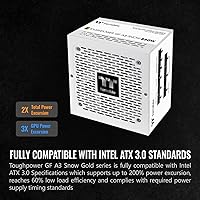
  • ATX Standard: Fully compliant with the ATX 3.0 specification, which includes improved handling of the instantaneous power spikes that modern GPUs can demand.
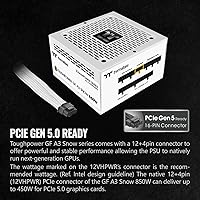
  • PCIe Connector: Ships with a native PCIe Gen 5 12VHPWR connector rated at 450W, compatible with current-generation NVIDIA and AMD high-performance graphics cards.
  • Modularity: Fully modular design allows every cable — including ATX, EPS, and peripheral leads — to be removed entirely when not needed, keeping the build clean.
  • Form Factor: Standard ATX form factor measuring 5.9 x 5.5 x 3.4 inches, fitting the vast majority of mid-tower and full-tower PC cases on the market.
  • Weight: Weighs 3.42 pounds, which is within the normal range for a fully modular 850W unit and causes no mounting complications in standard PSU bays.
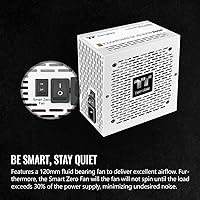
  • Cooling: Cooled by a single air-cooling fan that operates in a semi-passive mode at low loads and ramps up progressively as thermal demand increases.
  • Protections: Equipped with five hardware-level protection circuits: overvoltage (OVP), undervoltage (UVP), overcurrent (OCP), overtemperature (OTP), and short circuit (SCP).
  • Voltage Input: Designed for 120V input, making it compatible with standard North American household and office power outlets without requiring an external voltage converter.
  • Color: Ships in a matte white finish as part of the Snow Edition lineup, designed to complement white-themed or arctic-aesthetic PC builds.
  • Multi-GPU Support: Rated as SLI and Crossfire ready, providing the necessary power rail configuration to support dual-GPU setups where the platform and GPU models permit.
  • Warranty: Backed by a 10-year manufacturer warranty, which is significantly longer than the 3-to-5-year coverage commonly offered on competing units in this category.
  • Cable Profile: Includes low-profile modular connectors that sit closer to the motherboard surface, easing cable routing in cases with shallow PSU shroud clearance.
  • Compatible Devices: Intended for use in standard ATX desktop PCs, including gaming rigs, enthusiast workstations, and content creation builds using current-generation components.
  • Brand & Series: Manufactured by Thermaltake under the Toughpower GF A3 product line, a mid-to-upper-tier series targeting performance-focused home and workstation builders.

Related Reviews
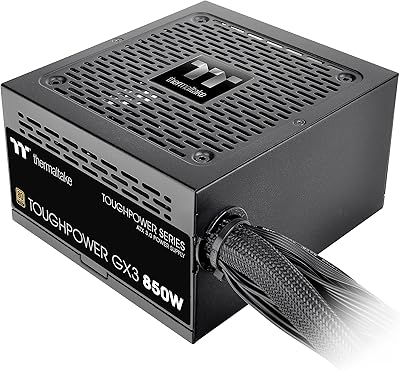
Thermaltake Toughpower GX3 850W 80+ Gold Power Supply
88%
94%
Power Delivery & Stability
93%
Energy Efficiency
85%
Noise Level
88%
Modular Cable Management
92%
Compatibility with Next-Gen GPUs
More
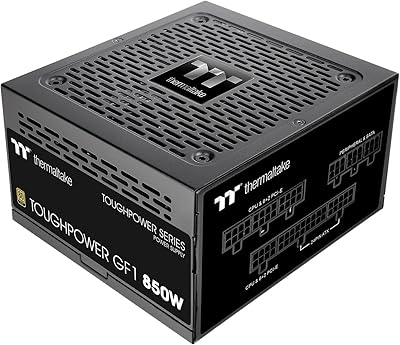
Thermaltake GF1 850W (2024)
83%
91%
Noise Level
84%
Build Quality
88%
Cable Management
86%
Voltage Stability
82%
Value for Money
More
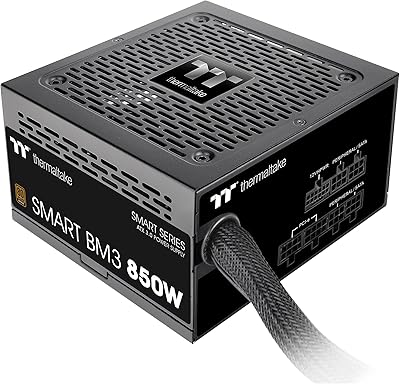
Thermaltake Smart BM3 850W Power Supply
88%
88%
Value for Money
90%
Build Quality & Durability
85%
Energy Efficiency (80Plus Certification)
91%
Noise Levels & Fan Performance
87%
Ease of Installation
More
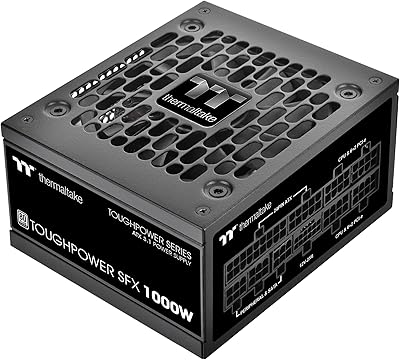
Thermaltake Toughpower SFX 1000W Platinum Power Supply
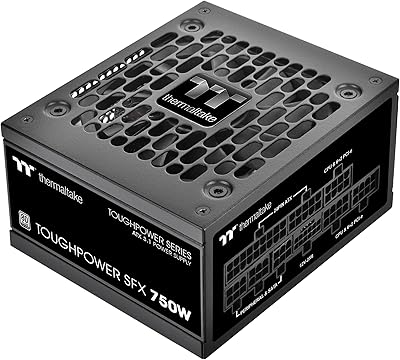
81%
92%
Power Output Stability
78%
Noise Level
71%
Cable Management
93%
GPU Compatibility
88%
Build Quality
More
Thermaltake Toughpower GX2 80+ Gold 600W Power Supply
84%
90%
Energy Efficiency
88%
Reliability
85%
Noise Level
92%
Value for Money
78%
Ease of Installation
More
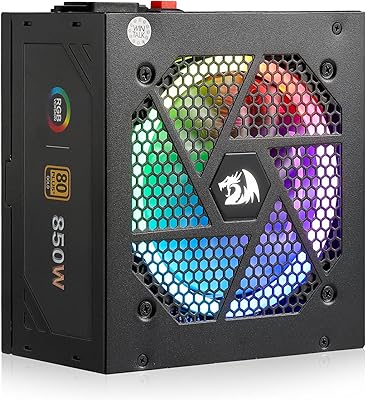
Thermaltake Toughpower SFX 750W 80Plus Platinum Power Supply
89%
96%
Energy Efficiency
94%
Modular Cable Design
91%
Cooling Performance
89%
Noise Levels
88%
Build Quality
More
be quiet! Pure Power 13 M 850W Power Supply
89%
92%
Performance
94%
Efficiency
88%
Noise Level
91%
Modular Design
89%
Build Quality
More
Redragon RGPS-850W 850W Power Supply
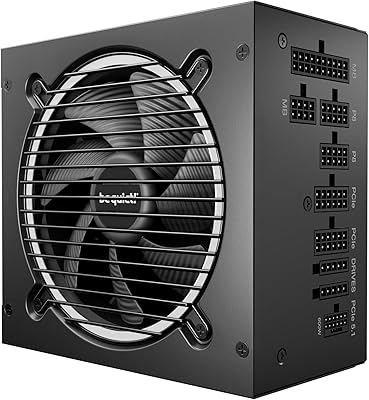
80%
78%
Power Delivery Stability
81%
Build Quality & Components
86%
Noise Level & Fan Behavior
84%
Modular Cable System
88%
PCIe 5.1 & ATX 3.1 Compatibility
More
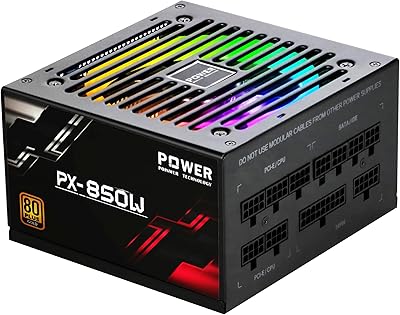
POINWER PX-850W 850W Power Supply
80%
86%
Power Delivery Stability
89%
Energy Efficiency
74%
Build Quality & Components
83%
Cable Management & Modularity
81%
Noise Level
More
be quiet! Pure Power 12 M 850W Modular Power Supply
88%
94%
Quiet Operation
88%
Ease of Installation
89%
Build Quality
92%
Power Delivery Stability
90%
Energy Efficiency
More

FAQ

For an RTX 4080, yes — the included 12VHPWR connector plugs directly into the GPU with no adapter required, which is exactly the use case this unit is built for. An RTX 4090 is a different story; that card can draw well over 450W under peak load, and combined with a high-end CPU, you may be pushing uncomfortably close to the 850W ceiling. Most builders pairing an RTX 4090 with a powerful processor would be better served by a 1000W or 1200W unit.

ATX 3.0 is essentially a revised power delivery standard that allows a PSU to handle sudden, brief spikes in GPU power demand without triggering protective shutdowns. Older PSUs built to the previous ATX 2.0 spec can struggle with the transient power behavior of modern GPUs like the RTX 40-series. If you are buying a current-gen GPU, ATX 3.0 compliance gives you cleaner, more stable power delivery — it is not strictly mandatory, but it is a meaningful reliability improvement.

In most cases, yes. A combination of a Ryzen 9 7900X or Core i9-13900K paired with an RTX 4070 Ti or RX 7900 XT will typically draw somewhere between 550W and 700W under sustained gaming load, leaving a reasonable buffer. Where it gets tight is if you are aggressively overclocking both the CPU and GPU simultaneously — under those conditions, 850W starts to feel like a ceiling rather than a comfort zone.

You can, but you need to verify compatibility before ordering. Modular PSU pinouts are not universal, and using cables made for a different brand or model can cause serious damage. Look for cable manufacturers that explicitly list this Thermaltake 850W unit as a supported model — several reputable cable makers like CableMod do carry compatible options.

Under typical gaming and productivity workloads, most users describe the fan as barely noticeable — the semi-passive mode means it can run silently at light loads entirely. The noise becomes more apparent during sustained heavy workloads like prolonged rendering or extended benchmark loops, where the fan ramps up to manage heat. It is not unusually loud for a PSU in this class, but it is worth knowing if you are building a very quiet workstation.

The warranty covers manufacturing defects and hardware failures under normal operating conditions for a full decade from the date of purchase. Claims are handled through Thermaltake's RMA process, which requires proof of purchase, so keep your receipt or order confirmation. Some users have reported the process takes a bit longer than brands with local service centers, so it is worth being patient if you ever need to use it.

This is a legitimate concern with white PC components in general. The extent of discoloration depends heavily on environmental factors — UV exposure, cigarette smoke, and dust accumulation can all contribute. A few long-term users have noted slight yellowing after a year or more, though it is not a universal complaint. Keeping the interior of your case reasonably dust-free will help slow any cosmetic aging.

It competes closely on features — the ATX 3.0 compliance, full modularity, and Gold efficiency are table stakes at this tier from any of those brands. Where SeaSonic and Corsair's higher-end lines have an edge is in internal component pedigree and reputation for voltage precision under demanding workloads. For everyday gaming builds the differences are minor, but users with more demanding stability requirements sometimes prefer paying a bit more for a SeaSonic Prime or Corsair HX series unit.

For mid-tower builds, the cable lengths are generally described as comfortable. Full-tower cases are a different matter — a few users running larger enclosures have found the runs a bit short for fully tidy routing, particularly the CPU EPS lead to motherboards positioned higher up. If you are building in a large tower, it is worth measuring your cable path distances before assuming the stock cables will reach cleanly.

Yes, the standard ATX footprint and low-profile modular connectors make it a practical fit for most mid-tower cases without modification. The fully modular design is particularly useful in tighter builds where removing unused cables makes a real difference to airflow and tidiness. Just verify your case lists standard ATX PSU compatibility, as some slimmer mid-towers specify a shorter PSU depth limit that this unit's 5.9-inch length may not clear.

Where to Buy