Overview

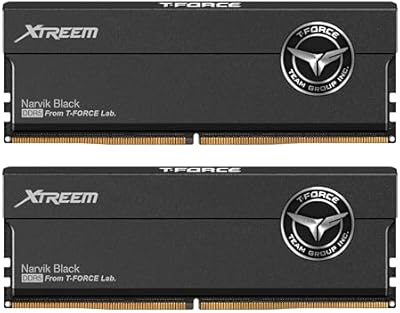
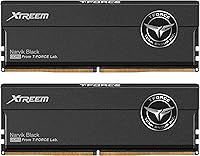
The TEAMGROUP T-Force XTREEM 32GB 8000MHz DDR5 RAM sits at the very top of what consumer memory currently offers, built specifically for builders who refuse to compromise on bandwidth or stability. Running at 8000MHz puts this high-speed DDR5 kit in rare company — only a handful of retail options push into this frequency class without requiring extensive manual tuning. Underpinning that speed is a Samsung A-DIE IC, a chip the enthusiast community has long trusted for its consistency at extreme clocks. The 2x16GB dual-channel layout suits modern Intel and AMD platforms well. This is a premium-tier purchase priced to match, aimed squarely at those who already know exactly why they want it.
Features & Benefits

What separates the T-Force XTREEM from most DDR5 kits isn't just raw clock speed — it's the engineering underneath. Samsung A-DIE chips are notoriously difficult to source at scale, and their inclusion here means genuine headroom for manual tuning beyond the rated XMP profile. On-Die ECC is worth understanding correctly: it's not server-grade error correction, but an internal layer baked into the die that helps maintain stability during sustained high-frequency operation. A dedicated power management IC keeps voltage delivery steady, which matters enormously at these speeds. The sandblasted aluminum heatspreader, 2mm thick, actively handles thermals during extended workloads rather than serving a purely visual role. The lifetime warranty rounds things out as a real long-term value consideration.

Best For

This 8000MHz memory kit is built for a specific type of builder, not the average system upgrader. It performs best on high-end Intel and AMD platforms — think Core Ultra 9 or Ryzen 9 7950X-class systems paired with boards that carry robust memory controller support. Checking the motherboard QVL before purchasing is non-negotiable; a weak IMC or an outdated BIOS can prevent the kit from reaching rated speeds regardless of IC quality. Content creators handling heavy video encoding, 3D rendering, or large dataset workloads will notice real bandwidth gains. Competitive overclockers will appreciate the A-DIE headroom for pushing clocks further. Anyone on a mid-range board or watching their budget closely should look at slower kits instead.

User Feedback

Across more than 260 ratings averaging 4.6 stars, the reception has been broadly positive. Buyers frequently call out XMP and EXPO activation as refreshingly straightforward on compatible boards — enable the profile in BIOS and you're done. Build quality and thermal performance earn consistent praise as well. Where sentiment gets more mixed is compatibility: a noticeable share of users needed BIOS updates or manual timing adjustments to hit rated speeds, especially on boards sitting near the edge of QVL support. Some also mention that kit-to-kit variance affects how much extra overclocking headroom is actually available. On whether the premium over a mid-speed DDR5 kit is justified, most enthusiast buyers land on yes — but only when the platform can deliver.

Pros

  • Samsung A-DIE ICs provide exceptional overclocking headroom and consistency beyond the rated XMP profile.
  • Dual XMP 3.0 and AMD EXPO certification means one-click profile activation works reliably on both major platforms.
  • The dedicated onboard power management chip stabilizes voltage delivery at frequencies where cheaper kits often falter.
  • On-Die ECC adds a meaningful layer of internal stability during prolonged high-frequency operation.
  • The 2mm sandblasted aluminum heatspreader manages thermals effectively under sustained heavy workloads.
  • A lifetime warranty backed by manufacturer support is a genuine long-term ownership advantage.
  • The 2x16GB dual-channel configuration is well-matched to memory-bandwidth-hungry CPU-intensive applications.
  • Buyers with compatible platforms consistently report a smooth setup experience when enabling the rated memory profile.
  • Build quality is frequently praised, with the kit feeling substantial and well-finished out of the box.

Cons

  • Reaching rated speeds is not guaranteed without a QVL-verified motherboard and a recent BIOS version.
  • Weak CPU integrated memory controllers can cap actual operating frequency below the advertised 8000MHz.
  • Some buyers report kit-to-kit variance in available overclocking headroom beyond the rated profile.
  • The price premium over mid-speed DDR5 kits is difficult to justify for gaming or general desktop use.
  • CL38 latency at 8000MHz is not class-leading; tighter-latency alternatives exist at lower frequencies for latency-sensitive tasks.
  • Real-world application gains in everyday workloads are modest and may not be perceptible without benchmarking tools.
  • Compatibility troubleshooting can require time and technical confidence that casual builders may not have.

Ratings

Our AI-generated scores for the TEAMGROUP T-Force XTREEM 32GB 8000MHz DDR5 RAM were produced by analyzing verified buyer reviews collected from global markets, with spam, bot-generated, and incentivized submissions actively filtered out before any category was scored. The analysis covers both the genuine strengths enthusiast buyers consistently praise and the recurring pain points that a fair assessment cannot ignore. Every score below reflects real-world ownership experiences, not manufacturer claims.
Performance
88%
Buyers running memory-bandwidth-sensitive workloads — video encoding, large Blender scenes, and scientific computing pipelines — consistently report measurable throughput gains over mid-speed DDR5 alternatives. Synthetic benchmarks confirm the bandwidth advantage, and productivity-focused users find the headroom translates into genuinely shorter completion times on supported platforms.
Gamers on typical titles report little to no perceivable difference compared to a well-tuned 6000MHz kit, making the performance premium harder to justify for pure gaming rigs. Workloads that are compute-bound rather than memory-bandwidth-bound see similarly muted gains, narrowing the practical scenarios where the speed uplift is genuinely felt.
Overclocking Headroom
93%
The Samsung A-DIE IC foundation is the single biggest reason enthusiast overclockers seek out this kit specifically. Users pushing beyond the rated XMP profile report more available headroom than most competing DDR5 kits at this speed class, with tighter secondary timings achievable on platforms carrying strong CPU memory controllers.
Kit-to-kit silicon variance means not every pair will overclock equally, and some buyers report hitting a ceiling closer to the rated frequency than they had hoped. Those expecting guaranteed margin beyond the rated clock on every chip in the batch may occasionally be disappointed — binning at this level is inherently imperfect.
Compatibility
67%
33%
On fully supported boards with current BIOS versions, XMP and EXPO profile activation is genuinely uncomplicated — most users on high-end Z790 or X670E motherboards report hitting rated speeds on the first boot after enabling the profile. Dual-certification across both major platforms is a practical and meaningful advantage.
A meaningful segment of buyers report that boards outside the QVL — or those with weaker CPU memory controllers — either refuse to post at the rated frequency or require significant manual BIOS intervention to stabilize. This is not a kit for anyone who has not done their motherboard research upfront.
Value for Money
69%
31%
For power users whose workloads genuinely scale with memory bandwidth — large video timelines, CPU renders, and data processing tasks — the price premium over mid-tier DDR5 is defensible and measurable. Professionals who bill time against project completion can often rationalize the cost against real productivity improvements.
Gamers and general desktop users consistently find the price gap versus a quality 6000MHz DDR5 kit difficult to justify given the real-world performance differences in their use cases. Any compatibility issue requiring troubleshooting adds further frustration to an already steep investment.
Build Quality
92%
The physical construction is one of the first things buyers mention positively — the heatspreader feels dense and substantial, the PCB is rigid, and the overall fit and finish reflects a flagship-tier product. Users experienced with handling multiple memory kits note this one stands out immediately in hand.
A small number of buyers note the heatspreader height adds slightly more bulk than ultra-slim competing designs, which can occasionally create clearance concerns near tall tower cooler fins. No structural defects have been widely reported, but the no-RGB aesthetic is subjective and will not appeal to every builder.
Thermal Management
84%
During extended rendering sessions and sustained memory stress tests, this high-speed DDR5 kit holds temperatures comfortably within safe operating ranges thanks to the thick aluminum sandblasted fin construction. Users in both open-air benching setups and enclosed mid-tower cases report no instability or throttling attributed to heat.
Running at 1.45V, the modules do generate noticeable warmth under extended load, and in cases with limited airflow directed at the DIMM slots temperatures can trend toward the higher end of the comfortable range. Direct airflow over the modules is not strictly required but is advisable in tightly packed builds.
Setup & Installation
79%
21%
For builders who have confirmed QVL compatibility upfront, installation is physically uncomplicated and enabling the XMP or EXPO profile typically requires a single BIOS menu visit and a reboot. Most buyers on fully supported boards describe a clean, first-boot experience with no manual timing intervention needed.
Buyers on boards that are not QVL-confirmed regularly report needing a BIOS update before the kit will post reliably at rated speeds, adding an unexpected step to what they assumed would be a simple drop-in upgrade. BIOS version sensitivity has frustrated a notable minority of reviewers who expected a simpler experience.
Stability Under Load
86%
On compatible platforms, the T-Force XTREEM shows strong stability credentials — users running extended memory stress tools like TestMem5 and overnight renders report clean passes with tight timing configurations that lower-quality kits typically cannot sustain. The On-Die ECC layer appears to contribute meaningfully to error resilience here.
A subset of users on borderline-supported boards report occasional instability at rated speeds without additional manual sub-timing adjustments, which can become a time-consuming trial-and-error process. The kit demands more from the surrounding platform than a mid-frequency alternative, and that dependency shows when the hardware is not up to the task.
Platform Versatility
74%
26%
Supporting both Intel XMP 3.0 and AMD EXPO in a single kit is a practical advantage for enthusiasts who build across multiple platforms or anticipate switching ecosystems. The dual-certification coverage spans the two most relevant current-generation desktop architectures without requiring any hardware compromise.
The kit is exclusively a full-size desktop DIMM product with no SO-DIMM or compact variant, limiting it to traditional tower and ATX builds only. It also requires a DDR5-capable platform, so any system still running DDR4 would need a complete motherboard and CPU overhaul before this memory becomes relevant.
Warranty & Support
88%
A lifetime warranty on a premium memory kit is a genuine long-term ownership benefit, particularly for users who plan to keep systems running across multiple platform generations. TEAMGROUP's official support channel has been described by buyers as accessible, with technical assistance available alongside the standard RMA process.
RMA processing, even with lifetime coverage, takes time, and professionals who depend on their machine daily may find the downtime during a warranty claim genuinely disruptive. Some buyers also note that regional support response times can vary meaningfully depending on their geographic location.
IC Quality
91%
The Samsung A-DIE IC selection places this kit in a tier that knowledgeable enthusiast builders specifically target, knowing the silicon binning typically delivers more consistent overclocking behavior than alternative IC options available at this frequency class. Buyers with hands-on experience across multiple DDR5 kits frequently cite this as a tangible differentiator.
Even within A-DIE production batches, silicon lottery variance means occasional buyers receive modules that perform closer to the rated ceiling with less room to push further. This is not unique to this kit, but it is a reality worth acknowledging for anyone assuming every unit will be a top-bin sample.
Power Delivery
83%
The dedicated onboard power management IC actively smooths out the voltage delivery that sustained operation at 1.45V demands, reducing the micro-instabilities that can affect DDR5 modules at extreme frequencies without this type of onboard regulation. Experienced overclockers frequently note this contributes meaningfully to real-world stability beyond what the specs alone suggest.
The 1.45V operating voltage sits on the higher end of consumer DDR5 norms, and motherboards with less precise memory power delivery can still introduce inconsistency that the onboard PMIC alone cannot fully compensate for. Users on budget-tier boards occasionally find that the PMIC advantage is partially offset by weaker motherboard power rails.
Aesthetic Design
81%
19%
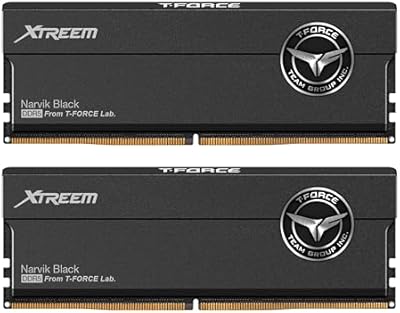
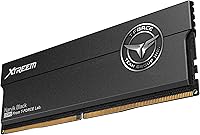
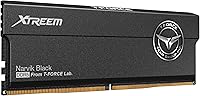
The black sandblasted aluminum finish is clean and understated, pairing well with a wide range of case styles and lighting setups without demanding visual attention. Builders who prefer a tool-focused, no-nonsense look appreciate that the kit does not rely on RGB or heavy branding to signal its premium positioning.
Buyers who specifically want addressable RGB or a visually dynamic heatspreader will not find it here — the look is deliberately subdued and may feel understated inside a windowed case built around elaborate lighting. The single black colorway also limits matching flexibility for builders working within strict aesthetic themes.

Suitable for:

The TEAMGROUP T-Force XTREEM 32GB 8000MHz DDR5 RAM is built for a narrow but well-defined audience: enthusiast PC builders who have already invested in a platform capable of exploiting extreme memory bandwidth. If you are pairing this with a high-end Intel Core Ultra or AMD Ryzen 7000 series processor on a board that appears on the manufacturer QVL, you are in the right territory. Content creators running sustained CPU-intensive workloads — large video exports, 3D scene rendering, or complex simulation tasks — stand to gain meaningfully from the bandwidth headroom this kit provides over mid-speed DDR5 options. Competitive overclockers will value the Samsung A-DIE IC foundation, which offers more tuning latitude than kits built on alternative chips. Anyone already comfortable navigating BIOS memory settings and who treats their PC as a performance tool rather than an appliance will find this kit genuinely rewarding.
Not suitable for:

The TEAMGROUP T-Force XTREEM 32GB 8000MHz DDR5 RAM is a poor fit for anyone building a general-purpose desktop or working within a tighter budget. Reaching rated speeds requires a motherboard with a strong memory controller, an up-to-date BIOS, and ideally a verified QVL entry — without these, there is a real chance the kit runs at a lower default frequency until manual intervention fixes it. Gamers on mainstream or entry-level boards are unlikely to see frame rate gains that justify the significant price premium over a 6000MHz or 6400MHz DDR5 kit. Users who prefer a plug-and-play experience with zero BIOS configuration should also think twice, as edge-of-spec kits occasionally need more coaxing than advertised. If your workload is primarily web browsing, office applications, or even moderate gaming, the performance delta versus slower DDR5 simply does not translate into anything noticeable in day-to-day use.
Specifications

  • Capacity: This kit includes two 16GB DDR5 modules for a total of 32GB, designed to run in dual-channel configuration on compatible desktop platforms.
  • Speed: The modules are rated at 8000MHz (PC5-64000), placing them at the upper boundary of currently available consumer DDR5 speeds.
  • Latency: The primary latency rating is CL38, which is typical for DDR5 kits operating at this extreme frequency range.
  • IC Type: Each module uses Samsung A-DIE integrated circuits, a chip widely regarded in the enthusiast community for its consistency and overclocking headroom.
  • Memory Type: The kit uses DDR5 SDRAM, the current-generation memory standard required by modern Intel Core Ultra and AMD Ryzen 7000 series platforms.
  • Voltage: The operating voltage at the rated XMP profile is 1.45V, which is managed onboard by a dedicated power management IC.
  • On-Die ECC: On-Die ECC is implemented at the silicon level within each module, providing internal error correction that helps maintain stability under sustained high-frequency operation.
  • XMP Support: The kit is certified for Intel XMP 3.0, allowing one-click profile activation on compatible Intel motherboards directly from the BIOS.
  • EXPO Support: AMD EXPO compatibility is included alongside XMP 3.0, enabling rated-speed profile activation on supported AMD AM5 platform motherboards.
  • Power Management: A dedicated onboard power management integrated circuit regulates voltage delivery, reducing instability that commonly affects memory kits at extreme operating frequencies.
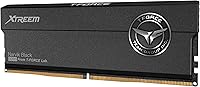
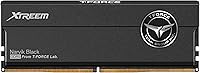
  • Heatspreader: Each module features a 2mm thick aluminum heatspreader with a sandblasted fin surface treatment, designed to actively dissipate heat during extended workloads.
  • Form Factor: Both modules use the standard DIMM form factor and are compatible with desktop motherboards only; this kit is not designed for laptops or small-form-factor SO-DIMM slots.
  • Dimensions: Each module measures 3.94 x 1.97 x 0.5 inches, which is a standard DDR5 DIMM profile that fits most full-size and mid-tower cases without clearance issues.
  • Weight: Each module weighs 2.82 ounces, reflecting the solid aluminum heatspreader construction without adding excessive mass to the motherboard slot.
  • Warranty: TEAMGROUP covers this kit with a lifetime warranty and offers technical support through their official website for the duration of ownership.
  • Platform: This kit is designed exclusively for desktop use and requires a platform with a DDR5-capable memory controller, such as Intel LGA1700 or AMD AM5.
  • Color: Both modules ship in black, with the heatspreader finish achieved through an aluminum sandblasting process rather than painted or anodized coating.
  • Release Date: This kit was first made available in October 2023, positioning it among the earlier high-volume retail options in the extreme-speed DDR5 segment.

Related Reviews

TEAMGROUP T-Force XTREEM 32GB DDR5 Desktop RAM
82%
71%
Out-of-Box Compatibility
88%
Rated Speed Performance
86%
System Stability
77%
Value for Money
89%
Platform Versatility
More
TEAMGROUP T-Force XTREEM DDR5 32GB (2x16GB) 7600MHz
87%
94%
Performance
91%
Stability & Reliability
88%
Ease of Installation
89%
Heat Dissipation
93%
Overclocking Capability
More
TEAMGROUP T-Force Vulcan Alpha DDR5 32GB (2x16GB) 5600MHz RAM
89%
94%
Gaming Performance
89%
Ease of Installation
90%
Compatibility with Intel Systems
91%
Compatibility with AMD Systems
87%
Overclocking Stability
More
TEAMGROUP T-Force Delta RGB 32GB DDR5 RAM
80%
88%
XMP Setup Ease
89%
Speed & Bandwidth
86%
System Stability
91%
RGB Aesthetics
71%
Value for Money
More
TEAMGROUP T-Force Vulcan Alpha DDR5 32GB Desktop RAM
80%
88%
EXPO Setup Experience
71%
Compatibility Range
84%
Value for Money
86%
Stability & Reliability
79%
Thermal Performance
More
TEAMGROUP T-Force Delta RGB 32GB DDR5 RAM
80%
91%
Installation Ease
88%
Stability & Reliability
86%
Performance at Rated Speed
84%
RGB Lighting Quality
83%
Thermal Performance
More
TEAMGROUP T-Force Delta RGB DDR5 32GB RAM
83%
88%
Performance at Rated Speed
91%
XMP 3.0 Compatibility
84%
AMD Expo Compatibility
83%
Out-of-Box Setup
89%
Stability & Reliability
More
TEAMGROUP T-Force Vulcan 64GB DDR5 Desktop RAM
84%
88%
Value for Money
93%
XMP & EXPO Activation
91%
System Stability
72%
Motherboard Compatibility
86%
Build & Physical Quality
More
TEAMGROUP T-Create Expert Overclocking 32GB DDR5 7200MHz RAM Kit
88%
94%
Performance
89%
Overclocking Support
91%
Stability Under Load
90%
Compatibility with Intel & AMD
75%
Temperature Management
More
TEAMGROUP Elite Plus DDR5 32GB Desktop RAM
81%
91%
Platform Compatibility
93%
Installation Experience
84%
Value for Money
89%
System Stability
67%
Raw Performance
More

FAQ

You will need to enable the XMP or EXPO profile in your BIOS, which typically takes about 30 seconds and a reboot. On a fully compatible board with an up-to-date BIOS, that single step is usually all it takes. That said, some boards near the edge of QVL support may need additional BIOS tuning or a firmware update before the kit runs stably at full speed.

Yes, the kit supports AMD EXPO in addition to Intel XMP 3.0, so it is designed to work on AM5 platforms. The key requirement is that your specific motherboard lists a compatible kit in its QVL — not all AM5 boards handle 8000MHz equally well, and the strength of the CPU memory controller plays a significant role in whether you hit rated speeds without manual intervention.

On-Die ECC is an error-correction mechanism built directly into the memory die itself, not a system-level feature you enable in the OS or BIOS. It silently corrects minor single-bit errors internally, which improves stability under demanding workloads at high frequencies. It is not the same as registered ECC memory used in servers — it does not appear to the operating system as ECC, and it does not add significant latency.

Each module sits at standard DDR5 DIMM height, so it is unlikely to cause clearance issues with most tower air coolers or AIO liquid coolers. The heatspreader adds a modest amount of height, but nothing unusual compared to other enthusiast DDR5 kits. If your cooler overhangs the first DIMM slot aggressively, check the cooler manufacturer's memory clearance spec just to be safe.

Honestly, for most gaming workloads, the difference is marginal. Games rarely saturate memory bandwidth to the point where 8000MHz produces a noticeable frame rate uplift over a well-tuned 6000MHz kit. Where this high-speed DDR5 kit justifies the premium is in CPU-intensive productivity tasks like video encoding, 3D rendering, and large data processing, where memory bandwidth translates more directly into real throughput gains.

The kit will still install and boot, but it will likely default to JEDEC speeds — typically around 4800MHz or 5600MHz — rather than the rated 8000MHz profile. You may be able to manually enable XMP and get it to run at rated speeds anyway, but there is no guarantee, and stability can vary. Checking the QVL before purchasing is the single most important step for anyone considering this kit.

A single stick will work for basic operation, but you will lose dual-channel mode, which cuts available memory bandwidth roughly in half. For the workloads this kit targets — high-frequency enthusiast builds and bandwidth-intensive applications — running both sticks in the correct paired slots (usually A2 and B2) is strongly recommended.

The TEAMGROUP T-Force XTREEM 32GB 8000MHz DDR5 RAM is covered against manufacturing defects for the lifetime of the product. Physical damage caused by improper installation, overvoltage, or mishandling is generally not covered. To initiate a claim, you would contact TEAMGROUP through their official support website and follow their RMA process, which they advertise as free technical support alongside the warranty.
If your workload involves tasks like exporting high-resolution video, rendering complex 3D scenes, or processing large datasets in applications that scale with memory bandwidth, yes — the uplift over a standard 4800MHz or 5600MHz DDR5 kit can be meaningful. The gap narrows somewhat compared to a well-tuned 6400MHz kit, but at the top end of the frequency curve this 8000MHz memory kit does deliver measurably higher bandwidth in sustained throughput benchmarks.

The 2mm aluminum heatspreader with its sandblasted fin surface does a solid job of managing heat passively during extended workloads. DDR5 at high voltages can run noticeably warm, and the additional surface area compared to a bare module makes a real difference. Most users report stable thermals during prolonged sessions, and the modules do not require active airflow directed at them — though having some case airflow passing over the RAM area never hurts.