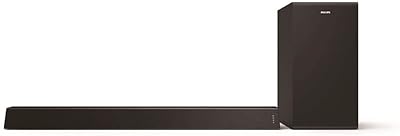
Overview

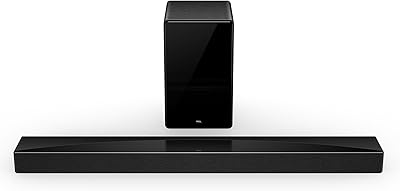
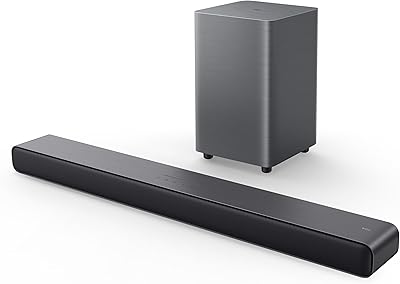
The TCL Q85H 7.1.4 Channel Soundbar enters a competitive space with an ambitious promise: replace your separate receiver, speakers, and subwoofer with a single, manageable system. That 7.1.4 channel count is genuinely rare at this price point — most rivals top out at 5.1.2 or 3.1.2 — putting it in direct conversation with Sonos, Samsung, and Sony offerings that cost considerably more. Launched in July 2024, it has a relatively modest review footprint so far, which is worth keeping in mind. This surround sound bar is built for convenience, but like any soundbar, it involves real trade-offs compared to a fully dedicated home theater build.

Features & Benefits

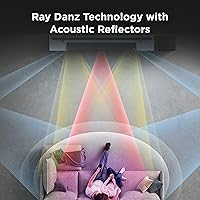
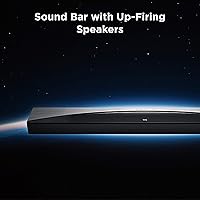
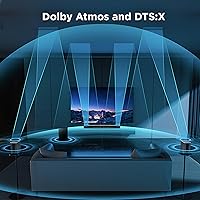
The Q85H supports both Dolby Atmos and DTS:X, which means spatial audio — sound appearing to come from above and around you — rather than just left and right. TCL achieves height effects through its Ray Danz reflector technology, bouncing audio off your ceiling to simulate overhead channels. Be clear-eyed here: it is not the same experience as physical in-ceiling speakers, but the effect is surprisingly convincing in the right room. The wireless subwoofer punches with real authority, and having the rear surround speakers included out of the box — no cables required — is a genuine practical advantage. Connectivity covers HDMI ARC, optical, USB, aux, Bluetooth, and AirPlay.

Best For

This TCL soundbar system makes the most sense for someone upgrading from a basic 2.1 or 5.1 setup who wants genuine height-channel audio without tearing up walls or running speaker wire across the room. It particularly shines paired with a large-screen TV — 65 inches and up — where the output power can actually fill the space. If you stream Dolby Atmos content regularly on Netflix, Apple TV+, or Disney+, the format support here is a strong match. Open-plan living areas are a better fit than small, treated rooms. Buyers looking for a complete surround configuration without paying for separate components will find the overall value compelling.

User Feedback

With around 150 ratings and a 4.2-star average, the Q85H has a decent early signal but not enough volume to draw definitive conclusions. Buyers who praised it most focused on the immersive surround effect, particularly during action films, and appreciated the subwoofer output without it being overbearing. Setup simplicity — one HDMI cable and you are running — came up repeatedly as a genuine strength. On the other side, some users flagged that dialogue clarity dips at higher volume levels, a recurring issue across the soundbar category. A handful also noted occasional hiccups with remote responsiveness. Given how recently this launched, treat the current ratings as a useful early read rather than a settled verdict.

Pros

  • Wireless rear surround speakers are included in the box — no cable runs, no extra purchases.
  • The 7.1.4 channel count is genuinely uncommon at this price tier, outpacing most rivals on paper and in practice.
  • Dolby Atmos and DTS:X support covers virtually every major spatial audio format used by streaming platforms today.
  • Single HDMI ARC connection handles audio and control, making the initial setup approachable for any experience level.
  • The wireless subwoofer delivers room-pressurizing bass that holds together well at higher volumes in larger spaces.
  • Ray Danz reflector technology creates a noticeably wider soundstage without requiring physical ceiling or wall speakers.
  • AirPlay support gives Apple device users a reliable wireless streaming path beyond standard Bluetooth.
  • Built-in center channel keeps dialogue reasonably anchored during moderate-volume TV and film watching.
  • The Q85H performs well above its weight for gaming audio, with directional surround cues that add real spatial awareness.

Cons

  • Dialogue clarity weakens at higher volume levels — a persistent issue flagged across a meaningful share of user reviews.
  • The remote control feels inexpensive relative to the overall system cost and draws repeated criticism for its layout.
  • No dedicated companion app means fine-tuning EQ or advanced audio modes requires navigating button combinations.
  • Wireless rear speaker pairing occasionally fails on first setup, requiring a manual reset that the documentation does not clearly explain.
  • The height-channel effect depends heavily on ceiling type — vaulted or textured ceilings reduce the Atmos experience noticeably.
  • No low-latency game mode is included, which puts the Q85H behind some competitors for latency-sensitive gaming use.
  • The subwoofer default tuning skews toward impact over refinement, which can feel excessive in smaller or acoustically lively rooms.
  • Long-term reliability data is still limited given the July 2024 launch — the review base is too early to draw firm durability conclusions.
  • No integration with third-party multi-room audio ecosystems limits appeal for buyers already using platforms like Sonos or Denon HEOS.

Ratings

The TCL Q85H 7.1.4 Channel Soundbar earns an overall score built from AI analysis of verified global buyer reviews, with spam, bot-generated, and incentivized feedback actively filtered out before scoring. Across categories ranging from surround immersion to remote usability, both the genuine strengths and the friction points that real owners encounter are reflected without sugar-coating. The result is a balanced, honest snapshot of what living with this surround sound bar actually looks like day to day.

Surround Sound Immersion
88%
Buyers consistently describe the sense of audio wrapping around the room as one of the Q85H's clearest wins. During action-heavy films or live concert streams, the wireless rear speakers place distinct sound cues behind the listener in a way that most 5.1 soundbars simply cannot replicate.
The immersion is room-dependent — buyers in open-plan or irregularly shaped spaces report that the surround effect feels less locked-in. A few noted the rear speakers occasionally feel disconnected from the front stage rather than forming one cohesive sound field.
Dolby Atmos & DTS:X Performance
82%
18%
On supported streaming content, the height dimension adds a noticeable sense of space that flat soundbars cannot touch. Scenes with overhead audio cues — rainfall, aircraft flyovers, crowd ambience — register with convincing verticality for a reflective-based system.
Buyers who have experienced physical in-ceiling Atmos setups flag the height effect as more suggestive than precise. The reflected audio approach works best in rooms with standard flat ceilings; vaulted or textured ceilings noticeably reduce the overhead effect.
Bass Performance
86%
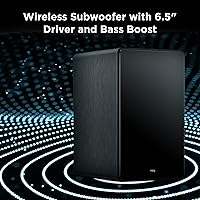
The wireless subwoofer delivers output that genuinely pressurizes a mid-to-large room without requiring manual EQ tweaking out of the box. Owners watching action films and playing games praise the low-end punch as feeling full and controlled rather than boomy or one-note.
At the highest output levels, a handful of users noted some bass bloat that muddied lower-midrange detail. Those living in apartments with noise-sensitive neighbors also flagged that the subwoofer's default tuning skews toward impact over refinement.
Dialogue Clarity
67%
33%
At moderate listening volumes, the dedicated center channel keeps vocal tracks reasonably separated from the surrounding sound mix. Dialogue in drama content and talk shows comes through clearly enough that most buyers do not reach for subtitles under normal conditions.
This is one of the more frequently cited pain points: voices can get masked during loud action sequences or complex soundtracks, especially at higher volume settings. It is a known trade-off in the soundbar category, but the Q85H does not fully escape it despite the dedicated center driver.
Setup & Installation
93%
Single HDMI ARC connection to the TV is genuinely all most people need to get the full system running, and reviewers across skill levels praised how quickly everything came together. The wireless subwoofer and rear speakers pair automatically, which removes a step that trips up buyers with competing systems.
A small share of buyers experienced the rear speakers or subwoofer failing to auto-pair on first power-up, requiring a manual reset sequence. Wall-mounting the soundbar itself also takes more effort than the included hardware kit suggests, per several installation-focused reviews.
Soundstage Width
81%
19%
Ray Danz reflector technology pushes the perceived soundstage well beyond the physical width of the bar itself. In a well-proportioned room, music and cinematic audio can feel like they extend past the edges of the screen, which adds real presence to stereo and multichannel content alike.
The widening effect is less pronounced in rooms where the soundbar sits far from side walls, since the reflectors rely partly on room boundaries to bounce audio effectively. Buyers in very large or acoustically treated rooms saw diminishing returns from this feature.
Build Quality & Design
74%
26%
The bar itself has a clean, fabric-wrapped aesthetic that reads as premium from a distance and blends neatly below most mid-to-large TVs. At 41.5 inches wide, it proportions well against 65-inch and larger screens without looking undersized.
Up close, some buyers feel the plastic housing on the rear speakers and subwoofer does not quite match the price point — a fair critique for a brand known for value-forward engineering. The remote control in particular draws repeated mentions as feeling inexpensive relative to the system cost.
Remote & App Control
58%
42%
Basic playback and volume functions work reliably enough for day-to-day use, and the inclusion of voice control support adds a hands-free layer that some buyers found genuinely useful when the remote was out of reach.
The remote design and feature set is a recurring frustration — buyers describe the button layout as unintuitive and the lack of a robust companion app as a gap competitors have already closed. Fine-tuning EQ or accessing advanced audio modes requires more button combinations than most users find acceptable.
Wireless Connectivity
79%
21%
Bluetooth pairing for music streaming from phones and tablets works consistently, and AirPlay support is a meaningful advantage for Apple device users who want lossless wireless audio without extra adapters. Switching between sources is handled without noticeable lag.
A few buyers noted occasional Bluetooth dropout when walls or interference sources sat between the device and the soundbar. AirPlay performance is solid but the absence of any multi-room audio ecosystem integration limits appeal for buyers already invested in platforms like Sonos.
Music Listening Performance
72%
28%
For casual music listening — background playlists, pop and electronic genres — the Q85H performs well above what most people expect from a soundbar system. The wide soundstage and subwoofer balance make streaming music feel engaging rather than flat.
Audiophiles or buyers who frequently listen to jazz, classical, or acoustic recordings will notice that the system prioritizes cinematic punch over tonal neutrality. Stereo imaging for music lacks the precision that a dedicated stereo speaker pair at a similar price would deliver.
Gaming Audio Performance
77%
23%
DTS:X support and the discrete surround channel layout give gaming a genuine directional advantage — enemy footsteps, in-game spatial cues, and ambient effects feel positioned with more accuracy than standard stereo or 2.1 setups. Buyers who game in their living rooms report a noticeable upgrade.
Input latency was flagged by a small number of competitive gamers as a concern, particularly in fast-paced titles where audio sync precision matters. The system also lacks a dedicated game mode with low-latency optimization, which rival products at this tier have started to include.
Volume & Output Headroom
84%
The total system output is substantial enough to fill a large living room at party volumes without obvious strain. Buyers in open-plan spaces, which typically expose weaker soundbars, reported the Q85H holding together well at higher drive levels.
At near-maximum volume, some compression artifacts creep in — particularly in the high-frequency range — suggesting the system is being pushed toward its ceiling. For typical TV-watching distances the headroom is more than adequate, but it is not an unlimited resource.
Value for Money
76%
24%
The combination of wireless rears, a wireless subwoofer, Dolby Atmos, and DTS:X in a single purchase represents a genuine package. Buyers who compared the all-in cost against assembling a separate receiver-and-speaker system consistently viewed the Q85H as the more practical and economical path.
At its price bracket, the Q85H competes with a tier where Samsung and Sony offer more polished software ecosystems and stronger dialogue handling. Buyers who prioritize refinement over feature count may find the value case harder to make against those alternatives.
Long-Term Reliability
69%
31%
Most buyers who have owned the system for several months report no hardware failures, and the wireless speaker pairing has remained stable for the majority of the review base over time. TCL includes a limited warranty that covers the core hardware components.
With only about 150 ratings accumulated since the July 2024 launch, the long-term durability picture is still forming. A few early buyers mentioned firmware-related audio behavior changes post-update that required factory resets — a pattern worth monitoring as the review base grows.

Suitable for:

The TCL Q85H 7.1.4 Channel Soundbar is the right call for buyers who want a genuine surround sound experience without hiring an electrician or running speaker wire under carpets. It hits a sweet spot for anyone upgrading from a basic soundbar who has been curious about Dolby Atmos but does not want to build a full receiver-and-speaker setup from scratch. Large living rooms and open-plan spaces are where this system earns its keep — the output muscle and discrete surround channels fill bigger areas in a way that compact 3.1.2 bars simply cannot. Frequent streamers who regularly watch Atmos-encoded content on Netflix, Apple TV+, or Disney+ will get the most tangible benefit from the format support baked in here. If your TV is 65 inches or larger and the built-in speakers left you underwhelmed, this surround sound bar represents a meaningful, practical step up without demanding a dedicated room or complex configuration.
Not suitable for:

The TCL Q85H 7.1.4 Channel Soundbar is probably not the right fit for buyers who prioritize dialogue intelligibility above everything else — voices can get masked during loud, complex soundtracks, and that is a genuine recurring complaint rather than an edge case. Audiophiles who listen critically to music, particularly acoustic, jazz, or classical genres, will find the system tuned more for cinematic impact than tonal accuracy or stereo precision. Anyone deeply invested in an existing smart home audio ecosystem — Sonos being the obvious example — should be aware that the Q85H does not plug into those platforms, which limits multi-room flexibility. Competitive gamers who need the lowest possible audio latency will also want to check alternatives, as the system lacks a dedicated low-latency game mode that some rivals have introduced. And if you are working with a smaller room, a lower ceiling, or an irregular layout, the Ray Danz height-reflection technology and surround staging will not perform at their best — the acoustic environment matters more than most buyers expect.
Specifications

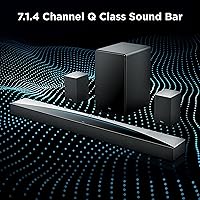
  • Channel Config: The system delivers a 7.1.4 channel surround configuration, comprising the main soundbar, wireless subwoofer, and two wireless rear surround speakers.
  • Total Power: Combined system output reaches up to 860 watts, providing enough headroom to fill large living rooms without audible strain at typical listening volumes.
  • Audio Formats: Supported spatial audio formats include Dolby Atmos and DTS:X, covering the two dominant object-based surround standards used across streaming platforms and Blu-ray.
  • Soundstage Tech: TCL's patented Ray Danz acoustic reflector technology is built into the soundbar to widen the perceived soundstage by bouncing audio off the ceiling and side walls.
  • Bar Dimensions: The main soundbar measures 41.5″ wide, 4.86″ tall, and 2.68″ deep, designed to sit proportionally beneath 65-inch and larger televisions.
  • Subwoofer Driver: The wireless subwoofer houses a 6.5-inch dynamic driver and connects to the soundbar without any physical cable between the two units.
  • System Weight: The total packaged system weighs approximately 39.5 pounds, accounting for the soundbar, subwoofer, and wireless rear speaker units combined.
  • Wired Inputs: Physical connectivity options include HDMI ARC, optical digital audio, a 3.5mm auxiliary input, and a USB port for direct media playback.
  • Wireless Audio: Wireless streaming is supported via Bluetooth for standard device pairing and AirPlay for higher-quality audio transmission from Apple devices.
  • Center Channel: A dedicated built-in center channel speaker is integrated into the soundbar to anchor dialogue and vocal tracks during film and TV playback.
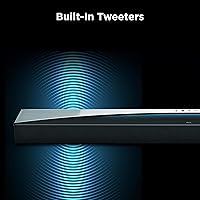
  • Tweeter Array: Built-in tweeters are included within the soundbar to reproduce high-frequency detail in music, dialogue, and film effects with greater precision.
  • Control Methods: The system can be operated via the included infrared remote control or through voice control using compatible smart home setups.
  • Power Source: All components in the system run on standard corded AC power at 120 volts, with no battery-operated components in the core setup.
  • Included Items: The retail box includes one HDMI cable, a power cord, a remote control with two AAA batteries pre-included, and a wall installation kit for the soundbar.
  • Warranty: TCL covers the Q85H system under a limited manufacturer warranty; buyers should confirm the specific term and coverage scope directly with TCL at purchase.
  • Mounting Type: The soundbar is designed primarily for floor-standing placement but includes a wall installation kit for wall-mount configurations beneath a television.
  • Availability Date: The system was first made available for purchase in July 2024, making it a relatively recent entry in the premium soundbar segment.
  • Amazon Ranking: At the time of analysis, the system ranked at number 101 in the Home Audio Sound Bars category on Amazon, reflecting a growing but still early market presence.

Related Reviews

JBL Bar 1000 7.1.4 Soundbar
81%
91%
Surround Sound Immersion
88%
Detachable Speaker Convenience
89%
Bass Performance
87%
Dolby Atmos & DTS:X Decoding
71%
Value for Money
More
TCL Q75H 5.1.2 Channel Soundbar
85%
91%
Sound Quality
88%
Ease of Setup
92%
Bass Performance
89%
Dialogue Clarity
84%
Build Quality
More
JBL Bar 1300X 11.1.4-Channel Soundbar
80%
91%
Surround Sound Immersion
88%
Detachable Surround Speaker Design
93%
Bass Performance
67%
Value for Money
74%
Setup & Installation
More
TCL Alto 7 2.0 Channel Soundbar with Built-in Subwoofer
84%
85%
Sound Quality
83%
Bass Performance
92%
Ease of Setup
89%
Value for Money
90%
Connectivity Options
More
LG S70TY 3.1.1-Channel QNED TV Matching Soundbar
88%
91%
Sound Quality
93%
Ease of Setup
96%
Compatibility with LG QNED TVs
88%
Dialogue Clarity
84%
Bass Performance
More
Hisense HS214 2.1 Channel Soundbar
86%
84%
Sound Quality
88%
Bass Performance
91%
Setup and Installation
92%
Roku TV Integration
83%
Build Quality
More
JBL Bar 500
JBL Bar 500
81%
88%
Sound Quality
91%
Bass Performance
86%
Dialogue Clarity
93%
Streaming & Connectivity
89%
Setup & Installation
More
TCL S55H 2.1 Channel Soundbar
80%
88%
Bass Performance
91%
Value for Money
67%
Dialogue Clarity
72%
Spatial Audio (Atmos & DTS)
94%
Setup & Installation
More
Creative Stage 2.1 Soundbar
78%
84%
Bass & Low-End Performance
73%
Audio Clarity & Midrange
91%
Connectivity & Input Range
86%
TV ARC Reliability
67%
Bluetooth Performance
More
Philips B5306 2.1-Channel Soundbar with Subwoofer
74%
91%
Ease of Setup
88%
Roku TV Integration
83%
Bass Performance
66%
Dialogue Clarity
61%
Wireless Subwoofer Reliability
More

FAQ

They are genuinely wireless — no cables need to run between the rear speakers and any other component. The rear units pair directly with the system over a dedicated wireless connection, so you just need a power outlet near where you place each speaker. That said, you will still need a power cord for each rear speaker individually.

The TCL Q85H 7.1.4 Channel Soundbar works with virtually any TV that has an HDMI ARC or eARC port, regardless of brand. Samsung, LG, Sony, and other manufacturers all use the same HDMI ARC standard. If your TV only has an optical output, that connection is supported too, though Dolby Atmos passthrough may be limited depending on your TV's optical output capabilities.

The height effect is real, but it works differently than physical in-ceiling speakers. The Q85H uses Ray Danz reflector technology to bounce sound off your ceiling, creating a sense of vertical space. In rooms with standard flat ceilings at typical height, the effect is genuinely noticeable during Atmos-encoded content. Vaulted or heavily textured ceilings reduce how well the reflections work, so your room matters more than people expect.

Setup is one of the stronger points of this system. Connect the included HDMI cable from the soundbar to your TV's ARC port, plug everything in, and the subwoofer and rear speakers typically pair automatically on first power-up. Most buyers describe the process as taking under 20 minutes. A small number of users have reported needing to manually trigger the wireless pairing sequence if auto-pairing does not complete, but this is not the common experience.

It handles music fine for casual everyday listening — the wide soundstage and subwoofer output make streaming playlists and pop or electronic music feel engaging. Where it falls short is critical music listening. If you regularly sit down to focus on jazz, acoustic, or classical recordings, the system's tuning priorities favor cinematic punch over the kind of tonal accuracy a dedicated stereo setup would deliver.

The dedicated center channel does help at moderate listening levels, and many buyers report an improvement over soundbars without one. However, at higher volumes during loud, dense soundtracks, some dialogue masking still occurs — it is one of the more consistent criticisms in the user review base. If crystal-clear dialogue at all volume levels is your top priority, this is worth factoring into your decision before buying.

As of now, there is no robust dedicated companion app for fine-grained EQ control or advanced audio management. Control runs primarily through the included remote, which some buyers find unintuitive for anything beyond basic volume and source switching. Voice control is supported if you have a compatible smart home setup, which adds some convenience, but software control depth is an area where competitors currently have an edge.

The main trade-off is convenience versus audio purity. A dedicated receiver paired with quality separates will almost always outperform a soundbar system for both music and film audio — better amplification, more precise imaging, and greater long-term flexibility. What the Q85H offers in return is a dramatically simpler installation with no speaker wire runs, fewer components to manage, and a much smaller footprint. If your priority is a clean living room without a complex setup, the soundbar approach makes a lot of practical sense.

This surround sound bar is genuinely well-suited to large, open spaces — that is actually one of its stronger use cases based on user feedback. The total output has enough headroom to cover bigger rooms without sounding strained at normal watching volumes. Very large, acoustically live open-plan spaces may push the system toward its limits at high volume, but for most real-world large living rooms it performs confidently.

It is worth being aware of. A pool of around 150 ratings gives a reasonable early signal about quality and common issues, but it is not large enough to surface every reliability pattern or long-term durability concern. The early sentiment is generally positive with some consistent pain points around the remote and dialogue clarity, but the picture will sharpen as more buyers add their experiences over the coming months. If you are risk-averse, waiting for the review count to grow further is a reasonable approach.

Where to Buy