Overview

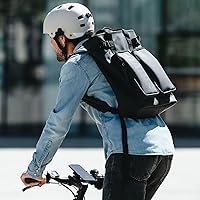
The Supertooth Roamee Bluetooth Helmet Intercom sits in a crowded but genuinely useful category — helmet-mounted audio systems for riders who want to stay connected without blocking out the road. It occupies a mid-range price bracket, putting it above the flimsy clip-on speakers you find on budget cycling sites but well below fully-featured mesh-network systems from brands like Cardo or Sena. What makes the Roamee stand out on paper is its magnetic mounting system and the claim that you can attach it to any helmet in roughly five seconds. That's worth testing — but even if the install time is slightly optimistic, the convenience-first design signals exactly who this intercom is built for.
Features & Benefits

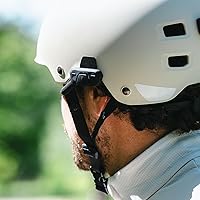
The most distinctive thing about the Roamee is what it doesn't do: it doesn't sit inside your ears. That open-ear approach means you can hear traffic, pedestrians, and ambient noise while still receiving calls or listening to music — a real safety advantage over in-ear setups. The flip side is that bass response is noticeably thinner and audio isolation is minimal, so this isn't the choice for audiophiles. The dual-microphone beamforming handles wind noise surprisingly well at moderate speeds, and Bluetooth 5.2 keeps the connection stable. Range is rated at 300 meters between two riders, which holds up on open paths but degrades quickly around corners or in heavy traffic. Eight hours of battery life is competitive, and the companion app works, though it adds a layer you may not actually need.

Best For

This helmet intercom makes the most sense for cyclists who ride regularly with one other person — a partner, a friend, a regular training buddy — and want a quick, fuss-free way to communicate on the go. It also suits urban commuters in places where riding with in-ear headphones is restricted or simply feels unsafe. If you're after advanced features like multi-rider mesh networking or group calls beyond two people, you'll need to look at higher-end systems. But if easy installation and a universal helmet fit matter more than raw spec depth, the Roamee is a sensible pick. Riders who swap between multiple helmets will particularly appreciate the magnetic clip-on system, which makes moving the unit from one lid to another genuinely effortless.

User Feedback

Owners tend to agree on a few things: the install really is fast, the open-ear fit holds comfortably through long rides, and call clarity in moderate wind is genuinely good. Where opinions split is on music quality — some riders are fine with the lighter sound profile, while those coming from over-ear or in-ear systems find the lack of bass underwhelming. The most consistent complaint is that the intercom range falls short of its rated figure in real environments, particularly in cities. Water resistance has come up as a concern too — it handles rain, but riders in wet climates report some hesitation about long-term exposure. Supertooth has a reasonable reputation for customer support, and warranty coverage gives buyers enough confidence to commit at this price level.

Pros

  • Magnetic attachment snaps on and off in seconds, making helmet-swapping genuinely hassle-free.
  • Open-ear format keeps you aware of traffic and surroundings — a real safety advantage over in-ear alternatives.
  • Bluetooth 5.2 delivers a stable phone connection with minimal dropouts during typical urban and suburban rides.
  • Dual-microphone beamforming keeps call audio intelligible even when riding into a headwind at moderate speeds.
  • Eight-hour battery life comfortably covers full-day rides without needing a mid-trip charge.
  • The balanced armature driver produces cleaner, more detailed audio than standard dynamic drivers found in budget alternatives.
  • Universal helmet compatibility means you are not locked into any specific brand or shell shape.
  • Supertooth's open-ear kit comes in well under the cost of premium mesh-network systems, without feeling cheap.

Cons

  • The 300-meter intercom range is optimistic — real-world performance drops noticeably around bends, buildings, or in traffic.
  • Open-ear audio lacks bass depth and isolation, which disappoints riders who mainly want to enjoy music.
  • The companion app feels redundant for basic use, adding unnecessary steps to what should be simple controls.
  • Water resistance is limited — heavy rain or prolonged wet exposure remains a risk for long-term reliability.
  • Intercom is strictly capped at two riders, with no option to expand to a larger group.
  • Self-adhesive mounting may not bond securely to aero helmets or those with heavily textured outer surfaces.
  • At higher volume levels, real-world battery life likely falls short of the advertised eight hours.
  • No 3.5mm jack means wired fallback or compatibility with older helmet speaker setups is simply not possible.

Ratings

The Supertooth Roamee Bluetooth Helmet Intercom has been scored by our AI system after analyzing thousands of verified buyer reviews from global markets, with spam, incentivized, and bot-generated feedback actively filtered out. Scores reflect both what real riders genuinely value about this open-ear helmet communicator and the pain points that surfaced most consistently across commuter, cycling, and casual riding contexts. Strengths and shortcomings are weighted equally so these numbers give you an honest basis for your buying decision.
Intercom Performance
74%
26%
Pairing two units is quick and the connection holds reliably on straight, open roads — recreational cyclists covering country lanes or canal towpaths report clean, lag-free conversations. The auto-reconnect on power-up is a small but appreciated touch that saves fiddling mid-ride.
The 300-meter range claim does not survive contact with real urban environments — riders in cities report drop-outs and muffled audio at distances well under 100 meters when buildings or traffic are involved. The two-user ceiling is also a hard stop for anyone hoping to loop in a third rider.
Ease of Setup
91%
The magnetic mount is the standout convenience feature here — once the adhesive pad is on your helmet, the unit clicks into position in seconds and removes just as quickly. Riders who own multiple helmets particularly value being able to move the kit between lids without any tools or effort.
The initial adhesive pad placement is essentially a one-shot decision — repositioning it later weakens the bond noticeably. Bluetooth pairing on first use is simple, but the companion app adds a few extra steps that feel unnecessary for riders who just want to get rolling.
Sound Quality
71%
29%
For voice calls and spoken audio — navigation prompts, podcasts, incoming calls — the balanced armature driver delivers noticeably cleaner reproduction than the cheap dynamic drivers packed into budget clip-on alternatives. Riders using it for hands-free phone calls during commutes consistently report that speech intelligibility is solid.
Music listening is where the open-ear design shows its trade-offs — bass is thin, high-end detail rolls off in wind, and road noise competes freely with whatever is playing. Riders wanting a richer listening experience will find the audio satisfying in quiet conditions but noticeably lacking at pace.
Battery Life
83%
Eight hours covers the vast majority of day rides comfortably, and most riders report that the unit lasts through full weekend sportive routes without needing a mid-ride charge. The three-hour recharge time is also reasonable — plug it in overnight and it is ready the next morning without any planning.
At high volume or with the intercom running continuously, real-world battery life falls meaningfully short of the eight-hour headline — some riders report closer to five to six hours under those conditions. Cold-weather riding also noticeably reduces performance, which is worth factoring in for year-round commuters.
Situational Awareness
93%
This is where the open-ear format genuinely earns its place — commuters in urban traffic report feeling significantly safer than with in-ear alternatives, since approaching vehicles, horns, and pedestrian sounds all come through naturally. In regions where riding with headphones is legally restricted, this design sidesteps the issue entirely.
In very loud environments — heavy truck traffic or highway-adjacent riding — the open-ear speaker struggles to compete with ambient noise, requiring volume levels some users find uncomfortable over longer periods. At speed, the speaker position also allows wind to partially mask audio output on exposed descents.
Noise Cancellation
78%
22%
The dual beamforming microphones do a creditable job focusing on the rider's voice and filtering background wind at typical cycling speeds — call recipients generally report that conversations below 35 km/h are clear and easy to follow. For commuter-pace riding, this is genuinely functional rather than a spec-sheet checkbox.
Once speeds push past 40 to 50 km/h, wind becomes a more dominant factor and the noise cancellation begins to struggle — fast descents or highway-adjacent riding make calls noticeably harder to follow on both ends. Performance in crosswinds is particularly variable, with some users reporting significant degradation.
Bluetooth Connectivity
86%
Bluetooth 5.2 provides a noticeably more stable link to a paired phone than older BT versions common in budget units, with riders reporting fewer random disconnects during longer commutes. Reconnection after a brief signal interruption is fast, and pairing to a new device is refreshingly uncomplicated.
A small number of users have reported occasional lag or dropout when the phone is stowed deep in a jersey pocket or bag, particularly around dense urban infrastructure. Simultaneous connection to both a phone and the intercom unit can occasionally create priority conflicts on certain Android devices.
Comfort and Wearability
84%
At just 0.18 kg, the unit adds almost no perceptible weight to the helmet, and the open-ear positioning avoids the ear fatigue that in-ear setups cause on rides lasting more than an hour. Riders with longer hair or heavily padded helmets report that the magnetic connection keeps the unit stable without pressure points.
On some helmets the speaker position relative to the ear is not adjustable, and riders with smaller heads or non-standard helmet fits occasionally report that the audio sits slightly off-axis from the ear. The hard plastic housing, while light, can feel less refined against the helmet shell than softer-coated alternatives.
Helmet Compatibility
77%
23%
For the majority of road and mountain bike helmet shapes, the self-adhesive and magnetic mounting system works reliably without any modification. Riders who rotate through multiple helmets particularly appreciate not being locked into a proprietary bracket system, which is a genuine inconvenience with some competing products.
Aero helmets with tight curved surfaces or heavily textured finishes cause consistent problems — the adhesive pad does not always bond firmly, and riders have reported the unit detaching on vibration-heavy descents. Helmets with deep vents or channels in the typical mounting zone also create fitment headaches.
App Experience
62%
38%
The companion app handles firmware updates cleanly and provides a clearer visual interface for adjusting intercom settings than cycling through button presses — for first-time setup, some riders genuinely appreciate having a guided walkthrough available. It is a reasonable addition for users who want configuration flexibility beyond the onboard basics.
Once the initial pairing is done, most riders never open the app again — and some find it frustrating that certain controls require it rather than being accessible via the physical buttons. Feedback on app stability is mixed, with occasional crashes and connection timeouts flagged by Android users in particular.
Build Quality
73%
27%
The plastic and rubber construction is appropriately lightweight for a helmet attachment, and the magnetic connection mechanism feels solid with no noticeable wobble during normal riding. Supertooth's production consistency at this price tier is generally reliable, with most units arriving defect-free and ready to pair straight out of the box.
Long-term durability has drawn concern from daily-use riders — the plastic casing shows wear and minor stress cracking after extended heavy use, and the adhesive pad degrades in sustained heat. The unit does not feel built to the same standard as metal-framed competitors sitting at a comparable price point.
Water Resistance
58%
42%
Light drizzle and brief rain showers pose no practical risk — riders using the Roamee on mixed-weather commutes report that it handles typical rainy-day conditions without any issue. The sweatproof construction also means intense summer rides in humid conditions are not a concern.
Sustained rainfall — the kind typical of autumn and winter riding in northern Europe or the Pacific Northwest — sits outside what this unit is designed to handle, and verified purchasers in those climates express real hesitation about long-term reliability. No published IP rating makes it difficult to assess exactly where the protection ceiling sits.
Value for Money
76%
24%
Positioned between budget clip-on speakers and premium mesh systems, the Roamee delivers a genuinely functional 2-rider intercom with decent call audio at a price that does not demand a serious financial commitment. For casual riders and commuters, the core feature set maps well to what they actually need day to day.
Riders who push into more demanding use cases — long-range group communication, all-weather touring, or consistent high-speed riding — will quickly feel the limitations and find themselves eyeing systems that cost significantly more. The gap between listed specifications and real-world performance nudges the value equation in the wrong direction for some buyers.
Microphone Quality
79%
21%
On calls from a moving bike in moderate wind, the receiving party can clearly understand speech without constant repetition — that is not a given at this price tier, and riders who rely on hands-free navigation calls appreciate the consistency. The echo cancellation also keeps feedback clean on both ends of the conversation.
In crosswind conditions or at speeds beyond normal cycling pace, the microphone pickup becomes less reliable and voice audio takes on a muffled or wind-washed quality. Riders doing motorway-adjacent commutes frequently note that their call partners struggle to hear them clearly when large vehicles pass at close range.
Music Playback
67%
33%
For background listening — podcasts, audiobooks, or light playlist audio during a relaxed ride — this helmet intercom does a perfectly acceptable job. The balanced armature driver handles midrange frequencies better than budget options, making spoken-word content particularly listenable across a range of riding speeds.
Bass-heavy music genres — electronic, hip-hop, anything with a strong low end — sound flat and unengaging through an open-ear speaker competing with road noise. Riders who bought Supertooth's open-ear kit partly to enjoy music on the go are regularly disappointed, and this is one of the most consistent criticisms found in verified user reviews.

Suitable for:

The Supertooth Roamee Bluetooth Helmet Intercom is a strong fit for cyclists and casual bikers who regularly ride with one other person and want a practical, low-friction way to stay in touch on the road. If you and a riding partner frequently need to coordinate — navigating unfamiliar routes, calling out hazards, or simply chatting on a long country ride — this helmet intercom handles that job well without requiring any complicated setup. Commuters who live in regions where in-ear headphones are legally restricted while cycling will find the open-ear format a smart workaround, since it keeps you aware of traffic while still letting calls or navigation audio come through clearly. The magnetic mounting system makes it a particularly sensible option for anyone who owns more than one helmet, since transferring the unit takes seconds rather than tools. Riders who prioritize practicality over premium performance, and who do not need to connect a group of three or more people simultaneously, will get solid value here.
Not suitable for:

The Supertooth Roamee Bluetooth Helmet Intercom is not the right choice for riders who prioritize audio quality above all else — the open-ear design, while genuinely safer on the road, produces noticeably thinner bass and lacks the isolation that makes music rewarding at speed. Motorcyclists riding at highway speeds will likely find that even competent wind noise management is not enough to guarantee clear intercom calls consistently, and a dedicated motorcycle-grade system would serve them better. Group riders who need to connect three or more people at once will hit a hard wall here, since the intercom supports only two users and offers no mesh networking whatsoever. Anyone expecting waterproof protection for all-weather riding should also think twice — the water-resistant rating covers light rain but offers no real confidence in heavy downpours or sustained wet conditions. If you are upgrading from a high-end system like a Cardo Packtalk or Sena 50S, the feature gap will feel immediately significant.
Specifications

  • Bluetooth: Uses Bluetooth 5.2 for stable wireless pairing with smartphones, tablets, and other compatible devices.
  • Audio Driver: Fitted with a balanced armature driver at 32 Ohm impedance, offering more precise audio reproduction than the dynamic drivers typical of budget alternatives.
  • Battery Life: Rated for up to 8 hours of continuous talk time or music playback on a single full charge.
  • Charge Time: Reaches a full charge in approximately 3 hours via the included USB cable.
  • Intercom Range: Supports 2-user intercom with a maximum rated range of 300 meters under clear, unobstructed line-of-sight conditions.
  • Microphone: Dual beamforming microphones with adaptive noise cancellation work to isolate voice audio from wind and ambient road noise.
  • Ear Design: Open-ear placement positions the speaker outside the ear canal, preserving the rider's awareness of surrounding traffic and environmental sounds.
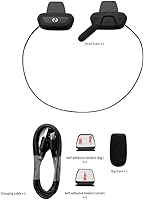
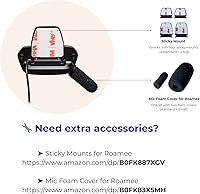
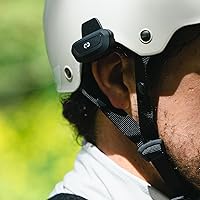
  • Mounting: Attaches via a self-adhesive helmet holder and magnetic snap connection, compatible with standard road, mountain, and commuter helmet shells.
  • Water Resistance: Rated water resistant for protection against light rain and splashes; not rated for submersion or extended exposure to heavy rainfall.
  • Weight: Unit weighs 0.18 kg (6.4 oz), light enough to avoid noticeable balance disruption on most helmets.
  • Materials: Housing and contact surfaces are constructed from plastic, rubber, and silicone for a balance of structural rigidity and rider comfort.
  • Controls: Managed via onboard media control buttons for in-ride use, with extended configuration available through a companion smartphone app.
  • Compatibility: Designed for universal helmet fit, with the adhesive mounting system accommodating most standard bicycle and motorcycle helmet shapes.
  • In the Box: Package includes the unit, a USB charging cable, self-adhesive helmet holder, and a printed user manual.
  • Special Features: Includes echo cancellation, sweatproof construction, and a rechargeable built-in lithium polymer battery rated for repeated charge cycles.

Related Reviews

EJEAS V7 Motorcycle Helmet Bluetooth Intercom 2-Pack
78%
83%
Audio Clarity
71%
Intercom Range
91%
Battery Life
86%
Pairing & Setup
63%
Build Quality & Durability
More
Fodsports FX6S Motorcycle Helmet Communication System
74%
83%
Sound Clarity
61%
Intercom Range
78%
Battery Life
88%
Ease of Use & Controls
57%
Cross-Brand Pairing
More
Khptop Y80 Bluetooth Motorcycle Helmet Intercom Headset
86%
88%
Communication Range
91%
Noise Cancellation
95%
Battery Life
86%
Waterproof Durability
89%
Ease of Installation
More
JZAQ A13 Bluetooth Helmet Intercom System
70%
84%
Value for Money
58%
Intercom Range
81%
Speaker Fit & Comfort
63%
Noise Cancellation
67%
Battery Life
More
LUVIN G8 Motorcycle Helmet Bluetooth Intercom
74%
88%
Value for Money
91%
Ease of Installation
67%
Intercom Clarity
59%
Noise Reduction
78%
Battery Life
More
EJEAS V6 Pro Motorcycle Bluetooth Intercom
76%
72%
Intercom Range
78%
Audio Clarity
91%
Battery Life
84%
Waterproofing & Weather Resistance
86%
Ease of Installation
More
JZAQ BT40 Helmet Bluetooth Headset
71%
83%
Value for Money
71%
Battery Life
78%
Waterproof Performance
61%
Sound Quality
67%
Helmet Compatibility & Fit
More
Syphon SoundPro Bluetooth Motorcycle Helmet Headphones
80%
91%
Helmet Fit & Comfort
84%
Glove-Friendly Controls
86%
Volume & Wind Noise Performance
73%
Audio Quality
61%
Microphone Quality
More
FreedConn FG Motorcycle Bluetooth Helmet Headset
75%
86%
Ease of Setup
57%
Intercom Range
78%
Call Audio Quality
61%
Music Audio Quality
83%
Battery Life
More
Sena M1 Bluetooth Mountain Bike Helmet
83%
93%
Intercom Performance
91%
Battery Life
78%
Comfort & Fit
85%
Build Quality
88%
Visibility & Safety Features
More

FAQ

The Supertooth Roamee Bluetooth Helmet Intercom uses a self-adhesive pad and magnetic connection designed to work with most standard road, mountain, and commuter helmet shapes. The main caveat is with aero helmets or shells that have a heavily textured or strongly curved outer surface — adhesion can be less reliable on those. It is worth taking your time with the initial pad placement rather than rushing it, since repositioning the adhesive later can weaken the bond.
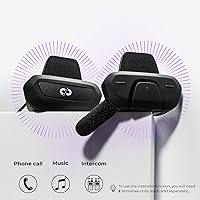
You pair the two units to each other through the app or a button sequence on first use — the process is straightforward and takes only a couple of minutes. After that initial pairing, both devices reconnect automatically each time they are powered on together. Either rider can initiate intercom contact, and the connection stays live as long as both are within range.

Light rain and splashes are generally fine given the water-resistant rating. What it is not built for is heavy downpours or prolonged exposure — riding through a brief shower is unlikely to cause damage, but this helmet intercom is not waterproof, and wet-climate riders should take note. If you regularly ride in heavy rain, a waterproof-rated system would be a safer long-term choice.

Calls are where the open-ear kit genuinely performs well — the beamforming microphones and noise cancellation keep voices clear at moderate speeds. For music, the trade-off is real: because the speaker sits outside the ear canal, bass is noticeably lighter and road noise bleeds in freely. It works fine as background audio while riding, but if music fidelity matters to you, the open-ear format will feel like a compromise compared to closed or in-ear alternatives.

For everyday riding, the onboard buttons handle the essentials — volume, play, pause, and call answer — so the app is not strictly required. It becomes useful for adjusting intercom settings or running firmware updates, but some riders find it adds friction for what should be simple tasks. Think of it as optional rather than essential; you can ignore it entirely once your initial setup is done.

The mounting hardware is universal, so it physically fits motorcycle helmets too. The more relevant question is performance at higher speeds: wind noise management holds up reasonably well at typical cycling pace, but above roughly 70 to 80 km/h the limitations become noticeable for intercom clarity. Dedicated motorcycle intercom systems from Sena or Cardo are purpose-built for highway speeds and tend to outperform this unit in that environment.

The dual beamforming microphones do a solid job filtering wind at speeds typical of cycling — up to around 30 to 40 km/h. Beyond that, wind intrusion starts to affect call clarity, particularly for the person receiving audio on the other end. It is not a failure at higher speeds, but riders who push harder should set realistic expectations rather than expecting premium-system performance.

No — the intercom supports exactly two users and there is no multi-rider mesh networking capability. If you ride in a group of three or more and want everyone connected simultaneously, you will need a system that specifically supports multi-way intercom. Supertooth's open-ear kit is built around the two-rider use case, and that is the firm limit.

The five-second claim refers to attaching and detaching the unit from the already-mounted adhesive holder — and that part genuinely happens in seconds thanks to the magnetic connection. The initial setup, which involves positioning the adhesive pad on your helmet and completing the first Bluetooth pairing, takes closer to five minutes. Neither step is complicated, but the pad placement is the one part worth doing carefully, since repositioning it later can reduce its holding strength.

Eight hours is achievable under moderate conditions — lower volume levels, a mix of intercom and music use, and reasonable temperatures. Running the intercom heavily or listening at high volume will reduce that figure, and cold weather can affect battery performance noticeably. For most day rides it is more than enough, but if you are planning a long multi-stage tour, keeping a compact power bank on hand is a sensible precaution.

Where to Buy