
Overview

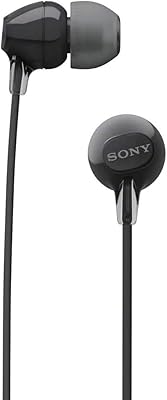
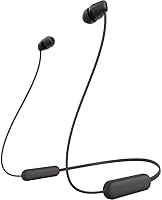
The Sony WI-C100 enters a crowded budget wireless market with something most rivals at this tier rarely offer: the backing of a brand with genuine audio credibility. These Sony neckband earphones sit firmly in the entry-level category, yet Sony has quietly included its DSEE audio processing — a feature you would normally expect on pricier hardware. The neckband design is a deliberate choice, giving listeners who find fully wireless earbuds unreliable a more secure, tangle-free alternative. Launched in mid-2022, this wireless headset targets practical everyday users — people who want long battery life and solid reliability without overspending.

Features & Benefits

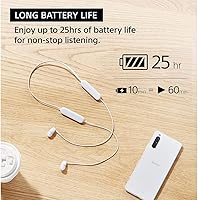
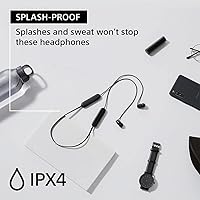
The standout spec here is straightforward: 25 hours of battery life that real-world users confirm actually holds up, meaning a full workweek of commuting without reaching for a charger. The DSEE engine works quietly in the background to recover high-frequency detail lost when audio gets compressed into streaming formats — a subtle but noticeable lift on podcasts and music alike. IPX4 splash resistance handles sweaty workouts and rainy commutes without worry. Bluetooth 5.0 keeps the connection stable across a solid 10-meter range. What genuinely surprised us is the inclusion of the Sony Headphones Connect app, which lets you tweak the EQ — that level of customization is almost unheard of at this price.

Best For

This wireless headset makes the most sense for people who spend a lot of time on the move. Commuters and transit riders will appreciate not having to charge mid-week, while gym-goers benefit from the secure neckband fit and sweat resistance — no worrying about an earbud popping out mid-sprint. It is also a natural step up for anyone switching from wired earphones for the first time. Remote workers who depend on clear call quality throughout long workdays will find the microphone genuinely reliable. Worth stating plainly: there is no noise cancellation here, so if that feature ranks high on your list, you will want to look elsewhere.

User Feedback

Across more than 12,000 ratings, these Sony neckband earphones hold a 4.2-star average — a result that reflects broad, consistent satisfaction rather than a wave of early enthusiasm. The praise clusters around battery life that genuinely delivers close to its claimed figure and call clarity that remote workers specifically highlight. On the downside, bass enthusiasts regularly note that low-end response feels thin for hip-hop or EDM. A portion of buyers also encountered fit issues with the stock eartips and switched to aftermarket options. One recurring niche complaint worth flagging: the neckband can feel stiff in cold weather. Minor issues overall, but worth knowing before committing.

Pros

  • Battery life genuinely holds close to the claimed 25 hours in real everyday use.
  • DSEE audio upscaling adds noticeable clarity to compressed streaming audio — rare at this price.
  • IPX4 splash resistance survives sweaty gym sessions and rainy commutes without issue.
  • Microphone quality is reliably clear for work calls and video meetings throughout the day.
  • Sony Headphones Connect app EQ support is a genuine differentiator most budget rivals skip entirely.
  • The neckband design keeps earphones securely in place during workouts and active commutes.
  • At just 20 grams, these Sony neckband earphones are light enough to wear for hours without fatigue.
  • Bluetooth 5.0 delivers a stable connection with a generous 10-meter range for room-to-room movement.
  • Inline controls handle playback and calls confidently without needing to touch a phone.
  • Strong 4.2-star average across a very large review base signals consistent, widespread buyer satisfaction.

Cons

  • Bass response feels noticeably thin on hip-hop, EDM, and other low-end-heavy music.
  • No multipoint Bluetooth means manually switching between phone and laptop every single time.
  • Active noise cancellation is absent — a real limitation in loud commuting or open office environments.
  • Stock eartips do not fit all ear shapes well; some buyers must purchase aftermarket tips separately.
  • The neckband becomes stiff and less comfortable in cold weather conditions.
  • No quick-charge feature means a forgotten overnight charge cannot be recovered quickly before heading out.
  • The neckband form factor is bulkier to store and carry than a compact truly wireless earbud case.
  • No voice assistant shortcut button despite competitors at similar prices often including one.

Ratings

The Sony WI-C100 has been evaluated by our AI system after processing thousands of verified global buyer reviews, with spam, bot-generated, and incentivized feedback actively filtered out before scoring. The result is a transparent, balanced assessment that reflects both what these Sony neckband earphones genuinely do well and where they fall short for specific types of listeners.

Battery Life
93%
This is the category where the WI-C100 consistently earns its loudest praise. Commuters and remote workers repeatedly confirm that real-world usage closely mirrors the claimed 25-hour figure — a rare outcome in a category where manufacturers routinely overpromise. Getting through a full workweek without a single charge is a genuine daily-use advantage.
Charging time is not particularly fast, so when you do eventually run the battery down, patience is required before getting back to full capacity. A small number of users also noted slightly reduced stamina after extended ownership, which is expected with lithium-ion cells but worth acknowledging.
Value for Money
88%
For a budget-tier neckband, the combination of DSEE audio processing, IPX4 splash resistance, and app-based EQ customization represents a compelling overall package. Most buyers feel the hardware punches above its weight class, citing Sony brand reliability as a meaningful part of the value equation.
Competing options from Anker and JBL at similar prices can offer punchier bass or a more modern aesthetic, meaning the WI-C100 is not automatically the best value for every buyer type. Those prioritizing deep bass or noise cancellation will find the value proposition weaker for their specific needs.
Sound Quality
72%
28%
For everyday listening — podcasts, pop, and acoustic tracks — the DSEE processing does add a noticeable layer of clarity to compressed audio streams. Vocals come through cleanly, and the overall tuning is balanced enough to keep casual listeners satisfied throughout long commutes or workdays.
Bass-heavy music genres like hip-hop, EDM, and electronic reveal the limitations of the 9mm dynamic driver. Users accustomed to boosted low-end response will find the WI-C100 noticeably thin in this area, and while the app allows some EQ adjustment, the driver simply has physical limits that software cannot fully overcome.
Microphone & Call Quality
84%
Call quality is one of the more pleasant surprises here. Remote workers specifically flag the microphone as clear and reliable during long video calls and phone conversations, with voice pickup handling moderate ambient noise reasonably well. It holds up far better than expected for a budget neckband.
In louder outdoor environments — busy streets, transit stations — callers on the other end do report picking up background noise more noticeably. The microphone lacks any active noise suppression, so it is best suited to quieter indoor call environments rather than noisy commutes.
Comfort & Fit
69%
31%
The neckband design is inherently more secure than fully wireless earbuds for many users, and the lightweight 20-gram frame means most wearers forget it is there during long sessions. The included hybrid silicone eartips satisfy the majority of buyers straight out of the box.
A meaningful segment of buyers encounters fit issues with the stock eartips, finding that neither the small nor medium options create an adequate seal, which directly affects both sound quality and passive isolation. Switching to aftermarket tips solves the problem but adds an extra cost and inconvenience the buyer should anticipate.
Build Quality & Durability
76%
24%
The physical construction feels appropriately solid for the price tier, and the IPX4 rating delivers real-world reassurance for gym use and commuting in unpredictable weather. Buyers who have used the headset through multiple seasons of sweaty workouts report no significant degradation.
The neckband cable has a slight rigidity that becomes noticeably uncomfortable in cold weather conditions — a recurring complaint from users in colder climates who find the band stiffens and feels less pliable in winter. The overall aesthetic also reads as utilitarian rather than premium.
Bluetooth Connectivity
81%
19%
Bluetooth 5.0 delivers a stable, reliable connection for typical daily use scenarios. The 10-meter range is generous enough to leave a phone on a desk and move around a room freely, and users report minimal dropouts during standard commuting or gym sessions.
Multipoint connectivity — the ability to stay paired to two devices simultaneously — is absent, which is a genuine inconvenience for users who regularly switch between a laptop and a phone throughout the workday. Re-pairing manually each time becomes a small but recurring friction point.
App & Customization
79%
21%
The inclusion of Sony Headphones Connect app support is a legitimate differentiator at this price tier, giving users access to EQ presets and basic sound tweaking that most rival budget earphones simply do not offer. It adds a layer of personalization that attentive listeners will genuinely appreciate.
The app experience is functional rather than polished, and the EQ range is limited compared to what Sony offers on its mid-range and premium lines. Casual users may also find the app unnecessary, and it requires an ongoing installation on a phone that some minimalist buyers would rather avoid.
Noise Isolation
58%
42%
Passive isolation from the in-ear eartip design does block a moderate amount of ambient sound when a proper fit is achieved, which is adequate for light background noise in offices or quieter transit environments. Getting a snug eartip seal makes a noticeable difference in perceived isolation.
There is no active noise cancellation, which is expected at this price but still a limitation worth stating clearly. In genuinely loud environments — underground metro cars, busy open-plan offices — ambient sound bleeds through enough to push users toward raising the volume rather than feeling immersed in their audio.
Portability & Weight
86%
At just 20 grams, the WI-C100 is light enough to wear for extended periods without physical fatigue, and the neckband design means it hangs neatly around the neck during short breaks rather than needing to be packed away. Travelers specifically flag this as a practical low-effort carry.
The neckband form factor is inherently bulkier to store than a truly wireless earbud case, and it cannot be folded flat. Buyers who prefer sliding earphones into a jacket pocket will find the rigid loop design slightly awkward to manage in a bag or backpack.
Ease of Use
88%
Inline controls for play, pause, track skip, and volume are well-positioned and responsive, letting users manage playback without pulling out a phone. Pairing is quick and intuitive, and the button layout is simple enough to operate confidently by touch alone.
The absence of touch controls or voice assistant shortcut buttons is noticeable when compared to some competitors at a similar price. Power users who rely on quick voice assistant access or gesture controls will find the button-only interface a step behind current expectations.
Water & Sweat Resistance
82%
18%
IPX4 certification is verified by gym users and outdoor runners who have put the headset through consistent sweat exposure and light rain without any functional issues. The rating provides meaningful peace of mind for active use without being a selling point reserved only for edge cases.
IPX4 covers splashes and sweat but is not sufficient for submersion or heavy rain during prolonged outdoor activity. Swimmers and very heavy perspirers occasionally report that the protection ceiling is lower than they initially assumed based on the splash-proof marketing language.
Charging & Power Management
71%
29%
USB-C charging is a practical inclusion that aligns with most users current cable ecosystems, eliminating the need for a legacy Micro-USB cable. The battery indicator provides enough feedback to avoid unexpected shutdowns during daily use.
Charging speed is average at best, and there is no quick-charge feature to get a meaningful battery top-up in a short window. Users who forget to charge overnight and need a fast partial charge before heading out will find the recovery time frustratingly slow.

Suitable for:

The Sony WI-C100 is a natural fit for daily commuters and public transit riders who simply cannot afford to run out of battery mid-journey — 25 hours of real-world playback removes that anxiety entirely. Gym-goers and casual runners will appreciate the secure neckband fit combined with IPX4 splash and sweat resistance, which means the headset survives sweaty workouts without needing to be babied. Remote workers and home office users will find the microphone genuinely reliable for back-to-back calls throughout the day, which is not a given at this price tier. First-time wireless buyers stepping up from wired earphones will find the transition smooth, with intuitive inline controls and fast Bluetooth pairing that never feel intimidating. Travelers looking for a dependable, lightweight backup pair — something that fits in a bag without fuss and lasts the duration of a long-haul flight — will also get strong mileage out of the WI-C100.

Not suitable for:

The Sony WI-C100 will disappoint buyers who listen primarily to bass-heavy genres like hip-hop, trap, or EDM and expect a physical, room-filling low end — the 9mm dynamic driver simply does not deliver that kind of punch, and no amount of app EQ adjustment fully compensates. Buyers who regularly switch between a laptop and a phone throughout the workday should know there is no multipoint pairing, meaning manual reconnection becomes a recurring friction point. Anyone who assumed budget wireless earphones now routinely include active noise cancellation will be caught off guard here — there is none, and in loud environments like underground trains or open-plan offices, ambient sound bleeds through noticeably. Users in colder climates should be aware that the neckband stiffens in low temperatures, which affects both comfort and flexibility. Finally, if a truly pocketable form factor matters to you — something that disappears into a jacket pocket — the rigid neckband loop will feel cumbersome compared to a compact truly wireless case.

Specifications

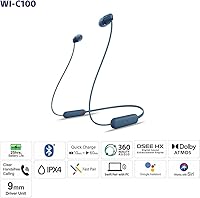
  • Bluetooth Version: Bluetooth 5.0 is used for wireless connectivity, providing a stable and efficient connection with reduced power consumption compared to older versions.
  • Wireless Range: The headset maintains a reliable connection up to 10 meters from the paired source device under typical conditions.
  • Battery Life: A fully charged battery delivers up to 25 hours of continuous audio playback on a single charge.
  • Driver Size: Each earbud houses a 9mm dynamic audio driver responsible for sound reproduction across the frequency range.
  • Impedance: The headset operates at 20 Ohms, making it compatible with standard output levels from smartphones, tablets, and laptops.
  • Water Resistance: An IPX4 rating certifies protection against water splashes from any direction, covering sweat and light rain exposure.
  • Weight: The complete neckband unit weighs 20 grams, making it light enough for extended all-day wear without neck or ear fatigue.
  • Form Factor: The in-ear neckband design positions the battery and controls along a flexible cable that rests around the back of the neck.
  • Audio Processing: Sony's DSEE (Digital Sound Enhancement Engine) technology reconstructs high-frequency detail lost during audio compression in streaming formats.
  • App Support: The Sony Headphones Connect app for iOS and Android provides access to EQ presets and basic sound customization settings.
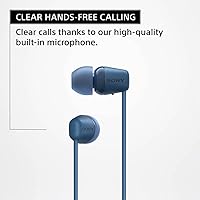
  • Microphone: A built-in inline microphone supports hands-free calling and is positioned along the cable for reliable voice pickup during calls.
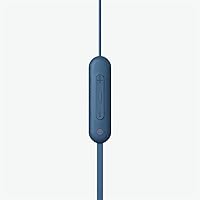
  • Inline Controls: Physical buttons on the cable allow users to play, pause, skip tracks, and adjust volume without accessing the paired device.
  • Headphone Jack: There is no 3.5mm audio jack; the headset operates exclusively via Bluetooth wireless connection with no wired fallback option.
  • Charging Port: The headset charges via USB-C, aligning with the current standard used by most modern smartphones and laptops.
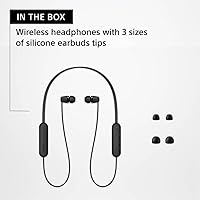
  • Eartip Material: Included eartips are made from hybrid silicone rubber and are provided in multiple sizes to accommodate different ear canal dimensions.
  • Compatible Devices: The headset pairs with any Bluetooth-enabled device including smartphones, tablets, laptops, and smart speakers across Android and iOS platforms.
  • Audio Driver Type: The WI-C100 uses a dynamic driver architecture, which is the standard driver type used in the majority of consumer earphones.
  • Item Dimensions: The product dimensions measure 2.76 x 0.75 x 6.3 inches as packaged, with the neckband designed to fit a range of neck sizes.
  • Noise Cancellation: No active noise cancellation is included; isolation relies entirely on the passive seal created by the in-ear eartip fit.
  • Included Accessories: The package includes the wireless stereo headset and a set of hybrid silicone rubber earbud tips in multiple sizes.

Related Reviews
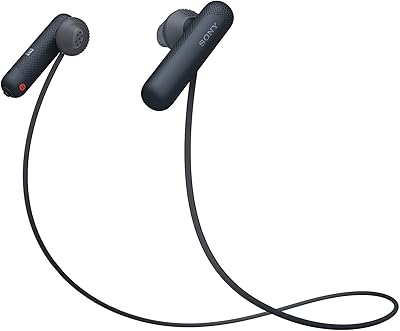
Sony WI-SP500 Wireless Sports Headphones
83%
88%
Comfort and Fit
82%
Sound Quality for Sports
92%
Battery Life
85%
Build Quality and Durability
81%
Ease of Use and Controls
More
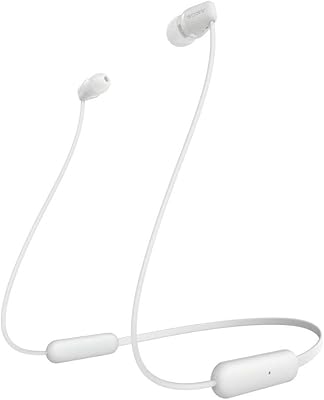
Sony WI-C310 Wireless In-Ear Headphones
83%
90%
Value for Money
83%
Sound Quality
89%
Battery Life
87%
Comfort & Fit
92%
Portability & Design
More
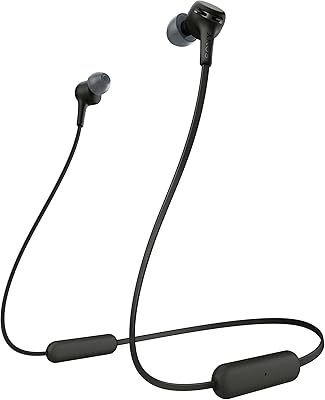
Sony WI-C200 Wireless In-Ear Headphones
79%
85%
Sound Quality
91%
Battery Life
88%
Comfort & Fit
78%
Build Quality
87%
Ease of Use
More
Sony WI-XB400 EXTRA BASS Wireless Bluetooth Headphones
83%
88%
Sound Quality
85%
Battery Life
80%
Comfort & Fit
82%
Build Quality
87%
Bluetooth Connectivity
More
Sony KLV-32W602D 32″ BRAVIA HD Multi-System Smart Wi-Fi LED TV
84%
85%
Display Quality
92%
Ease of Setup
88%
Connectivity Options
87%
Design & Size
90%
Wi-Fi Performance
More
Sony BDP-S360
Sony BDP-S360
86%
94%
Video Quality
90%
DVD Upscaling
88%
Audio Performance
91%
Setup & Installation
85%
Build Quality
More
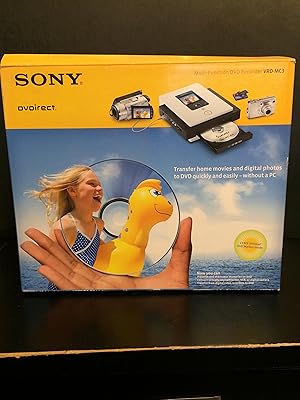
Sony VRDMC3 DVDirect
81%
88%
Recording Quality
91%
Ease of Use
85%
Setup & Installation
78%
Connectivity Options
84%
Disc Compatibility
More
Sony SRS-XB23
Sony SRS-XB23
87%
94%
Sound Quality
91%
Bass Performance
97%
Portability
89%
Build Durability
93%
Waterproofing
More
Sony MDRXB600IP Headphones
82%
88%
Bass Performance
85%
Comfort for Extended Use
83%
Noise Isolation
78%
Build Quality
81%
Portability
More
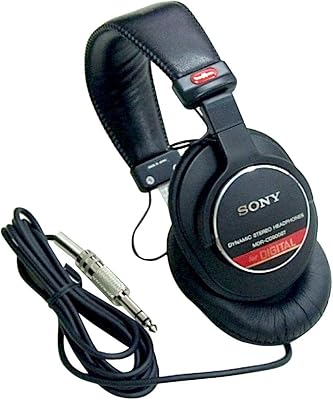
Sony MDR-CD900ST
Sony MDR-CD900ST
89%
96%
Sound Accuracy
91%
Comfort & Fit
94%
Build Quality
92%
Durability
95%
Frequency Response
More

FAQ

Yes, it pairs with any device that supports Bluetooth, including Android phones, iPhones, iPads, and laptops. The Sony Headphones Connect app is available on both iOS and the Google Play Store if you want to use the EQ features.

Absolutely. The IPX4 rating means the headset handles sweat and the occasional water splash without issue. The neckband design also keeps everything secure during movement, so you do not need to worry about earbuds dropping out mid-workout.

No, there is no active noise cancellation. Passive isolation depends entirely on how well the eartips seal in your ear canals. In loud environments like a busy subway or open office, you will hear a noticeable amount of ambient sound.

Sony rates the charging time at approximately 3 hours to reach a full charge via USB-C. There is no fast-charge feature, so if you need a quick top-up before heading out, plan accordingly and plug in the night before when possible.

This is a fairly common issue and an easy fix. The headset ships with multiple eartip sizes, so first try switching to a larger or smaller size to improve the seal. If none of the included tips work for you, standard aftermarket eartips in common sizes like small, medium, and large will fit the nozzle and are widely available online for a few dollars.

Unfortunately, no. These Sony neckband earphones do not support multipoint Bluetooth pairing, meaning they can only be actively connected to one device at a time. To switch between a laptop and a phone, you need to manually disconnect from one and reconnect to the other.

Surprisingly solid for the price tier. Most remote workers find the call quality clear and reliable for video meetings and standard phone calls in a reasonably quiet environment. In loud outdoor settings, background noise does bleed through more noticeably since there is no microphone noise suppression.

There is no dedicated voice assistant shortcut button on this wireless headset. You can trigger your phone's assistant by pressing the multifunction button according to your device's standard shortcut, but it is not a dedicated one-press feature like some competing earphones offer.

The neckband has a reasonable amount of flexibility and is designed to accommodate a range of adult neck sizes. It is not adjustable in a traditional sense, but the cable is flexible enough to sit comfortably on most adults. One thing worth noting is that in cold weather the band can feel noticeably stiffer, which a handful of users in colder climates have flagged as mildly uncomfortable.

If you care about fine-tuning how your music sounds, yes. The app gives you access to EQ presets and some basic adjustments that genuinely improve the listening experience for different genres. Most rivals at this price point offer no app customization at all, so it is a real bonus. If you are a casual listener who just wants to hit play and go, you can absolutely skip it and the headset works fine without it.