

Overview

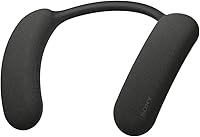
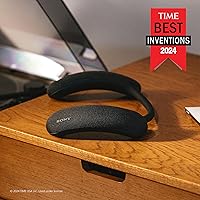
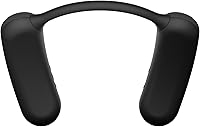
The Sony BRAVIA Theater U Wearable Speaker occupies a genuinely unusual corner of the audio market — it is not a soundbar, not a pair of headphones, and not trying to be either. This wearable speaker rests around your neck, projecting sound upward toward your ears while keeping them completely open to the room. That distinction matters. You can still hear your phone ring, hold a conversation, or listen for the kids — all while getting personal audio from the TV. At its price point, buyers should expect solid build quality and real technology backing the experience, though it helps to know upfront that this is a niche listening solution, purpose-built for a specific kind of viewer.

Features & Benefits

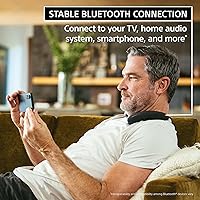
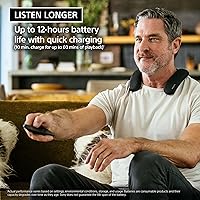
The BRAVIA Theater U's most notable technical feature is its 360 Spatial Sound Personalizer, which uses Sony's app to measure how sound reflects off your individual ear shape and adjusts the audio profile accordingly. Results vary — on well-mixed TV shows and films, the effect is genuinely convincing; on standard stereo content, it is more subtle. The upward-facing X-Balanced Speaker Unit is a real design choice, not a gimmick, directing audio toward your ears from a more natural angle. Bluetooth pairing via the included adaptor keeps the TV connection stable and reliable. Battery life is a genuine strong point — 12 hours is realistic for most sessions, and the quick-charge feature means a short break tops things back up fast.

Best For

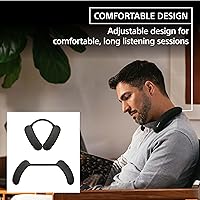
This wearable speaker is purpose-built for a specific lifestyle scenario: late-night TV watching where you need real volume without waking anyone else. If you find over-ear headphones uncomfortable after an hour, the open-ear design here is a meaningful upgrade in wearability. Sony's neck speaker suits gamers who want positional audio cues during solo sessions without losing room awareness — a full audio seal is not always desirable. It also works well for older adults who want sound closer to their ears without feeling cut off from the environment. That said, this is not for audiophiles, multi-player gamers, or anyone expecting deep, thumping bass. Music listening is adequate, not a primary strength.

User Feedback

Buyers who switch to the BRAVIA Theater U from traditional headphones tend to be the most satisfied — they get the audio proximity they wanted without the fatigue or isolation. The comfort during long sessions is the most consistently praised aspect, and the adjustable fit works for most builds, though some users with broader shoulders report the unit sitting higher than expected. On the critical side, audio leakage at higher volumes is a known issue — this is not private listening in a shared bedroom. Bass-heavy music listeners frequently note the limited low-end response. The personalization app setup gets mixed reviews: some find it genuinely worthwhile, others find the calibration process fiddly. Overall, real-world satisfaction tracks closely with how well buyers understood what they were buying beforehand.

Pros

  • Open-ear design lets you stay aware of your surroundings while watching TV at personal volume.
  • Genuinely comfortable during extended binge-watching sessions — no ear cup pressure or headband fatigue.
  • 12-hour battery life is realistic and covers most evening use without mid-session recharging.
  • Quick-charge feature gets you back to watching fast — 10 minutes of charge for a full hour of playback.
  • The 360 Spatial Sound Personalizer adds a noticeable sense of depth on well-mixed film and TV content.
  • Stable Bluetooth connection via the dedicated audio adaptor reduces dropout frustration during TV use.
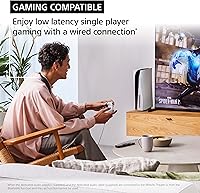
  • Wired low-latency mode keeps audio perfectly synced during solo gaming sessions.
  • Built-in microphone handles hands-free calls without needing to remove the speaker.
  • IPX4 splash resistance adds practical durability for everyday household use.
  • Lightweight at under 275 grams — easy to forget you are wearing it after a few minutes.

Cons

  • Audio leakage at higher volumes is significant — not suitable for truly private listening in shared spaces.
  • Bass response is noticeably limited, making music listening feel thin compared to even modest speakers.
  • The spatial audio effect is inconsistent and depends heavily on content quality and app calibration.
  • Sony's personalization app setup can feel fiddly, with some users reporting a steep initial learning curve.
  • The fit does not work equally well for everyone — broader shoulders or larger neck sizes may find it uncomfortable.
  • At this price point, the 5-watt output feels modest and may underwhelm buyers expecting more raw volume.
  • Not a practical choice for multi-player gaming environments where audio leakage disrupts others nearby.
  • No wireless low-latency mode — lag-free gaming requires a physical wired connection, which limits movement.
  • The BRAVIA Theater U ecosystem lock-in means the dedicated adaptor is proprietary, not universally compatible.
  • Charging time to full is 12 hours, which can catch users off guard if they forget to plug in overnight.

Ratings

The scores below reflect an AI-driven analysis of verified global user reviews for the Sony BRAVIA Theater U Wearable Speaker, with spam, bot activity, and incentivized feedback actively filtered out to ensure accuracy. Each category is scored based on real patterns in buyer sentiment — strengths are credited where earned, and recurring pain points are reflected honestly. The result is a transparent snapshot of where this wearable speaker genuinely delivers and where it falls short for different types of buyers.

Wearing Comfort
88%
Users who switch from over-ear headphones consistently highlight how much more comfortable the BRAVIA Theater U feels after two or three hours of continuous TV watching. The weight is distributed across the shoulders rather than clamped against the skull, which makes a real difference during long evening viewing sessions.
Buyers with broader shoulders or shorter necks report the unit sitting higher than expected, which becomes noticeable during extended wear. A small but consistent group found the adjustable fit did not accommodate their frame well enough for true long-session comfort.
Sound Quality
74%
26%
For TV dialogue and cinematic soundtracks, this wearable speaker performs well above what its compact form factor might suggest. The upward-facing driver orientation creates a more natural sense of audio directionality compared to traditional neck speakers that fire straight at the ears.
At 5 watts, the output ceiling is modest, and listeners accustomed to full-range speakers will notice the compression at higher volumes. Tonal balance skews toward midrange clarity at the expense of low-end warmth, which limits its appeal beyond TV-centric use.
Spatial Audio Performance
71%
29%
When properly calibrated through Sony's app, the 360 Spatial Sound Personalizer adds a convincing sense of dimension to film soundtracks and TV dramas — it is noticeably more immersive than flat stereo playback on the same content. Users who invested time in the setup process rated this feature significantly higher than those who skipped it.
The effect is heavily content-dependent — it shines on well-mixed streaming content but feels minimal on standard broadcast TV or older recordings. Several users reported the personalization calibration felt inconsistent, requiring multiple attempts to get a result that felt meaningfully different from the default mode.
Battery Life
91%
Twelve hours of real-world playback is consistently confirmed by users across multiple usage patterns, making it a reliable all-evening companion without anxiety about mid-show battery cutoffs. The quick-charge function earns specific praise — a short charge during dinner or a break genuinely delivers a usable top-up.
The full charge cycle taking up to 12 hours means overnight charging is essentially mandatory if the battery is run down completely. A small number of users noted battery degradation becoming noticeable after roughly 12 to 14 months of daily use.
Bluetooth Stability
83%
The dedicated audio adaptor included in the box provides a noticeably more stable Bluetooth connection to the TV compared to generic pairing, and users report very few dropouts during normal living-room distances. Re-pairing after switching devices is generally described as quick and reliable.
Without the dedicated adaptor — when paired directly to a smartphone or laptop — connection stability is more variable and closer to standard Bluetooth performance. A handful of users reported interference in homes with dense wireless networks or multiple Bluetooth devices active simultaneously.
Gaming Performance
69%
31%
Solo gamers who connect via the wired low-latency mode report audio that stays tightly synced with on-screen action, which is particularly appreciated in story-driven or atmospheric games where sound cues matter. The open-ear design is a genuine advantage for gamers who need to remain aware of their environment.
The low-latency benefit requires a wired connection, which limits movement and feels at odds with an otherwise wireless product. Wireless Bluetooth gaming introduced lag that several users described as distracting during fast-paced gameplay, making it unsuitable for competitive gaming.
Audio Leakage
48%
52%
At low to moderate volumes — the kind used for late-night TV watching — the sound leakage is manageable and unlikely to wake a lightly sleeping partner in the same room. Users specifically using this for quiet-hours viewing tend to find it fits the use case adequately.
At anything approaching medium-high volume, the open-ear design means audio is clearly audible several feet away, undermining the assumption that this is a personal listening device. Multiple users expressed frustration that this made it impractical for shared bedrooms or quiet apartment settings at the volumes they actually preferred.
Bass Response
52%
48%
For TV dialogue, news, and talk shows, the lack of deep bass is largely irrelevant — vocal clarity is prioritized and the midrange presentation serves that content well. Users who primarily watch drama series or documentary content rarely flag bass as a concern.
Music listeners and action movie fans consistently call out the thin low-end as a significant limitation, with bass-heavy content sounding noticeably flat and lacking physical presence. At this price tier, buyers reasonably expect more weight in the low frequencies, and this wearable speaker does not deliver it.
App & Setup Experience
63%
37%
Users who found the Sony app intuitive appreciated being guided through the ear-shape personalization process step by step, and several described the final result as genuinely worth the effort. The app interface is reasonably polished and avoids the cluttered feel of some companion apps in this category.
A meaningful portion of users described the calibration process as confusing or inconsistent, with some needing to repeat it multiple times before noticing a clear improvement. Users who are less comfortable with app-dependent hardware setup found the experience frustrating enough to simply abandon personalization altogether.
Build Quality
77%
23%
The physical construction feels appropriately premium — materials are solid, the adjustable mechanism operates smoothly, and the overall finish is consistent with Sony's standard hardware quality at this price level. Users report the unit holding up well under daily use over several months.
A small but notable group raised concerns about the longevity of the flexible arc structure after repeated bending during adjustment, with some experiencing slight creaking or reduced tension over time. The IPX4 rating is reassuring for light use, but the unit's overall durability under heavy daily handling has drawn occasional skepticism.
Microphone Quality
66%
34%
For everyday hands-free calls around the house, the built-in microphone performs competently — voice pickup is clear enough that call recipients rarely notice a difference from a standard phone handset. Users appreciate being able to answer calls without removing or pausing the speaker.
In noisier environments — a kitchen with background noise, for example — microphone performance degrades noticeably, with call recipients reporting difficulty hearing clearly. It is not a replacement for a dedicated headset mic in any context where call quality is important.
Value for Money
67%
33%
Buyers who fully understand the niche this product occupies — and who genuinely need its specific combination of open-ear comfort, spatial audio, and hands-free functionality — tend to feel the premium pricing is justified relative to alternatives. The technology backing the experience is real and not simply marketing.
For buyers who expected a more versatile audio product, the price feels steep against the reality of limited bass, modest wattage, and the constraint that it excels in only a narrow set of scenarios. The value proposition weakens significantly if music listening or multi-person use is part of the buyer's intent.
TV Integration
84%
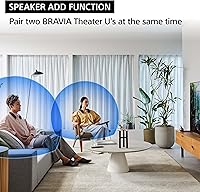
The dedicated audio adaptor included in the box removes most of the friction associated with connecting a Bluetooth speaker to a television, and users with Sony BRAVIA TVs in particular report a plug-and-play experience that requires almost no troubleshooting. Switching back to TV speakers is also straightforward.
On non-Sony TVs, compatibility can vary depending on the audio output configuration, and a small number of users reported needing to adjust TV audio settings manually before the adaptor worked correctly. The proprietary adaptor design also means replacements are not universally available.
Portability & Storage
58%
42%
At under 275 grams, the BRAVIA Theater U is light enough to move between rooms effortlessly, and the USB-C charging standard makes it compatible with most modern chargers already in the home. Users appreciate not needing a dedicated docking station or proprietary power brick.
The arc-shaped form factor does not collapse or fold, making it awkward to store in a bag or travel with conveniently. Users who hoped to use it beyond the home — during travel or in an office — found the rigid shape impractical for anything other than stationary home use.

Suitable for:

The Sony BRAVIA Theater U Wearable Speaker was built for a very specific kind of listener, and if you fit that profile, it genuinely delivers. Late-night TV watchers who share a bedroom or living space with others will find the open-ear design solves a real problem — you get personal volume without sealing yourself off from the room or wearing uncomfortable ear cups for two hours straight. It is also a strong fit for people who have mild hearing difficulties and want sound physically closer to their ears without resorting to hearing aids or in-ear options. Binge-watchers who experience headphone fatigue will notice a genuine difference in how this wearable speaker sits during long sessions. Gamers who play solo and want spatial audio cues while remaining aware of their surroundings — say, listening for a child or a doorbell — will also find this a practical middle ground. If you are already using Sony BRAVIA televisions, the dedicated adaptor makes pairing notably straightforward compared to generic Bluetooth speaker setups.

Not suitable for:

The Sony BRAVIA Theater U Wearable Speaker is a poor fit for anyone who prioritizes deep bass, high-fidelity music playback, or room-filling sound. At 5 watts with a compact driver, it simply cannot reproduce the low-end weight that music lovers or home theater enthusiasts typically expect at this price tier. Audiophiles shopping for a premium listening experience will be disappointed — this is designed around TV dialogue and cinematic effects, not critical music listening. Multi-player gamers should also look elsewhere, since open-ear audio in a shared gaming environment means everyone nearby hears what you hear. Buyers hoping to replace a soundbar will find the comparison frustrating; this wearable speaker works alongside a TV setup, not as a substitute for one. Finally, people with broader shoulders or larger neck sizes have reported fit issues, so it is worth checking physical dimensions before committing if ergonomics are a concern.

Specifications

  • Brand & Model: Manufactured by Sony under the model designation HT-AN7, part of the BRAVIA Theater product line.
  • Product Type: Wireless wearable neck speaker designed primarily for personal TV audio without ear cups or in-ear tips.
  • Output Power: Maximum audio output is 5 watts, suited for close-proximity personal listening rather than room-filling sound.
  • Driver Type: Features Sony's X-Balanced Speaker Unit positioned in an upward-facing orientation to direct sound toward the listener's ears.
  • Spatial Audio: Equipped with Sony's 360 Spatial Sound Personalizer technology, which calibrates surround sound output based on individual ear shape via a companion app.
  • Connectivity: Connects wirelessly via Bluetooth and supports a wired low-latency connection mode specifically for single-player gaming use.
  • Battery Life: Provides up to 12 hours of continuous playback on a full charge under standard usage conditions.
  • Quick Charge: Supports fast charging via USB-C, delivering approximately 60 minutes of playback from just 10 minutes of charging.
  • Battery Capacity: Equipped with a built-in 1200 mAh lithium-ion rechargeable battery (included and non-removable).
  • Charging Port: Charges via USB-C; a USB-A to USB-C cable is included in the box.
  • Water Resistance: Rated IPX4, meaning it can withstand light splashing from any direction but is not submersible or waterproof.
  • Microphone: Features a built-in microphone that enables hands-free calling when the speaker is connected to a compatible smartphone.
  • Weight: Weighs 271 grams (9.6 ounces), making it relatively lightweight for extended neck-worn use.
  • Dimensions: Measures 11″ deep by 8.4″ wide by 2.2″ high in its resting arc configuration.
  • Compatible Devices: Works with televisions, smartphones, tablets, laptops, and desktop computers via Bluetooth or wired connection.
  • In-Box Accessories: Includes a dedicated audio adaptor, a dedicated audio cable, the speaker unit itself, and a USB-A to USB-C charging cable.
  • Control Method: Supports voice control in addition to physical on-device controls for managing playback and calls.
  • Warranty: Covered by Sony's standard limited warranty; buyers should verify local warranty terms at point of purchase.

Related Reviews
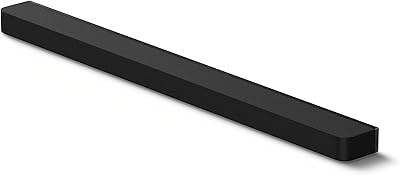
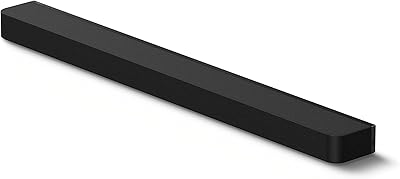
Sony BRAVIA Theater Bar 8 Soundbar
86%
92%
Sound Quality
88%
Ease of Setup
91%
PS5 Integration
75%
Bass Performance
89%
Connectivity Options
More
Sony BRAVIA Theater Bar 9 Soundbar
79%
91%
Spatial Audio Performance
93%
Dialogue Clarity
54%
Bass Output (Solo Configuration)
94%
BRAVIA TV Ecosystem Integration
88%
Gaming Performance
More
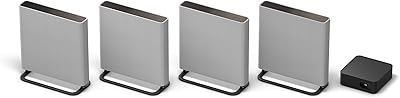
Sony BRAVIA Theater Quad HT-A9M2
78%
92%
Spatial Audio Performance
61%
Bass & Low-End Response
78%
Setup & Installation
74%
App & Smart Control
88%
Gaming Performance
More
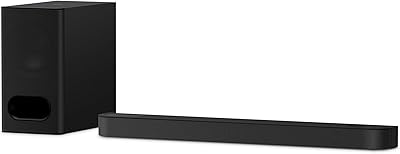
Sony BRAVIA Theater Bar HT-B600 3.1.2ch Soundbar with Wireless Subwoofer
87%
90%
Sound Quality
89%
Bass Performance
85%
Dialogue Clarity
91%
Ease of Setup
88%
Build Quality
More
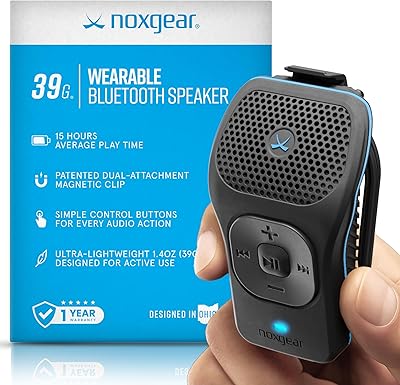
Noxgear 39g Wearable Clip-On Bluetooth Speaker
78%
91%
Attachment Security
84%
Battery Life
73%
Audio Clarity
88%
Waterproofing & Weather Resistance
62%
Microphone Quality
More
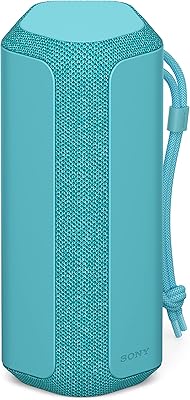
Sony SRS-XE200 Portable Bluetooth Speaker
80%
84%
Sound Width & Dispersion
67%
Bass Performance
88%
Battery Life
91%
Durability & Build
79%
Portability & Design
More
ZYHKON S9 Wearable Bluetooth Speaker
86%
88%
Battery Life
84%
Sound Quality
93%
Portability
90%
Ease of Use
91%
Water Resistance
More
Sony WH-RF400 Wireless TV Headphones
75%
93%
Ease of Setup
88%
RF Connection Reliability
79%
Wireless Range
91%
Battery Life
82%
Sound Clarity for Dialogue
More
Theater Solutions 4R4G Outdoor Rock Speakers 4-Pack
74%
88%
Disguise & Aesthetics
81%
Weatherproofing & Durability
74%
Sound Clarity (Mids & Highs)
51%
Bass Performance
83%
Value for Money
More
DEWALT Wearable Clip-On Bluetooth Speaker
81%
93%
Clip & Attachment System
88%
Sound Volume & Loudness
67%
Audio Quality & Clarity
91%
Wearability & Comfort
86%
Water & Dust Resistance
More

FAQ

You do not need a Sony TV. The included dedicated audio adaptor connects to any TV with a compatible audio output port, and Bluetooth connectivity works broadly across brands. That said, pairing is more straightforward and reliable when used with Sony BRAVIA televisions, which are optimized for this ecosystem.

You can use the BRAVIA Theater U without completing the personalization process, but you will miss the main differentiator. The app calibration uses your ear shape to tailor the surround effect, and on well-mixed film or TV content, the difference is noticeable. For casual background TV watching, skipping it is fine; for an immersive experience, it is worth the few minutes of setup.

This is an open-ear speaker worn around the neck, so it is not a private audio solution. At low to moderate volumes, a sleeping partner a few feet away is unlikely to be disturbed. At higher volumes, the sound leakage becomes significant enough that it can be heard across the room. If truly silent operation for others is your priority, in-ear options are more appropriate.

Yes, but specifically for solo gaming via a wired connection. The wired low-latency mode keeps audio synced with on-screen action, which matters for timing-sensitive games. Wireless Bluetooth gaming introduces some latency, which can feel off during fast-paced gameplay. Also worth noting: this is not well-suited for multi-player sessions in a shared room, since the audio is audible to everyone nearby.

Most users find it significantly more comfortable than over-ear headphones during extended sessions, largely because there is no clamping pressure on the ears or head. The weight is distributed across the shoulders rather than the neck alone. That said, people with broader shoulders have noted the unit can sit slightly higher than expected, which may become noticeable over time. For average builds, long-session comfort is genuinely one of its stronger points.

It is designed primarily for TV and film content, and that is where it performs best. Music listening is functional but limited — the bass response is modest at 5 watts, and the open-ear design means you lose some low-end presence compared to enclosed headphones or a dedicated speaker. If music is your main use case, there are better-suited options at this price tier.

It handles hands-free calls competently for casual use — the microphone picks up voice clearly enough for everyday conversations. It is not a conference-call or professional-grade solution, and like most built-in speaker mics, performance depends on ambient noise levels. For home use during a phone or video call, it works without issue.

The IPX4 rating means it can handle light splashing from any direction, so an accidental spill or a few drops of rain while moving through the house should not cause damage. It is not waterproof and should not be submerged or exposed to heavy water flow. Wipe it dry after any significant moisture exposure.

A full charge from empty takes around 12 hours, which is best done overnight. The quick-charge feature is genuinely practical for day-to-day use — 10 minutes of charging gives you roughly an hour of playback, which is enough to cover a typical movie or a couple of TV episodes if you forgot to charge it beforehand.

That depends entirely on what problem you are trying to solve. A soundbar fills a room with audio and often delivers richer bass and stereo imaging for everyone listening. Sony's neck speaker is personal audio — one listener, close-proximity sound, open ears. If you are trying to watch TV without disturbing others, or you want personalized volume without turning up the room, this solves something a soundbar cannot. If you just want better overall sound quality for a shared viewing experience, a soundbar remains the stronger choice.

Where to Buy