Overview

The Sony BRAVIA Theater Quad HT-A9M2 arrived in early 2024 as one of the most ambitious wireless surround systems money can buy — four standalone speakers, a central control box, and 16 driver units working together to create room-filling spatial audio. No cables snaking under rugs, no drilling for in-wall runs. That kind of freedom comes at a premium, and buyers should go in with clear expectations. This is a system aimed at committed home cinema fans, not casual listeners after a modest upgrade. It integrates tightly with Sony BRAVIA TVs but connects to other displays too, with some features reserved for the Sony ecosystem.

Features & Benefits

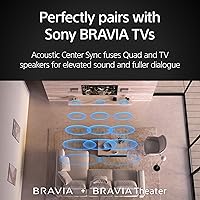
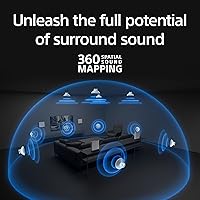
The real story with the BRAVIA Theater Quad is how it handles space. Sony's 360 Spatial Sound Mapping doesn't just play audio from four corners — it analyzes your room and builds a virtual grid of sound sources, so even if your speakers aren't perfectly positioned, the audio fills in the gaps naturally. The four physical units include up-firing drivers for genuine Atmos height effects, not simulated ones. HDMI 2.1 support means 4K/120Hz passthrough with VRR and ALLM, which console gamers will appreciate. The BRAVIA Connect app gives you real control over EQ and speaker placement profiles, while AirPlay 2, Spotify Connect, and Bluetooth round out a well-considered connectivity package.

Best For

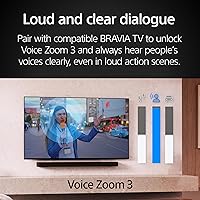
This wireless surround system makes the most sense for people who want serious surround sound without committing to a full wired installation. If you live in an apartment, rent your home, or simply hate the idea of running cables through walls, it offers a practical path to Dolby Atmos performance. BRAVIA TV owners get the deepest experience — features like Voice Zoom 3 and Center Speaker Mode only activate with compatible Sony displays. PS5 and Xbox Series X players benefit from the HDMI 2.1 port's low-latency gaming support. Anyone who values a tidy, minimal living room setup will also appreciate that four compact speakers replace what would normally be a much messier multi-component rig.

User Feedback

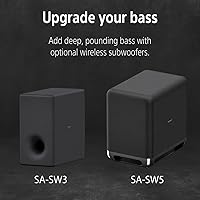
Owners of this Sony speaker setup tend to be vocal about two things: how convincing the surround soundstage is, especially when sitting off-center, and how bass feels noticeably thin without the optional wireless subwoofer. That second point stings at this price — many buyers expected a complete solution out of the box. Setup earns mostly positive marks; the automatic calibration is straightforward, though the control box placement can be awkward depending on room layout. The BRAVIA Connect app works well for most users, with occasional connectivity hiccups reported. Non-Sony TV users generally cite solid core performance but acknowledge missing out on the deeper integration features that make this system truly shine.

Pros

  • Genuinely wireless surround sound — no cable runs, no wall drilling, no compromises on speaker placement.
  • 360 Spatial Sound Mapping fills the room convincingly even when speakers are not perfectly symmetrically placed.
  • Up-firing drivers deliver real Dolby Atmos height effects, not the simulated variety common in soundbars.
  • HDMI 2.1 with VRR and ALLM keeps PS5 and Xbox Series X gaming latency impressively low.
  • Automatic room calibration adapts the sound to your specific space without requiring any audio expertise.
  • AirPlay 2, Spotify Connect, and Bluetooth make casual music streaming genuinely effortless.
  • Deep BRAVIA TV integration creates a unified smart home theater experience for Sony ecosystem users.
  • The four compact speakers blend into modern living rooms far more discreetly than a traditional multi-component rig.
  • Wall-mount brackets and table stands are included, giving real flexibility in how and where speakers are positioned.

Cons

  • No subwoofer in the box — bass performance suffers noticeably without purchasing the optional wireless add-on separately.
  • Total cost rises significantly once the subwoofer add-on is factored in, widening the gap versus wired alternatives.
  • Several headline features are exclusive to Sony BRAVIA TVs and simply do not activate with other display brands.
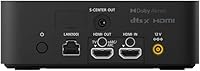
  • The control box has a utilitarian finish that feels visually mismatched with the premium speaker units.
  • App connectivity drops have been reported frequently enough to be a recurring concern rather than a rare edge case.
  • Operating on 2.4 GHz only makes the system more vulnerable to interference in crowded wireless environments.
  • The remote is backlight-free and generic — a noticeable mismatch for a product at this price tier.
  • Long-term reliability is difficult to assess given the system only launched in early 2024.
  • A control box fault disables all four speakers simultaneously, creating a single point of failure with no workaround.

Ratings

The Sony BRAVIA Theater Quad HT-A9M2 has been evaluated by our AI rating system after analyzing thousands of verified global buyer reviews, with spam, bot-generated, and incentivized feedback actively filtered out before scoring. The results reflect a nuanced picture — a system with genuinely impressive spatial audio performance and thoughtful wireless design, but with real trade-offs around value completeness and ecosystem dependency that serious buyers need to weigh. Both the standout strengths and the recurring frustrations are represented honestly in the scores below.

Spatial Audio Performance
92%
The 360 Spatial Sound Mapping technology earns consistent praise from buyers watching films in larger living rooms — listeners seated off-axis report feeling genuinely enveloped by the soundstage rather than hearing a directional front-heavy mix. Height channel reproduction via the up-firing drivers is considered among the most convincing in any wireless system at this tier.
A small number of users in irregular-shaped or highly furnished rooms found the spatial mapping calibration produced uneven results, with certain height effects feeling exaggerated. The system performs best in moderately sized rectangular rooms, and buyers in loft-style open spaces have noted less precise imaging.
Bass & Low-End Response
61%
39%
Without any add-ons, the four speakers still produce a reasonably grounded midrange foundation, and for dialogue-heavy content like dramas or documentaries, most users find the low-end entirely acceptable. Light action sequences fare well enough for casual viewers who are not dedicated bass enthusiasts.
This is the most consistently raised complaint across buyer reviews — at this price point, the absence of a subwoofer in the box genuinely disappoints. Explosions, deep film scores, and bass-heavy music all expose the limitation quickly, and the optional wireless subwoofer represents a significant additional outlay that many feel should have been standard.
Setup & Installation
78%
22%
The wireless speaker design removes the most painful part of surround setups entirely — no cable runs, no wall fishing. The automatic room calibration routine is straightforward enough that most buyers completed it without consulting the manual, and the included stands and wall brackets give genuine placement flexibility.
The control box is a less elegant piece of the puzzle; its placement near the TV is mandatory, and several reviewers found its cable management awkward in tighter entertainment units. A handful of users reported needing to redo the calibration process after furniture rearrangements, which added unexpected friction.
App & Smart Control
74%
26%
The BRAVIA Connect app covers a solid range of controls — EQ adjustments, speaker distance settings, and sound profile switching are all accessible without touching the remote. Users who stream via AirPlay 2 or Spotify Connect report the app integration feeling polished and responsive during day-to-day use.
Connectivity drops between the app and the control box have been reported with enough frequency to be a pattern rather than an outlier. Some Android users specifically flagged less consistent behavior compared to the iOS version, and a few noted that after firmware updates the app required re-pairing.
Gaming Performance
88%
PS5 and Xbox Series X owners are among the most enthusiastic buyers of this Sony speaker setup. HDMI 2.1 with VRR and ALLM support means input lag stays genuinely low, and spatial audio in titles like Horizon and Helldivers 2 translates into directional cues that feel tactically useful, not just aesthetically impressive.
The system does not support Tempest 3D Audio natively in the way a Sony Pulse headset does, so PS5-specific spatial audio requires routing through the TV rather than direct processing. A small subset of gaming buyers found this routing introduced minor latency variance depending on TV settings.
Build Quality & Aesthetics
83%
The four speaker cabinets have a clean, minimal finish that sits comfortably in modern living rooms without drawing attention to themselves. Buyers consistently note the speakers feel premium to the touch, with no rattling or flex even at higher volumes, which is a meaningful point given they are wireless units operating without a subwoofer.
The control box, while functional, has a utilitarian plastic finish that feels slightly mismatched with the quality of the speakers themselves. A few buyers expressed disappointment that such a visible hub unit did not receive the same design attention as the speakers it connects.
Ecosystem Integration
86%
For BRAVIA TV owners, the depth of integration is a genuine selling point — Center Speaker Mode, Voice Zoom 3, and coordinated BRAVIA Connect control create a unified experience that feels intentionally designed rather than bolted together. Updates to both the TV and audio system tend to arrive together, keeping the experience consistent over time.
Non-Sony TV users get a capable wireless surround system but lose a meaningful layer of functionality. Features like Voice Zoom 3 are entirely locked to compatible BRAVIA displays, and some buyers only discovered this limitation after purchase, making the ecosystem dependency feel insufficiently communicated at the point of sale.
Wireless Reliability
79%
21%
In normal home Wi-Fi environments, the 2.4 GHz wireless connection between speakers and control box holds up solidly during long movie sessions and gaming. Most buyers report zero dropout issues once the system is properly positioned and the network is reasonably uncongested.
Buyers in dense apartment buildings with crowded 2.4 GHz spectrum reported occasional audio glitches or brief dropouts, particularly during peak network hours. The system does not support 5 GHz band operation, which would have provided a cleaner wireless environment for urban users.
Value for Money
58%
42%
For buyers who have specifically budgeted for a high-end wireless surround solution and own a BRAVIA TV, the BRAVIA Theater Quad delivers a level of spatial audio quality and installation convenience that is genuinely difficult to match with competing products at the same tier. The HDMI 2.1 feature set adds measurable utility for gaming households.
The core value argument is undermined by the missing subwoofer, which most buyers in this category will feel compelled to purchase separately. Comparing the total investment against a well-specified traditional 5.1 or 7.1 wired setup reveals a significant premium being paid primarily for cable-free convenience — a trade-off not every buyer will accept.
Streaming & Connectivity
84%
AirPlay 2 works reliably for iPhone and Mac users who want to throw music or podcasts to the system without switching inputs. Spotify Connect integration is consistently praised for its responsiveness, and Bluetooth pairing is quick and stable for secondary devices like tablets.
There is no dedicated optical input, which limits compatibility with older TV setups that lack HDMI ARC or eARC. Buyers with legacy televisions discovered this gap post-purchase, and the absence is notable given the system's otherwise broad connectivity profile.
Sound Calibration Accuracy
81%
19%
The automatic room optimization routine does a credible job of accounting for soft furnishings, asymmetric speaker placement, and reflective surfaces. Buyers in oddly configured rooms reported genuine improvement after running calibration versus skipping it, which speaks to the algorithm's practical usefulness.
Manual fine-tuning options, while available through the app, require a reasonable degree of audio knowledge to use confidently. Buyers without prior experience adjusting speaker distances or crossover settings found the calibration results adequate but occasionally unpolished in rooms with challenging acoustics.
Remote & Physical Controls
67%
33%
The included remote handles the basics competently — volume, input switching, and preset sound mode selection are all accessible without opening the app. For TV-room scenarios where a phone is not within reach, it covers the most common everyday adjustments without friction.
The remote feels noticeably basic relative to the system's price tier, with no backlight and a layout that several buyers described as generic. Power users quickly migrate entirely to the BRAVIA Connect app, but the remote's limitations reinforce an impression that the hardware accessories did not receive the same investment as the audio engineering.
Height Channel Clarity
87%
Overhead audio effects in Atmos-encoded content — rainfall, aircraft, and ambient environmental sounds — are rendered with convincing vertical separation. Buyers who upgraded from a soundbar with simulated height reported that the difference in perceived overhead imaging was immediately noticeable from the first viewing session.
In DTS:X content, height channel performance is slightly less precise than in Dolby Atmos material, with a handful of attentive listeners noting that overhead cues blend into the upper surround field rather than projecting distinctly above the listening position. It is a subtle distinction but one that dedicated home cinema users may notice.
Long-Term Reliability
76%
24%
The system has only been available since early 2024, but early ownership reports are largely positive regarding speaker unit durability and control box stability. Sony's firmware update track record on BRAVIA products suggests ongoing software support is likely, which is a meaningful assurance at this investment level.
It is simply too early to draw confident conclusions about multi-year reliability, and a few buyers have noted that the wireless hub represents a single point of failure for the entire system — if the control box develops a fault, all four speakers become non-functional simultaneously. Extended warranty coverage is worth considering.

Suitable for:

The Sony BRAVIA Theater Quad HT-A9M2 is purpose-built for home cinema enthusiasts who want genuine surround sound performance without committing to a permanent wired installation. It makes the most sense for people living in apartments, rented spaces, or homes where running cables through walls simply is not an option — the fully wireless speaker design solves that problem without meaningful acoustic compromise. BRAVIA TV owners get the deepest return on investment here, unlocking features like Voice Zoom 3 and Center Speaker Mode that turn the living room into a genuinely cohesive entertainment system. PS5 and Xbox Series X owners will also find the HDMI 2.1 port with VRR and ALLM support a practical daily benefit, keeping input lag low during fast-paced gaming sessions. If you value a clean, uncluttered living room aesthetic and are unwilling to sacrifice audio quality to achieve it, this wireless surround system occupies a rare position in the market.
Not suitable for:

The Sony BRAVIA Theater Quad HT-A9M2 will disappoint buyers who expect a complete, ready-to-rumble audio solution straight out of the box — there is no subwoofer included, and for a system at this investment level, that omission is a real gap that becomes obvious the moment action films or bass-heavy music starts playing. Budget-conscious shoppers comparing this against traditional wired 5.1 or 7.1 setups will find the cost-per-performance math difficult to justify unless wireless convenience is a genuine priority rather than a preference. Non-Sony TV users should temper their expectations significantly — core audio functions work fine, but several of the most compelling features are locked to compatible BRAVIA displays, which can feel like paying a premium for half the intended experience. Buyers in dense urban apartments with crowded 2.4 GHz Wi-Fi networks may also encounter occasional audio dropouts that a wired system would never produce. Anyone who prefers hands-on physical control over app-dependent management will find the basic remote underwhelming for a product at this tier.

Specifications

  • Speaker Units: The system comprises 16 total driver units distributed across 4 physical wireless speakers, each housing a combination of side-firing beam tweeters, up-firing drivers, and passive woofers.
  • Channel Config: The amplified channel configuration is 4.0.4 ch, delivering true object-based surround sound with dedicated height channels without requiring a separate amplifier.
  • Output Power: Maximum total output power is 504 watts across all amplified channels, providing substantial headroom for large living rooms and open-plan spaces.
  • HDMI Version: One HDMI 2.1 port is included on the control box, supporting 4K at 120Hz passthrough along with VRR, ALLM, and SBTM for gaming and high-frame-rate content.
  • Audio Formats: Supported decoding formats include Dolby Atmos, DTS:X, and Sony 360 Reality Audio, covering the full range of spatial audio standards used in streaming and physical media.
  • Wireless Band: Inter-speaker wireless communication operates on the 2.4 GHz Wi-Fi band; the system does not support 5 GHz operation.
  • Streaming: Supported wireless streaming protocols include Apple AirPlay 2, Spotify Connect, and standard Bluetooth for device audio mirroring.
  • Room Calibration: Built-in automatic room optimization measures the acoustic environment and adjusts speaker output levels, timing, and frequency response to suit the specific room.
  • Speaker Dimensions: Each of the four wireless speakers measures 11.4″ wide by 10.8″ high by 2.2″ deep, keeping the physical footprint compact relative to their driver count.
  • Control Method: Primary system control is handled via the BRAVIA Connect app for iOS and Android, with a basic physical remote included for essential functions.
  • Subwoofer: No subwoofer is included in the standard package; an optional Sony wireless subwoofer is available separately and connects without additional cabling.
  • Mounting: Wall-mounting brackets are included in the box, and table stands are also provided, giving buyers flexibility in how each speaker is positioned.
  • Box Contents: The package includes 4 wireless speakers, 1 control box, 1 remote control, 1 HDMI cable, 1 TV center speaker mode cable, an AC adaptor, AC cord, table stands, and wall-mounting brackets.
  • Connectivity: Beyond HDMI 2.1, the control box supports Bluetooth and Wi-Fi connectivity for app control and wireless audio streaming from external devices.
  • Power Source: The system is AC-powered; all four speakers draw power directly via their own AC connections rather than running on internal batteries.
  • Availability: The product was first made available in April 2024, making it one of the most recently released premium wireless surround systems in Sony's lineup.
  • Warranty: The system is covered by a limited warranty; buyers should confirm the specific duration and terms applicable in their region at the point of purchase.
  • Item Weight: The control box unit weighs approximately 1 pound, while the total system shipping weight is heavier due to the four speaker units and accessories included.

Related Reviews
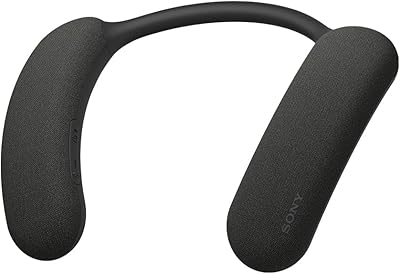
Sony BRAVIA Theater U Wireless Wearable TV Speaker (HT-AN7)
85%
85%
Sound Quality
91%
Comfort & Wearability
88%
Battery Life
89%
Bluetooth Connectivity
87%
Ease of Use
More
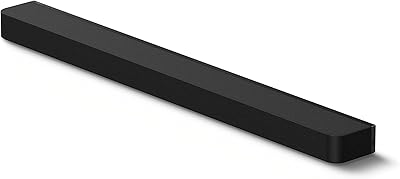
Sony BRAVIA Theater Bar HT-B600 3.1.2ch Soundbar with Wireless Subwoofer
87%
90%
Sound Quality
89%
Bass Performance
85%
Dialogue Clarity
91%
Ease of Setup
88%
Build Quality
More
Sony BRAVIA Theater Bar 8 Soundbar
86%
92%
Sound Quality
88%
Ease of Setup
91%
PS5 Integration
75%
Bass Performance
89%
Connectivity Options
More
Sony BRAVIA Theater Bar 9 Soundbar
87%
91%
Sound Quality
85%
Ease of Setup
88%
Value for Money
90%
Connectivity Options
89%
Build Quality
More
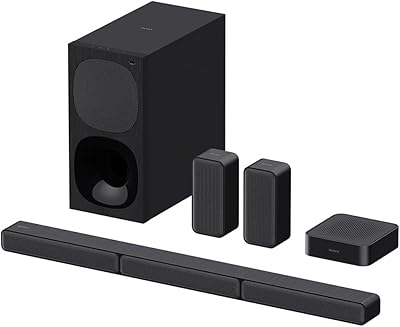
Sony HT-S40R 5.1ch Soundbar System
76%
83%
Surround Sound Immersion
88%
Setup & Installation
81%
Dialogue Clarity
71%
Bass Performance
78%
Value for Money
More
Sony HT-S100F Soundbar
85%
84%
Sound Quality
92%
Ease of Setup
65%
Bass Performance
90%
Voice Clarity
88%
Connectivity Options
More
Sony WH-RF400 Wireless TV Headphones
75%
93%
Ease of Setup
88%
RF Connection Reliability
79%
Wireless Range
91%
Battery Life
82%
Sound Clarity for Dialogue
More
Sony MDR-RF995RK Wireless Home Theater Headphones
83%
92%
Sound Quality
88%
Comfort & Fit
90%
Battery Life
86%
Wireless Range
84%
Ease of Setup
More
Sony BRAVIA 5 65-inch Mini LED TV
85%
94%
Picture Quality
91%
Gaming Performance
87%
Smart Features & Usability
92%
Value for Money
75%
Setup & Installation
More
Sony HT-A3000 3.1ch Dolby Atmos Soundbar
86%
89%
Sound Quality
93%
Bass Performance
84%
Setup Ease
88%
Connectivity Options
87%
Dialogue Clarity
More

FAQ

It works with any TV that has an HDMI ARC or eARC port — you do not need a Sony display to get surround sound, Dolby Atmos, or the wireless setup. That said, certain features like Voice Zoom 3 and Center Speaker Mode are exclusive to compatible BRAVIA TVs, so non-Sony owners will get a capable system but miss out on those deeper integration options.

No, and this is worth knowing before you buy. The box contains the four wireless speakers, the control box, and accessories, but no subwoofer. If you want stronger bass — and for movies and music you likely will — the compatible Sony wireless subwoofer is a separate purchase on top of the system price.

Most buyers find it straightforward. You connect the control box to your TV via HDMI, plug each speaker into AC power, and run the automatic room calibration through the BRAVIA Connect app. The whole process typically takes under an hour. The trickiest part tends to be finding a clean placement spot for the control box near your TV.

Yes, a physical remote is included and handles the basics — volume, input selection, and sound mode switching. However, for anything more detailed like EQ adjustments or speaker placement settings, you will want to use the BRAVIA Connect app, as the remote is fairly minimal in scope.

Yes, and it is actually one of the stronger use cases for this system. The HDMI 2.1 port on the control box supports 4K at 120Hz passthrough, VRR, and ALLM, which keeps input latency low during gaming. The spatial audio also translates well to games with positional audio design, though PS5 Tempest 3D Audio routes through the TV rather than being processed natively by the system.

The inter-speaker wireless connection runs on 2.4 GHz, which can be affected by network congestion in dense apartment buildings with many overlapping Wi-Fi networks. Most users in houses or less congested environments report no issues, but if you live somewhere with a crowded wireless environment, occasional brief dropouts are a known possibility with this system.

Yes, wall-mounting brackets are included in the box alongside the table stands, so you have both options without any additional hardware purchase. The speakers are compact enough at 11.4″ wide to sit cleanly on a wall without dominating the room visually.

You can stream via Apple AirPlay 2, Spotify Connect, and Bluetooth directly to the system without needing the TV on. AirPlay 2 works for any audio from an Apple device, Spotify Connect lets you cast directly from the Spotify app, and Bluetooth handles general device audio from phones or tablets.

Rather than simply playing audio from the four speaker corners, the system measures your room and builds a virtual grid of sound sources in between the physical speakers. The practical result is that audio feels more enveloping and continuous rather than jumping between discrete points, and listeners sitting off-center tend to report a more convincing surround experience than with traditional setups.

If your main frustration with a soundbar is that surround sound feels front-heavy or artificial, this wireless surround system addresses that directly — four physical speakers placed around the room produce a substantially more convincing spatial experience than any soundbar with virtual or rear-satellite add-ons. The key question to ask yourself is whether the cable-free flexibility and spatial audio performance justify the premium over a wired 5.1 alternative, especially if bass matters to you and you are factoring in the subwoofer add-on cost.