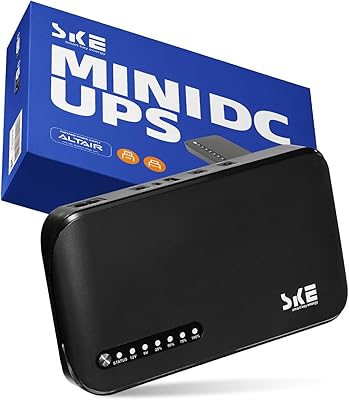


Overview

The Skazeke PB1 15000mAh Mini UPS entered the market in early 2024 as a compact, no-fuss battery backup built around low-power DC devices — think routers, modems, and security cameras rather than desktop PCs. Skazeke is a relatively new name in this space, so it doesn't carry the brand weight of APC or CyberPower, but this battery backup has quietly climbed to a top-125 ranking in its Amazon category, which says something about real-world demand. Beyond keeping your network alive during an outage, it doubles as a portable power bank, making it a practical dual-purpose tool for both home use and the road.

Features & Benefits

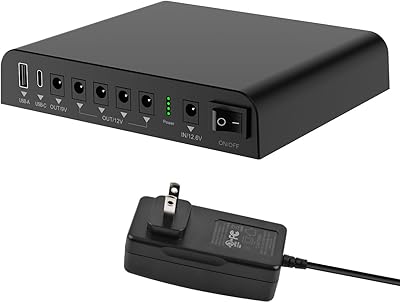
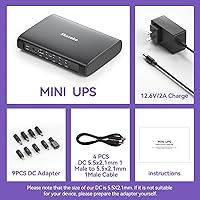
What makes this mini UPS genuinely useful is its flexibility across output voltages. It runs five ports simultaneously — USB 5V, a DC 5V port, a 9V port, and two 12V ports — covering most small DC-powered devices without hunting down extra adapters. The box is well-stocked too: four DC cables, nine adapter tips, and a charger all ship with it. Automatic switchover during a power cut happens without any user action, which is really the whole point of owning one. The LED indicators add a practical layer of feedback, flashing when voltage doesn't match your device or when you're pulling more than 2A — a real ceiling worth noting if your router leans power-hungry.

Best For

This battery backup makes the most sense for people whose work or daily routine genuinely depends on a stable connection when the grid goes down. Remote workers, students in areas with unreliable power, and home surveillance setups running low-draw IP or CCTV cameras are the natural sweet spot here. Raspberry Pi hobbyists and hardware makers will appreciate the clean, selectable DC outputs. It has also found a niche among users powering devices like breast pumps that demand uninterrupted, stable DC power. That said, if your router or connected device draws more than 2A, check its specs carefully before committing — this unit has a firm per-port limit.

User Feedback

Across roughly 80 reviews, the Skazeke backup unit holds a 4.4-out-of-5 rating — a decent result for a brand still building its reputation. Buyers frequently call out easy plug-and-play setup and the compact footprint, with most reporting it tucks neatly behind a router or mounts flat on a wall without fuss. The automatic cutover gets consistent praise, with users noting their connections stayed live through outages they'd normally lose entirely. On the critical side, the 2A per-port ceiling frustrates owners of mid-range or mesh routers that pull more current. Runtime is also a common question; realistic estimates for a typical home router fall somewhere between four and eight hours, though long-term battery health over many cycles is still an open question for a product this young.

Pros

  • Automatic switchover during outages is fast enough to keep most routers and modems online without any manual action.
  • Five output ports across three voltage levels cover a wide range of low-power DC devices from a single unit.
  • The compact, sub-10-ounce form factor fits neatly behind a router or mounts flat on a wall.
  • Setup is genuinely plug-and-play — no software, no configuration, and no technical expertise required.
  • Nine included DC adapter tips mean most buyers can connect their devices straight out of the box.
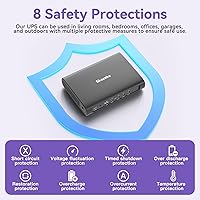
  • Seven built-in protection modes provide real safeguards when the unit runs unattended around the clock.
  • The LED indicator system actively flags voltage mismatches and overload conditions before damage occurs.
  • Doubles as a portable power bank for USB and DC devices when taken on the road.
  • Holds a 4.4-star average across verified buyers, reflecting broadly positive real-world experiences.
  • Competitive mid-range pricing for a multi-voltage DC UPS with this level of accessory inclusion.

Cons

  • The 2A per-port ceiling excludes many modern mesh and Wi-Fi 6 routers that draw more current.
  • Wall-mounting screws are not included despite the product being marketed as wall-mountable.
  • Runtime drops significantly when multiple ports are loaded at once, more than the capacity spec suggests.
  • The manual lacks detail on LED flash codes, leaving buyers to guess what certain indicator patterns mean.
  • Skazeke is a new brand with limited long-term reliability data — multi-year battery health is still an open question.
  • Some DC adapter tips feel slightly loose in their sockets, raising concerns about connection stability over time.
  • No carrying case or port cover is included, leaving exposed ports vulnerable during travel.
  • A handful of users report the overload protection triggers on router startup surge, causing unnecessary alarm.
  • The plastic housing shows cosmetic wear faster than expected for buyers who handle it regularly.
  • Customer support documentation is thin, and troubleshooting resources beyond the basic manual are scarce.

Ratings

The Skazeke PB1 15000mAh Mini UPS has been scored across 12 categories using AI analysis of verified global buyer reviews, with spam, bot-submitted, and incentivized feedback actively filtered out before scoring. Ratings reflect a genuine cross-section of real-world experiences — from home network users in outage-prone regions to makers running Raspberry Pi rigs — so both the strengths and the frustrations are represented honestly.

Automatic Switchover Reliability
88%
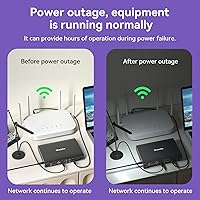
The vast majority of buyers report that the cutover during a power outage is fast enough that their router never drops the connection — video calls stay live, VPN sessions hold, and smart home hubs don't reset. For people in areas with brief but frequent dips, this near-instant response is the core reason they bought it.
A smaller subset of users noted occasional hesitation during switchover, particularly when the unit was below 30% charge, causing a brief flicker on connected devices. It is not universal, but it is consistent enough to flag for anyone running latency-sensitive equipment.
Battery Capacity & Runtime
76%
24%
At 15000mAh, this battery backup can realistically power a typical home router for somewhere between four and eight hours depending on the router's draw — genuinely useful for rolling blackouts or storm outages that last through the night. Users running a single low-draw modem reported the longest runtimes, often exceeding expectations.
Runtime drops noticeably when multiple ports are loaded simultaneously. Users powering a router plus a security camera at 12V found the capacity stretched thinner than the spec sheet implied, and the 55.5Wh total energy figure is a more honest anchor than the mAh number when estimating real-world hours.
Output Port Versatility
84%
Five simultaneous outputs across three voltage levels — 5V, 9V, and 12V — give this mini UPS a flexibility that most competitors in its price range simply do not match. Buyers powering a router on 12V while also running a USB-charged device praised not having to choose which device gets backup power.
The 2A ceiling per port is a firm wall, and it catches buyers off guard when they connect a mid-range mesh router that pulls closer to 2.5A or 3A. The unit's LED will flash a warning, but that does not solve the underlying compatibility gap for higher-draw setups.
Ease of Setup
91%
Buyers across all tech comfort levels consistently describe setup as refreshingly straightforward — match your device voltage, select the right DC tip from the nine included adapters, plug in, and the unit handles everything else. No software, no configuration menus, and no guesswork.
The manual is thin on detail for edge cases, and a few buyers struggled to identify which adapter tip matched their specific device without doing independent research. A clearer voltage-matching guide or quick-reference card in the box would eliminate most of the confusion.
Build Quality & Form Factor
73%
27%
The unit feels solid enough for a tucked-away installation behind a router or mounted flat on a wall, and the sub-10-ounce weight means it does not stress whatever surface it rests on. The compact slab design is genuinely one of the better executions in this product category.
The plastic housing does not project premium durability — it flexes slightly under firm pressure and the port labels can be hard to read in low light. Buyers who handle it frequently as a portable power bank noticed minor cosmetic wear faster than expected.
Included Accessories
86%
Nine DC adapter tips and four cables in the box is a genuinely generous starting kit, and most buyers found at least one combination that fit their device without ordering anything extra. The included charger is also properly rated rather than a stripped-down afterthought.
Wall-mounting screws are not included despite the unit being advertised as wall-mountable, which annoyed buyers who discovered this only after unpacking. A couple of the DC adapter tips also felt slightly loose in their sockets, raising minor durability concerns with repeated use.
Protection Features
82%
18%
Seven protection layers — covering short circuit, overcharge, over-discharge, overcurrent, overvoltage, and temperature events — give buyers real confidence when leaving this battery backup running unattended for extended periods. The LED warning system actively communicates problems rather than just shutting down silently.
The protection triggers conservatively, occasionally cutting power to a device that is technically within spec but drawing close to the limit during startup surge. Some router owners reported their unit flagging an overload on boot before settling, which is alarming even if the device ultimately runs fine.
Portability
79%
21%
At under a pound and fitting comfortably in a laptop bag pocket, this battery backup travels well for users who need to run equipment during field tests or temporary setups. The dual-role as a USB power bank adds real utility for those who carry it outside the home.
The form factor is optimized for static installation rather than frequent travel — the exposed DC ports and adapter tips are vulnerable without a case, and no carrying pouch is included. Buyers who used it as a regular travel power bank reported cosmetic damage to port edges within a few months.
Value for Money
78%
22%
For a mid-range price, the combination of multi-voltage DC outputs, automatic switchover, and a well-stocked accessory kit is difficult to match without spending significantly more on an established brand. Buyers who needed exactly this feature set consistently rated the value as fair to strong.
If your use case only needs a single 12V output, cheaper single-port options exist at a lower price point. And buyers who needed more than 2A per port found themselves having to return or supplement with a costlier unit, making the value calculation less favorable for those edge cases.
Long-term Reliability
63%
37%
Within the first six months of use, the majority of buyers report consistent performance with no capacity fade or port issues. Those running it in a simple always-on configuration as a home network backup seem particularly satisfied with day-to-day stability.
Skazeke is a new brand with a limited track record, and reviews beyond six months of ownership are sparse. A handful of users reported noticeable capacity reduction after several hundred charge cycles, but the sample size is too small to draw firm conclusions — this is the biggest unanswered question about this unit.
LED Indicator Clarity
71%
29%
The real-time feedback system does its job — flashing lights clearly signal a voltage mismatch or an overload condition, which prevents users from unknowingly running their device in a degraded state. Buyers appreciated having some form of active feedback rather than a single power LED.
The indicator codes are not intuitive without reading the manual first, and the manual does not go into sufficient detail on every flash pattern. A few buyers misread a normal charging state as an error and unnecessarily returned working units.
Device Compatibility
81%
19%
The breadth of supported device types is a genuine strong point — routers, modems, IP cameras, Raspberry Pi boards, LED panels, breast pumps, and car DVRs all show up in verified buyer use cases, which speaks to how broadly the voltage range covers real-world DC-powered equipment.
Compatibility breaks down at the 2A ceiling, which excludes some popular Wi-Fi 6 routers and multi-antenna access points that draw more current, especially on startup. Buyers with newer or more capable networking hardware should verify their device specs before purchasing.

Suitable for:

The Skazeke PB1 15000mAh Mini UPS was built with a very specific buyer in mind, and if you fit that profile, it delivers real value. Remote workers and students in areas with unreliable grid power will find it keeps their router and modem alive through most short-to-medium outages — realistically four to eight hours for a typical home router, depending on its draw. It is equally well-matched for small home surveillance setups where one or two low-draw IP cameras need to stay online regardless of what the grid is doing. Raspberry Pi enthusiasts and hardware makers appreciate the selectable DC voltage outputs, which let them power their projects cleanly without voltage regulators or extra adapters. Anyone running a medical-adjacent device like a breast pump — where losing power mid-cycle is genuinely disruptive — will also find this battery backup a practical and affordable safety net.

Not suitable for:

If your home network runs on a newer Wi-Fi 6 or mesh router that pulls more than 2A, the Skazeke PB1 15000mAh Mini UPS is not the right fit — the per-port current ceiling is firm, and the unit will flag an overload rather than silently underperform. It is also a poor choice for anyone who needs to protect desktop computers, NAS drives, or any AC-powered equipment, since this unit outputs DC only and has no AC inverter. Buyers who want long-term peace of mind from an established brand with a deep service history will likely find the relative newness of Skazeke uncomfortable — the brand simply does not have the track record yet to offer the same confidence as APC or CyberPower at a comparable price. And if your power outages regularly stretch beyond eight to ten hours, the 55.5Wh total capacity will not be enough to carry multiple devices through the night without recharging.

Specifications

  • Brand: Manufactured by Skazeke, a consumer electronics brand that entered the mini UPS market in early 2024.
  • Model Number: This unit carries the model designation PB1, the entry-level configuration in the Skazeke UPS lineup.
  • Battery Capacity: The internal lithium polymer cell is rated at 15000mAh, equivalent to 55.5Wh of usable stored energy.
  • Cell Type: Uses a lithium polymer (LiPo) battery pack, which offers a favorable energy-to-weight ratio in a flat, compact form factor.
  • Output Ports: Provides five simultaneous output connections: one USB at 5V/2A, one DC at 5V/2A, one DC at 9V/2A, and two DC ports at 12V/2A each.
  • Max Current: Each individual output port is limited to a maximum of 2A, regardless of voltage selection.
  • Charger Input: The included wall charger supplies up to 12.6V/2A to recharge the internal battery pack.
  • Dimensions: The unit measures 6.29″ wide by 4.6″ tall by 1.25″ deep, making it roughly the footprint of a large paperback book.
  • Weight: At 9.6 ounces (0.9 lb), this battery backup is light enough to rest on top of a router or hang on a wall without heavy mounting hardware.
  • Mounting: The unit includes mounting holes for wall installation, though screws are not supplied in the box.
  • Accessories: Each purchase includes 4 DC cables, 9 DC barrel adapter tips covering common sizes, 1 wall charger, and a printed manual.
  • Protection Modes: Seven protection systems are built in: short circuit, overcharge, over-discharge, overcurrent, overvoltage, and thermal protection.
  • LED Indicators: Onboard LED indicators communicate charging status, voltage mismatch errors, and overload conditions through distinct flash patterns.
  • Supported Voltages: Output voltage is selectable across 5V, 9V, and 12V DC to match the power requirements of different connected devices.
  • Simultaneous Outputs: All five output ports can operate at the same time, allowing multiple devices to receive backup power during an outage.
  • Switchover Type: Power switchover is automatic when mains electricity is interrupted, requiring no manual input from the user.
  • Availability Date: First made available for purchase in January 2024 through Amazon and select online retailers.
  • Amazon Ranking: Holds a position within the top 125 products in the Computer Uninterruptible Power Supply Units category on Amazon.

Related Reviews
Eaton 3S Mini UPS 36W
82%
91%
Battery Life
88%
Ease of Setup
94%
Portability/Size
80%
Power Output
72%
Value for Money
More
SKE DC20000 Plus Altair Mini UPS
78%
76%
Battery Life & Runtime
83%
Port Versatility & Compatibility
91%
Size & Portability
94%
Ease of Setup
58%
Recharge Speed
More
Skazeke UPS 9000+4 DC Battery Backup
84%
91%
Battery Life
87%
Ease of Use
88%
Value for Money
85%
Compact Design
83%
Device Compatibility
More
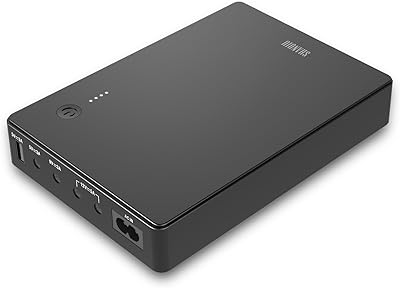
TalentCell SL3400 97.2Wh Mini UPS Battery Pack
75%
91%
Ease of Setup
74%
Runtime Performance
82%
Build Quality
88%
Pass-Through Charging
83%
Output Versatility
More
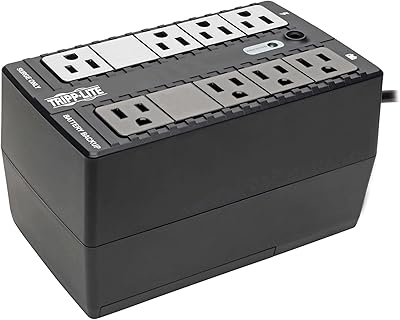
Tripp Lite 450VA Mini UPS Battery Backup Surge Protector
86%
85%
Performance
90%
Surge Protection Effectiveness
72%
Battery Runtime
88%
Ease of Installation
94%
Noise Level
More
Shanqiu Mini UPS FX 5-12Pro-AC 74Wh Battery Backup
85%
88%
Value for Money
91%
Battery Performance
87%
Portability/Size
85%
Ease of Use
90%
Output Options Flexibility
More
SKE SMART KEY ENERGY Mini UPS Battery Backup 10400mAh 38.48Wh
85%
87%
Battery Life
93%
Portability/Size
85%
Compatibility with Devices
89%
Power Output for Small Devices
65%
Power Output for Larger Devices
More
APC SMT750 750VA Smart-UPS Battery Backup

80%
91%
Power Protection Reliability
88%
Pure Sine Wave Output
89%
Automatic Voltage Regulation
62%
Runtime at Load
87%
Build Quality
More
APC Smart-UPS 1000VA UPS Battery Backup (SMT1000)
87%
88%
Performance
91%
Value for Money
85%
Battery Life
92%
Build Quality
89%
Noise Level
More
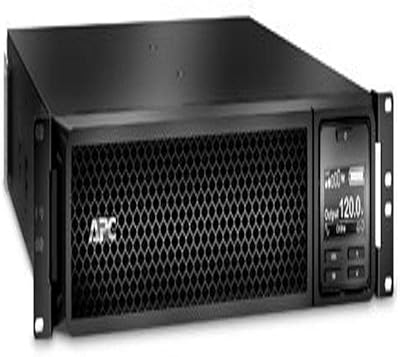
APC SCL500RM1UC 500VA Lithium Ion Rackmount UPS
79%
88%
Build Quality
83%
Battery Life & Longevity
67%
Runtime at Real-World Loads
91%
Installation & Setup
93%
Weight & Physical Footprint
More

FAQ

It depends on how much current your router draws. A typical single-band or dual-band home router pulling around 10 to 15 watts at 12V could run for roughly four to eight hours on a full charge. If you are running multiple devices simultaneously or your router is a power-hungry mesh unit, expect that window to shrink noticeably. Check your router's label for its wattage and divide 55.5Wh by that number to get a ballpark estimate.

The switchover is designed to be automatic and fast enough that most routers and modems do not reboot or drop the connection. The majority of buyers report their video calls and VPN sessions stayed live through the transition. There can be a very brief flicker in rare cases, particularly if the unit's battery is low, but it is not a manual process — you do not need to do anything when the lights go out.

Check the label on your router's original power adapter for the output voltage and barrel connector size. The included kit has nine different DC barrel tips, so there is a good chance one of them fits. Match the tip size to your router's port, connect it to the 12V output on the backup unit, and you are set. If none of the nine tips fit, you may need to pick up a specific adapter separately, but this is uncommon for standard home networking equipment.

Possibly, but you need to check your router's power draw first. The Skazeke PB1 15000mAh Mini UPS has a firm 2A ceiling per output port, which means it can deliver at most 24 watts on the 12V port. Many Wi-Fi 6 and tri-band mesh routers pull more than that, especially during startup. If your router's power adapter says 3A or higher, this unit will not be able to power it reliably and the overload indicator will flash.

Yes, this mini UPS is designed to pass power through to your connected devices while the internal battery stays topped up from the wall. When mains power is present, it functions as a pass-through with simultaneous charging. When the power cuts out, it automatically switches to battery output. Think of it as always being in standby, ready to take over.

Yes, and it works reasonably well in that role. The USB 5V output handles phone and small device charging, while the DC outputs let you power equipment in the field. At under a pound it is genuinely portable, though there is no carrying case in the box and the exposed barrel ports are a little vulnerable without one. It is more convenient as a stationary backup than as an everyday travel battery, but the option is there.

There are two common flash patterns to know. If the battery indicator flashes continuously, it usually means the input voltage from the wall charger does not match what the unit expects — double-check that you are using the supplied charger or a compatible one rated at the correct voltage. If the voltage indicator on one of the output ports keeps flashing, the connected device is drawing more than 2A, which exceeds the port's limit. In either case, the manual has a flash-pattern reference, though it is admittedly brief.

Yes, that is actually the intended use case. The built-in overcharge protection prevents the battery from being damaged by continuous charging, and the thermal protection monitors for heat buildup. Leaving it plugged in permanently while connected to your router is the standard always-on UPS configuration. That said, like any lithium battery device, keeping it in a well-ventilated spot and away from direct heat sources is good practice.

The unit has mounting holes built into the casing, so the hard part of wall installation is already handled by the design. The catch is that screws are not included in the box, which caught a few buyers off guard. You will need to pick up appropriate screws for your wall type separately — standard drywall screws work for most installations. Once mounted, the flat profile sits close to the wall and stays out of the way.

Established brands like APC or CyberPower offer more extensive support networks, longer warranty terms, and years of reliability data. This battery backup competes on price and versatility — specifically the multi-voltage DC outputs, which most traditional UPS units do not offer without extra adapters or converters. If you need AC output, guaranteed long-term support, or protection for expensive equipment, a name-brand unit is the safer call. If you need a compact, affordable DC backup for a router or small camera setup, this unit holds its own.