Overview

The SIMOLIO SM-824D2 Dual Wireless TV Headphones have been quietly solving a very real household problem since 2018: one person needs the TV louder, and everyone else doesn't. The kit ships with two headsets, making it genuinely practical for couples rather than just a solo solution. Rather than Bluetooth, it uses 2.4GHz RF wireless technology — a deliberate choice that trades the complexity of pairing for a stable, low-delay connection capable of reaching through walls and floors. At a mid-to-premium price point, it sits well above basic TV headphones, and its years-long track record gives buyers considerably more real-world data to rely on than most newer alternatives.
Features & Benefits

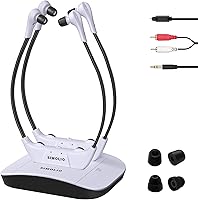
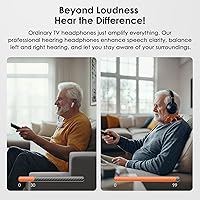
What sets the SIMOLIO dual headset apart from generic wireless TV earbuds is how thoughtfully its controls are designed for people with uneven hearing. The left/right balance control lets you shift audio toward whichever ear hears better — a small feature with a significant practical payoff. The voice clarity mode doesn't use traditional active noise cancellation; it filters the audio signal to bring dialogue frequencies forward, making speech easier to follow without distorting other sounds. An ambient sound mode keeps wearers connected to their surroundings, and a spare battery charges inside the transmitter base so you can swap it mid-movie without any interruption. The optical bypass also lets TV speakers or a soundbar keep running simultaneously.

Best For

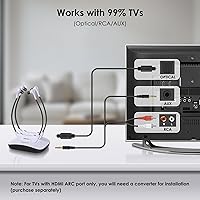
This senior-focused TV headphone set is an ideal pick for households where two people watch together but have different hearing needs. If one partner wants to crank the volume while the other prefers quiet, these wireless TV earbuds solve that tension without anyone having to compromise. They also work well for people who find Bluetooth audio frustrating — the RF connection requires no pairing ritual and introduces virtually no audio delay. One key caveat: the set does not support HDMI-only connections, so check your TV's audio outputs before buying. It works with optical, RCA, or 3.5mm ports. Caregivers will also appreciate the ambient passthrough feature, which keeps the wearer responsive to nearby conversations without removing the earbuds.

User Feedback

With over 2,300 ratings and a 4.3-star average, buyer sentiment for the SIMOLIO dual headset skews strongly positive, and the most consistent praise centers on improved dialogue clarity and how straightforward the setup is — plug in the transmitter, insert the earbuds, and it just works. Long viewing sessions draw favorable comments too, with many users appreciating the ear loops for keeping the tips secure. That said, comfort is a genuine dividing line: people accustomed to over-ear headphones sometimes find the in-ear style tiring after a few hours. The no-HDMI restriction also surfaces in negative reviews, often from buyers who didn't verify compatibility beforehand. Battery performance generally holds up well, with most users finding the stamina close to what is advertised.

Pros

  • Ships with two complete headsets, making it a practical all-in-one solution for couples from day one.
  • Left/right audio balance control is a genuinely useful feature for anyone with uneven hearing between ears.
  • The RF wireless connection requires zero pairing — power it on and it works, every time.
  • A spare battery stays charged inside the transmitter base, so running out of power mid-program is rarely an issue.
  • Dialogue clarity filtering makes speech noticeably easier to follow without distorting the rest of the audio.
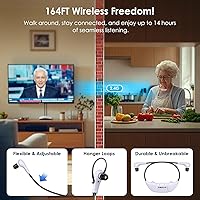
  • The 164-foot range comfortably covers most homes, including trips to the kitchen during commercial breaks.
  • Optical bypass lets the TV speakers or soundbar keep playing while the earbuds are in use simultaneously.
  • Memory foam eartips with ear loops keep the earbuds secure and comfortable for the majority of users.
  • Audio delay is negligible in practice — lip sync stays accurate, which matters far more than most buyers expect.
  • Over 2,300 ratings with a 4.3-star average provides a deep, reliable pool of real-world performance data.

Cons

  • No HDMI connection support means buyers with newer TVs must first check for alternate audio outputs or buy an adapter.
  • The in-ear form factor divides opinion — users who prefer over-ear headphones may find extended wear uncomfortable.
  • Soundbar bypass only works through the optical connection; RCA and AUX users cannot use this feature.
  • No Bluetooth support rules out compatibility with smart TVs that lack analog or optical audio outputs.
  • Earbud fit is not universal; users with smaller or unusually shaped ear canals report a less secure feel.
  • The plastic build, while functional, does not feel particularly premium given the mid-to-upper price point.
  • Voice clarity mode shapes sound toward dialogue frequencies, which can make music and cinematic soundtracks feel thin.
  • Only one transmitter is included, so both headsets must stay within range of the same base unit.

Ratings

The SIMOLIO SM-824D2 Dual Wireless TV Headphones have accumulated a substantial body of verified buyer feedback since their 2018 launch, and these scores were generated by AI after analyzing thousands of real-world reviews worldwide — actively filtering out incentivized, bot-generated, and spam submissions to surface genuine user sentiment. Strengths and frustrations are reflected equally, so the scores you see here tell the full story, not just the flattering parts.
Dialogue Clarity
88%
This is the feature buyers talk about most, and the satisfaction rate is high. Seniors who previously struggled to follow fast-spoken TV dialogue — particularly on dramas and news programs — consistently report a marked improvement. The voice clarity filtering does a convincing job of pulling speech forward in the audio mix.
The same frequency shaping that helps dialogue can make music-heavy content or action movie soundtracks sound thin and slightly hollow. Users who watch a diverse range of content, not just speech-driven programming, may find the audio profile feels too narrow for their tastes.
Ease of Setup
91%
Buyers repeatedly praise how quickly the system is up and running — plug the transmitter into the TV's audio output, connect power, and the headsets link automatically with no pairing menus or app downloads required. For older users who find technology intimidating, this near-zero friction setup is a genuine selling point.
The no-HDMI limitation catches a meaningful number of buyers off guard after purchase, and the frustration in those reviews is real. If a buyer does not check their TV's audio outputs beforehand, what should be a five-minute setup can turn into a compatibility dead end that requires a separate adapter purchase.
Comfort & Fit
72%
28%
The memory foam eartips and ear loops work well for most users during typical two-to-three hour TV sessions, and the majority of buyers report no significant discomfort. The ear loops add meaningful stability, preventing the earbuds from shifting during casual movement around the room.
In-ear earbuds are not universally comfortable, and this product attracts buyers who might be better served by an over-ear design. A recurring complaint involves ear canal fatigue during longer sessions, and users with smaller or irregularly shaped ears report difficulty achieving a secure, comfortable seal.
Wireless Reliability
86%
The 2.4GHz RF connection is demonstrably more stable than Bluetooth in a living room environment, with very few reports of dropouts during normal use. Users appreciate being able to walk to the kitchen or bathroom without the audio cutting out, which is a common complaint with cheaper or Bluetooth-based alternatives.
Signal degradation does occur in homes with thick concrete walls, dense building materials, or significant wireless interference from neighboring networks. A small but consistent group of buyers in apartments or older homes report occasional static or brief dropout events that do not affect the majority of users in standard construction homes.
Battery System
84%
The spare battery concept solves a real problem elegantly — knowing there is always a fully charged backup sitting in the base removes any anxiety about running out of power mid-program. Most users find the runtime honest and close to the stated figure under moderate volume conditions.
The 14-hour battery claim applies to moderate volume levels, and buyers who use higher volume settings report noticeably shorter runtimes. Managing two batteries per headset also introduces a minor organizational overhead that a simpler USB-C charge-while-using design would eliminate.
Value for Money
74%
26%
For buyers who need two headsets and specifically want the balance control, ambient mode, and spare battery system together in one bundle, the per-feature cost calculus is reasonable. Purchasing two separate wireless TV headsets with comparable features would cost considerably more.
At a mid-to-premium price point, the plastic build and in-ear form factor leave some buyers feeling the hardware does not quite justify the cost. Those who only need a single headset are effectively paying for a second unit they may never use, which makes the value proposition weaker for solo viewers.
Audio Latency
89%
Under 30 ms delay is imperceptible to virtually all users in real viewing conditions, and lip-sync complaints are nearly absent from the review pool. This is one of the clearest functional advantages RF wireless holds over Bluetooth for TV audio, and buyers who switched from a Bluetooth system specifically notice the improvement.
A very small number of users report occasional sync drift during extended sessions, though this appears to be an edge case rather than a systemic issue. It is worth noting that the sub-30 ms figure is a specification ceiling, and real-world performance can vary slightly depending on the source device and cable used.
Volume Independence
87%
The ability for each headset user to set their own volume independently — completely decoupled from the TV's master volume — is one of the most practically appreciated features in the review pool. Couples with different hearing sensitivities report that this alone resolved a long-standing daily source of friction.
Volume range has a ceiling, and a small subset of users with more significant hearing difficulty report that even maximum headset volume is not loud enough for their needs. This product targets mild-to-moderate hearing difficulty; those with more pronounced hearing challenges may find the headset volume cap limiting.
Soundbar Compatibility
68%
32%
For households that have already invested in a soundbar, the optical bypass is a legitimately useful feature — it means no one has to choose between the earbuds and the soundbar, and the person who needs personal volume can use it without disrupting everyone else's listening experience.
The bypass feature is strictly limited to optical connections, which excludes users who connect their soundbar via RCA, HDMI ARC, or 3.5mm. This restriction is not prominently flagged during purchase, and buyers with non-optical soundbar setups occasionally discover the limitation only after the product arrives.
Ambient Sound Mode
81%
19%
Users who live with caregivers or family members find the ambient passthrough mode practically valuable — wearing earbuds no longer means tuning out the household entirely. The ability to hear someone call from another room without removing the earbuds adds a meaningful layer of everyday safety and social awareness.
The ambient mode introduces a moderate level of background noise into the audio feed, which some users find distracting during quieter scenes or dialogue-heavy programming. It functions as a toggle rather than a gradual blend, so there is no way to fine-tune how much environmental sound passes through.
Left/Right Balance Control
83%
This feature resonates strongly with the core target audience — users with asymmetric hearing loss can shift audio toward their stronger ear, making dialogue easier to follow without relying solely on overall volume. It is a small hardware addition that solves a very specific but common real-world problem effectively.
The adjustment range, while useful, is not granular enough for users with significant hearing asymmetry who want finer control. The balance control is also a physical dial rather than a digital setting, so it can shift accidentally during handling, requiring users to periodically check and reset it.
Build Quality
66%
34%
The transmitter base feels solid enough for permanent placement near a TV stand, and the headset arms have a degree of flexibility that allows them to be shaped for a better fit over time. For day-to-day home use — sitting, watching, and occasionally being set down — durability is adequate for most buyers.
The all-plastic construction is the most common material criticism in the review pool, and at this price tier, buyers expect something that feels more substantial in hand. A few long-term users report that the flexible headset arm begins to lose its shape retention after many months of daily adjustment.
Transmitter Design
77%
23%
The dual-purpose transmitter-and-charging-base design is genuinely convenient — it handles signal broadcasting, charges the active headset, and keeps the spare battery topped up all from one compact unit. The plug-and-charge approach means there are no cables to manage between sessions once the system is installed.
With only one transmitter in the box, both headsets must remain within range of the same base, which limits flexibility in larger or multi-room setups. Buyers who hoped to use the headsets in different rooms simultaneously, or at significant distances from each other, will find this architecture restrictive.
Packaging & Documentation
79%
21%
The box includes all the cables needed for the three supported connection types — optical, RCA, and AUX — so most buyers do not need to source anything extra. The quick-start guide is straightforward enough that the target audience, including less tech-savvy users, can typically complete setup without consulting detailed instructions.
The user manual is English-only, which limits accessibility for non-English-speaking buyers who encounter this product through international marketplaces. Some users also note that the documentation does not clearly enough emphasize the HDMI incompatibility upfront, which contributes to avoidable post-purchase disappointment.

Suitable for:

The SIMOLIO SM-824D2 Dual Wireless TV Headphones are built with a very specific household situation in mind, and they nail it: two people watching the same TV who need completely different volume levels. Seniors with mild-to-moderate hearing difficulty will find the tone adjustment and left/right balance controls particularly useful, since real-world hearing rarely fades equally in both ears. Couples benefit from the dual-headset bundle right out of the box, rather than needing to purchase a second unit separately. Anyone frustrated by Bluetooth pairing problems or audio that lags behind the picture will appreciate that this system connects automatically and keeps sound locked to the video without any noticeable delay. Caregivers will also find value here — the ambient sound mode means the person wearing the earbuds can still hear someone calling from across the room without pulling them out. If your TV has an optical, RCA, or 3.5mm audio output, setup is genuinely plug-and-play.

Not suitable for:

The SIMOLIO SM-824D2 Dual Wireless TV Headphones are a poor fit for anyone whose TV exclusively outputs audio through HDMI — a surprisingly common situation with newer televisions, and the single biggest source of frustrated returns. Buyers who strongly prefer over-ear cushioned headphones for comfort will likely find the in-ear format a compromise, particularly during sessions lasting several hours. This is also not the right choice for someone expecting traditional active noise cancellation; the voice clarity feature shapes the audio signal to favor dialogue, but it does not block out ambient room noise the way dedicated noise-cancelling headphones do. Audiophiles or anyone looking for rich, full-spectrum sound for music or movies will find the sound profile too voice-focused for their tastes. Finally, users who need Bluetooth compatibility — for example, to connect to a smart TV that has no analog or optical outputs — should look elsewhere, as this system has no Bluetooth support whatsoever.
Specifications

  • Wireless Technology: Uses 2.4GHz RF (radio frequency) wireless transmission, with no Bluetooth support.
  • Operating Range: Effective wireless range extends up to 164 ft (50 m) and can penetrate walls and ceilings.
  • Audio Latency: Signal delay is under 30 ms, keeping audio tightly synchronized with on-screen action.
  • Battery Life: Each headset runs for approximately 14 hours on a full charge, depending on volume level.
  • Spare Battery: A second battery is included and remains charging inside the transmitter base for immediate hot-swapping.
  • Charging Time: A depleted battery reaches a full charge in approximately 3 hours.
  • Form Factor: In-ear design with ear loops to secure the earbuds in place during extended wear.
  • Eartip Material: Eartips are made from soft memory foam designed to conform to the ear canal for a comfortable fit.
  • Audio Driver: Each earbud uses a dynamic driver configuration tuned to prioritize voice frequency reproduction.
  • Impedance: Headset impedance is rated at 32 Ohm, standard for consumer-grade personal audio devices.
  • Audio Controls: Onboard controls include tone adjustment, left/right ear balance, and a mono/stereo toggle.
  • Ambient Sound: An ambient sound mode allows environmental sounds to pass through so the wearer can hear nearby conversations.
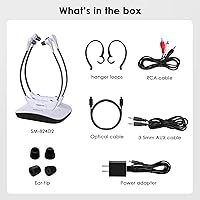
  • Connections: The transmitter supports optical (TOSLINK), RCA, and 3.5mm AUX audio inputs.
  • Soundbar Bypass: When connected via optical, the transmitter allows the TV's soundbar or speakers to remain active simultaneously.
  • Headset Count: The package includes two fully functional headsets, both compatible with the single included transmitter.
  • Battery Type: Each headset is powered by a built-in lithium polymer (LiPo) rechargeable battery.
  • Package Contents: Box includes 2 headsets, 1 transmitter with spare battery inserted, optical cable, RCA cable, AUX cable, and a US power adapter.
  • HDMI Support: The system does not support HDMI connections; an external HDMI audio extractor must be purchased separately if needed.
  • Bluetooth Support: The system is not compatible with Bluetooth and cannot connect to TVs that output audio exclusively via Bluetooth.
  • Water Resistance: These earbuds carry no water resistance rating and should be kept away from moisture.

Related Reviews

SIMOLIO 737D Plus Dual Wireless TV Headphones
78%
93%
Ease of Setup
91%
Dual Volume Control
88%
Audio Latency
74%
Sound Quality
66%
Comfort & Fit
More
ROSIDA TH11 Wireless TV Headphones
80%
88%
Latency & Lip-sync
91%
Setup & Ease of Use
93%
TV Compatibility
87%
Volume & Amplification
72%
Comfort & Fit
More
Dytole TV001 Wireless TV Headphones
79%
91%
Battery Life
88%
Ease of Setup
82%
Audio Clarity
79%
Audio Sync Accuracy
67%
Wearing Comfort
More
ANSTEN AS60 Wireless TV Headphones
80%
93%
Ease of Setup
88%
Wireless Range & Stability
91%
Audio Latency
84%
Comfort & Wearability
71%
Sound Quality
More
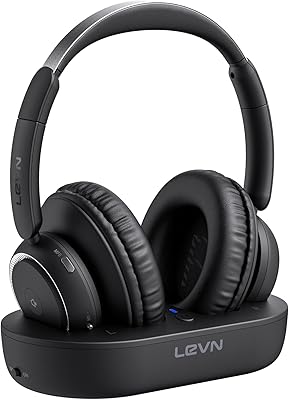
LEVN LE-HS018 Wireless TV Headphones
79%
94%
Ease of Setup
88%
Audio Latency
91%
Battery Life
86%
Dialogue Clarity
74%
Comfort & Fit
More
Avantree Ensemble Wireless TV Headphones
82%
94%
Ease of Setup
91%
Dialogue Clarity
88%
Wearing Comfort
93%
Battery Life
89%
Charging Dock Experience
More
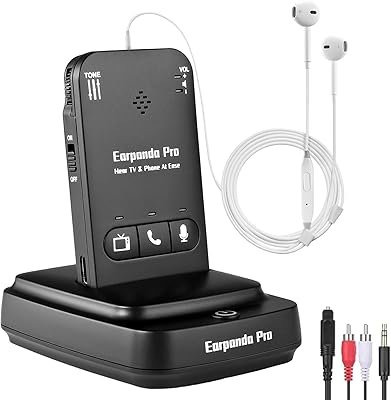
Earpanda Pro TV Headphones Wireless for Seniors
87%
85%
Sound Quality
92%
Ease of Use
88%
Comfort
90%
Wireless Range
80%
Battery Life
More
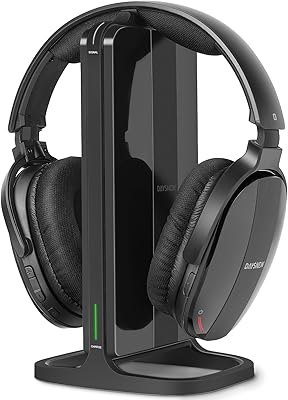
Daysnew DB100 Wireless TV Headphones
77%
91%
Ease of Setup
84%
Audio Sync & Latency
88%
Volume Control & Personalization
76%
RF Wireless Range
71%
Comfort & Fit
More
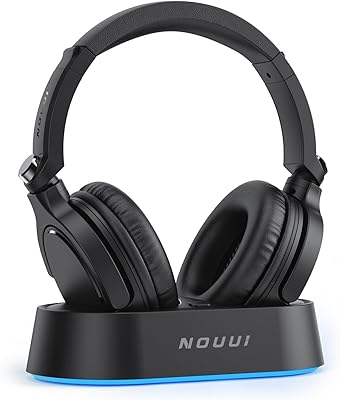
NOUUI NU-TV002 V2 Wireless TV Headphones
80%
91%
Ease of Setup
88%
Audio Sync & Latency
86%
Battery Life
79%
Charging & Docking Base
67%
Wearing Comfort
More
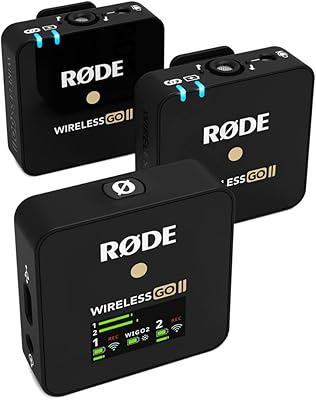
RØDE Wireless GO II
RØDE Wireless GO II
84%
92%
Audio Clarity
86%
Signal Reliability
97%
Internal Backup Recording
94%
Portability & Weight
91%
Setup Speed & Ease of Use
More

FAQ

Not directly, no. The SIMOLIO SM-824D2 Dual Wireless TV Headphones require an optical, RCA, or 3.5mm AUX audio output on your TV. If your TV only has HDMI, you would need to purchase a separate HDMI audio extractor to convert the signal first. Check the back of your TV carefully before buying — many TVs have an optical or headphone jack even if HDMI is the primary connection.

Yes, both headsets connect to the single transmitter simultaneously and work independently. Each person can adjust their own volume without affecting the other, which is the whole point of the dual-headset design.

If you connect the transmitter using the optical cable, you can use the built-in bypass feature to keep your soundbar running at the same time. This means one person can listen through the earbuds while everyone else hears the TV through the soundbar as usual. Note that this simultaneous playback feature only works with the optical connection, not RCA or AUX.

When a headset battery runs low, you simply swap the depleted battery out and drop in the fully charged spare that has been sitting in the transmitter base. There is no complex process — the spare stays charged automatically while it sits in the base, so it is always ready when you need it.

Not quite. Active noise cancellation physically counteracts ambient noise using microphones, while the voice clarity feature here works differently — it shapes the audio signal to emphasize speech frequencies and pull dialogue forward in the mix. It makes voices easier to understand, but it will not block out the sound of a dishwasher running or traffic outside the way a dedicated noise-cancelling headphone would.

Yes, and this is one of the more thoughtful features on these wireless TV earbuds. There is a dedicated left/right balance control that lets you shift the audio toward whichever ear hears better. Combined with the tone adjustment, you have real flexibility to tune the sound to your specific hearing without needing to turn the whole TV up.

Yes. Switching on the ambient sound mode allows external sounds to pass through so you can hear a family member or caregiver talking to you without removing the earbuds. It is a genuinely practical feature, especially for older users who need to stay aware of their surroundings.

It is about as simple as it gets. You plug the transmitter into your TV's audio output, connect the power adapter, and the headsets pair to the transmitter automatically. There is no app, no Bluetooth pairing menu to navigate, and no code to enter. Most users are up and running in a few minutes.

Most users find the memory foam eartips and ear loops comfortable for extended wear, and the majority of reviews reflect that. That said, comfort with in-ear earbuds is personal — if you are used to over-ear or on-ear headphones, the in-ear style can feel fatiguing after a while. If you have had trouble tolerating in-ear earbuds in the past, that is worth factoring in before purchasing.

The 2.4GHz RF signal is rated for up to 164 ft and is designed to pass through walls and ceilings with reasonable reliability. In practice, most single-story homes and apartments are well within that range. You may notice some signal degradation through multiple thick concrete walls, but for typical home layouts, walking to an adjacent room while keeping the audio going is generally not an issue.