Overview

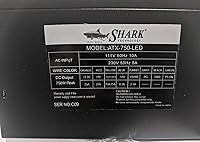
The Shark Technology ATX-750-LED 750W Power Supply is a budget-oriented ATX unit aimed at first-time builders and anyone assembling a basic gaming or office PC without spending heavily on power delivery. One thing to flag upfront: the 750W figure refers to peak output, not sustained continuous power — a distinction that matters when sizing this against your actual component load. The non-modular design means a fixed cable bundle, which keeps costs down but demands a bit of patience during cable management. This budget ATX unit has been on the market since 2015 and, while it carries no 80 Plus efficiency certification, it continues to sell and covers standard ATX 12V 2.0 builds across mid and mini tower cases.
Features & Benefits

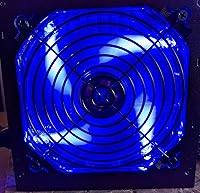
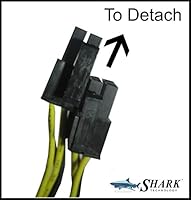
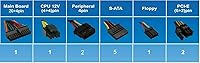
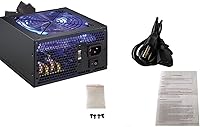
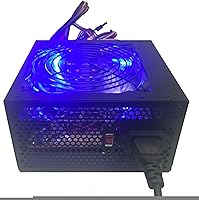
The connector spread on this 750W power supply is genuinely practical for the price tier. You get a 20+4 pin main connector, a 4+4 pin CPU lead, dual 6+2 PCIe connectors, five SATA ports split across two separate cables for better reach inside crowded cases, two Molex peripherals, and a floppy connector for older hardware. The 120mm blue LED fan runs quietly under light to moderate loads, and the low-drag circular guard keeps airflow tidy. Cable lengths hold up well in both mini and mid tower builds. Everything arrives ready to install — a UL-certified five-foot AC cord and four mounting screws are in the box, so there is nothing extra to hunt down.

Best For

This Shark Technology PSU makes the most sense for budget-conscious builders putting together a secondary rig, a light gaming system, or a workhorse office PC — situations where a mid-range GPU drawing under 150W is about the heaviest load. It also doubles as a clean drop-in replacement for Dell OptiPlex 3010, 7010, and 9010 MT desktops, where the form factor and connector layout line up well. Buyers who need something functional while saving toward a higher-tier unit will find it serviceable. Skip it if a power-hungry GPU is in the plans or if efficiency certification and verified sustained output under heavy load are requirements you are unwilling to compromise on.

User Feedback

Across 124 ratings, this budget ATX unit holds a 4.0-star average — solid enough, though the range of opinions is worth understanding before buying. Pleased owners consistently cite straightforward installation, adequate cable lengths, and a fan that stays unobtrusive during typical daily use. On the other side, some buyers raise doubts about long-term reliability, and a few specifically flag the peak-versus-continuous wattage framing as confusing when they expected full sustained delivery. The Dell OptiPlex replacement use case earns its own set of positive mentions from users who found it a clean, functional swap for a dead factory unit. The overall picture is reasonable for the price — just go in with calibrated expectations.

Pros

  • Connector selection covers the essentials: 20+4 main, 4+4 CPU, dual 6+2 PCIe, five SATA, and two Molex ports.
  • Split SATA cables on separate lines make routing inside cramped mid-tower cases noticeably easier.
  • The 120mm fan keeps noise levels low during typical office and light gaming workloads.
  • Works as a confirmed drop-in replacement for Dell OptiPlex 3010, 7010, and 9010 MT desktops.
  • Ships with a UL-certified AC power cord and mounting screws — nothing extra to source before installation.
  • Compatible with both Intel Core and AMD Ryzen mainstream platforms out of the box.
  • Blue LED fan and quad status LEDs add a clean visual touch for budget open-frame or windowed builds.
  • Cable lengths are generous enough for both mini and mid-tower cases without stressful stretching.
  • At its price point, the connector variety is hard to match without spending significantly more.

Cons

  • The 750W rating is peak, not continuous — actual sustained output under load is not independently verified.
  • No 80 Plus efficiency certification means energy costs and heat output under load are unknowns.
  • Non-modular design leaves unused cables cluttering the case with no way to remove them.
  • Design dates back to 2015, predating efficiency and build-quality standards common in newer units.
  • Long-term reliability concerns appear in user reviews, raising questions about lifespan under daily use.
  • No multi-year warranty documentation is prominently highlighted, a red flag for primary system builds.
  • Marketed wattage framing has confused buyers expecting full continuous delivery at the rated number.
  • Not a confident fit for any GPU that pulls more than 150W sustained under gaming load.
  • Lack of efficiency rating makes it a poor choice for systems that run extended workloads or stay on overnight.

Ratings

Our AI rating engine analyzed verified global user reviews for the Shark Technology ATX-750-LED 750W Power Supply, actively filtering out incentivized, bot-generated, and duplicate submissions to surface what real builders actually experienced. Scores across each category reflect an honest synthesis of both satisfied and frustrated buyers, so the strengths and the genuine pain points are represented equally. Where this budget ATX unit earns praise, you will see it — and where it falls short of expectations, the scores make that clear too.

Value for Money
74%
26%
For budget-conscious builders who just need power flowing to a light gaming or office system, the connector variety and included accessories at this price point are hard to argue with. Buyers replacing a dead PSU in a secondary rig consistently called it a fair trade.
The value calculation shifts once you factor in the age of the design and the absence of any efficiency certification. Buyers who later needed a more capable unit felt they would have been better served saving a little more upfront for a certified model.
Wattage & Power Delivery
53%
47%
For low-demand builds running integrated graphics or a modest entry-level discrete card, the available power is sufficient and the system stays stable under typical workloads. Light gaming sessions and office use present no issues for most users.
The 750W peak-versus-continuous ambiguity is this unit's most criticized technical weakness. Users who assumed peak equaled sustained delivery were caught off guard under heavier loads, and the lack of independent verification leaves real uncertainty for anyone pushing the system harder.
Connector Variety
83%
The full spread of connectors — dual 6+2 PCIe, five SATA across split cables, two Molex lines, a floppy port, and both 4-pin and 8-pin CPU support — covers essentially every connection a mainstream build would need. Builders praised not having to hunt for adapters.
Having the connectors is one thing; the non-modular design means every unused cable stays in the case regardless. In tighter builds, the leftover cable mass from unused Molex and floppy leads becomes a legitimate cable management headache.
Installation Experience
88%
First-time builders repeatedly highlighted how straightforward the installation process was, with clear fitment into standard ATX bays and enough cable length to reach drives and motherboard headers without straining. The bundled screws and AC cord meant no extra shopping trips.
The fixed cable bundle, while manageable in mid towers, caused frustration in smaller cases where unused cables had nowhere clean to tuck. A few buyers also noted the cable labeling could be clearer for absolute beginners sorting connectors for the first time.
Noise Level
81%
19%
Under light to moderate loads — typical office tasks, casual gaming, video playback — the 120mm fan runs quietly enough that most users forgot it was spinning. Several buyers specifically noted it was less intrusive than the stock fans their previous budget PSUs used.
Under sustained heavier loads the fan audibly spins up, which is expected behavior but worth noting for anyone building in a quiet environment. No decibel figures are published, so buyers sensitive to fan noise have no objective baseline to compare against before purchasing.
Cable Length & Routing
79%
21%
The split SATA cable design — five connectors spread across two independent lines — earned genuine appreciation from builders with drives mounted in separate bays. Cable reach in both mini and mid-tower cases was rated as adequate by the clear majority of reviewers.
Non-modular builds always carry the routing penalty of unused cables, and this unit is no exception. In cases with limited cable management space behind the motherboard tray, the fixed bundle can make a tidy build noticeably harder to achieve.
Build Quality
61%
39%
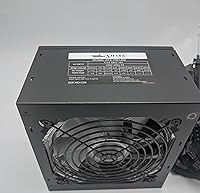
Out of the box the unit feels solid enough for its price bracket, with a clean black casing and a fan guard that looks purposeful rather than cheap. Short-term handling impressions from buyers were generally neutral to positive.
Long-term reliability is where confidence drops. Critical reviews flag durability concerns after extended use, and the unit carries no published stress-test or ripple-suppression data that would reassure buyers about component quality inside the housing.
Efficiency
44%
56%
For a spare machine or a lightly used secondary PC that is not running for extended hours, the lack of an efficiency rating is unlikely to create any visible problem day to day. Power draw at light load is simply not a concern most casual users will notice.
The complete absence of an 80 Plus certification of any tier is a meaningful gap. Without it, there is no standardized guarantee on how much AC power is wasted as heat, which matters for systems that run long hours or sit in warm environments.
Compatibility
86%
Support across Intel Core i3 through i7 and AMD Ryzen 3 through 9 mainstream platforms covers the overwhelming majority of consumer build scenarios. The Dell OptiPlex replacement compatibility is a specific and validated use case that a meaningful portion of buyers leveraged successfully.
Compatibility with the physical connectors is not the same as compatibility under load, and some buyers found that high-draw components exposed the unit's power delivery limitations. It fits most systems but does not necessarily power all of them optimally.
Cooling Performance
72%
28%
The 120mm fan with its low-drag round guard keeps temperatures in check for the workloads this unit is designed for. The blue LED adds a visual element that budget open-frame build enthusiasts appreciated without any functional compromise.
There are no published thermal performance specifications — no maximum operating temperature, no fan curve data, nothing. Buyers running the unit in warm cases or poorly ventilated spaces are making an educated guess about thermal headroom rather than an informed decision.
Design & Aesthetics
77%
23%
The all-black housing with blue LED fan strikes a clean, understated look that suits most budget and mid-range builds without clashing. The quad status LEDs add a practical visual cue that users found genuinely useful when troubleshooting power state issues.
The design has not been refreshed since the product launched in 2015, and it shows when placed alongside more modern PSUs with braided cables, RGB options, or cleaner housing finishes. For buyers who care about interior build aesthetics, it reads as dated.
Dell OptiPlex Fit
84%
As a replacement for failing factory PSUs in Dell OptiPlex 3010, 7010, and 9010 MT towers, this unit performs exactly as advertised. Multiple verified buyers confirmed clean fitment and stable operation after swapping out the original Dell unit, making it a reliable niche solution.
The fit is specific to those listed OptiPlex MT models — buyers with SFF or USFF variants of the same series found it incompatible due to form factor differences. Outside those three confirmed models, compatibility with other Dell systems should not be assumed.
Packaging & Included Accessories
82%
18%
Arriving with a UL-certified AC cord and four mounting screws already in the box is a small but genuinely appreciated detail, especially for first-time builders who might not realize those items are sometimes sold separately. Packaging feedback was largely positive with no reports of transit damage.
Beyond the cord and screws, there are no extras — no cable ties, no velcro straps, and no installation guide for complete beginners. For an audience that skews toward first-time builders, a basic quick-start sheet would have been a meaningful addition.

Suitable for:

The Shark Technology ATX-750-LED 750W Power Supply is a solid pick for first-time PC builders who need a functional, no-frills unit to power a basic gaming or everyday office system without stretching the budget. If your build centers around a mid-range CPU — Intel Core i3 through i7 or AMD Ryzen 3 through 7 — paired with an integrated or entry-level discrete GPU, this budget ATX unit covers the connector requirements without overpaying for efficiency ratings you may not notice in daily use. It also fills a specific and genuinely useful niche as a drop-in replacement PSU for Dell OptiPlex 3010, 7010, and 9010 MT desktops, where factory units fail over time and branded replacements get expensive. Hobbyists assembling a secondary rig, a home lab machine, or a spare PC for occasional use will find the value proposition reasonable. Buyers who simply need power flowing to a modest system — and are not chasing wattage headroom or certification badges — will get what they pay for here.
Not suitable for:

Enthusiast builders and anyone planning to run a power-hungry discrete GPU should think carefully before choosing this 750W power supply. The 750W figure represents peak output, not a guaranteed continuous delivery rating, and there is no 80 Plus efficiency certification to confirm stable performance under sustained heavy load — two factors that matter a great deal when a mid-to-high-end GPU is pulling serious wattage. The non-modular cable design also becomes a real frustration in smaller cases where cable clutter directly affects airflow and build cleanliness. Anyone prioritizing long-term reliability for a primary workstation or a system that runs demanding workloads for hours at a time would be better served by a certified unit from an established PSU-focused brand. This budget ATX unit is also a decade-old design, and buyers who care about modern efficiency standards or multi-year warranty backing will find newer options more reassuring.

Specifications

  • Peak Wattage: This unit is rated at 750W peak output, which represents maximum burst capacity rather than guaranteed continuous power delivery.
  • Form Factor: Built to the ATX 12V 2.0 standard, it fits the vast majority of mid-tower and mini-tower PC cases on the market.
  • Dimensions: The unit measures 5.91″ x 5.51″ x 3.35″, consistent with standard ATX PSU sizing for straightforward case fitment.
  • Weight: At 2.35 pounds, this is a lightweight unit that does not add meaningful bulk to a standard desktop build.
  • Cooling Fan: A 120mm blue LED fan with a low air-drag circular guard manages internal temperatures under typical operating loads.
  • Cable Design: Non-modular build with a fully fixed cable bundle — all cables are permanently attached and cannot be removed.
  • Main Power: Includes one 20+4 pin main motherboard power connector compatible with current ATX motherboard standards.
  • CPU Power: A single 4+4 pin 12V CPU connector supports both 4-pin and 8-pin CPU power sockets on compatible motherboards.
  • PCIe Connectors: Two 6+2 pin PCIe connectors are included, each supporting either 6-pin or 8-pin graphics card power inputs.
  • SATA Connectors: Five SATA power connectors are distributed across two separate cable lines, improving routing flexibility inside the case.
  • Molex Connectors: Two 4-pin Molex peripheral connectors are included on two independent cable lines for older drives and accessories.
  • Floppy Connector: One legacy floppy drive power connector is included for compatibility with older hardware or specialty adapters.
  • Power Cord: A UL-certified 5-foot AC power cord is bundled in the box and meets standard US safety requirements.
  • Status Indicators: Four power status LEDs on the unit provide a visual confirmation of active power state and turn off when the system is powered down.
  • CPU Compatibility: Supports Intel Core i3, i5, and i7 processors as well as AMD Ryzen 3, 5, 7, and 9 mainstream platform CPUs.
  • Dell Compatibility: Functions as a direct replacement PSU for Dell OptiPlex 3010, 7010, and 9010 MT standard mini-tower systems.
  • Efficiency Rating: No 80 Plus efficiency certification is claimed or documented for this unit by the manufacturer.
  • Color: The unit ships in an all-black finish with a matching black fan guard and black installation hardware.
  • Included Hardware: Four black installation screws are included in the package alongside the power cord for a complete out-of-the-box installation.
  • Power Source: The unit operates on standard AC mains power via the included cord and is designed for use with US-standard wall outlets.

Related Reviews
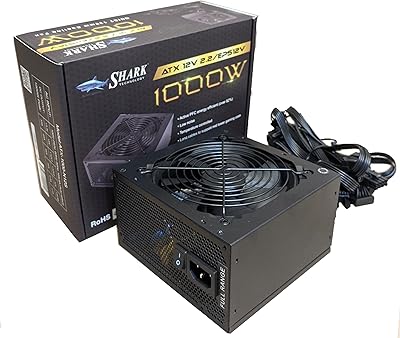
Shark Technology ATX-1000-N12S 1000W ATX Power Supply
73%
74%
Value for Money
78%
Power Delivery
57%
Voltage Stability
47%
Brand Reliability
81%
Noise Level
More
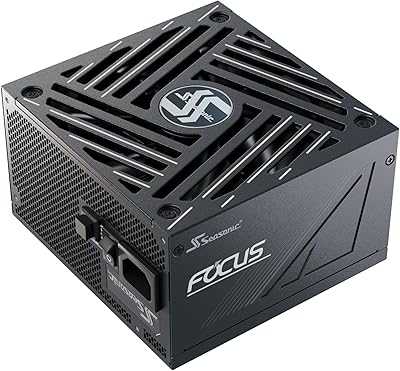
Seasonic Focus GX-750 750W Power Supply
87%
94%
Power Delivery Stability
92%
Build Quality
87%
Noise Level
88%
Efficiency (80 Plus Gold)
89%
Cable Management & Modularity
More
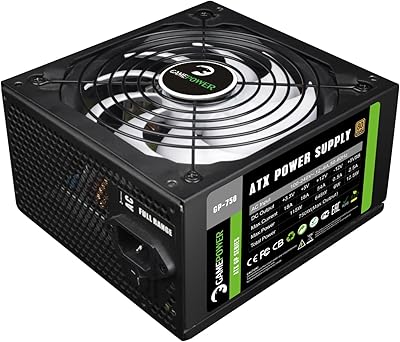
GamePower GP-750 750W ATX Power Supply
78%
84%
Value for Money
87%
Power Stability
83%
Noise Level
57%
Cable Management
64%
Long-term Reliability
More
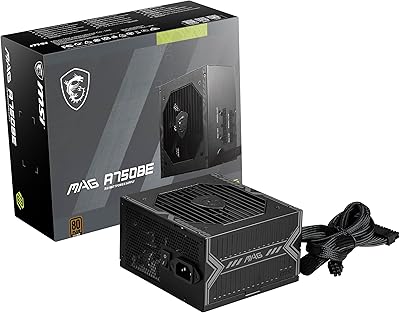
MSI MAG A750BE 750W ATX Power Supply
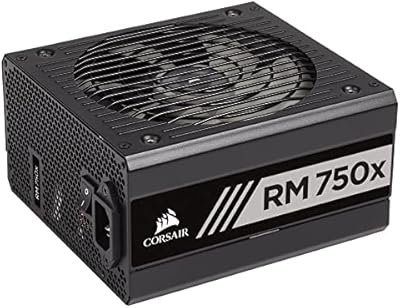
83%
88%
Build Quality
91%
Value for Money
86%
Noise Level
79%
Cable Management
87%
Voltage Stability
More
Corsair RM750x 750W Fully Modular Power Supply
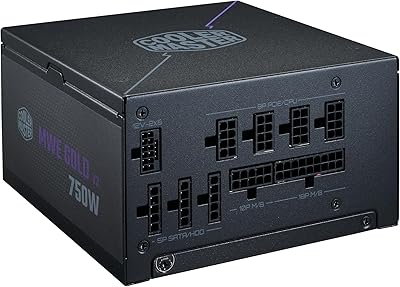
86%
94%
Noise Level
91%
Build Quality
93%
Voltage Stability
88%
Cable Management
89%
Long-Term Reliability
More
Cooler Master MWE 750 Bronze V2 Power Supply
83%
91%
Power Stability
88%
Noise Level
72%
Cable Management
79%
Efficiency
84%
Build Quality
More
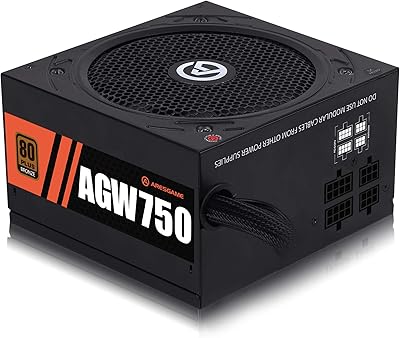
Cooler Master MWE Gold 750 V3 PSU
83%
88%
Build Quality
91%
Cable Management
93%
PCIe Connector Design
74%
Noise Level
83%
Thermal Performance
More
ARESGAME AGW750 750W Semi-Modular ATX Power Supply
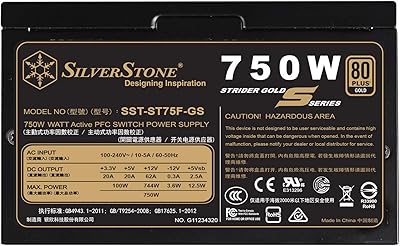
81%
88%
Value for Money
83%
Power Delivery Stability
91%
Cable Management
86%
Noise Level
79%
Efficiency
More
SilverStone SST-ST75F-GS-V3 750W Modular Power Supply
81%
86%
Build Quality
88%
Noise Level
91%
Cable Management
89%
Power Stability
84%
Efficiency
More
be quiet! Pure Power 13 750W PSU
86%
93%
Noise Level
88%
Build Quality
86%
Value for Money
74%
Wattage & Power Headroom
84%
Cable Quality & Modularity
More

FAQ

That is an important distinction to nail down before buying. The 750W figure refers to peak output, meaning it can hit that number in short bursts rather than sustain it continuously under heavy load. For light to moderate builds this is fine, but if you are running a power-hungry GPU for extended gaming sessions, you will want a PSU with a verified continuous wattage rating from a brand that publishes those numbers clearly.

Yes, it follows the standard ATX form factor at 5.91″ x 5.51″ x 3.35″, so it will drop into virtually any mid-tower or mini-tower case with a standard ATX PSU bay. If you have an unusually compact or proprietary case design, double-check the bay dimensions before ordering.

Yes, and this is actually one of the stronger use cases for this unit. It is a confirmed compatible replacement for the Dell OptiPlex 3010, 7010, and 9010 MT models, where the original factory PSUs tend to fail over time. Several buyers have done exactly this and reported clean results.

No, it does not carry an 80 Plus certification of any kind. The manufacturer has not claimed one, and none is documented in the product specifications. If efficiency under load matters to you — either for electricity costs or heat management — you will want to look at a certified unit instead.

The unit includes two 6+2 pin PCIe connectors, so it can physically connect to most mid-range GPUs. That said, because the sustained continuous wattage is not independently verified, we would not recommend pairing it with anything that pulls more than around 150W under gaming load. Entry-level discrete cards and integrated graphics setups are the safer fit here.

Multiple buyers have noted that the cable lengths are adequate for both mini and standard mid-tower cases without having to force any connections. The five SATA connectors are split across two separate cable lines as well, which helps reach drives mounted in different locations inside the case.

No, it is fully non-modular, which means all cables are permanently attached to the unit. You cannot remove the ones you are not using. In a tidy build this can create some clutter behind the motherboard tray, so plan your cable management accordingly if a clean interior matters to you.

Most buyers describe it as quiet during everyday tasks and light gaming. The 120mm fan is designed to run at lower speeds under moderate loads, which keeps noise levels down. Under heavier sustained loads the fan will spin up, though specific decibel measurements are not published by the manufacturer.

Yes, the package includes a UL-certified five-foot AC power cord and four black mounting screws, so you have the essentials covered right out of the box. No additional accessories are required for a standard installation in a compatible ATX case.

Shark Technology does not prominently advertise a multi-year warranty for this unit, which is worth factoring into your decision if this will be the heart of a primary or business-critical system. For peace of mind on a long-term build, a PSU from a brand with a clearly documented three to five year warranty is a safer bet. For a secondary or spare machine, the risk calculus is different.