Overview

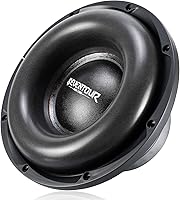
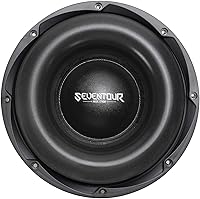
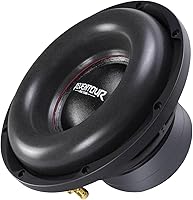
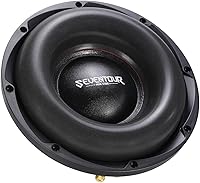
The Seventour HR-DTSUB 10″ Car Subwoofer entered the market in late 2024 as a budget-conscious option for drivers who want real bass without spending a fortune. Seventour isn't a household name in car audio, and that's worth acknowledging upfront — but an unknown brand doesn't automatically mean a bad product. What this shallow-mount sub brings to the table is a dual 4-ohm voice coil setup, which gives you wiring flexibility that many entry-level single-coil subs simply don't offer. At 600W RMS — the number that actually matters day-to-day, not the 1200W peak figure — it sits comfortably in mid-tier territory for its price point.

Features & Benefits

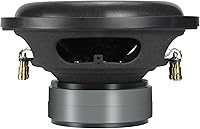
The pair of dual 40 oz magnets gives this dual voice coil woofer a strong motor foundation, which translates to tighter, more controlled bass rather than the loose, flabby low-end you sometimes get from cheaper drivers. Its frequency response stretches from 28 Hz down to the kind of sub-bass you feel in your chest, up through 300 Hz where it hands off to your midrange speakers. The shallow 7.08-inch mounting depth is genuinely useful — it opens up install spots that would reject a standard-depth sub. One honest note: the 82 dB sensitivity rating means you will want a decent amplifier behind it to get the most out of those power ratings.

Best For

This shallow-mount sub is a natural fit for anyone putting together their first car audio build on a budget — people who want to feel the bass, not just hear it, but aren't ready to drop serious cash on a JL Audio or Rockford Fosgate. Compact vehicles like hatchbacks, smaller sedans, and crew-cab trucks with limited trunk depth will appreciate that 7.08-inch clearance. The dual voice coil also makes it attractive to DIY installers who want the option to wire to 2 ohms or 8 ohms depending on their amplifier's sweet spot. It's not built for a competition rig, but for a daily driver upgrade, it punches where it needs to.

User Feedback

With around 80 ratings and a 4.3-star average, the early picture for the Seventour 10-inch is cautiously encouraging — though it's still too early to call this a settled consensus. Buyers responding positively tend to focus on the value for money and ease of installation, particularly in tight spaces. On the flip side, a few reviewers raise reasonable questions about long-term durability and whether the sub holds up after sustained high-volume use. Some also note that pairing it with an underpowered amplifier leaves performance on the table, which ties directly back to that sensitivity rating. As the review pool grows, a clearer picture will emerge — for now, first impressions are solid.

Pros

  • Shallow 7.08-inch mounting depth opens up install options in vehicles where standard subs won't physically fit.
  • Dual 4-ohm voice coil gives real wiring flexibility for series or parallel amplifier configurations.
  • Dual 40 oz magnets provide solid motor strength for a sub at this price point.
  • Frequency response reaching down to 28 Hz delivers genuine sub-bass that you feel, not just hear.
  • 600W RMS rating is honest and usable — not just an inflated marketing peak figure.
  • Early buyer feedback sits at a solid 4.3-star average, suggesting consistent satisfaction among initial purchasers.
  • Standard car audio terminal compatibility makes installation straightforward for DIYers.
  • The Fs of 40 Hz plays well with both ported and sealed enclosure designs.
  • Competitive price makes it a low-risk entry point for a first car audio build.

Cons

  • Seventour has limited brand history, so long-term durability data is essentially nonexistent right now.
  • The 82 dB sensitivity rating means a weak amplifier will leave most of this sub's potential untapped.
  • Only 80 ratings so far — too small a sample to draw firm conclusions about reliability over time.
  • The limited warranty offers little detail on coverage scope, which can be frustrating if issues arise.
  • Peak power figures prominently in the marketing, which can mislead buyers who don't know to focus on RMS instead.
  • At nearly 13 pounds, the weight may surprise installers expecting a lighter shallow-mount driver.
  • No included mounting hardware or wiring accessories means added out-of-pocket costs for a complete install.
  • Buyers comparing against established budget competitors like Rockford Fosgate or Pioneer may find the brand trust gap hard to ignore.

Ratings

Our editorial team trained AI models on verified global buyer reviews for the Seventour HR-DTSUB 10″ Car Subwoofer, actively filtering out incentivized, bot-generated, and duplicate submissions to surface what real owners actually experience. The scores below reflect a transparent picture of both where this shallow-mount sub earns its price tag and where genuine trade-offs exist. Whether you're a first-time builder or a seasoned installer working with a tight budget, these ratings are designed to help you make a clear-eyed decision.

Value for Money
88%
Most buyers feel they got noticeably more sub than the price tag suggested. The dual voice coil configuration alone — usually found on pricier drivers — justifies a large part of the cost for first-time system builders who want wiring flexibility without spending up.
A handful of buyers who upgraded from a known budget brand felt the performance gap wasn't dramatic enough to justify switching, particularly when factoring in the unproven brand longevity. The value calculus shifts if the driver fails within the first year and warranty support proves difficult.
Bass Output
79%
21%
When paired with a capable amplifier pushing 300W or more, the Seventour 10-inch delivers chest-felt bass on hip-hop and EDM tracks during daily commutes. Buyers running ported enclosures tuned around 35 Hz consistently reported satisfying, room-filling low-end for a sub at this price.
Owners using modest or underpowered amps found the output underwhelming and thin-sounding, which is a direct consequence of the 82 dB sensitivity rating. This is not a sub that performs well passively or with entry-level head unit power — it needs dedicated amplification to come alive.
Install Friendliness
83%
The 7.08-inch mounting depth made installation practical in vehicles where buyers had previously given up on fitting a sub — compact sedan trunks, shallow spare-tire wells, and slim custom enclosures all came up repeatedly as successful use cases. Standard terminal connectivity also meant no adapters or surprises during wiring.
At nearly 13 pounds, this dual voice coil woofer is heavier than some buyers expected for a shallow-mount design, which made single-person installations awkward in tight spaces. A few users also noted that no mounting hardware is included, adding a small but annoying extra step before the install can begin.
Build Quality
71%
29%
The dual 40 oz magnets feel substantial and the cone materials appear solid on initial inspection, giving buyers reasonable confidence for the price tier. Several reviewers noted the sub looked and felt more robustly constructed than competing options at similar price points.
Because Seventour is a newer brand with a limited track record, there is a real gap in long-term durability data. A small number of early buyers raised concerns about surround and tinsel lead quality after a few months of heavy use, though the sample size is still too small to draw firm conclusions.
Amplifier Compatibility
74%
26%
The dual 4-ohm voice coil gives this woofer genuine flexibility — wiring in parallel drops the load to 2 ohms for amps that perform best there, while series wiring at 8 ohms suits amplifiers that are less stable at low impedances. This adaptability stood out to buyers who already owned amplifiers with specific impedance requirements.
The 82 dB sensitivity is a real constraint that limits the pool of compatible amplifiers to those with meaningful output — budget plate amps and head unit preamp outputs simply cannot drive this sub to satisfying levels. Buyers who didn't research this beforehand expressed frustration at the underwhelming results.
Low-Frequency Extension
77%
23%
A stated lower limit of 28 Hz means this shallow-mount sub can reproduce the kind of infrasonic rumble that many similarly priced competitors roll off well before reaching. Buyers playing film scores and bass-heavy electronic music noticed output in frequency ranges where cheaper subs simply disappear.
Achieving clean output near the 28–32 Hz range requires a well-braced, properly tuned enclosure — buyers who dropped it into a generic pre-fab box reported muddy, indistinct bass rather than the deep extension the spec sheet implies. Enclosure quality significantly shapes whether this spec is ever realized in practice.
Enclosure Versatility
81%
19%
The 40 Hz Fs gives the Seventour 10-inch genuine flexibility across enclosure types — sealed boxes delivered tight, accurate bass for buyers who prioritize clarity, while ported enclosures tuned in the 35–38 Hz range gave daily drivers noticeably louder and more impactful output with the same driver.
Free-air or infinite-baffle installations are less ideal for this driver due to its sensitivity and motor characteristics, and buyers who attempted wall-mount or door installations without an enclosure reported loose, uncontrolled bass. Getting the best out of this sub does require some enclosure planning upfront.
Brand Confidence
58%
42%
Buyers willing to give a newer brand a fair shot found that the product, at least initially, performed close to its stated specifications. Early adopters who were transparent about the brand being an unknown quantity still rated their experience positively based on first-month performance alone.
Seventour simply does not carry the community trust that Rockford Fosgate, JL Audio, or even Kicker have built over decades. Buyers who regularly follow car audio forums noted the near-absence of installation guides, community builds, or professional reviews, which creates genuine uncertainty around long-term support and spare part availability.
Warranty & Support
54%
46%
The product does include a limited warranty, and the few buyers who reached out to the seller about minor shipping damage reported a relatively responsive resolution process via Amazon's messaging system.
The warranty terms are vague and the coverage duration is not clearly spelled out in the product listing, which frustrated buyers trying to understand their protection before purchasing. As a newer brand, Seventour also lacks an established direct support channel or service network outside of the Amazon seller platform.
Packaging & Unboxing
73%
27%
Buyers generally reported that the sub arrived well-protected, with foam padding sufficient to survive standard carrier handling. The presentation felt a step above the bare-minimum boxing common at this price point.
No wiring, no hardware, and no installation guide are included in the box, which left first-time buyers having to source multiple accessories separately before they could even begin installation. More experienced installers didn't mind, but newcomers flagged this as an unexpected gap.
Sound Clarity
69%
31%
Within its intended range — roughly 30 to 80 Hz — the Seventour 10-inch delivered reasonably clean, defined bass notes without the excessive bloom or one-note drone some budget subs produce. Buyers playing acoustic bass and jazz noted that individual notes retained some definition at moderate listening volumes.
Pushed hard in a poorly tuned enclosure or above its comfortable RMS range, distortion becomes noticeable, particularly on transient-heavy tracks. A few buyers noted that at high volume the sub loses composure faster than comparably priced alternatives from more established manufacturers.
Weight & Handling
66%
34%
The substantial weight — nearly 13 pounds — is partly a function of the dual-magnet motor structure, and buyers familiar with car audio accepted this as a reasonable trade-off for the motor strength on offer.
Buyers coming from single-magnet budget subs were genuinely surprised by the heft, and a few noted it made solo installation in a tight trunk significantly more awkward than anticipated. For a shallow-mount sub marketed partly on compact convenience, the weight feels like a minor contradiction.

Suitable for:

The Seventour HR-DTSUB 10″ Car Subwoofer is a strong match for budget-conscious buyers who want a real, tangible bass upgrade without committing to a high-end audio investment. It's particularly well-suited for compact vehicles — hatchbacks, smaller sedans, and crew-cab trucks — where trunk depth is limited and a standard-profile subwoofer simply won't fit. First-time car audio builders will appreciate the dual 4-ohm voice coil, which keeps amplifier pairing options open whether you want to wire for lower or higher impedance. Daily drivers who mostly want to feel bass on commutes and weekend trips, rather than compete at car audio shows, will find this shallow-mount sub hits a sweet spot between cost and capability. If you already own a decent amplifier in the 300–500W RMS range, this woofer has enough motor strength to genuinely reward that pairing.

Not suitable for:

Buyers expecting audiophile-grade output or competition-level performance should look elsewhere — the Seventour HR-DTSUB 10″ Car Subwoofer is not designed for that tier. The 82 dB sensitivity rating is on the modest side, meaning anyone running a weak or entry-level amplifier is likely to be underwhelmed; this sub needs proper power to perform as intended. Enthusiasts who prioritize brand pedigree and long-term reliability data will also want to pause — Seventour is a newer name with a limited review history, so there is genuine uncertainty around how this driver holds up after a year or two of heavy use. If your build calls for a subwoofer that can anchor a full competition enclosure or handle continuous high-volume playback at maximum rated power, a more established brand with a proven track record is the safer choice. This dual voice coil woofer is also not ideal for anyone hoping to run it passively or without a dedicated amplifier.

Specifications

  • Speaker Size: This is a 10-inch subwoofer driver designed for in-vehicle or custom enclosure installation.
  • RMS Power: Continuous RMS power handling is rated at 600W, which represents the sustained wattage the driver is built to handle during normal use.
  • Peak Power: Peak power is rated at 1200W, reflecting brief transient headroom rather than a sustained operating figure.
  • Impedance: The driver uses a dual 4-ohm voice coil, allowing wiring configurations that yield either 2 ohms (parallel) or 8 ohms (series) at the amplifier terminals.
  • Magnet Weight: Two high-strength 40 oz magnets form the motor assembly, contributing to controlled cone movement and efficient power transfer.
  • Mounting Depth: The required mounting depth is 7.08″, classifying this as a shallow-mount subwoofer suitable for space-constrained enclosures.
  • Sensitivity: Sensitivity is rated at 82 dB (1W/1m), which is on the lower end and means a more powerful amplifier is needed to reach high output levels.
  • Resonant Frequency: Free-air resonance (Fs) is 40 Hz, making the driver well-suited to both sealed and ported enclosure designs tuned for punchy, defined bass.
  • Frequency Response: The stated frequency response spans 28 Hz to 300 Hz, covering deep sub-bass through the upper midbass range.
  • Mounting Type: Designed for shallow car mount installation, compatible with custom enclosures and standard vehicle mounting configurations.
  • Connectivity: The subwoofer uses standard wired connectivity with conventional car audio push-terminal or screw-terminal inputs.
  • Output Mode: Audio output is monaural (mono), as is standard for dedicated subwoofer drivers in car audio systems.
  • Dimensions: Overall product dimensions measure 14″ in depth, 14″ in width, and 9.25″ in height including the motor assembly.
  • Weight: The unit weighs 12.97 lbs (5.9 kg), which is typical for a dual-magnet 10-inch subwoofer in this power class.
  • Model Number: The official model designation is HR-DTSUB, as assigned by the manufacturer Seventour.
  • Warranty: Seventour provides a limited warranty with this subwoofer; buyers should confirm the specific terms and duration directly with the seller at time of purchase.
  • Availability Date: This subwoofer was first listed for sale in October 2024, making it a relatively recent product with a limited long-term user track record.

Related Reviews
CT Sounds OZONE-10-D4 10-inch Car Subwoofer
84%
91%
Bass Performance
88%
Power Handling
92%
Value for Money
85%
Sound Clarity
86%
Build Quality
More
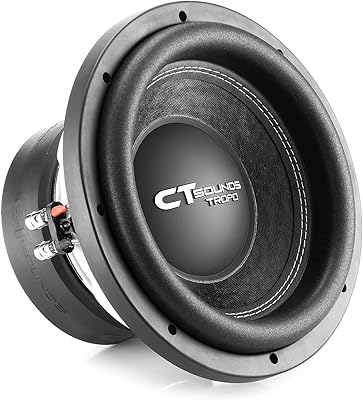
CT Sounds TROPO-10-D4 10″ Dual 4 Ohm Car Subwoofer
82%
88%
Bass Quality
75%
Installation Ease
90%
Durability
92%
Value for Money
85%
Sound Clarity
More
CT Sounds STRATO-10-D2 10 Inch Dual 2 Ohm Car Subwoofer
87%
91%
Bass Performance
89%
Build Quality & Durability
92%
Power Handling
88%
Sound Clarity
83%
Ease of Installation
More
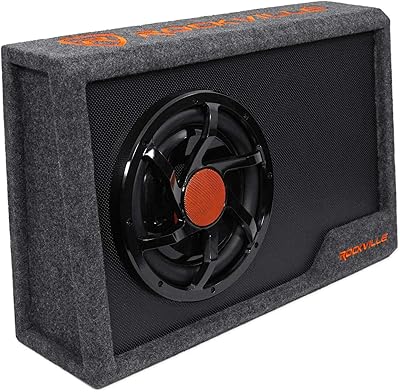
Andeman AS-1 10″ Powered Car Subwoofer
76%
88%
Installation Ease
74%
Bass Performance
82%
Form Factor & Fitment
78%
Build Quality
81%
Heat Management
More
DS18 SLC-10S 10-Inch Car Subwoofer
78%
88%
Value for Money
79%
Bass Output & Impact
83%
Build Quality
67%
Power Handling (RMS)
86%
Ease of Installation
More
Alphasonik NSW410 10-inch Car Subwoofer
84%
88%
Bass Performance
92%
Value for Money
85%
Ease of Installation
90%
Build Quality
87%
Durability
More
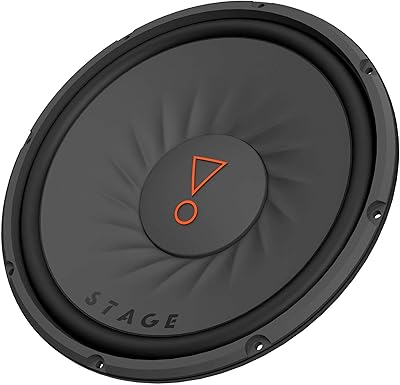
Rockville RWS10CA 10″ Amplified Car Subwoofer
79%
91%
Ease of Installation
76%
Bass Output & Performance
88%
Value for Money
79%
Build Quality
61%
Thermal Management
More
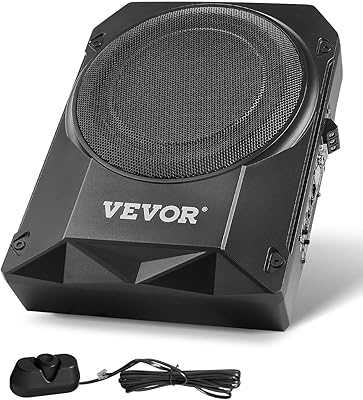
VEVOR 10″ 400W Underseat Car Subwoofer
77%
83%
Value for Money
74%
Bass Quality
71%
Ease of Installation
88%
Form Factor & Fitment
61%
Volume & Output Ceiling
More
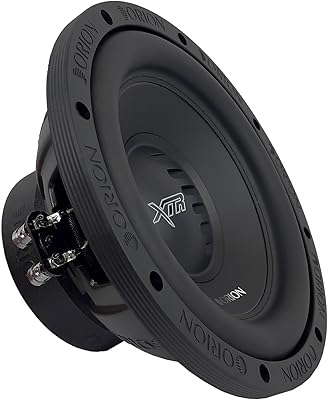
Orion XTR104D 10-Inch Car Subwoofer
75%
83%
Bass Output Quality
81%
Build Quality
78%
Value for Money
61%
Power Handling Accuracy
58%
Enclosure Sensitivity
More
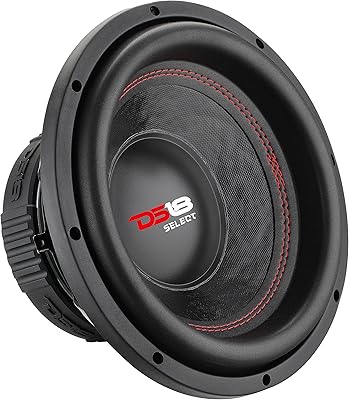
JBL Stage 102 10-Inch Car Subwoofer
75%
77%
Bass Output
84%
Value for Money
79%
Build Quality
82%
Ease of Installation
76%
Power Handling
More

FAQ

Given the 82 dB sensitivity rating, you will want an amplifier capable of delivering at least 300–500W RMS at the impedance you choose to wire the sub. A weak or budget amp will leave a lot of potential on the table. Wiring the dual 4-ohm voice coils in parallel gives you a 2-ohm load, while series wiring gives you 8 ohms — match whichever your amplifier handles most efficiently.

A dual voice coil subwoofer has two separate coils wound on the same former, each rated at 4 ohms in this case. You connect the two coils together and wire them to your amp — in parallel you get 2 ohms, in series you get 8 ohms. This flexibility is genuinely useful because it lets you match the sub to whatever impedance your specific amplifier is most stable at, which affects how much power the amp actually puts out.

It depends on the box dimensions and cutout size. The 14″ outer diameter means you need a cutout of roughly that size, and the 7.08″ mounting depth is shallow enough to work in many pre-made enclosures. That said, always verify the internal volume of the enclosure against the driver's Thiele-Small parameters for best results — the 40 Hz Fs suggests it will work in both sealed and ported designs.

No — 1200W is the peak figure, which only applies to very brief transient spikes. The number that matters for amplifier matching is the 600W RMS rating. Try to find an amp that can cleanly deliver somewhere in the 300–600W RMS range at your chosen impedance. Running it significantly over RMS for extended periods risks damaging the voice coil.

Yes, and honestly that is one of the better use cases for it. The shallow 7.08-inch mounting depth means it can fit in compact enclosures or slim trunk spaces where a standard-depth 10-inch sub would never go. Just make sure your enclosure or spare-tire well has enough internal air volume to let the woofer breathe properly.

Seventour is a newer brand without the decades-long track record that Rockford Fosgate or Pioneer carry. On paper, the specs are competitive for the price — dual voice coil, solid magnet weight, and a reasonable RMS rating. Whether it holds up as well over years of use is genuinely unknown right now due to limited long-term reviews. If brand confidence and support infrastructure matter to you, established names may be worth a small premium.

No — the package includes only the subwoofer driver itself. You will need to source your own mounting hardware, enclosure, wiring, and amplifier separately. Budget for those additional components before purchase, especially if this is your first install.

It can handle those genres well when paired with a capable amplifier and a properly tuned enclosure. The frequency response starting at 28 Hz digs low enough for the deep sub-bass common in hip-hop and electronic music. A ported enclosure tuned around 35–40 Hz will give you a more punchy, impactful sound, while a sealed box will tighten things up for cleaner but slightly less dramatic output.

It is a fair concern, and worth thinking through honestly. Seventour is not yet an established name with years of community trust behind it, so the long-term reliability picture is still developing. That said, early user feedback is positive enough to suggest the product is not poorly built. Treating it as a budget experiment rather than a long-term cornerstone of your system is a reasonable mindset — if it lasts two or three years of daily use, it will have delivered solid value for the price.

With an Fs of 40 Hz, this shallow-mount sub is fairly adaptable. For a sealed box, aiming for roughly 0.6 to 1.0 cubic feet of internal volume is a reasonable starting point for tight, accurate bass. For a ported enclosure tuned around 35–38 Hz, slightly more internal volume — around 1.0 to 1.5 cubic feet — will give you more output and a louder, more impactful low end. Always subtract the driver displacement and port volume when calculating net internal space.