






Overview

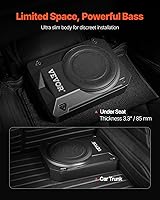
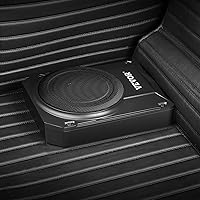
The VEVOR 10″ 400W Underseat Car Subwoofer is a practical answer for drivers who want real bass without sacrificing trunk space or committing to a full custom audio build. At just 3.3 inches tall, this underseat subwoofer slides under most car, truck, SUV, or RV seats without much trouble. VEVOR is a brand that leans into affordable utility — tools and equipment for people who want results without overspending. This unit sits in entry-level to mid-tier audio territory, which means it will genuinely impress anyone coming from factory speakers, but won't satisfy someone chasing competition-grade output.

Features & Benefits

The real convenience here is the built-in amplifier — you're not buying a sub and then hunting for a compatible amp to match it. The unit handles up to 200W RMS continuously, which is honest, usable power rather than the inflated peak figures you see plastered everywhere. It accepts both RCA low-level and high-level speaker inputs, and a high-to-low converter is included, so compatibility with most factory or aftermarket head units isn't an issue. The sealed enclosure keeps bass tight and punchy — you won't get the exaggerated boom of a ported box, but the low-end feels controlled and musical. A remote volume knob rounds things out nicely.

Best For

This powered under-seat unit is a strong match for truck and SUV owners who want extra bass without losing cargo room or dealing with a complicated install. It's also well-suited to anyone stepping up from factory audio for the first time — someone who wants a real improvement in bass response without buying separate components. Compact car drivers who've accepted that a traditional sub box simply won't fit will find this genuinely useful. That said, if you're already running a dedicated amp or chasing loud, room-filling low-end, this isn't the right tool. It's built for everyday drivers, not custom audio projects.

User Feedback

With a 4.1-star average across around 140 ratings, the VEVOR slim sub lands in solidly positive territory. Buyers consistently mention how much better their car sounds compared to stock — especially in trucks where bass always feels thin from the factory. Installation gets mostly positive marks, particularly from users whose head units already had RCA outputs. Where people push back is at higher volumes, where the output can feel modest rather than punchy. The wiring instructions also drew complaints for being unclear. Long-term durability data is still limited given the product's recent launch, but heat-related issues appear rare based on current reviews.

Pros

  • Built-in amplifier means one less component to buy, mount, and wire into your system.
  • The 3.3-inch height fits under most rear seats without requiring any modification.
  • Both RCA and high-level speaker inputs are supported, so it works with almost any head unit.
  • The included high-to-low converter removes a common compatibility headache right out of the box.
  • Sealed enclosure produces tight, punchy bass that sounds controlled rather than muddy.
  • External volume knob lets you adjust bass level from your seat without crawling around.
  • Aluminum alloy housing handles heat well and adds meaningful long-term durability.
  • Multiple built-in protections — overheat, short circuit, and fuse — reduce the risk of damage during daily use.
  • At its price point, the all-in-one powered format offers strong value for a first-time upgrade.
  • Buyers consistently report a clear, immediate improvement over stock factory speakers.

Cons

  • At high listening volumes, the 200W RMS output starts to feel underpowered for larger vehicle cabins.
  • Wiring instructions have been criticized by multiple buyers for being vague and poorly illustrated.
  • The sealed enclosure trades raw loudness for accuracy — buyers expecting big, boomy bass may feel shortchanged.
  • Bass extension cuts off around 50 Hz, so very deep low-end rumble is largely absent.
  • Long-term durability is still unproven given the product only launched in late 2024.
  • Cable length on the remote volume controller may not reach ideal mounting spots in all vehicle layouts.
  • At 8.73 lbs, the unit is heavier than it looks and requires secure mounting to avoid shifting over bumps.
  • No wireless connectivity or app control means setup and adjustments are entirely manual.

Ratings

The scores below reflect AI-powered analysis of verified global buyer reviews for the VEVOR 10″ 400W Underseat Car Subwoofer, with spam, bot-generated, and incentivized feedback actively filtered out before scoring. Each category captures both what real owners genuinely appreciate and where frustrations consistently emerge — nothing is glossed over. The result is an honest, balanced snapshot of how this underseat subwoofer performs across the metrics that matter most to everyday drivers.

Value for Money
83%
For a self-contained powered unit that eliminates the need for a separate amplifier, buyers consistently feel they are getting a fair deal. The all-in-one format — sub, amp, and converter bundled together — makes the effective cost-per-feature ratio feel competitive against similarly priced separate components.
A small segment of buyers who pushed the unit harder in larger cabins felt the real-world output did not fully justify even the modest investment. When volume headroom feels limited at higher listening levels, the perceived value erodes noticeably.
Bass Quality
74%
26%
For daily driving and casual listening, the sealed enclosure delivers tight, controlled low-end that feels noticeably cleaner and more musical than typical factory speakers. Genres like hip-hop and EDM benefit well from the punchy, mid-bass emphasis this unit produces around 60–100 Hz.
Deep sub-bass below 50 Hz is largely absent, which disappointed buyers expecting a more visceral, physical bass experience. The sealed design favors accuracy over raw output, so anyone hoping for dramatic, felt-in-the-chest rumble at moderate volumes will be let down.
Ease of Installation
71%
29%
Most buyers with basic car audio familiarity completed the install in a couple of hours without professional help. The inclusion of the high-to-low converter and both RCA and speaker-level inputs genuinely simplifies the process for factory stereo owners.
The printed wiring instructions drew repeated criticism for being poorly illustrated and unclear, especially around the remote turn-on wire and gain settings. Buyers without prior car audio experience reported confusion that added significant time to what should be a straightforward weekend job.
Form Factor & Fitment
88%
The 3.3-inch profile is the standout feature here, and it earns consistent praise from truck, SUV, and compact car owners alike. In full-size trucks especially, the unit slides under the rear bench seat with room to spare and looks close to factory-installed once cabled up.
At 8.73 lbs with an aluminum alloy shell, it is heavier than it looks in photos, and securing it firmly to avoid movement over rough roads requires careful bracket placement. A small number of buyers in vehicles with low-clearance power seat tracks reported fitment being tighter than expected.
Volume & Output Ceiling
61%
39%
At moderate listening levels — typical city commuting or highway cruising at reasonable volumes — the unit performs well and fills smaller vehicle cabins adequately. Buyers in sedans, hatchbacks, and smaller trucks tend to rate output satisfaction significantly higher than those in larger vehicles.
The 200W RMS continuous rating becomes a real-world ceiling that owners of mid-size and full-size SUVs bump into more often than they would like. Pushing the unit near its limits for extended periods also raises concerns about long-term strain on the amplifier section.
Build Quality
79%
21%
The aluminum alloy housing feels noticeably more solid than budget plastic-shell competitors, and the overall fit and finish suggests a unit built to survive the vibration and temperature cycling that under-seat environments demand. Buyers appreciate that it does not rattle or flex under load.
Long-term durability data is still limited given the product only launched in late 2024, so multi-year reliability remains an open question. A few buyers noted that mounting hardware felt marginally undersized relative to the weight of the unit itself.
Heat Management
81%
19%
Overheating complaints are rare across the review pool, suggesting the aluminum housing and built-in thermal protection circuit work as intended during typical daily use. Most buyers running it through summer commutes reported no heat-related shutdowns or performance degradation.
Extended high-volume sessions in hot climates remain a mild concern, particularly since the unit sits in a low-airflow environment under the seat. The thermal protection cuts the unit before damage occurs, but repeated triggering of that protection during aggressive listening sessions would be frustrating.
Audio Clarity
76%
24%
With a distortion rate below 0.4% and a signal-to-noise ratio above 90dB, the unit stays clean and free of audible hiss at normal listening levels. Buyers upgrading from heavily distorted factory bass reported a meaningful clarity improvement even before adjusting the gain.
At the upper end of the volume range, a small number of buyers detected mild distortion creeping in, particularly on bass-heavy tracks with sharp transients. This is less a product defect and more a predictable consequence of the modest amplifier headroom.
Remote Volume Control
72%
28%
Having an accessible knob to dial bass up or down without reaching under the seat is a genuinely useful convenience, and buyers who mounted it cleanly on the dash or center console appreciated the day-to-day usability. It responds smoothly with no audible crackling during adjustment.
The cable length was flagged by multiple buyers as slightly short, limiting mounting options depending on where the sub is positioned and the vehicle layout. The knob itself feels adequate rather than premium, which is a minor but noticeable detail in an otherwise clean install.
Compatibility
86%
Supporting both high-level and low-level inputs with a converter included covers virtually every head unit configuration a buyer is likely to encounter, from a basic factory radio to a modern aftermarket receiver. This broad compatibility removes a significant pre-purchase anxiety point for most shoppers.
While electrical compatibility is wide, physical compatibility with certain tight-clearance vehicles — particularly those with sliding or power-adjustable rear seats — cannot be guaranteed without measuring first. A clearer fitment guide in the packaging would save some buyers a frustrating return.
Packaging & Included Accessories
67%
33%
The box includes the subwoofer unit, mounting hardware, the remote volume knob, and the high-to-low converter, which covers the essentials for most installs without additional purchases. Buyers generally felt the included parts were functional and complete for a basic setup.
Documentation quality is clearly where VEVOR cut corners — the instruction sheet is minimal and the diagrams are too small and ambiguous to be genuinely useful. For a product where buyers are making electrical connections inside a vehicle, clearer step-by-step guidance should be non-negotiable.
Noise & Interference
78%
22%
The majority of buyers reported a quiet background with no audible alternator whine or electrical interference once the unit was properly grounded. The high signal-to-noise ratio spec translates reasonably well into real-world listening conditions for most installs.
A handful of buyers experienced ground loop noise that required troubleshooting, typically resolved by improving the ground connection point. This is a common car audio issue rather than a product-specific flaw, but the sparse instructions offer no guidance on diagnosing or fixing it.
Discreetness of Install
84%
Once mounted under the rear seat with cables routed neatly, the unit is essentially invisible to passengers and casual observers, which appeals strongly to buyers who want better audio without advertising that they have modified their vehicle. Truck owners in particular praised how factory-clean it looks.
Routing the wiring invisibly from the battery and head unit to an under-seat location still requires some effort and planning, and buyers who did not plan cable management carefully ended up with visible runs that undercut the otherwise tidy look of the installation.

Suitable for:

The VEVOR 10″ 400W Underseat Car Subwoofer is built for a very specific kind of buyer — and for that buyer, it genuinely delivers. Truck and SUV owners who want noticeably better bass without sacrificing rear cargo space or cutting into the trunk will find the slim 3.3-inch profile a real practical win. It's equally well-suited to compact car drivers who have simply accepted that a traditional sub box won't fit anywhere sensible. First-time upgraders stepping off factory audio will be genuinely surprised by the improvement, and because the amplifier is already built in, there's no need to research, budget for, or wire a separate amp. Anyone who wants a clean, discreet install that looks almost factory-fitted — especially under a rear bench seat — will appreciate how unobtrusive this unit sits once it's mounted.

Not suitable for:

The VEVOR 10″ 400W Underseat Car Subwoofer is honest about what it is, and buyers who ignore that honesty will be disappointed. If you regularly push your system loud — windows-down, highway-speed loud — the 200W RMS continuous output will start to feel limited, and you may find yourself wishing for more headroom. Dedicated audio enthusiasts who already run a separate amplifier, or who care deeply about low-frequency extension below 50 Hz, should look elsewhere. This is a sealed enclosure tuned for tight, controlled bass, not the deep, pressurized rumble that ported competition-style boxes produce. Buyers who want a truly custom audio build with matched components will find this all-in-one format too rigid. It is also worth noting that the wiring documentation has frustrated some users, so anyone uncomfortable with basic car audio wiring should factor in extra setup time or a professional install.

Specifications

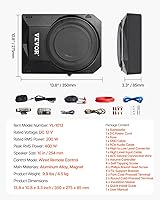
  • Peak Power: The unit is rated at 400W peak power, representing maximum short-burst output under ideal conditions.
  • RMS Power: Continuous RMS output is 200W, which is the practical, sustained power figure buyers should use for real-world comparisons.
  • Driver Size: The subwoofer uses a 10-inch (254mm) dynamic driver housed inside a sealed enclosure.
  • Profile Height: At 3.3 inches tall, the unit is specifically engineered to fit beneath most standard car, truck, and SUV seats.
  • Dimensions: Overall physical dimensions measure 3.3″ deep by 13.8″ wide by 10″ tall.
  • Weight: The complete unit weighs 8.73 lbs, which is heavier than entry-level plastic-housing competitors.
  • Frequency Response: Bass output spans 50–150 Hz, covering the core low-frequency range for most popular music genres.
  • Enclosure Type: The sealed enclosure design produces tighter, more accurate bass compared to ported alternatives, prioritizing control over maximum loudness.
  • Input Options: Accepts both RCA low-level inputs and high-level speaker wire inputs, covering factory and aftermarket head unit configurations.
  • Level Converter: A high-to-low level converter is included in the package, enabling direct connection to head units without RCA output.
  • Volume Control: An external wired volume control knob is included, allowing in-cabin bass level adjustments without accessing the unit itself.
  • Distortion Rate: Total harmonic distortion is rated at below 0.4%, keeping audio quality clean at moderate listening levels.
  • Signal-to-Noise: The signal-to-noise ratio exceeds 90dB, meaning background hiss and electrical interference remain minimal during normal use.
  • Shell Material: The outer housing is constructed from aluminum alloy, which actively assists with heat dissipation during extended operation.
  • Protections: Built-in safety features include overheat protection, short circuit protection, and a fuse, guarding against common electrical failures.
  • Power Source: The unit draws power directly from the vehicle electrical system via a corded connection; no battery or wireless power is used.
  • Connectivity: All connections are wired; there is no Bluetooth, Wi-Fi, or any wireless audio transmission capability.
  • Warranty: VEVOR provides a limited warranty with this unit; buyers should confirm specific terms and duration directly with the manufacturer.
  • Mounting Type: Designed exclusively for under-seat installation, secured to the vehicle floor using the included set of assembly accessories.
  • Audio Output Mode: The unit operates in stereo output mode, processing left and right channel bass signals from the source head unit.

Related Reviews
VEVOR 8″ 400W Underseat Car Subwoofer
78%
88%
Ease of Installation
74%
Bass Output Quality
91%
Form Factor & Fitment
83%
Value for Money
71%
Build Quality
More
CT Sounds OZONE-10-D4 10-inch Car Subwoofer
84%
91%
Bass Performance
88%
Power Handling
92%
Value for Money
85%
Sound Clarity
86%
Build Quality
More
CT Sounds TROPO-10-D4 10″ Dual 4 Ohm Car Subwoofer
82%
88%
Bass Quality
75%
Installation Ease
90%
Durability
92%
Value for Money
85%
Sound Clarity
More
CT Sounds STRATO-10-D2 10 Inch Dual 2 Ohm Car Subwoofer
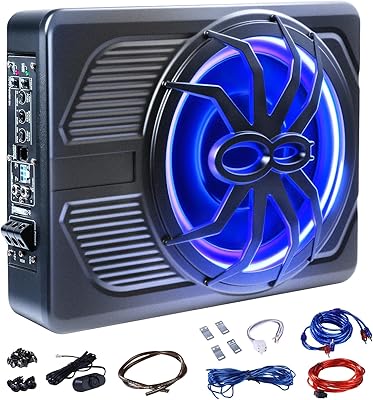
87%
91%
Bass Performance
89%
Build Quality & Durability
92%
Power Handling
88%
Sound Clarity
83%
Ease of Installation
More
Andeman AS-1 10″ Powered Car Subwoofer
76%
88%
Installation Ease
74%
Bass Performance
82%
Form Factor & Fitment
78%
Build Quality
81%
Heat Management
More
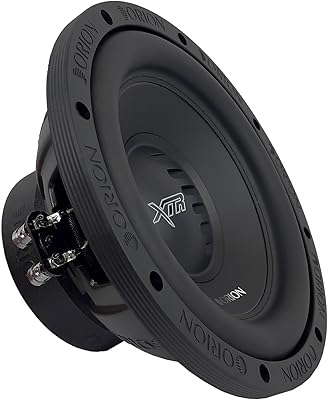
Orion XTR104D 10-Inch Car Subwoofer
75%
83%
Bass Output Quality
81%
Build Quality
78%
Value for Money
61%
Power Handling Accuracy
58%
Enclosure Sensitivity
More
DS18 SLC-10S 10-Inch Car Subwoofer
78%
88%
Value for Money
79%
Bass Output & Impact
83%
Build Quality
67%
Power Handling (RMS)
86%
Ease of Installation
More
Alphasonik NSW410 10-inch Car Subwoofer
84%
88%
Bass Performance
92%
Value for Money
85%
Ease of Installation
90%
Build Quality
87%
Durability
More
JBL Stage 102 10-Inch Car Subwoofer
75%
77%
Bass Output
84%
Value for Money
79%
Build Quality
82%
Ease of Installation
76%
Power Handling
More
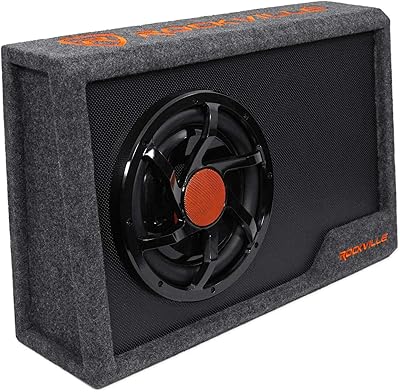
Rockville RWS10CA 10″ Amplified Car Subwoofer
79%
91%
Ease of Installation
76%
Bass Output & Performance
88%
Value for Money
79%
Build Quality
61%
Thermal Management
More

FAQ

For most full-size trucks like the F-150 or Silverado, the 3.3-inch profile clears the seat rails without any cutting or modification. That said, it is worth measuring the clearance under your specific seat before ordering, since some crew cab configurations with power seat mechanisms run tighter than you might expect.

No, that is one of the main advantages of this underseat subwoofer. The amplifier is already built into the unit, so you run power and signal directly to the sub itself — no external amp required.

Yes. The unit supports high-level speaker wire inputs, and a high-to-low level converter is included in the box. You tap into your existing front or rear speaker wires, and the converter handles the signal translation. It is a common setup for factory head unit installs.

It is manageable for a capable DIYer, but the included instructions have frustrated some buyers for being vague. The basic connections are power, ground, remote turn-on wire, and signal input — nothing exotic. Watching a YouTube walkthrough for under-seat powered subs before you start will save you significant time and confusion.

Tight and punchy is the honest answer. The sealed enclosure is tuned for accuracy and impact rather than raw loudness or deep sub-bass rumble. If you want that chest-thumping, felt-more-than-heard bass below 40 Hz, a ported enclosure system would serve you better. For hip-hop, EDM, and rock at everyday volumes, this powered under-seat unit delivers a satisfying result.

At moderate volumes it performs well, but the 200W RMS rating is on the modest side for filling a large SUV cabin at highway speeds. Buyers with smaller vehicles tend to be more satisfied with the volume ceiling. In a mid-size or full-size SUV, you may find yourself pushing it near its limits more often than you would like.

The knob can be mounted anywhere within reach of the included cable — typically on the dash, center console, or door panel. A few buyers have noted the cable felt slightly short depending on where the sub is positioned and where they wanted the knob, so plan your routing before committing to a mounting spot.

Absolutely. The VEVOR 10″ 400W Underseat Car Subwoofer accepts standard RCA low-level inputs directly, so connecting it to any aftermarket receiver with a subwoofer or rear RCA output is straightforward.

Based on user feedback, heat-related issues are not a common complaint, which suggests the thermal management is adequate for typical daily driving. The built-in overheat protection circuit also cuts the unit before any damage occurs if temperatures do climb too high.

No, this powered under-seat unit is not waterproof or water-resistant in any way. Under-seat areas in trucks and SUVs can occasionally see moisture from wet boots or spilled drinks, so it is worth thinking about placement and whether a basic protective cover makes sense for your situation.