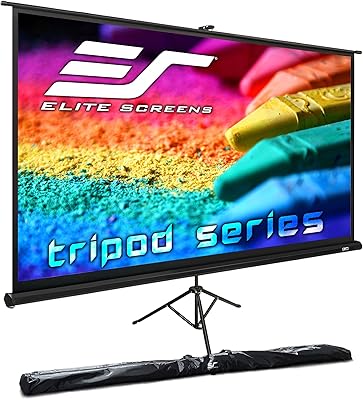
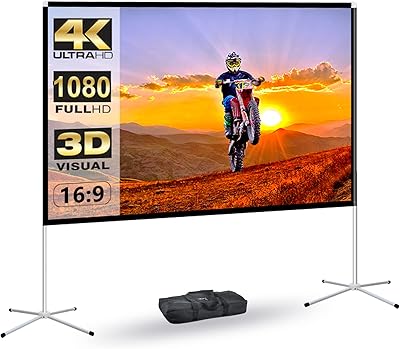
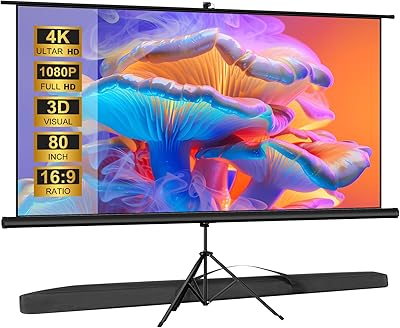
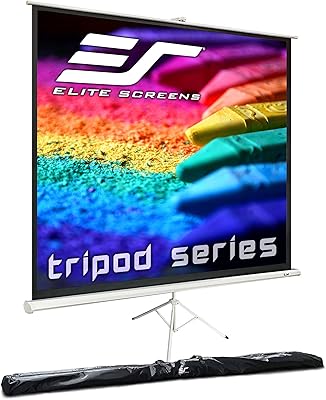
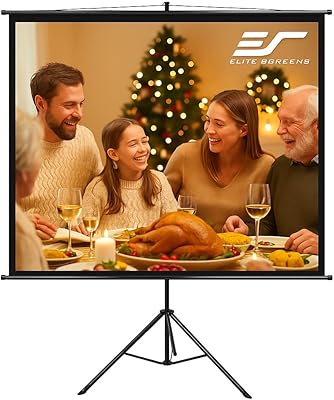
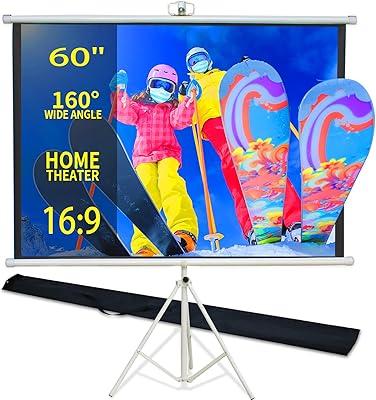
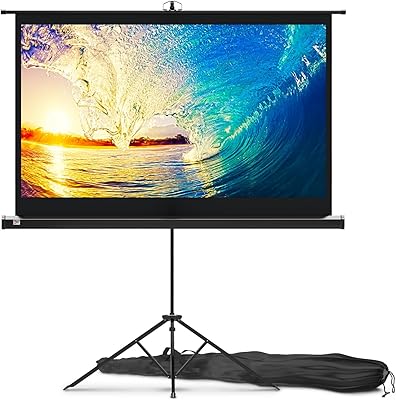
Overview

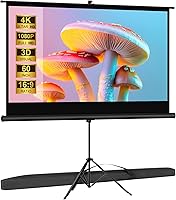
The SCREENMAX 60-Inch Portable Tripod Projector Screen is a compact, pull-up solution built for casual movie fans who want a real screen without the commitment of a wall mount. Sitting in the mid-range tier, you get noticeably better construction than bare-bones budget options, though it is not designed for professional or heavy daily use. The 1.8 gain fiberglass surface is a genuine highlight at this price point, pushing image brightness and contrast well beyond what a painted wall delivers. Unbox it, and the first impression is solid — the components feel purposeful, and the overall design is clearly aimed at people who value quick deployment over complexity.
Features & Benefits

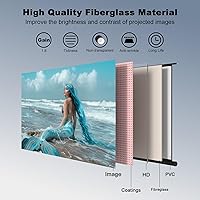
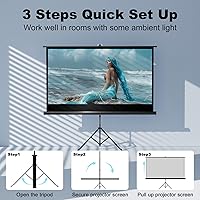
The black-backed fiberglass panel is what separates this pull-up projector screen from cheaper fabric alternatives. That backing actively blocks light from bleeding through, so even in a room that is not fully darkened, the image holds up reasonably well. The manual pull-up mechanism snaps into place on a foldable tripod base with no tools involved — most people have it standing in under two minutes. You can also raise or lower the screen height to clear furniture or uneven ground, which is a practical touch that sounds minor until you actually need it. Both 16:9 and 4:3 aspect ratios are supported, and a carry bag is included for transport.

Best For

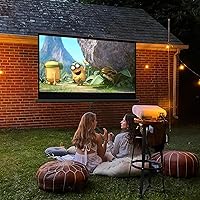
This portable screen makes the most sense for people who do not need a permanent setup. If you are renting an apartment or just not ready to drill into walls, the SCREENMAX tripod screen solves the mounting problem entirely. It is also a solid pick for backyard movie nights — occasional use where you want something that looks better than a white sheet but can be packed away after the credits roll. Teachers and small-event presenters will appreciate the fast setup and teardown. That said, if you are projecting regularly or expect to leave the screen standing for extended periods, you would likely outgrow it and want something more permanent.

User Feedback

Buyers consistently praise the quick assembly and the noticeably rigid surface, which delivers a cleaner image than many expected from a screen this size. Image clarity in low-light settings earns particular appreciation. On the flip side, a few recurring complaints are worth noting. Outdoor use in any real wind is risky — the tripod legs provide decent stability on flat ground, but gusts can cause wobble. Some buyers also raised concerns about long-term durability, specifically around the locking mechanism after repeated use. Shipping damage has appeared in a handful of reviews, though brand responses seem reasonably prompt. The 60-inch size satisfies most buyers, though a few wished a larger option were available.

Pros

  • The rigid fiberglass surface stays flat out of the box — no stretching, no creasing, no fuss.
  • Setup takes under two minutes with no tools, which matters when you are racing the sunset.
  • The 1.8 gain surface noticeably boosts image brightness compared to bare walls or fabric screens.
  • Black backing keeps ambient light from bleeding through and washing out the projected image.
  • Height adjustment lets you clear coffee tables, low walls, or uneven terrain without rearranging the room.
  • Both 16:9 and 4:3 aspect ratios are supported, covering streaming content and older presentation formats.
  • The included carry bag makes this portable screen genuinely packable for travel or venue changes.
  • At 8.5 pounds, the unit is sturdy enough to feel planted but light enough for one person to carry.
  • Customer support responses from the brand have been consistently prompt for a smaller manufacturer.
  • Buyers upgrading from a wrinkled sheet or unpainted wall notice an immediate improvement in image quality.

Cons

  • Moderate wind can topple or wobble the screen, making exposed outdoor setups risky without improvised weights.
  • Tripod leg hardware feels noticeably cheaper than the quality of the fiberglass panel itself.
  • A minority of buyers report loosening joints and reduced locking tension after several months of regular folding.
  • Shipping damage — bent frame pieces or panel corner dings — appears in enough reviews to warrant careful inspection on arrival.
  • The 60-inch size can feel small in larger rooms or when seating is spread more than a few feet back.
  • No staking or ballast system is included, leaving outdoor stability entirely up to the buyer to solve.
  • The carry bag handles are underbuilt relative to the weight of the packed unit, according to several buyers.
  • This is not an ambient light rejecting screen — bright outdoor daytime use will wash out the image entirely.
  • Rear projection is not supported, which limits placement flexibility in tight or unconventional spaces.
  • The adjustment column has a fixed maximum height that may not satisfy taller or elevated screen placements.

Ratings

The SCREENMAX 60-Inch Portable Tripod Projector Screen has been scored by our AI system after combing through thousands of verified buyer reviews from global markets, with spam, incentivized posts, and bot activity actively filtered out. The scores below reflect honest, real-world use patterns — from backyard movie setups to classroom presentations — capturing both what buyers genuinely appreciate and where frustrations tend to surface. Nothing has been smoothed over; the pain points are just as visible as the strengths.
Ease of Setup
91%
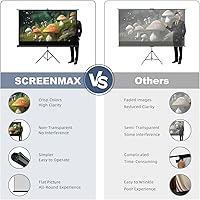
This is the category where the pull-up tripod screen earns the most consistent praise. Buyers repeatedly describe getting the whole unit standing in under two minutes without reading a single instruction. For families setting up in the backyard before sundown, that kind of friction-free assembly makes a real difference.
A small but notable group of users found the locking pin or pull-up hook fiddly on the first few uses, requiring a second attempt to get the screen to sit flat. Those with less mechanical confidence sometimes needed a helper for the initial setup.
Image Clarity & Gain Performance
83%
The fiberglass surface with a 1.8 gain rating visibly outperforms bare walls and fabric screens in side-by-side comparisons buyers describe. Colors appear punchier and the image holds contrast reasonably well even when ambient lighting is not fully controlled, which matters for casual living room use.
In brightly lit outdoor environments — late afternoon setups or areas with strong side lighting — the gain advantage fades and hotspotting can appear depending on the projector used. The screen performs best when the space is at least partially darkened.
Build Quality & Materials
71%
29%
The rigid fiberglass panel itself feels notably more substantial than the rolled fabric screens in the same price bracket. Buyers who previously owned cheaper options consistently comment that this screen holds its flat shape without sagging or developing creases over a short period of use.
The tripod legs and PVC connectors draw more skepticism. Several buyers described the stand hardware as adequate for casual use but not confidence-inspiring under repeated stress. The iron frame components can feel slightly mismatched in quality compared to the premium fiberglass panel itself.
Outdoor Stability
58%
42%
On flat, wind-free surfaces — a patio, a gymnasium floor, or a sheltered backyard — the tripod base keeps the screen stable without issues. The 8.5-pound weight does provide a reasonable amount of passive resistance against minor disturbances during calm evening screenings.
Wind is a genuine problem. Even moderate gusts cause visible wobble, and a few buyers reported the screen tipping in unexpected outdoor conditions. There is no staking option or ballast solution included, so users hosting in open areas need to improvise with sandbags or weights on the legs.
Portability & Transport
86%
The included carry bag transforms this from a living room fixture into a genuinely mobile setup. Teachers, event organizers, and families who split time between a house and a vacation rental specifically call out the bag as a practical addition that makes the whole package feel cohesive.
At 8.5 pounds, the unit is manageable for most adults but not something you would casually carry far on foot. The bag itself gets mixed reviews for strap quality, with a few buyers noting the handles feel underbuilt relative to the weight they need to carry.
Screen Flatness & Wrinkle Resistance
88%
Unlike roll-up fabric screens that arrive with memory creases and never quite lay flat, this fiberglass panel arrives consistently flat and stays that way. Buyers coming from fabric alternatives notice the improvement immediately, especially when projecting fine text or detailed graphics.
A small number of users received units with minor warping along the edges, likely from shipping compression rather than a design flaw. This appears infrequent but is worth inspecting upon delivery before discarding the packaging.
Aspect Ratio Versatility
79%
21%
Supporting both 16:9 and 4:3 natively means this portable screen handles modern streaming content and older presentation formats without awkward black bars eating into the display area. Educators who mix video content with older slideshows found this dual-ratio support genuinely useful.
The physical screen dimensions are fixed, so aspect ratio flexibility is partly an illusion — the projector still needs to be configured correctly. A few users expected a masking system or adjustable borders and were disappointed to find the screen itself does not accommodate that.
Height Adjustability
82%
18%
Being able to raise the screen above a coffee table or a low garden wall is a feature that buyers do not always anticipate needing until they actually set up in a real room. Once they do, the adjustable column gets mentioned in reviews as one of the more thoughtful design decisions.
The adjustment range, while useful, has a ceiling that some taller setups found limiting. Users projecting in rooms with high ceilings or wanting an elevated screen for a larger seated crowd occasionally wished the column extended a few more inches.
Light Rejection
76%
24%
The black backing does measurable work in keeping the projected image contained and preventing washout from light sources behind the screen. Buyers using the screen near windows or in partially lit rooms noted the backing made a visible difference compared to semi-transparent alternatives.
This is not an ALR (ambient light rejecting) screen, and buyers who expected that level of performance in bright rooms were let down. In fully sunlit outdoor settings, the image washes out regardless of the black backing, which is a known limitation at this price tier.
Value for Money
77%
23%
For occasional users — weekend movie nights, classroom demos, holiday gatherings — the price-to-performance ratio is genuinely reasonable. Getting a rigid fiberglass screen, an adjustable tripod, and a carry bag in a single package competes well against similarly priced fabric-and-frame setups.
Buyers who project frequently or want something that holds up over years of use may find themselves replacing this sooner than expected. The value calculation changes significantly if durability concerns materialize after a season of use.
Long-Term Durability
62%
38%
Over the first several months of casual use, the screen holds up well for most buyers. The fiberglass panel itself shows no degradation under normal indoor and occasional outdoor conditions, and the surface does not yellow or warp with modest UV exposure during evening screenings.
Repeated folding and unfolding of the tripod legs and the pull-up mechanism are where durability questions start to surface. Buyers using the screen weekly over a full year have reported loosening joints and reduced locking tension, which is consistent with mid-range hardware expectations.
Packaging & Shipping Integrity
66%
34%
The majority of buyers receive the unit in good condition with no functional damage. The carry bag doubles as some protective cushioning, and most components arrive properly packed for standard delivery handling.
A noticeable minority of reviews flag shipping damage — bent frame components or corner dings on the panel from what appears to be rough courier handling. This does not seem to be a packaging design failure so much as a fragility mismatch with standard parcel handling.
Customer Support
72%
28%
SCREENMAX appears to respond to negative reviews and support requests with above-average consistency for a smaller brand in this category. Buyers who experienced defects and reached out generally reported receiving a resolution offer within a reasonable timeframe.
The actual resolution quality varies — some buyers got prompt replacements while others described back-and-forth exchanges that dragged on. Support responsiveness seems stronger on Amazon messaging than through other channels.

Suitable for:

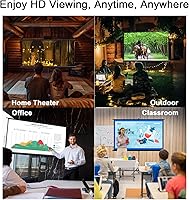
The SCREENMAX 60-Inch Portable Tripod Projector Screen is a natural fit for anyone who wants a real projection surface without the permanence of a wall mount. Renters and apartment dwellers benefit most obviously — there are no studs to find, no holes to fill, and no landlord conversations to have. Families who host occasional backyard movie nights will appreciate the no-tools setup and the fact that the whole unit folds down and stows in a carry bag when the evening is over. It also works well for teachers, trainers, and small-event presenters who move between rooms or venues and need a consistent display surface that does not rely on whatever screen or wall happens to be available. If you are currently projecting onto a painted wall or a bedsheet and wondering why the image looks soft or washed out, this pull-up projector screen will be a clear and immediate step up in picture quality.
Not suitable for:

The SCREENMAX 60-Inch Portable Tripod Projector Screen is not the right tool for buyers who project frequently, plan to leave the screen permanently installed, or need a setup that can withstand real outdoor conditions. Wind is a genuine liability — the tripod base provides stability on calm evenings but offers little resistance in exposed or breezy environments, and there is no integrated solution for weighing down the legs. The 60-inch diagonal size satisfies casual use but will feel limiting in larger living rooms, home theater setups, or any venue where the audience is spread across more than a few rows. Heavy users who plan to fold and unfold the unit multiple times per week should also temper their durability expectations, as the locking hardware on the stand is built for occasional rather than daily-use cycles. Anyone investing in a high-lumen laser projector or a premium home cinema experience will likely outgrow this portable screen quickly and would be better served by a fixed-frame or motorized alternative.
Specifications

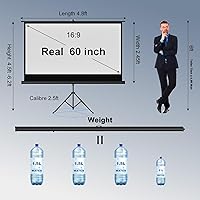
  • Screen Size: The viewable screen area measures 60 inches diagonally, with an active display surface of 52″ wide by 29″ tall.
  • Aspect Ratio: Supports both 16:9 and 4:3 native aspect ratios, making it compatible with modern HD content and legacy presentation formats.
  • Gain Value: The screen surface has a gain rating of 1.8, which amplifies projected brightness and contrast compared to standard matte white surfaces.
  • Screen Material: The projection surface is constructed from fiberglass with a black backing layer that blocks light transmission and reduces ambient light interference.
  • Frame & Stand: The supporting structure is built from iron and PVC components, forming a foldable tripod base with a height-adjustable vertical column.
  • Overall Dimensions: When fully assembled, the unit measures approximately 55″ wide by 59″ tall including the stand and frame.
  • Item Weight: The complete assembled unit weighs 8.5 pounds, including the screen panel, tripod stand, and carry bag.
  • Mounting Type: Uses a single-tripod floor mount that is foldable, height-adjustable, and requires no wall anchoring or permanent installation.
  • Setup Method: The screen deploys via a manual pull-up mechanism that locks the panel into position at the desired height without tools.
  • Rear Projection: Rear projection is not supported; the screen is designed exclusively for front-facing projector placement.
  • Included Accessories: A dedicated carry bag is included in the package for transporting and storing the folded screen and stand.
  • Wrinkle Resistance: The rigid fiberglass panel is wrinkle-free by design and maintains a flat projection surface without requiring tensioning frames or stretching.
  • Brand: Manufactured and sold by SCREENMAX, a brand specializing in portable projection display solutions for consumer and small commercial use.
  • Availability: This product has been available for purchase since September 2024 and currently holds a Best Sellers Rank of #137 in the Projection Screens category.
  • Portability: The unit folds down compactly and fits into the included carry bag, making it suitable for transport between home, outdoor, and venue settings.

Related Reviews

Elite Screens T60UWH 60-Inch Tripod Projector Screen
79%
93%
Ease of Setup
91%
Portability
84%
Image Quality
72%
Screen Flatness
74%
Build Quality
More
AODIOU 60-Inch Portable Projector Screen with Stand
76%
88%
Portability & Transport
91%
Ease of Assembly
73%
Image Clarity & Surface Quality
74%
Build Quality & Frame Durability
62%
Outdoor Wind Stability
More
SCREENMAX 80-Inch Portable Projector Screen
77%
91%
Ease of Setup
74%
Portability
78%
Image Quality
71%
Build Quality
62%
Outdoor Stability
More
Elite Screens Tripod Series T119NWS1 119-inch Projector Screen
85%
94%
Portability & Setup
88%
Visual Quality
85%
Build Quality
91%
Adjustable Features
82%
Value for Money
More
Elite Screens Tripod Lite T50SW 50-Inch Projector Screen
85%
89%
Portability & Setup
85%
Viewing Angle
87%
Image Quality
81%
Build Quality
90%
Ease of Cleaning
More
Elite Screens T120UWH 120-inch Tripod Projector Screen
77%
91%
Ease of Setup
67%
Screen Flatness
84%
Image Quality
78%
Portability
74%
Build Quality
More
Elite Screens Yard Master Sport 110-inch Screen
78%
88%
Ease of Setup
83%
Portability & Storage
79%
Image Clarity & Screen Performance
71%
Outdoor Stability
58%
Aspect Ratio Suitability
More
Elite Screens T72UWH 72-Inch Tripod Projector Screen
79%
91%
Ease of Setup
83%
Image Quality
74%
Build Quality
78%
Portability
67%
Screen Surface Flatness
More
PropVue 60-Inch Tripod Projector Screen
75%
93%
Ease of Assembly
91%
Portability
78%
Image Quality
67%
Canvas Tension & Flatness
69%
Tripod Stability
More
YF2009 200-inch Portable Projector Screen
75%
88%
Value for Money
91%
Screen Size & Impact
86%
Portability & Weight
82%
Setup & Installation
71%
Image Quality & Clarity
More

FAQ

No tools required at all. The process is basically three steps: unfold the tripod legs, lock the base, then pull the screen panel upward and hang it on the support rod. Most people have it standing in about two minutes once they have done it once. The first time might take five minutes while you get familiar with the locking mechanism.

On a calm or mildly breezy evening it holds steady without any issues. However, if you are setting up in an open area with meaningful wind, the tripod legs can wobble or tip — there is no staking option or built-in ballast system included. A common workaround is placing heavy objects or sandbags on the legs, but that is something you need to bring yourself. For sheltered patios or indoor-outdoor spaces, stability is generally fine.

It depends on how many people you are hosting and how far back they sit. For a small group of four to eight people seated within about 10 to 12 feet, 60 inches works comfortably. For larger gatherings or longer viewing distances, the image starts to feel small and you would be better served by a larger screen in the 100-inch-plus range.

It works with any standard front-projection projector regardless of brand or resolution. The 1.8 gain surface is optimized for front-facing projection only — rear projection is not supported. Pairing it with a higher-lumen projector will get better results in rooms that are not fully darkened.

Noticeably better in most cases. The fiberglass surface with a 1.8 gain rating reflects more light back toward the viewer than a painted wall, which means colors appear brighter and contrast is stronger. The black backing also prevents light bleed that can wash out the image from behind. If you have been using a wall, the improvement will be immediately visible.

Light dust can be wiped off with a soft dry cloth. For smudges or more stubborn marks, a lightly dampened microfiber cloth works well, but avoid abrasive cleaners or anything solvent-based as they can affect the screen coating. The rigid fiberglass material is more forgiving to wipe down than fabric screens, which can absorb stains.

The SCREENMAX 60-Inch Portable Tripod Projector Screen ships with the rigid fiberglass panel in a pre-flattened state, so there is no waiting period or flattening process required. Unlike rolled fabric screens that arrive with memory creases, the rigid panel goes up flat immediately. A small number of buyers have reported minor edge warping from shipping compression, so it is worth inspecting the panel when you first unbox it.
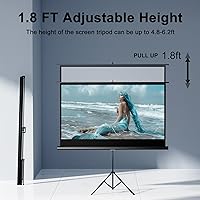
Yes, raising the screen above a coffee table is one of the more practical uses of the height adjustment. The telescoping column allows you to shift the entire screen upward so the bottom edge clears obstacles in the viewing path. The exact maximum height has a ceiling, so for very elevated placements or large seated audiences spread across a wide area, you may find the top range limiting.

For occasional use — a few times a month — the screen holds up well over a reasonable period. For weekly or near-daily use, the locking hardware on the tripod stand and the pull-up mechanism are the components most likely to show wear over time. The fiberglass panel itself is the most durable part of the package; the stand hardware is where mid-range build quality shows its limits.

SCREENMAX has a reasonably responsive customer support channel accessible through the seller contact option on Amazon. Most buyers who reported defects or missing parts received a response and a resolution offer within a short period. Shipping damage is the most common issue reported, so inspect all components when you first open the box and document anything that looks off before reaching out.