Overview

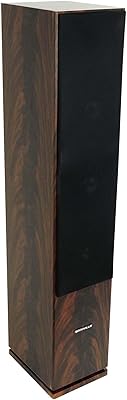
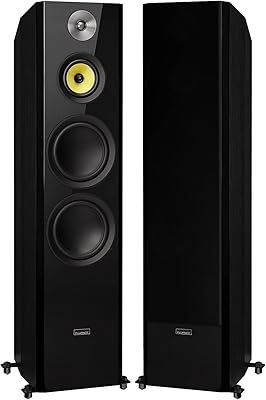
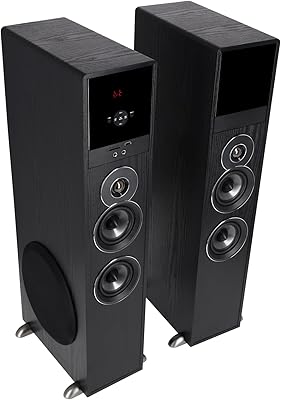
The Rockville RockTower 64D Floorstanding Tower Speaker is one of the more interesting budget options in the floorstanding category right now. At this price point, getting a true 3-way driver configuration is genuinely unusual — most competitors here offer a simple two-way design and call it a day. The dark wood MDF cabinet looks polished enough to sit in a living room without looking out of place. Worth flagging upfront: this floorstander runs at 4-ohm impedance, so you will want a receiver that can handle that load comfortably. This is an entry-level speaker, not a reference-grade audiophile unit — set expectations accordingly and it can punch well above its weight.
Features & Benefits

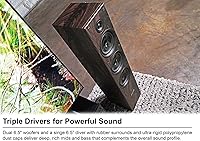
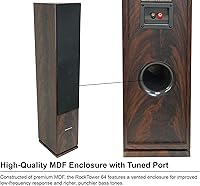
The driver layout is what sets the RockTower 64D apart from most speakers in its price range. You get two 6.5-inch woofers handling the low end, a separate 6.5-inch driver dedicated to midrange frequencies, and a 1-inch silk dome tweeter covering the highs — a legitimate three-way design. The speaker carries a 500W peak rating, but the more meaningful figure is the 125W RMS, which reflects the continuous output your amplifier actually needs to deliver. The ported enclosure helps extend bass without requiring an enormous cabinet, and the gold-plated binding posts support banana plugs, spades, or bare wire. The detachable grille keeps things clean when not in use.

Best For

This tower speaker is a natural fit for first-time system builders who want full-range sound without the added cost of a separate subwoofer. It performs best in small to medium-sized rooms — a large open-plan space may expose the limits of its low-end output. The 4-ohm load means pairing it with a receiver or integrated amplifier rated for 4-ohm operation is important; not every budget stereo box will handle it cleanly. Genre-wise, it does well with rock, hip-hop, and movie soundtracks where the layered driver arrangement earns its keep. One critical note: this floorstander is sold individually, so budget for two when building a stereo pair.

User Feedback

Buyers tend to highlight the physical build and value for money as genuine strengths — the cabinet feels solid for the price, and bass presence gets consistent praise from those upgrading from bookshelf speakers. On the flip side, a number of reviewers note that midrange detail can thin out when pushed at higher volumes, and several mention a break-in period before the sound fully settles. Assembly is generally described as straightforward. A recurring frustration is the single-unit packaging, with some buyers caught off guard expecting a stereo pair. Long-term reliability data is still limited given the product launched recently, but Rockville's after-purchase support is generally described as responsive.

Pros

  • True 3-way driver design is rare and genuinely useful at this price point.
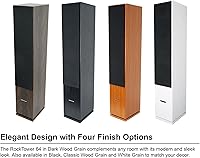
  • The dark wood MDF cabinet looks far more polished than expected for an entry-level floorstander.
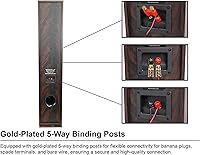
  • Gold-plated 5-way binding posts support banana plugs, spades, and bare wire with no adapters needed.
  • A 30Hz–20kHz frequency response means you get real bass presence without adding a subwoofer right away.
  • The ported enclosure helps low frequencies breathe without bloat or distortion at normal listening volumes.
  • Assembly is straightforward, and buyers consistently describe the physical build as solid for the money.
  • The detachable grille keeps the cabinet looking clean in family rooms where dust or curious hands are a factor.
  • Rockville's after-purchase support is generally regarded as responsive when issues do arise.

Cons

  • Sold as a single unit — you will need to purchase two for a stereo pair, raising the real total cost.
  • The 500W peak rating is a marketing figure; the 125W RMS is what actually matters for receiver matching.
  • Midrange detail noticeably softens when pushed to higher volume levels, which limits dynamic range.
  • A 4-ohm impedance requirement rules out some budget receivers that are only stable at 8 ohms.
  • Several buyers report the speaker needs a meaningful break-in period before the sound fully settles.
  • Bass output, while decent, has clear limits in rooms larger than a standard bedroom or small living room.
  • Long-term reliability data is thin given the product only launched in late 2024.

Ratings

The scores below reflect an AI-driven analysis of verified buyer reviews for the Rockville RockTower 64D Floorstanding Tower Speaker, drawn from global feedback with spam, bot-generated, and incentivized responses actively filtered out. Each category is scored based on what real users consistently reported — strengths and frustrations alike — so you get an honest, balanced picture before you buy.

Value for Money
88%
Buyers repeatedly call this tower speaker one of the better deals in the entry-level floorstander market, particularly given the three-way driver configuration that competitors rarely offer at this price tier. For someone building a first stereo or home theater setup on a tight budget, the overall package is hard to argue with.
The single-unit packaging means the true cost of a stereo pair is double the listed price, which shifts the value equation for some buyers. A handful of reviewers felt the real-world performance gap versus slightly more expensive alternatives was noticeable enough to warrant saving up.
Build Quality
83%
The MDF cabinet feels noticeably solid when handled, and the dark wood finish looks more refined than most budget speakers in this class. Gold-plated binding posts and a sturdy detachable grille reinforce the impression that Rockville put some genuine thought into the physical construction.
A small number of buyers noted minor cosmetic inconsistencies in the finish upon unboxing, including slight grain mismatches or edge imperfections. At this price point these are forgivable, but quality control is not perfectly consistent across every unit shipped.
Sound Quality
74%
26%
For casual listening rooms playing rock, hip-hop, or movie soundtracks at moderate volumes, the three-way design delivers a noticeably fuller sound than typical two-way budget speakers. The separation between bass, mids, and highs gives the speaker a more layered presentation that buyers upgrading from bookshelf speakers tend to appreciate immediately.
Critical listeners and those who push the volume harder will notice the midrange softening and a degree of compression that reveals the speaker's entry-level limitations. Compared to audiophile-grade floorstanders, the soundstage lacks precise imaging and the detail retrieval in complex passages falls short.
Bass Performance
71%
29%
The ported enclosure and dual woofer arrangement produce a bass presence that surprises buyers coming from smaller bookshelf units, making it genuinely viable as a standalone solution without a subwoofer in smaller rooms. Movie soundtracks and bass-heavy music genres benefit most from this setup.
In medium to large rooms the low end starts to feel thin and lacks the punch that a dedicated subwoofer would add. Bass output is decent for the driver size, but buyers expecting deep, room-filling sub-bass from these speakers alone will likely be disappointed.
Treble Clarity
77%
23%
The 1″ silk dome tweeter handles high-frequency content cleanly at normal listening volumes, producing crisp cymbal detail, vocal sibilance, and ambient effects in movie soundtracks without harshness. Most buyers found the top end pleasant rather than fatiguing during longer listening sessions.
At higher volumes the tweeter can edge toward brightness, which some listeners find taxing over extended sessions. The high-frequency detail is adequate rather than exceptional — nuanced acoustic recordings reveal the tweeter's limits more readily than louder, compressed music sources.
Midrange Detail
66%
34%
For everyday listening — casual music playback, TV dialogue, and gaming — the dedicated midrange driver keeps vocals and instruments reasonably intelligible and present. Buyers who previously relied on a soundbar or budget bookshelf speakers notice a real improvement in vocal clarity.
This is where the speaker shows its price-tier limitations most clearly. At higher volumes the midrange loses definition, and voices in films or detailed acoustic performances can sound slightly recessed or congested compared to more carefully voiced speakers in a higher price bracket.
Ease of Setup
91%
Virtually every buyer describes the setup process as quick and painless — the speaker arrives mostly assembled, the binding posts accept standard bare wire without any tools, and placement is just a matter of positioning and connecting to a receiver. Most people are listening within 20 minutes of unboxing.
The 33-pound weight per unit makes solo unboxing and positioning more awkward than lighter bookshelf alternatives, and a second pair of hands is genuinely helpful. A few buyers also noted that finding the ideal toe-in angle for the best stereo imaging took some trial and error.
Receiver Compatibility
69%
31%
The 4-ohm impedance is handled without issue by any modern mid-range AV receiver or stereo amplifier rated for 4-ohm loads, and the 125W RMS power handling gives plenty of headroom for typical home listening scenarios. Buyers using mainstream Denon, Yamaha, or Onkyo receivers report clean, stable performance.
Owners of older or budget-only stereo receivers rated solely for 8-ohm loads may experience amplifier strain, distortion, or thermal shutdowns over time. The 4-ohm requirement is a genuine compatibility concern that not enough buyers check before purchasing, leading to frustration post-delivery.
Cabinet Aesthetics
82%
18%
The dark wood finish reads as surprisingly tasteful in living room photos shared by buyers, sitting comfortably alongside standard furniture without looking like a piece of DJ equipment. At 41.73″ tall the speaker has an authoritative physical presence that feels appropriate for a dedicated listening or home theater room.
The finish is a printed or foil wrap over MDF rather than a real wood veneer, which becomes apparent on very close inspection. Buyers placing these next to high-end furniture may find the material quality underwhelming, even if the overall appearance works well in most casual home environments.
Packaging & Shipping
78%
22%
Most buyers report the speaker arriving well-protected with adequate foam padding, and damage-on-arrival complaints are relatively uncommon in the review pool. The packaging is straightforward to unbox without risk of accidental damage to the cabinet or drivers.
A recurring complaint involves the single-unit packaging not being immediately obvious to buyers expecting a stereo pair in the box, causing confusion at delivery. A small percentage of buyers also reported minor shipping damage to cabinet corners, suggesting the outer carton could benefit from added reinforcement.
Frequency Range Coverage
79%
21%
The rated 30Hz to 20kHz response covers the full spectrum of audible sound on paper, and in practice the speaker handles a wide variety of content — from bass-heavy playlists to high-frequency orchestral passages — without obviously missing entire frequency bands.
The low end of that frequency range is optimistic under real-world listening conditions, particularly in larger rooms where room acoustics expose the limits of the driver size. Buyers should treat the 30Hz rating as a best-case figure rather than a reliable baseline for everyday performance.
Long-Term Reliability
63%
37%
Early buyer feedback is broadly positive regarding durability, with no widespread reports of driver failure or cabinet delamination in the months following purchase. Rockville's customer support reputation is generally described as responsive when warranty issues are raised.
The product only launched in late 2024, so long-term data beyond 12 months simply does not exist yet. Some caution is warranted when assessing multi-year durability, since the MDF construction and budget-grade crossover components have not been tested across years of sustained use by a large owner base.
Crossover Performance
68%
32%
The crossover network does a reasonable job of dividing frequencies across the three drivers, producing a relatively cohesive sound that does not have obvious tonal gaps or harsh transition points between the woofer, midrange, and tweeter under normal conditions.
At elevated volume levels or during complex musical passages, the crossover's budget-grade components become a limiting factor, introducing a degree of coloration and overlap that more carefully engineered speakers avoid. This is not unique to this model but is a characteristic trade-off at this price tier.
Grille & Accessories
74%
26%
The detachable grille fits securely and removes cleanly without tools, which buyers with children or pets appreciate as a practical dust and damage barrier. The grille's neutral fabric appearance works well aesthetically whether it is on or off.
The grille attachment mechanism is basic, and a few buyers noted it feels slightly loose over time with repeated removal and re-attachment. No additional accessories or mounting hardware are included in the box, which is expected at this price but still worth noting for first-time buyers.

Suitable for:

The Rockville RockTower 64D Floorstanding Tower Speaker is a strong match for budget-conscious buyers who want a genuine full-range floorstanding speaker without spending several hundred dollars per unit. It suits people building their first stereo setup or adding front speakers to a modest home theater system, particularly where the room is small to medium in size. Listeners who stream a mix of music, movies, and games will appreciate the three-way driver layout, which handles those varied source types better than a basic two-way design typically would. It pairs well with mid-range AV receivers or stereo amplifiers that are rated for 4-ohm loads, making it accessible for anyone already working with mainstream home audio gear. If you tend to listen at moderate volumes and want something that looks presentable in a living room without a bookshelf speaker compromise, this floorstander is worth a serious look.
Not suitable for:

The Rockville RockTower 64D Floorstanding Tower Speaker is not the right choice for dedicated audiophiles or critical listeners who expect precise imaging, refined midrange transparency, or deep sub-bass extension. Large open-plan rooms will likely expose the limits of the driver configuration, leaving the sound feeling thin or underpowered at the volume levels those spaces demand. Buyers who already own or plan to buy a capable subwoofer may find the overlap redundant rather than complementary. Anyone running a receiver that is only rated for 8-ohm loads should be cautious, since underpowering a 4-ohm speaker can introduce distortion or stress the amplifier. It is also worth noting that this floorstander is sold as a single unit, so buyers expecting a stereo pair out of the box will need to budget for two, which changes the overall value calculation.
Specifications

  • Speaker Type: 3-way passive floorstanding speaker designed for indoor home audio use.
  • Peak Power: Rated at 500W peak, which represents the absolute maximum transient power the speaker can handle in short bursts.
  • RMS Power: Continuous RMS power handling is 125W, which is the figure that actually determines real-world amplifier matching.
  • Impedance: Nominal impedance is 4 ohms, requiring a receiver or amplifier rated to drive 4-ohm loads stably.
  • Woofers: Two 6.5″ woofer drivers handle low-frequency reproduction within the three-way configuration.
  • Midrange Driver: A dedicated 6.5″ midrange driver handles the critical vocal and instrumental frequency band separately from the woofers.
  • Tweeter: A 1″ silk dome tweeter reproduces high-frequency detail above the crossover point.
  • Frequency Response: Rated frequency response spans 30Hz to 20kHz, covering the full range of audible sound from deep bass to high treble.
  • Enclosure Type: Vented, ported MDF enclosure designed to extend bass output and reduce low-frequency distortion.
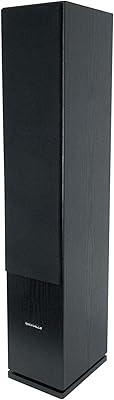
  • Cabinet Finish: Dark wood-grain finish applied to an MDF cabinet construction for durability and aesthetic integration into living spaces.
  • Binding Posts: Gold-plated 5-way binding posts accept banana plugs, spade connectors, pin connectors, and bare wire.
  • Grille: Fabric grille is detachable, allowing the speaker to be used with or without front coverage.
  • Dimensions: Cabinet measures 10.43″ deep, 7.87″ wide, and 41.73″ tall.
  • Weight: Each unit weighs 33 pounds, requiring careful placement and ideally two-person handling during setup.
  • Unit Count: Sold individually as a single speaker unit; a stereo pair requires purchasing two separate units.
  • Mounting Style: Floor-standing design intended for direct placement on hard floors or low-pile carpet without additional mounting hardware.
  • Warranty: Covered by Rockville's limited warranty; buyers should confirm current terms directly with the manufacturer at time of purchase.

Related Reviews

Rockville RockTower 68B Passive Tower Speaker
85%
89%
Sound Quality
91%
Bass Performance
85%
Build Quality
80%
Ease of Setup
84%
Design and Aesthetics
More
Rockville RockTower 68D Floorstanding Speaker
69%
78%
Bass Performance
61%
High-Frequency Clarity
83%
Value for Money
57%
Build Quality
54%
Shipping & Packaging
More
Rockville ONE-Tower Bluetooth Speaker System
85%
87%
Sound Quality
91%
Bass Performance
85%
Ease of Setup
89%
Connectivity Options
83%
Design & Build Quality
More
Rockville RWB80B 8-Inch Marine Tower Speakers
78%
88%
Sound Volume & Output
83%
Waterproofing & Marine Durability
91%
Ease of Installation
78%
Build Quality & Materials
62%
Bass & Low-Frequency Response
More
Fluance Signature HFF Floorstanding Tower Speakers
79%
88%
Sound Quality
84%
Bass Performance
91%
Build Quality
86%
Soundstage & Imaging
83%
High-Frequency Clarity
More
Rockville RWB70B 6.5″ Marine Wakeboard Tower Speakers
78%
83%
Build Quality
78%
Sound Clarity
54%
Bass Performance
89%
Mounting System
88%
Ease of Installation
More
Rockville PT65BR 6.5″ Bluetooth Tower Speakers
76%
83%
Sound Volume & Projection
52%
Bass Performance
91%
Installation Ease
67%
Build Quality & Materials
78%
Water & Weather Resistance
More
Rockville TM150C Powered Tower Speaker System
78%
83%
Bass Performance
88%
Volume & Headroom
67%
Sound Clarity & Midrange
86%
Karaoke Functionality
91%
Connectivity & Input Range
More
Rockville TM80B
Rockville TM80B
76%
83%
Bass Performance
74%
Sound Clarity
88%
Karaoke Functionality
81%
Connectivity Range
91%
Setup & Ease of Use
More
Rockville RWB90B 8″ 300W Marine Wakeboard Tower Speakers
87%
88%
Sound Quality
91%
Ease of Installation
94%
Durability in Marine Environments
85%
Mounting Flexibility
89%
Build Quality
More

FAQ

You need to buy two separately. The Rockville RockTower 64D Floorstanding Tower Speaker is sold as a single unit, which catches a lot of buyers off guard. If you are building a stereo setup, make sure you factor in the cost of two units from the start.
It depends on whether your receiver is rated for 4-ohm loads. Many budget and mid-range AV receivers handle 4 ohms just fine, but some entry-level stereo receivers are only stable at 8 ohms. Check your receiver's spec sheet before buying — running a 4-ohm speaker on an 8-ohm-only receiver can cause overheating or distortion over time.

For a small to medium room at moderate volumes, the tower speaker can manage bass adequately on its own thanks to the ported enclosure and dual woofers. That said, if you are a serious bass listener or your room is on the larger side, adding a subwoofer later will noticeably fill out the low end. Think of it as a solid starting point rather than a permanent replacement for a dedicated sub.

The 5-way binding posts accept pretty much any connection type — bare wire, banana plugs, spade connectors, or pin connectors. Most buyers just use bare 16 or 14-gauge speaker wire, which is the simplest and cheapest option. Banana plugs are convenient if you plan to swap the speakers around often.

At moderate listening levels in a typical living room, the sound holds together well. Pushing them hard at high volumes is where some buyers report the midrange losing a bit of clarity. These are entry-level speakers, so expecting them to perform like a high-end audiophile setup at concert volumes is unrealistic — but for everyday listening they are more than capable.

Several buyers do mention noticing an improvement after 20 to 40 hours of use at normal listening levels. Whether you are a believer in speaker break-in or not, it is worth giving them a week of regular use before drawing any firm conclusions about the sound quality.

It is pretty straightforward. The speaker arrives largely pre-assembled; you mainly need to attach any included base components, connect your speaker wire to the binding posts, and position it in the room. Most buyers report being up and running within 15 to 20 minutes.

Technically you could, but floorstanding speakers of this size are better suited as front left and right channels rather than surround or rear speakers. Using them as surrounds in a typical room would likely make the soundstage feel unbalanced. They work best as the main stereo pair or front channels in a multi-speaker system.

The three-way driver layout handles genre variety reasonably well. Rock, hip-hop, and movie soundtracks tend to get the most out of the layered driver arrangement. Acoustic and jazz content is fine at moderate volumes, though critical listeners may notice that midrange nuance is not this floorstander's strongest suit compared to more expensive options.

The consensus from buyers is that it looks better in person than the product photos suggest. The MDF cabinet is solid and the finish has a clean, furniture-like appearance that blends reasonably well in a living room setting. It is not real wood veneer, but at this price point the build quality is generally considered a genuine strength rather than a weak point.