Overview

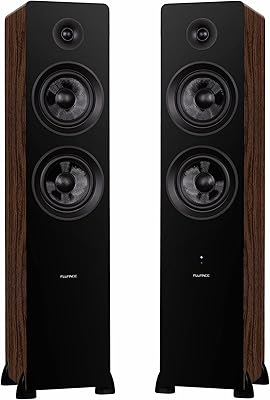
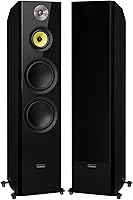
The Fluance Signature HFF Floorstanding Tower Speakers represent Fluance's most deliberate push into serious listening territory, positioned at a price point that invites direct comparison with established names like Klipsch, Polk Audio, and SVS. What genuinely separates these Fluance towers from much of the competition at this tier is a true 3-way crossover design — a meaningful engineering choice that assigns distinct frequency bands to dedicated drivers rather than asking one or two to do too much. Worth stating plainly upfront: this floorstanding pair is entirely passive, so budgeting for a capable amplifier or receiver is non-negotiable. The lifetime warranty Fluance backs them with is a rare commitment in this category and worth factoring into the overall value picture.
Features & Benefits

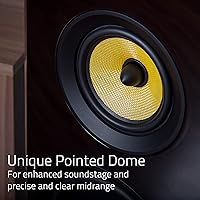
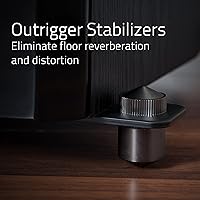
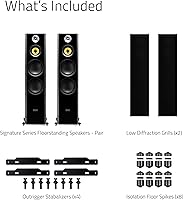
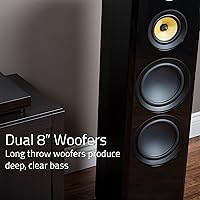
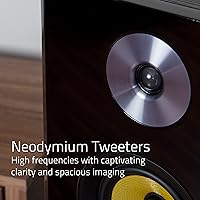
The dual 8-inch woofers are where most listeners notice the biggest immediate payoff, pushing bass down to around 35 Hz — deep enough that a dedicated subwoofer becomes optional in average-sized rooms, though home theater purists may still want one for the lowest octave. The 1-inch neodymium tweeter handles high frequencies with real precision, staying composed even at higher volumes. A pointed midrange dome is the subtler touch, but it meaningfully sharpens stereo imaging by directing sound from the cone center outward. The MDF cabinet with its thick front baffle keeps the enclosure quiet and inert, and the outrigger feet plus isolation floor spikes do practical work anchoring these towers against room-transmitted vibration.

Best For

These Fluance towers are a natural match for anyone building a focused 2-channel stereo system in a medium or large room — roughly 200 square feet and up is where they breathe most comfortably. They also perform well as front channels in a home theater setup, particularly for buyers who'd rather not depend on a separate subwoofer for everyday listening. If you're upgrading from bookshelf speakers and want meaningfully more bass reach and dynamic headroom, the HFF speakers deliver that step convincingly. One practical note: plan to pair them with an amplifier or receiver producing at least 80 watts per channel — under-driving them visibly limits what they can do.

User Feedback

Owners consistently highlight bass punch and build quality as standout strengths, with many noting the cabinet finish looks more expensive than the price suggests. The lifetime warranty earns repeated mentions in longer-term reviews, and people report genuinely positive service experiences when they've needed support. The honest criticisms are worth knowing: a real break-in period is commonly flagged, with most agreeing the sound tightens and opens considerably after 40 to 60 hours of use, so early impressions can mislead. At roughly 62 pounds for the pair, solo setup is genuinely awkward. A handful of buyers mentioned minor grille fit inconsistencies out of the box, though nothing that affects sound quality.

Pros

  • Deep, controlled bass reaching down to 35 Hz means most listeners can skip a separate subwoofer for music.
  • The 3-way crossover keeps each driver focused on its ideal frequency range, resulting in noticeably cleaner midrange clarity.
  • Build quality consistently impresses buyers, with the MDF cabinet feeling solid and the finish looking genuinely premium.
  • Outrigger stabilizers and floor spikes are included and make a real difference in stability on both hard floors and carpet.
  • Neodymium tweeter stays composed and detailed at higher volumes without harshness or listening fatigue.
  • The lifetime parts-and-labor warranty is a rare commitment that gives long-term owners real peace of mind.
  • Stereo imaging is a consistent highlight among owners, with instruments and vocals locking into a well-defined soundstage.
  • Magnetic grilles attach cleanly and come off without leaving marks, a small but appreciated practical detail.
  • These Fluance towers compete credibly against similarly priced offerings from well-known brands, offering strong performance per dollar.
  • Long-term owners regularly report the sound improves meaningfully after a proper break-in period, rewarding patience.

Cons

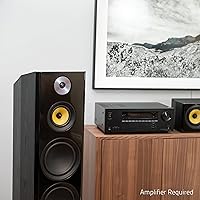
  • Entirely passive design means buyers must budget separately for a capable amplifier or receiver before hearing a single note.
  • At roughly 62 pounds for the pair, moving or positioning them solo is genuinely awkward and may require a second person.
  • A break-in period of 40 to 60 hours is widely reported before the sound fully opens up, making early impressions unreliable.
  • Small room listeners risk acoustic overload — these speakers need space to perform as intended.
  • Underpowered amplifiers noticeably limit dynamics and bass control, making amp selection a critical and potentially costly decision.
  • Some buyers have reported minor grille fit inconsistencies straight out of the box, requiring small adjustments.
  • The large footprint demands thoughtful, permanent placement and may conflict with furniture layouts in multipurpose living spaces.
  • Dedicated home theater users chasing the deepest low-frequency impact may still want to add a subwoofer alongside the HFF speakers.

Ratings

The scores below reflect our AI-driven analysis of verified global owner reviews for the Fluance Signature HFF Floorstanding Tower Speakers, with spam, incentivized posts, and bot-generated feedback actively filtered out before scoring. Each category captures what real buyers experienced over weeks and months of daily use — not just first impressions — and both the highlights and the honest frustrations are weighted into every number you see here.

Sound Quality
88%
Owners consistently describe the overall sound presentation as well-balanced and cohesive, with instruments sitting clearly in their own space rather than bleeding together. Listeners upgrading from entry-level towers frequently note how much more defined and controlled the audio feels, particularly during complex orchestral passages or densely layered rock tracks.
A handful of more experienced audiophiles feel the midrange can occasionally sound slightly recessed compared to reference-grade speakers at higher price points. These tendencies are subtle and may not bother casual listeners, but dedicated critical listeners may notice them during extended sessions.
Bass Performance
84%
The dual 8″ woofers produce genuinely impressive low-frequency output for a passive tower at this price tier, reaching deep enough that many owners in medium-sized rooms skipped adding a subwoofer entirely. Bass feels tight and purposeful rather than bloated, which makes it work equally well for jazz, electronic, and acoustic genres.
Buyers running these HFF speakers in smaller rooms or off underpowered amplifiers report the bass can sound muddy or loose rather than controlled. Those chasing truly cinematic sub-bass for home theater use may still find a dedicated subwoofer necessary to fill in the lowest frequencies convincingly.
Build Quality
91%
The MDF cabinet construction feels genuinely solid and dense when you handle these towers — far removed from the hollow, plasticky feel of cheaper competitors. Owners frequently comment that the cabinet finish and front baffle thickness give the speakers a premium physical presence that looks and feels more expensive than the price suggests.
A recurring minor complaint involves out-of-box grille alignment, with some buyers noting one or both magnetic grilles sit slightly off-center and require repositioning. A small number of reviewers also noted minor finish inconsistencies at cabinet edges, though nothing that affected structural integrity or sound.
Soundstage & Imaging
86%
The 3-way crossover and pointed midrange dome work together to create a noticeably wide, three-dimensional soundstage that owners often describe as one of the HFF speakers' most pleasant surprises. Vocals lock convincingly to the center, and instruments pan realistically across the room without collapsing even at higher listening volumes.
Optimal imaging requires careful speaker placement and toe-in adjustment, which some buyers found more finicky than expected. Listeners sitting well off-axis report the soundstage narrows considerably, meaning these towers reward a dedicated listening position more than casual multi-room use.
High-Frequency Clarity
83%
The neodymium tweeter handles cymbal detail, string overtones, and vocal air with genuine finesse, staying composed and non-fatiguing even during longer listening sessions. Owners coming from horn-loaded tweeters like Klipsch often note a preference for the smoother, more forgiving presentation the HFF speakers offer.
A subset of reviewers who prefer a brighter, more forward treble presentation find the tweeter slightly polite or laid-back compared to their expectations. This is largely a matter of sound preference rather than a deficiency, but buyers who enjoy an energetic top-end should audition before committing.
Value for Money
87%
For a 3-way passive tower with premium driver materials, a thick MDF cabinet, and a lifetime warranty, the price-to-performance ratio is widely seen as genuinely competitive in the under-800-dollar floorstanding category. Owners who compared directly against Klipsch and Polk Audio towers in a similar range frequently concluded these Fluance towers offered equivalent or better build and sound for the money.
The value calculation shifts if you factor in the required amplifier purchase for buyers starting from scratch, as the total system cost can climb considerably beyond the speaker price alone. Buyers who already own a capable receiver benefit most from the value proposition here.
Amplifier Pairing Sensitivity
67%
33%
When paired with a well-matched amplifier delivering 80 watts per channel or more, the HFF speakers respond with authoritative dynamics and clean transients that justify the investment. Owners using quality receivers from Yamaha, Denon, or Marantz consistently report excellent results and describe the pairing as immediately rewarding.
This is one of the most frequently cited pain points in user reviews — underpowered amplifiers noticeably compress the dynamics and make the bass sound soft and uncontrolled. Buyers who purchased these towers without budgeting for a capable amplifier represent a disproportionate share of the disappointed reviewers, making amp selection arguably as important as the speakers themselves.
Setup & Installation
63%
37%
The outrigger stabilizers and floor spikes are well-designed and genuinely useful, giving the towers a planted, stable footing that works reliably on both hardwood and carpet. Instructions are clear and the spike attachment process is straightforward once you have the towers positioned where you want them.
At roughly 62 pounds for the pair, maneuvering these towers solo is legitimately awkward and multiple reviewers recommend having a second person available for unboxing and placement. The sheer size also means once you have positioned them and assembled the outriggers, moving them for room rearrangement becomes a real project.
Break-In Requirement
58%
42%
Owners who committed to the break-in process consistently report the sound becomes more open, detailed, and dynamic after 40 to 60 hours of use, with the bass in particular tightening noticeably. Long-term owners describe the post-break-in sound as meaningfully better than the initial out-of-box experience.
The extended break-in period is a notable friction point, particularly for buyers who expected to enjoy the speakers immediately after unboxing. First impressions before break-in can be genuinely misleading, and several reviews that criticize the bass or treble appear to have been written well before the drivers had time to settle in properly.
Warranty & Customer Support
89%
The lifetime parts-and-labor warranty is a standout differentiator that long-term owners repeatedly credit as a meaningful reason they trusted Fluance over similarly priced competitors. Buyers who have actually used the warranty report responsive, no-hassle support experiences that reinforce confidence in the brand's direct-to-consumer model.
A small number of reviewers noted slower-than-expected response times during high-demand periods, and a few international buyers flagged complications around shipping costs for warranty service. Overall these remain isolated complaints against a backdrop of predominantly positive support experiences.
Room Compatibility
66%
34%
In medium to large rooms — roughly 200 square feet and above — this floorstanding pair fills the space naturally and delivers the kind of full-range, room-filling presentation it was clearly designed for. Owners in dedicated listening rooms or open-plan living spaces consistently rate their satisfaction highly.
Small-room buyers are the most consistently disappointed segment, with multiple reviews describing the sound as overwhelming, boomy, or difficult to position correctly in tight spaces under 150 square feet. These are speakers that genuinely need room to breathe, and forcing them into a compact environment undermines most of what makes them worthwhile.
Aesthetic & Design
79%
21%
The Black Ash finish and clean cabinet lines give these towers a restrained, furniture-friendly appearance that blends more easily into living spaces than more aggressively styled competitors. The magnetic grilles provide a tidy, driver-free look when preferred, and owners appreciate the lack of visible pin holes after removal.
At nearly 47 inches tall and over 15 inches wide, these are visually prominent speakers that cannot be tucked away discreetly — they command presence in a room whether you want them to or not. Buyers in shared living spaces occasionally mention partner or household pushback on the footprint, which is a real-world consideration worth acknowledging.
Midrange Performance
81%
19%
Vocals, acoustic instruments, and spoken dialogue in film all benefit from the dedicated midrange driver, which keeps them clear and present without the congestion that often plagues 2-way speakers handling the same frequency range. Owners who listen heavily to jazz, classical, or singer-songwriter material frequently single out the midrange as a particular strength.
At very high volume levels, a small number of owners noticed the midrange can begin to sound slightly strained or compressed, particularly on dense rock and electronic mixes. This appears to be amplifier-dependent in many cases, so the issue may be less about the driver itself and more about running the system near its dynamic limits.

Suitable for:

The Fluance Signature HFF Floorstanding Tower Speakers are built for listeners who take their audio seriously and are ready to invest in a proper setup — not just a plug-and-play solution. They shine brightest in medium to large rooms, roughly 200 square feet or more, where their dual woofers and 3-way design can fully pressurize the space and deliver a coherent, room-filling soundstage. Dedicated 2-channel stereo enthusiasts will get the most out of these Fluance towers, particularly those pairing them with a quality integrated amplifier or AV receiver in the 80 to 200 watt per channel range. Home theater builders who want capable front speakers that handle most of the frequency range without leaning heavily on a subwoofer will also find this floorstanding pair a compelling anchor for their system. Buyers who prioritize long-term ownership confidence will appreciate that Fluance backs these with a lifetime parts-and-labor warranty — something genuinely uncommon at this price tier.
Not suitable for:

The Fluance Signature HFF Floorstanding Tower Speakers are a poor fit for apartment dwellers, small room listeners, or anyone without a capable amplifier already in their setup or budget. At nearly 47 inches tall and weighing around 62 pounds for the pair, these are physically substantial speakers that demand both floor space and a permanent placement commitment — casual or flexible living arrangements will find them impractical. Because they are entirely passive, buyers expecting a self-contained, powered speaker experience will need to shop elsewhere; there is no built-in amplification whatsoever. Those hoping to run them from a budget receiver or a low-powered amplifier will likely be underwhelmed, as the HFF speakers respond poorly to being under-driven and tend to sound flat and congested without adequate power. Listeners who primarily occupy small listening rooms should also consider that these towers can easily overwhelm a compact space acoustically, making proper placement and room treatment more critical than many buyers anticipate.
Specifications

  • Speaker Type: 3-way floorstanding tower speaker designed for passive operation with an external amplifier or receiver.
  • Woofers: Dual 8″ dynamic drivers work in tandem to reproduce low frequencies with controlled linear movement.
  • Tweeter: 1″ neodymium dome tweeter handles high-frequency reproduction with low distortion and precise detail.
  • Midrange Driver: Pointed dome midrange driver directs sound from the center of a woven glass fiber cone for improved imaging.
  • Frequency Response: Rated frequency response begins at 35 Hz, covering deep bass through the full audible spectrum.
  • Power Handling: Maximum power handling is rated at 200 watts, requiring a capable external amplifier or AV receiver.
  • Crossover Network: Internal 3-way crossover network divides the audio signal across the tweeter, midrange, and woofer drivers.
  • Cabinet Material: Enclosures are precision-built from MDF wood engineered to minimize internal resonance and coloration.
  • Front Baffle: The front baffle measures 1.4″ thick with chamfered edges to reduce sound diffraction around the drivers.
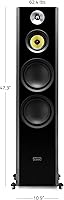
  • Dimensions: Each cabinet measures 10.9″ deep by 15.4″ wide by 47.3″ tall, making these substantial floorstanding towers.
  • Weight: The pair weighs approximately 62.4 pounds combined, requiring careful handling during placement and setup.
  • Connectivity: Wired passive connection via speaker binding posts; no built-in amplification or wireless capability.
  • Surround Config: Configured for 2.0 stereo output, suitable as front left and right channels in stereo or home theater systems.
  • Included Accessories: Each pair ships with four outrigger stabilizers, eight isolation floor spikes, and two magnetic front grilles.
  • Cabinet Finish: Available in Black Ash veneer finish designed to blend with standard home theater and living room furniture.
  • Warranty: Backed by a lifetime parts-and-labor manufacturer warranty provided directly through Fluance.
  • Indoor Use: Designed exclusively for indoor use and not rated for outdoor or moisture-exposed environments.
  • Driver Material: Woofer cones use a woven glass fiber construction for stiffness and low coloration across the bass range.

Related Reviews
Fluance Ai81 Elite Powered Floorstanding Speakers
86%
94%
Sound Quality
90%
Bass Performance
88%
Ease of Setup
85%
Build Quality
93%
Connectivity Options
More
Fluance Signature HFS Bookshelf Speakers
81%
88%
Sound Quality
91%
Soundstage & Imaging
62%
Bass Response
86%
Build Quality
84%
Value for Money
More
Polk Signature Elite ES50 Tower Speaker
87%
91%
Sound Quality
88%
Bass Performance
85%
Ease of Setup
93%
Design and Build Quality
89%
Compatibility with AV Systems
More
Fluance XL8F Floorstanding Speakers
80%
83%
Bass Performance
86%
Midrange Clarity
81%
High-Frequency Detail
78%
Soundstage & Imaging
88%
Build Quality
More
KEF Q550 Floorstanding Speaker
80%
91%
Sound Clarity
89%
Soundstage & Imaging
67%
Bass Performance
88%
Build Quality
74%
Value for Money
More
Fluance XL8SW Bookshelf Speakers
87%
90%
Sound Quality
84%
Bass Response
91%
Clarity of Midrange
87%
Ease of Installation
88%
Design & Build Quality
More
Fluance Elite SX6WH Bookshelf Speakers
84%
87%
Sound Quality
91%
Build Quality
72%
Bass Performance
89%
Value for Money
82%
Ease of Setup
More
DALI Oberon 5 Floorstanding Speakers
80%
93%
Sound Naturalness
91%
Midrange Clarity
74%
Bass Extension & Control
89%
High-Frequency Smoothness
88%
Soundstage & Imaging
More
Fluance Ai41 Powered Bookshelf Speakers
82%
88%
Sound Quality
73%
Bass Performance
84%
Treble Clarity
91%
Build Quality
87%
Connectivity & Inputs
More
Polk Monitor XT60 Tower Speaker
86%
93%
Sound Quality
90%
Bass Performance
88%
Build Quality
85%
Setup & Installation
82%
Design & Aesthetics
More

FAQ

You will need a separate amplifier or AV receiver — these are fully passive speakers with no built-in power. Connecting them directly to a TV will not work. Plan to pair them with a receiver or integrated amplifier that delivers at least 80 watts per channel to get the best out of them.

Honestly, a small room is not their ideal environment. These towers are large physically and capable of pressurizing a medium-to-large space, so in a compact bedroom they can easily become acoustically overwhelming. If your listening room is under roughly 150 to 180 square feet, a quality bookshelf speaker setup would likely serve you better.

For music listening, most people find the dual 8″ woofers sufficient without a subwoofer, especially in average-sized rooms. If you are building a dedicated home theater system and want the full impact of movie soundtracks below 30 Hz, adding a subwoofer will fill in that last octave. For stereo music use, they are largely self-sufficient.

Most owners report that the sound noticeably tightens and opens up after around 40 to 60 hours of regular use at moderate volumes. If your first impression is that the bass sounds a little stiff or the highs slightly bright, give them time before drawing conclusions. Running music at a comfortable volume for a couple of weeks typically gets you there.

Look for an AV receiver or stereo integrated amplifier offering 80 to 150 watts per channel into 8 ohms. Brands like Yamaha, Denon, Marantz, and NAD all offer models in reasonable price ranges that pair well. Avoid budget mini-amplifiers or entry-level receivers rated below 50 watts — under-driving these towers is one of the most common complaints from disappointed buyers.

The outrigger stabilizers and spikes genuinely help, particularly on hardwood or tile floors where the cabinets could otherwise shift. On carpet, the spikes also work well by anchoring the speaker into the pile. You are not required to use them, but most owners find the stability improvement worthwhile, and the spikes can also slightly improve bass clarity by decoupling the cabinet from floor vibrations.

Technically possible, but these towers are overkill and physically awkward for surround placement — they are designed as front left and right speakers. Using them as surrounds would also require a very powerful multichannel receiver and significant room space. Most buyers use them as the front pair and pair them with smaller satellite or bookshelf speakers for surrounds.

Owners who have compared them directly often find the cabinet construction on this floorstanding pair competitive with — and sometimes more solid-feeling than — comparable Klipsch and Polk offerings. The MDF construction and thick front baffle give them a genuinely dense, well-damped feel. Sound character is a matter of preference: Klipsch tends toward a brighter, more forward presentation while these Fluance towers lean toward a more balanced, controlled delivery.

A handful of buyers have noted minor grille alignment quirks on initial unboxing. The grilles attach magnetically, so there are no pins to align precisely, but occasionally one side sits slightly off. In most cases, gentle repositioning by hand resolves it quickly. If the fit issue persists, Fluance's customer support team is generally responsive and can advise or send replacement parts under the warranty.

From what long-term owners report, it is a genuine and functional warranty rather than a hollow promise. Fluance is a direct-to-consumer brand with an incentive to maintain their reputation, and multiple buyers have described positive warranty service experiences. The key detail is that it covers both parts and labor, which is notably more comprehensive than the limited one- or two-year warranties common in this category.