Overview

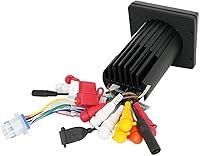
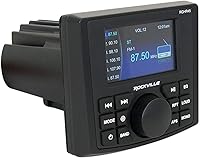
The Rockville RGHR45 Marine Gauge Receiver sits in an interesting spot — practical enough for a no-fuss install, yet capable enough to replace a tired factory unit on most boats and PWCs. It drops into a standard gauge opening without cutting or fabricating new panels, which alone saves considerable installation time. The IP66 waterproof rating means it handles spray, rain, and the occasional wave splash — though it is not designed for submersion, so don't confuse it with dive-proof hardware. Its 3-inch TFT display is compact but readable underway, and it competes directly with entry-level units from Kenwood and JVC on both features and price positioning.
Features & Benefits

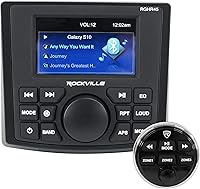
What stands out most about this marine receiver is the 4-zone volume control — you get independent level adjustment across four outputs using the included wired remote, which is a genuine rarity at this price tier. Power figures matter here: the 28W RMS per channel is the honest number to keep in mind, since peak ratings rarely reflect real-world listening levels. Connectivity is broad — Bluetooth for phone streaming, USB for media files and video, plus AM/FM with a healthy bank of presets. The rear camera input and subwoofer RCA output give practical boaters a clear upgrade path without purchasing extra hardware separately.

Best For

The Rockville gauge stereo is a natural fit for boat owners replacing a worn-out factory head unit without wanting to spend on a Garmin or Fusion setup. PWC and ATV riders benefit too — the compact gauge-hole footprint and weather-resistant housing keep things clean and functional. If you want multi-zone audio control on a realistic budget, this is one of the few options at this price point that actually delivers it. It also suits DIY installers comfortable running a wired remote without needing a full touchscreen interface. Boaters already planning to add a backup camera will appreciate the input is built right in.

User Feedback

Buyers consistently praise how straightforward installation is and how reliably Bluetooth maintains a connection — handy when your phone is stowed and you're focused on the wheel. The waterproofing holds up well through rain and spray in practice, though some users note the display washes out badly in direct afternoon sun. The wired remote draws mixed reactions: some appreciate no batteries or pairing hassle, while others wish a wireless option were included. A few longer-term owners flagged connector durability after extended salt air exposure, which is worth watching. Overall, most buyers feel this boat head unit punches above its weight for the asking price.

Pros

  • Four-zone independent volume control is a rare and genuinely useful feature at this price tier.
  • Bluetooth connection is reliable and quick to pair, even with the unit mounted in a dashboard.
  • Standard gauge-hole mounting makes installation straightforward for most boats and PWCs.
  • IP66 waterproofing holds up well in rain and spray during real-world boating conditions.
  • Built-in rear camera input saves the cost of a separate display or adapter.
  • Dedicated subwoofer RCA output makes it easy to add bass without extra hardware.
  • USB video playback and multiple RCA inputs give this marine receiver more input flexibility than typical rivals.
  • Available in both white and black to match different helm aesthetics.
  • Humiseal-coated PCB adds a meaningful layer of corrosion resistance for saltwater environments.
  • AM/FM with a solid bank of presets keeps traditional radio accessible alongside modern streaming.

Cons

  • Display washes out noticeably in direct sunlight, making it hard to read at midday on open water.
  • The wired remote is functional but limits placement flexibility compared to a wireless alternative.
  • Peak power figures are heavily marketed, but real continuous output is considerably more modest.
  • Long-term connector durability in salt air environments has been a concern for some owners after extended use.
  • No support for Apple CarPlay or Android Auto, which rivals at similar prices sometimes include.
  • The 3-inch display is small enough that navigating menus while underway can feel fiddly.
  • No built-in GPS or NMEA connectivity, so integration with marine chart plotters is not possible.
  • Customer support responsiveness from Rockville has drawn mixed reviews when issues arise post-purchase.

Ratings

The scores below for the Rockville RGHR45 Marine Gauge Receiver were generated by our AI system after analyzing verified buyer reviews from multiple global markets, with spam, bot-submitted, and incentivized feedback actively filtered out. The result is an honest, balanced snapshot that reflects both what this marine receiver genuinely does well and where real owners have run into frustration. No score has been inflated to flatter the brand, and no legitimate pain point has been buried.
Waterproof Durability
78%
22%
Owners across freshwater and coastal saltwater environments consistently report that the IP66-rated housing holds up through heavy rain, spray, and the occasional wave splash without any sign of water intrusion. The Humiseal PCB coating adds a meaningful layer of internal protection that users notice when comparing longevity to cheaper uncoated competitors.
IP66 is not submersion-rated, and a handful of boaters in rougher conditions found the limits of that rating the hard way. Some long-term users also flagged connector junction points as a weak spot for salt air corrosion after one or two full seasons without maintenance.
Installation Ease
88%
The standard gauge-hole mounting format is a genuine time-saver — most DIY installers report having this boat head unit up and running in under an hour without any panel cutting or adapter plates. Wiring clarity and a logical connector layout get consistent praise from owners doing their first marine stereo swap.
A small number of users on older vessels found the fit slightly looser than expected, requiring trim rings or extra mounting hardware not included in the box. The wired remote also adds a cable management task that a few installers found fiddly in tight helm spaces.
Multi-Zone Audio Control
84%
Four independent volume zones via the included wired remote is a feature that typically costs significantly more on competing brands, and buyers who run speakers at the bow, stern, and cabin genuinely notice the difference in day-to-day use on the water. Zone 4 as a dedicated subwoofer output is a smart design choice that makes bass expansion a simple RCA connection rather than a complex rewire.
The wired remote is the only way to control zone volumes, which can feel limiting on larger boats where the helm and listening zones are far apart. A wireless or app-based zone control option would make this feature considerably more practical for bigger vessels.
Bluetooth Performance
82%
18%
Pairing is quick and the connection stays solid during typical on-water use, which matters when your phone is stowed and you just want music to keep playing without interruption. Buyers specifically praise the reliability of Bluetooth when other electronics on the boat are running simultaneously, which is not always the case on budget receivers.
Bluetooth range is adequate but not exceptional — walking to the stern of a longer boat while the unit is at the helm can cause occasional dropouts for some users. There is also no aptX or hi-res audio codec support, so audiophile-tier wireless streaming is not on the table.
Display Readability
54%
46%
In shaded conditions or overcast days on the water, the 3-inch TFT display is perfectly functional for reading track info, navigating menus, and monitoring input sources. The compact screen fits the gauge-hole format neatly, and the color display is a step up from the monochrome screens found on older-generation marine stereos.
Direct sunlight is where this display genuinely struggles — multiple owners describe it as nearly unreadable at midday without a bimini or shade cover, which is a real usability issue on open boats. This is the single most consistent complaint across verified buyer reviews and is the primary reason the score sits well below the other highlighted categories.
Sound Quality
71%
29%
For casual boating listening at moderate volumes, the built-in amplification delivers clear, enjoyable audio across a range of speaker types. The onboard EQ presets cover the most common tonal preferences without requiring manual frequency adjustment, and Rock and Flat modes get the most positive mentions from owners.
The gap between the peak power figure and the real-world RMS output catches some buyers off guard — owners expecting room-filling loudness on a large open boat may find the built-in amp falls short without an external amplifier. It is adequate for a pontoon at cruising speed, but not for a party barge at anchor.
Input & Connectivity Range
86%
Having USB video, RCA A/V input, rear camera input, and Bluetooth under one roof at this price point gives this marine receiver a flexibility that most direct competitors cannot match. Owners who want to connect multiple source devices without a signal switcher find the input array genuinely useful in practice.
There is no Apple CarPlay or Android Auto support, which is an increasingly expected feature even in the marine segment. A few buyers also noted that the USB port location made cable management slightly awkward depending on the mounting orientation.
Build & Materials
73%
27%
The housing feels solid and purposeful rather than flimsy, and the weather-resistant finish shows no obvious degradation after a normal boating season for most owners. Available in both white and black, the unit integrates cleanly into a variety of helm aesthetics without looking aftermarket.
Some users describe the button feel as somewhat cheap compared to Kenwood or Fusion units at a similar price point. The wired remote in particular draws criticism for its plasticky construction, with a few owners reporting cable wear near the connector end after a single season.
Value for Money
87%
Relative to what comparable units from established marine brands charge for four-zone control, a rear camera input, and a Humiseal-coated PCB in a single package, this Rockville gauge stereo offers a compelling set of capabilities per dollar spent. Budget-minded boaters consistently rate it as a smart buy for the feature count.
Buyers who stretch the budget expecting near-premium performance may feel let down by the display and remote quality, which reflect the price tier honestly. It is excellent value if your expectations match the segment, but a poor value if you are hoping it punches into Fusion or JL Audio territory.
Rear Camera Functionality
68%
32%
Having a factory rear camera input built into a gauge-hole receiver at this price is a genuine practical win — most owners connect a standard RCA reversing camera without any additional adapter hardware. The display handles the video feed clearly enough for low-speed docking assistance.
The camera input does not automatically trigger from a reverse signal in the same plug-and-play way a dedicated backup camera system would, so some wiring knowledge is required to get automatic switching working correctly. Video quality is also capped by the small 3-inch display, which limits how useful the feed is at night or in poor visibility.
AM/FM Tuner
74%
26%
The tuner performs well for a marine unit in this class, with solid reception in open-water conditions where signal clarity is typically better than urban environments. The combination of 18 FM and 12 AM presets covers a practical number of saved stations for mixed freshwater and coastal use.
In areas with weaker signal coverage — particularly on inland lakes surrounded by terrain — the AM reception can be inconsistent. Tuner sensitivity is not class-leading, and buyers who rely heavily on marine weather radio should verify local coverage before committing.
Wired Remote Usability
62%
38%
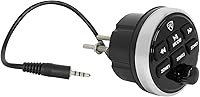
The included wired remote solves a real problem for boats where the head unit is recessed below the helm — being able to adjust per-zone volume without leaning down is genuinely useful during an active day on the water. It is functional out of the box with no pairing or battery management needed.
The cable length limits placement flexibility, and the remote itself feels basic compared to the wireless alternatives offered by competing brands. Several owners wish the unit offered both wired and wireless options, rather than wired only.
Long-Term Reliability
66%
34%
Most owners report trouble-free operation through their first full boating season, and the conformal PCB coating does appear to extend internal component life compared to uncertified marine receivers. Units installed with proper dielectric grease on connectors and stored correctly in the off-season show better longevity.
A portion of longer-term owners — particularly those in saltwater environments — report issues with connector corrosion or remote cable degradation after two or more seasons. Rockville's after-sales support responsiveness has drawn mixed feedback, which adds some risk if the unit develops a fault outside the return window.
USB & Media Playback
76%
24%
USB video playback with H.264 and H.265/HEVC support covers most common file formats people actually store on a USB drive, and the audio USB playback is stable and straightforward to use. Buyers appreciate not needing to reformat drives or convert files just to get their media to play.
The small display limits the practical appeal of video playback in most boating scenarios, and there is no support for hi-res audio file formats for buyers with flac or high-bitrate libraries. Playlist navigation via the front controls is workable but takes some getting used to.
Compatibility & Fitment
83%
The standard gauge-hole design covers an impressively wide range of boat makes and years, meaning most buyers can order with reasonable confidence that the physical install will work without modifications. Compatibility with a broad range of external speakers, amps, and subwoofers via the RCA outputs adds further flexibility.
Older vessels with non-standard gauge cutouts or thicker panel materials may need additional mounting hardware that is not included. Compatibility with Apple devices is limited to basic Bluetooth audio — there is no Lightning or USB-C wired connection support for iOS users who prefer wired audio.

Suitable for:

The Rockville RGHR45 Marine Gauge Receiver is a strong match for practical boaters and powersports riders who want a meaningful audio upgrade without crossing into premium-brand territory on price. It fits especially well for pontoon and deck boat owners replacing a stock head unit, since the standard gauge-hole mounting means no custom fabrication and a clean, factory-looking result. Riders who run multiple speaker zones across a larger vessel will appreciate the four-zone volume control via the wired remote — that kind of flexibility is genuinely hard to find at this price point. Budget-conscious DIY installers who want rear camera readiness built in, rather than bolted on as an afterthought, will find the input welcome. Anyone who already plans to add an external subwoofer or a second pair of speakers can do so without buying additional hardware, since the dedicated RCA outputs are already there waiting.
Not suitable for:

The Rockville RGHR45 Marine Gauge Receiver is not the right choice for serious marine audiophiles who prioritize output fidelity above all else — the real-world RMS power per channel is moderate, and it will not satisfy anyone accustomed to high-end Fusion or JL Audio setups. Boaters who spend most of their time in direct, harsh sunlight should think carefully before buying, as the 3-inch TFT display has genuine readability limitations on bright days. If a wireless remote is non-negotiable for your setup — say, a larger boat where the helm and the stereo are far apart — the wired-only control solution may frustrate you. This boat head unit is also not suitable for any application requiring true waterproof submersion protection; IP66 handles spray and rain confidently, but it is not built for anything approaching underwater exposure. Finally, buyers expecting smartphone-mirroring features like Apple CarPlay or Android Auto will need to look elsewhere, as this receiver does not support either protocol.
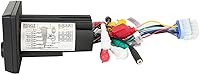
Specifications

  • Peak Power: The unit delivers 72W per channel across four channels at peak output measured at 2 ohms.
  • RMS Power: Continuous RMS output is rated at 28W per channel across all four channels, which reflects real-world listening performance.
  • Waterproof Rating: IP66 certification means the housing resists powerful water jets and spray from any direction, though it is not rated for submersion.
  • PCB Coating: The internal circuit board is treated with Humiseal conformal coating to resist moisture and corrosion in marine environments.
  • Display: A 3-inch TFT color screen provides menu navigation and media information in a compact gauge-hole footprint.
  • Audio Zones: Four independent volume zones are available: built-in amp output, two RCA line outputs, and a dedicated subwoofer RCA output.
  • Connectivity: Supported connections include Bluetooth, USB, 3.5mm auxiliary input, AM/FM tuner, and RCA inputs and outputs.
  • FM Presets: The tuner stores up to 18 FM station presets for quick access without manual retuning.
  • AM Presets: Up to 12 AM station presets can be saved alongside FM stations in the tuner memory.
  • Video Inputs: The unit accepts USB video playback and an RCA A/V input, and includes a dedicated rear camera input with display support.
  • Video Encoding: USB video playback supports H.264 and H.265/HEVC encoded files for broad format compatibility.
  • EQ Presets: Four onboard equalizer presets — Pop, Rock, Jazz, and Flat — allow quick tonal adjustments without manual EQ tuning.
  • Mounting Type: Designed to fit standard marine gauge openings, allowing drop-in installation on most boats and powersports vehicles without cutting.
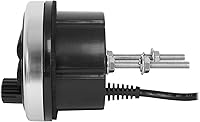
  • Remote Control: A wired remote control is included in the box for adjusting volume and zone levels from a distance.
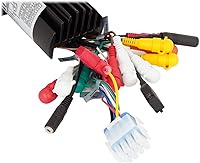
  • Connector Types: Physical connection options include a 3.5mm jack, RCA plugs, and USB port for media and power-related functions.
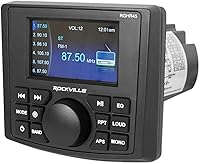
  • Color Options: Available in two finishes — white and black — to suit different helm aesthetics and console designs.
  • Item Weight: The unit weighs 3.85 pounds, making it manageable for single-person installation in tight gauge panel spaces.
  • Channel Config: Audio output is configured as a 4-channel stereo surround setup compatible with standard marine speaker wiring.
  • Compatible Devices: Works with Android smartphones for Bluetooth streaming and is compatible with external speakers and amplifiers via RCA outputs.
  • Brand: Manufactured by Rockville, a US-based audio brand focused on value-oriented marine, car, and pro audio equipment.

Related Reviews
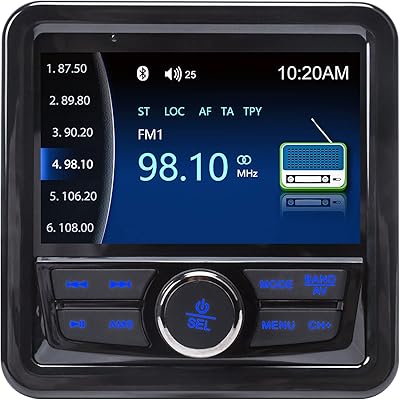
Audiozerone JI8415A Marine Gauge Receiver
85%
88%
Value for Money
91%
Build Quality & Durability
85%
Ease of Installation
87%
Audio Performance
92%
Water Resistance
More
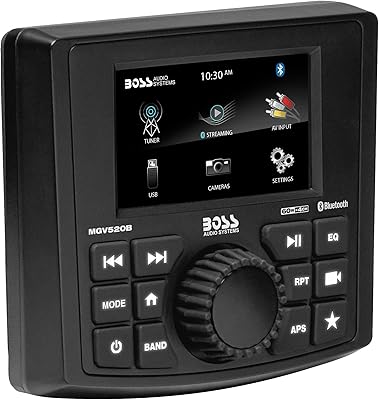
BOSS MGV520B Marine Gauge Receiver
73%
86%
Bluetooth Performance
78%
Weatherproofing & Durability
74%
Sound Quality
71%
Installation Experience
81%
Value for Money
More
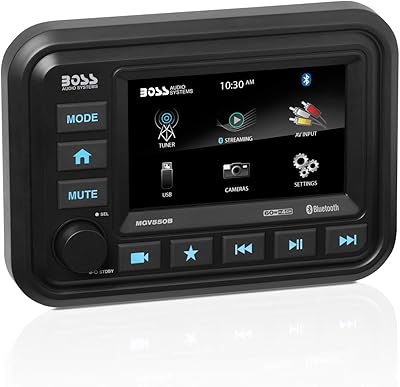
BOSS Audio Systems MGV550B Marine Gauge Receiver
76%
83%
Weatherproofing & Durability
88%
Touchscreen Responsiveness
86%
Bluetooth Connectivity
79%
Built-in Amplifier Output
61%
Installation Experience
More
BOSS Audio Systems MCKGB350B.6 Marine Gauge Receiver and Speaker Package
83%
88%
Sound Quality
91%
Durability/Weatherproofing
84%
Ease of Installation
86%
Bluetooth Connectivity
83%
Audio Customization Options
More
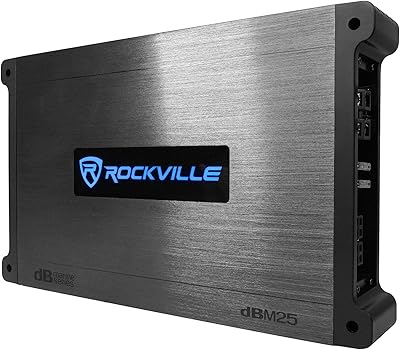
Rockville DBM25 Marine Amplifier
75%
88%
Value for Money
83%
Marine Durability
79%
Power Accuracy
74%
Audio Quality
82%
Crossover Flexibility
More
Rockville DBM12 Marine Amplifier
86%
89%
Performance
91%
Durability
86%
Audio Quality
78%
Ease of Installation
92%
Build Quality
More
Citreal Marine Bluetooth Stereo Receiver
74%
76%
Water Resistance
83%
Bluetooth Performance
81%
Ease of Installation
61%
Sound Quality
79%
AM/FM Reception
More
VOXXBASS Bluetooth Marine Radio Receiver
86%
92%
Durability and Waterproofing
87%
Sound Quality
90%
Bluetooth Connectivity
75%
Ease of Installation
85%
Compatibility with Devices
More
Rockville MS10LB 10-inch Marine Subwoofer
68%
71%
Bass Performance
86%
Ease of Installation
58%
Build Quality
63%
Weather Resistance
78%
Value for Money
More
Rockville MS525B 5.25″ Marine Boat Speakers
78%
91%
Value for Money
88%
Weatherproofing & Durability
83%
Treble & High-Frequency Clarity
47%
Bass & Low-End Output
69%
Volume & Output Power
More

FAQ

The IP66 rating is a legitimate industry standard, not just a label. It means the unit can handle direct water jets and heavy spray from any angle without damage. That said, IP66 does not mean submersion-proof, so if your boat takes on water or the unit gets fully submerged, it may not survive. For typical rain, splashing, and spray on the water, it holds up well according to most owners.

If your boat has a standard marine gauge opening, this unit should drop right in without any cutting or panel modification. The mounting is designed around the most common gauge-hole size found on pontoon boats, deck boats, and many PWCs. It is worth measuring your existing opening before ordering to confirm compatibility, but for the vast majority of vessels this is a straight swap.

It means you can independently adjust the volume going to four different speaker groups from the included wired remote. For example, you could turn down the speakers at the bow while keeping the stern speakers loud, or fade the subwoofer output separately. It is a genuinely practical feature if you have speakers spread across different areas of the boat.

Most buyers report that Bluetooth pairing is quick and the connection stays stable during normal use. It is not a hi-fi audiophile-grade wireless link, but for streaming music from your phone on the water it performs reliably. Keeping your phone within a reasonable range of the unit helps maintain a consistent signal.

This is honestly one of the weaker points of this boat head unit. The 3-inch TFT screen is fine in shade or overcast conditions, but in direct afternoon sun it can wash out enough to make reading menus difficult. If you spend a lot of time boating in full sun without a bimini top, that is worth factoring into your decision.

Yes, there is a dedicated rear camera input built in. You can wire a standard RCA-output backup camera to the unit and the display will show the camera feed. It will not auto-trigger the way a car stereo does with a reverse signal in all cases, so check the wiring instructions, but the hardware input is there and functional.

It depends on your setup. The wired remote is a nice touch for boats where the stereo is mounted below the helm and you want quick volume control without reaching down. The downside is the cable limits placement flexibility. If you prefer a wireless solution or have a complex helm layout, it can feel restrictive compared to Bluetooth or RF remotes offered by competing brands.

Plan around the 28W RMS per channel figure rather than the peak number. That is the honest, sustained output the amp can deliver. For average marine speakers in a mid-sized boat, that is enough for clear, enjoyable sound at reasonable volume. If you are looking to fill a large open vessel with loud audio, you will likely want to add an external amplifier using the RCA outputs.

No, neither Apple CarPlay nor Android Auto is supported. You can stream audio from your iPhone or Android phone via Bluetooth, but there is no screen mirroring or app integration. If phone mirroring is a priority for you, this Rockville gauge stereo is not the right fit.

Feedback from owners suggests the unit performs well through a single season when properly installed and rinsed occasionally. The Humiseal-coated PCB adds real corrosion resistance inside. Some longer-term users have noted that connector points and the remote cable junction can show wear after prolonged saltwater exposure, so applying dielectric grease to connections at the start of each season is a smart preventive step.

Where to Buy