Overview

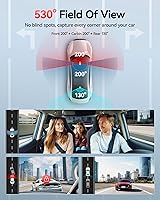
The REDTIGER VisionPano20 3-Channel Dash Cam arrived recently as a genuinely full-coverage contender in a crowded mid-range field. Where most dash cams stop at front and rear, this triple-channel dash cam adds a wide-angle interior lens, pushing total coverage to 530 degrees — a meaningful step up for anyone tired of blind-spot gaps during lane changes or parking lot incidents. Out of the box, you get a 128GB card included, a GPS adhesive mount, and all the cabling needed for the rear camera, which is a refreshingly complete package. The review base is still growing given the recent launch, but early signals point to a competitive option worth serious consideration.

Features & Benefits

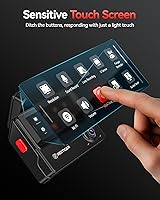
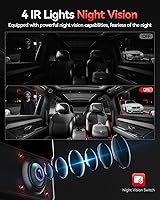
The VisionPano20 pairs its wide front and interior lenses — each shooting 2.5K footage — with a 130-degree rear camera, giving you angles that catch side-swipes and parking scrapes a standard two-camera rig would miss entirely. The cabin IR camera is particularly useful for rideshare work; four infrared LEDs keep passengers clearly visible even in pitch darkness. Day-to-day control runs through a responsive 3.18-inch touchscreen that makes adjusting settings far quicker than hunting for physical buttons. GPS is integrated into the adhesive mount, logging speed and location for insurance documentation. One caveat worth stating plainly: parking mode requires a separate hardwire kit that does not come in the box.

Best For

This three-camera setup earns its keep most naturally for rideshare and gig drivers, where interior cabin footage provides solid protection against false passenger claims. Parents monitoring young children or checking on a newly licensed teen behind the wheel will appreciate how the IR lens handles low-light back-seat visibility. Small fleet operators running vans or trucks benefit from having multi-angle incident documentation in one tidy unit. Urban drivers in high-theft areas will find the parking surveillance mode valuable once the hardwire kit is sourced separately. RV owners also fit naturally here, as the wide front and interior lenses handle large-cab road trips well.

User Feedback

Early buyers have pushed the VisionPano20 to a 4.5-star average, with the review pool still expanding since the cam only recently hit the market. The most consistent praise centers on image sharpness and how natural the touchscreen feels compared to older button-heavy competitors — installation also earns positive notes, with reviewers finding the included accessories genuinely reduce setup friction. On the critical side, some users report the WiFi app occasionally takes a moment to sync, and a few discovered their card needed reformatting before first use. Rideshare drivers specifically call out strong night IR clarity, though a handful note visible edge distortion on the ultra-wide lenses, which is a common tradeoff at this field of view.

Pros

  • Included 128GB card, GPS mount, and full rear camera cable make the out-of-box setup genuinely complete.
  • The 2.5K interior lens with four IR lights delivers clear cabin footage even in total darkness, a real advantage for rideshare drivers.
  • A responsive touchscreen interface removes the frustration of navigating menus through tiny physical buttons.
  • Built-in GPS logs speed and location data automatically, giving you credible evidence for insurance or legal situations.
  • Triple-lens coverage catches side-impact angles and parking lot scrapes that a standard two-camera system simply misses.
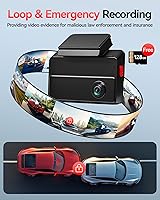
  • Loop recording and a G-sensor mean critical collision clips are automatically protected without manual intervention.
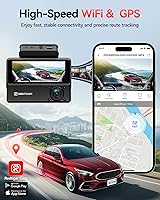
  • WiFi connectivity lets you pull and share clips from your phone without ever touching the memory card.
  • At its price point, the combination of three cameras and included storage represents solid value for the feature set.
  • An 18-month warranty with stated 24-hour support is a reasonable safety net for a mid-range electronics purchase.
  • Compatible with cars, trucks, vans, RVs, and buses, making it practical across a wider range of vehicles than most consumer dash cams.

Cons

  • The hardwire kit required for parking mode is sold separately, adding cost and installation work that is easy to overlook at purchase.
  • WiFi app connectivity can be slow to establish a stable connection, which gets frustrating when you need footage quickly.
  • Some users report needing to reformat the included memory card before the camera will recognize it properly.
  • Ultra-wide lenses produce noticeable edge distortion, which is a real limitation for anyone relying on precise peripheral detail.
  • The rear camera records at 1080p while the front and interior shoot 2.5K, creating an inconsistency in footage quality across channels.
  • Running a 21-foot rear camera cable cleanly through certain vehicle interiors can be a time-consuming installation challenge.
  • The review pool is still modest given the recent launch, so long-term reliability data is limited compared to more established models.
  • No built-in battery means the camera cannot function at all without a power connection, limiting flexibility in some setups.

Ratings

The scores below for the REDTIGER VisionPano20 3-Channel Dash Cam are generated by our AI review engine after analyzing verified global buyer feedback, with spam, bot-submitted, and incentivized reviews actively filtered out. Each category reflects both what real drivers genuinely praised and the friction points they ran into — nothing is glossed over. Whether you are considering this triple-channel dash cam for rideshare work, family use, or everyday commuting, these ratings are designed to give you an honest, unvarnished picture.

Video Clarity
88%
Buyers consistently single out the front and interior footage as sharper than they expected at this price level, with license plates readable at a distance and cabin details crisp enough to hold up in dispute situations. Rideshare drivers in particular report that daytime recordings look genuinely usable rather than washed out or over-compressed.
The rear camera records at a lower resolution than the other two lenses, and the quality gap is noticeable when reviewing side-by-side clips. In lower-light conditions on unlit roads, rear footage loses meaningful detail, which matters if a rear-end collision happens on a dark highway.
Night Vision — Cabin
91%
The four infrared LEDs embedded in the interior lens are the standout feature for anyone driving passengers after dark. Rideshare drivers report that faces, clothing, and interior details remain clearly identifiable even with zero ambient light inside the vehicle, which is exactly what you need for legitimate incident documentation.
The IR illumination is effective within the cabin but does create a slight halo effect on very reflective surfaces like glass partitions or phone screens. A small number of users also note that the IR automatically disables when the cabin is already well-lit, which can cause brief exposure adjustment delays when entering tunnels.
Coverage Angle
83%
The combination of three wide-angle lenses genuinely reduces the dead zones that frustrate owners of standard two-camera setups, catching side-swipe events and parking lot approaches that would otherwise go unrecorded. Fleet drivers and RV owners in particular find the breadth of coverage meaningful on wider vehicles.
Ultra-wide lenses come with inherent optical distortion, and objects toward the frame edges appear stretched in a way that makes precise distance judgment difficult. A portion of reviewers feel the 530-degree marketing figure sets expectations that the real-world footage, while good, does not fully live up to at the peripheries.
Parking Mode
62%
38%
When properly set up with a hardwire connection, the collision-triggered and time-lapse parking modes work reliably and have helped several users document hit-and-run events and vandalism with usable footage. Urban drivers in high-theft areas report genuine peace of mind once the system is running.
The hardwire kit required to enable parking mode is not included in the box, which catches a meaningful number of buyers off guard after purchase. This adds both cost and installation complexity — either a DIY fuse-box job or a shop visit — making what sounds like a standard feature feel like an upsell in practice.
App & WiFi Experience
67%
33%
When the WiFi connection establishes cleanly, the mobile app makes pulling clips genuinely convenient — no card removal, no adapter needed, just download and share directly from your phone. Most users get there eventually and appreciate not having to fumble with the memory card during a busy shift.
Connection reliability is one of the more consistent complaints in the review pool, with some users reporting the camera and app take several attempts to pair reliably. The app interface itself is functional but not particularly polished, and a few Android users report stability issues that iOS users seem to encounter less frequently.
Installation Ease
84%
The included accessory kit — cable clips, installation tool, and a long rear camera cable — gives the setup process a completeness that budget alternatives rarely match. Most buyers with no prior dash cam experience report getting the main unit and rear camera mounted and running within an hour.
Routing the rear camera cable cleanly through a sedan or hatchback headliner is genuinely fiddly, particularly around pillars and rubber door seals. RV and truck owners with more ceiling space tend to find it easier, while compact car owners occasionally report having to partially disassemble trim panels to achieve a tidy result.
Touchscreen Usability
86%
The responsive 3.18-inch screen earns consistent praise as a genuine improvement over older dash cams that bury settings behind multi-step button combos. Adjusting recording settings, reviewing a clip, or checking GPS status can all be done with a few direct taps rather than navigating blind through physical controls.
Like any in-car touchscreen, interacting with it while the vehicle is in motion is not safe or practical, so its usefulness is largely limited to parked configuration sessions. A handful of users also note that the screen is harder to read in direct sunlight at certain angles, requiring shade or a positioning adjustment.
GPS Accuracy
81%
19%
The built-in GPS logs speed and route data with enough consistency that buyers use the overlay information confidently in insurance submissions and fleet reporting. The adhesive mount integrates the GPS antenna cleanly without requiring a separate module or awkward cable routing.
Lock-on time at cold start can run several minutes in dense urban environments where satellite signal is obstructed by tall buildings, meaning the first few minutes of a trip sometimes record without valid location data. GPS accuracy in tunnels or underground parking structures is absent, as expected, but worth knowing if those environments are part of your daily routine.
Build Quality
77%
23%
The main unit feels solid for its weight class — the plastics are not premium, but there is no flex or rattle in the housing that would suggest premature failure. The adhesive mount holds the unit firmly even on long highway drives where vibration tends to expose weak points in cheaper mounting systems.
The rear camera housing feels noticeably lighter and less robust than the main unit, and a few users in colder climates report the cable connector becoming stiff to seat in winter temperatures. At the mid-range price point, the overall feel is acceptable but a step below what dedicated fleet-grade hardware offers.
Memory & Storage
85%
Shipping with a 128GB card included removes the immediate additional purchase most competing models require, and the support for cards up to 512GB gives room to grow if you want longer retention windows or higher recording quality across all three channels simultaneously.
Several users report needing to format the included card through the camera menu before it would be recognized, which is a minor but unnecessary friction point for first-time buyers. The camera has no internal buffer storage, so any gap in the card — corruption, removal, or failure — means a gap in your recordings.
Value for Money
82%
18%
Factoring in the included 128GB card, GPS mount, full rear camera cable kit, and an 18-month warranty, the out-of-box value proposition is genuinely competitive against rivals that charge similarly but ship with none of the accessories. For rideshare drivers and families who would otherwise buy these components separately, the bundling meaningfully reduces total cost.
Once you add the hardwire kit needed for parking mode, the effective cost climbs enough to make some buyers feel the advertised feature set is incomplete at the base price. For purely solo commuters who have no use for the interior camera, the added channel hardware represents cost without corresponding personal benefit.
Low-Light Front Performance
74%
26%
In well-lit urban streets and suburban environments, the front lens handles nighttime recording capably — headlights, street signs, and nearby vehicle plates are generally legible in replayed footage. The lens coatings do a reasonable job managing glare from oncoming traffic.
On genuinely dark rural roads with minimal ambient light, the front camera struggles to deliver the same detail it achieves in daylight, which is a common limitation at this sensor tier rather than a unique flaw. Buyers expecting full clarity in complete darkness from the front lens — not just the IR cabin lens — will likely be disappointed.
Loop Recording Reliability
88%
The G-sensor automatically locks clips when a collision is detected, and the loop recording overwrites old files in a predictable and reliable way that users report working without intervention over extended periods. Protected clips are kept separate from the overwrite queue, which is exactly the behavior you want from a security-focused device.
A small number of users have reported that particularly heavy braking on rough roads occasionally triggers a false G-sensor lock, filling protected storage faster than expected and requiring periodic manual clearance. This is more of a calibration sensitivity issue than a fundamental flaw, but it can be mildly annoying on pothole-heavy commutes.

Suitable for:

The REDTIGER VisionPano20 3-Channel Dash Cam is purpose-built for anyone whose driving life involves other people in the vehicle. Rideshare and gig economy drivers top that list — having documented, timestamped interior footage is genuinely useful when a passenger dispute arises, and the infrared cabin lens means that protection does not disappear after dark. Parents monitoring a rear-facing infant seat or keeping tabs on a teenager's first solo drives will find the cabin angle covers exactly what a rear-view mirror cannot. Fleet managers running small commercial vans or trucks also benefit, since multi-angle video evidence simplifies incident reporting without requiring separate camera systems per vehicle. Urban commuters who park on busy streets overnight will appreciate the collision-triggered parking surveillance, provided they are willing to source the hardwire kit separately. RV owners and road-trip regulars round out the fit nicely, as the wide front and interior lenses handle large-cab environments that frustrate narrower two-camera setups.

Not suitable for:

The REDTIGER VisionPano20 3-Channel Dash Cam is a harder sell for buyers whose priorities do not align with its three-lens tradeoffs. If all you need is a clean, discreet front-facing recorder for a solo commute, paying for interior and rear hardware you will never use is straightforward overkill. Drivers who specifically want 24-hour parking protection should know upfront that the hardwire kit enabling that feature is sold separately — it is not a minor omission, and the added cost and installation effort should factor into your decision before purchase. Videographers or drivers who prioritize razor-sharp edge-to-edge image quality will also hit a ceiling here; ultra-wide lenses at this angle produce visible distortion toward the frame edges, which is a physics limitation rather than a product flaw, but a real one nonetheless. Those who prefer a purely plug-and-play, no-app experience may find the WiFi sync process mildly fiddly compared to simply pulling the SD card. Finally, buyers with vehicles that lack a clean power routing path for a rear camera cable — some coupes or hatchbacks with limited trim access — may struggle with the 21-foot cable run during installation.

Specifications

  • Front Resolution: The front-facing lens records at 2.5K (1440p), capturing license plates and road signs with enough clarity to be useful in insurance or legal contexts.
  • Interior Resolution: The cabin-facing camera also shoots at 2.5K (1440p), making it one of the sharper interior lenses available in this price tier.
  • Rear Resolution: The rear camera records at 1080p full HD, which is a step below the front and interior lenses but still sufficient for capturing following vehicles and rear-end incidents.
  • Field of View: The three lenses cover 200° front, 200° interior, and 130° rear, combining for a total stated coverage of 530°.
  • Display: A 3.18″ capacitive touchscreen serves as the primary control interface, replacing physical buttons for menu navigation and playback.
  • IR Night Vision: Four infrared LEDs are embedded around the interior lens, enabling clear low-light cabin recording without an external light source.
  • GPS: GPS tracking is built into the adhesive windshield mount and logs vehicle speed, coordinates, and route data for each recorded trip.
  • Connectivity: The camera connects to a companion mobile app via WiFi for wireless clip browsing and sharing; USB is also supported for direct file transfer.
  • Included Storage: A 128GB memory card is included in the box, with the camera supporting cards up to 512GB maximum capacity.
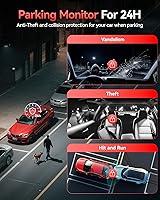
  • Parking Mode: Time-lapse and collision-triggered parking surveillance are supported, but both require a hardwire kit that is sold separately and not included in the package.
  • Power Input: The unit draws power via a Type-C port and is compatible with DC 12V and 24V vehicle power systems at 2.5A, covering most passenger cars and commercial vehicles.
  • Dimensions: The main camera unit measures 3.43 x 1.18 x 3.15 inches, keeping the windshield footprint compact relative to its three-lens configuration.
  • Weight: The main unit weighs 4.6 ounces, which is light enough that the adhesive windshield mount holds it securely without additional support hardware.
  • Mounting Type: The primary unit attaches to the windshield via an included adhesive GPS mount; no suction cup or bracket drilling is required.
  • Rear Cable Length: The included rear camera cable runs 21.3 feet, which is long enough to route cleanly through the headliner and door trim of most full-size vehicles.
  • Power Cable: An 11.5-foot car charger power cable is included, designed to route along the windshield trim to the 12V socket with minimal visible slack.
  • Compatible Vehicles: The system is rated for use in cars, trucks, vans, minivans, RVs, and buses, making it broadly applicable beyond personal passenger vehicles.
  • Warranty: REDTIGER covers this camera with an 18-month manufacturer warranty backed by stated 24-hour customer support access.

Related Reviews
Zengest 3 Channel Dash Cam
86%
88%
Video Quality
85%
Ease of Installation
92%
Night Vision Performance
72%
App Control Experience
90%
Parking Mode Reliability
More
Rexing M3 3-Channel Mirror Dash Cam
75%
83%
Video Clarity (Daytime)
61%
Night Vision Performance
88%
Screen Quality
58%
GPS Accuracy
86%
Cabin Camera Utility
More
Veqotya S16 3-Channel Dash Cam
69%
89%
Value for Money
74%
Video Clarity
67%
Night Vision
61%
App & WiFi Experience
81%
Interior Cabin Camera
More
WOLFBOX i07 3-Channel Dash Cam
75%
84%
Front Video Quality
71%
Interior Camera Quality
73%
Rear Camera Quality
66%
Night Vision Performance
88%
GPS Accuracy
More
BAEASU J07 3-Channel Dash Cam
73%
83%
Video Clarity (Front Camera)
71%
Night Vision Performance
88%
Interior Cabin Recording
74%
Rear Camera Quality
86%
Ease of Installation
More
Kussla X30 3-Channel Dash Camera
67%
83%
Night Vision
81%
Front Camera Quality
62%
Rear & Interior Quality
74%
Ease of Installation
86%
Value for Money
More
Icesky M4 Three-Channel Dash Cam
71%
83%
Daytime Video Clarity
67%
Night and Low-Light Performance
61%
App Experience
69%
Installation Process
72%
Build Quality
More
AZDOME M580 3-Channel Dash Cam
85%
93%
Video Quality
88%
Ease of Setup
85%
GPS Tracking Accuracy
90%
Night Vision Performance
82%
Build Quality
More
iZEEKER iD230 3-Channel Dash Cam
75%
83%
Front Camera Quality
88%
Cabin Night Vision
61%
Rear Camera Quality
79%
Ease of Installation
67%
G-Sensor Reliability
More
Vantrue N4 3-Channel Dash Cam
70%
88%
Video Quality
92%
Interior Night Vision
86%
Build & Durability
89%
Heat & Cold Resistance
74%
Parking Mode
More

FAQ

Yes, and this is worth knowing before you complete your purchase. The parking surveillance feature — both the time-lapse and collision-trigger modes — requires a hardwire kit that connects the camera directly to your vehicle's fuse box for constant low-level power. That kit does not come in the box, so factor in the added cost and either a DIY installation or a shop visit if parking protection is important to you.

The VisionPano20 is well-suited to rideshare use from a hardware standpoint — the 2.5K interior lens with infrared lighting keeps cabin footage clear day and night. On the legal side, rules about recording passengers vary by state and country, so check your local laws and consider posting a visible notice in your vehicle, which many rideshare drivers do as standard practice.

Not necessarily. The camera connects to a companion app over WiFi, so you can browse, play back, and download clips directly from your phone without touching the card. That said, some users report the WiFi connection can take a moment to establish, so if you need footage in a hurry, pulling the card and using a card reader is the more reliable route.

The 530° figure reflects the combined angles of all three lenses added together, not a single panoramic sensor. In practice, you get genuinely wide front and interior views plus a solid rear angle — together they cover most of the space around and inside your vehicle. What the wide angles do not give you is distortion-free edge detail; like any ultra-wide lens, objects toward the periphery will appear stretched or curved. It is honest coverage, just not magic.

A 128GB card comes included, which is enough for several hours of three-channel recording before loop recording overwrites the oldest files. If you use the included card or add your own, formatting it through the camera menu before first use is a smart first step — a handful of users have reported the camera not recognizing a card that was not freshly formatted in-device.

Yes, it is compatible with larger vehicles including RVs, minivans, trucks, and buses. The wide interior lens is especially practical in vehicles with more cabin depth, where a narrower camera would miss rear-seat passengers entirely. The 21-foot rear camera cable is also long enough to reach the back of most full-size vans without needing an extension.

The VisionPano20 uses a built-in supercapacitor rather than a traditional lithium battery. This means it can safely save and close any active file if power is interrupted, but it does not store enough charge to record independently of the vehicle. If you want extended recording while the engine is off, the separately sold hardwire kit is the only way to make that happen.

Most buyers complete the setup without professional help. You route the power cable along the windshield trim to the 12V port, stick the GPS adhesive mount, and run the rear camera cable through the headliner to the back window. The included installation tool helps tuck cable into trim gaps. The trickiest part for most people is the rear cable run, particularly in hatchbacks or sedans with limited trim access.

The screen is genuinely responsive and larger than what you find on most budget dash cams, which helps. That said, interacting with any touchscreen while moving is not ideal from a safety standpoint, so it is best used at a stop for settings or playback. For day-to-day driving, once the camera is configured, you typically do not need to touch it at all.

The interior camera has a clear advantage at night because of its four dedicated IR LEDs, which actively illuminate the cabin regardless of ambient light. The front and rear cameras rely on their lenses and sensor quality for low-light performance rather than active IR, so their night footage quality depends more on streetlight availability and driving conditions. In well-lit urban environments, front and rear footage is typically solid; on dark rural roads, it will be less detailed than the cabin view.