Overview

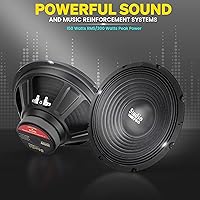
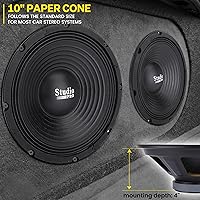
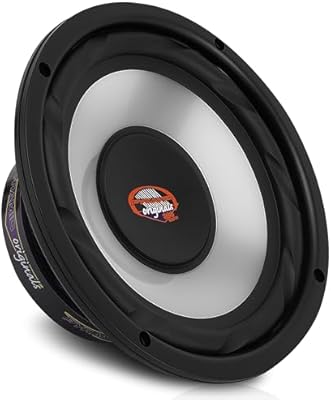
The Pyramid WH10 10-Inch Car Subwoofer Speaker is a no-frills, entry-level woofer that has been a staple of budget car audio builds since its introduction in 2005. Manufactured by Sound Around under the Pyramid Speaker label, this budget car subwoofer is aimed squarely at cost-conscious buyers who want functional bass without overspending. The paper cone follows standard 10-inch sizing, which means it fits the vast majority of prefab and custom enclosures without any head-scratching. One detail worth flagging upfront: the WH10 runs at 8-ohm impedance, so check that your amplifier can handle that load efficiently before you commit to wiring it up.
Features & Benefits

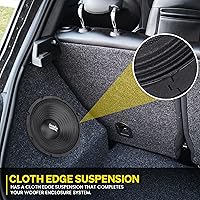
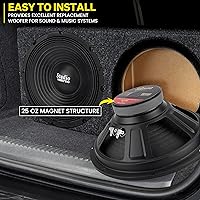
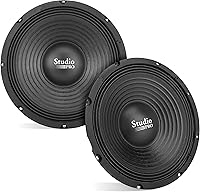
The spec sheet lists 300 watts peak, but the number that actually matters for amplifier matching is the 150W RMS rating — that is the continuous power this woofer can reliably handle day to day. The 1.5-inch Kapton bobbin voice coil keeps distortion low at moderate listening levels and dissipates heat better than plain paper formers. Cloth edge suspension is a genuine advantage here; foam surrounds crack and pull apart over years of heat cycling in a car, while cloth holds up considerably longer. The 25-ounce magnet gives the motor enough drive for a sealed or ported enclosure, and the 4.5-inch mounting depth clears most standard box configurations without requiring custom cuts.

Best For

This Pyramid woofer makes the most sense for someone replacing a dead factory subwoofer who is not ready to spend serious money yet. It is a solid pick for a first DIY enclosure project — the standard sizing removes most of the guesswork, and the relatively forgiving impedance is workable with a range of basic aftermarket amplifiers. If you are building out a second car, a project truck, or a garage setup just to experiment, the WH10 is a low-risk starting point. It also suits hobbyists who want to test a new box design before dropping real money on a premium driver. Just do not expect it to keep pace with high-output competition builds.

User Feedback

With a 3.8 out of 5 rating across over 300 buyers, reactions to this budget car subwoofer are genuinely mixed — not because it is bad, but because expectations vary widely. Buyers who installed it in a simple sealed box for casual listening tend to walk away satisfied; the bass is audible and clean at moderate volumes. Friction points emerge at higher output, where the paper cone can sound stressed, and users in hot or humid climates have flagged long-term cone durability as a concern. Installation feedback is consistently positive, with most beginners getting it mounted without drama. The peak power claims draw the most skepticism, as experienced buyers note the real-world ceiling feels much closer to the RMS figure.

Pros

  • Standard 10-inch sizing fits most prefab and custom enclosures with no modification needed.
  • Cloth edge suspension outlasts foam surrounds, which crack and separate after years of heat cycling in a car.
  • The 1.5-inch Kapton voice coil keeps distortion manageable at everyday listening volumes.
  • At this price point, replacing it if something goes wrong does not require a difficult financial decision.
  • Beginners consistently report a straightforward installation experience with no major surprises.
  • The 25-oz magnet delivers enough motor strength for a basic sealed or ported enclosure build.
  • Works well as a low-stakes test driver when dialing in a new box design before upgrading.
  • Wired single-driver configuration keeps setup simple for those new to car audio wiring.
  • Has remained in production since 2005, suggesting reliable enough demand and stable parts availability.
  • A solid entry point for understanding how subwoofer enclosure tuning actually affects sound output.

Cons

  • Paper cone is vulnerable to humidity and sustained heat, limiting long-term durability in harsh climates.
  • The 300-watt peak claim is misleading for beginners — the realistic continuous ceiling is the 150W RMS figure.
  • Bass output softens noticeably at higher volumes, making it a poor fit for anyone who likes to push the system.
  • Eight-ohm impedance can conflict with amplifiers optimized for four-ohm loads, requiring careful matching.
  • No waterproofing whatsoever, so any moisture exposure risks permanent cone damage.
  • Sound character can feel underdeveloped compared to polypropylene cone competitors at a similar price.
  • The single-unit configuration means buyers needing stereo bass output will have to purchase separately.
  • Some users report the power handling feels optimistic under real-world conditions rather than controlled specs.
  • Not well-suited for vehicle interiors with significant road noise, where a stronger motor would be needed to compensate.

Ratings

Our AI-generated scores for the Pyramid WH10 10-Inch Car Subwoofer Speaker were produced by analyzing verified buyer reviews from multiple global markets, with spam, bot-generated, and incentivized feedback actively filtered out before scoring. The ratings reflect a balanced synthesis of real-world praise and genuine frustration — nothing has been smoothed over or inflated. Where buyers consistently flagged trade-offs, those concerns are transparently reflected in both the scores and the explanations below.
Value for Money
83%
For buyers on a tight budget, this Pyramid woofer consistently punches above its price class in terms of sheer functionality. Reviewers replacing blown factory woofers routinely note that the performance-to-cost ratio is difficult to argue with at this tier, especially when the alternative is leaving a car without any bass at all.
The value equation weakens for buyers who later discover they need a compatible 8-ohm amplifier, which can add unexpected cost to the total project. A few buyers also felt that once the full system cost was tallied — enclosure included — a slightly higher-spec driver might have been a smarter long-term investment.
Bass Output
67%
33%
At everyday highway and city driving volumes, the WH10 adds a clearly audible low-end presence that noticeably improves over stock factory speakers. Casual listeners playing mixed-genre music at moderate levels — commutes, road trips, background listening — report a satisfying result for the price paid.
Push the system past moderate volume and the limitations become apparent fairly quickly; the bass starts to sound strained rather than punchy. Buyers who expected competition-level output or genuinely deep sub-bass were frequently disappointed, and this gap in expectations accounts for most of the lower star ratings in the review pool.
Build Quality
61%
39%
The cloth edge suspension is a genuine highlight — it resists heat cycling and age-related cracking far better than the foam surrounds found on many competing budget drivers. The basket and magnet assembly feel solid enough for the price, and most buyers report no obvious defects out of the box.
The paper cone is the weakest point in the overall construction and draws consistent criticism from buyers in warmer or more humid regions. Long-term durability in vehicles that sit in direct sunlight regularly is a real concern, and several reviewers noted visible cone degradation within one to two years of installation.
Power Handling
58%
42%
The 150-watt RMS rating is adequate for pairing with a modest entry-level amplifier, and buyers running it within that range reported stable, distortion-free performance during normal daily use. The Kapton voice coil provides better thermal management than a plain paper former, which helps under sustained moderate loads.
The advertised 300-watt peak figure misleads a significant number of buyers who push the driver harder than its RMS ceiling supports, leading to early failures in some cases. Experienced audio enthusiasts in the review pool were consistently skeptical of the peak rating and felt the real-world ceiling was closer to the RMS figure under any sustained listening scenario.
Ease of Installation
86%
First-time builders consistently cite installation as one of the smoothest parts of the experience — the standard sizing drops into most prefab enclosures without any cutting or adapter rings. Wiring is straightforward, and the mounting depth of 4.5 inches clears common sealed and ported box designs without requiring custom carpentry.
The 8-ohm impedance occasionally catches beginners off guard if they have already purchased a 4-ohm-optimized amplifier, forcing an extra compatibility research step mid-project. A small number of buyers noted that the included documentation was minimal, leaving them to rely on external resources for enclosure tuning guidance.
Distortion Control
71%
29%
At low to moderate output levels, the Kapton bobbin voice coil does a respectable job keeping the sound clean and relatively well-defined for a budget driver. Buyers using this woofer for background music or casual listening rarely flagged distortion as a concern during normal daily driving conditions.
At higher gain settings, particularly when an amplifier is pushing toward the peak rating, distortion becomes noticeably present and the sound character degrades. The paper cone contributes to a slight looseness in bass definition at elevated volumes compared to stiffer cone materials used in higher-end drivers.
Enclosure Compatibility
81%
19%
The 10-inch standard diameter and 4.5-inch mounting depth make this budget car subwoofer compatible with a wide range of off-the-shelf enclosures, which is a practical advantage for beginners who do not want to build a custom box. Both sealed and basic ported designs accommodate the driver without modification in most cases.
The woofer does not ship with any enclosure recommendations or tuning specifications, which leaves newer builders guessing at optimal box volume and port dimensions. Buyers who chose a mismatched enclosure reported underwhelming bass performance that they initially attributed to the driver rather than the box design.
Sound Clarity
63%
37%
Within the low-frequency range the driver is designed for, output is reasonably clean during casual use — kick drums and bass guitar lines come through with adequate definition for everyday listening. Buyers comparing it to blown or absent factory woofers were consistently satisfied with the clarity improvement.
The WH10 is not a high-resolution driver by any measure, and buyers with prior experience on mid-range or premium subwoofers noticed a clear gap in detail and tonal accuracy. Bass notes at the lower end of the frequency range can sound somewhat soft and indistinct rather than tight and controlled.
Durability Over Time
54%
46%
Buyers in mild, temperate climates who run the driver within its RMS limits report multi-year service lives without incident. The cloth surround holds up reliably under normal temperature swings, and users who treat the system gently tend to leave positive long-term feedback.
In hot or humid environments — a parked car in summer, a coastal climate, a garage with poor ventilation — the paper cone absorbs moisture and heat in ways that accelerate wear. A meaningful segment of reviewers reported premature degradation within the first year under these conditions, pulling the long-term durability score down significantly.
Magnet & Motor Strength
72%
28%
The 25-ounce magnet provides sufficient motor force for sealed and modestly ported enclosures at moderate power levels, which aligns well with the intended use case. Buyers who matched the driver to an appropriately tuned box noted controlled cone excursion and stable output during normal listening sessions.
The magnet strength is not sufficient to drive the cone with authority at high excursion levels, which becomes apparent when the driver is pushed or placed in a poorly matched vented enclosure with low tuning. Compared to mid-tier woofers with heavier motor assemblies, the WH10 loses composure more quickly under demanding playback conditions.
Compatibility with Vehicle Types
77%
23%
The standardized 10-inch format means the WH10 works across a broad range of vehicles — sedans, trucks, SUVs, and hatchbacks — wherever a 10-inch cutout or enclosure is practical. This versatility makes it a go-to replacement driver for buyers who just need something that fits without a compatibility headache.
The 8-ohm impedance limits amplifier pairing options compared to the more common 4-ohm standard in modern car audio setups. Buyers upgrading from a factory-installed system may find their head unit or factory amp does not deliver optimal power into an 8-ohm load, resulting in lower-than-expected output.
Packaging & Delivery Condition
74%
26%
Most buyers report receiving the driver in acceptable condition with no visible shipping damage, and the standard packaging appears adequate for protecting the unit during transit. The out-of-box inspection process is quick and straightforward given the single-component nature of the package.
A small but notable number of reviewers mentioned receiving units with minor cosmetic damage or loose components, suggesting packaging consistency is not fully reliable across all fulfillment channels. The absence of any accessories or mounting hardware in the box means buyers must source everything else independently before installation can begin.
Brand Reliability
66%
34%
Pyramid Speaker has maintained a presence in the budget car audio market for decades, and the WH10 has been available continuously since 2005 — longevity that suggests the product meets a consistent baseline of buyer expectations. Replacement units are easy to source if needed, which reduces the risk of being stuck without a spare.
The brand does not carry the same reputation for quality assurance as established mid-range audio manufacturers, and quality control variability across production runs is occasionally mentioned in buyer feedback. Warranty support experiences appear inconsistent based on reviewer accounts, with some buyers reporting difficulty obtaining resolution for defective units.

Suitable for:

The Pyramid WH10 10-Inch Car Subwoofer Speaker is a practical choice for anyone approaching car audio on a limited budget who still wants a functional, real bass upgrade over factory speakers. It suits first-time builders particularly well — the standard 10-inch diameter drops into most off-the-shelf enclosures without modification, and the 4.5-inch mounting depth clears both sealed and basic ported boxes that beginners typically start with. If you are replacing a blown woofer in a daily driver or secondary vehicle and just need something that works without a lengthy research spiral, this Pyramid woofer delivers exactly that. Hobbyists testing a new box design before committing to a premium driver will also find it a sensible stand-in — low enough cost that a tuning mistake does not sting. Casual listeners who want added bass for everyday music at moderate volumes will find the 150W RMS rating more than adequate for their needs.
Not suitable for:

The Pyramid WH10 10-Inch Car Subwoofer Speaker is not the right call for anyone building a serious or competition-grade audio system. The paper cone, while lightweight and responsive, is genuinely vulnerable to prolonged exposure to heat and humidity — a real concern if the woofer is installed in a vehicle that bakes in the sun daily or sits in a damp climate. Enthusiasts who plan to push their amplifier hard will likely hit the limits of this budget car subwoofer quickly; the 300-watt peak figure is marketing headroom, not a sustained operating target, and driving it aggressively over time risks premature wear. Audiophiles chasing tight, accurate bass reproduction will find the overall output somewhat one-dimensional compared to drivers two or three times the price. If you already know you want serious output, skip this tier entirely and invest in a better driver from the start.
Specifications

  • Brand: Manufactured by Sound Around and sold under the Pyramid Speaker brand label.
  • Model: The model designation is WH10, part of Pyramid's entry-level woofer lineup.
  • Driver Diameter: The cone measures 10 inches in diameter, conforming to standard car audio sizing.
  • Peak Power: Maximum peak power output is rated at 300 watts under short-term conditions.
  • RMS Power: Continuous power handling is rated at 150 watts RMS, which is the figure to use for amplifier matching.
  • Impedance: The WH10 operates at 8 ohms, which must be compatible with the output impedance of your amplifier.
  • Voice Coil: Equipped with a 1.5-inch Kapton bobbin voice coil designed to reduce distortion and manage moderate heat buildup.
  • Magnet Weight: The motor assembly uses a 25-ounce magnet structure to drive the cone.
  • Suspension Type: Cloth edge suspension is used in place of foam, offering improved resistance to heat-related deterioration over time.
  • Cone Material: The driver cone is constructed from paper, which is lightweight and responsive but not moisture-resistant.
  • Mounting Depth: Installation requires a minimum enclosure depth of 4.5 inches to seat the driver properly.
  • Dimensions: Overall unit dimensions are 10.43 x 10.43 x 4.06 inches including the basket and magnet assembly.
  • Connectivity: Wired connection only; no wireless or Bluetooth capability is included or supported.
  • Configuration: Single-driver, single-channel (1.0) configuration; one unit is included per package.
  • Waterproofing: The WH10 is not waterproof or water-resistant and should not be exposed to moisture or direct humidity.
  • Frequency Response: Upper frequency response is listed at 20 kHz, though practical bass output is optimized for lower frequencies.
  • Availability: This model has been continuously available since its first listing in November 2005 and is not discontinued.
  • Warranty: Covered by a limited manufacturer warranty; terms and duration should be confirmed with the seller at time of purchase.

Related Reviews
Pyramid WH12 12-Inch Car Subwoofer Speaker
84%
85%
Sound Quality
87%
Bass Performance
91%
Ease of Installation
84%
Build Quality
88%
Power Handling
More
Pyramid PW1048USX 10-Inch 500W Car Subwoofer
83%
88%
Bass Performance
92%
Value for Money
85%
Build Quality
90%
Ease of Installation
82%
Sound Clarity
More
CT Sounds OZONE-10-D4 10″ Car Subwoofer
80%
88%
Build Quality
83%
Sound Quality
91%
Value for Money
79%
Thermal Durability
84%
Installation Experience
More
CT Sounds STRATO-10-D2 10 Inch Dual 2 Ohm Car Subwoofer
87%
91%
Bass Performance
89%
Build Quality & Durability
92%
Power Handling
88%
Sound Clarity
83%
Ease of Installation
More
DS18 SLC-10S 10-Inch Car Subwoofer
78%
88%
Value for Money
79%
Bass Output & Impact
83%
Build Quality
67%
Power Handling (RMS)
86%
Ease of Installation
More
Orion XTR104D 10-Inch Car Subwoofer
75%
83%
Bass Output Quality
81%
Build Quality
78%
Value for Money
61%
Power Handling Accuracy
58%
Enclosure Sensitivity
More
Alphasonik NSW410 10-inch Car Subwoofer
84%
88%
Bass Performance
92%
Value for Money
85%
Ease of Installation
90%
Build Quality
87%
Durability
More
Planet Audio P10AWK 10-Inch Amplified Car Subwoofer
71%
83%
Ease of Installation
71%
Bass Output & Impact
76%
Sound Tuning & Flexibility
86%
Compatibility & Input Options
58%
Build Quality & Materials
More
Pyramid WX65X 6.5-inch Car Woofer Speaker
70%
83%
Value for Money
74%
Bass Output
67%
Sound Clarity
88%
Installation Ease
62%
Build Quality
More
Seventour HR-DTSUB 10″ Car Subwoofer
73%
88%
Value for Money
79%
Bass Output
83%
Install Friendliness
71%
Build Quality
74%
Amplifier Compatibility
More

FAQ

You want an amplifier that can deliver a stable output at 8 ohms — that is the impedance this woofer runs at. A lot of budget amps are optimized for 4-ohm loads, so double-check your amp spec sheet before wiring things up. For power, aim to match the 150-watt RMS rating rather than the 300-watt peak figure, which is a short-burst ceiling, not a sustained target.

Yes, it works in both sealed and ported boxes. The 4.5-inch mounting depth clears most standard prefab ported enclosures without any modification. That said, tuning a ported box takes a bit more knowledge, so if you are just starting out, a sealed enclosure is easier to get right and still delivers solid bass with this driver.

At moderate listening levels it performs well and adds a noticeable bass presence to your system. Push it hard and it does begin to run out of headroom — the output level is appropriate for casual daily driving, not for shaking parking lots. If your goal is serious volume, you will want to look at a heavier-duty driver.

That is a fair concern and one that comes up in user feedback fairly often. Paper cones are more susceptible to humidity and prolonged heat than polypropylene alternatives. If your car sits in direct sun for hours every day or you are in a genuinely humid climate, the cone could degrade faster than it would in a milder environment. It is a real trade-off at this price point, and worth factoring into your decision.

Absolutely, and that is actually one of the best use cases for this budget car subwoofer. The standard 10-inch sizing means it drops into most factory cutouts without modification, and the installation process is straightforward enough that most beginners handle it without much trouble.

No, the package includes only the speaker driver itself. You will need to source or build your own enclosure separately. Most buyers pair it with an inexpensive prefab sealed box, which is easy to find and keeps total project cost low.

The 300-watt figure is peak power — a brief, momentary maximum that the driver can technically survive under ideal conditions for a very short time. The 150-watt RMS rating is what matters for real-world use; it is the continuous power the woofer handles reliably over extended listening sessions. When shopping for an amplifier, match to the RMS number.

For car audio specifically, yes — cloth surrounds tend to hold up better over time than foam. Foam degrades with heat cycles, UV exposure, and age, eventually cracking and pulling away from the cone. Cloth is more resistant to those conditions, which is a genuine practical advantage in a vehicle environment where temperatures swing significantly.

You can, but the wiring configuration matters. Running two 8-ohm drivers in parallel gives you a 4-ohm load, which many amplifiers handle well. Wiring them in series results in a 16-ohm load, which most amps are not optimized for. Parallel wiring is generally the preferred approach if your amp is stable at 4 ohms.

For a first build or a replacement driver on a tight budget, the WH10 is a reasonable starting point. It removes most of the guesswork around sizing and enclosure compatibility, and the cost is low enough that a mistake in your build is not a financial disaster. Just go in with realistic expectations about output — this is a learning-curve driver, not an endgame one.