Overview

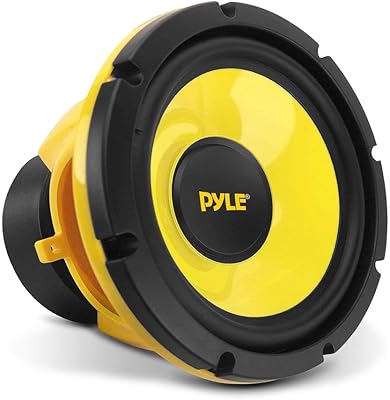
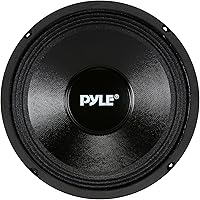
The Pyle PPA10 10-Inch Car Midbass Woofer has been on the market since 2004 — that kind of staying power means something in a segment flooded with short-lived budget options. Before ordering, one thing needs to be clear: this is a raw speaker driver, not a complete system. You still need an enclosure and an amplifier. What it does is fill the often-neglected sonic gap between a subwoofer and your midrange speakers, giving vocals and instruments more body and presence. With a 4.3-star average across over a hundred ratings, it has earned a modest but honest reputation among budget-conscious builders.
Features & Benefits

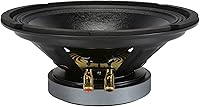
Power handling sits at 200 watts RMS, which pairs cleanly with most mid-tier aftermarket amplifiers without constantly chasing headroom. The Kapton voice coil is a legitimate highlight — Kapton handles heat better than standard materials, so during long drives or loud sessions, distortion stays controlled. An 89.2 dB sensitivity rating means this car audio driver pulls its weight without needing a brute-force amplifier to wake it up. The 8-ohm impedance is a practical choice for vehicles with thinner factory wiring runs. Add a frequency sweep from 50Hz to 5kHz, and you have solid coverage across kick drums, bass guitar, and the lower vocal range.

Best For

This midbass driver makes the most sense for DIY car audio builders who already have an enclosure and amplifier in place and just need a dependable raw driver to complete the setup. It works equally well as a drop-in replacement for anyone dealing with a blown 10-inch driver — standard sizing means it slots into most aftermarket cabinets without modification. Listeners who care more about vocal clarity and punchy midrange than deep sub-bass extension will find the frequency range well-suited to their priorities. A handful of buyers have even put it to use in home audio projects, which speaks to its flexibility beyond the car.

User Feedback

Buyers who know what they are getting tend to walk away satisfied. The most consistent praise centers on value for the price — solid output and an easy drop-in fit for standard enclosures come up repeatedly. Where opinions divide is on build quality. The stamped plastic basket draws the most criticism; veteran installers who prefer a rigid steel basket may find it underwhelming at this driver size. There are also occasional reports of unit-to-unit variation, which is not unusual at this price tier but worth knowing ahead of time. Experienced installers who properly tune the setup tend to rate it noticeably higher than casual buyers expecting out-of-box results.

Pros

  • Solid midbass output at a budget price point that is hard to beat in this driver category.
  • Standard 10-inch sizing makes it a straightforward drop-in replacement for most aftermarket enclosures.
  • The Kapton voice coil handles heat well, keeping distortion in check during long listening sessions.
  • An 89.2 dB sensitivity rating means you do not need a high-wattage amplifier to drive it effectively.
  • The 8-ohm impedance works well with typical vehicle wiring, reducing signal loss without extra hardware.
  • 200 watts RMS power handling pairs sensibly with a wide range of mid-tier car amplifiers.
  • Has been in continuous production since 2004, suggesting reliable parts availability and consistent demand.
  • Cloth edge suspension and a 50 oz magnet structure provide a stable foundation for accurate cone movement.
  • Works in home speaker cabinet builds as well, giving it more versatility than a typical car-only driver.
  • One-year limited warranty offers at least a basic safety net for a product at this price tier.

Cons

  • The stamped plastic basket lacks the rigidity that more experienced installers expect from a 10-inch driver.
  • Unit-to-unit build quality can be inconsistent, so what you receive may vary from one order to the next.
  • Sold as a bare driver only — no enclosure, amplifier, or wiring is included, which adds to the total cost.
  • Bass extension cuts off around 50Hz, making it unsuitable for anyone who wants real subwoofer-level output.
  • Casual buyers with no installation experience may find the setup requirements unexpectedly complex.
  • The paper cone, while standard, is more vulnerable to moisture damage than polypropylene alternatives.
  • At 6 pounds, the weight is manageable, but the plastic basket may flex under stress in high-vibration installs.
  • Marketing specs list 600 watts peak power, but the 200 watts RMS figure is the only one that matters in practice.

Ratings

Our scores for the Pyle PPA10 10-Inch Car Midbass Woofer were generated by AI after analyzing verified global buyer reviews, with spam, bot activity, and incentivized feedback actively filtered out. The ratings reflect a balanced picture — where this car audio driver genuinely delivers value, and where real buyers have run into frustrations. Both strengths and trade-offs are represented transparently so you can make a confident, informed decision.
Value for Money
88%
For builders working within a tight budget, the output this midbass driver delivers relative to its price is one of its strongest selling points. Buyers consistently noted that it performs well above what the price tag suggests, especially once properly mounted and amplified in a tuned enclosure.
The value perception drops noticeably for buyers who did not realize a separate enclosure and amplifier were required — the additional system costs can reframe the math quickly. A handful of buyers who received units with minor defects also felt the value proposition was harder to defend.
Sound Quality
76%
24%
In its target range — punchy kick drums, clear vocals, and defined bass guitar — this car audio driver handles itself well for the price tier. Experienced installers who dialed in their crossover points reported a noticeably fuller, more engaging sound than stock car speakers could produce.
Buyers expecting extended low-end depth were often disappointed, as the 50Hz floor leaves a gap if no dedicated subwoofer is in the system. At very high volumes, some users noted a slight thinning of the midrange that pointed to the limits of the paper cone construction.
Build Quality
61%
39%
The cloth surround and Kapton voice coil are genuine quality choices at this price point, and most units arrive with the cone centered and the surround evenly attached. For buyers who inspected their unit carefully on arrival, the core driver components held up well through regular daily use.
The stamped plastic basket is the most cited concern across buyer feedback — it flexes under pressure in ways a steel-framed basket would not, and some installers felt it compromised long-term confidence in the mount. Reports of unit-to-unit inconsistency suggest quality control is not always tight across production batches.
Power Handling
79%
21%
The 200 watt RMS rating is honest and pairs cleanly with a wide range of mid-tier car amplifiers without requiring buyers to overspend on headroom. Users running it at or near the RMS ceiling in sealed enclosures reported no immediate thermal issues, which speaks to the Kapton coil doing its job.
Some buyers chasing the peak 600 watt figure pushed the driver harder than its sustained rating allows, leading to premature voice coil fatigue. The gap between peak and RMS figures is wide enough that it can mislead buyers who are newer to matching amplifier output to driver ratings.
Ease of Installation
82%
18%
Standard 10-inch sizing meant most buyers could drop this straight into an existing enclosure without any cutting or adapter work. Even less experienced installers noted that the wiring terminals are straightforward and the physical fitment into common aftermarket cabinets was clean and tight.
Buyers starting from scratch with no enclosure or amplifier found the overall installation process more involved than they anticipated, and a few wished for even basic mounting instructions in the box. The plastic basket can make achieving a perfectly flush, rattle-free mount slightly trickier than with a rigid steel frame.
Midbass Performance
81%
19%
This is genuinely where the Pyle 10-inch woofer earns its keep — buyers building multi-driver systems noted a meaningful improvement in vocal presence and instrument body once it was crossed over correctly. It fills the sonic gap between a subwoofer and smaller midrange drivers in a way that feels natural rather than forced.
Getting the most out of the midbass range requires a properly configured crossover, and buyers who skipped that step often found the driver sounded boomy or muddy rather than defined. The upper end of the frequency range approaches 5kHz, but some users noted a slight hardness in the upper midrange at higher listening levels.
Voice Coil Durability
77%
23%
The Kapton voice coil was specifically called out by installers as a smart material choice for a driver in this price range, offering better thermal resistance than you typically find at this tier. Buyers using it for long commutes with sustained volume levels reported no signs of coil stress after months of use.
A small number of buyers who consistently ran the driver above its RMS rating reported early voice coil failure, which is expected but frustrating when the peak spec is prominently marketed. The 1.5-inch coil diameter, while adequate, limits excursion compared to larger-format voice coils in more expensive drivers.
Frequency Accuracy
71%
29%
Within the 80Hz to 3kHz sweet spot, the driver reproduces music with reasonable accuracy and a satisfying sense of weight and presence. Buyers who took the time to tune their system reported that vocals in particular came through with good clarity and natural body.
The low end of the frequency range is not as controlled as higher-priced drivers, and buyers noticed some boominess in the 50Hz to 80Hz region without careful enclosure tuning. Response above 3kHz becomes progressively less accurate, which is why pairing it with a proper high-pass crossover is not optional — it is necessary.
Magnet & Motor Strength
74%
26%
The 50 oz magnet structure gives the driver a solid foundation for cone control, and buyers noticed the driver tracked bass lines with reasonable tightness rather than sounding loose or undefined. For a budget driver, the motor assembly does not feel underbuilt.
Compared to higher-end midbass drivers with larger or more precisely machined magnet systems, some experienced installers noted slightly less cone authority at the frequency extremes. The stamped basket does not complement the magnet structure as well as a more rigid frame would, slightly undermining what is otherwise a capable motor.
Sensitivity & Efficiency
83%
At 89.2 dB, this car audio driver does not demand a high-output amplifier to reach satisfying listening volumes, which buyers appreciated when pairing it with modestly powered head units or entry-level amplifiers. Several users noted it kept up with louder efficiency ratings in mixed driver setups without obvious volume imbalance.
While the sensitivity rating is competitive, it is not exceptional, and buyers with lower-powered setups occasionally wished for a slightly higher efficiency figure to get more output from the same amplifier. In a multi-driver system with higher-sensitivity tweeters or midranges, some level-matching adjustment is typically needed.
Packaging & Unboxing
68%
32%
Most buyers reported the driver arrived adequately protected, with the cone and surround intact and no visible shipping damage. For a budget product, the packaging does its primary job of getting the driver to the buyer in working condition.
There are no installation guides, spec sheets, or mounting hardware included in the box, which left newer buyers feeling underprepared. A few buyers noted that the packaging did not feel premium, which — while minor — shaped their initial perception of the product before they even heard it.
Impedance Compatibility
85%
The 8-ohm impedance rating was specifically appreciated by buyers upgrading from factory systems, as it plays well with standard vehicle wiring gauges without requiring additional components to manage signal loss. Amplifier matching at 8 ohms is also more forgiving than 4-ohm loads for users with entry-level amplifiers.
Buyers with amplifiers optimized for 4-ohm loads will see reduced output power delivery at 8 ohms, which occasionally disappointed users expecting the amplifier's rated wattage to transfer directly. For those building multi-driver systems, the 8-ohm rating limits certain wiring configuration options compared to 4-ohm alternatives.
Versatility of Use
72%
28%
Beyond the car, a meaningful number of buyers successfully deployed this driver in home-built speaker cabinets and DIY audio projects, which speaks to the driver being genuinely useful outside its primary application. The standard sizing and conventional wiring terminals make it easy to adapt to different builds.
The driver is marketed and optimized specifically for car audio, and buyers using it in home environments sometimes found the bass tuning less predictable without car-specific enclosure guidance. Those hoping to use it in full-range home speaker applications were limited by the 50Hz low-end floor and the need for additional crossover components.
Long-Term Reliability
63%
37%
Buyers who installed the driver correctly and kept amplifier power within the RMS rating reported consistent performance over extended periods without any degradation in sound quality. The cloth surround in particular held up well against temperature changes inside parked vehicles.
The plastic basket remains the most credible long-term durability concern, with some buyers noting visible flex or slight creaking under sustained vibration after prolonged use. The one-year limited warranty provides a basic safety net, but buyers looking for a driver they can confidently forget about for several years may want to consider a more robust option.

Suitable for:

The Pyle PPA10 10-Inch Car Midbass Woofer is a strong fit for hands-on car audio enthusiasts who are building or upgrading a component system from scratch and want to stretch their budget without sacrificing core performance. If you already own a compatible enclosure and a mid-tier amplifier, this driver slots in cleanly and delivers real midbass output — punchy kick drums, fuller vocals, and better instrument body than most factory setups can manage. It is equally practical for anyone dealing with a dead or blown 10-inch driver who just needs a reliable, standard-size replacement without overspending. DIYers who enjoy tuning and experimenting across multiple drivers will also appreciate the 8-ohm impedance and the broad frequency sweep, which gives them useful flexibility in crossover design. Even a few home audio hobbyists have found it useful for custom speaker cabinet builds, which says something about its versatility beyond the car.
Not suitable for:

The Pyle PPA10 10-Inch Car Midbass Woofer is not the right choice for buyers expecting a ready-to-install, complete speaker solution — without a separate enclosure and amplifier, it simply will not function. Listeners chasing true deep bass extension below 50Hz should look elsewhere, as this driver is optimized for the midbass range rather than subwoofer territory. Buyers who prioritize premium build quality and long-term mechanical durability will likely be put off by the stamped plastic basket, which lacks the rigidity of a steel-framed driver at this size. If you are installing in a high-vibration environment or planning to push the driver hard and often, the plastic basket may raise legitimate concerns over time. Those with no prior car audio experience who are hoping for a plug-and-play upgrade would be better served by a full component speaker kit instead.

Specifications

  • Driver Diameter: The cone driver measures 10 inches across, conforming to the standard sizing used in most aftermarket car audio enclosures.
  • Peak Power: Maximum peak power handling is rated at 600 watts, representing the absolute short-term limit under ideal conditions.
  • RMS Power: Continuous RMS power handling is 200 watts, which is the practical figure to match against your amplifier output.
  • Frequency Response: The driver covers a range of 50Hz to 5kHz, making it effective across the midbass and lower midrange bands.
  • Sensitivity: Rated at 89.2 dB SPL, meaning the driver produces a usable listening volume without requiring an excessively powerful amplifier.
  • Impedance: The nominal impedance is 8 ohms, which helps reduce signal loss when used with standard vehicle wiring.
  • Voice Coil: A 1.5-inch Kapton voice coil is used, chosen for its ability to dissipate heat effectively and resist thermal distortion.
  • Magnet Structure: The driver uses a 50 oz magnet structure, providing the motor force needed for controlled cone excursion.
  • Cone Material: The cone is constructed from black paper, a traditional material that balances stiffness and mass for midbass applications.
  • Basket Type: The basket is stamped plastic, which keeps weight down but offers less rigidity than a steel-framed alternative.
  • Surround Type: A cloth edge suspension surrounds the cone, allowing controlled movement while maintaining long-term flexibility.
  • Dimensions: Overall product dimensions measure 10.5 x 10.5 x 5.13 inches, including the basket flange and magnet assembly depth.
  • Weight: The complete driver assembly weighs 6 pounds, which is typical for a 10-inch woofer with a 50 oz magnet.
  • Warranty: Covered by a 1-year limited warranty through Sound Around, the parent manufacturer of the Pyle brand.
  • Model Number: The official item model number is PPA10, used to confirm compatibility and identify the correct replacement unit.
  • Manufacturer: Manufactured by Sound Around, a New York-based audio company that markets consumer products under the Pyle brand name.
  • Color: The driver and basket are finished in black, standard for car audio components intended to be installed inside an enclosure.
  • Included Components: The package contains the raw speaker driver only — no enclosure, amplifier, wiring harness, or mounting hardware is included.

Related Reviews
Pyle PPA15 15-Inch Car Midbass Woofer
84%
91%
Bass Quality
87%
Power Handling
89%
Durability
72%
Ease of Installation
85%
Build Quality
More
CT Sounds OZONE-10-D4 10-inch Car Subwoofer
84%
91%
Bass Performance
88%
Power Handling
92%
Value for Money
85%
Sound Clarity
86%
Build Quality
More
CT Sounds STRATO-10-D2 10 Inch Dual 2 Ohm Car Subwoofer
87%
91%
Bass Performance
89%
Build Quality & Durability
92%
Power Handling
88%
Sound Clarity
83%
Ease of Installation
More
Alphasonik NSW410 10-inch Car Subwoofer
84%
88%
Bass Performance
92%
Value for Money
85%
Ease of Installation
90%
Build Quality
87%
Durability
More
Pyle PLG81 Car Midbass Speaker System
80%
85%
Sound Quality
90%
Bass Performance
92%
Value for Money
80%
Durability
75%
Ease of Installation
More
DS18 SLC-10S 10-Inch Car Subwoofer
78%
88%
Value for Money
79%
Bass Output & Impact
83%
Build Quality
67%
Power Handling (RMS)
86%
Ease of Installation
More
Orion XTR104D 10-Inch Car Subwoofer
75%
83%
Bass Output Quality
81%
Build Quality
78%
Value for Money
61%
Power Handling Accuracy
58%
Enclosure Sensitivity
More
Pyle PLW15RD 15-Inch Car Subwoofer
85%
93%
Bass Performance
88%
Sound Clarity
90%
Build Quality
82%
Ease of Installation
87%
Durability
More
Pyle PDIC16106 10-inch In-Ceiling/In-Wall Speakers
84%
88%
Sound Quality
91%
Ease of Installation
85%
Build Quality
84%
Design & Aesthetics
90%
Value for Money
More
Timpano TPT-MD10 10-Inch Midbass Speaker
87%
87%
Sound Quality
92%
Power Handling
91%
Sensitivity and Output
84%
Build Quality
78%
Ease of Installation
More

FAQ

No — the Pyle PPA10 10-Inch Car Midbass Woofer is a bare driver only. You will need a compatible enclosure, an external amplifier, and wiring to make it work. Think of it as one component in a larger system, not a standalone upgrade.

Aim to match the 200 watt RMS rating as closely as possible with your amplifier output. Running it significantly underpowered can cause clipping distortion, while consistently pushing it beyond that RMS ceiling risks damaging the voice coil over time.

If your existing enclosure was built for a standard 10-inch driver, there is a good chance this will drop straight in. That said, always verify the cutout diameter and mounting depth against your specific cabinet before ordering, since tolerances can vary between manufacturers.

It is worth knowing about upfront. The stamped plastic basket is functional and keeps costs down, but it does flex more than a steel-framed alternative under stress. For a typical install where the driver lives inside a sealed or ported box, it holds up fine. If you are mounting in a high-vibration environment or plan to push it hard regularly, the basket is the first thing to watch.

Not really. The frequency response starts at 50Hz, which means it handles midbass and lower midrange well but does not dig into the deep sub-bass territory below that. If you want genuine low-end thump below 40Hz, a dedicated subwoofer driver is the better choice.

Kapton is a heat-resistant material that handles thermal stress better than standard paper or aluminum voice coils at this price point. In practical terms, it means the driver holds together more consistently during long, loud listening sessions without the voice coil warping or the voice coil gap tightening up from heat buildup.

Yes, and several buyers have done exactly that. The driver itself does not care whether it lives in a car or a home-built enclosure — as long as you provide appropriate amplification and a properly tuned box, it works in either setting.

Peak power ratings describe the absolute maximum the driver can handle for a split second under perfect conditions — they are not a realistic operating figure. The 200 watt RMS number is the one that reflects actual sustained performance and should be what you base your amplifier selection on.

Based on user feedback, most units arrive in good shape, but there are occasional reports of variation between orders. This is not unusual for budget-tier drivers manufactured at volume. If you receive a unit that looks off — uneven surround, loose basket screws, or visible cone misalignment — contact the seller promptly while your return window is open.

A high-pass crossover somewhere between 80Hz and 120Hz is a reasonable starting point for this midbass driver, depending on how low your subwoofer is crossed over. You want the two drivers to hand off cleanly without a gap or overlap in the bass range, so some tuning by ear will help dial it in for your specific setup.