
Overview

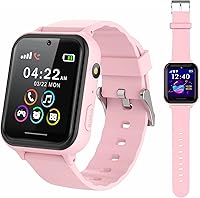
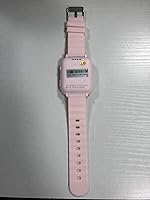
The PTHTECHUS S19 Kids Smartwatch is a budget-friendly standalone wearable built for children aged 4 to 12 — and it's worth understanding exactly what that means before you buy. This kids smartwatch relies on a 2G SIM card for phone calls, which is a critical detail: most US carriers have phased out 2G networks, so American buyers need to verify compatibility first. There's no Wi-Fi, no app pairing, no internet access — and that's a deliberate design choice that keeps children safely offline. The 1.44-inch square screen is compact and reasonably bright for small hands, and at just 60 grams, it sits comfortably on a young child's wrist without feeling bulky.

Features & Benefits

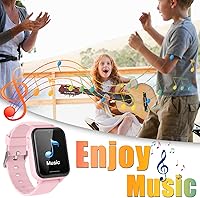
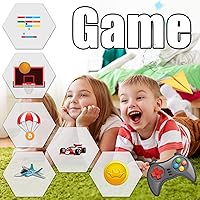
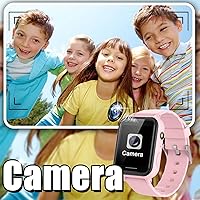
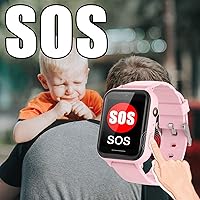
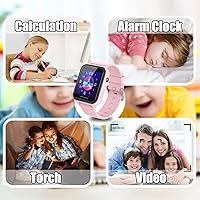
Beyond the calling function, this kids smartwatch packs a surprising amount into a small package. Two-way calling and a dedicated SOS emergency button work through any compatible 2G SIM — no smartphone needed on the other end. Ten built-in games lean toward logic and problem-solving rather than mindless entertainment, which parents tend to appreciate. The dual camera setup — selfie and rear-facing — lets kids shoot photos and short videos stored directly on the device's 1,000 MB of built-in memory. Music is handled offline too: load MP3 files via USB from a PC, and kids can listen without any streaming or data plan. A calculator, alarm, pedometer, flashlight, and audio recorder round things out.

Best For

This children's wearable makes the most sense for a specific type of buyer — and being upfront about that will save real disappointment. If you're in the US, the 2G network limitation is a genuine barrier; the calling feature simply won't work with most American SIM cards. For families in Europe, Asia, or other regions where 2G is still active, though, this watch is a genuinely practical communication tool for younger kids. It's also a strong pick as a first wearable for children aged 4 to 8 — a stepping stone that offers entertainment and light communication without unsupervised internet access. Gift buyers will find the multi-function range hard to beat at this price.

User Feedback

Buyer reviews paint a fairly consistent picture, though experience varies a lot depending on where you live. US-based parents are often caught off guard by the 2G limitation — it's the most common complaint by a wide margin. Outside of that, the PTHTECHUS watch earns solid praise for screen brightness and build quality relative to its price. Kids reportedly pick it up quickly without much parental hand-holding, which is a recurring positive. Battery life gets mixed comments: adequate for a day of light use, but heavy gaming and music sessions drain it faster than expected. A few reviewers flag strap durability as something that degrades over time. In 2G-compatible regions, overall satisfaction runs notably high.

Pros

  • No Wi-Fi or app pairing required — kids stay safely offline from the moment it's switched on.
  • Two-way calling and a dedicated SOS button provide real peace of mind for parents in 2G-supported regions.
  • Ten built-in games lean toward problem-solving, not just mindless tapping.
  • Dual camera with selfie and rear options gives kids a creative outlet without internet sharing risks.
  • At just 60 grams, the PTHTECHUS watch sits comfortably on small wrists without feeling heavy.
  • MP3 music playback works completely offline — load songs via USB and no data plan is needed.
  • Setup is straightforward enough that young children can operate it independently after a single walkthrough.
  • Onboard storage handles both music and photos, so kids aren't constantly running out of space.
  • The screen holds up well in brightness and clarity for its size and price tier.
  • A genuinely strong value for gift-givers wanting a fun, multi-function device without a high price tag.

Cons

  • The 2G SIM requirement makes the calling feature completely unusable for most buyers in the United States.
  • No GPS means parents have zero location-tracking capability — a real gap for safety-focused families.
  • Battery life under heavy gaming and music use drains faster than many parents expect.
  • The wrist strap shows signs of wear relatively quickly, particularly with active or rough-and-tumble kids.
  • 1,000 MB of storage fills up faster than expected once photos, videos, and music are all added.
  • The 1.44-inch screen, while functional, is genuinely small and can feel cramped for older children.
  • Loading music requires a PC and USB cable every time — there's no wireless transfer option.
  • Older kids aged 9 to 12 may outgrow the entertainment options within a few weeks.
  • Screen durability after accidental drops is a concern noted by multiple reviewers.
  • Customer support is email-only, which can mean slow resolution times if something goes wrong.

Ratings

The PTHTECHUS S19 Kids Smartwatch has been evaluated by our AI rating engine after a thorough analysis of verified global buyer reviews, with spam, bot-generated, and incentivized submissions actively filtered out to ensure the scores reflect genuine ownership experiences. Ratings cover everything from daily usability to long-term durability, capturing both what parents and kids genuinely love and where the watch falls short. Strengths and frustrations are weighted equally — nothing has been softened to flatter the product.

Value for Money
83%
For buyers in regions where 2G is still active, this kids smartwatch delivers a remarkable range of features at a price point that few competitors can match. Parents consistently describe it as punching above its weight — the combination of calling, games, camera, and music in a single device feels substantial for the cost.
For US-based buyers whose SIM card ends up incompatible, the value calculation collapses quickly. Paying for a watch with a calling feature you cannot use is a frustrating outcome, and several reviewers felt the product description could have been clearer about this limitation upfront.
2G Calling Reliability
71%
29%
In areas with functioning 2G infrastructure, parents report that call quality is clear enough for a child to communicate without confusion, and the absence of app pairing means the connection is immediate and simple. Setting up contacts is straightforward, and kids as young as 5 can dial out without help.
The 2G dependency is a hard ceiling that makes this feature completely inaccessible in the US and other markets where 2G has been retired. Even in countries with partial 2G coverage, users in rural or fringe areas report dropped calls and inconsistent signal, which undermines the core safety promise of the watch.
SOS Emergency Function
74%
26%
Parents who have tested the SOS button in 2G-compatible regions find it responsive and reliable for its intended purpose — a quick call to a pre-set emergency number without the child needing to navigate any menus. That one-press simplicity is exactly what young children need in a stressful moment.
Since SOS depends entirely on 2G connectivity, it provides zero safety backup in markets where that network is unavailable. The false sense of security this can create for uninformed buyers is arguably the most serious concern raised across global reviews of the PTHTECHUS watch.
Ease of Use for Children
88%
This is consistently one of the highest-praised aspects across buyer reviews worldwide. Children aged 4 to 7 tend to navigate the interface within minutes of unboxing, without parental instruction. The icon-based layout and tactile buttons make the learning curve almost nonexistent for the target age group.
The touchscreen sensitivity can be slightly uneven, with some children needing a firmer press than expected to register taps accurately. A handful of parents also note that navigating back between menus occasionally confuses younger kids until they build muscle memory for the button layout.
Built-in Games
76%
24%
The 10 preloaded games skew toward logic puzzles and reflex challenges rather than passive entertainment, which parents appreciate during car trips or waiting room situations. Kids in the 5 to 8 range particularly enjoy them, and several reviewers note their children returned to the games repeatedly over several weeks.
The game selection cannot be expanded or updated, so older or tech-savvy children tend to exhaust the novelty within a month or two. The games are also visually basic given the small screen, which limits engagement for kids accustomed to tablet-quality graphics.
Camera Quality
61%
39%
For a child's first camera experience, the dual-lens setup delivers enough for the purpose — kids can take selfies, photograph pets and toys, and record short video clips without any setup. The built-in photo album adds a sense of ownership that younger children find genuinely exciting.
Image quality is soft and washed out in anything less than bright daylight, which is a realistic limitation at this price and screen size. Parents expecting even basic smartphone-level photo quality will be disappointed, and the small viewfinder makes framing shots somewhat hit-or-miss for small hands.
Music Playback
79%
21%
The offline MP3 approach works reliably once songs are loaded, and kids can listen during school commutes or playtime without any data connection. Parents appreciate having full control over the music library since every track must be manually transferred from a PC.
The USB transfer process feels dated for modern users, and parents without a Windows PC may find it cumbersome. Storage is limited to 1,000 MB, so larger music libraries will require regular management and deletion of older files to make room for new ones.
Battery Life
63%
37%
Under light daily use — a few calls, some music, and casual game sessions — the battery comfortably covers a school day for most children. Parents who charge it overnight report no issues with availability during daytime hours, and the charging cable is simple to use.
Sustained gaming or continuous music playback noticeably accelerates drain, and some parents report the battery dropping to low within 4 to 5 hours under heavy use. There is no battery percentage indicator visible at a glance, so children can be caught off guard by sudden shutdowns.
Build Quality
68%
32%
For a budget-tier device, the overall construction feels more solid than many buyers expect at this price. The casing resists minor bumps and everyday handling well, and the screen holds up to fingerprint smudging better than some comparable devices in the same category.
The wrist strap is the most commonly cited weak point — multiple reviewers note it begins to show wear, discoloration, or cracking within two to three months of daily use. The watch body also lacks any water or dust resistance rating, so even light rain exposure warrants caution.
Screen Quality
72%
28%
Brightness levels are consistently praised for the size and price tier — the display is readable indoors and in moderate outdoor light, which covers most real-world usage scenarios for school-age children. Icons and text render clearly enough for young eyes to navigate without frustration.
Direct sunlight washes the screen out significantly, making outdoor use in sunny conditions difficult. At 1.44 inches, the display is also genuinely small, and older children in the 10 to 12 age range often find the text and game graphics uncomfortably cramped for extended sessions.
Setup & Installation
84%
Parents who purchase a compatible 2G SIM report the entire setup process takes under 10 minutes with no technical expertise required. There is no APN configuration, no app to install, and no account to create — insert the SIM, power on, and the watch is ready to use.
Sourcing a compatible 2G SIM card is an invisible extra step that catches many buyers off guard, particularly in countries where SIM card formats vary. First-time users occasionally struggle with the SIM tray mechanism, and the instruction manual could be clearer about SIM installation steps.
Parental Control Features
57%
43%
The closed ecosystem — no internet, no app store, no social media — functions as a natural parental control by design. Parents can manually set approved contacts, and the absence of Wi-Fi means there is no risk of unmonitored browsing or accidental in-app purchases.
Beyond contact restrictions, there are no granular parental control tools — no usage time limits, no remote monitoring, and no ability to push settings changes from a parent device. For parents wanting more active oversight of their child’s device usage, this children’s wearable offers limited flexibility.
Comfort & Wearability
81%
19%
At 60 grams, the watch is light enough that most children between 4 and 10 forget they are wearing it within the first day. The strap length accommodates a range of wrist sizes in the target age group, and the square case sits flat rather than protruding awkwardly.
The strap material, while soft initially, can feel slightly stiff for very young children and becomes less comfortable as it ages and loses flexibility. A few parents note the clasp mechanism requires more finger dexterity than a 4 or 5 year old can reliably manage independently.
Utility Functions
77%
23%
The breadth of built-in tools — alarm clock, calculator, calendar, pedometer, flashlight, and audio recorder — adds genuine practical value beyond entertainment. The alarm function in particular is praised by parents as a helpful tool for teaching children to manage their own morning or homework routines.
Most utility functions are basic in execution, with the pedometer being notably inconsistent in step counts according to several reviewers who compared it against other trackers. The flashlight and audio recorder work as expected but offer no customization or output quality settings.

Suitable for:

The PTHTECHUS S19 Kids Smartwatch is a genuinely good fit for parents who want a simple, controlled way to stay in touch with their child without handing over a full smartphone. It works best for families in countries or regions where 2G networks are still active — think much of Europe, Asia, Africa, and Latin America — where the SIM-based calling and SOS features will actually function as advertised. Younger children in the 4 to 8 age range tend to get the most out of this kids smartwatch, since the built-in games, camera, and music player are entertaining at that age without requiring any internet access or parental supervision of online activity. It also makes a practical gift for grandparents or relatives to give: there's nothing complicated to set up, no app to download, and a child can start using it almost immediately. If your goal is a first wearable that keeps kids offline but still connected to trusted adults, this children's wearable hits that mark well.

Not suitable for:

Buyers in the United States should approach the PTHTECHUS S19 Kids Smartwatch with significant caution — the calling and SOS features depend entirely on a 2G network, and virtually all major US carriers have shut down their 2G infrastructure. Without a working SIM, the watch functions only as an entertainment device, which is a hard sell at any price if communication was your primary reason for buying. Parents expecting GPS location tracking will also be disappointed, as this children's wearable has no GPS capability whatsoever. Older kids in the 9 to 12 range may find the 1.44-inch screen and limited storage underwhelming once the novelty wears off, especially if peers are using more capable devices. Anyone hoping for app support, streaming, or Wi-Fi connectivity should look at a different category entirely — this watch was deliberately built without those features, and no workaround exists.

Specifications

  • Brand & Model: Manufactured by PTHTECHUS under the model designation S19.
  • Screen Size: Features a 1.44-inch square display suitable for basic text, icons, and photo viewing.
  • Weight: The watch body weighs 60 grams, making it light enough for small wrists to wear comfortably throughout the day.
  • Dimensions: Overall dimensions measure 8.66 x 1.18 x 3.94 inches including the strap.
  • Connectivity: Supports 2G SIM card insertion at 900 MHz radio frequency for calls; also connects to a PC via USB cable for charging and file transfer.
  • Storage: Equipped with 1,000 MB of built-in onboard memory for storing music files, photos, and video recordings.
  • Battery: Powered by an included Lithium Polymer rechargeable battery that charges via the provided USB cable.
  • Operating System: Runs on Android Wear 1.0, a lightweight OS sufficient to support the watch's built-in apps and games.
  • Camera: Includes both a selfie-facing and a rear-facing camera, with support for photo capture, video recording, and a built-in photo album.
  • Music Playback: Supports MP3 playback with songs transferred directly from a PC via USB cable; no streaming or internet connection is required.
  • Built-in Games: Comes preloaded with 10 learning-oriented games designed to encourage problem-solving and cognitive engagement in younger children.
  • SOS Function: Includes a dedicated SOS button that triggers an emergency call over the 2G network to a pre-set contact number.
  • GPS: This device does not include GPS or any location-tracking capability.
  • Wi-Fi: The watch does not support Wi-Fi connectivity and does not require it for any of its functions.
  • App Pairing: No smartphone app or Bluetooth pairing is required; the watch operates entirely as a standalone device.
  • Utility Functions: Includes a calculator, alarm clock, calendar, pedometer, flashlight, and audio recorder as additional built-in tools.
  • Age Range: Designed and sized for children between 4 and 12 years old.
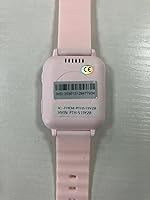
  • SIM Compatibility: Requires a 2G-compatible SIM card; most US carriers have discontinued 2G networks, so buyers should verify local 2G availability before purchasing.

Related Reviews
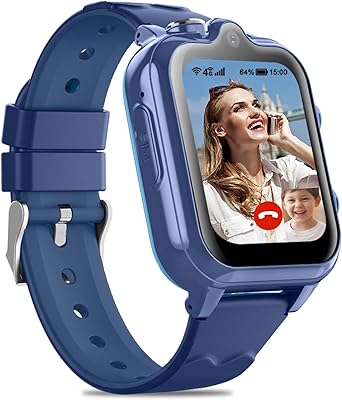
Garmin Bounce Kids Smartwatch
76%
88%
GPS Accuracy
82%
Two-Way Messaging
61%
Battery Life
91%
Durability
53%
Subscription Value
More
Accutime Bluey Kids Smartwatch
73%
93%
Bluey Theming & Character Appeal
82%
Value for Money
71%
Ease of Use for Young Children
78%
Battery Life
67%
Durability & Build Quality
More
DDIOYIUR 4G Kids Smartwatch
69%
78%
GPS Accuracy
54%
Battery Life
61%
Call & Audio Quality
57%
Setup Experience
74%
Build Quality
More
HENGTO W99 Kids Smartwatch
73%
83%
Ease of Setup
78%
Display Quality
62%
Build Quality
54%
App Experience
74%
Activity Tracking
More
PTHTECHUS S80K Kids Fitness Smartwatch
76%
91%
Value for Money
86%
Display Quality
88%
Feature Set
79%
Bluetooth Calling
63%
Health Monitoring Accuracy
More
PTHTECHUS Kids 4G GPS Smartwatch
72%
78%
GPS Tracking Accuracy
74%
Call & Video Quality
88%
SOS Reliability
54%
Battery Life
83%
Parental Controls
More
cjc HD Touchscreen Smartwatch for Kids
83%
90%
Educational Value
88%
Battery Life
85%
Ease of Use
80%
Build Quality
75%
Camera Performance
More
Fitbit Ace LTE Kids Smartwatch
76%
88%
GPS Accuracy
91%
Parental Controls
84%
Battery Performance
61%
Value for Money
87%
Ease of Setup
More
Disney Stitch Kids Smartwatch LAS4026AZ
85%
91%
Design & Comfort
87%
Build Quality
88%
Screen & Display
84%
Camera Functionality
86%
Educational Features
More
Accutime Hello Kitty HK4185 Kids Smartwatch
72%
91%
Character Design Appeal
88%
Value for Money
93%
Ease of Setup
58%
Build Quality
63%
Touchscreen Responsiveness
More

FAQ

This is the most important question to answer before buying. Most major US carriers — including AT&T, T-Mobile, and Verizon — have fully shut down their 2G networks, which means the calling and SOS features on this kids smartwatch will not function with a standard American SIM card. If you are based in the US and communication is a priority, this watch is not the right choice. The entertainment features like games, camera, and music will still work fine, but the watch becomes essentially a standalone gadget rather than a communication device.

No, not at all. The PTHTECHUS S19 Kids Smartwatch is completely standalone — there is no app to download, no Bluetooth pairing, and no parent smartphone required. You simply insert a compatible 2G SIM card, and the watch handles calls on its own. That independence is actually one of its stronger selling points for parents who want simplicity.

The watch needs a nano or micro SIM card from a carrier that still supports 2G networks operating at 900 MHz. In regions where 2G is active — much of Europe, Asia, and parts of Latin America — you can pick up a prepaid SIM from any local carrier. Just confirm with your carrier that 2G service is available in your area before purchasing the watch.

You transfer music the old-fashioned way: connect the watch to a Windows PC using the included USB cable, and it shows up as a removable storage device. Then drag and drop your MP3 files onto it. There is no streaming, no Wi-Fi transfer, and no app needed. It takes a few minutes to set up the first time, but kids can enjoy their playlist immediately afterward.

It holds up reasonably well for everyday use, but it is a budget-tier device and should be treated accordingly. Several parents have noted that the wrist strap can show wear over a few months of active use, and the screen is not rated for serious impact resistance. It is fine for school, light play, and daily wear, but we would not count on it surviving repeated hard drops onto concrete.

Battery life depends heavily on how your child uses it. For light use — a few calls, some game time, and music in the background — most parents report getting through a full school day on a single charge. Heavy gaming and continuous music playback will drain it faster, sometimes within 4 to 5 hours. Charging overnight via the USB cable keeps things topped up reliably.

Yes, the watch allows you to set up a contact list, and the calling function works through those saved numbers. You can limit who the child can reach out to, which is a key part of why parents choose this type of watch over a full smartphone. The SOS button is linked to a specific pre-set emergency number as well.

At 1.44 inches, the display is small but functional for kids aged 4 to 8. Icons are designed to be tappable without too much precision, and younger children tend to adapt quickly. For older kids closer to 10 or 12, the screen can feel cramped, especially when viewing photos or playing games. Manage expectations accordingly if buying for an older child in that range.

No — there is no GPS and no location tracking of any kind on this children's wearable. If knowing your child's whereabouts in real time is important to you, you will need to look at a different category of device, such as a 4G GPS kids smartwatch. This one is purely about communication, entertainment, and basic utilities.

In practice, children between 4 and 8 years old tend to get the most out of this kids smartwatch. The games are engaging for that age group, the camera feels exciting as a novelty, and the simple interface is easy to navigate without much help. Older kids approaching 10 to 12 may find the feature set a bit limited compared to what their peers are using, so temper expectations if buying for that upper age range.