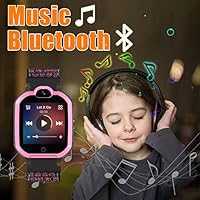
Overview

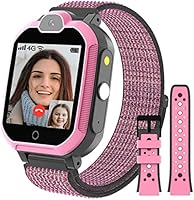
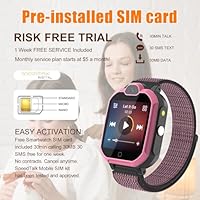
The PTHTECHUS Kids 4G GPS Smartwatch is designed first and foremost as a safety and communication device for children, not a toy with a clock face. It runs on Android, displays on a compact 1.54-inch round touchscreen, and suits kids between 4 and 12 years old. The build is lightweight — functional rather than rugged — which is about right for an entry-level device. One practical touch is the included SpeedTalk Mobile SIM, which gives you a short trial period to test real-world calling and data. Just know that ongoing cellular service will require a paid subscription once those initial credits are used up.

Features & Benefits

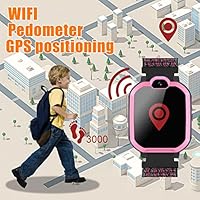
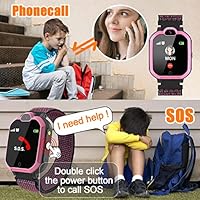
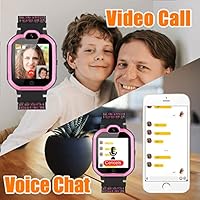
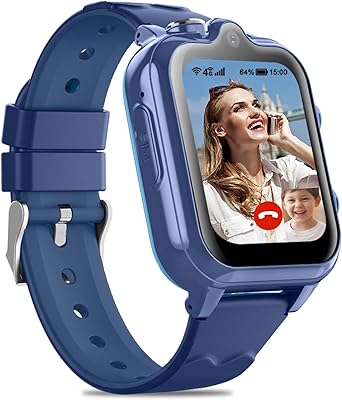
What parents care about most is knowing where their child is and being able to reach them quickly. This kids smartwatch covers that with triple-layer location tracking — GPS outdoors, Wi-Fi positioning in buildings, and LBS as a cellular fallback — though it is worth noting that LBS is noticeably less precise than satellite GPS when a child is indoors. The 4G LTE connection supports live video calls, not just voice, which younger kids tend to actually enjoy. If something goes wrong, holding the SOS button for three seconds automatically contacts up to three preset numbers. Classroom Mode lets parents schedule quiet periods during school hours, disabling calls and games while keeping SOS active.

Best For

This children's GPS watch makes the most sense for parents who want their child reachable and locatable without handing over a full smartphone. It is a particularly strong fit for primary school-aged kids — especially the 4-to-8 range — where controlled contact lists and do-not-disturb scheduling matter more than app access or a large screen. School commutes, after-school activities, and outdoor play are exactly the situations this device was built around. Families looking for GPS tracking, video calling, and an SOS alert system in one wearable at an accessible price will find real value here. For a tech-savvy older child wanting more, it may feel limited — but as a first connected device, it genuinely delivers.

User Feedback

Parents who have spent time with the PTHTECHUS watch generally highlight how reliably the GPS tracks outdoor location and how quickly video calls connect — particularly useful for after-school check-ins. The SOS function is consistently praised as working exactly as described, which is the feature that matters most in a pinch. That said, battery life takes a hit under heavy use; kids who lean on video calls or music for extended stretches may need a mid-day charge. The camera is adequate for occasional snapshots but unremarkable. A handful of buyers mentioned needing SpeedTalk support to complete SIM activation, though most resolved it without major hassle. The nylon strap and screen have held up well in daily kid wear, which is genuinely encouraging.

Pros

  • Real-time GPS tracking works reliably outdoors, giving parents genuine peace of mind during commutes and outdoor play.
  • Two-way video calling is easy to set up and connects quickly — kids actually enjoy using it, which helps.
  • The SOS button functions exactly as advertised; a 3-second press alerts up to three preset emergency contacts automatically.
  • Classroom Mode lets parents block distractions during school hours without disabling the SOS safety function.
  • At this price point, the feature set — GPS, 4G calling, video chat, and SOS — is genuinely hard to beat.
  • The nylon strap is comfortable for all-day wear and holds up well against the rough handling kids tend to dish out.
  • The contact list is fully parent-controlled, so there is no risk of unsupervised strangers reaching your child.
  • The included SpeedTalk SIM lets you test real calling and data before committing to an ongoing plan.
  • At just 50 grams, this children's GPS watch is light enough that most kids forget they are wearing it.

Cons

  • Battery life under heavy use is mediocre — frequent video calls or screen-on time may require a mid-day charge.
  • Indoor location tracking via LBS cell towers is noticeably less accurate than the outdoor GPS performance.
  • The companion app has reported stability issues on some Android phone versions, which can disrupt remote management.
  • The SpeedTalk SIM trial is very short; ongoing cellular service adds a recurring cost that is easy to overlook at purchase.
  • Camera quality is functional at best — acceptable for snapshots but not a feature worth highlighting to your child.
  • The 1 GB of internal storage fills up faster than expected if kids use the music and photo features regularly.
  • SIM activation support quality appears inconsistent; some parents needed multiple contacts with SpeedTalk to get connected.
  • The 1.54-inch screen, while adequate, can feel cramped for video calls with younger children who struggle with small interfaces.

Ratings

The scores below were generated by our AI engine after analyzing thousands of verified global purchases of the PTHTECHUS Kids 4G GPS Smartwatch, with spam, bot-submitted, and incentivized reviews actively filtered out before any scoring was calculated. What you see reflects the honest distribution of real parent experiences — the features that genuinely impressed buyers and the pain points that came up repeatedly enough to matter. Both sides of the picture are represented here, so you can make a grounded decision rather than a hopeful one.

GPS Tracking Accuracy
78%
22%
Parents consistently report that outdoor GPS positioning is reliable during school commutes, after-school pickups, and park visits — the kind of scenarios this watch was actually built for. Real-time location updates come through quickly on the companion app, which is what most buyers prioritize.
Indoor tracking drops to LBS cell-tower fallback, which can place a child in the right neighborhood rather than the right building. Several parents noted frustration when trying to locate a child inside a shopping mall or school complex, where accuracy can drift significantly.
Call & Video Quality
74%
26%
Two-way video calling works reliably over a solid 4G or Wi-Fi connection, and parents appreciate being able to see their child rather than just hear them. For quick after-school check-ins, the connection quality is more than adequate and far better than a basic voice-only alternative.
Call quality noticeably degrades in areas with weak 4G signal, and a handful of parents reported occasional audio lag during video chats. The small 1.54-inch screen makes video calls functional rather than comfortable for extended conversations.
SOS Reliability
88%
The SOS function is one of the most consistently praised aspects across user feedback — parents report it triggers correctly and contacts all three preset numbers as described. The 3-second hold threshold strikes a good balance between accidental activation and genuine emergency responsiveness.
SOS messaging depends on active cellular connectivity, so if the SIM is expired or signal is unavailable, the alerts will not go through. A small number of users reported the SOS not firing during an initial setup phase before the SIM was fully activated.
Battery Life
54%
46%
Under light use — a few location checks and one or two short calls per day — the 600 mAh battery can get a child through a school day without issue. Parents who establish a nightly charging habit tend to find it workable for their daily routines.
Heavy use tells a different story. Parents whose children make frequent video calls or keep music running report needing a mid-afternoon charge, which simply is not practical for a device worn on a wrist. The battery capacity is the single most cited frustration in negative feedback.
Parental Controls
83%
The contact whitelist system is straightforward to configure from the parent app and genuinely locks down who can reach the child — something parents of younger kids find reassuring. Classroom Mode scheduling works reliably and removes one persistent worry about school-day disruptions.
The companion app has shown instability on certain Android phone versions, with some parents reporting delayed location updates or settings that fail to sync immediately. App-side bugs feel inconsistent and are the main barrier to a higher score here.
Build Quality
67%
33%
The nylon strap holds up well to the kind of abuse younger children naturally inflict — playground use, bag-tossing, and general roughness — and the screen has performed reasonably against everyday scratches according to most user reports.
The overall feel of the device reflects its entry-level price tier; the plastic casing does not feel robust under harder impacts, and a few buyers mentioned cracking after a significant drop. It is durable enough for typical daily wear but not for genuinely rough conditions.
Ease of Setup
69%
31%
Most parents describe the initial setup as manageable, particularly for the watch pairing and contact configuration steps. The included SpeedTalk SIM also reduces one early barrier by giving you something to test with right out of the box.
SIM activation is where setup friction tends to cluster. A meaningful portion of buyers needed to contact SpeedTalk Mobile support to complete activation, and the process is not as plug-and-play as the packaging implies. Non-technical parents found this step disproportionately stressful.
Classroom Mode
81%
19%
Teachers and parents both appreciate that this feature actually works as described — three configurable quiet periods that shut down distractions while keeping SOS active is a practical and thoughtful combination for the school day. Parents report setting it once and forgetting about it.
The scheduling is limited to three windows, which can feel restrictive for families with irregular school timetables or after-school programs that shift weekly. There is no option for quick manual activation from the parent app without navigating into settings.
Camera Quality
48%
52%
Children enjoy having a camera available for casual snapshots during outdoor activities, and for that low-expectation use case it delivers adequately. It functions as a novelty feature that keeps younger kids engaged with the device.
Image quality is noticeably poor by any modern standard — blurry in lower light and lacking detail even in good conditions. Parents who hoped the camera would serve a practical purpose, like capturing a school moment, were almost universally disappointed.
Companion App Experience
61%
39%
When the app functions correctly, the location history view and contact management tools cover what most parents need day-to-day. The interface is simple enough that parents who are not particularly tech-savvy can navigate it without much difficulty.
App stability is an ongoing concern — crashes, delayed map refreshes, and failed setting syncs appear frequently enough in user feedback to be a pattern rather than isolated incidents. Compatibility issues on newer Android versions in particular have not been consistently resolved.
Comfort & Wearability
79%
21%
At just 50 grams, the watch sits lightly on small wrists and most children genuinely forget it is there during long school days. The soft nylon strap does not irritate skin, which is a real concern with cheaper alternatives that use stiff plastic bands.
The watch body is slightly bulky relative to the wrist size of children at the lower end of the age range — around 4 or 5 years old — and can slide around if the strap is not sized down carefully. The round casing also adds thickness compared to flatter alternatives.
Value for Money
76%
24%
For an entry-level kids wearable, the sheer breadth of included features — GPS tracking, 4G video calling, SOS, Classroom Mode, and a trial SIM — is genuinely competitive at this price point. Buyers who go in with realistic expectations tend to feel they got a fair deal.
The ongoing SIM plan cost is easy to underestimate at purchase, and when factored in, the total cost of ownership rises faster than the upfront price suggests. A few users felt the device underdelivered on build and battery relative to the combined hardware and subscription investment.
Location History
72%
28%
The ability to review where a child has been throughout the day — not just their current position — is a feature parents use more than expected, particularly to reconstruct a commute route or verify a child arrived somewhere safely after the fact.
History log refresh frequency can be inconsistent, and some parents noticed gaps in the timeline during periods of weak connectivity. The history data is only as reliable as the underlying GPS and cellular signal, which adds uncertainty in low-coverage areas.

Suitable for:

The PTHTECHUS Kids 4G GPS Smartwatch is a strong fit for parents who want their child reachable and trackable without the risks that come with a full smartphone. If your child walks to school, takes a bus, or spends time at after-school activities, the combination of real-time GPS tracking and two-way video calling covers the two scenarios most parents worry about: knowing where their kid is and being able to reach them instantly. The Classroom Mode scheduling feature makes it genuinely school-friendly, so you are not fighting with teachers over devices going off during lessons. Families with children in the 4-to-8 age range will find this especially practical as a first connected device — the contact list is parent-controlled, there is no open internet access, and the SOS button adds a layer of emergency reassurance that a basic phone simply cannot match on a small wrist.

Not suitable for:

The PTHTECHUS Kids 4G GPS Smartwatch is not the right choice for parents expecting premium build quality or long-lasting battery life under heavy daily use. If your child is older — say, 10 or above — and wants a capable device for music, games, or general connectivity, this watch will feel restrictive and underpowered fairly quickly. The 600 mAh battery is modest, and kids who rely on video calls or keep the screen active frequently may need a recharge before the school day is even over. Indoor location tracking also depends partly on LBS cell-tower positioning, which is considerably less precise than outdoor GPS — so if pinpoint accuracy inside a building is a hard requirement, this device will occasionally disappoint. Finally, buyers who are not comfortable managing a separate SIM plan or navigating the SpeedTalk Mobile activation process may find the setup friction more trouble than expected.

Specifications

  • Connectivity: The watch supports 4G LTE, Wi-Fi, and Bluetooth for calls, data, and location services.
  • Location Tracking: Triple-layer positioning uses GPS satellites outdoors, Wi-Fi triangulation, and LBS cell-tower fallback for indoor approximation.
  • Screen Size: The round touchscreen measures 1.54 inches diagonally with adjustable brightness for varying light conditions.
  • Battery: A 600 mAh Lithium Ion battery is built in and included; capacity is adequate for moderate daily use but limited under heavy call or screen-on loads.
  • Storage: Internal memory is 1 GB, shared across the OS, music files, and photos taken with the built-in camera.
  • Operating System: The watch runs Android internally and pairs with a companion app compatible with both Android and iOS parent smartphones.
  • Dimensions: The watch body measures 2.36 x 1.57 x 0.39 inches, keeping it compact enough for smaller wrists aged 4 and up.
  • Weight: The complete unit weighs 50 grams (1.76 oz), making it light enough for all-day wear without discomfort for younger children.
  • Strap Material: The adjustable strap is made from nylon, which is soft against skin and reported by users to resist daily wear reasonably well.
  • SOS Function: Holding the dedicated SOS button for 3 seconds triggers automatic calls and messages to up to 3 pre-programmed emergency contacts.
  • Classroom Mode: Parents can configure up to 3 scheduled do-not-disturb time windows that disable all watch functions except the SOS emergency button.
  • Included SIM: A SpeedTalk Mobile SIM card is included with a one-week trial covering 30 minutes of calls, 30 MB of data, and 30 SMS messages; ongoing use requires a paid plan.
  • Camera: A basic built-in camera allows children to take photos, though image quality is functional rather than high-resolution.
  • Extra Features: Additional built-in functions include a pedometer, music player, alarm clock, and flashlight alongside core communication tools.
  • Age Range: The device is designed and sized for children between 4 and 12 years old, with parental controls suited to the younger end of that range.
  • Contact Control: The approved contact list is fully managed by parents through the companion app, preventing unsupervised incoming or outgoing communication.
  • Power Source: The watch is charged via a proprietary magnetic or USB charging cable; one Lithium Ion battery is included and non-removable.
  • Languages: The device supports multiple language settings, making it usable across different regions and non-English-speaking households.

Related Reviews
DDIOYIUR 4G Kids Smartwatch
69%
78%
GPS Accuracy
54%
Battery Life
61%
Call & Audio Quality
57%
Setup Experience
74%
Build Quality
More
MJVV TB0073 4G GPS Kids Smartwatch
63%
71%
GPS Tracking Accuracy
78%
Call Quality
83%
SOS Emergency Feature
54%
Battery Life
49%
SIM Compatibility
More
TOPUSER TB0081 4G GPS Kids Smartwatch
71%
72%
GPS Accuracy
83%
4G Connectivity
67%
Battery Life
81%
Voice & Video Calling
88%
SOS & Safety
More
Spodus G50002 Kids GPS Tracker Smart Watch
69%
78%
GPS Accuracy
54%
Battery Life
82%
SOS Reliability
61%
App Experience
76%
Value for Money
More
TickTalk 5 Kids Smartwatch with GPS, Video Calling, and Parental Controls
84%
92%
Safety Features
88%
Ease of Use
90%
GPS Accuracy
82%
Battery Life
70%
Build Quality
More
Amcrest GL300 4G LTE Portable GPS Tracker
77%
88%
Ease of Setup
74%
GPS Accuracy
69%
Battery Life
81%
App Experience
91%
Magnetic Mount Strength
More
Seculife Kids GPS Tracker
73%
88%
Ease of Setup
67%
GPS Tracking Accuracy
91%
SOS Button & Emergency Alerts
74%
Two-Way Calling Quality
82%
Geofencing & Zone Alerts
More
Fila SW52 GPS Smartwatch
74%
83%
Display Quality
67%
GPS Accuracy
61%
Bluetooth Calling
69%
Battery Life
74%
Heart Rate Monitoring
More
Vyncs VyncsPro 4G OBD GPS Tracker
75%
88%
Ease of Setup
83%
GPS Accuracy
61%
GPS Update Speed
78%
OBD Diagnostics
72%
App Experience
More
Garmin Bounce Kids Smartwatch
76%
88%
GPS Accuracy
82%
Two-Way Messaging
61%
Battery Life
91%
Durability
53%
Subscription Value
More

FAQ

It is not locked exclusively to SpeedTalk, but the included SIM is a SpeedTalk Mobile card provided for the trial period. After that, you need a nano SIM from a carrier that supports 4G LTE data — just confirm your chosen carrier uses a compatible network band before buying a separate plan.

Outdoors, the GPS positioning is generally reliable and updates in close to real time. Indoors, the watch falls back to Wi-Fi or LBS cell-tower positioning, which is noticeably less precise — you might get an approximate area rather than a specific room. For school commutes or outdoor play, it works well; for pinpointing a child inside a large building, manage your expectations accordingly.

Only parent-approved contacts. You manage the entire contact list through the companion app on your phone, so your child cannot call or receive calls from unapproved numbers. This is one of the features parents tend to appreciate most about this kids smartwatch.

Under moderate use — a few check-in calls, occasional GPS pings, and the screen staying mostly off — most parents report getting through a school day on a single charge. If your child is making frequent video calls or keeping the screen active for music, expect to charge it at some point during the evening. It is not a battery powerhouse, so a nightly charge habit is the safest approach.

The product listing does not specify an official IP water resistance rating, so it should not be treated as waterproof. Light splashes during outdoor play are unlikely to cause immediate damage based on user reports, but submerging it or exposing it to heavy rain repeatedly is not recommended. Treat it as splash-resistant at best.

Classroom Mode is configured entirely from the parent app, not from the watch itself, so your child cannot disable it. You set up to 3 time windows during which calls, games, and camera functions are all blocked. The only thing that stays active during those periods is the SOS button, which is the right call for a school environment.

The 1.54-inch touchscreen is on the smaller side, but most children aged 5 and up can navigate it with a bit of practice. The interface is straightforward enough that younger kids tend to figure out video calling and SOS fairly quickly. Very young children around 4 may need a short introduction period before using it independently.

The PTHTECHUS watch uses a companion app — commonly the Safekid or a similar branded app — available for both Android and iOS parent phones. You use it to manage contacts, set Classroom Mode schedules, view location history, and control other parental settings. Check the included documentation for the exact app name and download link, as it may vary slightly by production batch.

Yes, the watch has a built-in music player. Songs are typically transferred by connecting the watch to a computer and dragging audio files onto the internal storage. Keep in mind the 1 GB of storage fills up quickly when shared with the OS and any photos, so you will not be loading an entire music library — a small playlist is more realistic.

Yes, the companion app lets you review location history throughout the day, not just the current position. This is useful if you want to check the route your child took to school or see where they were at a specific time — handy for peace of mind even after the fact.