Overview

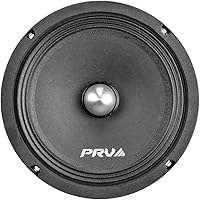
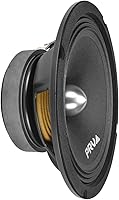
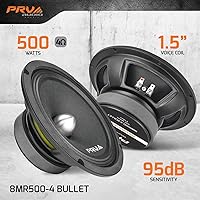
The PRV Audio 8MR500-4 Bullet Midrange Speaker is an 8-inch driver built specifically for car door installations, and it shows in how it's put together. At the center sits an aluminum bullet phase plug, a design borrowed from pro audio cabinets, which doubles as a heat sink for the voice coil during long listening sessions. Rated for 500 watts of program power at 4 ohm, this midrange driver has enough headroom for serious power without sounding strained. It's meant to slot into a 3-way setup, working alongside matching PRV woofers and tweeters rather than standing in as a one-speaker solution. If you're assembling a proper component system, this car door speaker is built with that goal in mind from the start.
Features & Benefits

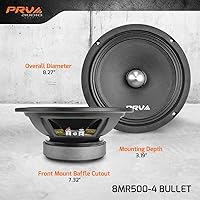
The machined aluminum phase plug isn't just a styling choice; it's there to even out high-frequency dispersion so the upper midrange doesn't get harsh or beamy off-axis. That same pro-audio-style construction is meant to help with heat dissipation under load, which matters if you're running this midrange driver hard on a long road trip. At 8.27 inches across, it's compact enough to fit into many factory door cutouts without major modification, though you'll still want to check clearance before ordering. The single 4-ohm voice coil keeps wiring simple when paired with a passive crossover, and the cylindrical housing has a noticeable heft to it, which hints at a magnet structure built to handle real power rather than just survive it.

Best For

This speaker makes the most sense for car audio enthusiasts who are building a dedicated 3-way door system and want something with real output ceiling rather than a basic replacement speaker. If you've found yourself frustrated with muddy vocals or buried guitar lines from a stock door speaker, this midrange driver is aimed at fixing exactly that kind of issue. It's a good match for DIYers who are already comfortable wiring crossovers and matching components to an amplifier, since getting the best out of it takes more than just bolting it in. On the other hand, anyone looking for a simple plug-and-play upgrade without prior component speaker experience will likely find the learning curve more frustrating than rewarding.

User Feedback

Feedback from people running this car door speaker tends to focus on clarity once it's properly crossed over, with several mentioning that vocals and instruments come through more distinct than they expected from a midrange-only driver. On the downside, a handful of installers point out that getting clean placement requires careful baffle or enclosure prep, which adds time to the install compared to a basic coaxial swap. Power handling seems to hold up fine for normal daily driving volumes, with no widespread complaints about reliability or premature failure. The most consistent gripe isn't about the hardware itself but the tuning process, since dialing in a 3-way system takes patience, and a few buyers admit it took some trial and error before everything blended the way they wanted.

Pros

  • Aluminum phase plug provides real passive cooling, not just an aesthetic choice.
  • The 1.5-inch voice coil handles sustained high-power use without audible compression.
  • 4-ohm impedance pairs cleanly with the vast majority of aftermarket amplifiers.
  • Build quality feels dense and purposeful — the aluminum construction inspires confidence.
  • Neutral to slightly warm tonal character works well inside typical car door cavities.
  • Over a decade of continuous production signals genuine reliability and parts longevity.
  • Designed to integrate naturally into PRV's 3-way ecosystem, simplifying system matching.
  • The 8-inch cone covers the midrange band well without over-engineering the door fitment.
  • Users consistently report clean, composed output even at elevated volume levels.
  • Strong value proposition compared to similarly spec'd pro-audio midrange drivers.

Cons

  • Sold as a single unit, so building a stereo pair means doubling your budget upfront.
  • Depth and diameter can create serious fitment problems in smaller or shallower door panels.
  • Requires a dedicated amplifier channel and crossover — this is not a standalone solution.
  • The 500W figure is program power, not RMS; buyers may overestimate amplifier requirements.
  • No waterproofing whatsoever, making outdoor or exposed installations a non-starter.
  • Not a practical option for anyone without prior component speaker installation experience.
  • Heavier than many comparable midrange drivers at around 5.2 pounds, which matters in custom builds.
  • Works best within the PRV ecosystem; buyers mixing brands face more crossover tuning work.
  • Limited value for listeners who primarily play content at moderate, everyday listening volumes.

Ratings

Our scores for the PRV Audio 8MR500-4 Bullet Midrange Speaker are generated by AI after analyzing verified user reviews from car audio buyers worldwide, with spam, bot activity, and incentivized feedback actively filtered out. The goal is a clear, balanced picture, so both the strengths installers praise and the real-world friction points show up honestly below.
Midrange Clarity
88%
Once properly crossed over, this midrange driver pulls vocals and instruments forward in a way that stock door speakers rarely manage. Daily commuters and audiophiles alike note that dialogue and lead guitar lines sound noticeably more defined at moderate volumes.
A few buyers found the clarity underwhelming until they adjusted their crossover points, since running it outside its intended range muddies the sound. It's not a fix-all if the rest of the system isn't tuned to match.
Power Handling
86%
Rated for 500 watts of program power, owners running it on moderately powered amps report it shrugs off daily volume swings without distortion or strain. It holds composure well during long highway drives at higher listening levels.
Some installers caution that hitting anywhere near its full rated power requires a serious amp setup most casual users won't have. Underpowering it slightly is common, which can leave performance feeling a bit conservative.
Build Quality
84%
The machined aluminum bullet phase plug and solid cylindrical housing give this car door speaker a noticeably sturdier feel than many budget alternatives. The weight alone signals a magnet structure built for sustained use rather than occasional volume spikes.
A handful of buyers wished for more finishing detail around the mounting flange, since rough edges occasionally needed light sanding before a clean fit. It's solid, but not flawless in fit and finish.
Heat Dissipation
81%
19%
The aluminum phase plug doing double duty as a voice coil cooler seems to genuinely help during extended high-volume sessions, with several owners reporting no noticeable performance drop after hours of use. It's a thoughtful pro-audio touch carried over into a car application.
A few users running it at sustained high power noted some warmth around the frame after long sessions, though nothing approaching failure. It's reassuring but not a guarantee against heat buildup in extreme conditions.
Installation Ease
61%
39%
For installers already familiar with component speaker setups, mounting this midrange driver into prepared door panels goes smoothly thanks to its compact 8.27-inch footprint. Standard mounting hardware and a straightforward door, plug, or wheel mount design keep things uncomplicated for experienced hands.
Newcomers frequently mention that baffle prep and proper sealing take more effort than expected, especially compared to a simple coaxial swap. The need for a crossover network adds another layer of complexity that catches first-timers off guard.
Fit & Compatibility
79%
21%
The 8.27-inch diameter lines up with many factory door cutouts, which saves time for buyers working with common vehicle platforms. Multiple mounting style options also give installers some flexibility depending on the door design.
Not every vehicle door accommodates the depth or diameter without modification, and a few owners had to fabricate adapter rings. It's worth measuring carefully rather than assuming a universal fit.
Crossover Flexibility
75%
25%
Pairing this PRV bullet speaker with the matching woofer and tweeter line gives experienced builders a lot of room to fine-tune the overall sound signature. Buyers who enjoy experimenting with crossover points appreciate the control it offers.
That same flexibility becomes a hurdle for buyers without crossover experience, since incorrect settings noticeably hurt sound quality. Several reviewers admitted it took multiple attempts before the tuning felt right.
Wiring & Connectivity
89%
The single 4-ohm voice coil keeps wiring refreshingly simple for anyone running a passive crossover, with no confusing dual-coil configurations to sort through. Most installers found the wired, corded setup predictable and easy to integrate into existing harnesses.
There's little flexibility for those wanting alternate impedance options or multi-coil wiring schemes for unusual setups. It's straightforward, but that simplicity limits customization for advanced wiring configurations.
Value for Money
83%
Given the aluminum phase plug, solid power handling, and pro-audio-inspired build, many buyers feel they're getting component-level engineering without paying flagship prices. It's frequently mentioned as a smart middle step up from basic factory speakers.
Buyers expecting a complete plug-and-play upgrade may feel the added cost of a crossover and matching components changes the overall value equation. It's a fair price for the driver alone, but the full system cost adds up.
Durability
85%
Owners running this speaker through regular daily driving conditions report consistent performance without rattles, buzzing, or premature wear. The solid weight and sturdy magnet structure inspire confidence for long-term use.
Since it isn't waterproof, a small number of buyers in humid climates expressed concern about long-term moisture exposure inside the door cavity. Proper sealing is necessary to avoid degradation over time.
Weatherproofing
52%
48%
For buyers using it strictly in a sealed, factory-style door environment, the lack of waterproofing hasn't caused noticeable issues, since the door panel itself offers some natural protection. It performs as expected within that intended use case.
It's explicitly not rated waterproof, which rules it out for marine use, open-air enclosures, or any environment with direct moisture exposure. This is a clear limitation for buyers outside standard sealed-door applications.
3-Way System Synergy
87%
When matched with PRV's companion woofers and tweeters, this car door speaker fills its midrange role convincingly, contributing to a noticeably more layered overall sound stage. Buyers building complete 3-way systems consistently report satisfaction with how it blends with the rest of the lineup.
Used outside a matched 3-way configuration, its narrower frequency focus becomes a limitation rather than a strength, since it isn't designed to cover bass or treble on its own. It really needs the full system to shine.

Suitable for:

The PRV Audio 8MR500-4 Bullet 8-Inch Midrange Speaker was built for a specific kind of buyer: someone who already knows what a 3-way active door build looks like and has the amplifier, crossover, and installation skills to execute it properly. This is the driver for the car audio enthusiast who is tired of midrange components that compress, distort, or physically fail under sustained high-power use. Fabricators and custom installers running SPL-oriented or competition-grade builds will find the thermal management design genuinely useful, not just a marketing talking point. It also makes strong practical sense for anyone already working within the PRV ecosystem, since pairing the 8MR500-4 Bullet with PRV's matched woofer and tweeter components takes most of the crossover alignment guesswork off the table. If your goal is real component-level midrange clarity at serious output levels, this driver is a credible and time-tested choice.

Not suitable for:

If you are looking for a simple speaker swap to replace a blown factory unit, the PRV Audio 8MR500-4 Bullet 8-Inch Midrange Speaker is not what you need — full stop. This driver requires a dedicated amplifier channel, a properly tuned crossover, and enough door depth to accommodate its physical size, none of which are givens in a stock vehicle. Casual listeners who run a head unit without external amplification will get nothing useful out of it. Buyers with smaller cars or shallow door cavities should measure very carefully before purchasing, as fitment can be a genuine obstacle. It is also sold as a single unit, so budget-conscious buyers building a stereo pair need to account for that cost upfront. Anyone expecting a ready-to-install, all-in-one audio upgrade will be frustrated by how much supporting hardware this component demands.

Specifications

  • Speaker Type: This is a dedicated midrange driver designed for use in a 3-way component car audio system.
  • Driver Size: The cone diameter measures 8 inches, with an overall frame diameter of 8.27 inches.
  • Impedance: The voice coil is rated at 4 ohm, which is standard for most car amplifier setups.
  • Power Handling: It can handle up to 500 watts of program power continuously.
  • Phase Plug Material: The bullet-style phase plug is machined from solid aluminum for rigidity and heat transfer.
  • Driver Technology: It uses a dynamic driver design with a single voice coil configuration.
  • Dimensions: The speaker measures 8.27″ in diameter by 3.46″ in mounting depth.
  • Weight: Each unit weighs approximately 5.2 pounds.
  • Shape: The housing follows a cylindrical form factor typical of mid-bass and midrange drivers.
  • Output Mode: The speaker operates in mono output mode as a single-channel driver.
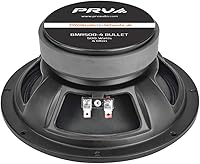
  • Connectivity: It uses a wired, corded electric connection rather than wireless or Bluetooth pairing.
  • Mounting Options: It supports door, car, plug, and wheel mounting configurations.
  • Water Resistance: The speaker is not rated as waterproof, so it should be kept away from direct moisture exposure.
  • Recommended Use: It is intended for custom door installations as part of a 3-way car audio build.
  • Color: The speaker is finished in black to blend with most factory door panels.
  • Crossover Requirement: A passive or active crossover network is required since this is a midrange-only driver.

Related Reviews
PRV Audio 6MR250B-4 Slim 6.5-inch Midrange Speaker
84%
91%
Sound Clarity
94%
Fitment & Depth
88%
Value for Money
79%
Installation Experience
74%
Build Quality
More
PRV Audio 6MR400-4 Bullet Speaker
89%
93%
Sound Clarity
90%
Power Handling
88%
Cooling Efficiency
91%
Build Quality
85%
Installation Ease
More
PRV Audio 69MR500-PHP-4 6x9 Midrange Speaker
84%
93%
Midrange Clarity
89%
Build Quality
91%
Sensitivity & Efficiency
88%
Power Handling
84%
Integration with Tweeters
More
PRV Audio 6MB100-4 6.5″ Midbass Car Speakers
79%
93%
Mounting Depth & Fitment
88%
Midrange Sound Quality
71%
Bass Response
89%
Installation Ease
52%
High-Frequency Extension
More
PRV Audio 8MR450A 8-Inch Midrange Speaker
84%
93%
Sound Clarity
91%
Value for Money
88%
Power Handling
84%
Installation Ease
82%
Build Quality
More
PRV Audio 12MR2000 12-inch Midrange Speaker
85%
92%
Sound Clarity
88%
Build Quality
94%
Power Handling
72%
Ease of Installation
89%
Durability
More
PRV Audio 10MR650A 10-Inch Midrange Speaker
87%
94%
Sound Clarity
91%
Midrange Performance
88%
Durability and Build Quality
89%
Heat Management
90%
Volume Handling
More
PRV Audio 6MR200A 6.5-Inch Shallow Midrange Speaker
85%
91%
Sound Clarity
94%
Shallow Mount Design
93%
Value for Money
88%
Installation Experience
79%
Build Quality
More
PRV AUDIO 6MB200-4 v2 6.5-inch Midbass Speaker
85%
87%
Bass Quality
91%
Vocal Clarity
85%
Durability
82%
Power Handling
88%
Sound Detail
More
PRV Audio EX4.6PRO 4-Way Electronic Crossover
82%
91%
Signal Quality
93%
Output Headroom
62%
Build Quality
84%
Value for Money
87%
Tuning Flexibility
More

FAQ

Not really, since this is a midrange-only driver and needs a crossover to filter out the lows and highs. You'll get the best results pairing it with a matching woofer and tweeter in a proper 3-way setup. If you install it alone without a crossover, it likely won't sound balanced.

The 8.27-inch diameter fits many factory cutouts, but it's worth measuring your door panel and checking depth clearance before buying. Some doors may need slight modification or a mounting adapter ring depending on your vehicle.

It's rated for up to 500 watts of program power, but you don't need to max that out to get decent output. A moderate amplifier in the 75 to 150 watt range per channel is usually plenty for daily listening.

No, it's not waterproof, so it should stay in an enclosed door cavity protected from moisture. Avoid using it in marine applications or any setup where it could get splashed.

That's the phase plug, and it's there to help smooth out high-frequency dispersion while also acting as a heat sink for the voice coil. It's a feature borrowed from pro audio speaker design adapted for car use.

Basic car audio installation tools and some familiarity with wiring and crossovers will make the process much smoother. If you've never installed component speakers before, expect a bit of a learning curve, especially with baffle prep and crossover tuning.

Buyers tend to report clearer vocals and instrument separation once it's properly crossed over, since this midrange driver is focused on one frequency range instead of trying to cover everything. It's a different kind of clarity than what a basic coaxial provides.

Any amp capable of delivering clean power within its handling range at 4 ohm should work fine. Just make sure your crossover points are set correctly so the midrange isn't getting frequencies outside its intended range.

It seems to hold up well for regular daily driving volumes based on owner feedback, not just occasional show use. That said, getting the most out of it does take some setup effort, so it rewards people willing to tune their system properly.

Skipping proper baffle or enclosure prep is a common one, since door cavities aren't always sealed well from the factory. Rushing the crossover setup is another, since mismatched frequency points can make the midrange sound thin or harsh.