Overview

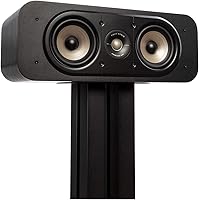
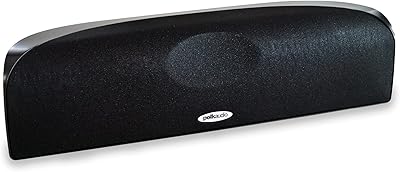
The Polk Audio Signature Elite ES30 Center Speaker sits firmly in the mid-to-upper tier of the home theater market, targeting buyers who want noticeably better dialogue reproduction without spending boutique-level money. Most people underestimate how critical a center channel is — roughly three-quarters of what you hear in a film or TV show routes through it, from every spoken line to most foreground sound effects. The ES30 belongs to Polk's well-regarded Signature Elite family, a series built around consistent voicing and real-world value. Build quality feels solid; the cabinet has genuine heft. One important caveat up front: this is a passive speaker, meaning it needs a capable AV receiver to power it. Plan your setup accordingly.
Features & Benefits

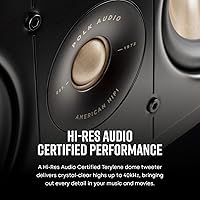
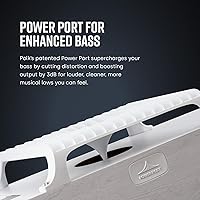
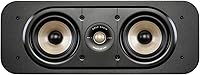
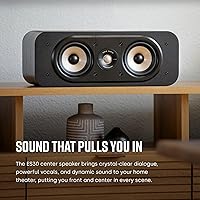
The standout engineering in the ES30 is Polk's patented Power Port technology — a rear bass port shaped to minimize turbulence and port noise, which translates to cleaner, more extended low-end than you would typically expect from a center channel. Paired with a 1-inch Terylene dome tweeter and two 5.25-inch woofers in Polk's Dynamically Balanced Acoustic Array, the speaker delivers wide, even sound dispersion across a broad listening area. It carries Hi-Res Audio certification and supports both Dolby Atmos and DTS:X, holding its own alongside modern AVR setups. Dual impedance compatibility at 4 and 8 ohms means it works with most receivers. At 20 inches wide and 19 pounds, placement deserves advance thought.

Best For

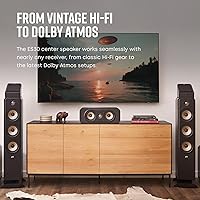
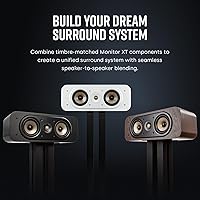
This center channel speaker is purpose-built for home theater, not casual music listening. It makes the most sense for anyone anchoring a 5.1 or larger surround system — especially those already building around Polk's Signature Elite lineup, since the timbre-matched design keeps the sound consistent across every speaker in the chain. Dialogue clarity is the primary draw, so if you watch a lot of films, dense TV dramas, or action-heavy content, this is a strong fit. Room size matters too; the ES30 rewards medium-to-large spaces where its output and sensitivity can fully stretch out. It is also a smart pick for buyers wanting Hi-Res Audio credentials at a price that stops well short of the high-end market.

User Feedback

With over 1,000 ratings averaging 4.7 stars, the ES30 has built a notably consistent track record. The praise that comes up most reliably centers on dialogue intelligibility — buyers report that voices cut through cleanly even in loud, layered scenes. Many also note the bass extension is genuinely impressive for a center channel, though it is not a substitute for a dedicated subwoofer. On the critical side, the speaker's size catches some buyers off guard; 20 inches wide does not fit neatly on every TV console. A recurring note is that a capable receiver is non-negotiable — underpowered setups undersell what Polk's Signature Elite center can actually do. Long-term durability reports are broadly positive.

Pros

  • Dialogue clarity is exceptional — voices cut through cleanly even during loud, layered action scenes.
  • The Power Port bass technology delivers noticeably cleaner low-end extension than most center channels at this price point.
  • Hi-Res Audio certified and fully compatible with Dolby Atmos and DTS:X for modern AVR setups.
  • Works with a wide range of receivers thanks to dual 4- and 8-ohm impedance compatibility.
  • Timbre-matched to the full Signature Elite lineup, making multi-speaker builds sound cohesive.
  • Build quality feels substantial and premium relative to similarly priced competitors.
  • Over 1,000 ratings averaging 4.7 stars points to genuinely consistent buyer satisfaction.
  • Wide sound dispersion means the sweet spot is not limited to a single seated position.
  • The bold, modern cabinet design holds up visually in a dedicated home theater or living room setup.

Cons

  • At 20 inches wide and 19 pounds, it will not fit on many standard TV consoles without planning ahead.
  • Requires a capable AV receiver to perform well — an underpowered or budget receiver holds it back noticeably.
  • No receiver or stand is included, adding to the total cost of a complete working setup.
  • Not ideal as a standalone purchase; its strengths are best realized within a matched Signature Elite system.
  • Passive speaker design means zero convenience for buyers seeking a simpler, self-powered solution.
  • Bass output, while good for a center channel, will disappoint anyone expecting subwoofer-level impact.
  • The rear Power Port placement requires adequate clearance behind the speaker — tight shelf installs can restrict airflow.
  • Higher upfront investment compared to entry-level center channels, which may be hard to justify for casual viewers.

Ratings

The scores below reflect our AI-powered analysis of verified global buyer reviews for the Polk Audio Signature Elite ES30 Center Speaker, with spam, bot-generated, and incentivized feedback actively filtered out before scoring. Each category captures both the genuine enthusiasm and the honest frustrations that real owners have reported across thousands of hands-on experiences. Nothing is glossed over — where buyers found limitations, those are reflected just as transparently as the strengths.

Dialogue Clarity
94%
This is the single most praised aspect across buyer feedback, and for good reason. Owners consistently report that voices in films and TV shows cut through dense action soundtracks with a precision they had not experienced from previous center channels. Even in fast-paced scenes with layered sound effects, individual voices remain distinct and intelligible.
A small number of buyers noted that at very high volume levels, some harshness crept into sibilant sounds — the sharp S and T consonants in speech. This appears more likely when paired with a receiver that lacks fine-grained EQ controls, rather than being an inherent flaw in the speaker itself.
Bass Performance
78%
22%
For a center channel, the low-end output genuinely surprises people. Polk's Power Port technology delivers a tighter, cleaner bass response than competing speakers in this class, and owners watching action films report a sense of frontal impact and weight that adds real presence to explosions and score-heavy sequences.
Expectations need to be managed carefully here. Buyers who hoped the ES30 could reduce their reliance on a subwoofer were generally disappointed — it bottoms out before true cinematic low frequencies, and in larger rooms the bass can feel thin without a dedicated sub in the chain. It enhances, but does not replace.
Build Quality
91%
Owners frequently comment on how solid and well-finished the cabinet feels the moment it comes out of the box. The matte black finish resists fingerprints reasonably well, the grille fits snugly without rattling, and the overall construction gives the impression of a speaker priced well above its actual market position.
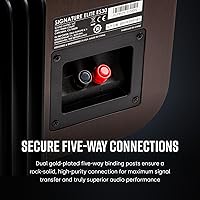
A handful of buyers noted minor cosmetic inconsistencies — slight variations in grille fit or finish texture — though these appear to be isolated quality control outliers rather than a widespread pattern. The speaker's weight of 19 pounds means the binding post area on the rear needs to be handled carefully during initial installation.
Value for Money
86%
Buyers who did their homework before purchasing tend to feel well-served by what the ES30 delivers relative to its price tier. The combination of Hi-Res Audio certification, genuine Power Port engineering, and premium build finish represents a tangible step up from cheaper alternatives without crossing into diminishing-returns territory.
For buyers who do not already own a quality AV receiver, the total system cost climbs quickly, and the speaker only reaches its potential with capable amplification. A few buyers felt the pricing was harder to justify when factoring in the additional purchase of a speaker stand, which is not included.
Dolby Atmos & DTS:X Integration
83%
In setups where an Atmos-capable receiver handles the object-based processing, the ES30 holds up its end of the bargain cleanly. Its Hi-Res Audio certification means it is not a bottleneck in high-resolution audio chains, and buyers report that the center stage in Atmos mixes sounds cohesive and well-anchored.
It is worth noting that the ES30 itself does not have upward-firing drivers, so it contributes nothing directly to height effects in an Atmos setup. Buyers who were unclear on this distinction going in occasionally expressed surprise that the speaker alone did not transform their experience into full Atmos sound.
Physical Footprint & Placement
61%
39%
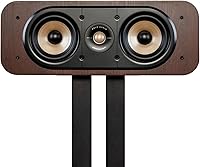
Buyers who planned their setup in advance and either had a deep enough console shelf or invested in a dedicated stand reported zero placement issues. The cabinet's proportions look authoritative and intentional in a proper home theater context, and the tabletop surface is stable enough that vibration at moderate volumes is not a concern.
This is the most consistently flagged pain point in buyer feedback. At 20 inches wide and nearly 11 inches deep, it does not fit below most standard TV stands without overhanging or blocking ventilation. Several buyers returned or struggled to rehome the speaker purely because of this, making it a genuine dealbreaker for compact living room setups.
Receiver Compatibility
88%
The dual 4- and 8-ohm impedance rating gives the ES30 broad compatibility across the receiver market, and most buyers with mid-range or better AVRs from Denon, Yamaha, Marantz, or Sony report no matching or configuration issues at all. Setup is straightforward once the receiver is in place.
Buyers who attempted to run it off entry-level or very old receivers noticed a clear ceiling on dynamics and volume before distortion crept in. The speaker is not forgiving of weak amplification, and this has led to some unfairly negative reviews from buyers who attributed the underperformance to the speaker rather than the upstream hardware.
Sound Dispersion
87%
The Dynamically Balanced Acoustic Array configuration does a solid job of spreading sound horizontally, so listeners seated off-center in a wide room still get a clear, balanced front image. Families watching TV together — where seating spreads across a sofa — report that nobody gets a noticeably worse experience based on their seat position.
In very wide rooms where seating extends significantly beyond a typical sofa span, some listeners at the far edges noticed a slight drop in high-frequency presence. This is a physics limitation more than a design flaw, but worth noting for unusually wide viewing arrangements.
Series Timbre Matching
93%
Buyers who built their system around the full Signature Elite family consistently praise how naturally sound moves across the front stage. Panning effects in film soundtracks pass through the center to the towers without any tonal discontinuity, which is something that mismatched speaker families frequently get wrong.
This benefit is entirely irrelevant unless you are running other Signature Elite speakers alongside it. Buyers who paired the ES30 with speakers from other brands or series reported that they still needed to spend time manually adjusting receiver EQ settings to achieve tonal balance — the timbre match does not extend beyond the Polk family.
Unboxing & Initial Setup
82%
18%
Packaging is well-engineered and protective, with very few reports of transit damage despite the speaker's weight. The speaker arrives ready to connect, and owners with existing home theater setups generally report being up and running within minutes of unboxing.
There are no setup instructions included beyond the basics, which is fine for experienced buyers but can leave newer home theater builders uncertain about optimal placement height, toe-in angle, and receiver calibration settings. First-time center channel buyers would benefit from consulting external setup guides.
Long-Term Reliability
89%
Across the pool of longer-term owners, failure rates appear low and the driver components hold up well under consistent, regular use. There are no widespread reports of woofer surround degradation, tweeter failure, or cabinet resonance developing over time, which is a reasonable indicator of solid component sourcing.
The sample of very long-term owners is still limited given the speaker launched in 2021, so multi-year durability data is less comprehensive than for older products. A limited warranty is included, but buyers should verify the specific terms and duration directly with Polk, as coverage details are not prominently documented in the listing.
Aesthetic Design
85%
The bold, angular cabinet design reads as modern and intentional rather than generic. Buyers setting up dedicated home theater rooms consistently note that it looks like it belongs in a high-quality system, and the matte black finish coordinates well with most TV and receiver aesthetics on the market.
The design is firmly anchored in the dark-and-angular home theater aesthetic, which does not suit every living room interior. Buyers wanting something that blends more discreetly into a lighter or Scandinavian-style room decor will find the ES30 a visually dominant presence that is difficult to downplay.
High-Volume Headroom
76%
24%
At normal-to-loud listening levels in a standard living room or dedicated theater room, the ES30 handles dynamics cleanly without audible strain. Buyers who host regular movie nights report that it fills the room with authority at levels that genuinely replicate a cinematic front-stage experience.
In larger rooms pushed to very high volume, the 25-watt power handling ceiling becomes a practical limit. A small but consistent group of buyers with larger spaces noted compression and reduced clarity at the top end of the volume range, suggesting the speaker is better matched to rooms of typical residential proportions than to very large open-plan areas.

Suitable for:

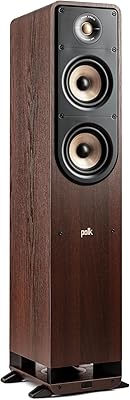
The Polk Audio Signature Elite ES30 Center Speaker is purpose-built for the home theater enthusiast who takes their setup seriously and wants every line of dialogue to land with clarity and weight. It fits especially well in medium-to-large rooms where the speaker has space to breathe and a capable AV receiver is already part of the system. Buyers building around the broader Polk Signature Elite family — pairing the ES30 with ES55 towers and ES15 surrounds — will get the most out of its timbre-matched design, since tonal consistency across channels is where this speaker truly distinguishes itself. Film and TV watchers who have struggled with muddy or recessed dialogue in past setups will notice an immediate improvement. It also appeals to the budget-conscious audiophile who wants Hi-Res Audio certification and Dolby Atmos compatibility without committing to a professionally graded system.
Not suitable for:

Anyone expecting a plug-and-play experience should look elsewhere — the ES30 is a passive speaker that requires a dedicated AV receiver, and buyers who overlook that detail will be disappointed out of the box. Smaller living rooms and compact media consoles may also struggle to accommodate its 20-inch width and 19-pound frame, making physical placement a genuine obstacle rather than a minor inconvenience. If your primary use case is stereo music listening rather than surround sound film and TV, this center channel speaker is simply not the right tool; it is engineered for home theater, not critical two-channel audio. Budget-conscious shoppers building a first, casual setup may find the price hard to justify without a receiver and compatible surround speakers already in hand. And buyers hoping the ES30 will replace or approximate a subwoofer will be let down — its bass extension is impressive for a center channel, but it was never designed to carry low-frequency duties on its own.

Specifications

  • Speaker Type: Passive center channel speaker requiring an external AV receiver for power.
  • Tweeter: 1-inch Terylene dome tweeter designed for clear, detailed high-frequency reproduction.
  • Woofers: Two 5.25-inch dynamic cone woofers arranged in a Dynamically Balanced Acoustic Array.
  • Impedance: Compatible with both 4-ohm and 8-ohm AV receiver outputs for broad receiver flexibility.
  • Power Handling: Rated for a maximum output of 25 watts continuous power handling.
  • Frequency Response: Frequency response extends down to 40 Hz, providing meaningful low-end presence for a center channel.
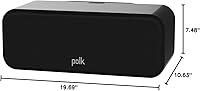
  • Dimensions: Cabinet measures 10.6″ deep, 20″ wide, and 7.5″ tall.
  • Weight: Unit weighs 19 pounds, requiring a sturdy shelf surface or a rated speaker stand.
  • Bass Technology: Polk's patented Power Port rear bass port reduces turbulence and port noise for cleaner low-end output.
  • Certifications: Carries Hi-Res Audio certification and is compatible with Dolby Atmos and DTS:X audio formats.
  • Mounting Options: Designed for tabletop shelf placement or use with a compatible speaker stand, sold separately.
  • Surround Config: Engineered as the center anchor for 5.1 and larger surround sound configurations.
  • Series Match: Timbre-matched to the full Polk Signature Elite lineup, including ES55 tower and ES15 surround speakers.
  • Color: Available in a bold matte black finish suited to modern home theater aesthetics.
  • Power Source: Draws power via binding post connection to a corded AV receiver; no internal amplifier or power cable included.
  • Warranty: Covered under Polk Audio's limited warranty; specific terms should be confirmed directly with the manufacturer.

Related Reviews

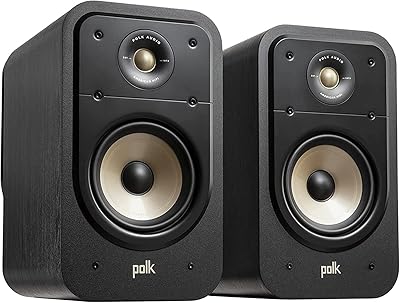
Polk Signature Elite ES20 Bookshelf Speaker
86%
91%
Sound Quality
89%
Bass Performance
88%
Clarity and Detail
85%
Build Quality
87%
Ease of Setup
More
Polk Signature Elite ES50 Tower Speaker
87%
91%
Sound Quality
88%
Bass Performance
85%
Ease of Setup
93%
Design and Build Quality
89%
Compatibility with AV Systems
More
Polk Signature Elite ES15 Bookshelf Speaker
87%
91%
Audio Quality
88%
Bass Performance
85%
Build Quality
89%
Sound Clarity
90%
Design & Aesthetics
More
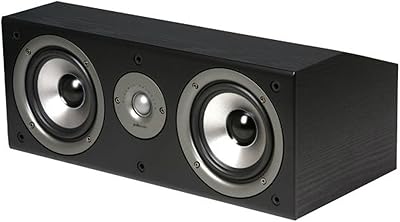
Polk Audio TL1 Center Channel Speaker
78%
88%
Dialogue Clarity
52%
Bass & Low-End Response
83%
Value for Money
79%
Build Quality & Finish
91%
AV Receiver Compatibility
More
Polk Audio 255C-RT In-Wall Center Speaker
81%
91%
Dialogue Clarity
61%
Bass Performance
78%
Installation Experience
88%
Aesthetic Integration
83%
Build Quality
More
Polk Audio CS1 Series II Center Speaker
82%
91%
Dialogue Clarity
88%
Value for Money
83%
Build Quality
61%
Bass Performance
84%
Placement Flexibility
More
Polk Audio T30 Center Channel Speaker
79%
88%
Dialogue Clarity
91%
Value for Money
61%
Bass Performance
78%
Build Quality
94%
Setup & Installation
More
Polk Audio T15
Polk Audio T15
82%
88%
Sound Clarity
61%
Bass Response
79%
Build Quality
93%
Value for Money
91%
Ease of Setup
More
Polk Audio OWM3
Polk Audio OWM3
83%
88%
Sound Clarity
63%
Bass Performance
94%
Versatile Placement
76%
Build Quality
86%
Value for Money
More
Polk Audio Reserve R200 Bookshelf Speaker
87%
94%
Sound Quality
89%
Bass Performance
90%
Build Quality
85%
Ease of Setup
92%
Value for Money
More

FAQ

No, the Polk Audio Signature Elite ES30 Center Speaker is a passive speaker, which means it has no built-in amplifier and no power cable. You connect it to the center channel output on your AV receiver using speaker wire, and the receiver supplies the power. If you do not already own a compatible receiver, factor that into your budget.
Because it supports both 4-ohm and 8-ohm impedance, the ES30 is compatible with the vast majority of home theater receivers on the market. That said, it performs noticeably better with a mid-range or better receiver that can deliver clean, stable power. Budget receivers rated below 50 watts per channel tend to undersell what this speaker can actually do.

That depends on your furniture. At 20 inches wide and 7.5 inches tall, it is a fairly substantial cabinet, and some TV stands or media consoles do not have enough vertical clearance or depth to accommodate it comfortably. Measure the space carefully before ordering. If the fit is tight, a dedicated center channel speaker stand is a practical alternative.

Technically yes, but it is not really designed for solo duty. A center channel speaker handles dialogue and front-stage anchoring in a surround mix, so without at least a pair of front left and right speakers, you are not getting the full picture of what it offers. It will still work connected to a receiver, but the listening experience will feel incomplete.

Yes, it is compatible with Dolby Atmos and DTS:X, provided your AV receiver also supports those formats. Keep in mind that the ES30 itself is a traditional forward-firing center channel — it does not have upward-firing drivers for object-based height effects. In an Atmos system, it handles the center dialogue layer while dedicated Atmos-enabled speakers or ceiling speakers handle the height channels.

Polk's Power Port is a rear-firing port, so placing it flush against a wall or in a tight enclosed shelf can restrict airflow and affect bass performance. A few inches of breathing room behind the cabinet is a good practical minimum. Open shelving or a speaker stand gives it the best chance to perform as intended.

It is one of the best matches you can make. The entire Signature Elite series is timbre-matched, meaning the drivers and crossover tuning are voiced to sound consistent with one another. Mixing and matching speakers from different families often creates tonal inconsistencies as sound pans across the front stage, but pairing this center with ES55 towers keeps dialogue and music seamlessly integrated.

It is primarily a home theater speaker. Center channels are optimized for mono dialogue and centered front-stage content in surround mixes, not for stereo music playback. You can certainly run music through it in a multichannel setup, but if dedicated music listening is your priority, a stereo pair of bookshelf or floor-standing speakers would serve you better.

Not really. While the Power Port technology gives this center channel more low-end extension than you might expect, it bottoms out at 40 Hz under ideal conditions and handles only 25 watts. A proper subwoofer reaches deeper, plays louder, and handles the low-frequency effects channel in film soundtracks. Think of the ES30's bass as a complement to a sub, not a replacement for one.

Based on aggregated buyer feedback, long-term reliability is a general strength — the cabinet and drivers hold up well under regular use, and there are few widespread reports of component failure. The build feels solid from the moment you unbox it, which gives a reasonable indication of durability. As with any passive speaker, longevity also depends partly on how cleanly your receiver is driving it.

Where to Buy