Overview

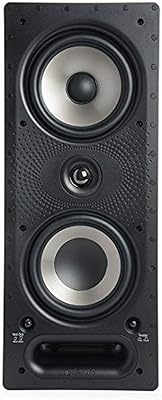
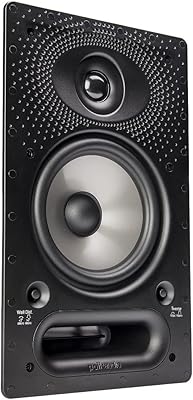
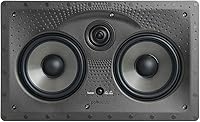
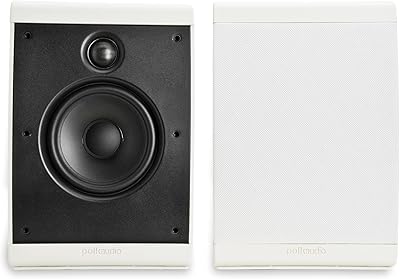
The Polk Audio 255c-LS In-Wall Center Channel Speaker is built for one specific kind of buyer: someone serious enough about their home theater to cut a hole in the wall for it. That distinction matters. This isn't a speaker you unbox and place on a shelf — it's a permanent wall fixture, designed to disappear into your room while anchoring an entire surround setup. As the center channel in Polk's Vanishing LS Series, it slots naturally alongside matching in-wall and in-ceiling speakers. Installation relies on a single cut-out drop-in approach that works in new construction or existing drywall, which is genuinely useful when retrofitting a finished room.
Features & Benefits

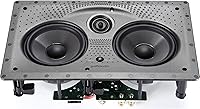
The 255c-LS runs a dual-driver midrange configuration — two 5.25″ Dynamic Balance drivers engineered to minimize cone distortion across the frequency range, keeping mids composed during complex soundtracks rather than smeared or harsh. Above them, a 1″ Ring-Radiator tweeter handles high-frequency detail with more precision than a standard dome tweeter, which meaningfully improves dialogue clarity and stereo imaging. Polk's PowerPort bass venting manages the tricky acoustics of a sealed wall cavity, reducing the boominess that can plague in-wall speakers in untreated rooms — though results will still vary by construction. The 8-ohm impedance plays nicely with most AV receivers without placing unusual demands on your amplifier.

Best For

This in-wall center channel is purpose-built for homeowners designing or renovating a dedicated home theater who want clean walls over equipment clutter. If you're already working within the Polk Vanishing LS ecosystem — pairing in-wall surrounds and in-ceiling heights — the 255c-LS is the natural center-channel anchor. It's also a practical choice when room layout won't accommodate a traditional shelf speaker in front of the screen. That said, be clear-eyed about the commitment: cutting into drywall is permanent, and this Polk speaker is simply not the right fit for renters, anyone in a temporary living situation, or buyers who want a speaker they can easily relocate or return.

User Feedback

With 61 ratings averaging 4.5 stars, reception skews clearly positive — but the sample size is modest enough that individual experiences carry real weight here. The most consistent praise targets dialogue clarity; owners repeatedly note that voices cut through cleanly without the muddiness some in-wall designs produce. Installation also earns strong marks, with most buyers finding the cam locking system as straightforward as advertised, though a few noted that wall cavity depth and existing insulation can add friction in older homes. On the downside, bass output is predictably room-dependent — wall construction and cavity size will influence your results. Long-term durability reports remain limited at this review volume, but build quality impressions have been consistently favorable.

Pros

  • Dialogue clarity is exceptional — voices stay crisp and intelligible even during dense, layered film soundtracks.
  • The Ring-Radiator tweeter retrieves high-frequency detail that most in-wall competitors at this price simply don't match.
  • Six rotating cam locks make solo installation achievable without a second person holding the speaker in place.
  • The 7mm grille protrusion means the 255c-LS essentially disappears into the wall once mounted.
  • Paintable metal grille allows the speaker to blend into virtually any wall color or decor scheme.
  • Standard 8-ohm impedance pairs safely and stably with the vast majority of AV receivers on the market.
  • PowerPort bass venting meaningfully reduces unwanted cavity resonance in well-constructed walls.
  • Tonal matching within the Polk Vanishing LS Series is cohesive enough to satisfy discerning surround-sound listeners.
  • The included mounting template removes measurement guesswork and helps prevent costly cut-out mistakes.
  • Build quality feels solid and premium — metal construction and tight tolerances that hold up to years of use.

Cons

  • Bass performance varies significantly depending on wall cavity depth and insulation — results are not predictable across homes.
  • Cutting into drywall is irreversible; a miscut or a change of plans means real repair work.
  • The owner's manual assumes baseline installer knowledge and leaves complete beginners without enough guidance.
  • Grille painting requires careful prep work — rushed attempts result in visible brush marks or uneven coverage.
  • At maximum power, the speaker compresses audibly in larger rooms, limiting its suitability for high-output setups.
  • The review pool of 61 ratings is too small to draw confident conclusions about long-term driver reliability.
  • Hidden wiring through existing finished walls adds significant labor time that the product itself does not account for.
  • Mixing this in-wall center channel with non-Polk surrounds often requires noticeable EQ correction to smooth tonal differences.
  • Open-plan rooms with reflective surfaces make acoustic outcomes harder to predict before committing to a permanent installation.
  • Buyers with older homes may encounter non-standard stud spacing or wall depth that complicates an otherwise straightforward mount.

Ratings

The Polk Audio 255c-LS In-Wall Center Channel Speaker earns its strong reputation among home theater enthusiasts who prioritize clean acoustics and a clutter-free installation — and the scores below reflect exactly that reality. Our AI has analyzed verified buyer reviews from multiple global markets, actively filtering out incentivized, bot-generated, and low-credibility submissions to surface what real owners actually experience. Both the genuine strengths and the friction points are represented here without softening.
Dialogue Clarity
93%
This is the category where the 255c-LS genuinely stands apart from budget in-wall alternatives. Owners consistently report that voices — whether whispered movie dialogue or dense TV mixing — cut through with exceptional precision. The Ring-Radiator tweeter deserves much of the credit for keeping consonants crisp without introducing sibilance.
A small number of buyers noted that at very low listening volumes, some dialogue warmth is lost and the upper midrange can feel slightly thin. This appears more pronounced in larger rooms where the speaker is being pushed beyond its comfortable output range.
Sound Quality Overall
88%
The dual Dynamic Balance midrange drivers produce a tonal balance that feels composed and natural across movies, music, and TV. Owners coming from freestanding center channels are often surprised by how little they feel they've compromised, especially in the midrange where most center-channel content lives.
The high end can feel slightly analytical rather than warm on certain recordings, and the 255c-LS is not the most forgiving speaker with lower-quality streaming sources. Those running compressed audio from budget streamers may notice a slight edge in the upper frequencies.
Bass Performance
71%
29%
Polk's PowerPort venting does a credible job managing low-end energy within a sealed wall cavity. In well-constructed rooms with adequate stud depth, owners report noticeably tighter, less boomy bass compared to non-ported in-wall designs — particularly helpful during action sequences where center-channel LFE can muddy dialogue.
Bass output is heavily dependent on wall construction, cavity depth, and insulation materials — factors that vary wildly home to home. Several owners reported that shallow cavities or dense insulation significantly reduced low-end extension, making a subwoofer not optional but essentially required.
Installation Ease
86%
The six rotating cam system genuinely simplifies a process that intimidates many first-time in-wall installer buyers. Most owners with basic DIY confidence report completing the physical mounting in under 30 minutes using the included template, even when working alone without a second person to hold the speaker in position.
Older homes with non-standard stud spacing or thicker drywall introduced complications that a few buyers weren't prepared for. Routing speaker wire through existing walls — a step the installation instructions understandably don't address — is where the real time investment tends to happen.
Build Quality
89%
The physical construction feels appropriately solid for the mid-to-premium price tier. The metal grille in particular draws consistent praise — it sits flush, resists flex, and doesn't rattle at higher listening volumes the way plastic grilles on competing in-wall speakers tend to do over time.
A handful of buyers expressed concern about long-term driver durability, though the review base is still relatively small and few have reported actual failures. The grille's magnetic attachment is secure but can pick up minor marks during handling, which matters if you're painting it to match a wall finish.
Grille & Aesthetics
84%
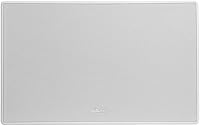
The 7mm Sheer-Grille protrusion is about as close to flush as this category gets without custom millwork. Owners with minimalist room designs or projection screens specifically call out how little visual presence the speaker has once installed — it genuinely reads as part of the wall rather than a speaker mounted on it.
Painting the grille to match a custom wall color is achievable but requires care; buyers who rushed the prep work reported visible brush marks or uneven coverage. The factory white finish also limits out-of-box compatibility with darker room palettes without painting.
Imaging & Soundstage
82%
18%
The Ring-Radiator tweeter's wider dispersion pattern compared to standard dome designs produces a soundstage that feels broader and more enveloping than most center channels in this form factor. Several home theater owners noted that audio feels naturally anchored to the screen rather than obviously coming from a point source.
Off-axis listening — sitting significantly to the left or right of center — does reduce some of that imaging precision. For rooms with wide seating arrangements, the effect is less pronounced than with floor-standing center speakers that have more directional control at distance.
Amplifier Compatibility
87%
The 8-ohm impedance rating keeps this Polk speaker compatible with essentially any AV receiver on the market without stressing the amplifier section. Owners running mid-range Denon, Yamaha, and Marantz receivers consistently report stable, distortion-free performance across normal home listening levels.
At 25 watts maximum rated power, the 255c-LS has less headroom than some buyers assume. Those running high-output amplifiers in large rooms occasionally reported that the speaker compresses audibly at reference-level volumes, suggesting it is better matched to medium-sized rooms.
Value for Money
79%
21%
For buyers who are already committed to the in-wall format and understand what they're purchasing, the 255c-LS delivers performance that justifies its position in the mid-to-premium tier. The build quality, acoustic engineering, and Vanishing LS ecosystem compatibility make it a credible long-term investment for a permanent installation.
Buyers who discover post-purchase that their wall cavity depth is insufficient, or who underestimated the full installation costs including professional wiring, occasionally feel the overall spend didn't meet expectations. The speaker itself holds its value proposition, but the total project cost catches some buyers off guard.
Ecosystem Compatibility
91%
Within the Polk Vanishing LS Series, tonal matching across center, surround, and ceiling channels is impressively cohesive. Buyers who built out a full LS system report that panning effects and ambient audio move naturally around the room without audible timbre shifts between speakers — which is harder to achieve than it sounds.
Outside the Polk LS ecosystem, tonal matching with third-party in-wall speakers requires careful calibration and isn't guaranteed. Buyers mixing the 255c-LS with older Polk lines or competing brands noted some character differences that required AV receiver EQ adjustments to smooth out.
Long-Term Durability
77%
23%
The owners who have lived with the 255c-LS for several years report no significant degradation in driver performance or physical condition. The metal grille and cam mounting system show no signs of loosening over time in the majority of long-term reports, which matters given that re-accessing an in-wall speaker is not a casual task.
The review pool is still relatively modest at 61 ratings, meaning true long-term durability data beyond three to four years of ownership is limited. Until a larger sample of multi-year owners reports back, confidence intervals on decade-long performance remain genuinely uncertain.
Packaging & Unboxing
83%
Polk ships the 255c-LS in frustration-free packaging that protects the speaker and grille without excessive waste. The included mounting template is a practical touch that owners appreciate — it removes the guesswork from marking the cut-out and reduces the risk of a costly measurement error before the first drywall cut.
The owner's manual, while functional, assumes a baseline familiarity with in-wall speaker installation that complete beginners may not have. A few first-time installers noted they needed to supplement the instructions with third-party guides to feel confident completing the job correctly.
Room Versatility
68%
32%
In rooms purpose-built or properly renovated for home theater use, this in-wall center channel performs with very few acoustic compromises. The PowerPort venting and Dynamic Balance drivers are engineered to work within the constraints of wall-cavity acoustics, and in favorable conditions they do exactly that.
In living rooms with open floor plans, vaulted ceilings, or significant parallel reflective surfaces, performance is harder to predict and harder to correct after installation. The speaker cannot be repositioned or angled once mounted, which limits the acoustic tuning options available compared to a freestanding speaker on a stand.
High-Frequency Detail
86%
The Ring-Radiator tweeter retrieves detail in the upper frequencies — subtle reverb trails, background ambient textures, high-hat decay — that cheaper dome tweeters tend to flatten or obscure. Buyers who previously used entry-level in-wall speakers frequently cite this as the most immediately noticeable upgrade.
Listeners who prefer a warmer, more rolled-off high end may find the 255c-LS slightly forward in the presence region, particularly with bright-sounding receivers. It is not harsh, but it rewards pairing with a receiver that has a well-implemented EQ or room correction system to balance the presentation.

Suitable for:

The Polk Audio 255c-LS In-Wall Center Channel Speaker is built for homeowners who are genuinely committed to a dedicated home theater setup and want acoustic performance without equipment cluttering their living space. If you're constructing a new media room, finishing a basement, or renovating a space where you have open wall access and freedom to run speaker wire, this is the kind of installation that makes permanent sense. It's particularly well-matched for buyers already working within the Polk Vanishing LS ecosystem — the tonal coherence across the full speaker array is a real advantage that's hard to replicate by mixing brands. DIY enthusiasts with basic drywall confidence will find the rotating cam mounting system approachable, and the included template takes the guesswork out of the cut. If your TV is wall-mounted and a traditional center speaker on a shelf is simply impractical given your room layout, this in-wall center channel solves that problem cleanly and permanently.
Not suitable for:

The Polk Audio 255c-LS In-Wall Center Channel Speaker is a poor fit for anyone who isn't ready to make a permanent modification to their walls — full stop. Renters, frequent movers, or buyers living in apartments should look elsewhere; once it's mounted, relocating this speaker means patching drywall and starting over. Buyers with shallow wall cavities, dense blown-in insulation, or non-standard stud spacing may also face installation complications that the product itself can't resolve. If your primary concern is low-end impact and you're expecting deep, room-pressurizing bass without a subwoofer, this Polk speaker will disappoint — wall-cavity acoustics simply impose physical limits on how much bass any in-wall design can deliver. Finally, buyers running a budget AV receiver at high volumes in a large open-plan room may find the 25-watt ceiling a real constraint, and those who prefer to audition speakers before buying should know that most retailers don't carry this model for in-store listening.
Specifications

  • Speaker Type: In-wall center channel speaker designed for permanent flush-mount installation in home theater surround sound systems.
  • Midrange Drivers: Two 5.25″ Dynamic Balance midrange drivers engineered to reduce cone distortion and maintain tonal accuracy across the vocal frequency range.
  • Tweeter: One 1″ Ring-Radiator tweeter that delivers extended high-frequency detail and wider dispersion than conventional dome tweeter designs.
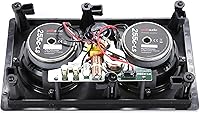
  • Bass Technology: Polk PowerPort rear-venting technology manages low-frequency energy within the wall cavity to reduce resonance and improve bass definition.
  • Impedance: 8 ohms nominal impedance, compatible with the amplifier sections of standard AV receivers without placing unusual electrical demands on the output stage.
  • Max Power: Rated at 25 watts maximum continuous output power, suited to medium-sized dedicated listening rooms with a matched AV receiver.
  • Dimensions: The speaker body measures 14.75″ deep by 9.25″ wide by 4.06″ high, requiring sufficient wall cavity depth for full flush installation.
  • Weight: The unit weighs 7 pounds, light enough for single-person handling during the mounting process without requiring additional support equipment.
  • Grille Design: Paintable magnetically-secured metal Sheer-Grille protrudes only 7mm from the wall surface, creating a near-flush visual profile once installed.
  • Mounting System: Six rotating cam locks grip the drywall from behind after insertion, securing the speaker firmly with a single cut-out drop-in process.
  • Connectivity: Wired connection via bare wire or banana plug speaker terminals; no wireless or Bluetooth capability is included or supported.
  • Surround Config: Configured as a 3.0 channel center speaker, intended to handle dialogue, central sound effects, and on-screen audio anchoring in a surround array.
  • Compatible Series: Designed to integrate tonally with other Polk Vanishing LS Series in-wall and in-ceiling speakers for a matched multi-channel home theater system.
  • Color: Ships in white with a white grille; the metal grille surface is paintable to match custom wall colors using standard spray or brush-applied paint.
  • Included Items: Package includes the speaker unit, magnetically-attached metal grille, a paper mounting template for accurate cut-out marking, and a printed owner's manual.
  • Woofer Diameter: The woofer cone diameter is 5 inches, contributing to the low-to-mid frequency output within the speaker's Dynamic Balance driver configuration.
  • Waterproofing: This speaker is not rated for waterproof or moisture-resistant environments and should only be installed in dry, climate-controlled interior walls.
  • Warranty: Covered by Polk Audio's limited warranty; buyers should confirm current terms directly with Polk Audio as coverage specifics may vary by region and registration.
  • Packaging: Ships in Frustration-Free Packaging designed to protect the speaker and grille during transit while minimizing excess packaging materials.
  • Driver Technology: Dynamic driver audio technology is used throughout, with no planar or ribbon elements, keeping the design practical for standard residential AV system integration.

Related Reviews
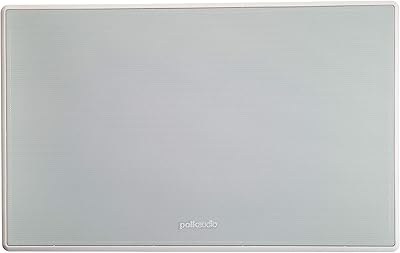
Polk Audio 255C-RT In-Wall Center Speaker
81%
91%
Dialogue Clarity
61%
Bass Performance
78%
Installation Experience
88%
Aesthetic Integration
83%
Build Quality
More
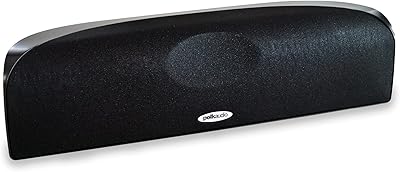
Polk Audio TL1 Center Channel Speaker
78%
88%
Dialogue Clarity
52%
Bass & Low-End Response
83%
Value for Money
79%
Build Quality & Finish
91%
AV Receiver Compatibility
More
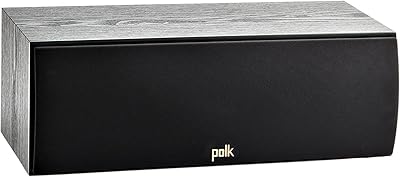
Polk Audio CS1 Series II Center Speaker
82%
91%
Dialogue Clarity
88%
Value for Money
83%
Build Quality
61%
Bass Performance
84%
Placement Flexibility
More
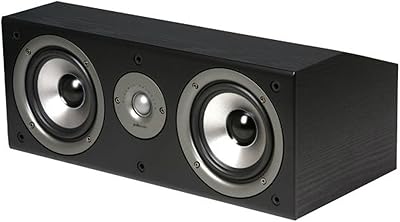
Polk Audio T30 Center Channel Speaker
79%
88%
Dialogue Clarity
91%
Value for Money
61%
Bass Performance
78%
Build Quality
94%
Setup & Installation
More
Polk Audio OWM3
Polk Audio OWM3
83%
88%
Sound Clarity
63%
Bass Performance
94%
Versatile Placement
76%
Build Quality
86%
Value for Money
More
Polk Audio 65-RT 6.5-inch In-Wall Speaker
80%
88%
Sound Quality
83%
Bass Performance
71%
Installation Experience
79%
Value for Money
81%
Build Quality
More
Polk Audio 265-RT In-Wall Speaker
82%
91%
Sound Quality
88%
Installation Experience
86%
Build Quality
93%
Grille & Aesthetics
71%
Bass Performance
More
Polk Audio Monitor XT35 Center Channel Speaker
82%
91%
Dialogue Clarity
58%
Bass Performance
83%
Build Quality
89%
Form Factor & Fit
86%
Value for Money
More
Acoustic Audio PSC-43 Center Channel Speaker
76%
83%
Dialogue Clarity
91%
Value for Money
51%
Bass Performance
67%
Build Quality
88%
Ease of Setup
More
Polk Audio Signature Elite ES30 Center Speaker
84%
94%
Dialogue Clarity
78%
Bass Performance
91%
Build Quality
86%
Value for Money
83%
Dolby Atmos & DTS:X Integration
More

FAQ

Most owners complete the installation with tools they already own — a drywall saw or oscillating tool, a drill, a screwdriver, and a stud finder. The included mounting template handles the cut-out marking, which is the step where most first-timers make mistakes. The cam locking system doesn't require anything special; you tighten it from the front once the speaker is seated. The bigger challenge is usually routing speaker wire through your walls beforehand, which may require a fish tape or a flexible drill bit depending on your home's construction.

The Polk Audio 255c-LS In-Wall Center Channel Speaker runs at 8 ohms, which is the standard impedance that virtually every AV receiver on the market is designed to handle. Brands like Denon, Yamaha, Marantz, Sony, and Onkyo all pair cleanly with this speaker without straining the amplifier section. Just make sure your receiver has a dedicated center channel output, which any surround-capable receiver will have.

The speaker body is 4.06″ deep, so your wall cavity needs to accommodate at least that depth with some clearance for wiring. Standard drywall construction over wood studs typically offers around 3.5 inches of cavity depth, which can be tight. If you're working with thicker walls, a dedicated media room with deeper framing, or a new construction where you can plan ahead, you'll have a more comfortable fit. Always measure your cavity depth before cutting.

Yes, the metal grille is designed to be painted, and plenty of owners have done it successfully. The key is prep work — lightly sanding the surface first and using thin, even coats of spray paint rather than a brush gives you the cleanest result. Rushing it or applying heavy coats leads to drips and visible texture. If you're matching a textured wall finish, it takes more patience, but the metal surface holds paint well once properly primed.

A subwoofer is strongly recommended, and honestly expected, in any setup using this in-wall center channel. The PowerPort venting helps manage low-end resonance within the wall cavity, which keeps the bass you do get sounding tighter and cleaner — but the physical limits of in-wall design mean it isn't going to produce the deep, room-pressurizing low frequencies that an action film demands. Think of the 255c-LS as handling everything from dialogue down to moderate bass, with your sub covering the rest. That's the intended division of labor.

Yes, and that's genuinely one of the strongest use cases for the 255c-LS. Within the Vanishing LS Series, Polk has designed the drivers and crossover voicing to produce a consistent tonal character across the center, surround, and ceiling channels. When panning effects move around the room, they transition naturally without the obvious timbre shifts you get when mixing different speaker brands or even different Polk lines. If you're building out a full in-wall system, staying within the LS Series pays off in sonic coherence.

Removing the speaker is possible but not trivial. The cam locks release by loosening the screws from the front, and you can pull the speaker out of the wall without damaging it. What you're left with is a cut-out in your drywall that needs patching and repainting. It's manageable if you have basic finishing skills, but it's not the kind of thing you'd want to do casually or frequently. This Polk speaker is designed to stay put for years, not to be swapped in and out.

Acoustically challenging rooms — with parallel reflective surfaces, hard floors, and open ceilings — will make any speaker work harder, and in-wall center channels have fewer placement adjustment options than freestanding designs. You can't tilt, angle, or reposition the 255c-LS once it's in the wall, so what you get is what your room gives you. In that kind of space, a good AV receiver with room correction software (like Audyssey, YPAO, or MCACC) becomes especially important to compensate for the acoustic environment.

Polk Audio backs this speaker with a limited warranty, but the exact duration and coverage terms can vary depending on your region and whether you register the product after purchase. The safest move is to check Polk's official website for current warranty details in your country, as these specifics can change. Generally speaking, Polk's limited warranties cover manufacturing defects in materials and workmanship, but not damage from installation errors, misuse, or environmental factors.

Technically yes, if the wall cavity in that location is deep enough and doesn't have obstructions like fireplace framing or ductwork behind it. The more important concern is heat — if there's any possibility of elevated temperatures near the installation point due to the fireplace, you should avoid it. Speaker components, especially the crossover components, are sensitive to sustained heat exposure. If the fireplace is decorative or rarely used and there's genuine clearance in the cavity, many installers have made this work, but verify your wall construction thoroughly before cutting.

Where to Buy